Regulatory Changes and Standards
Regulatory changes and evolving standards are shaping the Fats and Oil Market. Governments are increasingly implementing stricter regulations regarding food safety, labeling, and quality standards. These regulations aim to ensure consumer safety and promote transparency in the market. For instance, recent legislation has mandated clearer labeling of trans fats and saturated fats in food products, influencing consumer choices. Companies within the Fats and Oil Market must navigate these regulatory landscapes to ensure compliance while also adapting their product offerings to meet new standards. This could lead to increased operational costs but also presents an opportunity for companies to differentiate themselves through quality and transparency.
Rising Demand for Plant-Based Oils
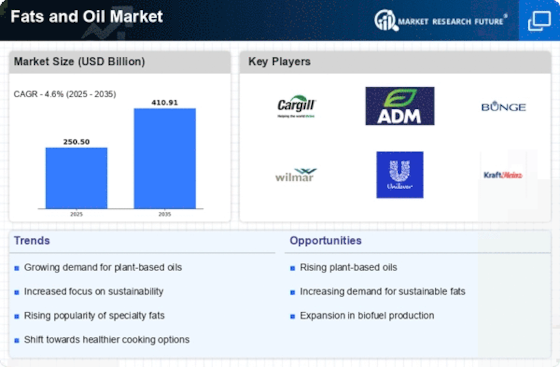
The Fats and Oil Market is experiencing a notable shift towards plant-based oils, driven by increasing consumer awareness regarding health and sustainability. As more individuals adopt vegetarian and vegan diets, the demand for oils such as olive, canola, and sunflower is on the rise. According to recent data, the consumption of plant-based oils has surged by approximately 20% over the past five years. This trend is likely to continue as consumers seek healthier alternatives to traditional animal fats. The Fats and Oil Market must adapt to this changing landscape by expanding their product lines to include a wider variety of plant-based options, thereby catering to the evolving preferences of health-conscious consumers.
Growing Interest in Functional Oils
The Fats and Oil Market is witnessing a surge in interest for functional oils, which are oils enriched with health-promoting properties. Oils such as coconut oil, flaxseed oil, and fish oil are gaining traction due to their perceived health benefits, including improved heart health and anti-inflammatory properties. Market data indicates that the functional oils segment is projected to grow at a compound annual growth rate of 8% over the next five years. This trend suggests that consumers are increasingly seeking oils that not only serve culinary purposes but also contribute to overall wellness. The Fats and Oil Market must capitalize on this trend by developing and marketing oils that highlight their health benefits.
Sustainability and Eco-Friendly Practices
Sustainability is becoming a central theme in the Fats and Oil Market, as consumers increasingly prefer products that are environmentally friendly. The demand for sustainably sourced oils is on the rise, driven by concerns over deforestation and environmental degradation associated with traditional oil production. Companies are now focusing on eco-friendly practices, such as sustainable farming and responsible sourcing, to appeal to environmentally conscious consumers. Market Research Future indicates that products labeled as sustainably sourced can command a premium price, suggesting a lucrative opportunity for businesses in the Fats and Oil Market. As sustainability becomes a key differentiator, companies must invest in sustainable practices to enhance their brand image and meet consumer expectations.
Technological Advancements in Oil Extraction
Technological innovations in oil extraction processes are significantly impacting the Fats and Oil Market. Advanced extraction techniques, such as cold pressing and supercritical fluid extraction, enhance the yield and quality of oils while minimizing environmental impact. These methods not only improve efficiency but also align with the growing demand for high-quality, pure oils. Recent advancements have shown that these technologies can increase oil yield by up to 30% compared to traditional methods. As a result, companies within the Fats and Oil Market are likely to invest in these technologies to remain competitive and meet consumer expectations for premium products.













Leave a Comment