Fetal Bovine Serum market (2025 - 2035)

Fetal Bovine Serum Market Research Report: Size, Share, Trend Analysis By Product Type (Heat Inactivated Fetal Bovine Serum, Untagged Fetal Bovine Serum, Tagged Fetal Bovine Serum), By Applications (Research and Development, Diagnostic Laboratories, Biotechnology), By End Use (Pharmaceutical Industry, Academic Research, Clinical Research), By Form (Liquid, Powder) and By Regional (North America, Europe, South America, Asia Pacific, Middle East and Africa) - Growth Outlook & Industry Forecast 2025 To 2035
ID: MRFR/HC/5908-HCR
110 Pages
Vikita Thakur, Rahul Gotadki
Last Updated: July 09, 2026
Fetal Bovine Serum market
Market Size
Forecast Period2025-2035
CAGR (2025-2035)5.8%
2025 Market SizeUSD 1.30 Billion
2035 Market SizeUSD 2.31 Billion
Key Players
Thermo Fisher Scientific
Merck KGaA
Cytiva
Corning Incorporated
Biowest
Bovogen Biologicals
Opportunities
  • Specialty-Grade Premiumization
  • Asia-Pacific CRO/CMO Capacity Expansion
  • Digital Traceability and Data Monetization

Fetal Bovine Serum market Summary

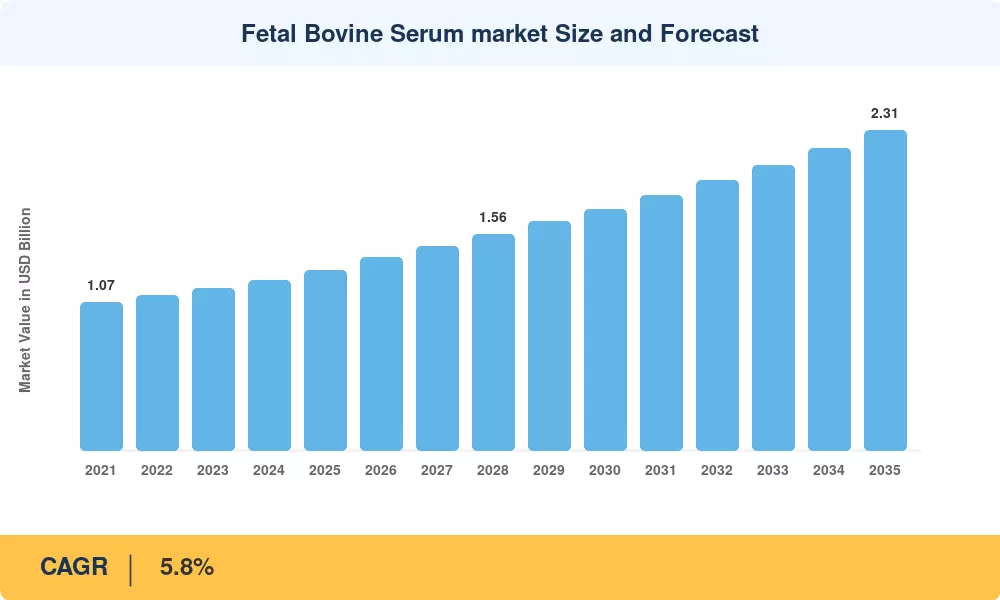
The Fetal Bovine Serum Market size was valued at USD 1.30 Billion in 2025, and the market is projected to grow from USD 1.39 Billion in 2026 to USD 2.31 Billion by 2035, registering a CAGR of 5.8% during the forecast period 2026–2035. Two structural forces anchor this trajectory: the cell and gene therapy pipeline now exceeds 3,200 active clinical assets globally [1], creating non-discretionary demand for qualified serum lots, and the U.S. cattle herd dropped to roughly 87.2 million head in January 2025 — its lowest level since 1951 — tightening raw-material supply and reinforcing pricing power [2].

The industry is experiencing a pronounced quality stratification. Legacy standard-grade FBS is giving way to specialty grades — charcoal/dextran-stripped, dialyzed, and stem-cell-qualified — as researchers demand tighter lot-to-lot consistency. Meanwhile, regulatory agencies in the EU and U.S. have intensified traceability requirements for animal-derived biologicals, pushing suppliers to invest in origin-certification platforms and ISIA-certified collection networks [3]. Global biopharmaceutical R&D spending crossed USD 265 billion in 2024 [4], underwriting steady serum consumption even as synthetic alternatives gain early traction.

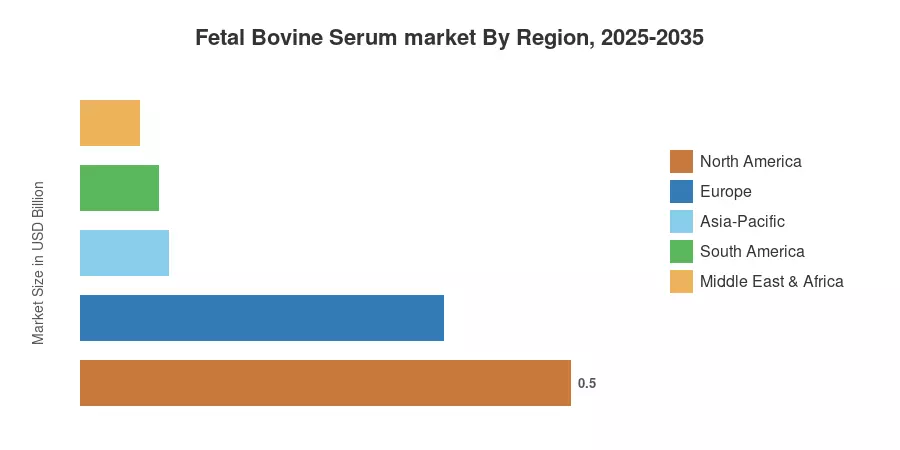
North America controlled approximately 38.2% of the Fetal Bovine Serum Market in 2025, anchored by concentrated biopharma clusters and NIH-funded academic research infrastructure. Asia-Pacific is the fastest-growing region, projected at a 6.7% CAGR through 2035, driven by expanding CRO/CMO capacity in China and India. Europe held the second-largest share at roughly 28.5%, supported by EMA-harmonized quality frameworks and a dense network of academic research institutes. The Fetal Bovine Serum Market is poised for sustained but supply-constrained growth as therapeutic complexity scales faster than herd recovery.


Key Report Takeaways

• By Product Type

  • Charcoal/dextran-stripped serum captured 34.1% of the Fetal Bovine Serum Market share in 2025, driven by demand from hormone-sensitive assay workflows.
  • Stem-cell-qualified FBS is advancing at the fastest pace among product types, reflecting expansion in regenerative medicine trial enrollment.

• By Application

  • Biopharmaceutical production accounted for 29.5% of total revenue in 2025, supported by monoclonal antibody and recombinant protein pipelines.
  • Cell-culture maintenance and expansion is the fastest-growing application segment through 2035.

• By End User

  • Biotechnology and pharmaceutical companies controlled 57.4% of the Fetal Bovine Serum Market in 2025.
  • Academic and research institutes are posting the fastest end-user growth rate through 2035, fueled by government grant allocations.

• By Region

  • North America led with a 38.2% revenue share in 2025, while Asia-Pacific is projected to grow at a 6.7% CAGR through 2035.


Fetal Bovine Serum Market Size and Forecast (2021–2035)

Market Research Future's estimation framework combines primary supplier interviews, customs trade-flow data, and downstream consumption audits across biopharmaceutical, academic, and contract research end users. Historical figures reflect confirmed shipment values; forecast projections apply a compounded growth model calibrated against pipeline expansion rates and herd-supply indicators.
Fetal Bovine Serum market Size and Forecast
Our Impact
Enabled $4.3B Revenue Impact for Fortune 500 and Leading Multinationals
Partnering with 2000+ Global Organizations Each Year
30K+ Citations by Top-Tier Firms in the Industry

Driver Impact Analysis

Driver ~% Impact on CAGR Geographic Relevance Impact Timeline
Cell & gene therapy pipeline expansion +1.4% Global Long-term (≥4 yr)
Cattle herd contraction & supply scarcity +0.9% North America, South America Short-term (≤2 yr)
Biopharmaceutical R&D spending growth +1.1% North America, Europe Medium-term (2–4 yr)
Regulatory traceability mandates +0.6% Europe, North America Medium-term (2–4 yr)
CRO/CMO capacity build-out in Asia +0.8% Asia-Pacific Long-term (≥4 yr)
Regenerative medicine trial scaling +0.7% Global Long-term (≥4 yr)
Vaccine platform diversification (mRNA, viral vector) +0.5% Global Short-term (≤2 yr)


Cell and Gene Therapy Pipeline Expansion

The Alliance for Regenerative Medicine reported over 1700-2000 active cell and gene therapy clinical assets globally as of late 2025. Each clinical-stage program requires validated FBS lots for cell expansion, differentiation assays, and potency testing — creating locked-in consumption that persists through multi-year development timelines. CAR-T manufacturing uses serum-free or human-derived media under GMP protocols, and with more than 15 approved CAR-T products now on global markets, commercial-scale serum demand is compounding alongside the clinical pipeline [8].

Cattle Herd Contraction and Supply Scarcity

The USDA confirmed that U.S. cattle stood at 87.2 million head on January 1, 2024, and dropped further to 86.7 million head in January 2025, the lowest count since 1951 [2]. Prolonged drought conditions across key ranching states reduced calf crops in 2023 and 2024, directly constraining fetal blood collection volumes. Because FBS is a slaughter by-product with no synthetic substitute at scale, supply inelasticity translates directly to pricing power for integrated collectors. Australian and New Zealand herds face similar demographic pressures, concentrating supply leverage among a shrinking number of certified abattoir networks [10].

Biopharmaceutical R&D Investment

Industry benchmarking data [4] shows that the global biopharmaceutical R&D spend was above USD 265 billion in 2024. This investment supports demand across the Fetal Bovine Serum Market since practically every mammalian cell-culture workflow, from early-stage screening to process development, uses FBS as the usual growth supplement. Serum usage per organization is increasing as large-pharma businesses ramp up pre-clinical capability to serve obesity, cancer and autoimmune pipelines.


Regulatory Traceability Mandates

The ISIA (International Serum Industry Association) accreditation scheme and EU regulatory criteria now demand full geographic traceability from abattoir to end user [3]. These regulations add to the compliance expenses for smaller dealers, but benefit established suppliers who have invested in GPS-tagged collection, gamma-irradiation infrastructure and blockchain-based chain-of-custody platforms. The European Medicines Agency has also strengthened TSE/BSE risk-mitigation documentation for serum used in the manufacturing of biologics, raising switching costs for purchasers that are already qualified on a given supplier's quantities [11].


Restraints Impact Analysis

Restraint ~% Impact on CAGR Geographic Relevance Impact Timeline
Ethical and regulatory pressure against animal-derived products –0.7% Europe, North America Long-term (≥4 yr)
Lot-to-lot variability and reproducibility concerns –0.5% Global Medium-term (2–4 yr)
Emergence of chemically defined media alternatives –0.6% North America, Europe Long-term (≥4 yr)
Geographic concentration of supply (biosecurity risk) –0.4% Global Short-term (≤2 yr)
Price volatility driven by herd cyclicality –0.3% South America, Oceania Short-term (≤2 yr)


Ethical and Regulatory Pressure

Animal welfare advocacy groups and regulatory bodies in Europe have intensified scrutiny of fetal blood collection practices. The European Commission requirements for animal-derived research materials, and several academic funding agencies now require justification for FBS use before approving grant disbursements [12]. While these pressures have not yet materially displaced FBS volumes, they are accelerating investment into serum-free and chemically defined media, particularly in publicly funded research environments.

Chemically Defined Media Alternatives

Companies such as FUJIFILM Irvine Scientific and Sartorius have expanded their portfolios of chemically defined, serum-free media formulations optimized for CHO, HEK293, and Vero cell lines [14]. Although serum-free media currently address less than 35-40% of total cell-culture media demand, adoption is growing in commercial bioprocessing where regulatory agencies favor defined inputs. The transition timeline remains long — most legacy processes are validated on FBS-containing media, and re-validation costs run into the millions — but the directional trend represents a structural ceiling on the Fetal Bovine Serum Market growth rate over the next decade.


Fetal Bovine Serum market Opportunities

Specialty-Grade Premiumization

Charcoal/dextran-stripped and stem-cell-qualified FBS grades command pricing premiums of 40–80% over standard serum, and their share of total volume is rising as precision assays and regenerative medicine applications expand. Suppliers that invest in specialized processing infrastructure can capture outsized margin growth even in a supply-constrained environment.

Asia-Pacific CRO/CMO Capacity Expansion

China's biotech CRO sector grew at an estimated 18% CAGR between 2020 and 2024, creating substantial incremental serum demand [7]. India's Biopharma SHAKTI initiative allocated INR 10,000 crore (approximately USD 1.2 billion) under the Union Budget to strengthen biologics and biosimilars infrastructure over five years, directly supporting cell-culture laboratory build-outs [15]. Suppliers with tariff-advantaged distribution in these markets stand to capture the fastest-growing pocket of the Fetal Bovine Serum Market.

Digital Traceability and Data Monetization

Suppliers can use blockchain-based lot-tracking platforms to give authenticated origin data, viral-testing certificates, and lot-performance analytics to their buyers as a packaged value-added service. In a market with continuing worries of counterfeiting and mislabeling of origins [3], first movers in digital traceability can differentiate on trust. This data layer also supports subscription-based revenue models for post-sale analytics and reorder optimization.


Vaccine Platform Diversification

The proliferation of mRNA and viral-vector vaccine platforms has expanded the range of cell substrates requiring FBS supplementation during process development. WHO estimates that over 300 vaccine candidates were in active development globally in 2024 across infectious disease, oncology, and allergy indications [9]. Each platform transition introduces a new FBS qualification cycle, generating incremental demand for characterized serum lots.

Emerging-Market Academic Infrastructure

Governments in Southeast Asia, the Middle East, and South America are increasing funding for university-level life-science research laboratories. Saudi Arabia's NEOM biotechnology initiative and Brazil's FAPESP grants program both include cell-biology infrastructure mandates that will drive first-time FBS procurement in under-penetrated regions.


Fetal Bovine Serum market Future Outlook

Precision Bioprocessing and AI-Guided Media Optimization

Artificial intelligence is starting to change how cell-culture biologists choose and adjust growth medium, including FBS supplementation levels. Machine-learning technologies are now able to anticipate lot-performance characteristics using spectroscopic fingerprints, lowering qualification durations from weeks to days. 17 This trend will not replace demand for FBS, but it will shift purchases to lots with specified performance and hence favor providers with sophisticated analytical skills.


Supply-Chain Verticalization

Major Fetal Bovine Serum Market players are moving towards backward integration by acquiring or directly contracting with abattoirs and collecting networks in Australia, New Zealand, and South America to source raw material. This vertical integration is mirroring trends in other biologics input marketplaces and is expected to further consolidate the supplier landscape over the next decade, increasing the entry barriers for smaller regional dealers [10].


Regulatory Convergence on Animal-Origin Materials

Harmonized global standards would reduce duplicate testing requirements across markets, lowering per-lot compliance costs but raising the qualification threshold for suppliers without global quality systems. The net effect favors large, multi-origin suppliers.

Serum-Free Transition Trajectory

While chemically defined media will continue to gain share in commercial bioprocessing, the Fetal Bovine Serum Market is insulated by the massive installed base of FBS-validated protocols across academic research, early-stage drug discovery, and diagnostic kit manufacturing. The transition will be gradual rather than disruptive, supporting continued market growth through 2035.


Fetal Bovine Serum market Segmentation

By Product Type

Segment Key Metric Primary Demand Driver
Standard/Regular USD 0.34 Billion (2025) General-purpose cell culture
Heat-Inactivated 5.2% CAGR (2026–2035) Immunology and complement-sensitive assays
Charcoal/Dextran-Stripped 34.1% share (2025) Hormone-sensitive assay workflows
Dialyzed USD 0.09 Billion (2025) Small-molecule metabolism studies
Stem-Cell-Qualified 6.7% CAGR (2026–2035) Regenerative medicine and iPSC expansion


Charcoal/dextran-stripped serum leads the Fetal Bovine Serum Market by product type, commanding a 34.1% share in 2025. This grade removes endogenous hormones and growth factors that interfere with steroid receptor binding assays and endocrine research, making it indispensable for pharmaceutical screening workflows. Demand is reinforced by growing oncology drug development activity, where hormone-receptor profiling is a standard preclinical step.

Stem-cell-qualified FBS is the fastest-growing product category, propelled by the scaling of iPSC-derived cell therapy manufacturing and academic stem-cell research programs. These lots undergo additional testing for pluripotency maintenance and clonal efficiency, commanding premium pricing that compensates suppliers for lower yields and extended quality-control timelines [8].

By Application

Segment Key Metric Primary Demand Driver
Biopharmaceutical Production 29.5% share (2025) mAb, recombinant protein manufacturing
Vaccine Manufacturing USD 0.22 Billion (2025) Viral-vector and cell-based vaccine platforms
Cell-Culture Maintenance & Expansion 7.2% CAGR (2026–2035) CRO/CMO scale-up, academic research
Other Applications 4.8% CAGR (2026–2035) Diagnostic kit production, IVF media


Biopharmaceutical production is the largest application of the Fetal Bovine Serum Market, driven by CHO and HEK293 cell-line expansion for monoclonal antibody and gene-therapy vector manufacturing. Cell-culture maintenance and expansion is the fastest-growing application, reflecting the rapid build-out of CRO and CMO capacity, particularly across Asia-Pacific markets.

By End User

Segment Key Metric Primary Demand Driver
Biotechnology & Pharmaceutical Companies 57.4% share (2025) Commercial drug development pipelines
Academic & Research Institutes 7.3% CAGR (2026–2035) Government grant funding expansion
CMOs/CROs USD 0.16 Billion (2025) Outsourced biologics manufacturing
Cell Banks & Other 5.0% CAGR (2026–2035) Biobanking, diagnostic production


Biotechnology and pharmaceutical companies dominate end-user spending in the Fetal Bovine Serum Market, reflecting their role as the primary sponsors of mammalian cell-culture-based drug development. Academic and research institutes represent the fastest-growing end-user category, supported by expanded NIH, Horizon Europe, and national-level grant allocations that directly fund cell-culture reagent procurement [16].


Regional Market Share Analysis

Region Key Metric Primary Investment Themes
North America 38.2% share (2025) Biopharma R&D clusters, NIH grant funding
Europe 28.5% share (2025) EMA regulatory harmonization, academic research
Asia-Pacific 6.7% CAGR (2026–2035) CRO/CMO expansion, government biotech programs
South America USD 0.08 Billion (2025) Cattle-origin supply, emerging research labs
Middle East & Africa 4.7% share (2025) Sovereign biotech initiatives, new lab infrastructure
Total USD 1.30 Billion (2025)

The Fetal Bovine Serum Market displays a concentrated regional profile, with North America and Europe collectively accounting for roughly two-thirds of 2025 revenue. Asia-Pacific is closing the gap rapidly, powered by CRO/CMO scale-up and government biotech investment.


North America

Country Key Metric Key Driver
US 78.5% of regional share NIH budget, biopharma R&D concentration
Canada 13.2% of regional share Government biotech grants, stem-cell research
Mexico 8.3% of regional share Emerging CRO operations, cost-competitive labs


The United States dominates the North American Fetal Bovine Serum Market, supported by NIH annual research funding exceeding USD 47 billion in 2024 and the highest global concentration of cell-therapy manufacturing facilities [16]. Canada's Stem Cell Network and Genome Canada programs sustain academic serum demand, while Mexico's nascent CRO sector is beginning to attract serum procurement from global sponsors seeking cost-efficient study sites.

Europe

Country Key Metric Key Driver
Germany 5.4% CAGR (2026–2035) Pharma R&D, Fraunhofer institutes
UK 22.8% of regional share Cell & Gene Therapy Catapult, MRC funding
France 16.4% of regional share INSERM research programs
Italy 10.7% of regional share Academic hospital research networks
Spain 8.1% of regional share Public biomedical research initiatives
Nordic Countries 7.5% of regional share Karolinska-linked research clusters
Russia 4.2% of regional share State-funded vaccine institutes
Rest of Europe 5.1% CAGR (2026–2035) Expanding CRO presence


Europe's Fetal Bovine Serum Market benefits from strong EMA regulatory alignment, which creates a predictable compliance environment for serum suppliers. The UK's Cell and Gene Therapy Catapult and Germany's BioNTech-led mRNA ecosystem are particularly active serum consumers, while France's INSERM network anchors academic demand [11].

Asia-Pacific

Country Key Metric Key Driver
China 7.3% CAGR (2026–2035) CRO/CMO build-out, NMPA biologics approvals
India 7.1% CAGR (2026–2035) DBT biotech funding, vaccine manufacturing
Japan 19.6% of regional share Regenerative medicine regulation (PMDA)
South Korea 13.4% of regional share Biosimilar development clusters
ASEAN 6.8% CAGR (2026–2035) Emerging lab infrastructure
Rest of Asia-Pacific 8.5% of regional share Australia/New Zealand supply origin


Asia-Pacific represents the fastest-growing region in the Fetal Bovine Serum Market, with China's NMPA approving a record 18 biologics in 2024 and India's Serum Institute and Bharat Biotech scaling cell-culture-based vaccine capacity [7]. Japan's forward-leaning regenerative medicine regulatory framework (PMDA conditional approval pathway) sustains high demand for stem-cell-qualified serum grades.

South America

Country Key Metric Key Driver
Brazil 58.3% of regional share Fiocruz vaccine programs, cattle-origin supply
Argentina 24.7% of regional share CONICET research, Pampas cattle herds
Rest of South America 17.0% of regional share Emerging university labs


Brazil anchors South American demand through Fiocruz-led vaccine production and a growing university research network. The region also serves as a significant FBS supply origin due to extensive cattle herds, though most raw serum is exported to North American and European processors for finishing and certification [10].

Middle East & Africa

Country Key Metric Key Driver
Saudi Arabia 28.5% of regional share Vision 2030 biotech investment
UAE 22.1% of regional share Healthcare free-zone lab expansion
South Africa 19.3% of regional share SAMRC research programs
Egypt 14.8% of regional share National Research Centre initiatives
Rest of MEA 15.3% of regional share Emerging academic laboratories


Saudi Arabia's Vision 2030 program includes dedicated biotechnology research campuses in NEOM and Riyadh, which are creating first-time institutional demand for FBS in the region. The UAE's healthcare free-zone expansions in Dubai and Abu Dhabi are similarly building laboratory capacity that will sustain long-term serum procurement [15].


Fetal Bovine Serum market By Region, 2025-2035

Competitive Benchmarking

The Fetal Bovine Serum Market exhibits medium concentration, with the top five suppliers holding an estimated 55–65% combined revenue share. The competitive structure bifurcates between vertically integrated global players — who control collection, processing, and distribution — and regional specialists competing on origin traceability and niche-grade expertise. The estimated HHI index sits in the 1,200–1,500 range, indicative of a moderately consolidated market with meaningful competition below the top tier.

Company Est. Revenue Share Range Key Offerings Strategic Positioning
Thermo Fisher Scientific ~14–18% Gibco FBS portfolio, specialty grades Vertically integrated global platform
Merck KGaA (MilliporeSigma) ~10–14% Sigma-Aldrich FBS, process-grade serum Broad life-science reagent ecosystem
Cytiva (Danaher) ~8–12% HyClone FBS, defined sera Bioprocessing workflow integration
Corning Incorporated ~5–8% Standard and specialty FBS Cell-culture consumables bundling
Biowest ~4–7% Origin-certified South American FBS Traceability-first positioning
Bovogen Biologicals ~3–6% Australian/NZ-origin FBS Oceania supply-chain control
PAN-Biotech ~2–4% EU-sourced specialty sera European regulatory compliance
Moregate BioTech ~2–4% Multi-origin FBS, custom lots Flexible sourcing and custom services
HiMedia Laboratories ~2–3% Cost-competitive FBS for emerging markets Asia/emerging-market distribution
Rocky Mountain Biologicals ~1–3% U.S.-origin FBS, small-lot flexibility Domestic origin premium positioning


Recent News & Developments

  • Thermo Fisher Scientific (May 2024): Reaffirmed its leadership in cell culture consumables by expanding distribution pathways for Gibco™ ISIA-traceable Fetal Bovine Serum across Asia-Pacific and European biomanufacturing hubs, ensuring high lot-to-lot consistency for biopharmaceutical clients.


  • Cytiva (September 2024): Expanded the global reach of its HyClone™ characterized FBS line, leveraging scientific origin verification to guarantee authentic, low-risk Australian and New Zealand raw material sourcing for global vaccine and cell therapy developers.


  • European Medicines Agency (March 2024): Enforced strict compliance with EMA/410/01 Rev. 3 guidelines across European biopharma supply chains, requiring comprehensive viral safety and TSE/BSE risk assessment documentation for all animal-derived raw materials.


  • Alliance for Regenerative Medicine (October 2023): Released sector data highlighting over 1,600 active cell and gene therapy clinical trials worldwide, underscoring sustained baseline demand for validated cell expansion media and specialized growth supplements.


Fetal Bovine Serum market Report Scope

Parameter Detail
Market Scope Global Fetal Bovine Serum Market by Product Type, Application, End User, and Region
Study Period 2021–2035
CAGR (2026–2035) 5.8%
Base Year Market Size USD 1.30 Billion (2025)
Forecast Endpoint USD 2.31 Billion (2035)
Fastest Growing Segment Stem-Cell-Qualified FBS (by product type); Asia-Pacific (by region)
Companies Profiled 10 (Thermo Fisher Scientific, Merck KGaA, Cytiva, Corning, Biowest, Bovogen, PAN-Biotech, Moregate BioTech, HiMedia, Rocky Mountain Biologicals)
Valuation Currency USD Billion


FAQs

How does lot-to-lot variability affect research reproducibility with FBS?
Each FBS lot contains a unique profile of growth factors, hormones, and proteins, which can shift experimental outcomes across lots. Researchers mitigate this by pre-screening multiple lots and reserving bulk quantities of a qualified lot for an entire study duration [13].
What criteria distinguish stem-cell-qualified FBS from standard grades?
Stem-cell-qualified lots undergo additional testing for embryonic stem cell pluripotency maintenance, clonal efficiency, and endotoxin levels below 10 EU/mL. These extra QC steps reduce yields and increase per-liter cost by 50–80% compared to standard FBS [8].
How are suppliers addressing geographic concentration risk in raw-material sourcing?
Leading companies are diversifying collection across Australia, New Zealand, South America, and the U.S. to avoid single-origin dependency. Multi-origin portfolios also help suppliers meet region-specific BSE/TSE regulatory requirements [10].
What role does gamma irradiation play in FBS processing?
Gamma irradiation at 25–35 kGy inactivates adventitious viruses, mycoplasma, and other potential contaminants without significantly degrading growth-promoting activity. It has become a standard processing step for GMP-grade serum used in biologics manufacturing [21].
How do procurement buyers typically evaluate FBS supplier reliability?
Buyers assess ISIA certification status, geographic origin documentation, lot-reservation programs, and historical supply continuity during shortage periods. Long-term supply agreements with guaranteed volume commitments are increasingly common [3].
What is the typical shelf life of properly stored FBS?
Properly aliquoted and stored at –20°C, FBS maintains functional stability for approximately five years from the date of collection. Repeated freeze-thaw cycles degrade growth factor activity, so single-use aliquoting at receipt is standard practice [13].
How might synthetic serum replacements reshape competitive dynamics over the next decade?
Synthetic alternatives will likely capture share first in commercial bioprocessing, where defined inputs simplify regulatory filings. Research and diagnostic applications will retain FBS dependency longer due to re-validation costs and protocol inertia [14].    
What is the current size of the fetal bovine serum market?
The fetal bovine serum market reached USD 1.072 billion in 2025 and is projected to reach USD 1.946 billion by 2035.
What is the CAGR of the fetal bovine serum market?
The fetal bovine serum market is projected to grow at a CAGR of 6.14% during the forecast period 2025–2035.
Which region leads the fetal bovine serum market?
North America holds the largest share at 64.36%, while Asia-Pacific is the fastest-growing region.
Author
Author
Author Profile
Vikita Thakur LinkedIn
Senior Research Analyst
She holds an experience of about 5+ years in market research and business consulting projects for sectors such as life sciences, medical devices, and healthcare IT. She possesses a robust background in data analysis, market estimation, competitive intelligence, pipeline analysis market trend identification, and consumer behavior insights. Her expertise lies in technical Sales support, client interaction and project management, designing and implementing market research studies, conducting competitive analysis, and synthesizing complex data into actionable recommendations that drive business growth.
Co-Author
Co-Author Profile
Rahul Gotadki LinkedIn
Research Manager
He holds an experience of about 9+ years in Market Research and Business Consulting, working under the spectrum of Life Sciences and Healthcare domains. Rahul conceptualizes and implements a scalable business strategy and provides strategic leadership to the clients. His expertise lies in market estimation, competitive intelligence, pipeline analysis, customer assessment, etc.

Research Approach


Secondary Research

The secondary research process involved comprehensive analysis of regulatory databases for animal-derived biological products, peer-reviewed biotechnology journals, pharmaceutical manufacturing publications, and authoritative life sciences organizations. Key sources included the US Department of Agriculture (USDA) Animal and Plant Health Inspection Service (APHIS), US Food & Drug Administration (FDA) Center for Biologics Evaluation and Research, European Medicines Agency (EMA) Committee for Medicinal Products for Human Use, European Directorate for the Quality of Medicines (EDQM), International Serum Industry Association (ISIA), US Environmental Protection Agency (EPA) Good Laboratory Practice standards, National Institutes of Health (NIH) RePORT database, National Center for Biotechnology Information (NCBI/PubMed), Centers for Disease Control and Prevention (CDC) Laboratory Quality Standards, World Organisation for Animal Health (WOAH), Food and Agriculture Organization (FAO) Animal Health Guidelines, and national veterinary authorities from key markets. These sources were utilized to collect bovine sourcing regulations, cell culture media standards, biopharmaceutical manufacturing guidelines, import/export restrictions, and market landscape analysis for heat inactivated, untagged, and tagged fetal bovine serum categories.


Primary Research

To gather both qualitative and quantitative information, the primary research process involved interviewing players from both the supply and demand sides. Members of the supply side who provided information included the chief executive officers, vice presidents, heads of quality control, and directors of the supply chain from companies that produced fetal bovine serum, supplied biological products, and made cell culture media. Directors of laboratories, PIs, and procurement managers from biotech and pharmaceutical firms, as well as academia research scientists and diagnostic lab quality assurance managers, made up the demand-side sources. Primary research provided evidence of market segmentation for both liquid and powder forms, verified the timescales for ethical sourcing, and uncovered patterns of cell culture adoption, volatility in serum pricing, and dynamics of regulatory compliance.

Primary Respondent Breakdown:

By Designation: C-level Primaries (40%), Director Level (25%), Others (35%)

By Region: North America (38%), Europe (25%), Asia-Pacific (28%), Rest of World (9%)


Market Size Estimation

Global market valuation was derived through revenue mapping and cell culture consumption volume analysis. The methodology included:

Identification of 35+ key manufacturers and suppliers across North America, Europe, Asia-Pacific, and Latin America

Product mapping across heat inactivated, untagged, tagged, liquid, and powder fetal bovine serum categories

Analysis of reported and modeled annual revenues specific to cell culture media and serum portfolios

Coverage of manufacturers representing 75-80% of global market share in 2024

Extrapolation using bottom-up (cell culture volume × ASP by application) and top-down (manufacturer revenue validation) approaches to derive segment-specific valuations for pharmaceutical industry, academic research, and clinical research end-use sectors

Download Free Sample

Kindly complete the form below to receive a free sample of this Report

Download PDF ×

We do not share your information with anyone. However, we may send you emails based on your report interest from time to time. You may contact us at any time to opt-out.
















