Fortified Juices Market
Fortified Juices Market Summary
As per Market Research Future analysis, the Fortified Juices Market was estimated at 7.601 USD Billion in 2024. The fortified juices industry is projected to grow from 8.081 USD Billion in 2025 to 14.9 USD Billion by 2035, exhibiting a compound annual growth rate (CAGR) of 6.31% during the forecast period 2025 - 2035
Key Market Trends & Highlights
The Fortified Juices Market is experiencing robust growth driven by health trends and innovative product offerings.
- Health consciousness is significantly driving demand for fortified juices, particularly in North America.
- Innovation in product offerings is evident, with a notable rise in the popularity of berry juices in the Asia-Pacific region.
- The expansion of distribution channels is facilitating greater accessibility to fortified juices across various demographics.
- Rising health awareness and the growing demand for functional beverages are key drivers propelling market growth.
Market Size & Forecast
| 2024 Market Size | 7.601 (USD Billion) |
| 2035 Market Size | 14.9 (USD Billion) |
| CAGR (2025 - 2035) | 6.31% |
Major Players
Tropicana Products (US), Minute Maid (US), Naked Juice (US), Ocean Spray (US), Dole Food Company (US), Welch's (US), V8 (US), Simply Orange (US), Pineapple Juice Co (US)
Fortified Juices Market Trends
The Fortified Juices Market is currently experiencing a notable transformation, driven by a growing consumer awareness regarding health and nutrition. This shift appears to be influencing purchasing behaviors, as individuals increasingly seek beverages that offer added health benefits. The incorporation of vitamins, minerals, and other nutrients into juice products seems to resonate well with health-conscious consumers, who are often looking for convenient ways to enhance their dietary intake. Furthermore, the rise of plant-based diets and the demand for natural ingredients may also be contributing to the expansion of this market segment. In addition, the Fortified Juices Market is likely to benefit from innovations in product formulations and packaging. Manufacturers are exploring new flavor combinations and functional ingredients that appeal to diverse consumer preferences. This trend indicates a potential for growth as brands strive to differentiate themselves in a competitive landscape. Moreover, the increasing availability of fortified juices in various retail channels, including online platforms, suggests that accessibility is becoming a key factor in market expansion. Overall, the Fortified Juices Market appears poised for continued growth as it adapts to evolving consumer demands and preferences.
Health Consciousness Driving Demand
The rising awareness of health and wellness among consumers is significantly influencing the Fortified Juices Market. Individuals are increasingly seeking products that provide nutritional benefits, leading to a surge in demand for juices enriched with vitamins and minerals.
Innovation in Product Offerings
Manufacturers are actively innovating their product lines to include unique flavors and functional ingredients. This trend reflects a desire to cater to diverse consumer tastes and preferences, thereby enhancing market competitiveness.
Expansion of Distribution Channels
The Fortified Juices Market is witnessing an expansion in distribution channels, particularly through online platforms. This increased accessibility is likely to attract a broader consumer base, facilitating market growth.
Fortified Juices Market Drivers
Rising Health Awareness
The increasing awareness regarding health and nutrition among consumers appears to be a primary driver for the fortified juices Market. As individuals become more conscious of their dietary choices, the demand for beverages that offer additional health benefits has surged. This trend is reflected in market data, indicating that the fortified juice segment has experienced a compound annual growth rate of approximately 6% over the past few years. Consumers are actively seeking products enriched with vitamins, minerals, and antioxidants, which are perceived to enhance overall well-being. Consequently, manufacturers are responding by developing innovative fortified juice products that cater to this health-centric consumer base, thereby propelling the growth of the Fortified Juices Market.
Expansion of Retail Channels
The expansion of retail channels is significantly impacting the Fortified Juices Market. With the rise of e-commerce and the proliferation of health-focused grocery stores, consumers now have greater access to a variety of fortified juice products. This shift in distribution strategy has been supported by market data indicating that online sales of fortified juices have increased by over 20% in recent years. Retailers are also enhancing their in-store displays and promotions to attract health-conscious shoppers. As a result, the availability and visibility of fortified juices in both physical and online stores are likely to drive consumer purchases, thereby contributing to the overall growth of the Fortified Juices Market.
Innovative Product Development
Innovation in product development is a crucial factor influencing the Fortified Juices Market. Companies are increasingly investing in research and development to create unique formulations that appeal to diverse consumer preferences. This includes the introduction of organic, non-GMO, and functional juices that offer specific health benefits, such as improved digestion or enhanced immunity. Market data suggests that the introduction of new flavors and combinations has led to a notable increase in consumer interest, with some brands reporting a 15% rise in sales following the launch of innovative products. As competition intensifies, the ability to offer distinctive and appealing fortified juice options is likely to remain a key driver for growth in the Fortified Juices Market.
Sustainability and Ethical Sourcing
Sustainability and ethical sourcing practices are increasingly influencing consumer choices within the Fortified Juices Market. As awareness of environmental issues grows, consumers are more inclined to support brands that prioritize sustainable practices, such as using organic ingredients and eco-friendly packaging. Market data indicates that products marketed as sustainable have seen a rise in demand, with some brands reporting a 30% increase in sales attributed to their commitment to sustainability. This trend suggests that companies focusing on ethical sourcing and environmentally friendly practices are likely to gain a competitive edge. As a result, the emphasis on sustainability is expected to play a pivotal role in shaping the future of the Fortified Juices Market.
Growing Demand for Functional Beverages
The growing demand for functional beverages is a notable driver for the Fortified Juices Market. Consumers are increasingly seeking drinks that not only quench thirst but also provide health benefits, such as energy boosts or immune support. This trend is reflected in market data, which shows that functional beverages, including fortified juices, are projected to account for a significant share of the beverage market in the coming years. The rise in lifestyle-related health issues has prompted consumers to opt for beverages that can aid in their wellness journey. Consequently, manufacturers are focusing on fortifying juices with probiotics, vitamins, and other beneficial ingredients, thereby aligning with consumer preferences and driving growth in the Fortified Juices Market.
Market Segment Insights
By Nutritional Benefit: Vitamins (Largest) vs. Antioxidants (Fastest-Growing)
In the Fortified Juices Market, Vitamins hold the largest market share among the Nutritional Benefit segment, as consumers increasingly prioritize health and immunity in their beverage choices. With rising awareness of vitamin deficiencies, fortified juices enriched with essential vitamins attract a broad consumer base, ranging from children to the elderly, seeking preventive health benefits.
Vitamins (Dominant) vs. antioxidants (Emerging)
Vitamins are currently the dominant force within the Fortified Juices Market, celebrated for their wide-ranging health benefits. They play a pivotal role in enhancing immunity and overall health, particularly Vitamin C and D, which are often highlighted in marketing strategies. Conversely, Antioxidants represent an emerging trend, driven by the growing consumer interest in functional beverages. They are linked to various health benefits, including anti-aging and disease prevention, positioning them as a rapidly developing segment. As consumers become more educated about health and wellness, the demand for juices infused with antioxidants is set to rise significantly.
By Product Type: Citrus Juices (Largest) vs. Berry Juices (Fastest-Growing)
In the Fortified Juices Market, the distribution of market share among product types reveals that Citrus Juices hold the largest segment, taking advantage of their established popularity and health benefits. Following closely are Berry Juices, which are gaining traction for their antioxidant properties and flavorful options. Tropical Juices, Vegetable Juices, and Mixed Juices make up the remainder of the market, each contributing uniquely to the diversity of offerings available to consumers. The growth trends in the Fortified Juices Market are markedly driven by an increasing consumer preference for health-oriented beverages. Berry Juices are experiencing the fastest growth, propelled by rising awareness about the health benefits associated with berries. Additionally, the trend toward natural and fortified products resonates with consumers' desires for clean labels and nutritional enhancements, assuring a positive outlook for both Citrus and Berry Juices in the coming years.
Citrus Juices (Dominant) vs. Berry Juices (Emerging)
Citrus Juices are regarded as the dominant type in the Fortified Juices Market, primarily due to their widespread appeal and consumer recognition. Known for their refreshing taste and high vitamin C content, these juices attract a broad demographic, effectively cementing their market leadership. On the other hand, Berry Juices represent the emerging segment, gaining popularity due to their rich flavor profiles and unique health benefits. They are particularly appealing to health-conscious consumers who value antioxidant-rich options. The vibrant colors and innovative blends of berry juices also contribute to their marketability, allowing them to stand out in a crowded marketplace. As consumers increasingly seek out nutritious and flavorful drinks, both Citrus and Berry Juices play pivotal roles in the product spectrum.
By Packaging Type: Bottles (Largest) vs. Pouches (Fastest-Growing)
The Fortified Juices Market has witnessed a significant distribution of market share among various packaging types. Bottles continue to hold the largest proportion of the market due to their convenience, aesthetic appeal, and consumer preference for single servings. Cans, pouches, and Tetra Packs follow, each having unique advantages that cater to different consumer demands, thereby showcasing a competitive packaging landscape. Overall, the rise of health consciousness among consumers has led to an increased reliance on packaged fortified juices, favoring bottles primarily over other formats.
Bottles: Dominant vs. Pouches: Emerging
Bottles represent the dominant packaging type in the Fortified Juices Market due to their versatility and consumer-familiarity. They offer ease of use and serve as an effective branding tool, which is paramount in a visually driven market. On the other hand, pouches have emerged rapidly, appealing to the on-the-go lifestyle of consumers who prefer lightweight and resealable options. Their eco-friendliness also resonates with environmentally-conscious buyers, creating a niche segment within the fortified juice category. As health and convenience continue to drive consumer choices, the competition between dominating bottles and emerging pouches intensifies.
By Distribution Channel: Supermarkets (Largest) vs. Online Retail (Fastest-Growing)
In the Fortified Juices Market, Supermarkets dominate the distribution channel landscape, holding a significant share due to their vast reach and consumer accessibility. These retail giants play a crucial role in promoting fortified juices, offering a wide variety of brands and flavors that cater to different consumer preferences. In contrast, Online Retail has emerged as a rapidly growing platform, leveraging technological advancements to provide convenience and diverse product availability to consumers seeking fortified options from the comfort of their homes. The growth of Online Retail in the Fortified Juices Market is driven by a shift in consumer shopping behavior favoring digital platforms. Increased internet penetration, coupled with changing lifestyles and a growing demand for health-oriented beverages, has propelled this channel to the forefront. Additionally, online platforms often engage in targeted marketing strategies, promoting health benefits and new product launches, which attract health-conscious consumers increasingly opting for online purchases over traditional retail experiences.
Supermarkets: Dominant vs. Online Retail: Emerging
Supermarkets are a dominant force in the Fortified Juices Market, providing consumers with extensive choices and competitive pricing. These establishments often feature promotional strategies and in-store displays that enhance product visibility, capturing the attention of health-conscious shoppers. Furthermore, supermarkets benefit from established relationships with suppliers, allowing them to offer a diverse range of fortified juices that appeal to various demographic segments. On the other hand, Online Retail is an emerging channel, characterized by its rapid growth and ability to cater to the modern consumer's preference for convenience. These platforms provide consumers with the flexibility to order products from anywhere, often accompanied by tailored recommendations and subscription services that enhance customer loyalty. As health awareness continues to rise, both channels will play pivotal roles in shaping the future of the fortified juices market.
Regional Insights
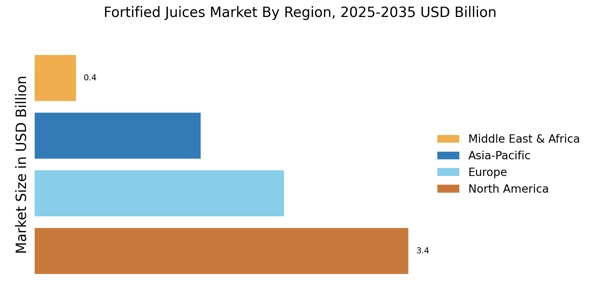
North America : Market Leader in Fortified Juices Market
North America is the largest market for fortified juices, holding approximately 45% of the global market share. The region's growth is driven by increasing health consciousness among consumers, a rise in demand for functional beverages, and supportive regulatory frameworks promoting nutritional products. The U.S. Food and Drug Administration (FDA) has also been instrumental in establishing guidelines that encourage the production of fortified juices, enhancing consumer trust and market growth. The United States is the leading country in this sector, with major players like Tropicana Products, Minute Maid, and Naked Juice dominating the landscape. The competitive environment is characterized by innovation in flavors and health benefits, with companies investing heavily in marketing and product development. The presence of established brands ensures a robust distribution network, making fortified juices widely available across various retail channels.
Europe : Emerging Market for Health Drinks
Europe is witnessing a significant rise in the fortified juices market, accounting for approximately 30% of the global share. This growth is fueled by increasing consumer awareness regarding health and wellness, alongside a shift towards natural and organic products. Regulatory bodies, such as the European Food Safety Authority (EFSA), have been pivotal in setting standards that promote the consumption of fortified beverages, thereby enhancing market potential. Leading countries in this region include Germany, France, and the UK, where the demand for fortified juices is on the rise. The competitive landscape is marked by both established brands and emerging players focusing on innovative formulations. Companies are increasingly emphasizing sustainability and health benefits, with key players like Dole Food Company and Ocean Spray adapting their strategies to meet evolving consumer preferences.
Asia-Pacific : Rapidly Growing Beverage Market
Asia-Pacific is rapidly emerging as a significant player in the fortified juices market, holding around 20% of the global market share. The region's growth is driven by a burgeoning middle class, increasing disposable incomes, and a growing awareness of health and wellness. Governments are also promoting nutritional initiatives, which support the consumption of fortified products, thereby acting as a catalyst for market expansion. Countries like China, India, and Japan are leading the charge, with a mix of local and international brands competing for market share. The competitive landscape is evolving, with companies like V8 and Simply Orange expanding their presence. The focus is on product innovation, catering to local tastes and preferences, which is crucial for capturing the attention of health-conscious consumers in this diverse market.
Middle East and Africa : Untapped Market Potential
The Middle East and Africa region is gradually emerging in the fortified juices market, currently holding about 5% of the global share. The growth is primarily driven by increasing urbanization, changing lifestyles, and a rising demand for healthy beverage options. Regulatory frameworks are also evolving, with governments encouraging the fortification of food and beverages to combat nutritional deficiencies, thus providing a favorable environment for market growth. Leading countries in this region include South Africa and the UAE, where the market is characterized by a mix of local and international brands. The competitive landscape is still developing, with opportunities for new entrants and established players to innovate and expand their product offerings. Companies are focusing on health benefits and convenience, which are key factors for attracting consumers in this emerging market.
Key Players and Competitive Insights
Key Companies in the Fortified Juices Market include
Industry Developments
The Fortified Juices Market has witnessed notable developments recently, with companies focusing on innovation and expansion to meet increasing consumer demand for health-oriented beverages. Ceres Juice and Ocean Spray have introduced new fortified product lines, enhancing nutritional value while targeting health-conscious consumers. PepsiCo and The Coca-Cola Company are particularly active, with both firms exploring acquisitions to broaden their portfolios, as seen in their pursuits of partnerships with smaller health-focused brands, although no specific recent mergers have been confirmed. Nestlé continues to push for sustainability in its fortified juice offerings, aligning with consumer preferences for environmentally-friendly practices.
Additionally, the market is anticipated to grow significantly, driven by rising awareness of health benefits associated with fortified juices, particularly among younger consumers seeking convenient and nutritious options. The competition among major players like Kraft Heinz, Dole Food Company, and Unilever remains strong as they all work to enhance their market shares through product innovation and strategic marketing efforts. Overall, the dynamic landscape of the fortified juices market reflects changing consumer preferences and the ongoing adaptability of major brands in the industry.
Future Outlook
Fortified Juices Market Future Outlook
The Fortified Juices Market is projected to grow at a 6.31% CAGR from 2025 to 2035, driven by rising health awareness, innovative product formulations, and increasing consumer demand for functional beverages.
New opportunities lie in:
- Expansion into emerging markets with tailored product offerings.
- Development of subscription-based delivery services for fortified juices.
- Collaboration with health professionals to promote fortified juice benefits.
By 2035, the Fortified Juices Market is expected to achieve substantial growth and diversification.
Market Segmentation
Fortified Juices Market Product Type Outlook
- Citrus Juices
- Berry Juices
- Tropical Juices
- Vegetable Juices
- Mixed Juices
Fortified Juices Market Packaging Type Outlook
- Bottles
- Cans
- Pouches
- Tetra Packs
Fortified Juices Market Nutritional Benefit Outlook
- Vitamins
- Minerals
- Antioxidants
- Protein
- Fiber
Fortified Juices Market Distribution Channel Outlook
- Supermarkets
- Convenience Stores
- Online Retail
- Health Food Stores
Report Scope
| MARKET SIZE 2024 | 7.601(USD Billion) |
| MARKET SIZE 2025 | 8.081(USD Billion) |
| MARKET SIZE 2035 | 14.9(USD Billion) |
| COMPOUND ANNUAL GROWTH RATE (CAGR) | 6.31% (2025 - 2035) |
| REPORT COVERAGE | Revenue Forecast, Competitive Landscape, Growth Factors, and Trends |
| BASE YEAR | 2024 |
| Market Forecast Period | 2025 - 2035 |
| Historical Data | 2019 - 2024 |
| Market Forecast Units | USD Billion |
| Key Companies Profiled | Tropicana Products (US), Minute Maid (US), Naked Juice (US), Ocean Spray (US), Dole Food Company (US), Welch's (US), V8 (US), Simply Orange (US), Pineapple Juice Co (US) |
| Segments Covered | Nutritional Benefit, Product Type, Packaging Type, Distribution Channel, Regional |
| Key Market Opportunities | Growing consumer demand for health-oriented beverages drives innovation in the Fortified Juices Market. |
| Key Market Dynamics | Rising consumer demand for health-oriented beverages drives innovation and competition in the fortified juices market. |
| Countries Covered | North America, Europe, APAC, South America, MEA |
Market Highlights
FAQs
What is the current valuation of the Fortified Juices Market as of 2024?
The Fortified Juices Market was valued at 7.601 USD Billion in 2024.
What is the projected market valuation for the Fortified Juices Market in 2035?
The market is projected to reach 14.9 USD Billion by 2035.
What is the expected CAGR for the Fortified Juices Market during the forecast period 2025 - 2035?
The expected CAGR for the Fortified Juices Market during 2025 - 2035 is 6.31%.
Which companies are considered key players in the Fortified Juices Market?
Key players in the market include Tropicana Products, Minute Maid, Naked Juice, Ocean Spray, Dole Food Company, Welch's, V8, Simply Orange, and Pineapple Juice Co.
What are the main nutritional benefits segments in the Fortified Juices Market?
The main nutritional benefits segments include Vitamins, Minerals, Antioxidants, Protein, and Fiber, with valuations ranging from 0.9 to 3.0 USD Billion.
Which product types dominate the Fortified Juices Market?
Citrus Juices, Berry Juices, Tropical Juices, Vegetable Juices, and Mixed Juices are the dominant product types, with valuations from 1.0 to 4.4 USD Billion.
What packaging types are prevalent in the Fortified Juices Market?
The prevalent packaging types include Bottles, Cans, Pouches, and Tetra Packs, with valuations ranging from 1.0 to 5.0 USD Billion.
What distribution channels are utilized for Fortified Juices?
Distribution channels include Supermarkets, Convenience Stores, Online Retail, and Health Food Stores, with valuations from 1.0 to 5.0 USD Billion.
How do the projected growth rates of different product types compare in the Fortified Juices Market?
Tropical Juices and Mixed Juices show the highest projected growth, with valuations expected to reach 3.5 and 4.4 USD Billion respectively by 2035.
What trends are influencing the Fortified Juices Market as it moves towards 2035?
Trends such as increasing health consciousness and demand for nutritional beverages are likely to drive growth in the Fortified Juices Market.
Research Approach
Secondary Research
The secondary research process involved a comprehensive analysis of regulatory databases, peer-reviewed food science journals, industry publications, and authoritative health and nutrition organizations. Key sources included the US Food & Drug Administration (FDA), European Food Safety Authority (EFSA), Food and Agriculture Organization of the United Nations (FAO), World Health Organization (WHO) Global Nutrition Report, US Department of Agriculture (USDA) Economic Research Service, Centers for Disease Control and Prevention (CDC) National Health and Nutrition Examination Survey (NHANES), National Institutes of Health (NIH) Office of Dietary Supplements, International Food Information Council (IFIC), European Juice Association (AIJN), American Beverage Association, International Nut and Dried Fruit Council (INC). National Food Safety Authority reports from key markets, including the China National Health Commission, Food Standards Australia New Zealand (FSANZ), and Health Canada. These sources were used to collect consumption statistics, regulatory approval data for fortification claims, clinical nutrition studies, demographic consumption trends, and market landscape analysis for vitamin-fortified, mineral-fortified, antioxidant-enriched, protein-fortified, and fiber-enriched juice categories across citrus, berry, tropical, vegetable, and mixed juice product types.
Primary Research
Qualitative and quantitative insights were obtained by interviewing supply-side and demand-side stakeholders during the primary research process. The supply-side sources consist of CEOs, VPs of Product Development, R&D chiefs, regulatory affairs managers, and commercial directors from fortified juice manufacturers, beverage conglomerates, private label producers, and packaging OEMs. Demand-side sources consist of procurement leads from supermarket chains, convenience store operators, e-commerce platform category managers, health food store purchasers, registered dietitians, nutritionists, and food service distributors. Market segmentation was validated by primary research in the following areas: nutritional benefits (vitamins, minerals, antioxidants, protein, fiber), product types (citrus, berry, tropical, vegetable, mixed juices), packaging formats (bottles, cans, pouches, Tetra Packs), and distribution channels (supermarkets, convenience stores, online retail, health food stores). It also verified the timelines for the product pipeline, collected information on consumer adoption patterns, pricing strategies, shelf-space dynamics, and trends in the sourcing of fortification ingredients.
Primary Respondent Breakdown:
By Designation: C-level Primaries (32%), Director Level (30%), Others (38%)
By Region: North America (32%), Europe (30%), Asia-Pacific (28%), Rest of World (10%)
Market Size Estimation
Global market valuation was derived through revenue mapping and consumption volume analysis. The methodology included:
Identification of 50+ key manufacturers and private label producers across North America, Europe, Asia-Pacific, Latin America, and the Middle East & Africa
Product mapping across vitamin-fortified, mineral-fortified, antioxidant-enriched, protein-fortified, and fiber-enriched juice categories
Analysis of reported and modeled annual revenues specific to fortified juice portfolios, including branded and private label offerings
Coverage of manufacturers representing 70–75% of the global market share in 2024
Extrapolation using bottom-up (consumption volume × average selling price by country/region) and top-down (manufacturer revenue validation) approaches to derive segment-specific valuations across nutritional benefit, product type, packaging type, and distribution channel segments.
Kindly complete the form below to receive a free sample of this Report
Customer Stories
“This is really good guys. Excellent work on a tight deadline. I will continue to use you going forward and recommend you to others. Nice job”
“Thanks. It’s been a pleasure working with you, please use me as reference with any other Intel employees.”
“Thanks for sending the report it gives us a good global view of the Betaïne market.”
“Thank you, this will be very helpful for OQS.”
“We found the report very insightful! we found your research firm very helpful. I'm sending this email to secure our future business.”
“I am very pleased with how market segments have been defined in a relevant way for my purposes (such as "Portable Freezers & refrigerators" and "last-mile"). In general the report is well structured. Thanks very much for your efforts.”
“I have been reading the first document or the study, ,the Global HVAC and FP market report 2021 till 2026. Must say, good info! I have not gone in depth at all parts, but got a good indication of the data inside!”
“We got the report in time, we really thank you for your support in this process. I also thank to all of your team as they did a great job.”