Download Free Sample
Kindly complete the form below to receive a free sample of this Report
France Ophthalmic Drugs Market Research Report By Dosage Form (Eye Drops, Eye Ointments, Eye Solutions, Gels, Capsules Tablets, Others), By Product Type (Prescription Drug, OTC Drug), By Drug Class (Antibiotics, Anti-Inflammatory, Anti-Glaucoma, Others), By Indication (Glaucoma, Retinal Disorder, Dry Eye, Eye Allergy, Others) and By Distribution Channels (Hospital pharmacies, Drug stores, Online pharmacies, Others) - Growth & Industry Forecast 2025 To 2035
As per analysis, the France Ophthalmic Drugs Market is projected to grow from USD 1.79 Billion in 2025 to USD 3.11 Billion by 2035, exhibiting a compound annual growth rate (CAGR) of 5.73% during the forecast period (2025 - 2035).
The France ophthalmic drugs market is experiencing a transformative shift towards personalized and preventive care solutions.
| 2024 Market Size | 1.68 (USD Billion) |
| 2035 Market Size | 3.11 (USD Billion) |
| CAGR (2025 - 2035) | 5.73% |
Novartis (CH), Roche (CH), Allergan (IE), Bausch Health (CA), Santen Pharmaceutical (JP), Alcon (CH), Merck & Co. (US), Pfizer (US), Bayer (DE)
Our Impact
Enabled $4.3B Revenue Impact for Fortune 500 and Leading Multinationals
Partnering with 2000+ Global Organizations Each Year
30K+ Citations by Top-Tier Firms in the Industry
The france ophthalmic drugs market is currently experiencing a dynamic evolution, driven by advancements in technology and an increasing prevalence of eye-related disorders. The market landscape appears to be shifting towards innovative treatment options, including biologics and gene therapies, which may offer enhanced efficacy and safety profiles. Furthermore, the growing awareness of eye health among the French population seems to be contributing to a rise in demand for prescription and over-the-counter ophthalmic medications. This heightened focus on eye care is likely to influence the market positively, as healthcare providers and patients alike seek effective solutions for conditions such as glaucoma, dry eye syndrome, and age-related macular degeneration. In addition, regulatory frameworks in France are adapting to accommodate new therapeutic modalities, which could facilitate faster market entry for novel ophthalmic drugs. The collaboration between pharmaceutical companies and research institutions appears to be fostering a robust pipeline of innovative products. As the france ophthalmic drugs market continues to evolve, stakeholders may need to remain vigilant regarding emerging trends and shifts in consumer preferences, ensuring that they are well-positioned to meet the changing needs of patients and healthcare providers alike.
The aging population in France is a pivotal driver for the France ophthalmic drugs market. As the demographic shifts towards an older age group, the prevalence of age-related eye conditions such as cataracts and macular degeneration increases. According to recent statistics, approximately 20% of the French population is over 65 years old, a figure projected to rise in the coming years. This demographic trend necessitates a growing demand for effective ophthalmic treatments, thereby propelling the market forward. Furthermore, the French healthcare system is adapting to these changes by prioritizing ophthalmic care, which may lead to increased funding and resources allocated to research and development in this sector. Consequently, the aging population is likely to remain a significant factor influencing the growth trajectory of the France ophthalmic drugs market.
Technological advancements in ophthalmic drug development are transforming the France ophthalmic drugs market. Innovations such as targeted drug delivery systems and novel therapeutic agents are enhancing treatment efficacy and patient outcomes. For instance, the introduction of sustained-release formulations has shown promise in managing chronic eye diseases, potentially reducing the frequency of administration. Moreover, the integration of artificial intelligence in drug discovery processes is streamlining research efforts, leading to faster development timelines. The French government has been supportive of these advancements, providing funding for research initiatives aimed at improving ophthalmic care. As a result, the market is witnessing a surge in new product launches, which could significantly impact the competitive landscape and drive growth in the France ophthalmic drugs market.
Increased awareness and education regarding eye health are emerging as vital drivers for the France ophthalmic drugs market. Public health campaigns and educational programs aimed at informing the population about the importance of regular eye examinations and early detection of eye diseases are gaining traction. This heightened awareness is likely to lead to an increase in patient consultations and subsequent demand for ophthalmic treatments. Furthermore, healthcare professionals are increasingly emphasizing the significance of preventive care, which may result in a shift towards proactive management of eye health. The French ophthalmic drugs market is expected to benefit from this trend, as more individuals seek out treatments for conditions that may have previously gone unaddressed. Consequently, the focus on education and awareness is poised to play a pivotal role in shaping the future landscape of the France ophthalmic drugs market.
The rising incidence of eye disorders in France is a critical driver for the France ophthalmic drugs market. Conditions such as diabetic retinopathy, glaucoma, and dry eye syndrome are becoming increasingly prevalent, largely due to lifestyle changes and an aging population. Recent studies indicate that nearly 3 million people in France are affected by diabetic retinopathy, highlighting the urgent need for effective treatment options. This growing burden of eye diseases is prompting healthcare providers to seek innovative solutions, thereby stimulating demand for ophthalmic drugs. Additionally, public health campaigns aimed at raising awareness about eye health are likely to contribute to increased screening and early diagnosis, further driving the market. Consequently, the rising incidence of eye disorders is expected to play a significant role in shaping the future of the France ophthalmic drugs market.
Government initiatives and policies in France are significantly influencing the France ophthalmic drugs market. The French government has implemented various healthcare reforms aimed at improving access to ophthalmic care and promoting research in this field. For instance, the introduction of reimbursement policies for innovative ophthalmic treatments is encouraging pharmaceutical companies to invest in research and development. Additionally, the establishment of public-private partnerships is fostering collaboration between academia and industry, which may lead to the development of groundbreaking therapies. These initiatives not only enhance patient access to essential medications but also stimulate market growth by creating a favorable environment for innovation. As such, government support is likely to remain a crucial driver for the France ophthalmic drugs market in the foreseeable future.
In the France ophthalmic drugs market, the application segment exhibits significant variation in market share among its constituents. Antiglaucoma drugs hold the largest share, catering to the substantial population diagnosed with glaucoma, which drives consistent demand. On the other hand, anti-inflammatory drugs are rapidly gaining traction owing to the increasing prevalence of ocular inflammation and post-operative complications, marking rapid growth in this category.
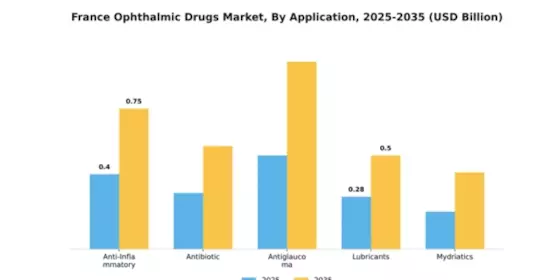
Antiglaucoma (Dominant) vs. Anti-Inflammatory (Emerging)
Antiglaucoma therapies are positioned as the dominant force within the France ophthalmic drugs market, primarily due to their necessity in managing a chronic and widespread condition like glaucoma, which affects many individuals. These drugs are designed to reduce intraocular pressure, a critical factor in preventing vision loss. Conversely, the anti-inflammatory segment is emerging, driven by a growing awareness of the importance of managing inflammation post-surgery and in conditions like dry eye disease. As more patients seek relief from discomfort and complications, anti-inflammatory treatments are becoming increasingly prioritized by healthcare providers and patients alike.
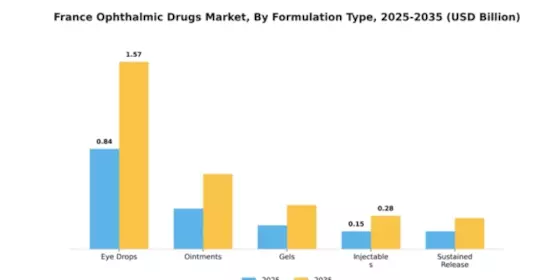
The France ophthalmic drugs market is predominantly composed of various formulation types, with Eye Drops leading the segment due to their convenience and widespread patient acceptance. Eye Drops account for a significant portion of the market share, driven by increasing patient reliance on over-the-counter and prescription medications for managing eye conditions. Ointments and Gels also hold notable shares, although their uptake is comparatively less favorable than Eye Drops. However, the emergence of Injectables has attracted attention, as they represent a growing segment due to their targeted delivery system and efficacy in specific treatments.
Eye Drops (Dominant) vs. Injectables (Emerging)
Eye Drops remain the dominant formulation type in the France ophthalmic drugs market, largely due to their ease of use and effectiveness in treating various eye ailments such as dry eye syndrome, glaucoma, and allergies. They cater to a wide demographic, including both preventative and therapeutic applications. Meanwhile, Injectables are emerging as a fast-growing segment, primarily utilized for more serious conditions like diabetic retinopathy and retinal disorders. These formulations offer enhanced bioavailability and direct action on ocular tissues, making them appealing to both healthcare providers and patients. The shift towards precision medicine and advancements in pharmaceutical technologies are expected to further bolster the Injectables segment.
In the France ophthalmic drugs market, the route of administration plays a crucial role in determining therapeutic efficacy and patient compliance. Topical administration remains the dominant segment, favored for its ease of use and patient comfort. Following closely are intravitreal and systemic routes, which cater to specialized needs such as retina diseases and systemic conditions affecting ocular health. Other routes like subconjunctival and periocular also contribute, albeit to a lesser extent, emphasizing a diverse approach to administration. As the market evolves, each route presents unique advantages that influence prescription trends. Growth trends in the ophthalmic drug sector show a significant uptick for intravitreal therapies, driven by advancements in drug delivery technologies and increasing prevalence of retinal disorders. The topical route continues to thrive due to new formulations and vehicles enhancing drug absorption and efficacy. Additionally, regulatory approvals for innovative systemic therapies are expanding treatment options, while subconjunctival and periocular routes are gaining traction due to their targeted delivery benefits in minimizing systemic effects. Overall, the future landscape of the France ophthalmic drugs market reflects an adaptive shift towards diverse routes of administration that cater to clinical needs and patient-centric care.
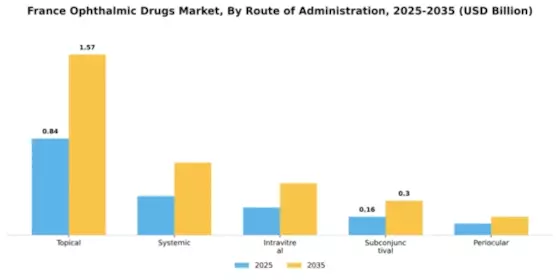
Topical (Dominant) vs. Intravitreal (Emerging)
In the France ophthalmic drugs market, the topical route dominates due to its extensive range of products designed for conditions like dry eye, glaucoma, and inflammation. This administration route is characterized by user-friendly applications, ensuring high patient adherence. Conversely, intravitreal therapy is emerging as a vital option for treating more complex conditions like age-related macular degeneration and diabetic retinopathy. This method involves injections directly into the vitreous, allowing for high local drug concentrations with minimal systemic exposure. The growth of intravitreal therapies is fueled by increasing incidences of retinal diseases and innovations in drug formulations, positioning it as an essential segment in the evolving landscape of ophthalmic treatments in France.
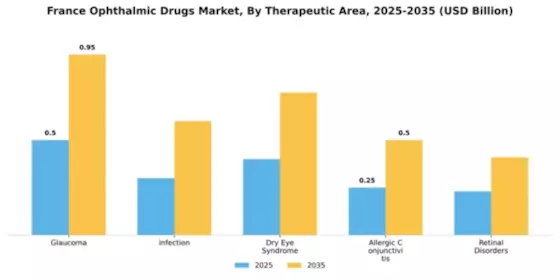
The therapeutic area segment of the France ophthalmic drugs market is notably dominated by glaucoma treatments, reflecting the highest market share among various conditions. Following closely are dry eye syndrome therapies, which have gained significant traction due to increasing awareness and diagnosis rates in the population. Other conditions include infections, allergic conjunctivitis, and retinal disorders, each contributing to the overall diversity of treatment options available in the market.
Glaucoma (Dominant) vs. Dry Eye Syndrome (Emerging)
Glaucoma treatments continue to be the most dominant force in the France ophthalmic drugs market, driven by an aging population and the chronic nature of the disease requiring long-term management. These treatments often involve a combination of medications, laser therapies, and surgical options, making them essential in maintaining patient health. In contrast, dry eye syndrome has emerged as a rapidly growing segment, fueled by lifestyle changes and increased screen time leading to higher prevalence rates. The innovation in lubricating eye drops and anti-inflammatory drugs has also significantly enhanced treatment effectiveness, appealing to a broader patient demographic.
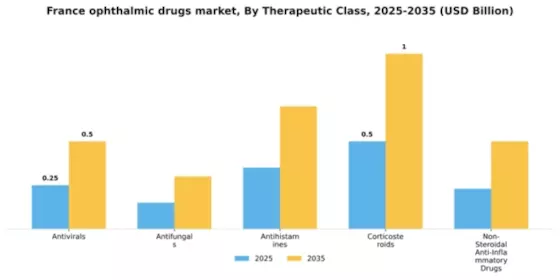
In the France ophthalmic drugs market, the patient demographic segments are primarily dominated by adults, accounting for the largest share due to their higher prevalence of eye-related diseases such as glaucoma and age-related macular degeneration. In contrast, the geriatric segment is emerging rapidly as the fastest-growing demographic, driven by the increasing aging population and a higher demand for specialized ophthalmic treatments tailored for age-related conditions. Recent trends indicate a significant surge in healthcare expenditures for elder care which significantly influences the geriatric demographic's growth in ophthalmic drug adoption. Moreover, advancements in drug formulations that cater to age-related eye disorders further invigorate this segment, providing innovative solutions to enhance vision and overall quality of life for the elderly.
Adult (Dominant) vs. Geriatric (Emerging)
The adult segment in the France ophthalmic drugs market is characterized by a broad spectrum of eye conditions, making it a dominant force in the industry. Adults present with a high incidence of diseases such as refractive errors and chronic conditions leading to vision impairment. The availability of an extensive range of treatment options, combined with effective marketing strategies, positions this segment as a leader in market share. Conversely, the geriatric segment is recognized as an emerging market, propelled by a rapid increase in the elderly population. This demographic exhibits unique healthcare needs, requiring specialized treatment approaches for age-related ocular diseases, thereby fostering significant innovation in product development and tailored therapies.
Get more detailed insights about France Ophthalmic Drugs Market Request Free Sample
The France ophthalmic drugs market is characterized by a competitive landscape that is both dynamic and multifaceted. Key growth drivers include an aging population, increasing prevalence of eye diseases, and advancements in drug formulations. Major players such as Novartis (CH), Roche (CH), and Allergan (IE) are strategically positioned to leverage these trends. Novartis (CH) focuses on innovation through its robust pipeline of ophthalmic therapies, while Roche (CH) emphasizes partnerships to enhance its research capabilities. Allergan (IE), on the other hand, is concentrating on expanding its product portfolio through acquisitions, thereby strengthening its market presence. Collectively, these strategies contribute to a competitive environment that is increasingly shaped by innovation and strategic collaborations.
In terms of business tactics, companies are localizing manufacturing and optimizing supply chains to enhance efficiency and responsiveness to market demands. The market structure appears moderately fragmented, with several key players exerting influence over various segments. This fragmentation allows for a diverse range of products and services, fostering competition that drives innovation and quality improvements across the sector.
In December 2025, Novartis (CH) announced a strategic partnership with a leading technology firm to develop AI-driven solutions for personalized ophthalmic treatments. This move is likely to enhance Novartis's capabilities in delivering tailored therapies, thereby positioning the company at the forefront of innovation in the ophthalmic space. The integration of AI into treatment protocols may significantly improve patient outcomes and streamline clinical workflows.
In November 2025, Roche (CH) launched a new line of advanced ocular therapeutics aimed at treating age-related macular degeneration (AMD). This product introduction not only expands Roche's portfolio but also underscores its commitment to addressing unmet medical needs in the ophthalmic sector. The launch is expected to strengthen Roche's competitive position by providing healthcare professionals with innovative treatment options that could improve patient quality of life.
In October 2025, Allergan (IE) completed the acquisition of a biotech firm specializing in gene therapy for inherited retinal diseases. This acquisition is strategically important as it enhances Allergan's capabilities in developing cutting-edge therapies that address rare and complex eye conditions. By integrating this technology, Allergan is likely to differentiate itself in the market, appealing to a niche segment of patients with specific needs.
As of January 2026, current competitive trends in the ophthalmic drugs market are increasingly defined by digitalization, sustainability, and the integration of AI technologies. Strategic alliances are becoming more prevalent, enabling companies to pool resources and expertise to drive innovation. The competitive differentiation is expected to evolve, shifting from traditional price-based competition to a focus on technological advancements, innovative solutions, and reliable supply chains. This transition may ultimately lead to enhanced patient care and improved market dynamics.


In recent developments, the France Ophthalmic Drugs Market has witnessed significant growth, particularly with innovations from major players like Allergan and Novartis, enhancing treatment options for eye diseases. In July 2023, Allergan launched a new formulation aimed at relieving dry eye symptoms, reflecting an ongoing commitment to addressing common ocular conditions. Additionally, Roche has expanded its pipeline with promising therapies for retinal diseases, demonstrating the competitive landscape among pharmaceutical companies.
The market has experienced a noted impact from mergers; for instance, in March 2023, Novartis completed its acquisition of a biotechnology firm specializing in gene therapy for ocular conditions, which is expected to strengthen its position in the market. The French ophthalmic drugs sector has also been influenced by a growing aging population, with the government recognizing the need for enhanced ophthalmic care and investing in public health initiatives. Additionally, Bausch Health and Santen Pharmaceutical are making strides in developing advanced glaucoma treatments, further driving advancements within the market.
As the business landscape evolves, these factors contribute to a dynamic environment for ophthalmic drug development in France.
The France ophthalmic drugs market is projected to grow at a 5.73% CAGR from 2025 to 2035, driven by technological advancements, increasing prevalence of eye disorders, and rising healthcare expenditure.
New opportunities lie in:
By 2035, the market is expected to be robust, reflecting sustained growth and innovation.
| MARKET SIZE 2024 | 1.68(USD Billion) |
| MARKET SIZE 2025 | 1.79(USD Billion) |
| MARKET SIZE 2035 | 3.11(USD Billion) |
| COMPOUND ANNUAL GROWTH RATE (CAGR) | 5.73% (2024 - 2035) |
| REPORT COVERAGE | Revenue Forecast, Competitive Landscape, Growth Factors, and Trends |
| BASE YEAR | 2024 |
| Market Forecast Period | 2025 - 2035 |
| Historical Data | 2019 - 2024 |
| Market Forecast Units | USD Billion |
| Key Companies Profiled | Novartis (CH), Roche (CH), Allergan (IE), Bausch Health (CA), Santen Pharmaceutical (JP), Alcon (CH), Merck & Co. (US), Pfizer (US), Bayer (DE) |
| Segments Covered | Application, Formulation Type, Route of Administration, Therapeutic Area |
| Key Market Opportunities | Emerging digital therapeutics and personalized medicine are reshaping the France ophthalmic drugs market. |
| Key Market Dynamics | Regulatory changes and technological advancements drive innovation in the France ophthalmic drugs market. |
| Countries Covered | France |
The France ophthalmic drugs market was valued at 1.68 USD Billion in 2024.
The market is projected to reach 3.11 USD Billion by 2035.
The expected CAGR for the market from 2025 to 2035 is 5.73%.
Key players include Novartis, Roche, Allergan, Bausch Health, Santen Pharmaceutical, Alcon, Merck & Co., Pfizer, and Bayer.
The main therapeutic areas include glaucoma, infection, dry eye syndrome, allergic conjunctivitis, and retinal disorders.
In 2024, the anti-inflammatory segment was valued at 0.4 USD Billion, while the antiglaucoma segment reached 0.5 USD Billion.
Formulation types include eye drops, ointments, gels, injectables, and sustained release, with eye drops valued at 0.84 USD Billion in 2024.
The topical route of administration was valued at 0.84 USD Billion in 2024.
The dry eye syndrome segment is expected to grow from 0.4 USD Billion in 2024 to a higher valuation by 2035.
While specific regional comparisons are not provided, the growth trajectory suggests a robust development in the France ophthalmic drugs market.


Kindly complete the form below to receive a free sample of this Report

“This is really good guys. Excellent work on a tight deadline. I will continue to use you going forward and recommend you to others. Nice job”


“Thanks. It’s been a pleasure working with you, please use me as reference with any other Intel employees.”


“Thanks for sending the report it gives us a good global view of the Betaïne market.”


“Thank you, this will be very helpful for OQS.”


“We found the report very insightful! we found your research firm very helpful. I'm sending this email to secure our future business.”


“I am very pleased with how market segments have been defined in a relevant way for my purposes (such as "Portable Freezers & refrigerators" and "last-mile"). In general the report is well structured. Thanks very much for your efforts.”


“I have been reading the first document or the study, ,the Global HVAC and FP market report 2021 till 2026. Must say, good info! I have not gone in depth at all parts, but got a good indication of the data inside!”


“We got the report in time, we really thank you for your support in this process. I also thank to all of your team as they did a great job.”


“The Automotive 48V ECU Components Procurement Intelligence Study” was a complex project, but the Market Research Future (MRFR) team handled it with quality, agility, and customer-centricity. They delivered all requested data on time and within the agreed scope. The team, including Shubhendra Anand and Rahul Gotadki, was always readily available to clarify questions and swiftly implement necessary adjustments, driving the project to a successful conclusion within a very demanding timeframe.
I would also like to specifically commend Akshay Agarwal for his responsiveness and support at every stage—from our initial inquiry on May 6th through to final delivery on June 18th. His dedication made the entire process seamless.”



