×
Request Free Sample ×

Kindly complete the form below to receive a free sample of this Report

* Please use a valid business email

Leading companies partner with us for data-driven Insights

clients tt-cursor
Hero Background

Fruit Vegetable Ingredient Market

ID: MRFR/FnB/25232-HCR
100 Pages
Harshita Gorade
October 2025

Fruit Vegetable Ingredient Market Research Report By Product Type (Fruits, Vegetables, Mix Fruits and Vegetables, Others), By Form (Powder, Liquid, Paste, Flakes, Others), By Application (Food and Beverage, Nutraceuticals, Dietary Supplements, Cosmetics and Personal Care, Others), By Source (Conventional, Organic), By Distribution Channel (Online Retailers, Offline Retailers, Direct-to-Consumer) and By Regional (North America, Europe, South America, Asia Pacific, Middle East and Africa) - Forecast to 2035.

Share:
Download PDF ×

We do not share your information with anyone. However, we may send you emails based on your report interest from time to time. You may contact us at any time to opt-out.

Fruit Vegetable Ingredient Market Infographic
Purchase Options

Fruit Vegetable Ingredient Market Summary

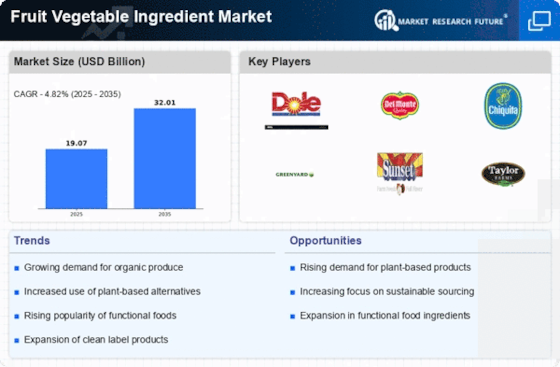
As per MRFR analysis, the Fruit Vegetable Ingredient Market Size was estimated at 19.07 USD Billion in 2024. The Fruit Vegetable Ingredient industry is projected to grow from 19.99 USD Billion in 2025 to 32.01 USD Billion by 2035, exhibiting a compound annual growth rate (CAGR) of 4.82 during the forecast period 2025 - 2035.

Key Market Trends & Highlights

The Fruit Vegetable Ingredient Market is experiencing a robust shift towards health-conscious and sustainable practices.

  • The North American market remains the largest, driven by a strong focus on health and wellness among consumers.
  • In the Asia-Pacific region, the market is the fastest-growing, fueled by increasing urbanization and dietary changes.
  • Fruits dominate the market as the largest segment, while the vegetable segment is witnessing rapid growth due to rising health awareness.
  • Key market drivers include the rising demand for natural ingredients and the expansion of plant-based diets, which are reshaping consumer preferences.

Market Size & Forecast

2024 Market Size 19.07 (USD Billion)
2035 Market Size 32.01 (USD Billion)
CAGR (2025 - 2035) 4.82%

Major Players

Dole Food Company (US), Fresh Del Monte Produce Inc. (US), Chiquita Brands International (US), Greenyard (BE), Sunset Produce (CA), Taylor Farms (US), Bonduelle (FR), Del Monte Foods (US), Mann Packing Company (US)

Fruit Vegetable Ingredient Market Trends

The Fruit Vegetable Ingredient Market is currently experiencing a dynamic evolution, driven by shifting consumer preferences towards healthier and more sustainable food options. This market encompasses a diverse range of products derived from fruits and vegetables, which are increasingly recognized for their nutritional benefits and versatility in culinary applications. As consumers become more health-conscious, there is a noticeable rise in demand for natural ingredients that can enhance flavor, texture, and nutritional value in various food products. This trend is further supported by a growing awareness of the environmental impact of food production, prompting manufacturers to seek out sustainable sourcing practices and innovative processing methods. Moreover, the Fruit Vegetable Ingredient Market is likely to witness advancements in technology that facilitate the extraction and preservation of natural flavors and nutrients. Innovations in processing techniques, such as freeze-drying and cold-pressing, may enhance the quality and shelf-life of these ingredients, making them more appealing to both manufacturers and consumers. Additionally, the increasing popularity of plant-based diets is expected to further propel the market, as fruits and vegetables serve as essential components in meat alternatives and other health-focused products. Overall, the Fruit Vegetable Ingredient Market appears poised for continued growth, driven by evolving consumer demands and technological advancements.

Health and Wellness Focus

There is a growing emphasis on health and wellness among consumers, leading to increased demand for natural and nutritious ingredients. This trend reflects a broader shift towards healthier eating habits, with fruits and vegetables being integral to this movement.

Sustainability and Ethical Sourcing

Sustainability has become a critical consideration for consumers and manufacturers alike. The Fruit Vegetable Ingredient Market is witnessing a shift towards ethically sourced ingredients, as companies strive to minimize their environmental footprint and promote responsible farming practices.

Technological Innovations in Processing

Advancements in processing technologies are transforming the way fruit and vegetable ingredients are extracted and preserved. Techniques such as cold-pressing and freeze-drying are enhancing the quality and longevity of these ingredients, making them more attractive to food manufacturers.

Fruit Vegetable Ingredient Market Drivers

Expansion of Plant-Based Diets

The shift towards plant-based diets is significantly influencing the Fruit Vegetable Ingredient Market. As more consumers adopt vegetarian and vegan lifestyles, the demand for plant-derived ingredients is on the rise. Reports indicate that the plant-based food market is expected to reach a valuation of over 74 billion dollars by 2027. This trend is not only limited to traditional food products but also extends to beverages and snacks, where fruit and vegetable ingredients play a crucial role in providing flavor and nutrition. The increasing awareness of the environmental impact of meat consumption further propels this trend, suggesting that the Fruit Vegetable Ingredient Market will continue to thrive as consumers seek sustainable and healthful options.

Rising Demand for Natural Ingredients

The increasing consumer preference for natural and organic products is a pivotal driver in the Fruit Vegetable Ingredient Market. As health-conscious consumers seek alternatives to synthetic additives, the demand for fruit and vegetable ingredients has surged. According to recent data, the market for natural food ingredients is projected to grow at a compound annual growth rate of approximately 8% over the next five years. This trend is particularly evident in sectors such as beverages and snacks, where fruit and vegetable ingredients are increasingly utilized for flavor enhancement and nutritional benefits. Consequently, manufacturers are adapting their product lines to incorporate these ingredients, thereby driving growth in the Fruit Vegetable Ingredient Market.

Increased Awareness of Nutritional Benefits

The growing awareness of the nutritional benefits associated with fruit and vegetable ingredients is a key driver in the Fruit Vegetable Ingredient Market. Consumers are increasingly informed about the health advantages of incorporating these ingredients into their diets, such as improved digestion and enhanced immune function. This trend is reflected in the rising sales of products fortified with fruit and vegetable ingredients, which are often marketed as superfoods. Market analysis suggests that the demand for functional foods, which include these ingredients, is expected to grow at a rate of 7% annually. This heightened awareness is prompting manufacturers to innovate and expand their product offerings, thereby fueling growth in the Fruit Vegetable Ingredient Market.

Innovations in Food Processing Technologies

Technological advancements in food processing are reshaping the Fruit Vegetable Ingredient Market. Innovations such as cold-press extraction and high-pressure processing are enhancing the quality and shelf-life of fruit and vegetable ingredients. These technologies allow for the preservation of nutrients and flavors, making these ingredients more appealing to manufacturers and consumers alike. The market for food processing technologies is projected to grow significantly, with investments in research and development driving new product innovations. As a result, the Fruit Vegetable Ingredient Market is likely to benefit from these advancements, as they enable the creation of high-quality, value-added products that meet evolving consumer preferences.

Regulatory Support for Healthy Eating Initiatives

Government initiatives promoting healthy eating are significantly impacting the Fruit Vegetable Ingredient Market. Various countries are implementing policies aimed at reducing sugar and fat consumption, which often leads to an increased focus on fruit and vegetable ingredients in food products. For instance, regulations encouraging the use of natural ingredients in school meals and public health campaigns advocating for increased fruit and vegetable intake are driving demand. This regulatory support not only influences consumer behavior but also encourages manufacturers to reformulate their products to align with health guidelines. As a result, the Fruit Vegetable Ingredient Market is likely to experience sustained growth as it adapts to these evolving regulatory landscapes.


Market Segment Insights

By Product Type: Fruits (Largest) vs. Vegetables (Fastest-Growing)

In the Fruit Vegetable Ingredient Market, the segment breakdown indicates that Fruits hold the largest market share, primarily driven by consumer preferences for healthier snacks and ingredients. This category benefits from a wide variety of uses across food applications, from fresh consumers to dried and powdered forms. Vegetables, on the other hand, are gaining rapidly in share, reflecting a growing trend towards plant-based diets and health-conscious cooking. Emerging as essential ingredients in numerous culinary products, vegetables are becoming increasingly favored by manufacturers and consumers alike. The growth trends in the Fruit Vegetable Ingredient Market show a burgeoning preference for innovative products that incorporate both fruits and vegetables. Factors such as rising health awareness, increased incorporation of vegetable-based ingredients in processed foods, and a surge in 'clean label' trends drive demand for mixed products. With an emphasis on sustainable and organic sourcing, both segments, especially vegetables, are set for substantial growth, appealing to a diverse consumer base eager for nutritious, flavor-rich options.

Fruits (Dominant) vs. Mixed Fruits and Vegetables (Emerging)

In the current landscape of the Fruit Vegetable Ingredient Market, Fruits are the dominant segment, characterized by their versatility and popularity among health-oriented consumers. The dominance of this category stems from its extensive use in beverages, desserts, and snack items, thus benefiting from robust demand patterns. Mixed Fruits and Vegetables represent an emerging segment, gaining traction as consumers seek more balanced nutrition profiles. This combination allows for innovative product offerings that enhance flavor, texture, and nutritional value. The growth of this segment is attributed to a growing trend in meal preparation, where convenience drives the preference for pre-mixed options. Manufacturers are responding to this demand with new product formulations that appeal to the health-conscious consumer, positioning mixed products favorably in retail and culinary applications.

By Form: Liquid (Largest) vs. Powder (Fastest-Growing)

In the Fruit Vegetable Ingredient Market, the segment distribution reveals that liquid forms dominate the overall market, showcasing their versatility and wide application across various industries such as food and beverages. Following closely are powdered forms, which have gained substantial traction in recent years due to the convenience they offer for storage and incorporation into recipes. This distribution highlights a clear preference among consumers for formats that provide ease of use and consistency in flavor and nutrition. Growth trends indicate that the powdered form is emerging as the fastest-growing segment within the market. Factors driving this growth include rising consumer demand for clean-label products and the increased focus on health and wellness. Additionally, the expansion of e-commerce and the rise in convenience-oriented food applications are further propelling the popularity of powdered vegetable ingredients, positioning them as an attractive option for manufacturers and consumers alike.

Liquid: Dominant vs. Powder: Emerging

In the Fruit Vegetable Ingredient Market, liquid forms are currently the dominant segment due to their extensive applications in the food and beverage industry, particularly in juices, sauces, and dressings. Their preferred status can be attributed to the straightforward incorporation of flavors and nutrients into various products. On the other hand, powdered forms are emerging rapidly, appealing to health-conscious consumers who favor concentrated nutrition and longer shelf lives without preservatives. Both forms have unique attributes: liquid offers immediate usability, while powder provides flexibility and ease of transport for both manufacturers and consumers, highlighting their differentiated roles in meeting diverse market needs.

By Application: Food and Beverage (Largest) vs. Nutraceuticals (Fastest-Growing)

The application segment of the Fruit Vegetable Ingredient Market showcases a diverse portfolio of uses, with food and beverage leading the charge. This category holds a significant market share, driven by the increasing consumption of processed foods and beverages that incorporate natural fruit and vegetable ingredients. Additionally, nutraceuticals have emerged as a vital segment, appealing to health-conscious consumers seeking functional benefits from their diets. This growing trend is fueled by the rising popularity of natural and organic products, making nutraceuticals a noteworthy contender in the market. As consumers continue to prioritize health and wellness, the demand for nutraceuticals is projected to accelerate, positioning it as the fastest-growing segment within the application category. This growth is largely propelled by innovations in product formulations that enhance nutritional profiles through fruit and vegetable extracts. Concurrently, the food and beverage segment is adapting to shifting consumer preferences, focusing on clean-label, minimally processed ingredients to maintain its dominant market position.

Food and Beverage: Dominant vs. Nutraceuticals: Emerging

The Food and Beverage application remains the dominant force in the Fruit Vegetable Ingredient Market, characterized by its broad usage across various products such as juices, snacks, and sauces. This segment benefits from a well-established supply chain and consumer familiarity with fruit and vegetable flavors. On the other hand, Nutraceuticals are emerging as a vital player in the market, gaining traction with consumers interested in enhancing their health through dietary supplements and functional foods. This segment's growth is driven by a shift towards preventive health measures, and products like vitamins, minerals, and functional beverages that leverage the benefits of natural ingredients. As such, both segments represent crucial aspects of market dynamics, catering to different consumer needs and preferences.

By Source: Conventional (Largest) vs. Organic (Fastest-Growing)

In the Fruit Vegetable Ingredient Market, the conventional segment holds a significant market share, primarily driven by established production processes and widespread consumer acceptance. Conventional ingredients are more readily available and often priced competitively, thus maintaining their dominance in the market. On the other hand, the organic segment is gaining traction due to increasing consumer awareness of health and sustainability, reflecting a shift in dietary preferences towards natural and organic options. This trend is gradually enhancing the market presence of organic ingredients.

Source: Conventional (Dominant) vs. Organic (Emerging)

The conventional fruit and vegetable ingredients segment remains the dominant force in the market due to its established supply chains and consistent pricing. Conventional ingredients often appeal to cost-sensitive consumers, ensuring their ongoing prominence in various applications such as food processing and culinary uses. Meanwhile, the organic segment is rapidly emerging as a pivotal player in response to growing health consciousness among consumers. Organic ingredients are perceived as healthier and environmentally friendly, attracting a more affluent consumer base that seeks quality and sustainability. This duality in the source segment showcases a market evolving to balance accessibility and quality.

By Distribution Channel: Online Retailers (Largest) vs. Direct-to-Consumer (Fastest-Growing)

The Fruit Vegetable Ingredient Market reveals a diverse landscape in distribution channels, with Online Retailers commanding the largest market share. This segment capitalizes on the growing trend of consumer convenience and preference for online shopping, driven further by technological advancements and the rise of e-commerce platforms. In contrast, Offline Retailers remain a substantial player, serving traditional consumers who prefer in-person shopping experiences. However, the Direct-to-Consumer channel is quickly gaining traction, emphasizing the need for brands to establish direct relationships with customers, thus enhancing brand loyalty and customer insights. In terms of growth trends, the Direct-to-Consumer segment is the fastest-growing distribution channel within the Fruit Vegetable Ingredient Market, spurred by shifting consumer preferences towards personalized shopping experiences and fresh product offerings. The pandemic accelerated this shift, as more consumers sought immediate access to fresh fruits and vegetables, driving companies to innovate in direct selling strategies. Overall, the evolution of these channels is indicative of a broader shift towards convenience, efficiency, and personalization in food purchasing behavior.

Online Retailers (Dominant) vs. Direct-to-Consumer (Emerging)

Online Retailers in the Fruit Vegetable Ingredient Market have solidified their status as dominant players, offering wide accessibility and a vast array of products. Through strategic partnerships with logistic firms and the integration of advanced data analytics, these retailers are effectively meeting consumer demands for quality and convenience. Their success is attributed to an enhanced user experience and innovative marketing strategies, which include targeted ads and loyalty programs. On the other hand, the Direct-to-Consumer segment is emerging rapidly, driven by an increasing desire for fresher produce and the personalized shopping experience it offers. Brands that adopt this model can gain deeper insights into customer preferences, thus improving product offerings and fostering a loyal consumer base. As this segment grows, we can expect increased competition, pushing both channels to innovate and refine their strategies further.

Get more detailed insights about Fruit Vegetable Ingredient Market

Regional Insights

North America : Market Leader in Innovation

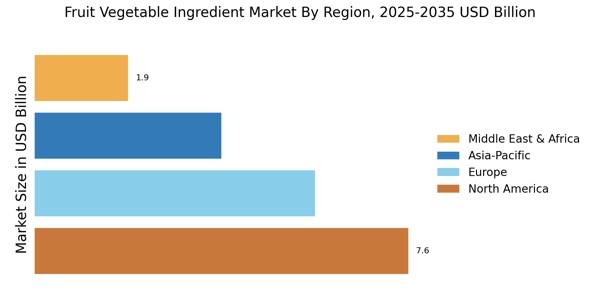
North America is the largest market for fruit and vegetable ingredients, holding approximately 40% of the global market share. The region's growth is driven by increasing health consciousness among consumers, a rising demand for organic products, and innovative food processing technologies. Regulatory support for food safety and quality standards further catalyzes market expansion, ensuring compliance and consumer trust. The United States is the leading country in this region, with major players like Dole Food Company and Fresh Del Monte Produce Inc. dominating the landscape. The competitive environment is characterized by a mix of large corporations and regional suppliers, all striving to meet the growing demand for fresh and processed fruit and vegetable ingredients. This dynamic market is also supported by strong distribution networks and retail partnerships.

Europe : Sustainable Growth Focus

Europe is the second-largest market for fruit and vegetable ingredients, accounting for approximately 30% of the global market share. The region's growth is fueled by increasing consumer demand for sustainable and organic products, alongside stringent regulations promoting food safety and environmental sustainability. The European Union's Green Deal and Farm to Fork strategy are pivotal in shaping market dynamics, encouraging sustainable practices across the supply chain. Leading countries in Europe include Germany, France, and the Netherlands, where companies like Bonduelle and Greenyard are key players. The competitive landscape is marked by a strong emphasis on innovation and sustainability, with many firms investing in research and development to create healthier and more environmentally friendly products. This focus on sustainability is expected to drive future growth in the region.

Asia-Pacific : Emerging Market Potential

Asia-Pacific is an emerging powerhouse in the fruit and vegetable ingredient market, holding approximately 20% of the global market share. The region's growth is driven by urbanization, increasing disposable incomes, and a shift towards healthier eating habits. Additionally, government initiatives promoting agricultural innovation and food security are significant catalysts for market expansion, enhancing the availability of fresh produce. Key countries in this region include China, India, and Japan, where local and international players are increasingly investing in production and distribution. The competitive landscape is evolving, with companies like Chiquita Brands International and Taylor Farms expanding their presence. The growing trend of convenience foods and ready-to-eat meals is also shaping the market, leading to increased demand for processed fruit and vegetable ingredients.

Middle East and Africa : Untapped Market Opportunities

The Middle East and Africa represent a resource-rich frontier for the fruit and vegetable ingredient market, holding approximately 10% of the global market share. The region's growth is driven by increasing population, urbanization, and a rising demand for healthy food options. Government initiatives aimed at enhancing agricultural productivity and food security are also pivotal in fostering market development, creating opportunities for local and international players. Leading countries include South Africa, Egypt, and the UAE, where the market is characterized by a mix of local producers and multinational companies. The competitive landscape is gradually evolving, with key players like Del Monte Foods and Mann Packing Company establishing a foothold. The region's unique climatic conditions also offer opportunities for diverse agricultural production, further enhancing market potential.

Fruit Vegetable Ingredient Market Regional Image

Key Players and Competitive Insights

The Fruit Vegetable Ingredient Market is currently characterized by a dynamic competitive landscape, driven by increasing consumer demand for healthy and sustainable food options. Key players are actively engaging in strategies that emphasize innovation, regional expansion, and partnerships to enhance their market presence. Companies such as Dole Food Company (US), Fresh Del Monte Produce Inc. (US), and Bonduelle (FR) are at the forefront, leveraging their extensive distribution networks and product diversification to capture market share. Their operational focus on sustainability and health-conscious products appears to resonate well with evolving consumer preferences, thereby shaping a competitive environment that prioritizes quality and innovation over mere price competition.

In terms of business tactics, companies are increasingly localizing manufacturing and optimizing supply chains to enhance efficiency and responsiveness to market demands. The competitive structure of the Fruit Vegetable Ingredient Market is moderately fragmented, with several key players exerting influence while also allowing for niche players to thrive. This fragmentation suggests a landscape where collaboration and strategic partnerships are essential for growth, as companies seek to leverage each other's strengths to navigate the complexities of global supply chains and consumer expectations.

In September 2025, Dole Food Company (US) announced a partnership with a leading technology firm to develop an AI-driven supply chain management system. This strategic move is likely to enhance Dole's operational efficiency and responsiveness to market fluctuations, positioning the company to better meet consumer demands for fresh and sustainable products. The integration of AI technology into their supply chain could potentially streamline operations, reduce waste, and improve overall product quality, thereby reinforcing Dole's competitive edge in the market.

Similarly, in August 2025, Fresh Del Monte Produce Inc. (US) launched a new line of organic fruit snacks aimed at health-conscious consumers. This product introduction not only reflects the company's commitment to innovation but also aligns with the growing trend towards healthier snacking options. By expanding its product portfolio to include organic offerings, Fresh Del Monte is likely to attract a broader customer base, thereby enhancing its market position amidst increasing competition.

In July 2025, Bonduelle (FR) expanded its operations into the Asian market by acquiring a local vegetable processing company. This strategic acquisition is indicative of Bonduelle's intent to tap into the rapidly growing demand for processed vegetable products in Asia. By establishing a foothold in this region, Bonduelle may enhance its global reach and diversify its product offerings, which could be crucial for sustaining growth in an increasingly competitive landscape.

As of October 2025, the Fruit Vegetable Ingredient Market is witnessing trends that emphasize digitalization, sustainability, and technological integration. Companies are increasingly forming strategic alliances to enhance their capabilities and market reach, reflecting a shift towards collaborative growth strategies. The competitive differentiation in this market is likely to evolve, moving away from traditional price-based competition towards a focus on innovation, technological advancements, and supply chain reliability. This shift suggests that companies that prioritize these aspects will be better positioned to thrive in the future.

Key Companies in the Fruit Vegetable Ingredient Market market include

Industry Developments

  • Q2 2024: Kerry opens new taste facility in South Africa to meet demand for healthier food and beverages Kerry Group, a major supplier of fruit and vegetable ingredients, opened a new state-of-the-art taste facility in KwaZulu-Natal, South Africa, to expand its capacity for natural and clean-label ingredients in the region.
  • Q2 2024: Givaudan Acquires DDW, The Color House, Expanding Natural Color Solutions Givaudan, a global leader in flavors and ingredients, completed the acquisition of DDW, The Color House, strengthening its portfolio in natural fruit and vegetable-based color ingredients for food and beverage applications.
  • Q1 2024: Symrise AG completes acquisition of Schaffelaarbos, expanding egg and vegetable ingredient capabilities Symrise AG announced the completion of its acquisition of Schaffelaarbos, a Dutch company specializing in sustainable egg and vegetable ingredients, to enhance its offerings in the natural ingredients sector.
  • Q2 2024: IFF Launches New Range of Plant-Based Fruit and Vegetable Ingredients for Clean Label Applications International Flavors & Fragrances Inc. (IFF) introduced a new line of plant-based fruit and vegetable ingredients designed for clean label and natural food product formulations.
  • Q1 2024: Tree Top Inc. announces $35 million expansion of fruit ingredient processing facility in Washington Tree Top Inc. revealed plans to invest $35 million in expanding its fruit ingredient processing facility in Selah, Washington, to increase production capacity for fruit purees and concentrates.
  • Q2 2024: Welch Foods Inc. launches new line of vegetable-forward juice blends Welch Foods Inc. introduced a new product line of juice blends featuring a higher proportion of vegetable ingredients, targeting health-conscious consumers seeking natural beverage options.
  • Q1 2024: Paradise Fruits Solutions opens new freeze-dried fruit ingredient facility in Germany Paradise Fruits Solutions inaugurated a new freeze-drying facility in Lower Saxony, Germany, to meet growing demand for natural fruit ingredients in snacks and bakery products.
  • Q2 2024: Van Drunen Farms announces partnership with food tech startup for upcycled vegetable ingredient development Van Drunen Farms entered a partnership with a food technology startup to develop upcycled vegetable ingredients, aiming to reduce food waste and expand sustainable ingredient offerings.
  • Q1 2024: Kiril Mischeff Ltd. secures major supply contract with UK food manufacturer for fruit and vegetable purees Kiril Mischeff Ltd. announced it has secured a significant supply contract to provide fruit and vegetable purees to a leading UK-based food manufacturer.
  • Q2 2024: Taura Natural Ingredients launches new range of fruit and vegetable pieces for bakery and snack applications Taura Natural Ingredients introduced a new product range of fruit and vegetable pieces designed for use in bakery and snack products, focusing on natural and minimally processed ingredients.
  • Q1 2024: Milne Fruit Products Inc. announces expansion of organic fruit ingredient line Milne Fruit Products Inc. expanded its portfolio of organic fruit ingredients, adding new varieties to meet increasing demand from food and beverage manufacturers.
  • Q2 2024: Mane SA opens new innovation center for fruit and vegetable ingredient research in France Mane SA inaugurated a new innovation center in France dedicated to research and development of fruit and vegetable ingredients for the food and beverage industry.

Future Outlook

Fruit Vegetable Ingredient Market Future Outlook

The Fruit Vegetable Ingredient Market is projected to grow at 4.82% CAGR from 2024 to 2035, driven by health trends, innovation, and sustainability initiatives.

New opportunities lie in:

  • Expansion into plant-based product lines
  • Development of ready-to-eat fruit and vegetable snacks
  • Investment in sustainable sourcing and supply chain technologies

By 2035, the market is expected to be robust, reflecting evolving consumer preferences and innovative product offerings.

Market Segmentation

Fruit Vegetable Ingredient Market Form Outlook

  • Powder
  • Liquid
  • Paste
  • Flakes
  • Others

Fruit Vegetable Ingredient Market Source Outlook

  • Conventional
  • Organic

Fruit Vegetable Ingredient Market Application Outlook

  • Food and Beverage
  • Nutraceuticals
  • Dietary Supplements
  • Cosmetics and Personal Care
  • Others

Fruit Vegetable Ingredient Market Product Type Outlook

  • Fruits
  • Vegetables
  • Mix Fruits and Vegetables
  • Others

Fruit Vegetable Ingredient Market Distribution Channel Outlook

  • Online Retailers
  • Offline Retailers
  • Direct-to-Consumer

Report Scope

MARKET SIZE 202419.07(USD Billion)
MARKET SIZE 202519.99(USD Billion)
MARKET SIZE 203532.01(USD Billion)
COMPOUND ANNUAL GROWTH RATE (CAGR)4.82% (2024 - 2035)
REPORT COVERAGERevenue Forecast, Competitive Landscape, Growth Factors, and Trends
BASE YEAR2024
Market Forecast Period2025 - 2035
Historical Data2019 - 2024
Market Forecast UnitsUSD Billion
Key Companies ProfiledMarket analysis in progress
Segments CoveredMarket segmentation analysis in progress
Key Market OpportunitiesGrowing consumer demand for plant-based products drives innovation in the Fruit Vegetable Ingredient Market.
Key Market DynamicsRising consumer demand for natural ingredients drives innovation and competition in the Fruit Vegetable Ingredient Market.
Countries CoveredNorth America, Europe, APAC, South America, MEA

Leave a Comment

FAQs

What is the current valuation of the Fruit Vegetable Ingredient Market as of 2024?

The overall market valuation was 19.07 USD Billion in 2024.

What is the projected market size for the Fruit Vegetable Ingredient Market by 2035?

The projected valuation for the Fruit Vegetable Ingredient Market is 32.01 USD Billion by 2035.

What is the expected CAGR for the Fruit Vegetable Ingredient Market during the forecast period 2025 - 2035?

The expected CAGR for the Fruit Vegetable Ingredient Market during the forecast period 2025 - 2035 is 4.82%.

Which product type segment holds the largest market share in 2024?

In 2024, the Fruits segment held the largest market share at 7.5 USD Billion.

How do the valuations of organic and conventional sources compare in the Fruit Vegetable Ingredient Market?

In 2024, the Conventional segment was valued at 12.0 USD Billion, while the Organic segment was valued at 7.07 USD Billion.

What are the leading applications for fruit and vegetable ingredients in 2024?

The Food and Beverage application segment was valued at 7.5 USD Billion in 2024, indicating its leading position.

Which distribution channel is expected to grow the most in the Fruit Vegetable Ingredient Market?

The Direct-to-Consumer distribution channel is projected to grow significantly, with a valuation of 5.26 USD Billion in 2024.

What is the market valuation for the Powder form of fruit and vegetable ingredients in 2024?

The Powder form segment was valued at 5.0 USD Billion in 2024.

Who are the key players in the Fruit Vegetable Ingredient Market?

Key players include Dole Food Company, Fresh Del Monte Produce Inc., and Chiquita Brands International, among others.

What is the valuation of the Mix Fruits and Vegetables segment in 2024?

The Mix Fruits and Vegetables segment was valued at 4.0 USD Billion in 2024.

Download Free Sample

Kindly complete the form below to receive a free sample of this Report

Compare Licence

×
Features License Type
Single User Multiuser License Enterprise User
Price $4,950 $5,950 $7,250
Maximum User Access Limit 1 User Upto 10 Users Unrestricted Access Throughout the Organization
Free Customization
Direct Access to Analyst
Deliverable Format
Platform Access
Discount on Next Purchase 10% 15% 15%
Printable Versions