Growing E-commerce Sector
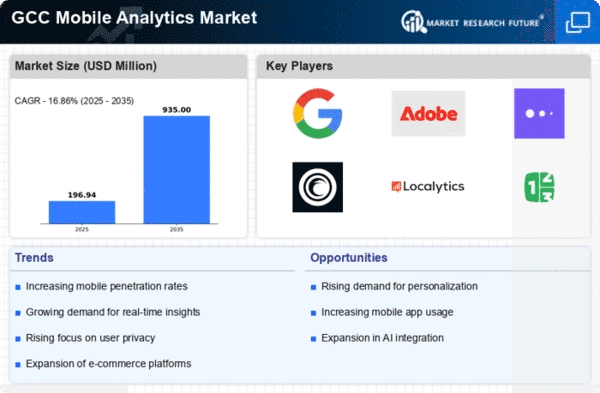
The expansion of the e-commerce sector in the GCC is significantly impacting the mobile analytics market. With online shopping becoming a preferred choice for consumers, businesses are increasingly utilizing mobile analytics to track user interactions and purchasing behaviors. In 2025, e-commerce sales in the GCC are projected to exceed $30 billion, highlighting the importance of mobile platforms in driving sales. Companies are leveraging mobile analytics to gain insights into customer preferences, optimize marketing strategies, and enhance user experiences. This trend suggests that the mobile analytics market will continue to thrive as businesses seek to capitalize on the growing e-commerce landscape. By understanding consumer behavior through mobile analytics, companies can improve their offerings and increase conversion rates, ultimately leading to higher revenues.
Rising Smartphone Penetration
The mobile analytics market is experiencing growth driven by the increasing penetration of smartphones in the GCC region. As of 2025, smartphone adoption rates in GCC countries have reached approximately 90%, leading to a surge in mobile app usage. This trend indicates that businesses are increasingly leveraging mobile analytics to understand user behavior and preferences. The ability to gather and analyze data from a vast user base allows companies to tailor their offerings, enhancing customer satisfaction. Furthermore, the mobile analytics market benefits from the growing demand for mobile applications across various sectors, including retail, finance, and healthcare. This rising smartphone penetration is likely to continue fueling the need for advanced analytics solutions, enabling businesses to make data-driven decisions and optimize their mobile strategies.
Increased Focus on Personalization
Personalization has emerged as a critical driver for the mobile analytics market in the GCC. As consumers increasingly expect tailored experiences, businesses are turning to mobile analytics to gather insights that inform personalized marketing strategies. In 2025, it is estimated that 70% of consumers in the region prefer personalized content, indicating a strong demand for customized interactions. The mobile analytics market plays a vital role in enabling businesses to analyze user data and deliver relevant content, promotions, and recommendations. This focus on personalization not only enhances customer engagement but also fosters brand loyalty. As companies continue to invest in mobile analytics solutions, the ability to provide personalized experiences is likely to become a key differentiator in the competitive landscape.
Emergence of Advanced Analytics Tools
The mobile analytics market is witnessing a transformation due to the emergence of advanced analytics tools. These tools, which incorporate machine learning and artificial intelligence, enable businesses to derive deeper insights from mobile data. In 2025, the adoption of such tools is expected to increase by 40% in the GCC, reflecting a growing recognition of their value. The mobile analytics market is benefiting from this trend as companies seek to enhance their analytical capabilities. Advanced analytics tools allow for real-time data processing, predictive analytics, and improved decision-making. This shift towards sophisticated analytics solutions is likely to drive innovation and efficiency within the mobile analytics market, empowering businesses to stay ahead of the competition.
Regulatory Compliance and Data Governance
The mobile analytics market is increasingly influenced by regulatory compliance and data governance requirements in the GCC. As data privacy concerns grow, businesses are compelled to adopt analytics solutions that adhere to local regulations. In 2025, it is anticipated that 60% of companies in the region will prioritize compliance in their mobile analytics strategies. This focus on regulatory adherence not only mitigates risks but also enhances consumer trust. The mobile analytics market is responding to this demand by offering solutions that ensure data security and compliance with regulations. As businesses navigate the complexities of data governance, the need for reliable mobile analytics tools that support compliance efforts is likely to become more pronounced, shaping the future landscape of the market.






















Leave a Comment