Download Free Sample
Kindly complete the form below to receive a free sample of this Report
GCC Type 1 Diabetes Treatment Market Research Report By Treatment Type (Insulin Therapy, Continuous Glucose Monitoring, Insulin Pump Therapy, Immunotherapy), By Route of Administration (Subcutaneous, Intravenous, Inhalation), By Distribution Channel (Hospital Pharmacy, Retail Pharmacy, Online Pharmacy), and By Age Group (Children, Adolescents, Adults) - Growth & Industry Forecast 2025 To 2035
As per Market Research Future analysis, the GCC type 1-diabetes-treatment market Size was estimated at $218.79 Million in 2024. The GCC type 1-diabetes-treatment market is projected to grow from 228.7 $ Million in 2025 to 356.0 $ Million by 2035, exhibiting a compound annual growth rate (CAGR) of 4.5% during the forecast period 2025 - 2035
The GCC type 1-diabetes-treatment market is experiencing a transformative shift driven by technological advancements and personalized medicine.
| 2024 Market Size | 218.79 (USD Million) |
| 2035 Market Size | 356.0 (USD Million) |
| CAGR (2025 - 2035) | 4.53% |
Novo Nordisk (DK), Sanofi (FR), Boehringer Ingelheim (DE), Roche (CH), AbbVie (US), Eli Lilly (US), Merck (DE), Johnson & Johnson (US), Dexcom (US)
Our Impact
Enabled $4.3B Revenue Impact for Fortune 500 and Leading Multinationals
Partnering with 2000+ Global Organizations Each Year
30K+ Citations by Top-Tier Firms in the Industry
the type 1 diabetes treatment market is currently experiencing notable developments, particularly within the GCC region. The increasing prevalence of type 1 diabetes among the population has prompted a surge in demand for effective treatment options. This demand is further fueled by rising awareness regarding diabetes management and the importance of early diagnosis. Healthcare providers are increasingly focusing on personalized treatment plans, which may enhance patient outcomes and improve quality of life. Furthermore, advancements in technology, such as continuous glucose monitoring systems and insulin delivery devices, are likely to play a pivotal role in shaping the future of diabetes care in the region. In addition, the regulatory landscape appears to be evolving, with governments in the GCC region implementing policies aimed at improving healthcare access and affordability. This shift may encourage pharmaceutical companies to invest in research and development, potentially leading to innovative therapies and solutions for type 1 diabetes. As the market continues to grow, collaboration between stakeholders, including healthcare professionals, patients, and industry players, seems essential for addressing the challenges associated with diabetes management. Overall, the type 1-diabetes-treatment market is poised for significant transformation, driven by technological advancements and a commitment to enhancing patient care.
the type 1 diabetes treatment market is witnessing rapid technological innovations, particularly in insulin delivery systems and glucose monitoring devices. These advancements are enhancing the precision of diabetes management, allowing patients to maintain better control over their blood glucose levels. Continuous glucose monitors and smart insulin pens are becoming increasingly popular, potentially leading to improved patient adherence and outcomes.
There is a growing emphasis on personalized medicine within the type 1-diabetes-treatment market. Healthcare providers are tailoring treatment plans to individual patient needs, which may result in more effective management strategies. This trend reflects a broader shift towards patient-centered care, where treatment is customized based on genetic, environmental, and lifestyle factors.
Regulatory bodies in the GCC region are actively promoting initiatives to enhance diabetes care. This support may include funding for research, subsidies for treatment options, and public health campaigns aimed at raising awareness. Such measures are likely to facilitate access to necessary treatments, thereby improving overall health outcomes for individuals living with type 1 diabetes.
Government initiatives aimed at improving diabetes care are significantly influencing the type 1-diabetes-treatment market. In the GCC, various health ministries are implementing programs to enhance awareness, prevention, and management of diabetes. Increased funding for diabetes research and treatment facilities is expected to bolster the market. For example, initiatives that promote early diagnosis and access to advanced treatment options are likely to lead to better health outcomes. The type 1-diabetes-treatment market stands to benefit from these efforts, as they encourage the development of new therapies and support systems for patients. Furthermore, public health campaigns aimed at educating the population about diabetes management are anticipated to drive market growth.
The increasing incidence of type 1 diabetes in the GCC region is a primary driver for the type 1-diabetes-treatment market. Recent studies indicate that the prevalence of type 1 diabetes among children and adolescents is on the rise, with estimates suggesting a growth rate of approximately 3-5% annually. This trend necessitates enhanced treatment options and management strategies, thereby propelling market growth. As healthcare systems adapt to this rising demand, investments in innovative therapies and technologies are likely to increase. the type 1-diabetes-treatment market is expected to expand significantly as healthcare providers seek to address the needs of a growing patient population. This will lead to improved health outcomes and quality of life for individuals living with this condition..
Innovations in insulin delivery systems are transforming the type 1-diabetes-treatment market. The introduction of smart insulin pens, continuous glucose monitors (CGMs), and insulin pumps has revolutionized diabetes management. These technologies enhance patient adherence and enable more precise control of blood glucose levels. For instance, the market for insulin delivery devices in the GCC is projected to grow at a CAGR of around 6-8% over the next few years. Such advancements not only improve the quality of life for patients but also reduce the long-term complications associated with poorly managed diabetes. As these technologies become more accessible, the type 1-diabetes-treatment market is likely to witness a surge in demand for integrated solutions that combine monitoring and delivery.
The demand for continuous glucose monitoring (CGM) systems is rapidly increasing within the type 1-diabetes-treatment market. Patients and healthcare providers are recognizing the benefits of real-time glucose data, which allows for more informed decision-making regarding insulin administration and lifestyle choices. The CGM market in the GCC is expected to grow significantly, with projections indicating a CAGR of approximately 10-12% over the next few years. This growth is driven by the increasing awareness of diabetes management and the desire for improved patient outcomes. As CGM technology becomes more sophisticated and user-friendly, its adoption is likely to expand, further propelling the type 1-diabetes-treatment market.
There is a notable increase in awareness and education regarding diabetes management in the GCC, which is positively impacting the type 1-diabetes-treatment market. Health organizations and non-profits are actively promoting educational programs that inform patients and families about the importance of effective diabetes management. This heightened awareness is leading to earlier diagnosis and a greater willingness to seek treatment. As a result, the market is experiencing a shift towards more proactive management strategies. The emphasis on education is likely to foster a more informed patient population, which could lead to increased demand for various treatment options within the type 1-diabetes-treatment market.
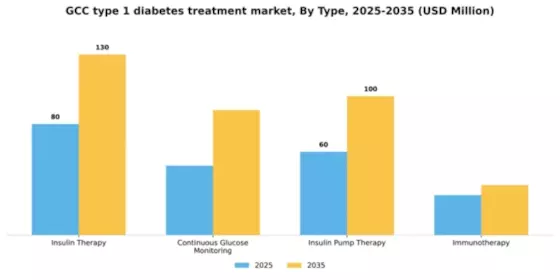
In the GCC type 1-diabetes-treatment market, Insulin Therapy stands out as the largest segment, capturing the majority of the market share due to its longstanding efficacy and acceptance. Continuous Glucose Monitoring follows closely, gaining traction as patients increasingly prefer innovative solutions that enhance their management of diabetes, thereby reflecting a significant share amidst traditional treatment methods.
The growth trends within this segment indicate a shift towards more technologically advanced options. Continuous Glucose Monitoring is witnessing rapid adoption, driven by increasing consumer awareness and the need for better glucose management. Moreover, Insulin Pump Therapy and Immunotherapy are also witnessing notable demand, as patients seek personalized treatment options that adapt to their evolving health needs.
Insulin Therapy (Dominant) vs. Continuous Glucose Monitoring (Emerging)
Insulin Therapy remains the dominant segment within the GCC type 1-diabetes-treatment market, largely due to its established role in diabetes management and patient familiarity. This conventional approach is well integrated into the healthcare system, ensuring consistent availability and support. On the other hand, Continuous Glucose Monitoring is emerging as a revolutionary option, characterized by its ability to provide real-time data and enable proactive adjustments to treatment plans. Patients are increasingly drawn to this technology for its convenience and precision, indicating a transitional phase in diabetes care that blends traditional methods with innovative solutions.
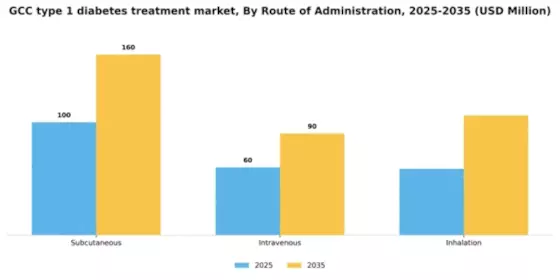
In the GCC type 1-diabetes-treatment market, the route of administration segment is largely dominated by subcutaneous methods, which account for the highest market share due to their convenience and ease of use for patients. This preference is complemented by the availability of various insulin delivery systems that enhance user compliance and lead to better management of diabetes. Conversely, intravenous administration is rapidly gaining traction, being associated with quicker therapeutic effects and greater control, making it increasingly popular in hospital settings.
Growth trends indicate a significant shift towards advanced insulin delivery systems, with both subcutaneous and intravenous routes witnessing innovations that improve patient outcomes. Factors driving this growth include an increased prevalence of type 1 diabetes in the region, awareness of diabetes management, and technological advancements in delivery devices. Additionally, the rise of personalized medicine and the focus on improving patient experiences are expected to further boost the adoption of these administration routes.
Subcutaneous (Dominant) vs. Intravenous (Emerging)
Subcutaneous administration remains the dominant method in the GCC type 1-diabetes-treatment market, favored for its user-friendly nature and effective diabetes management outcomes. Insulin pens and pumps offering this route allow for flexible dosing and improved adherence among patients. On the other hand, intravenous administration is emerging as a strong alternative, especially in clinical environments, where it can provide immediate insulin action and optimal blood glucose control. This method is gaining ground in critical care settings and for patients requiring rigorous monitoring. Both methods are supported by ongoing advancements, ensuring that the patient needs are at the forefront of diabetes treatment strategies.
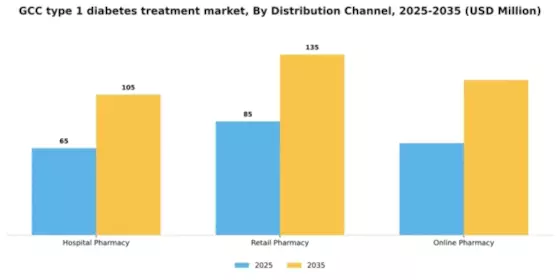
In the GCC type 1-diabetes-treatment market, the distribution of market share among various channels indicates that Hospital Pharmacy holds the largest share. This segment is favored due to the direct access it provides to medical professionals and patients requiring immediate care. Conversely, Online Pharmacy, while currently smaller in market share, is experiencing rapid growth as consumers increasingly prefer the convenience of online purchases, especially in the wake of the pandemic.
The growth trends in this segment are primarily driven by the increased adoption of digital health solutions and the rising demand for accessible and efficient healthcare services. Retail Pharmacy, while still significant, is growing at a slower rate compared to Online Pharmacy. This shift towards digital solutions reflects changing consumer behaviors and the importance of adapting to new shopping preferences, ensuring that the industry remains competitive and responsive to patient needs.
Hospital Pharmacy (Dominant) vs. Online Pharmacy (Emerging)
Hospital Pharmacy has established itself as the dominant channel within the GCC type 1-diabetes-treatment market, leveraging strong relationships with healthcare professionals and providing patients with immediate access to medications. Its ability to offer personalized services and essential diabetes management education enhances its appeal among patients. On the other hand, Online Pharmacy is emerging as a vital distribution channel due to its ability to provide a broader range of products and the convenience of home delivery. This segment attracts tech-savvy consumers who prioritize convenience and discretion. As regulatory frameworks adapt to these trends, the Online Pharmacy segment is anticipated to grow more rapidly, indicating a shift in the market dynamics favoring digital solutions.
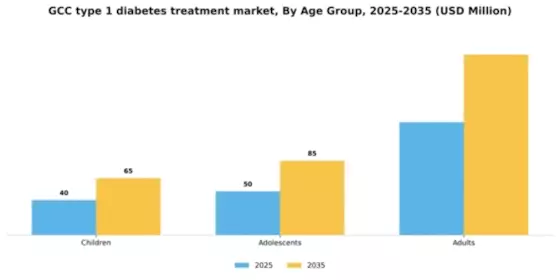
In the GCC type 1-diabetes-treatment market, the age group segment is primarily dominated by adults, capturing the largest share of the market due to their ongoing management needs and increased prevalence of type 1 diabetes. This demographic's established healthcare practices and treatment adherence significantly contribute to its market stability and expansion. In contrast, children represent the fastest-growing segment, propelled by rising awareness, supportive parental involvement, and innovative treatment solutions tailored for younger patients, marking a notable shift in market dynamics.
The growth trends in the age group segment demonstrate a clear focus on tailored treatment plans, with advancements in technology and continuous glucose monitoring systems aiding both adults and children. The increased incidence of type 1 diabetes among younger populations is driving significant investments into pediatric care, fostering a growth environment that prioritizes minimizing complications. Furthermore, initiatives promoting healthier lifestyles in schools and communities are expected to enhance outreach and management among adolescents, propelling their importance in the overall market development.
Adults: Dominant vs. Children: Emerging
The adult demographic in the GCC type 1-diabetes-treatment market remains dominant due to their established healthcare infrastructures and continuous engagement with diabetes management programs. Adults often require comprehensive treatment plans, including insulin therapy, continuous glucose monitoring, and lifestyle modifications, tailored to their unique health challenges. Meanwhile, children are emerging rapidly as a critical segment, driven by increasing early diagnosis and the introduction of advanced treatment technologies like insulin pumps and smart devices aimed at younger patients. This trend is further supported by a growing number of pediatric specialists and educational initiatives that focus on empowering families with knowledge about diabetes management, making children an essential focus for future market growth.
Get more detailed insights about GCC Type 1 Diabetes Treatment Market Request Free Sample
The type 1-diabetes-treatment market is characterized by a dynamic competitive landscape, driven by increasing prevalence rates and a growing demand for innovative therapies. Key players such as Novo Nordisk (DK), Sanofi (FR), and Eli Lilly (US) are strategically positioned to leverage their extensive research and development capabilities. Novo Nordisk (DK) focuses on insulin delivery systems and has made significant investments in digital health solutions, while Sanofi (FR) emphasizes partnerships to enhance its product portfolio. Eli Lilly (US) is actively pursuing advancements in diabetes management technologies, indicating a collective shift towards integrated care solutions that enhance patient outcomes. The market structure appears moderately fragmented, with several players vying for market share through localized manufacturing and optimized supply chains. Companies are increasingly localizing their production to reduce costs and improve responsiveness to regional demands. This strategy not only enhances supply chain efficiency but also allows for tailored product offerings that meet specific market needs, thereby influencing the competitive dynamics among key players. In October 2025, Novo Nordisk (DK) announced a collaboration with a leading tech firm to develop a new digital platform aimed at improving patient engagement and adherence to treatment regimens. This strategic move underscores the company's commitment to integrating technology into diabetes care, potentially setting a new standard for patient management in the type 1 diabetes space. The collaboration is expected to enhance data collection and analysis, providing valuable insights into patient behavior and treatment efficacy. In September 2025, Sanofi (FR) launched a new insulin formulation designed to offer faster absorption rates, which could significantly improve glycemic control for patients. This innovation reflects Sanofi's focus on enhancing therapeutic options and demonstrates its responsiveness to evolving patient needs. The introduction of this product may strengthen Sanofi's competitive position by addressing a critical gap in the market for rapid-acting insulin therapies. In August 2025, Eli Lilly (US) expanded its partnership with a digital health company to incorporate artificial intelligence (AI) into its diabetes management solutions. This initiative aims to provide personalized treatment recommendations based on real-time data analytics. By leveraging AI, Eli Lilly (US) is likely to enhance its product offerings, positioning itself as a leader in the integration of technology and diabetes care, which could reshape patient experiences and outcomes. As of November 2025, current trends in the type 1-diabetes-treatment market indicate a strong emphasis on digitalization, sustainability, and AI integration. Strategic alliances among companies are increasingly shaping the competitive landscape, fostering innovation and collaboration. The shift from price-based competition to a focus on technological advancements and supply chain reliability is evident. Companies that prioritize innovation and patient-centric solutions are likely to differentiate themselves in this evolving market, suggesting a future where competitive advantage hinges on the ability to adapt to changing healthcare paradigms.


Recent developments in the GCC Type 1 Diabetes Treatment Market showcase significant advancements and strategic movements by major pharmaceutical companies. Novo Nordisk continues to lead innovation with a focus on insulin therapy and has expanded distribution channels in the UAE as of March 2023.
Eli Lilly has also ramped up its efforts, revealing plans to launch new diabetic treatment devices in Qatar by June 2023, aimed at enhancing patient compliance. In terms of growth, the market valuation is experiencing an upward trajectory bolstered by increased diabetes prevalence and government initiatives promoting healthcare access across the GCC.
Notably, in August 2022, Johnson and Johnson announced a collaboration with Merck to pool resources in Research and Development for advanced diabetes care solutions, further solidifying their commitment to this therapeutic area.
The competitive landscape is expected to evolve rapidly as Bristol-Myers Squibb and Roche are also rumored to engage in strategic partnerships to bolster their product ranges, contributing to market dynamics in the coming years. These developments reflect a robust and responsive market environment within the GCC, addressing the unique challenges posed by Type 1 Diabetes.
The Type 1 Diabetes Treatment Market is projected to grow at a 4.53% CAGR from 2025 to 2035, driven by technological advancements, increasing prevalence, and enhanced patient management solutions.
New opportunities lie in:
By 2035, the market is expected to achieve substantial growth, reflecting evolving treatment paradigms.
| MARKET SIZE 2024 | 218.79(USD Million) |
| MARKET SIZE 2025 | 228.7(USD Million) |
| MARKET SIZE 2035 | 356.0(USD Million) |
| COMPOUND ANNUAL GROWTH RATE (CAGR) | 4.53% (2025 - 2035) |
| REPORT COVERAGE | Revenue Forecast, Competitive Landscape, Growth Factors, and Trends |
| BASE YEAR | 2024 |
| Market Forecast Period | 2025 - 2035 |
| Historical Data | 2019 - 2024 |
| Market Forecast Units | USD Million |
| Key Companies Profiled | Novo Nordisk (DK), Sanofi (FR), Boehringer Ingelheim (DE), Roche (CH), AbbVie (US), Eli Lilly (US), Merck (DE), Johnson & Johnson (US), Dexcom (US) |
| Segments Covered | Type, Route of Administration, Distribution Channel, Age Group |
| Key Market Opportunities | Advancements in continuous glucose monitoring technology enhance patient management in the type 1-diabetes-treatment market. |
| Key Market Dynamics | Rising demand for innovative insulin delivery systems drives competition in the type 1-diabetes-treatment market. |
| Countries Covered | GCC |
The overall market valuation for the GCC type 1-diabetes-treatment market was $218.79 Million in 2024.
The projected market valuation for the GCC type 1-diabetes-treatment market is $356.0 Million by 2035.
The expected CAGR for the GCC type 1-diabetes-treatment market during the forecast period 2025 - 2035 is 4.53%.
Key players in the GCC type 1-diabetes-treatment market include Novo Nordisk, Sanofi, Boehringer Ingelheim, Roche, AbbVie, Eli Lilly, Merck, Johnson & Johnson, and Dexcom.
The revenue range for Insulin Therapy in the GCC type 1-diabetes-treatment market was $80.0 Million to $130.0 Million.
The revenue for Continuous Glucose Monitoring ranged from $50.0 Million to $90.0 Million, indicating a moderate performance compared to other segments.
The revenue range for Insulin Pump Therapy in the GCC type 1-diabetes-treatment market was $60.0 Million to $100.0 Million.
In the age group category, Adults had the highest revenue range, from $128.79 Million to $206.0 Million.
The Retail Pharmacy distribution channel generated the most revenue, with a range of $85.0 Million to $135.0 Million.
The revenue projections for the Intravenous route of administration could reach between $60.0 Million and $90.0 Million by 2035.



Kindly complete the form below to receive a free sample of this Report

“This is really good guys. Excellent work on a tight deadline. I will continue to use you going forward and recommend you to others. Nice job”


“Thanks. It’s been a pleasure working with you, please use me as reference with any other Intel employees.”


“Thanks for sending the report it gives us a good global view of the Betaïne market.”


“Thank you, this will be very helpful for OQS.”


“We found the report very insightful! we found your research firm very helpful. I'm sending this email to secure our future business.”


“I am very pleased with how market segments have been defined in a relevant way for my purposes (such as "Portable Freezers & refrigerators" and "last-mile"). In general the report is well structured. Thanks very much for your efforts.”


“I have been reading the first document or the study, ,the Global HVAC and FP market report 2021 till 2026. Must say, good info! I have not gone in depth at all parts, but got a good indication of the data inside!”


“We got the report in time, we really thank you for your support in this process. I also thank to all of your team as they did a great job.”


“The Automotive 48V ECU Components Procurement Intelligence Study” was a complex project, but the Market Research Future (MRFR) team handled it with quality, agility, and customer-centricity. They delivered all requested data on time and within the agreed scope. The team, including Shubhendra Anand and Rahul Gotadki, was always readily available to clarify questions and swiftly implement necessary adjustments, driving the project to a successful conclusion within a very demanding timeframe.
I would also like to specifically commend Akshay Agarwal for his responsiveness and support at every stage—from our initial inquiry on May 6th through to final delivery on June 18th. His dedication made the entire process seamless.”



