Type 1 Diabetes Treatment Market Research Report: Size, Share, Trend Analysis By Treatment Type (Insulin Therapy, Continuous Glucose Monitoring, Insulin Pump Therapy, Immunotherapy), By Route of Administration (Subcutaneous, Intravenous, Inhalation), By Distribution Channel (Hospital Pharmacy, Retail Pharmacy, Online Pharmacy), By Age Group (Children, Adolescents, Adults) and By Regional (North America, Europe, South America, Asia Pacific, Middle East and Africa) - Growth Outlook & Industry Forecast 2025 To 2035
As per Market Research Future analysis, the Type 1 Diabetes Treatment Market was estimated at 8.752 USD Billion in 2024. The Type 1 Diabetes Treatment industry is projected to grow from 9.151 USD Billion in 2025 to 14.29 USD Billion by 2035, exhibiting a compound annual growth rate (CAGR) of 4.5% during the forecast period 2025 - 2035
Key Market Trends & Highlights
The Type 1 Diabetes Treatment Market is experiencing dynamic growth driven by technological innovations and increasing patient-centric approaches.
Technological advancements in treatment are reshaping the Type 1 Diabetes landscape, particularly in North America.
Personalized medicine approaches are gaining traction, enhancing treatment efficacy and patient satisfaction in the Asia-Pacific region.
The insulin therapy segment remains the largest, while continuous glucose monitoring is emerging as the fastest-growing segment.
Rising prevalence of Type 1 Diabetes and advancements in insulin delivery systems are key drivers propelling market expansion.
Market Size & Forecast
2024 Market Size
8.752 (USD Billion)
2035 Market Size
14.29 (USD Billion)
CAGR (2025 - 2035)
4.56%
Major Players
Novo Nordisk(DK), Sanofi (FR), Boehringer Ingelheim (DE), Roche (CH), AbbVie (US), Eli Lilly and Company (US), Medtronic (US), Dexcom (US), Insulet Corporation (US)
Our Impact
Enabled $4.3B Revenue Impact for Fortune 500 and Leading Multinationals
Partnering with 2000+ Global Organizations Each Year
30K+ Citations by Top-Tier Firms in the Industry
Type 1 Diabetes Treatment Market Trends
The Type 1 Diabetes Treatment Market is currently experiencing a dynamic evolution, driven by advancements in technology and a growing understanding of the disease. Innovative therapies, including insulin pumps and continuous glucose monitoring systems, are becoming increasingly prevalent. These developments not only enhance patient outcomes but also improve the quality of life for individuals managing this chronic condition. Furthermore, the integration of digital health solutions, such as mobile applications and telehealth services, appears to be reshaping the landscape of diabetes management, offering patients more personalized care options. In addition to technological advancements, there is a notable increase in research and development efforts aimed at discovering novel treatment modalities. This includes the exploration of immunotherapy and potential gene therapies, which may offer new avenues for disease management. The rising prevalence of Type 1 diabetes globally is prompting healthcare stakeholders to invest in innovative solutions that address the unique challenges faced by patients. As the market continues to evolve, collaboration among pharmaceutical companies, healthcare providers, and technology firms is likely to play a crucial role in shaping the future of Type 1 diabetes treatment.
Technological Advancements in Treatment
The Type 1 Diabetes Treatment Market is witnessing a surge in technological innovations, particularly in insulin delivery systems and glucose monitoring devices. These advancements facilitate more precise management of blood glucose levels, thereby enhancing patient adherence to treatment regimens.
Personalized Medicine Approaches
There is a growing trend towards personalized medicine within the Type 1 Diabetes Treatment Market. Tailoring treatment plans to individual patient profiles, including genetic and lifestyle factors, may lead to improved outcomes and greater patient satisfaction.
Increased Focus on Patient Education
An emphasis on patient education is becoming more pronounced in the Type 1 Diabetes Treatment Market. Empowering patients with knowledge about their condition and management strategies is likely to enhance self-management and overall health outcomes.
Type 1 Diabetes Treatment Market Drivers
Increased Awareness and Education
The heightened awareness surrounding Type 1 diabetes is driving growth in the Type 1 Diabetes Treatment Market. Educational campaigns aimed at both healthcare professionals and the general public are fostering a better understanding of the disease, its symptoms, and management strategies. This increased awareness is likely to lead to earlier diagnoses and more proactive treatment approaches. Furthermore, as patients become more informed about their condition, they may actively seek out advanced treatment options, thereby stimulating market demand. The emphasis on education is also encouraging healthcare providers to adopt best practices in diabetes management, which could further enhance the effectiveness of treatments available in the Type 1 Diabetes Treatment Market.
Rising Prevalence of Type 1 Diabetes
The increasing incidence of Type 1 diabetes is a primary driver for the Type 1 Diabetes Treatment Market. Recent estimates indicate that the prevalence of Type 1 diabetes is on the rise, with a notable increase in diagnoses among children and adolescents. This trend is likely to escalate demand for effective treatment options, as more individuals require management solutions. The growing awareness of Type 1 diabetes and its long-term complications further emphasizes the need for innovative therapies. As healthcare systems adapt to this rising prevalence, investments in research and development are expected to surge, potentially leading to breakthroughs in treatment methodologies. Consequently, the Type 1 Diabetes Treatment Market is poised for growth as stakeholders respond to the urgent need for comprehensive care solutions.
Growing Investment in Diabetes Research
The surge in investment for diabetes research is a crucial driver for the Type 1 Diabetes Treatment Market. Governments and private organizations are increasingly allocating funds to explore novel treatment options and improve existing therapies. This financial commitment is likely to accelerate the development of innovative solutions, including potential cures and advanced management tools. Recent reports indicate that funding for diabetes research has reached unprecedented levels, reflecting a collective recognition of the disease's impact on public health. As research initiatives expand, the Type 1 Diabetes Treatment Market may witness the introduction of groundbreaking therapies that could redefine treatment paradigms and enhance patient quality of life.
Advancements in Insulin Delivery Systems
Technological innovations in insulin delivery systems are significantly influencing the Type 1 Diabetes Treatment Market. The introduction of smart insulin pens, continuous glucose monitors, and insulin pumps has transformed diabetes management, offering patients more precise control over their blood glucose levels. These advancements not only enhance patient adherence but also improve overall health outcomes. Market data suggests that the insulin delivery segment is experiencing robust growth, driven by the increasing adoption of these technologies. As patients seek more convenient and effective ways to manage their condition, the demand for advanced delivery systems is expected to rise. This trend indicates a shift towards more integrated and user-friendly solutions within the Type 1 Diabetes Treatment Market.
Regulatory Support for Innovative Therapies
Regulatory bodies are increasingly supporting the development of innovative therapies for Type 1 diabetes, which serves as a significant driver for the Type 1 Diabetes Treatment Market. Streamlined approval processes and incentives for research and development are encouraging pharmaceutical companies to invest in new treatment modalities. This regulatory environment is conducive to the introduction of cutting-edge therapies, including biologics and gene therapies, which hold promise for improved patient outcomes. As these innovations gain traction, the Type 1 Diabetes Treatment Market is likely to expand, offering patients access to a broader range of effective treatment options. The proactive stance of regulatory agencies may also enhance collaboration between stakeholders, further propelling market growth.
Market Segment Insights
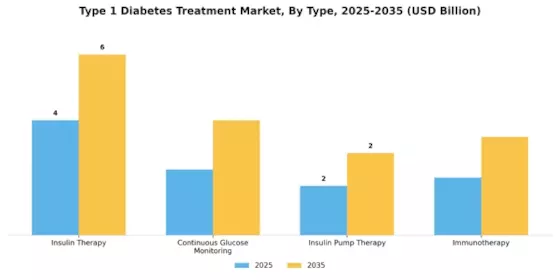
By Type: Insulin Therapy (Largest) vs. Continuous Glucose Monitoring (Fastest-Growing)
In the Type 1 Diabetes Treatment Market, Insulin Therapy remains the largest segment, dominating market share due to its established efficacy and extensive usage among patients. As the most traditional treatment method, it offers a range of options including long-acting and rapid-acting insulins, appealing to both new and existing users. Continuous Glucose Monitoring is rapidly gaining traction and is recognized as the fastest-growing segment, driven by technological advancements and increasing awareness of the benefits of real-time glucose tracking. The growth trends in this market segment are primarily influenced by the rising prevalence of Type 1 diabetes and a growing preference for more accurate and less invasive monitoring methods. Insulin Pump Therapy also shows a stable growth rate, although not as pronounced as Continuous Glucose Monitoring. Immunotherapy is emerging as a potential game-changer, attracting attention for its ability to modulate the immune response, although it is still in relative infancy compared to the other established treatments.
Monitoring: Insulin Pump Therapy (Dominant) vs. Immunotherapy (Emerging)
Insulin Pump Therapy is recognized as a dominant method in the management of Type 1 Diabetes, offering patients enhanced control over their insulin delivery with automated features and customizable settings. This therapy allows for continuous subcutaneous insulin infusion, which can lead to improved glycemic control and reduced risk of hypoglycemia. Patients appreciate the convenience and flexibility it provides in their daily lives, making it a preferred choice for many. On the other hand, cancer Immunotherapy is viewed as an emerging approach with the potential to transform diabetes management by targeting the autoimmune responses that lead to the condition. While still under research, its promise to not only help with control but potentially alter the disease course presents a compelling avenue for future developments in Type 1 Diabetes treatment. As these two therapies evolve, their respective impacts on patient outcomes will continue to unfold.
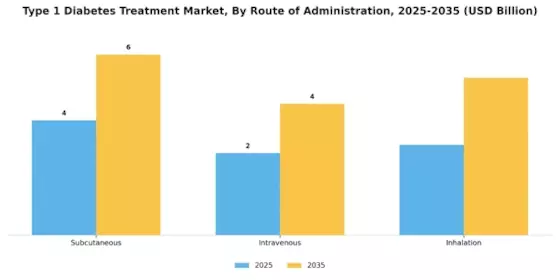
By Route of Administration: Subcutaneous (Largest) vs. Intravenous (Fastest-Growing)
In the Type 1 Diabetes Treatment Market, the route of administration plays a crucial role in therapeutic efficacy and patient compliance. Among the key routes - Subcutaneous, Intravenous, and Inhalation - Subcutaneous is recognized as the largest segment, widely favored for its ease of administration and patient acceptance. Intravenous administration is noted for its rapid effects, though it represents a smaller share compared to Subcutaneous, making it essential for specific clinical scenarios that require immediate intervention.
Subcutaneous (Dominant) vs. Intravenous (Emerging)
The Subcutaneous administration route remains the dominant method in Type 1 Diabetes treatment, providing patients with a user-friendly approach to insulin delivery device through syringes or pens. Its established position in the market is reinforced by continuous advancements in formulation that enhance efficacy and reduce injection site discomfort. On the other hand, Intravenous administration is emerging as a critical alternative, particularly in emergency settings. Its ability to deliver insulin quickly helps to manage acute complications effectively. This route is expected to gain momentum as healthcare professionals increasingly recognize its potential for rapid treatment in hospital environments.
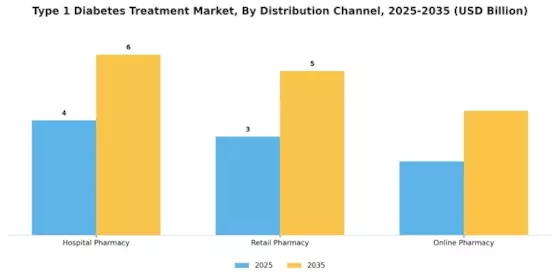
By Distribution Channel: Retail Pharmacy (Largest) vs. Online Pharmacy (Fastest-Growing)
In the Type 1 Diabetes Treatment Market, the distribution channel segment showcases a diverse landscape. Retail pharmacies hold the largest share due to their established presence and accessibility, providing essential diabetes treatments directly to consumers. Hospital pharmacies also play a significant role, often catering to patients during hospital stays, while online pharmacies are increasingly gaining popularity as they offer convenience and sometimes lower prices compared to local stores.
Retail Pharmacy (Dominant) vs. Online Pharmacy (Emerging)
Retail pharmacies dominate the Type 1 Diabetes treatment distribution channel, primarily because of their extensive network and the trust they have built with consumers over the years. They offer personalized services, including counseling and medication management, that enhance patient adherence to treatment regimens. In contrast, online pharmacies are an emerging force, leveraging technology to provide easy access to medications and information. They appeal particularly to tech-savvy patients seeking convenience and home delivery solutions. Although still growing, online pharmacies are rapidly transforming how patients access diabetes treatments, capitalizing on shifting consumer behavior towards e-commerce.
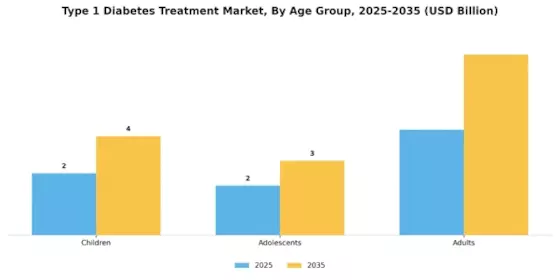
By Age Group: Children (Largest) vs. Adults (Fastest-Growing)
In the Type 1 Diabetes Treatment Market, the age group segment shows a distinct distribution of market share. Children represent the largest portion of the market, as they are often diagnosed at a young age and require ongoing treatment throughout their development. This demographic largely drives the demand for innovative treatment solutions due to their unique medical needs and the increasing prevalence of Type 1 diabetes among younger populations. Meanwhile, adults also make up a significant share, characterized by different lifestyle factors and treatment adherence levels. As trends evolve, the adult segment is emerging as the fastest-growing area within the market. Factors contributing to this growth include increasing awareness of diabetes management, advancements in technology catering to diabetes treatment, and a growing population of adults diagnosed with Type 1 diabetes. Furthermore, as more adults seek to maintain their quality of life and longevity through effective treatment options, this segment's expansion reflects changing health dynamics and preferences in diabetes care.
Children (Dominant) vs. Adults (Emerging)
In the Type 1 Diabetes Treatment Market, the children segment is considered dominant due to the high incidence of Type 1 diabetes during childhood years. This demographic often requires specialized treatment, including insulin therapy and continuous glucose monitoring, tailored to grow alongside them. The children's segment heavily influences market innovation, as manufacturers and healthcare providers focus on age-appropriate treatment solutions. On the other hand, the adult segment represents an emerging opportunity within the market. With an increasing number of adults diagnosed with Type 1 diabetes, there is a growing demand for personalized treatment plans and technology advancements. The contrast in treatment approaches highlights the unique characteristics of both segments, with children necessitating comprehensive management strategies and adults emphasizing flexibility and effectiveness.
Get more detailed insights about Type 1 Diabetes Treatment MarketRequest Free Sample
Regional Insights
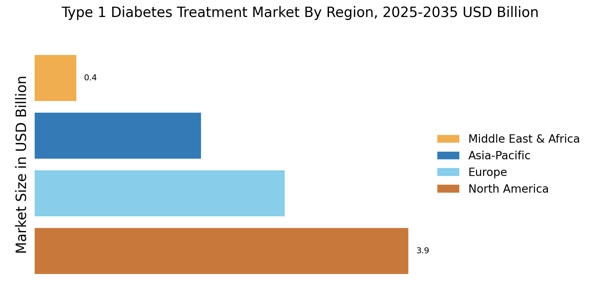
The Type 1 Diabetes Treatment Market is poised to see significant growth across various regions, reflecting diverse market dynamics. In 2023, North America leads with a market valuation of 4.1 USD Billion, which highlights its majority holding within the overall market landscape, driven by advanced healthcare infrastructure and a high prevalence of diabetes. Europe follows with a valuation of 2.5 USD Billion, showcasing its notable presence fueled by increasing awareness and healthcare investments in diabetes management.
The APAC region, valued at 1.5 USD Billion, displays substantial growth potential due to rising healthcare accessibility and improving economic conditions, positioning it as an emerging market.South America and MEA represent smaller market shares, valued at 0.8 USD Billion and 0.47 USD Billion in 2023, respectively; however, both regions are gradually witnessing advancements in diabetes care and treatment options. The overall market showcases trends such as technological advancements in treatment and rising patient awareness alongside challenges like healthcare disparities and the affordability of treatments.
The shifting landscape presents ample opportunities for growth, making it crucial for stakeholders to understand the Type 1 Diabetes Treatment Market segmentation to leverage regional strengths effectively.
Source Primary Research, Secondary Research, Market Research Future Database and Analyst Review
Key Players and Competitive Insights
The Type 1 Diabetes Treatment Market has witnessed significant advancements and evolving dynamics, driven by a combination of technological innovations, increasing awareness, and a growing patient population. This market is characterized by a competitive landscape where pharmaceutical companies, medical device manufacturers, and biotechnology firms are vying for market share through various strategic efforts, including research and development, partnerships, and the introduction of novel therapies and products.
As Type 1 diabetes persists as a prevalent chronic condition with substantial healthcare implications, understanding the competitive insights becomes essential for stakeholders aiming to navigate this complex yet promising market environment.Sanofi has established a formidable presence in the Type 1 Diabetes Treatment Market, bolstered by its extensive portfolio of insulin products and diabetes management solutions. The company's robust research and development capabilities have propelled it to the forefront, allowing for the continuous innovation of advanced therapeutics and technologies designed to improve patient outcomes.
Sanofi's commitment to understanding the unique needs of individuals living with Type 1 diabetes is reflected in its tailored approach to treatment, which often combines long-acting and rapid-acting insulin formulations, making their offerings comprehensive and effective.
Additionally, Sanofi's strategic collaborations and partnerships with various healthcare stakeholders enhance its market positioning and broaden its access to global regions, thus solidifying its influence in this competitive landscape.Eli Lilly stands out in the Type 1 Diabetes Treatment Market with its strong emphasis on research and innovation, which has resulted in the development of a range of effective diabetes medications, including insulin therapies and adjunctive treatments that cater specifically to the needs of Type 1 diabetes patients.
The company has a remarkable ability to adapt to the changing landscape of diabetes care, leveraging advancements in technology to offer integrated solutions that focus on better management and monitoring of the condition. Eli Lilly's commitment to patient-centric approaches is reinforced through extensive patient engagement initiatives and education programs aimed at empowering individuals with Type 1 diabetes. Alongside its robust product pipeline and strategic investments in digital health solutions, Eli Lilly continues to strengthen its competitive positioning within this dynamic market, responding proactively to emerging trends and challenges.
Key Companies in the Type 1 Diabetes Treatment Market include
Industry Developments
In recent developments within the Type 1 Diabetes Treatment Market, companies like Sanofi, Eli Lilly, and Novo Nordisk have made significant advancements in therapies and insulin delivery systems. For instance, Eli Lilly has been focusing on innovative insulin formulations, while Novo Nordisk has continued to enhance its product portfolio, including continuous glucose monitoring systems.
Abbott and Dexcom are also gaining attention with their glucose monitoring technologies, which enhance the management of diabetes.Current affairs indicate that investment in diabetes tech is surging, with Johnson Johnson and Medtronic leading in developing automated insulin delivery systems, appealing to the growing demand for advanced management solutions. The market is experiencing a boost from mergers and acquisitions, notably with companies like Boehringer Ingelheim exploring partnerships to broaden their diabetes product lines.
As these companies expand their research and development efforts, the market valuation is anticipated to rise, reflecting the increasing emphasis on innovative treatments and technologies that enhance patient outcomes and quality of life. This investment climate and focus on comprehensive treatment options are reshaping the competitive landscape of the Type 1 Diabetes Treatment Market.
Future Outlook
Type 1 Diabetes Treatment Market Future Outlook
The Type 1 Diabetes Treatment Market is projected to grow at a 4.56% CAGR from 2025 to 2035, driven by technological advancements, increasing prevalence, and enhanced patient management solutions.
New opportunities lie in:
Development of personalized insulin delivery systems
Expansion of telehealthservices for diabetes management
Investment in AI-driven predictive analytics for treatment optimization
By 2035, the market is expected to be robust, driven by innovation and increased accessibility.
Market Segmentation
Type 1 Diabetes Treatment Market Type Outlook
Insulin Therapy
Continuous Glucose Monitoring
Insulin Pump Therapy
Immunotherapy
Type 1 Diabetes Treatment Market Age Group Outlook
Children
Adolescents
Adults
Type 1 Diabetes Treatment Market Distribution Channel Outlook
Hospital Pharmacy
Retail Pharmacy
Online Pharmacy
Type 1 Diabetes Treatment Market Route of Administration Outlook
Subcutaneous
Intravenous
Inhalation
Report Scope
MARKET SIZE 2024
8.752(USD Billion)
MARKET SIZE 2025
9.151(USD Billion)
MARKET SIZE 2035
14.29(USD Billion)
COMPOUND ANNUAL GROWTH RATE (CAGR)
4.56% (2025 - 2035)
REPORT COVERAGE
Revenue Forecast, Competitive Landscape, Growth Factors, and Trends
BASE YEAR
2024
Market Forecast Period
2025 - 2035
Historical Data
2019 - 2024
Market Forecast Units
USD Billion
Key Companies Profiled
Novo Nordisk (DK), Sanofi (FR), Boehringer Ingelheim (DE), Roche (CH), AbbVie (US), Eli Lilly and Company (US), Medtronic (US), Dexcom (US), Insulet Corporation (US)
Segments Covered
Treatment Type, Route of Administration, Distribution Channel, Age Group, Regional
Key Market Opportunities
Advancements in continuous glucose monitoring systems enhance patient management in the Type 1 Diabetes Treatment Market.
Key Market Dynamics
Technological advancements in insulin delivery systems are reshaping treatment options for Type 1 Diabetes patients.
What is the projected market valuation for the Type 1 Diabetes Treatment Market in 2035?
The projected market valuation for the Type 1 Diabetes Treatment Market in 2035 is 14.29 USD Billion.
What was the market valuation for the Type 1 Diabetes Treatment Market in 2024?
The market valuation for the Type 1 Diabetes Treatment Market in 2024 was 8.752 USD Billion.
What is the expected CAGR for the Type 1 Diabetes Treatment Market from 2025 to 2035?
The expected CAGR for the Type 1 Diabetes Treatment Market during the forecast period 2025 - 2035 is 4.56%.
Which companies are considered key players in the Type 1 Diabetes Treatment Market?
Key players in the Type 1 Diabetes Treatment Market include Novo Nordisk, Sanofi, Boehringer Ingelheim, Roche, AbbVie, Eli Lilly and Company, Medtronic, Dexcom, and Insulet Corporation.
What segment of the Type 1 Diabetes Treatment Market had the highest valuation in 2024?
In 2024, the Insulin Therapy segment had the highest valuation at 3.5 USD Billion.
How is the Type 1 Diabetes Treatment Market segmented by age group?
The Type 1 Diabetes Treatment Market is segmented by age group, with valuations of 2.5 USD Billion for children, 2.0 USD Billion for adolescents, and 4.252 USD Billion for adults in 2024.
What are the projected valuations for Continuous Glucose Monitoring from 2024 to 2035?
The projected valuation for Continuous Glucose Monitoring is expected to rise from 2.0 USD Billion in 2024 to 3.5 USD Billion by 2035.
What distribution channel is anticipated to grow the most in the Type 1 Diabetes Treatment Market?
The Online Pharmacy distribution channel is anticipated to grow from 2.25 USD Billion in 2024 to 3.79 USD Billion by 2035.
What is the expected growth in the Insulin Pump Therapy segment from 2024 to 2035?
The Insulin Pump Therapy segment is expected to grow from 1.5 USD Billion in 2024 to 2.5 USD Billion by 2035.
How does the route of administration impact the Type 1 Diabetes Treatment Market?
The route of administration impacts the Type 1 Diabetes Treatment Market, with the Subcutaneous route valued at 3.5 USD Billion in 2024 and projected to reach 5.5 USD Billion by 2035.
Author
Author
Nidhi Mandole
Senior Research Analyst
She is an extremely curious individual currently working in Healthcare and Medical Devices Domain. Nidhi is comfortably versed in data centric research backed by healthcare educational background. She leverages extensive data mining and analytics tools such as Primary and Secondary Research, Statistical Analysis, Machine Learning, Data Modelling. Her key role also involves Technical Sales Support, Client Interaction and Project management within the Healthcare team. Lastly, she showcases extensive affinity towards learning new skills and remain fascinated in implementing them.
read more
Co-Author
Rahul Gotadki
Research Manager
He holds an experience of about 9+ years in Market Research and Business Consulting, working under the spectrum of Life Sciences and Healthcare domains. Rahul conceptualizes and implements a scalable business strategy and provides strategic leadership to the clients. His expertise lies in market estimation, competitive intelligence, pipeline analysis, customer assessment, etc.
The secondary research process involved comprehensive analysis of regulatory databases, peer-reviewed medical journals, clinical publications, and authoritative health organizations. Key sources included the US Food & Drug Administration (FDA), European Medicines Agency (EMA), International Diabetes Federation (IDF), American Diabetes Association (ADA), European Association for the Study of Diabetes (EASD), Juvenile Diabetes Research Foundation (JDRF), National Institutes of Health (NIH), National Center for Biotechnology Information (NCBI/PubMed), Centers for Disease Control and Prevention (CDC) Diabetes Division, World Health Organization (WHO) Global Health Observatory, IQVIA National Disease and Therapeutic Index, EU Eurostat Health Database, OECD Health Statistics, and national health ministry reports from key markets including the UK NHS Diabetes Programme, Health Canada, Australian Institute of Health and Welfare, and Japan Ministry of Health, Labour and Welfare. These sources were used to collect epidemiological data on Type 1 diabetes prevalence, regulatory approval data for insulin therapies and glucose monitoring devices, clinical safety and efficacy studies, demographic trends, reimbursement policies, and market landscape analysis for insulin therapy, continuous glucose monitoring systems, insulin pump therapy, and emerging immunotherapy technologies.
Primary Research
In order to gather both qualitative and quantitative insights, supply-side and demand-side stakeholders were interviewed during the primary research process. CEOs, VPs of Product Development, heads of regulatory affairs, and commercial directors from manufacturers of insulin, glucose monitoring devices, insulin pumps, and biotechnology businesses creating immunotherapy therapies were examples of supply-side sources. Board-certified endocrinologists, pediatric diabetologists, diabetes nurse educators, clinical pharmacists, procurement leads from hospital systems, specialist diabetes clinics, and pharmacy benefit managers were among the demand-side sources. Primary research verified product pipeline timelines for new insulin formulations and closed-loop systems, validated market segmentation across treatment types (insulin therapy, continuous glucose monitoring, insulin pump therapy, immunotherapy), and obtained information on clinical adoption patterns, pricing strategies, reimbursement dynamics, and patient adherence factors.
Primary Respondent Breakdown:
By Designation: C-level Primaries (32%), Director Level (31%), Others (37%)
By Region: North America (38%), Europe (25%), Asia-Pacific (28%), Rest of World (9%)
Market Size Estimation
Global market valuation was derived through revenue mapping and patient volume analysis. The methodology included:
Identification of 50+ key manufacturers across North America, Europe, Asia-Pacific, and Latin America specializing in insulin products, glucose monitoring devices, insulin pumps, and immunotherapy candidates
Analysis of reported and modeled annual revenues specific to Type 1 diabetes treatment portfolios
Coverage of manufacturers representing 72-78% of global market share in 2024
Extrapolation using bottom-up (patient population × treatment penetration × ASP by country/region) and top-down (manufacturer revenue validation) approaches to derive segment-specific valuations across treatment types, routes of administration (subcutaneous, intravenous, inhalation), distribution channels (hospital pharmacy, retail pharmacy, online pharmacy), and age groups (children, adolescents, adults)
“This is really good guys. Excellent work on a tight deadline. I will continue to use you going forward and recommend you to others. Nice job”
Noah MalgeriCo-Founder
“Thanks. It’s been a pleasure working with you, please use me as reference with any other Intel employees.”
Joseph AguayoSales Operations & Pricing Manager
“Thanks for sending the report it gives us a good global view of the Betaïne market.”
Peter Groot koerkampAccount and Business Manager
“Thank you, this will be very helpful for OQS.”
La Terria DoddProgram Support Specialist
“We found the report very insightful! we found your research firm very helpful. I'm sending this email to secure our future business.”
Younghwan ChoiSenior Retail Manager
“I am very pleased with how market segments have been defined in a relevant way for my purposes (such as "Portable Freezers & refrigerators" and "last-mile").
In general the report is well structured. Thanks very much for your efforts.”
Mark IrwinManagement Consultant
“I have been reading the first document or the study, ,the Global HVAC and FP market report 2021 till 2026. Must say, good info! I have not gone in depth at all parts, but got a good indication of the data inside!”
Rob KooikerGroup Product Manager HVAC & Fire Protection GMA
“We got the report in time, we really thank you for your support in this process. I also thank to all of your team as they did a great job.”
Akif MorogluStrategy & Business Development Director
“The Automotive 48V ECU Components Procurement Intelligence Study” was a complex project, but the Market Research Future (MRFR) team handled it with quality, agility, and customer-centricity. They delivered all requested data on time and within the agreed scope. The team, including Shubhendra Anand and Rahul Gotadki, was always readily available to clarify questions and swiftly implement necessary adjustments, driving the project to a successful conclusion within a very demanding timeframe.
I would also like to specifically commend Akshay Agarwal for his responsiveness and support at every stage—from our initial inquiry on May 6th through to final delivery on June 18th. His dedication made the entire process seamless.”
Guilherme Gomes MartinsProduct Management Director