Increased Healthcare Expenditure
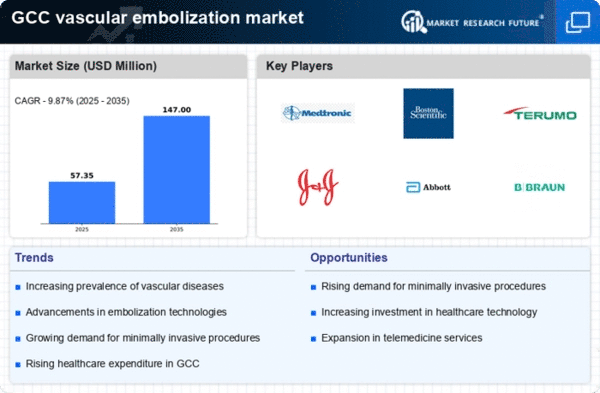
The vascular embolization market is benefiting from the rising healthcare expenditure in the GCC countries. Governments are allocating more resources to healthcare infrastructure, which includes the establishment of specialized centers for vascular treatments. Reports indicate that healthcare spending in the region is projected to reach $100 billion by 2025, with a significant portion directed towards advanced medical technologies. This financial commitment is likely to enhance the availability and accessibility of vascular embolization procedures, thereby fostering market growth. As healthcare facilities upgrade their equipment and expand their service offerings, the vascular embolization market is poised for substantial development.
Aging Population and Associated Health Issues
The demographic shift towards an aging population in the GCC is significantly impacting the vascular embolization market. As individuals age, the prevalence of vascular diseases such as aneurysms and arteriovenous malformations tends to increase. This trend is underscored by projections indicating that the elderly population in the region will grow by over 20% by 2030. Consequently, healthcare systems are adapting to meet the rising demand for vascular interventions, leading to an increase in the availability of embolization procedures. This demographic factor is expected to drive market growth as healthcare providers seek to address the complex health needs of older patients.
Rising Demand for Minimally Invasive Procedures
The vascular embolization market is experiencing a notable increase in demand for minimally invasive procedures across the GCC region. Patients and healthcare providers are increasingly favoring these techniques due to their reduced recovery times and lower risk of complications compared to traditional surgical methods. This shift is reflected in the growing number of interventional radiology procedures performed, which has surged by approximately 15% annually in recent years. As healthcare facilities invest in advanced imaging technologies and training for medical professionals, the vascular embolization market is likely to expand further, catering to the needs of a population that prioritizes effective yet less invasive treatment options.
Technological Innovations in Embolization Devices
The vascular embolization market is witnessing rapid advancements in the technology of embolization devices. Innovations such as bioresorbable materials and advanced delivery systems are enhancing the efficacy and safety of embolization procedures. These technological improvements are not only improving patient outcomes but also expanding the range of treatable conditions. The introduction of new products is expected to stimulate market growth, as healthcare providers seek to adopt the latest technologies to improve their service offerings. As a result, the vascular embolization market is likely to experience a surge in demand driven by these cutting-edge developments.
Growing Awareness and Education on Vascular Health
There is a marked increase in awareness and education regarding vascular health among the population in the GCC. Public health campaigns and initiatives aimed at educating individuals about the risks associated with vascular diseases are becoming more prevalent. This heightened awareness is leading to earlier diagnosis and treatment, which is crucial for conditions that may require embolization. As patients become more informed about their health options, the demand for vascular embolization procedures is likely to rise. This trend suggests a positive outlook for the vascular embolization market as healthcare providers respond to the increasing need for effective treatment solutions.



















Leave a Comment