Download Free Sample
Kindly complete the form below to receive a free sample of this Report
GCC Women's Healthcare Market Research Report By Indication (Postmenopausal Osteoporosis, Infertility, Reproductive Health Management, Polycystic Ovary Syndrome, Gynecologic Cancer, Others), By Diagnosis (Bone Densitometry, Diagnostic Imaging Tests, Biopsies, Ovulation Testing, Others), By Treatment (Therapeutics, Surgeries, Others) and By End User (Hospitals Clinics, Gynecology Centers, Research Institutes, Others) - Growth & Industry Forecast 2025 To 2035
As per analysis, the GCC Women Healthcare Market is projected to grow from USD 0.81 Billion in 2025 to USD 1.75 Billion by 2035, exhibiting a compound annual growth rate (CAGR) of 8.08% during the forecast period (2025 - 2035).
The GCC Women Healthcare Market is experiencing a transformative shift towards enhanced preventive care and specialized services.
| 2024 Market Size | 0.744 (USD Billion) |
| 2035 Market Size | 1.75 (USD Billion) |
| CAGR (2025 - 2035) | 8.08% |
Saudi German Hospital (SA), Cleveland Clinic Abu Dhabi (AE), Al Zahra Hospital (AE), King Faisal Specialist Hospital & Research Centre (SA), American Hospital Dubai (AE), NMC Health (AE), Aster DM Healthcare (AE), Mediclinic International (AE)
Our Impact
Enabled $4.3B Revenue Impact for Fortune 500 and Leading Multinationals
Partnering with 2000+ Global Organizations Each Year
30K+ Citations by Top-Tier Firms in the Industry
The GCC Women Healthcare Market is currently experiencing a transformative phase, characterized by a growing emphasis on women's health issues and the integration of advanced medical technologies. Governments within the Gulf Cooperation Council are increasingly prioritizing healthcare initiatives that specifically address the unique needs of women. This shift is evident in the expansion of healthcare facilities, the introduction of specialized services, and the promotion of awareness campaigns aimed at educating women about their health. Furthermore, the collaboration between public and private sectors appears to be fostering innovation and improving access to essential healthcare services for women across the region. In addition, the GCC Women Healthcare Market is witnessing a rise in preventive care and wellness programs tailored for women. This trend suggests a broader recognition of the importance of early detection and management of health conditions that disproportionately affect women. As healthcare providers adapt to these evolving demands, there is a potential for enhanced patient engagement and satisfaction. Overall, the GCC Women Healthcare Market is poised for growth, driven by a commitment to improving health outcomes for women and addressing their specific healthcare needs.
Government initiatives play a crucial role in shaping the GCC Women Healthcare Market. Various GCC countries have introduced policies aimed at improving healthcare access for women. For example, Saudi Arabia's Vision 2030 emphasizes enhancing healthcare services, including those specifically for women. This initiative aims to increase the number of healthcare facilities and improve the quality of care available to women. Additionally, the introduction of health insurance schemes that cover women's health services is likely to further stimulate market growth. Such policies not only enhance access but also encourage investments in women's healthcare, thereby positively impacting the GCC Women Healthcare Market.
Cultural shifts and changing attitudes towards women's health are emerging as significant drivers in the GCC Women Healthcare Market. As societal norms evolve, there is a growing acceptance of discussing women's health issues openly. This change is reflected in the increasing participation of women in the workforce and their demand for comprehensive healthcare services. Additionally, educational initiatives aimed at empowering women are contributing to a more proactive approach to health management. As women become more informed and assertive about their health needs, healthcare providers in the GCC are likely to adapt their services accordingly, fostering growth in the GCC Women Healthcare Market.
Technological advancements are significantly influencing the GCC Women Healthcare Market. The integration of innovative technologies such as telemedicine, mobile health applications, and electronic health records is transforming how healthcare services are delivered to women. For instance, telehealth services have become increasingly popular, allowing women to access healthcare consultations remotely. This is particularly beneficial in rural areas where healthcare facilities may be limited. The adoption of these technologies is expected to enhance patient engagement and improve health outcomes, thereby driving growth in the GCC Women Healthcare Market. Furthermore, the use of data analytics in healthcare is likely to provide insights into women's health trends, further informing service delivery.
The GCC Women Healthcare Market is witnessing a growing demand for mental health services tailored specifically for women. Increasing awareness of mental health issues, coupled with societal changes, has led to a greater recognition of the importance of mental well-being. Countries like Qatar and Kuwait are investing in mental health programs that address the unique challenges faced by women, including postpartum depression and anxiety disorders. This focus on mental health is likely to drive the expansion of specialized services within the GCC Women Healthcare Market, as healthcare providers seek to meet the evolving needs of women in the region.
The GCC Women Healthcare Market is experiencing a notable increase in awareness regarding women's health issues. This heightened awareness is driven by various initiatives aimed at educating women about health risks and preventive measures. Governments in the GCC region are actively promoting campaigns that focus on reproductive health, breast cancer awareness, and maternal health. For instance, the UAE has implemented national programs to enhance women's health literacy, which has led to a rise in health-seeking behavior among women. As a result, the demand for specialized healthcare services is expected to grow, indicating a shift towards prioritizing women's health in the GCC Women Healthcare Market.
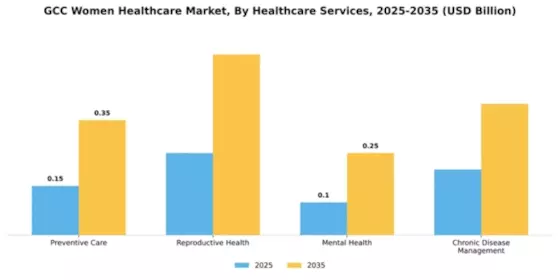
In the GCC Women Healthcare Market, preventive care holds the largest market share, driven by the growing awareness of health issues among women. This segment focuses on proactive measures that women can take to enhance their health, such as vaccinations, screenings, and wellness programs which are increasingly integrated into healthcare plans. On the other hand, reproductive health is rapidly gaining traction as one of the fastest-growing segments, largely fueled by enhanced access to women's health services and increased societal acceptance of reproductive rights. This segment includes family planning, prenatal and postnatal care, catering to the growing need for reproductive health services.
Preventive Care: Dominant vs. Reproductive Health: Emerging
Preventive care is characterized by its focus on early detection and prevention of diseases, which resonates with women in the GCC seeking to maintain their health. It includes services like routine screenings and health education that empower women to take charge of their health. In contrast, reproductive health, as an emerging segment, is witnessing exponential growth due to the rising emphasis on maternal health, family planning, and contraceptive services. The increasing availability of specialized healthcare professionals and technology-driven solutions supports this growth, making reproductive health a vital area of focus in the women healthcare landscape within the GCC.
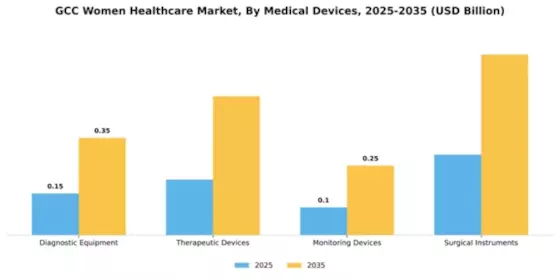
In the GCC Women Healthcare Market, diagnostic equipment holds the largest share among various medical device segments, reflecting a significant emphasis on early detection and preventive healthcare services. This segment includes imaging technologies such as ultrasound and mammography, which are critical for women’s health, and ensures that stakeholders focus on investing in accurate diagnostic devices to aid in better health outcomes.
Diagnostic Equipment (Dominant) vs. Therapeutic Devices (Emerging)
Diagnostic equipment is crucial in the GCC Women Healthcare Market, as it provides the tools necessary for early disease detection and assessment. This segment has established its dominance due to the increasing awareness and need for preventive healthcare among women. Conversely, therapeutic devices, while currently emerging, are rapidly gaining traction. They encompass innovative solutions such as targeted therapies and non-invasive treatment options, driven by the ever-evolving technological landscape and increasing healthcare accessibility. These devices aim to improve treatment efficacy specifically tailored to women's unique health issues, indicating a growing trend towards personalized healthcare solutions.
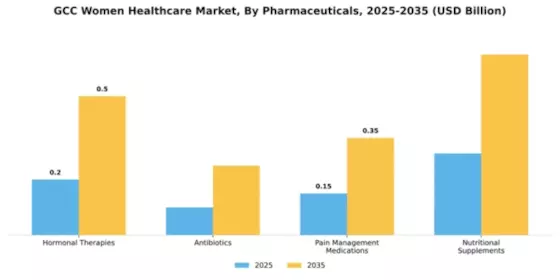
In the GCC Women Healthcare Market, Hormonal Therapies currently hold the largest share among the pharmaceutical segment, catering to a significant need for women's health management. This category includes various treatments for menopause, hormonal imbalances, and reproductive health. Antibiotics and Pain Management Medications also contribute notable proportions, though they play more supportive roles compared to Hormonal Therapies and Nutritional Supplements. Nutritional Supplements, while traditionally seen as adjuncts, are increasingly sought after and reflect shifting consumer preferences towards preventive health.
Hormonal Therapies (Dominant) vs. Nutritional Supplements (Emerging)
Hormonal Therapies represent a dominant force in the GCC Women Healthcare Market, primarily driven by increasing awareness of menopause management and reproductive health. These therapies include estrogen and progestin treatments, which are critical for many women experiencing hormonal changes. Nutritional Supplements, on the other hand, are emerging rapidly, reflecting a growing trend towards holistic health and wellness. Consumers are prioritizing preventive care and overall health, leading to a surge in demand for supplements that address nutritional gaps. This emerging segment exhibits potential for innovation and expanded product offerings, driven by rising consumer knowledge and an inclination towards natural health solutions.
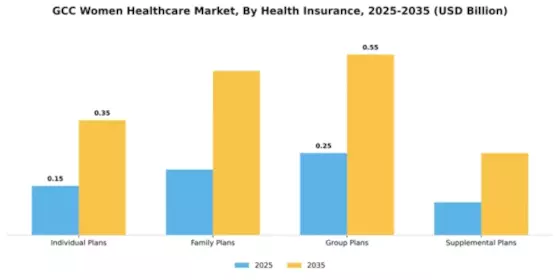
In the GCC Women Healthcare Market, the Health Insurance segment showcases a diverse distribution among its various plans. Individual plans dominate the market, catering specifically to women who prefer tailored healthcare solutions that address personal health needs. In contrast, family plans are rapidly gaining traction, reflecting a growing trend among families seeking comprehensive coverage that includes preventive care, maternity services, and pediatric healthcare tailored to women and children's health.
Health Insurance: Individual Plans (Dominant) vs. Family Plans (Emerging)
Individual health insurance plans play a crucial role in providing personalized healthcare options for women, empowering them to choose policies that align with their unique health requirements. These plans typically offer extensive coverage, including specialist consultations, mental health support, and wellness programs. On the other hand, family plans are becoming increasingly popular as they provide a holistic approach to family health needs. The appeal of family plans lies in their ability to cover multiple family members under a single policy, promoting preventive healthcare and ensuring that women have access to essential services during significant life events such as pregnancy and childbirth.
Get more detailed insights about GCC Womens Healthcare Market Request Free Sample
The Women Healthcare Market in the GCC region is characterized by a dynamic competitive landscape, driven by increasing awareness of women's health issues, rising healthcare expenditure, and a growing demand for specialized services. Key players are actively positioning themselves through various strategies, including innovation, partnerships, and regional expansion. For instance, the focus on digital transformation and telehealth services has become paramount, as companies seek to enhance patient engagement and streamline operations. This collective strategic emphasis shapes a competitive environment that is increasingly focused on quality and accessibility.
In terms of business tactics, companies are localizing their services and optimizing supply chains to better meet the needs of the regional population. The market appears moderately fragmented, with several key players exerting influence over specific segments. This fragmentation allows for niche players to thrive, while larger entities leverage their resources to establish a more significant market presence. The interplay between these dynamics fosters a competitive structure that encourages innovation and responsiveness to consumer needs.
In December 2025, Cleveland Clinic Abu Dhabi (AE) announced the launch of a new women’s health initiative aimed at providing comprehensive care tailored to the unique needs of women in the region. This initiative underscores the clinic's commitment to enhancing healthcare access and quality, particularly in obstetrics and gynecology. The strategic importance of this move lies in its potential to attract a broader patient base and reinforce the clinic's reputation as a leader in specialized healthcare services.
In November 2025, American Hospital Dubai (AE) expanded its women’s health services by introducing advanced screening technologies for breast cancer detection. This strategic enhancement not only aligns with global best practices but also positions the hospital as a frontrunner in preventive care. The introduction of such technologies is likely to improve early detection rates, thereby contributing to better health outcomes and solidifying patient trust in the hospital's capabilities.
In October 2025, Aster DM Healthcare (AE) entered into a partnership with a leading telehealth provider to enhance its digital health offerings for women. This collaboration aims to integrate telemedicine into routine care, making healthcare more accessible for women across the GCC. The strategic significance of this partnership lies in its potential to address barriers to access, particularly for those in remote areas, thereby expanding the hospital's reach and improving patient engagement.
As of January 2026, the competitive trends in the Women Healthcare Market are increasingly defined by digitalization, sustainability, and the integration of AI technologies. Strategic alliances are becoming more prevalent, as companies recognize the value of collaboration in enhancing service delivery and operational efficiency. Looking ahead, competitive differentiation is likely to evolve from traditional price-based competition to a focus on innovation, technology adoption, and supply chain reliability. This shift suggests that companies that prioritize these aspects will be better positioned to thrive in an increasingly complex market.


Recent developments in the GCC Women's Healthcare Market have shown a growing emphasis on integrated healthcare services and technological advancements. Companies like AbbVie and Hologic are actively expanding their portfolios to address women’s health issues, including reproductive health and oncology. In January 2023, NMC Health announced its collaboration with Cleveland Clinic Abu Dhabi to enhance women’s health services through advanced medical technologies and shared expertise.
Meanwhile, in March 2023, the Saudi German Hospitals Group launched a comprehensive women's health initiative focusing on preventative health and wellness across the GCC. Merger and acquisition activities are also notable, with Ramsay Santé completing the acquisition of a regional healthcare facility in February 2023, strengthening its presence in the women's wellness segment. Furthermore, Philips Healthcare has invested in the development of new imaging technologies tailored for women's health diagnostics as part of its growth strategy.
The market is experiencing significant financial growth, with estimations suggesting a valuation increase of around 15% annually due to rising demand for specialized healthcare services and advances in medical technology, particularly in countries like the UAE and Saudi Arabia. The GCC government initiatives promote health awareness and improve access to quality women's healthcare.
The GCC Women Healthcare Market is projected to grow at an 8.08% CAGR from 2025 to 2035, driven by increasing awareness, technological advancements, and enhanced healthcare access.
New opportunities lie in:
By 2035, the market is expected to be robust, reflecting substantial growth and innovation.
| MARKET SIZE 2024 | 0.744(USD Billion) |
| MARKET SIZE 2025 | 0.81(USD Billion) |
| MARKET SIZE 2035 | 1.75(USD Billion) |
| COMPOUND ANNUAL GROWTH RATE (CAGR) | 8.08% (2024 - 2035) |
| REPORT COVERAGE | Revenue Forecast, Competitive Landscape, Growth Factors, and Trends |
| BASE YEAR | 2024 |
| Market Forecast Period | 2025 - 2035 |
| Historical Data | 2019 - 2024 |
| Market Forecast Units | USD Billion |
| Key Companies Profiled | Saudi German Hospital (SA), Cleveland Clinic Abu Dhabi (AE), Al Zahra Hospital (AE), King Faisal Specialist Hospital & Research Centre (SA), American Hospital Dubai (AE), NMC Health (AE), Aster DM Healthcare (AE), Mediclinic International (AE) |
| Segments Covered | Healthcare Services, Medical Devices, Pharmaceuticals, Health Insurance |
| Key Market Opportunities | Integration of telehealth services enhances access to women's healthcare in the GCC region. |
| Key Market Dynamics | Rising demand for personalized healthcare solutions drives innovation in the GCC Women Healthcare Market. |
| Countries Covered | GCC |
As of 2024, the market valuation was 0.744 USD Billion.
The market is expected to reach a valuation of 1.75 USD Billion by 2035.
The market is projected to grow at a CAGR of 8.08% from 2025 to 2035.
The market includes segments such as Healthcare Services, Medical Devices, Pharmaceuticals, and Health Insurance.
In 2024, the Preventive Care segment was valued between 0.15 and 0.35 USD Billion.
The Reproductive Health segment had a valuation range of 0.25 to 0.55 USD Billion in 2024.
Key players include Saudi German Hospital, Cleveland Clinic Abu Dhabi, and American Hospital Dubai, among others.
The Chronic Disease Management segment was valued between 0.2 and 0.4 USD Billion in 2024.
The Therapeutic Devices segment is expected to grow, with a valuation range of 0.2 to 0.5 USD Billion in 2024.
The market includes Individual Plans, Family Plans, Group Plans, and Supplemental Plans, with varying valuations.


Kindly complete the form below to receive a free sample of this Report

“This is really good guys. Excellent work on a tight deadline. I will continue to use you going forward and recommend you to others. Nice job”


“Thanks. It’s been a pleasure working with you, please use me as reference with any other Intel employees.”


“Thanks for sending the report it gives us a good global view of the Betaïne market.”


“Thank you, this will be very helpful for OQS.”


“We found the report very insightful! we found your research firm very helpful. I'm sending this email to secure our future business.”


“I am very pleased with how market segments have been defined in a relevant way for my purposes (such as "Portable Freezers & refrigerators" and "last-mile"). In general the report is well structured. Thanks very much for your efforts.”


“I have been reading the first document or the study, ,the Global HVAC and FP market report 2021 till 2026. Must say, good info! I have not gone in depth at all parts, but got a good indication of the data inside!”


“We got the report in time, we really thank you for your support in this process. I also thank to all of your team as they did a great job.”


“The Automotive 48V ECU Components Procurement Intelligence Study” was a complex project, but the Market Research Future (MRFR) team handled it with quality, agility, and customer-centricity. They delivered all requested data on time and within the agreed scope. The team, including Shubhendra Anand and Rahul Gotadki, was always readily available to clarify questions and swiftly implement necessary adjustments, driving the project to a successful conclusion within a very demanding timeframe.
I would also like to specifically commend Akshay Agarwal for his responsiveness and support at every stage—from our initial inquiry on May 6th through to final delivery on June 18th. His dedication made the entire process seamless.”



