Download Free Sample
Kindly complete the form below to receive a free sample of this Report
Japan Women's Healthcare Market Research Report: Size, Share, Trend Analysis By Indication (Postmenopausal Osteoporosis, Infertility, Reproductive Health Management, Polycystic Ovary Syndrome, Gynecologic Cancer, Others), By Diagnosis (Bone Densitometry, Diagnostic Imaging Tests, Biopsies, Ovulation Testing, Others), By Treatment (Therapeutics, Surgeries, Others) and By End Users (Hospitals Clinics, Gynecology Centers, Research Institutes, Others) - Growth Outlook & Industry Forecast 2025 To 2035
As per analysis, the Japan Women Healthcare Market is projected to grow from USD 0.608 Billion in 2025 to USD 1.31 Billion by 2035, exhibiting a compound annual growth rate (CAGR) of 8.08% during the forecast period (2025 - 2035).
The Japan Women Healthcare Market is experiencing a transformative shift towards personalized and technology-driven solutions.
| 2024 Market Size | 0.558 (USD Billion) |
| 2035 Market Size | 1.31 (USD Billion) |
| CAGR (2025 - 2035) | 8.08% |
Astellas Pharma Inc (JP), Takeda Pharmaceutical Company Limited (JP), Mitsubishi Tanabe Pharma Corporation (JP), Eisai Co Ltd (JP), Daiichi Sankyo Company Limited (JP), Otsuka Pharmaceutical Co Ltd (JP), Chugai Pharmaceutical Co Ltd (JP), Kyowa Kirin Co Ltd (JP)
Our Impact
Enabled $4.3B Revenue Impact for Fortune 500 and Leading Multinationals
Partnering with 2000+ Global Organizations Each Year
30K+ Citations by Top-Tier Firms in the Industry
The Japan Women Healthcare Market is currently experiencing a transformative phase, characterized by a growing emphasis on personalized healthcare solutions tailored specifically for women. This shift appears to stem from an increasing awareness of women's unique health needs, which have historically been underrepresented in medical research and healthcare services. As a result, healthcare providers in Japan are likely to enhance their offerings, focusing on preventive care, reproductive health, and mental wellness. Furthermore, the integration of technology into healthcare services, such as telemedicine and mobile health applications, seems to be gaining traction, providing women with more accessible and convenient healthcare options. In addition, the Japanese government is actively promoting initiatives aimed at improving women's health outcomes. This includes policies that encourage regular health screenings and education on women's health issues. The emphasis on mental health, particularly in relation to maternal care and menopause, indicates a broader understanding of the holistic nature of women's health. As these trends continue to evolve, the Japan Women Healthcare Market is poised for significant growth, driven by both consumer demand and supportive governmental policies.
The aging population in Japan is a critical driver of the Japan Women Healthcare Market. As the demographic shifts towards an older age group, there is an increasing demand for healthcare services tailored to women, particularly in areas such as menopause management and chronic disease prevention. According to government statistics, women aged 65 and older represent a significant portion of the population, necessitating specialized healthcare solutions. This demographic trend is likely to spur innovations in women's health services, including preventive care and personalized treatment plans. The Japan Women Healthcare Market must adapt to these changes by enhancing service offerings and ensuring accessibility for older women, thereby addressing their unique health needs.
The increasing focus on mental health is emerging as a significant driver in the Japan Women Healthcare Market. Mental health issues, particularly among women, have gained recognition as critical components of overall health. The Japanese government has initiated programs aimed at addressing mental health concerns, including stress management and support for postpartum depression. Data indicates that women are more likely to seek mental health services, leading to a growing demand for specialized care. This trend is likely to encourage healthcare providers to expand their mental health offerings, thereby enhancing the overall scope of the Japan Women Healthcare Market. As awareness and acceptance of mental health issues continue to rise, the industry may witness further growth in this area.
Government support and policies play a pivotal role in shaping the Japan Women Healthcare Market. The Japanese government has implemented various initiatives aimed at improving women's health, including subsidized healthcare services and public health campaigns. For example, the Health Promotion Law encourages regular health check-ups and screenings for women, which has led to increased participation in preventive healthcare. Additionally, policies promoting gender equality in healthcare access are likely to enhance the overall health landscape for women. As these government initiatives continue to evolve, they are expected to drive growth in the Japan Women Healthcare Market by fostering an environment conducive to women's health and well-being.
Technological advancements are transforming the Japan Women Healthcare Market, providing innovative solutions that enhance patient care and accessibility. The integration of telemedicine, mobile health applications, and wearable devices is enabling women to monitor their health more effectively and access healthcare services remotely. For instance, telehealth services have seen a notable increase, allowing women to consult healthcare professionals without geographical constraints. This trend is particularly beneficial for those in rural areas, where access to specialized women's health services may be limited. As technology continues to evolve, it is expected that the Japan Women Healthcare Market will increasingly leverage these advancements to improve health outcomes and patient satisfaction.
There is a growing awareness of women's health issues in Japan, which serves as a significant driver for the Japan Women Healthcare Market. Educational campaigns and advocacy for women's health have led to increased public consciousness regarding conditions such as breast cancer, reproductive health, and mental health. This heightened awareness is reflected in the rising number of women seeking preventive screenings and health consultations. Data from health surveys indicate that more women are prioritizing their health, resulting in a surge in demand for specialized healthcare services. Consequently, healthcare providers are likely to expand their offerings to meet the evolving needs of women, thereby fostering growth within the Japan Women Healthcare Market.
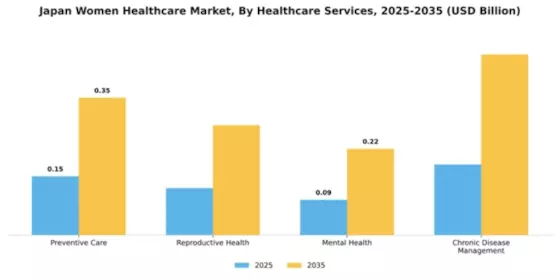
In the Japan Women Healthcare Market, preventive care holds the largest market share among the healthcare services segment, reflecting significant investment in health screenings and early intervention. Mental health services, on the other hand, have emerged as a critical focus area, driven by rising awareness and the destigmatization of mental health issues, thus attracting more attention and resources. As women increasingly prioritize holistic health approaches, these two segments exemplify the diverse needs of the market.
Preventive Care (Dominant) vs. Mental Health (Emerging)
Preventive care is recognized as the dominant service in the Japan Women Healthcare Market, emphasizing routine health screenings, vaccinations, and lifestyle counseling. This segment benefits from government initiatives promoting preventive practices, leading to a well-established infrastructure supporting these services. Conversely, mental health is an emerging segment gaining prominence as societal attitudes shift towards mental wellness. Increased healthcare access, the rise of telehealth services, and community-based support initiatives have driven growth. While preventive care focuses on avoiding health issues, mental health services address the rising incidences of stress, anxiety, and depression among women, highlighting a growing need for comprehensive care.
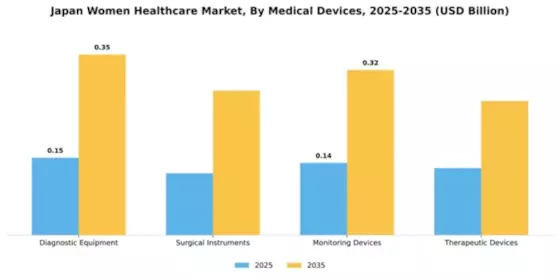
In the Japan Women's Healthcare Market, the segment of Medical Devices is marked by a significant distribution across various categories. Surgical Instruments hold the largest market share due to their critical role in a range of procedures, such as hysterectomies and endometriosis surgeries. Monitoring Devices, while smaller in share, demonstrate a marked increase in adoption among healthcare providers, driven by advancements in technology and patient care requirements. As healthcare trends shift, demand for innovative Monitoring Devices is expected to surge, particularly as remote patient monitoring becomes more prevalent. The rise in telehealth services is further propelling this growth, alongside a growing preference for minimally invasive surgeries which boost the need for advanced Surgical Instruments. Overall, trends indicate a dynamic evolution in the Medical Devices landscape, with Surgical Instruments remaining key players while Monitoring Devices thrive in the face of rising consumer expectations.
Surgical Instruments (Dominant) vs. Monitoring Devices (Emerging)
Surgical Instruments are predominant in the Japan Women's Healthcare Market, recognized for their essential role in various surgical procedures. These instruments are characterized by their precision, reliability, and the continuous innovation that enhances their functionality and patient outcomes. Health professionals prefer them due to their effectiveness in conducting surgeries like laparoscopy and minimally invasive procedures, which are gaining traction in Japan. In contrast, Monitoring Devices, which are emerging in this landscape, are driven by technological advancements like IoT and wireless connectivity. These devices are increasingly utilized for continuous patient monitoring, particularly for those with chronic conditions. This trend is expected to grow, reflecting the importance of real-time health data and patient-centered care strategies in modern healthcare.
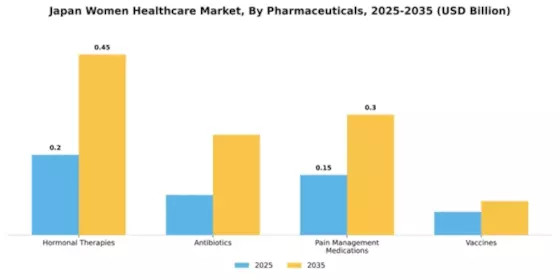
In the Japan Women Healthcare Market, the pharmaceuticals segment consists primarily of Hormonal Therapies, Antibiotics, Pain Management Medications, and Vaccines. Hormonal Therapies hold the largest market share among these, primarily due to the increasing incidence of hormonal disorders and menopause in women. In contrast, while Antibiotics and Pain Management Medications have significant roles, their market prevalence is overshadowed by the substantial contribution of Vaccines, which cater to preventive care needs.
Hormonal Therapies (Dominant) vs. Vaccines (Emerging)
Hormonal Therapies are critically important in the Japan Women Healthcare Market, serving women facing menopausal symptoms and hormonal imbalances. This segment's dominance is attributed to cultural awareness around women's health and increasing medical recommendations. On the other hand, Vaccines represent an emerging market, particularly as awareness grows regarding preventable diseases in women. This segment is rapidly evolving, driven by advancements in vaccine technology and increased government support for vaccination programs, making it a crucial area of investment and growth in the healthcare landscape.
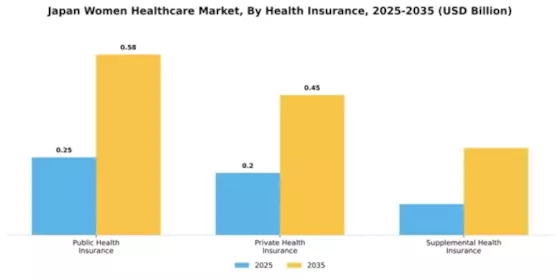
In the Japan Women Healthcare Market, the Public Health Insurance segment holds the largest market share, primarily due to its government backing and widespread acceptance among women. This segment ensures that essential healthcare services are accessible to a majority of the population, thereby fostering trust and stability. In contrast, Private Health Insurance is experiencing rapid growth as more women seek tailored healthcare solutions that offer additional services not covered by public options. This shift indicates a rising preference among women for personalized care and flexibility in their health insurance choices.
Health Insurance: Public (Dominant) vs. Private (Emerging)
Public Health Insurance has long been the cornerstone of health coverage in Japan, providing essential services to women and ensuring equitable access to healthcare. This segment is characterized by its affordability and inclusiveness, making it the preferred choice for many. In contrast, Private Health Insurance is increasingly emerging as a vital alternative, appealing to women who seek enhanced healthcare options and quicker access to specialized services. The growth of Private Health Insurance can be attributed to changing demographics, a growing awareness of health issues, and the demand for comprehensive women-specific healthcare services, thus reshaping the health insurance landscape in Japan.
In the Japan Women Healthcare Market, nutrition counseling holds the largest share within the wellness programs segment, reflecting the prioritization of dietary health among women. Fitness programs are gaining traction, rapidly growing due to increased awareness of the importance of physical fitness. This growth is indicative of a broader societal shift towards health-conscious lifestyles, aligning with the increasing demand for personalized wellness solutions.
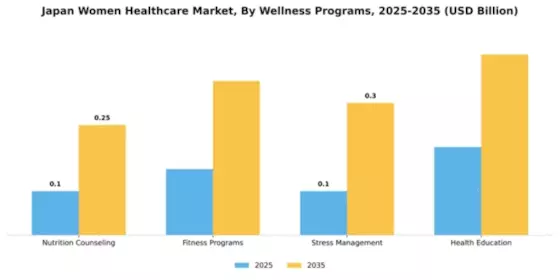
Nutrition Counseling: (Dominant) vs. Fitness Programs: (Emerging)
Nutrition counseling has established itself as the dominant force in the wellness programs segment, with women actively seeking tailored dietary advice to optimize their health. This segment is characterized by personalized meal planning and dietary consultations designed to meet individual health needs. On the other hand, fitness programs are emerging rapidly as women increasingly prioritize physical wellbeing, driven by the proliferation of fitness apps, online classes, and community-based activities. These programs cater to various fitness levels, making them accessible and appealing, which contributes to their rapid growth in popularity.
Get more detailed insights about Japan Womens Healthcare Market Request Free Sample
The Women Healthcare Market in Japan is characterized by a dynamic competitive landscape, driven by increasing awareness of women's health issues and a growing demand for specialized healthcare solutions. Key players such as Astellas Pharma Inc (Japan), Takeda Pharmaceutical Company Limited (Japan), and Eisai Co Ltd (Japan) are actively shaping the market through strategic initiatives focused on innovation and partnerships. Astellas Pharma Inc (Japan) emphasizes research and development in areas such as oncology and urology, which are critical to women's health, while Takeda Pharmaceutical Company Limited (Japan) is leveraging its global presence to enhance access to its women's health portfolio. Eisai Co Ltd (Japan) is also focusing on expanding its therapeutic offerings, particularly in the field of neurology, which intersects with women's health issues, thereby contributing to a competitive environment that prioritizes specialized care.
The business tactics employed by these companies include localizing manufacturing and optimizing supply chains to enhance efficiency and responsiveness to market demands. The competitive structure of the Women Healthcare Market appears moderately fragmented, with several players vying for market share. However, the collective influence of major companies is significant, as they drive innovation and set industry standards, thereby shaping the overall market dynamics.
In November 2025, Astellas Pharma Inc (Japan) announced a strategic partnership with a leading biotechnology firm to co-develop a novel treatment for endometriosis. This collaboration is expected to accelerate the development timeline and enhance the therapeutic options available for women suffering from this condition. The strategic importance of this partnership lies in Astellas' commitment to addressing unmet medical needs in women's health, which could potentially strengthen its market position.
In December 2025, Takeda Pharmaceutical Company Limited (Japan) launched a new digital health platform aimed at improving patient engagement and adherence in women’s health therapies. This initiative reflects Takeda's focus on integrating technology into healthcare solutions, which is likely to enhance patient outcomes and foster loyalty among healthcare providers. The strategic move underscores the growing trend of digitalization in healthcare, positioning Takeda as a forward-thinking leader in the market.
In January 2026, Eisai Co Ltd (Japan) unveiled a new initiative aimed at increasing awareness and education around women's mental health issues, particularly postpartum depression. This initiative is part of Eisai's broader strategy to expand its influence in the women's health sector and demonstrates a commitment to addressing holistic health needs. By focusing on mental health, Eisai is likely to differentiate itself in a competitive landscape that increasingly values comprehensive care.
As of January 2026, current trends in the Women Healthcare Market include a pronounced shift towards digitalization, sustainability, and the integration of artificial intelligence (AI) in healthcare solutions. Strategic alliances among key players are shaping the landscape, fostering innovation and enhancing service delivery. The competitive differentiation is expected to evolve from traditional price-based competition to a focus on innovation, technology, and supply chain reliability, reflecting a broader industry trend towards value-based care.


The Japan Women's Healthcare Market has seen significant developments recently, particularly in the areas of pharmaceuticals and healthcare services tailored to women's needs. Companies like AbbVie and Pfizer Japan are driving innovation with their robust product pipelines focused on reproductive health and menopausal therapies. In July 2023, Merck Sharp Dohme launched a new contraceptive option catering to younger women, highlighting the growing demand for comprehensive reproductive health solutions.
Additionally, GSK Japan is actively investing in research for sexually transmitted infections, aiming to expand its women's health portfolio. Market valuation for pivotal players such as Roche Japan and Takeda Pharmaceutical is on an upward trajectory, attributed to increasing awareness and demand for women's health products.
Notably, in September 2023, Mitsubishi Tanabe Pharma announced a strategic partnership with Daiichi Sankyo to enhance their joint research efforts on women's health conditions. These developments showcase a landscape increasingly responsive to women's specific healthcare needs, signifying a shift towards more inclusive medical research and product development tailored for Japanese women. Over the past two to three years, there has been a marked increase in government and private investments in healthcare solutions specifically designed for women's unique health concerns.
The Japan Women Healthcare Market is projected to grow at 8.08% CAGR from 2025 to 2035, driven by technological advancements, increasing awareness, and demographic shifts.
New opportunities lie in:
By 2035, the market is expected to be robust, reflecting substantial growth and innovation.
| MARKET SIZE 2024 | 0.558(USD Billion) |
| MARKET SIZE 2025 | 0.608(USD Billion) |
| MARKET SIZE 2035 | 1.31(USD Billion) |
| COMPOUND ANNUAL GROWTH RATE (CAGR) | 8.08% (2024 - 2035) |
| REPORT COVERAGE | Revenue Forecast, Competitive Landscape, Growth Factors, and Trends |
| BASE YEAR | 2024 |
| Market Forecast Period | 2025 - 2035 |
| Historical Data | 2019 - 2024 |
| Market Forecast Units | USD Billion |
| Key Companies Profiled | Astellas Pharma Inc (JP), Takeda Pharmaceutical Company Limited (JP), Mitsubishi Tanabe Pharma Corporation (JP), Eisai Co Ltd (JP), Daiichi Sankyo Company Limited (JP), Otsuka Pharmaceutical Co Ltd (JP), Chugai Pharmaceutical Co Ltd (JP), Kyowa Kirin Co Ltd (JP) |
| Segments Covered | Healthcare Services, Medical Devices, Pharmaceuticals, Health Insurance, Wellness Programs |
| Key Market Opportunities | Integration of telehealth services enhances access to women's healthcare in Japan. |
| Key Market Dynamics | Rising demand for personalized healthcare solutions drives innovation in Japan's Women Healthcare Market. |
| Countries Covered | Japan |
As of 2024, the Japan Women Healthcare Market was valued at 0.558 USD Billion.
The market is projected to reach 1.31 USD Billion by 2035.
The expected CAGR for the Japan Women Healthcare Market from 2025 to 2035 is 8.08%.
The market includes segments such as Healthcare Services, Medical Devices, Pharmaceuticals, Health Insurance, and Wellness Programs.
The Preventive Care segment is projected to grow from 0.15 USD Billion to 0.35 USD Billion by 2035.
Key players include Astellas Pharma Inc, Takeda Pharmaceutical Company Limited, and Eisai Co Ltd, among others.
The Reproductive Health segment is anticipated to increase from 0.12 USD Billion to 0.28 USD Billion by 2035.
The Chronic Disease Management segment is projected to grow from 0.18 USD Billion to 0.46 USD Billion by 2035.
The Diagnostic Equipment segment is expected to grow from 0.15 USD Billion to 0.35 USD Billion by 2035.
The Health Education segment is projected to increase from 0.2 USD Billion to 0.41 USD Billion by 2035.


Kindly complete the form below to receive a free sample of this Report

“This is really good guys. Excellent work on a tight deadline. I will continue to use you going forward and recommend you to others. Nice job”


“Thanks. It’s been a pleasure working with you, please use me as reference with any other Intel employees.”


“Thanks for sending the report it gives us a good global view of the Betaïne market.”


“Thank you, this will be very helpful for OQS.”


“We found the report very insightful! we found your research firm very helpful. I'm sending this email to secure our future business.”


“I am very pleased with how market segments have been defined in a relevant way for my purposes (such as "Portable Freezers & refrigerators" and "last-mile"). In general the report is well structured. Thanks very much for your efforts.”


“I have been reading the first document or the study, ,the Global HVAC and FP market report 2021 till 2026. Must say, good info! I have not gone in depth at all parts, but got a good indication of the data inside!”


“We got the report in time, we really thank you for your support in this process. I also thank to all of your team as they did a great job.”


“The Automotive 48V ECU Components Procurement Intelligence Study” was a complex project, but the Market Research Future (MRFR) team handled it with quality, agility, and customer-centricity. They delivered all requested data on time and within the agreed scope. The team, including Shubhendra Anand and Rahul Gotadki, was always readily available to clarify questions and swiftly implement necessary adjustments, driving the project to a successful conclusion within a very demanding timeframe.
I would also like to specifically commend Akshay Agarwal for his responsiveness and support at every stage—from our initial inquiry on May 6th through to final delivery on June 18th. His dedication made the entire process seamless.”



