Download Free Sample
Kindly complete the form below to receive a free sample of this Report
Germany Compression Therapy Market Research Report By Product Type (Compression Garments, Compression Bandages, Compression Pumps, Compression Hosiery), By Application (Chronic Venous Insufficiency, Lymphedema, Sports Injuries, Post-Surgical Recovery), By End-user (Hospitals, Ambulatory Surgical Centers, Home Care Settings, Rehabilitation Centers), andBy Distribution Channel (Online Pharmacies, Retail Pharmacies, Hospital Pharmacies, Medical Supply Stores) - Growth & Industry Forecast 2025 To 2035
As per Market Research Future analysis, the Germany compression therapy market size was estimated at 195.03 USD Million in 2024. The Germany compression therapy market is projected to grow from 207.22 USD Million in 2025 to 380.0 USD Million by 2035, exhibiting a compound annual growth rate (CAGR) of 6.2% during the forecast period 2025 - 2035
The Germany compression therapy market is experiencing notable growth driven by technological advancements and increasing awareness.
| 2024 Market Size | 195.03 (USD Million) |
| 2035 Market Size | 380.0 (USD Million) |
| CAGR (2025 - 2035) | 6.25% |
Essity (SE), Medtronic (US), 3M (US), BSN Medical (DE), Sigvaris (CH), Juzo (DE), Tactile Medical (US), Lohmann & Rauscher (DE)
Our Impact
Enabled $4.3B Revenue Impact for Fortune 500 and Leading Multinationals
Partnering with 2000+ Global Organizations Each Year
30K+ Citations by Top-Tier Firms in the Industry
The compression therapy market in Germany is currently experiencing notable growth, driven by an increasing awareness of the benefits associated with compression garments and devices. This market is characterized by a diverse range of products designed to alleviate various medical conditions, including venous disorders and lymphedema. The rising prevalence of chronic diseases, coupled with an aging population, appears to be propelling demand for effective therapeutic solutions. Furthermore, advancements in technology and materials are enhancing the efficacy and comfort of compression products, making them more appealing to consumers. In addition, the regulatory environment in Germany supports innovation and quality assurance in the compression therapy market. Government initiatives aimed at improving healthcare access and outcomes are likely to foster a favorable landscape for manufacturers and healthcare providers. As healthcare professionals increasingly recommend compression therapy as a standard treatment option, the market is poised for sustained expansion. The integration of digital health solutions, such as telemedicine and mobile health applications, may further enhance patient engagement and adherence to therapy, potentially transforming the landscape of compression therapy in the coming years.
Recent innovations in materials and design are enhancing the effectiveness of compression therapy products. Manufacturers are increasingly utilizing advanced fabrics that offer improved elasticity and breathability, which may lead to higher patient satisfaction and compliance. Additionally, the incorporation of smart technology into compression devices could provide real-time monitoring of treatment progress.
There is a growing emphasis on educating both healthcare professionals and patients about the benefits of compression therapy. Awareness campaigns and training programs are being implemented to inform stakeholders about the therapeutic advantages, which may contribute to increased adoption rates and a broader acceptance of these products in clinical settings.
The regulatory framework in Germany is evolving to support the development and distribution of compression therapy products. Stricter quality standards and guidelines are being established, which could enhance product safety and efficacy. This regulatory environment may encourage innovation while ensuring that patients receive high-quality therapeutic solutions.
Germany's increasing healthcare expenditure is a significant driver for the compression therapy market. With healthcare spending projected to reach €500 billion by 2025, there is a growing emphasis on preventive care and effective management of chronic conditions. Compression therapy is recognized for its cost-effectiveness in reducing complications associated with venous disorders, thereby appealing to both healthcare providers and patients. The German government’s commitment to improving healthcare access and quality is likely to facilitate the adoption of compression therapy solutions. As reimbursement policies evolve to cover more innovative treatment options, the market is expected to witness substantial growth, reflecting the broader trends in healthcare investment.
The regulatory environment in Germany is becoming increasingly supportive of the compression therapy market. The German Medicines Agency (BfArM) and other regulatory bodies are establishing clear guidelines for the approval and use of compression therapy products. This regulatory clarity fosters innovation and encourages manufacturers to develop new and improved products. Additionally, the emphasis on quality standards ensures that patients receive effective and safe treatment options. As regulations evolve to support advanced compression technologies, the market is likely to benefit from increased product availability and consumer trust. This supportive framework is essential for the sustained growth of the compression therapy market.
Innovations in compression technology are transforming the compression therapy market in Germany. The introduction of smart textiles and adjustable compression garments enhances patient compliance and treatment efficacy. For instance, devices that monitor pressure levels and provide real-time feedback are becoming more prevalent. This technological evolution not only improves the effectiveness of treatment but also attracts a younger demographic that values convenience and innovation. The market for compression therapy products is projected to grow at a CAGR of approximately 6% over the next five years, driven by these advancements. As manufacturers invest in research and development, the availability of high-quality, technologically advanced products is likely to increase, further stimulating market growth.
The rising prevalence of chronic venous disorders in Germany is a crucial driver for the compression therapy market. Conditions such as varicose veins and chronic venous insufficiency affect a significant portion of the population, with estimates suggesting that around 25% of adults may experience some form of venous disease. This growing patient demographic necessitates effective treatment options, thereby propelling the demand for compression therapy solutions. As healthcare providers increasingly recognize the benefits of compression therapy in managing these conditions, the market is likely to expand. Furthermore, the aging population in Germany, which is projected to reach 23 million individuals aged 65 and older by 2030, further exacerbates the need for effective compression therapy interventions.
The shift towards non-invasive treatment options is becoming increasingly pronounced in the German healthcare landscape, significantly impacting the compression therapy market. Patients and healthcare providers alike are favoring treatments that minimize surgical interventions and associated risks. Compression therapy is viewed as a safe and effective alternative for managing various venous disorders, which aligns with the growing preference for conservative treatment methods. This trend is likely to be reinforced by patient education initiatives that highlight the benefits of non-invasive therapies. As awareness of these options increases, the demand for compression therapy products is expected to rise, contributing to market expansion.
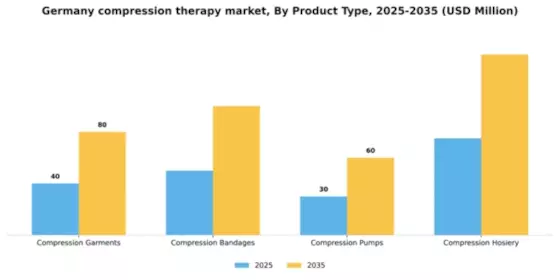
In the Germany compression therapy market, the segment values display a varied distribution with compression garments holding the largest market share, positioning themselves as a primary choice for consumers. Compression bandages, while not as dominant, are rapidly gaining traction and are observed to be the fastest-growing segment. The increasing acceptance of these products by healthcare professionals drives their use, particularly in clinical settings. Growth trends for compression garments are steady due to their established presence and effectiveness. Conversely, the surge in demand for compression bandages is fueled by a heightened awareness of venous diseases and their treatment. Factors influencing growth include advancements in fabric technology and increased promotion of therapeutic benefits, enhancing product appeal and utilization across demographics.
Compression Garments (Dominant) vs. Compression Bandages (Emerging)
Compression garments are characterized by their established efficacy in providing support and improving circulation, thus solidifying their position as the dominant force in the market. They cater to a wide demographic, including athletes and patients recovering from surgeries. Compression bandages, while an emerging segment, are gaining favor due to their versatility and ease of application. They are particularly favored in acute care settings and by home healthcare providers, emphasizing convenience and adaptability. The market is moving towards a more integrated approach where both products complement one another, enhancing overall treatment outcomes for patients.
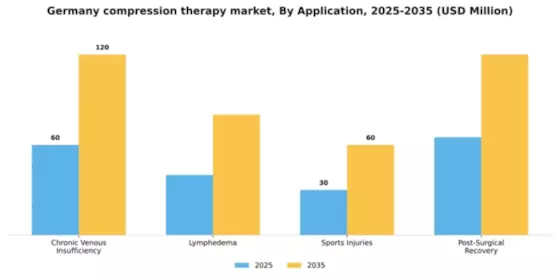
In the Germany compression therapy market, the application segments are diverse, with Chronic Venous Insufficiency holding a significant share, dominating the landscape. However, Lymphedema is emerging as the fastest-growing segment, driven by increased awareness and a rising patient base seeking effective management solutions. Within these segments, Sports Injuries and Post-Surgical Recovery also contribute, albeit at a smaller scale, indicating a broadening acceptance of compression therapies across various medical conditions. The growth trends in the application segment are heavily influenced by advancements in technology and an increase in the geriatric population, which often suffers from Chronic Venous Insufficiency. The expansion in sporting activities has led to a rise in Sports Injuries, subsequently boosting the demand for effective recovery solutions. Lymphedema is gaining traction, attributed to growing clinical guidelines focusing on preventive care, indicating a shift towards proactive management models in healthcare.
Chronic Venous Insufficiency (Dominant) vs. Lymphedema (Emerging)
Chronic Venous Insufficiency is established as the dominant application segment in the Germany compression therapy market, largely due to its high prevalence among the aging population along with lifestyle-related factors. It underscores the necessity for effective compression therapy solutions that alleviate symptoms and prevent progression. In contrast, Lymphedema is emerging rapidly, fueled by heightened awareness of lymphatic disorders and advancements in therapy options. It focuses on targeted treatment strategies that enhance patient outcomes, linking clinical research to practical solutions. Both segments reflect a growing trend toward specialized therapies that cater to distinct patient needs, establishing their importance in the evolving landscape of healthcare.
In the Germany compression therapy market, hospitals hold a significant share, driven by their capacity to provide comprehensive patient care and access to advanced therapeutic options. Ambulatory surgical centers and rehabilitation centers follow closely, catering to specific patient needs, while home care settings are increasingly gaining traction, mainly due to the growing preference for at-home treatment solutions among patients. The growth trends in this segment are largely influenced by an aging population, rising awareness of the benefits of compression therapy, and advancements in product technologies. Hospitals remain dominant due to their established infrastructures, yet home care settings are emerging rapidly as patients seek more convenient treatment options, leading to a notable shift in care methodologies within the market.
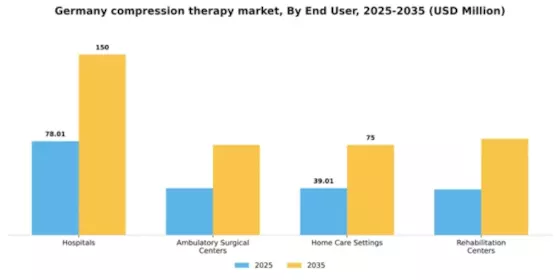
Hospitals (Dominant) vs. Home Care Settings (Emerging)
Hospitals are pivotal in the Germany compression therapy market, characterized by their extensive resources and skilled healthcare professionals who deliver high-quality care. They offer a range of advanced compression therapies and have established protocols that ensure effective treatment for various conditions. Conversely, home care settings are becoming an important emerging segment, driven by technological innovations that facilitate patient monitoring and therapy administration at home. This shift is appealing to patients who prefer receiving care in familiar surroundings, and these settings leverage cost-effectiveness and personalized treatment plans, making them a critical area of growth in the market.
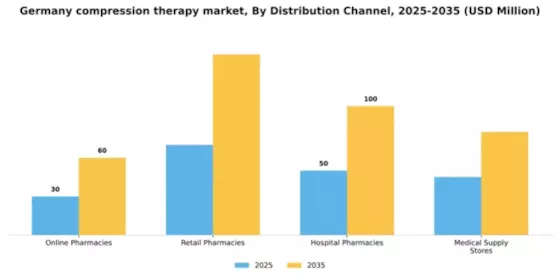
In the Germany compression therapy market, retail pharmacies hold the largest market share due to their widespread presence and the trust that consumers place in them. This segment benefits from direct interactions with customers, allowing for personalized recommendations and immediate product access. Online pharmacies are gaining traction, driven by increased internet penetration and a shift toward online shopping, particularly in the wake of the pandemic. The growth trends indicate a robust expansion of online pharmacies as consumers seek convenience and competitive pricing. Retail pharmacies are expected to maintain a significant share, but the surge in digital health solutions and telemedicine is propelling online pharmacies to rapidly capture market interest. This trend is further bolstered by marketing strategies targeting younger demographics who favor online purchasing methods.
Retail Pharmacies (Dominant) vs. Online Pharmacies (Emerging)
Retail pharmacies are positioned as the dominant channel in the Germany compression therapy market, appealing to a wide variety of consumers through their physical locations and personal service. They cater to customers seeking immediate access and personalized support for compression therapy needs. On the other hand, online pharmacies are emerging rapidly, leveraging e-commerce trends to attract consumers who prioritize convenience and swift deliveries. These online platforms often offer competitive pricing and a wider range of products, appealing to tech-savvy individuals. The dual growth of these channels reflects changing consumer behaviors, where traditional pharmacies must adapt to the rise of digital solutions while retaining their loyal customer base.
Get more detailed insights about Germany Compression Therapy Market Request Free Sample
The compression therapy market in Germany is characterized by a dynamic competitive landscape, driven by increasing awareness of chronic venous diseases and the growing demand for effective therapeutic solutions. Key players such as Essity (SE), Medtronic (US), and BSN Medical (DE) are strategically positioned to leverage innovation and expand their market presence. Essity (SE) focuses on enhancing its product portfolio through research and development, while Medtronic (US) emphasizes technological advancements in its compression devices. BSN Medical (DE) is actively pursuing partnerships to broaden its distribution channels, thereby enhancing its competitive edge. Collectively, these strategies contribute to a robust competitive environment, fostering innovation and improving patient outcomes.In terms of business tactics, companies are increasingly localizing manufacturing to reduce costs and optimize supply chains. The market appears moderately fragmented, with several players vying for market share. The collective influence of key players is significant, as they engage in strategic collaborations and mergers to strengthen their positions. This competitive structure allows for a diverse range of products and services, catering to various patient needs and preferences.
In October Essity (SE) announced the launch of a new line of compression garments designed specifically for athletes, aiming to enhance performance and recovery. This strategic move not only diversifies their product offerings but also taps into the growing trend of sports medicine, potentially attracting a new customer segment. The introduction of these specialized products may position Essity (SE) as a leader in the athletic compression market, further solidifying its brand reputation.
In September Medtronic (US) unveiled a groundbreaking smart compression device that integrates AI technology to monitor patient compliance and adjust pressure levels in real-time. This innovation is likely to enhance patient engagement and improve treatment outcomes, reflecting Medtronic's commitment to leveraging technology in healthcare. The integration of AI into compression therapy could set a new standard in the industry, compelling competitors to innovate similarly.
In August BSN Medical (DE) entered into a strategic partnership with a leading telehealth provider to offer remote monitoring services for patients using their compression products. This collaboration is indicative of a broader trend towards digital health solutions, allowing for improved patient management and adherence to therapy. By integrating telehealth capabilities, BSN Medical (DE) enhances its service offering, potentially increasing customer loyalty and satisfaction.
As of November current trends in the compression therapy market include a strong emphasis on digitalization, sustainability, and the integration of advanced technologies such as AI. Strategic alliances are increasingly shaping the competitive landscape, enabling companies to pool resources and expertise. Looking ahead, competitive differentiation is likely to evolve from traditional price-based competition to a focus on innovation, technological advancements, and supply chain reliability. This shift underscores the importance of developing unique value propositions that resonate with healthcare providers and patients alike.
In the Germany Compression Therapy Market, recent developments have been vibrant, with several companies like 3M, Sigvaris, DJO Global, and BSN Medical making strides in product innovation. The demand for compression garments has seen a growth valuation, propelled by an increasing awareness of venous diseases and a rising geriatric population, which influences the market positively.
Notably, Juzo and Medi have recently expanded their product lines, focusing on customized solutions that improve patient compliance. In terms of mergers and acquisitions, in July 2023, B. Braun acquired a strategic stake in a German technology firm specializing in vascular health, enhancing its position in the compression therapy sector.
This acquisition is expected to boost product development and distribution capabilities in Germany. Moreover, regulatory support from the German government, including initiatives to improve healthcare access, has bolstered market growth over the past few years.
Hartmann and Lohmann & Rauscher are also investing significantly in Research and Development to enhance their offerings. Overall, the market continues to evolve with innovation and strategic collaborations, shaping its trajectory in Germany.
The Compression Therapy Market is projected to grow at a 6.25% CAGR from 2025 to 2035, driven by increasing prevalence of venous disorders and rising awareness of preventive healthcare.
New opportunities lie in:
By 2035, the market is expected to achieve substantial growth, driven by innovation and strategic partnerships.
| MARKET SIZE 2024 | 195.03(USD Million) |
| MARKET SIZE 2025 | 207.22(USD Million) |
| MARKET SIZE 2035 | 380.0(USD Million) |
| COMPOUND ANNUAL GROWTH RATE (CAGR) | 6.25% (2025 - 2035) |
| REPORT COVERAGE | Revenue Forecast, Competitive Landscape, Growth Factors, and Trends |
| BASE YEAR | 2024 |
| Market Forecast Period | 2025 - 2035 |
| Historical Data | 2019 - 2024 |
| Market Forecast Units | USD Million |
| Key Companies Profiled | Essity (SE), Medtronic (US), 3M (US), BSN Medical (DE), Sigvaris (CH), Juzo (DE), Tactile Medical (US), Lohmann & Rauscher (DE) |
| Segments Covered | Product Type, Application, End User, Distribution Channel |
| Key Market Opportunities | Integration of smart textiles in compression therapy devices enhances patient compliance and treatment efficacy. |
| Key Market Dynamics | Rising demand for innovative compression therapy solutions driven by regulatory changes and evolving consumer preferences in Germany. |
| Countries Covered | Germany |
The market valuation was $195.03 Million in 2024.
The projected market valuation for 2035 is $380.0 Million.
The expected CAGR for the market during the forecast period is 6.25%.
Compression hosiery generated the highest revenue, with a valuation range of $75.03 Million to $140.0 Million.
Key applications include chronic venous insufficiency, lymphedema, sports injuries, and post-surgical recovery.
Hospitals contributed the most, with a valuation range of $78.01 Million to $150.0 Million.
Retail pharmacies are expected to perform best, with a valuation range of $70.0 Million to $140.0 Million.
Key players include Essity, Medtronic, 3M, BSN Medical, Sigvaris, Juzo, Tactile Medical, and Lohmann & Rauscher.
The revenue range for compression bandages is between $50.0 Million and $100.0 Million.
The market for compression pumps has a revenue range of $30.0 Million to $60.0 Million, which is lower than other product types.



Kindly complete the form below to receive a free sample of this Report

“This is really good guys. Excellent work on a tight deadline. I will continue to use you going forward and recommend you to others. Nice job”


“Thanks. It’s been a pleasure working with you, please use me as reference with any other Intel employees.”


“Thanks for sending the report it gives us a good global view of the Betaïne market.”


“Thank you, this will be very helpful for OQS.”


“We found the report very insightful! we found your research firm very helpful. I'm sending this email to secure our future business.”


“I am very pleased with how market segments have been defined in a relevant way for my purposes (such as "Portable Freezers & refrigerators" and "last-mile"). In general the report is well structured. Thanks very much for your efforts.”


“I have been reading the first document or the study, ,the Global HVAC and FP market report 2021 till 2026. Must say, good info! I have not gone in depth at all parts, but got a good indication of the data inside!”


“We got the report in time, we really thank you for your support in this process. I also thank to all of your team as they did a great job.”


“The Automotive 48V ECU Components Procurement Intelligence Study” was a complex project, but the Market Research Future (MRFR) team handled it with quality, agility, and customer-centricity. They delivered all requested data on time and within the agreed scope. The team, including Shubhendra Anand and Rahul Gotadki, was always readily available to clarify questions and swiftly implement necessary adjustments, driving the project to a successful conclusion within a very demanding timeframe.
I would also like to specifically commend Akshay Agarwal for his responsiveness and support at every stage—from our initial inquiry on May 6th through to final delivery on June 18th. His dedication made the entire process seamless.”



