Download Free Sample
Kindly complete the form below to receive a free sample of this Report
Germany Home Healthcare Market Research Report By Product Outlook (Testing, Screening and Monitoring Products, Blood Glucose Monitors, Blood Pressure Monitors, Pulse Oximeters, Peak Flow Meters, Heart Rate Monitors, Fetal Monitoring Devices, HIV Test Kits, Home Sleep Testing Devices, Others), By Service Outlook (Skilled Nursing Services, Rehabilitation Therapy Services, Hospice and Palliative Care Services, Unskilled Care Services, Respiratory Therapy Services, Infusion Therapy Services, Others) and By Indication Outlook (Cardiovascular Disorders and Hypertension, Diabetes, Respiratory Diseases, Pregnancy, Mobility Disorders, Hearing Disorders, Cancer, Wound Care, Other) - Growth & Industry Forecast 2025 To 2035
As per Market Research Future analysis, the Germany home healthcare market size was estimated at 20.0 USD Billion in 2024. The Germany home healthcare market is projected to grow from 21.42 USD Billion in 2025 to 42.5 USD Billion by 2035, exhibiting a compound annual growth rate (CAGR) of 7.0% during the forecast period 2025 - 2035
The Germany home healthcare market is experiencing robust growth driven by technological advancements and demographic shifts.
| 2024 Market Size | 20.0 (USD Billion) |
| 2035 Market Size | 42.5 (USD Billion) |
| CAGR (2025 - 2035) | 7.09% |
Amedisys Inc (US), LHC Group Inc (US), Visiting Angels (US), Brookdale Senior Living Inc (US), Kindred Healthcare LLC (US), Comfort Keepers (US), Gentiva Health Services (US), Interim HealthCare Inc (US)
Our Impact
Enabled $4.3B Revenue Impact for Fortune 500 and Leading Multinationals
Partnering with 2000+ Global Organizations Each Year
30K+ Citations by Top-Tier Firms in the Industry
The home healthcare market in Germany is undergoing a transformation driven by increasing demand for personalized care solutions. This shift is largely influenced by the aging population, which necessitates more tailored healthcare services within the comfort of patients' homes. Additionally, advancements in technology are facilitating the delivery of care, enabling healthcare providers to offer remote monitoring and telehealth services. These innovations not only enhance patient outcomes but also improve the efficiency of healthcare delivery, suggesting a promising future for the sector. Moreover, regulatory changes are playing a crucial role in shaping the landscape of the home healthcare market. The German government is actively promoting home-based care as a viable alternative to traditional hospital settings. This initiative aligns with the broader objective of enhancing patient autonomy and reducing healthcare costs. As a result, there is a growing emphasis on integrating various healthcare services, including nursing, rehabilitation, and social support, into cohesive home care packages. Such developments indicate a robust and evolving market that is likely to adapt to the changing needs of the population.
The integration of advanced technologies is transforming home healthcare. Innovations such as telemedicine, remote patient monitoring, and mobile health applications are becoming increasingly prevalent. These technologies facilitate real-time communication between patients and healthcare providers, enhancing the quality of care and enabling timely interventions.
Regulatory frameworks are evolving to support the expansion of home healthcare services. The German government is implementing policies that encourage home-based care, aiming to reduce hospital admissions and promote patient-centered approaches. This regulatory backing is likely to foster growth and innovation within the sector.
There is a growing emphasis on personalized care solutions tailored to individual patient needs. This trend reflects a shift towards more holistic approaches in healthcare, where services are customized based on specific health conditions and preferences. Such a focus is expected to enhance patient satisfaction and outcomes.
The escalating costs associated with traditional healthcare services in Germany are driving a shift towards home healthcare solutions. With healthcare expenditures projected to reach approximately €500 billion by 2025, there is a growing emphasis on cost-effective alternatives. Home healthcare services often present a more affordable option for patients, as they can reduce hospital readmissions and minimize the need for extensive inpatient care. This economic pressure encourages both patients and healthcare providers to explore home healthcare market options that deliver quality care at lower costs. Additionally, the German government has been incentivizing home healthcare services through various funding programs, which further supports the market's growth. As a result, the home healthcare market is likely to expand as it offers a viable solution to the financial challenges faced by the healthcare system.
The shift towards an aging population in Germany is a pivotal driver for the home healthcare market. As the proportion of individuals aged 65 and older continues to rise, the demand for home healthcare services is expected to increase significantly. By 2030, it is projected that nearly 25% of the German population will fall into this age category. This demographic trend necessitates a robust home healthcare market to cater to the unique needs of elderly patients, including chronic disease management and rehabilitation services. The increasing prevalence of age-related health issues, such as dementia and mobility impairments, further underscores the importance of home healthcare solutions. Consequently, stakeholders in the home healthcare market are likely to focus on developing tailored services that address the complexities associated with aging, thereby enhancing the quality of life for seniors in their own homes.
There is a noticeable shift in Germany towards preventive healthcare, which is significantly influencing the home healthcare market. This trend emphasizes the importance of early intervention and health maintenance, aiming to reduce the incidence of chronic diseases and hospitalizations. Home healthcare services are well-positioned to support this shift by offering regular health assessments, wellness programs, and education on lifestyle modifications. The focus on preventive care not only enhances patient outcomes but also alleviates the burden on the healthcare system. As more individuals seek to manage their health proactively, the demand for home healthcare services that promote preventive measures is likely to grow. This evolving paradigm suggests that the home healthcare market will play a crucial role in fostering a healthier population in Germany.
Technological innovations are transforming the landscape of the home healthcare market in Germany. The integration of telehealth services, remote monitoring devices, and mobile health applications is enhancing the delivery of care to patients in their homes. These advancements facilitate real-time communication between healthcare providers and patients, allowing for timely interventions and improved health outcomes. For instance, the use of wearable devices that track vital signs can alert caregivers to potential health issues before they escalate. Furthermore, the German government has been actively promoting digital health initiatives, which are expected to bolster the home healthcare market. As technology continues to evolve, it appears that the home healthcare market will increasingly leverage these tools to provide efficient, patient-centered care.
The growing awareness of the benefits associated with home healthcare services is a significant driver for the market in Germany. Patients and families are increasingly recognizing the advantages of receiving care in a familiar environment, which can lead to improved emotional well-being and faster recovery times. Educational campaigns and advocacy efforts have contributed to this heightened awareness, highlighting the effectiveness of home healthcare in managing chronic conditions and providing post-operative care. As more individuals become informed about the options available to them, the home healthcare market is likely to experience increased demand. This trend suggests that stakeholders in the home healthcare market must continue to engage in outreach and education to further promote the value of their services.
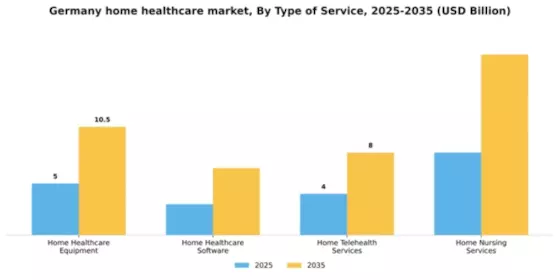
The Germany home healthcare market exhibits a varied distribution of shares among its segments, with Home Healthcare Equipment capturing the largest share due to its essential role in patient care and rehabilitation. Home Nursing Services also represent a significant portion, driven by the increasing demand for professional care at home, especially among the aging population. Meanwhile, Home Telehealth Services are rapidly gaining traction, reflecting a shift towards remote monitoring and virtual consultations. Growth trends in this segment are largely driven by technological advancements and changing consumer preferences. The rise in chronic diseases and the need for continuous care result in a robust demand for Home Healthcare Equipment. In addition, the COVID-19 pandemic has catalyzed the adoption of Home Telehealth Services, making them the fastest-growing segment as healthcare providers and patients embrace digital solutions for efficiency and accessibility.
Home Nursing Services (Dominant) vs. Home Healthcare Software (Emerging)
Home Nursing Services are the dominant force in the Germany home healthcare market, characterized by personalized care provided by trained professionals to patients in their own homes. This segment thrives on the pressing need for sustainable healthcare solutions in the face of an aging population. Conversely, Home Healthcare Software is an emerging segment, offering innovative solutions for patient management and care coordination. While still developing, the rising importance of data analytics and digital solutions is propelling growth in this area. As healthcare systems pivot to efficiency and quality, integrating software tools into home care practices is becoming crucial, driving demand for emerging technologies alongside established home nursing services.
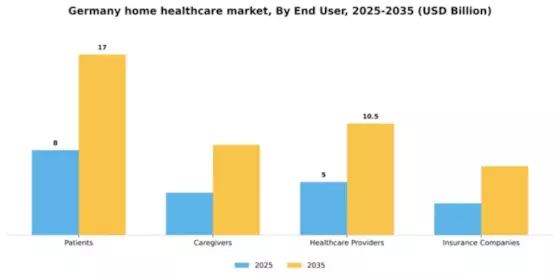
In the Germany home healthcare market, the patient segment dominates significantly, reflecting the growing demand for personalized home care services. This can be attributed to the increasing geriatric population and rising instances of chronic diseases necessitating outpatient care alternatives. Caregivers form another vital segment, experiencing rapid growth due to the expanding role of informal care in supporting patients at home, enabling a more integrated healthcare system. Growth trends indicate that the caregiver segment is becoming a focal point of investment as healthcare delivery models progressively shift towards home-based solutions. Innovations in telehealth and home monitoring technology spur demand for caregiver support, making this segment integral to improving patient outcomes and reducing hospital readmissions. Additionally, the increasing recognition of family caregivers' contributions is driving growth in related services and resources.
Patients: Dominant vs. Caregivers: Emerging
In the Germany home healthcare market, the patient segment remains dominant, characterized by the increased demand for tailored healthcare solutions delivered in a familiar home environment. This domination arises from demographic factors coupled with a robust emphasis on convenience and personalized care. On the other hand, caregivers represent an emerging segment, witnessing remarkable growth propelled by shifts towards decentralized healthcare. These caregivers, often family members or professional providers, are becoming crucial in the treatment process, given their role in managing daily care tasks. Increasing collaboration between healthcare providers and caregivers will likely enhance care delivery, ensuring patients receive comprehensive attention, which further strengthens the caregiver segment's market position.
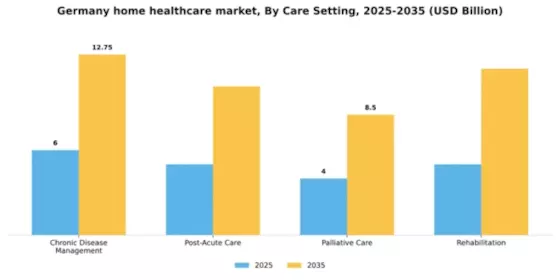
In the Germany home healthcare market, the care setting segment reveals a diverse distribution among its key values. Chronic Disease Management holds a significant share, reflecting the rising prevalence of long-term health conditions among the population. In contrast, Rehabilitation, while smaller, is the fastest-growing segment, driven by the increasing emphasis on recovery and the enhancement of mobility for patients after surgeries or illnesses. Growth trends indicate that the demand for Chronic Disease Management is heavily influenced by the aging demographic and the need for ongoing medical support. Meanwhile, Rehabilitation is experiencing rapid expansion due to technological advancements in treatment methods and a growing public awareness of rehabilitation services. The integration of digital health solutions is further enhancing service delivery in both segments, increasing their respective market positions.
Chronic Disease Management (Dominant) vs. Rehabilitation (Emerging)
Chronic Disease Management stands out as the dominant player in the care setting segment, primarily catering to patients with illnesses requiring long-term monitoring and support. This segment encompasses a wide range of services, including medication management, lifestyle interventions, and regular health assessments, all vital for improving patients' quality of life. On the other hand, Rehabilitation is emerging as a critical area in the market, focusing on helping individuals regain function after health setbacks. This segment is gaining traction due to innovative therapies and rehabilitation technologies that not only speed recovery times but also improve patient outcomes. Together, these segments play a crucial role in the holistic approach to healthcare.
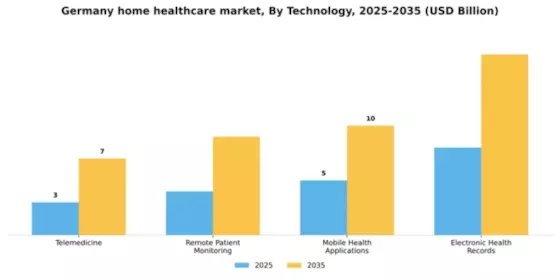
In the Germany home healthcare market, the technology segment showcases a distinct separation in market share among its key players. Telemedicine has established itself as the largest segment, capitalizing on the increasing demand for remote consultations and digital health solutions. Meanwhile, Remote Patient Monitoring has gained momentum due to the rise in chronic diseases and the need for regular monitoring, leading to its rapid growth trajectory. The growth trends in this segment are driven by technological advancements and an aging population that necessitates innovative healthcare solutions. The COVID-19 pandemic has further accelerated the adoption of technology in healthcare, particularly in telemedicine and remote monitoring, as patients and providers seek safer and more efficient methods of care delivery. Mobile health applications are also on the rise, facilitating patient engagement and medication management, while Electronic Health Records are becoming essential for streamlining patient data management and ensuring continuity of care.
Technology: Telemedicine (Dominant) vs. Mobile Health Applications (Emerging)
Telemedicine stands out as the dominant force within the technology segment, offering virtual consultations that have proven invaluable during unprecedented times. Its robust infrastructure and growing acceptance among healthcare providers position it as a reliable solution for patient care. Conversely, Mobile Health Applications are emerging rapidly, driven by consumer demand for health monitoring and fitness tracking capabilities. These applications empower patients to take charge of their health through accessible tools, including reminders for medication and lifestyle tracking. As both segments continue to evolve, their integration may lead to enhanced patient experiences and more cohesive healthcare solutions, exemplifying the dynamic nature of the Germany home healthcare market.
Get more detailed insights about Germany Home Healthcare Market Request Free Sample
The home healthcare market in Germany is characterized by a dynamic competitive landscape, driven by an increasing demand for personalized care solutions and an aging population. Key players such as Amedisys Inc (US), LHC Group Inc (US), and Comfort Keepers (US) are strategically positioning themselves through various operational focuses, including digital transformation and regional expansion. These companies are leveraging technology to enhance service delivery, which collectively shapes a competitive environment that is increasingly reliant on innovation and customer-centric approaches.In terms of business tactics, companies are localizing their operations to better meet regional needs, optimizing supply chains to ensure efficiency, and enhancing service quality. The market appears moderately fragmented, with several players vying for market share. However, the influence of major companies is significant, as they set benchmarks for service standards and operational excellence, thereby impacting the overall market structure.
In October Amedisys Inc (US) announced a partnership with a leading telehealth provider to integrate remote monitoring solutions into their home healthcare services. This strategic move is likely to enhance patient engagement and improve health outcomes, reflecting a broader trend towards digital health solutions. By adopting such innovative technologies, Amedisys aims to differentiate itself in a competitive market, potentially increasing its market share.
In September LHC Group Inc (US) expanded its footprint by acquiring a regional home health agency in Germany. This acquisition not only broadens their service offerings but also strengthens their operational capabilities in a key market. The strategic importance of this move lies in LHC Group's ability to leverage local expertise and resources, which may enhance their competitive positioning and operational efficiency in the region.
In August Comfort Keepers (US) launched a new initiative focused on sustainability in home healthcare services. This initiative includes the implementation of eco-friendly practices and the use of sustainable materials in their operations. Such a focus on sustainability may resonate well with environmentally conscious consumers, potentially giving Comfort Keepers a competitive edge in attracting a new demographic of clients who prioritize green practices.
As of November current trends in the home healthcare market include a strong emphasis on digitalization, sustainability, and the integration of artificial intelligence (AI) into service delivery. Strategic alliances are increasingly shaping the competitive landscape, as companies collaborate to enhance their service offerings and operational capabilities. Looking ahead, competitive differentiation is likely to evolve from traditional price-based competition to a focus on innovation, technology integration, and supply chain reliability, as companies strive to meet the growing expectations of consumers.


Recent developments in the Germany Home Healthcare Market indicate a robust growth trajectory, driven by an aging population and increasing demand for in-home medical services. Notably, in September 2023, Siemens Healthineers announced strategic investments in digital healthcare solutions to enhance remote patient monitoring capabilities, reflecting a shift towards integrated care models. Additionally, in August 2023, Abbott Laboratories expanded its product line for glucose monitoring systems specifically designed for home use, addressing the growing needs of diabetic patients. In terms of mergers and acquisitions, AmedisUE acquired a regional home healthcare provider in July 2023, strengthening its position in the market.
Similarly, in June 2023, Fresenius SE announced the acquisition of a telehealth platform to diversify its service offerings. These strategic moves align with the German government’s healthcare policies that aim to improve access to home-based care. The market is also experiencing a valuation increase among key players; for instance, Roche Diagnostics reported a 15% revenue growth in its home healthcare segment in Q2 2023, highlighting the sector's expansion. This growth is also supported by innovations from companies like Philips Healthcare and B. Braun Melsungen AG, who are continuously developing advanced home care products to meet rising demand.
The Home Healthcare Market in Germany is projected to grow at a 7.09% CAGR from 2025 to 2035, driven by technological advancements, an aging population, and increasing demand for personalized care.
New opportunities lie in:
By 2035, the home healthcare market is expected to be robust, reflecting significant growth and innovation.
| MARKET SIZE 2024 | 20.0(USD Billion) |
| MARKET SIZE 2025 | 21.42(USD Billion) |
| MARKET SIZE 2035 | 42.5(USD Billion) |
| COMPOUND ANNUAL GROWTH RATE (CAGR) | 7.09% (2025 - 2035) |
| REPORT COVERAGE | Revenue Forecast, Competitive Landscape, Growth Factors, and Trends |
| BASE YEAR | 2024 |
| Market Forecast Period | 2025 - 2035 |
| Historical Data | 2019 - 2024 |
| Market Forecast Units | USD Billion |
| Key Companies Profiled | Amedisys Inc (US), LHC Group Inc (US), Visiting Angels (US), Brookdale Senior Living Inc (US), Kindred Healthcare LLC (US), Comfort Keepers (US), Gentiva Health Services (US), Interim HealthCare Inc (US) |
| Segments Covered | Type of Service, End User, Care Setting, Technology |
| Key Market Opportunities | Integration of telehealth solutions enhances accessibility and efficiency in the home healthcare market. |
| Key Market Dynamics | Rising demand for personalized home healthcare services driven by aging population and technological advancements in Germany. |
| Countries Covered | Germany |
The overall market valuation was $20.0 Billion in 2024.
The projected valuation for 2035 is $42.5 Billion.
The expected CAGR during this period is 7.09%.
Key segments include Home Healthcare Equipment, Home Healthcare Software, Home Telehealth Services, and Home Nursing Services.
Home Nursing Services had a valuation of $8.0 Billion in 2024.
Home Telehealth Services is projected to grow from $4.0 Billion in 2024 to $8.0 Billion by 2035.
Key players include Amedisys Inc, LHC Group Inc, Visiting Angels, and Brookdale Senior Living Inc.
The Home Healthcare Equipment segment is projected to reach $10.5 Billion by 2035.
Chronic Disease Management is expected to grow from $6.0 Billion in 2024 to $12.75 Billion by 2035.
Insurance Companies are projected to contribute $3.0 Billion in 2024, growing to $6.5 Billion by 2035.



Kindly complete the form below to receive a free sample of this Report

“This is really good guys. Excellent work on a tight deadline. I will continue to use you going forward and recommend you to others. Nice job”


“Thanks. It’s been a pleasure working with you, please use me as reference with any other Intel employees.”


“Thanks for sending the report it gives us a good global view of the Betaïne market.”


“Thank you, this will be very helpful for OQS.”


“We found the report very insightful! we found your research firm very helpful. I'm sending this email to secure our future business.”


“I am very pleased with how market segments have been defined in a relevant way for my purposes (such as "Portable Freezers & refrigerators" and "last-mile"). In general the report is well structured. Thanks very much for your efforts.”


“I have been reading the first document or the study, ,the Global HVAC and FP market report 2021 till 2026. Must say, good info! I have not gone in depth at all parts, but got a good indication of the data inside!”


“We got the report in time, we really thank you for your support in this process. I also thank to all of your team as they did a great job.”


“The Automotive 48V ECU Components Procurement Intelligence Study” was a complex project, but the Market Research Future (MRFR) team handled it with quality, agility, and customer-centricity. They delivered all requested data on time and within the agreed scope. The team, including Shubhendra Anand and Rahul Gotadki, was always readily available to clarify questions and swiftly implement necessary adjustments, driving the project to a successful conclusion within a very demanding timeframe.
I would also like to specifically commend Akshay Agarwal for his responsiveness and support at every stage—from our initial inquiry on May 6th through to final delivery on June 18th. His dedication made the entire process seamless.”



