Download Free Sample
Kindly complete the form below to receive a free sample of this Report
UK Home Healthcare Market Research Report: Size, Share, Trend Analysis By Product Outlook (Testing, Screening, and Monitoring Products, Blood Glucose Monitors, Blood Pressure Monitors, Pulse Oximeters, Peak Flow Meters, Heart Rate Monitors, Fetal Monitoring Devices, HIV Test Kits, Home Sleep Testing Devices, Others), By Service Outlook (Skilled Nursing Services, Rehabilitation Therapy Services, Hospice, and Palliative Care Services, Unskilled Care Services, Respiratory Therapy Services, Infusion Therapy Services, Others) - Growth Outlook & Industry Forecast 2025 To 2035
As per Market Research Future analysis, the UK home healthcare market Size was estimated at 16.67 USD Billion in 2024. The UK home healthcare market is projected to grow from 17.85 USD Billion in 2025 to 35.4 USD Billion by 2035, exhibiting a compound annual growth rate (CAGR) of 7.0% during the forecast period 2025 - 2035
The UK home healthcare market is experiencing robust growth driven by technological advancements and demographic shifts.
| 2024 Market Size | 16.67 (USD Billion) |
| 2035 Market Size | 35.4 (USD Billion) |
| CAGR (2025 - 2035) | 7.09% |
LHC Group (US), Amedisys (US), Visiting Angels (US), Kindred Healthcare (US), Brookdale Senior Living (US), Comfort Keepers (US), Gentiva Health Services (US), Curo Health Services (US)
Our Impact
Enabled $4.3B Revenue Impact for Fortune 500 and Leading Multinationals
Partnering with 2000+ Global Organizations Each Year
30K+ Citations by Top-Tier Firms in the Industry
The home healthcare market is currently experiencing notable growth, driven by an increasing demand for personalized care solutions. This trend is largely influenced by an aging population, which necessitates more tailored healthcare services within the comfort of patients' homes. Additionally, advancements in technology are facilitating the delivery of care, enabling healthcare professionals to monitor patients remotely and provide timely interventions. The integration of telehealth services is becoming more prevalent, allowing for efficient communication between patients and providers, which enhances the overall quality of care. Furthermore, the emphasis on cost-effective healthcare solutions is prompting families to seek home-based care options, as they often present a more affordable alternative to traditional hospital stays. Moreover, the home healthcare market is witnessing a shift towards holistic approaches that encompass not only medical care but also emotional and social support. This comprehensive model aims to improve the overall well-being of patients, addressing their physical, mental, and social needs. As a result, various stakeholders, including healthcare providers and policymakers, are increasingly recognizing the importance of investing in home healthcare services. This trend suggests a promising future for the market, as it aligns with the broader goals of enhancing patient satisfaction and reducing healthcare costs. The ongoing evolution of this sector indicates that it will continue to adapt to the changing needs of the population, ensuring that quality care remains accessible and effective.
The incorporation of advanced technologies is transforming the home healthcare market. Innovations such as telehealth platforms and remote monitoring devices are enabling healthcare providers to deliver care more efficiently. This trend not only enhances patient engagement but also allows for real-time health assessments, which can lead to timely interventions.
The demographic shift towards an older population is significantly impacting the home healthcare market. As individuals age, they often require more personalized care, which is increasingly being provided in home settings. This trend highlights the need for services that cater specifically to the unique health challenges faced by older adults.
The rising focus on cost-effective healthcare solutions is driving families to consider home healthcare options. Home-based care often presents a more affordable alternative to institutional care, making it an attractive choice for many. This trend underscores the importance of providing quality care while managing healthcare expenses.
There is a noticeable shift towards preventive care within the home healthcare market. As awareness of health and wellness increases, more individuals are seeking proactive measures to maintain their health rather than solely relying on reactive treatments. This trend is particularly evident among the aging population, who are increasingly interested in services that promote healthy living and disease prevention. The home healthcare market is responding by offering a range of preventive services, including health screenings, wellness programs, and lifestyle coaching. This proactive approach not only enhances patient outcomes but also reduces long-term healthcare costs. By focusing on prevention, the market is likely to see sustained growth as more individuals prioritize their health and seek out home-based solutions.
Government policies and funding initiatives play a crucial role in shaping the home healthcare market. The UK government has been increasingly investing in home healthcare services to reduce hospital admissions and promote patient-centered care. Recent reports indicate that funding for community health services has risen by 5% over the past year, reflecting a commitment to enhancing home-based care. These initiatives aim to support the aging population and those with long-term health conditions, ensuring they receive appropriate care in their homes. The home healthcare market benefits from these investments, as they facilitate the development of innovative care models and technologies. Furthermore, government support can lead to increased awareness and acceptance of home healthcare services among the public, potentially driving market growth in the coming years.
The home healthcare market is experiencing a shift towards patient-centric care, which emphasizes the individual needs and preferences of patients. This approach is becoming increasingly important as patients seek more control over their healthcare decisions. The home healthcare market is adapting by providing personalized care plans that cater to the unique circumstances of each patient. This trend is supported by research indicating that patient satisfaction improves when care is tailored to their specific needs. As healthcare providers recognize the value of patient engagement, the demand for customized home healthcare services is expected to rise. This focus on patient-centric care not only enhances the overall experience for patients but also fosters better health outcomes, thereby driving growth in the home healthcare market.
Technological advancements are significantly influencing the home healthcare market. Innovations such as telehealth, remote monitoring devices, and mobile health applications are transforming how care is delivered at home. The integration of these technologies allows healthcare providers to monitor patients' conditions in real-time, improving outcomes and reducing the need for in-person visits. Recent statistics suggest that the use of telehealth services in the UK has increased by 30% in the last year, indicating a growing acceptance of technology in healthcare. The home healthcare market is likely to continue evolving as new technologies emerge, offering enhanced services that cater to the needs of patients and caregivers alike. This trend not only improves efficiency but also empowers patients to take an active role in managing their health.
The increasing prevalence of chronic diseases in the UK is a primary driver for the home healthcare market. Conditions such as diabetes, heart disease, and respiratory disorders necessitate ongoing management and monitoring, which can be effectively conducted at home. According to recent data, approximately 15 million people in the UK live with a chronic condition, highlighting the need for accessible healthcare solutions. The home healthcare market is adapting to this demand by offering tailored services that allow patients to receive care in a familiar environment, thereby improving their quality of life. This shift not only alleviates pressure on hospitals but also aligns with the preferences of patients who seek comfort and convenience in their care. As the population ages, the demand for chronic disease management at home is expected to grow, further propelling the market forward.
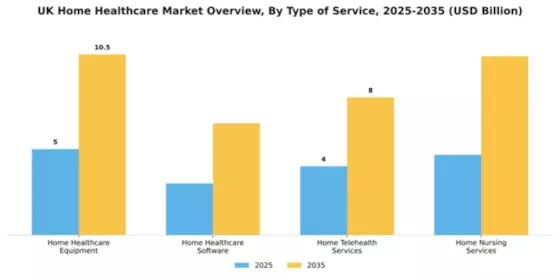
In the UK home healthcare market, the primary segments are Home Healthcare Equipment, Home Healthcare Software, Home Telehealth Services, and Home Nursing Services. Among these, Home Nursing Services hold the largest share, driven by the increasing necessity for personalized care in the comfort of patient's homes. Home Telehealth Services are rapidly gaining traction, attributed to technological advancements and heightened demand for remote health management. The growth in the UK home healthcare market is spurred by demographic shifts, including an aging population and a rising prevalence of chronic illnesses. Also, the COVID-19 pandemic has accelerated the adoption of Home Telehealth Services, as more patients seek remote consultations. The convergence of technology and healthcare services allows for more efficient care delivery, making this segment attractive for future investments.
Home Nursing Services (Dominant) vs. Home Telehealth Services (Emerging)
Home Nursing Services are characterized by their established presence in the UK home healthcare market, providing essential medical and personal care to individuals in need. These services are mandated by the growing demand for in-home care, particularly for the elderly and those with chronic conditions. Home Telehealth Services, on the other hand, represent an emerging trend that leverages technology to facilitate remote healthcare. This segment is marked by flexibility and convenience, allowing patients to receive care from the comfort of their homes. As healthcare increasingly shifts toward remote monitoring and consultations, Home Telehealth Services are progressively becoming a viable complement to traditional nursing services, enhancing overall patient care.
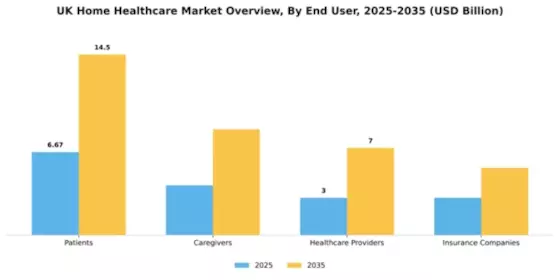
In the UK home healthcare market, the distribution among end users is led by patients, who account for the largest share due to the increasing demand for personalized care services. Caregivers follow closely, reflecting the growing recognition of their essential role in supporting patient recovery and wellbeing. Healthcare providers and insurance companies are also significant players, although they represent smaller portions of the market share, primarily supporting patient and caregiver needs with their services. Growth trends indicate a robust expansion across the end user segments, with caregivers experiencing the fastest growth. Factors such as an aging population, rising chronic health issues, and a shift towards home-based care models are driving this momentum. The UK home healthcare market is adapting to these changes, enhancing service delivery to meet the evolving needs of both patients and caregivers alike.
Patients (Dominant) vs. Caregivers (Emerging)
Patients represent the dominant force in the UK home healthcare market as they directly influence the demand for various healthcare services at home. As the primary recipients of care, their increasing preferences for tailored health solutions and support programs lead to a significant market presence. On the other hand, caregivers are emerging as a crucial component of this ecosystem, with their roles evolving rapidly due to heightened recognition of their impact on patient outcomes. They provide essential support, not just physically but also emotionally and socially, driving a demand for training and resources that cater to their development. The synergy between patients and caregivers is shaping new market dynamics, fostering innovations that enhance overall care quality.
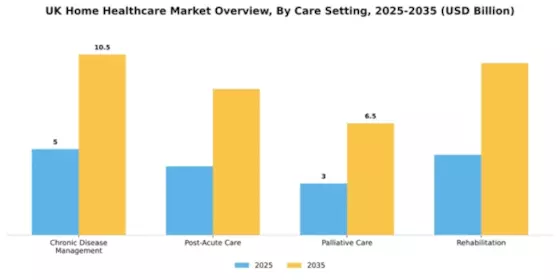
In the UK home healthcare market, the distribution of market share among care settings reveals that Chronic Disease Management stands out as the largest segment, driven by an increasing aging population and high prevalence of long-term conditions. Post-Acute Care and Palliative Care also present significant shares, but they do not match the impact that Chronic Disease Management holds in addressing the ongoing health challenges faced by patients at home. Moreover, the Rehabilitation segment is recognized as the fastest-growing area, fueled by advances in telehealth technologies and an increasing emphasis on prompt recovery from surgeries and other health complications. The rise of personalized healthcare strategies and patient-centered approaches continues to propel demand for Rehabilitation services, thus carving out a prominent place for this segment within the UK home healthcare market.
Chronic Disease Management (Dominant) vs. Rehabilitation (Emerging)
Chronic Disease Management is dominant in the UK home healthcare market, offering tailored solutions for patients managing conditions such as diabetes, hypertension, and respiratory diseases. This segment emphasizes continuity of care and comprehensive support systems, ensuring that patients receive consistent monitoring and assistance. On the other hand, the Rehabilitation segment is emerging due to a growing focus on improving recovery outcomes through in-home therapies and support. This segment leverages advanced technologies such as virtual rehabilitation programs and remote patient monitoring, appealing to both patients and healthcare providers seeking effective, efficient recovery options. Together, these segments illustrate the dynamic nature of care settings within the UK's healthcare landscape.
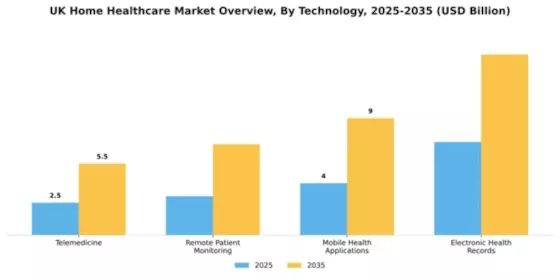
In the UK home healthcare market, the 'Technology' segment displays a diverse composition, with telemedicine holding the largest share, driven by its widespread acceptance due to convenience and accessibility. Remote patient monitoring closely follows, emerging as a pivotal component as healthcare technologies evolve. Mobile health applications and electronic health records form essential support tools, enhancing patient engagement and data management, thus rounding out the market landscape. Growth trends indicate a significant shift toward digital health solutions, propelled by an aging population and increasing chronic diseases. The rise of patient-centric care methodologies is further accelerating advancements in telemedicine and remote patient monitoring. Regulatory support and technological innovations also foster an environment conducive to growth, making these technologies indispensable in enhancing healthcare delivery and outcomes in the UK home healthcare market.
Telemedicine: Telemedicine (Dominant) vs. Mobile Health Applications (Emerging)
Telemedicine stands out as a dominant force in the UK home healthcare market, offering real-time consultations and eliminating geographical barriers for patients. Its effectiveness is complemented by the emergence of mobile health applications, which provide users with personalized health monitoring and data tracking. Telemedicine's robust infrastructure significantly enhances patient-physician interactions, while mobile health applications empower patients through self-management capabilities. These technologies are further supported by interoperability with electronic health records, solidifying their positions in the healthcare ecosystem. As telemedicine continues to thrive, mobile health applications are poised to capture an increasing share of the market, catering to the rising demand for digital health solutions.
Get more detailed insights about UK Home Healthcare Market Request Free Sample
The home healthcare market exhibits a dynamic competitive landscape characterized by a blend of innovation, strategic partnerships, and regional expansion. Key players such as LHC Group (US), Amedisys (US), and Visiting Angels (US) are actively shaping the market through their distinct operational focuses. LHC Group (US) emphasizes a strategy centered on enhancing patient outcomes through technology integration and personalized care, which appears to resonate well with the growing demand for tailored healthcare solutions. Amedisys (US), on the other hand, has been focusing on expanding its service offerings, particularly in chronic care management, thereby positioning itself as a comprehensive provider in the home healthcare sector. Visiting Angels (US) leverages its extensive network of franchise locations to enhance accessibility and local responsiveness, which seems to be a critical factor in its competitive strategy. Collectively, these strategies contribute to a moderately fragmented market structure, where innovation and service diversification play pivotal roles in shaping competitive dynamics.In terms of business tactics, companies are increasingly localizing their operations to better meet regional demands and optimize supply chains. This localization strategy not only enhances service delivery but also fosters community engagement, which is vital in the home healthcare sector. The competitive structure remains moderately fragmented, with numerous players vying for market share. However, the influence of major companies is significant, as they set benchmarks for service quality and operational efficiency, thereby driving overall market standards.
In October LHC Group (US) announced a strategic partnership with a leading telehealth provider to enhance its remote patient monitoring capabilities. This move is likely to bolster LHC Group's service offerings, allowing for more comprehensive care management and potentially improving patient outcomes. The integration of telehealth services aligns with the growing trend towards digital healthcare solutions, indicating a proactive approach to meeting evolving patient needs.
In September Amedisys (US) expanded its footprint by acquiring a regional home health agency, which is expected to enhance its market presence and service capabilities. This acquisition not only signifies Amedisys's commitment to growth but also reflects a broader trend of consolidation within the industry, as companies seek to strengthen their competitive positions through strategic mergers and acquisitions. The integration of new services and expertise from the acquired agency may provide Amedisys with a competitive edge in delivering comprehensive care.
In August Visiting Angels (US) launched a new digital platform aimed at improving caregiver training and support. This initiative appears to be a response to the increasing demand for skilled caregivers in the home healthcare market. By investing in caregiver development, Visiting Angels is likely to enhance service quality and client satisfaction, which are critical factors in maintaining a competitive advantage in this sector.
As of November the home healthcare market is witnessing a pronounced shift towards digitalization, sustainability, and the integration of artificial intelligence (AI) in service delivery. These trends are reshaping competitive dynamics, as companies increasingly prioritize technological advancements to enhance operational efficiency and patient care. Strategic alliances are becoming more prevalent, enabling firms to leverage complementary strengths and resources. Looking ahead, competitive differentiation is expected to evolve, with a notable shift from price-based competition to a focus on innovation, technology integration, and supply chain reliability. This transition underscores the importance of adaptability and forward-thinking strategies in navigating the complexities of the home healthcare landscape.




In recent months, the UK Home Healthcare Market has seen several significant developments, particularly as the government emphasizes the importance of at-home care solutions in light of the ongoing pressure on healthcare resources. In September 2023, Bupa announced an expansion of its home healthcare services, aiming to enhance its offerings in response to increasing demand. Additionally, Alcura has been actively involved in initiatives to streamline logistical support for home healthcare, addressing medication management efficiently.
Notably, in August 2023, Home Instead launched a new training program in partnership with local authorities, focusing on upskilling caregivers, thereby improving the quality of care delivery.
The market has experienced overall growth, with companies like Care U.K. and Four Seasons Health Care benefiting from increased investments in digital health technologies, which enhance service accessibility. Over the past two years, the shift toward home-based care has accelerated, particularly influenced by the COVID-19 pandemic, where consumer preferences have evolved significantly. In terms of mergers and acquisitions, Cera Care announced a strategic acquisition of a regional home care provider in June 2023, further consolidating its position in the market. Such developments are reshaping the landscape of home healthcare in the U.K., reflecting a robust response to changing healthcare needs.
The Home Healthcare Market is projected to grow at a 7.09% CAGR from 2025 to 2035, driven by technological advancements, an aging population, and increasing demand for personalized care.
New opportunities lie in:
By 2035, the market is expected to be robust, driven by innovation and evolving consumer needs.
| MARKET SIZE 2024 | 16.67(USD Billion) |
| MARKET SIZE 2025 | 17.85(USD Billion) |
| MARKET SIZE 2035 | 35.4(USD Billion) |
| COMPOUND ANNUAL GROWTH RATE (CAGR) | 7.09% (2025 - 2035) |
| REPORT COVERAGE | Revenue Forecast, Competitive Landscape, Growth Factors, and Trends |
| BASE YEAR | 2024 |
| Market Forecast Period | 2025 - 2035 |
| Historical Data | 2019 - 2024 |
| Market Forecast Units | USD Billion |
| Key Companies Profiled | LHC Group (US), Amedisys (US), Visiting Angels (US), Kindred Healthcare (US), Brookdale Senior Living (US), Comfort Keepers (US), Gentiva Health Services (US), Curo Health Services (US) |
| Segments Covered | Type of Service, End User, Care Setting, Technology |
| Key Market Opportunities | Integration of telehealth solutions enhances accessibility and efficiency in the home healthcare market. |
| Key Market Dynamics | Rising demand for personalized care solutions drives innovation and competition in the home healthcare market. |
| Countries Covered | UK |
The overall market valuation was $16.67 Billion in 2024.
The projected valuation for 2035 is $35.4 Billion.
The expected CAGR for the market during the forecast period is 7.09%.
Key segments include Home Healthcare Equipment, Home Healthcare Software, Home Telehealth Services, and Home Nursing Services.
In 2024, the valuation of Home Healthcare Equipment was $5.0 Billion.
The Home Nursing Services segment is projected to grow from $4.67 Billion in 2024 to $10.4 Billion by 2035.
Key players include LHC Group, Amedisys, Visiting Angels, and Kindred Healthcare.
The valuation of Home Telehealth Services in 2024 was $4.0 Billion.
The projected valuation for the Chronic Disease Management segment by 2035 is $10.5 Billion.
The Remote Patient Monitoring segment is expected to grow from $3.0 Billion in 2024 to $7.0 Billion by 2035.



Kindly complete the form below to receive a free sample of this Report

“This is really good guys. Excellent work on a tight deadline. I will continue to use you going forward and recommend you to others. Nice job”


“Thanks. It’s been a pleasure working with you, please use me as reference with any other Intel employees.”


“Thanks for sending the report it gives us a good global view of the Betaïne market.”


“Thank you, this will be very helpful for OQS.”


“We found the report very insightful! we found your research firm very helpful. I'm sending this email to secure our future business.”


“I am very pleased with how market segments have been defined in a relevant way for my purposes (such as "Portable Freezers & refrigerators" and "last-mile"). In general the report is well structured. Thanks very much for your efforts.”


“I have been reading the first document or the study, ,the Global HVAC and FP market report 2021 till 2026. Must say, good info! I have not gone in depth at all parts, but got a good indication of the data inside!”


“We got the report in time, we really thank you for your support in this process. I also thank to all of your team as they did a great job.”


“The Automotive 48V ECU Components Procurement Intelligence Study” was a complex project, but the Market Research Future (MRFR) team handled it with quality, agility, and customer-centricity. They delivered all requested data on time and within the agreed scope. The team, including Shubhendra Anand and Rahul Gotadki, was always readily available to clarify questions and swiftly implement necessary adjustments, driving the project to a successful conclusion within a very demanding timeframe.
I would also like to specifically commend Akshay Agarwal for his responsiveness and support at every stage—from our initial inquiry on May 6th through to final delivery on June 18th. His dedication made the entire process seamless.”



