Download Free Sample
Kindly complete the form below to receive a free sample of this Report
Germany Hydrocephalus Market Research Report: Size, Share, Trend Analysis By Types (Congenital Hydrocephalus, Acquired Hydrocephalus, Normal-Pressure Hydrocephalus, Ex-Vacuo Hydrocephalus), By Diagnostic (CT scan – head, MRI, Head Ultrasound), By Treatment (Surgery – Shunt Insertion, Ventriculostomy, Medication), and By End-user (Hospitals & Clinics, Diagnostic Centres, Academic Institutions, Research Organizations) - Growth Outlook & Industry Forecast 2025 To 2035
As per Market Research Future analysis, the Germany Hydrocephalus Market size was estimated at 28.56 USD Million in 2024. The Hydrocephalus market is projected to grow from 30.37 USD Million in 2025 to 56.07 USD Million by 2035, exhibiting a compound annual growth rate (CAGR) of 6.3% during the forecast period 2025 - 2035
The Germany hydrocephalus market is experiencing notable growth driven by advancements in treatment and increased awareness.
| 2024 Market Size | 28.56 (USD Million) |
| 2035 Market Size | 56.07 (USD Million) |
| CAGR (2025 - 2035) | 6.33% |
Medtronic (US), Johnson & Johnson (US), Stryker (US), B. Braun Melsungen AG (DE), Integra LifeSciences (US), Codman Neuro (US), Natus Medical Incorporated (US), NeuroPace (US)
Our Impact
Enabled $4.3B Revenue Impact for Fortune 500 and Leading Multinationals
Partnering with 2000+ Global Organizations Each Year
30K+ Citations by Top-Tier Firms in the Industry
The Germany Hydrocephalus Market in Germany is currently experiencing notable developments, driven by advancements in medical technology and increasing awareness of neurological disorders. The prevalence of hydrocephalus, particularly among pediatric populations, has prompted healthcare providers to seek innovative treatment options. This has led to a rise in demand for shunt systems and endoscopic procedures, which are becoming more refined and effective. Furthermore, the integration of telemedicine in patient management is enhancing access to care, allowing for timely interventions and follow-ups. As a result, stakeholders in the hydrocephalus market are focusing on research and development to improve existing therapies and introduce novel solutions. In addition, the regulatory landscape in Germany is evolving, with authorities emphasizing the importance of safety and efficacy in medical devices. This has encouraged manufacturers to invest in quality assurance and compliance measures, ensuring that products meet stringent standards. The collaboration between academic institutions and industry players is fostering innovation, potentially leading to breakthroughs in treatment methodologies. Overall, the hydrocephalus market appears poised for growth, with a focus on patient-centered care and technological advancements that could reshape treatment paradigms in the near future.
The hydrocephalus market is witnessing a surge in technological innovations, particularly in the development of shunt systems and endoscopic techniques. These advancements are aimed at improving patient outcomes and minimizing complications associated with traditional treatments. As healthcare providers adopt these new technologies, the efficiency and effectiveness of hydrocephalus management are likely to enhance.
There is a growing awareness of hydrocephalus among healthcare professionals and the general public in Germany. This heightened awareness is leading to earlier diagnosis and intervention, which is crucial for improving patient prognosis. Educational campaigns and support groups are playing a vital role in disseminating information about the condition, thereby influencing the hydrocephalus market positively.
The regulatory environment surrounding medical devices in Germany is becoming increasingly stringent. Manufacturers in the hydrocephalus market are adapting to these changes by enhancing their quality control processes and ensuring compliance with new regulations. This focus on safety and efficacy is expected to foster consumer trust and drive market growth.
The hydrocephalus market in Germany is experiencing growth due to the rising incidence of hydrocephalus cases. Recent data indicates that approximately 1 in 1,000 live births are affected by this condition, leading to an increased demand for effective treatment options. As awareness of the condition grows among healthcare professionals and the general public, more cases are being diagnosed, which in turn drives the need for innovative solutions in the hydrocephalus market. The increasing prevalence of congenital hydrocephalus, particularly in neonates, is prompting healthcare providers to seek advanced treatment modalities, thereby expanding the market. Furthermore, the aging population in Germany is also contributing to the rise in acquired hydrocephalus cases, further bolstering the market's growth potential.
Government initiatives and funding play a pivotal role in shaping the hydrocephalus market in Germany. The German government has been actively promoting healthcare initiatives aimed at improving the diagnosis and treatment of neurological disorders. In 2025, funding for healthcare research is projected to increase by 10%, with a portion specifically allocated to conditions like hydrocephalus. This financial support is likely to facilitate the development of new treatment protocols and enhance access to care for affected individuals. Additionally, public health campaigns aimed at raising awareness about hydrocephalus are expected to contribute to earlier diagnosis and intervention, which could positively impact the overall market dynamics. Such initiatives not only improve patient outcomes but also stimulate growth within the hydrocephalus market.
Investment in research and development (R&D) is a crucial driver for the hydrocephalus market in Germany. Pharmaceutical companies and medical device manufacturers are increasingly allocating resources to develop novel therapies and technologies aimed at improving patient outcomes. In 2025, it is estimated that R&D spending in the medical sector will reach €5 billion, with a significant portion directed towards neurological disorders, including hydrocephalus. This focus on innovation is likely to yield new treatment options, such as minimally invasive surgical techniques and advanced shunt systems, which could enhance the quality of life for patients. The collaboration between academic institutions and industry players is also fostering a conducive environment for breakthroughs in hydrocephalus treatment, thereby propelling the market forward.
The integration of advanced technologies in healthcare is significantly influencing the hydrocephalus market in Germany. The adoption of telemedicine, artificial intelligence, and data analytics is transforming how healthcare providers diagnose and manage hydrocephalus. In 2025, it is anticipated that the use of telehealth services will increase by 30%, allowing for remote monitoring and consultations for patients with hydrocephalus. This technological shift is likely to enhance patient engagement and adherence to treatment plans, ultimately improving outcomes. Furthermore, the development of smart shunt systems equipped with sensors to monitor intracranial pressure is expected to revolutionize treatment approaches. Such innovations are indicative of a broader trend towards personalized medicine, which could reshape the hydrocephalus market landscape.
The emergence of patient advocacy and support groups is becoming a significant driver for the hydrocephalus market in Germany. These organizations are dedicated to raising awareness, providing education, and supporting individuals affected by hydrocephalus. In 2025, it is estimated that the number of active support groups will increase by 25%, fostering a community that encourages dialogue and information sharing. This growth is likely to empower patients and families, leading to increased demand for treatment options and resources. Additionally, advocacy efforts are expected to influence healthcare policies and funding allocations, further enhancing the visibility of hydrocephalus within the healthcare system. As these groups continue to gain traction, they may play a crucial role in shaping the future of the hydrocephalus market.
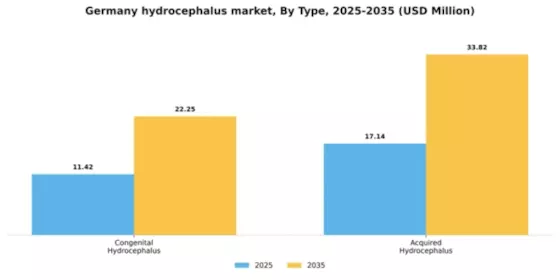
In the Germany hydrocephalus market, the distribution of market share between congenital and acquired hydrocephalus shows a clear dominance of congenital hydrocephalus. This segment accounts for a significant portion of the overall market, driven by the recognized prevalence of congenital conditions at birth. Meanwhile, acquired hydrocephalus is also carving out its niche, gaining attention due to increasing diagnosis rates and advancements in treatment options available to patients. The growth trends for these segments indicate a substantial upward trajectory, particularly for acquired hydrocephalus, which is the fastest-growing due to heightened awareness and improved imaging technologies that facilitate earlier diagnoses. Furthermore, the increasing incidence of conditions that lead to acquired hydrocephalus, such as head injuries and infections, contributes to its growth, making it a focus area for innovation and research.
Congenital Hydrocephalus (Dominant) vs. Acquired Hydrocephalus (Emerging)
Congenital hydrocephalus is characterized by an excess accumulation of cerebrospinal fluid in the ventricles of the brain due to developmental anomalies occurring during fetal development. This segment remains dominant in the Germany hydrocephalus market due to established treatment protocols and ongoing research into long-term outcomes. In contrast, acquired hydrocephalus emerges in later stages of life, often as a result of trauma or infection, and is gaining momentum because of the increasing focus on early diagnosis and intervention. Factors such as aging populations and improved healthcare access further stimulate interest in both categories, but the distinct characteristics and care requirements of each present unique challenges and opportunities within the healthcare framework.
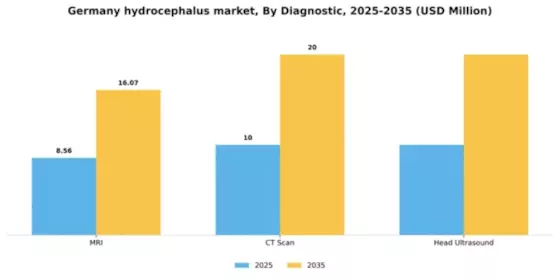
In the Germany hydrocephalus market, the diagnostic segment is primarily divided among MRI, CT Scan, and Head Ultrasound. MRI holds the largest share of the market, capturing significant traction due to its effective imaging capabilities, while CT Scans are emerging rapidly, bolstered by advancements in technology and increased demand for comprehensive diagnostics. Head Ultrasound, although present, occupies a smaller share in comparison. The growth trends in this segment are driven by the rising incidence of hydrocephalus and advancements in imaging technologies. MRI continues to be the diagnostic method of choice due to its precision and ability to provide high-resolution images. Meanwhile, CT Scans are experiencing the fastest growth, attributed to their speed and efficiency in emergency situations. The ongoing research and development in imaging techniques are expected to further enhance the capabilities and market presence of these diagnostic tools.
MRI (Dominant) vs. CT Scan (Emerging)
In the context of the Germany hydrocephalus market, MRI stands out as the dominant diagnostic tool, valued for its unparalleled image quality and detail in identifying hydrocephalus conditions. It is preferred by many healthcare providers due to its non-invasive nature and ability to produce clear images of brain structures. On the other hand, CT Scans are emerging strongly due to their rapid imaging capabilities and effectiveness in acute care settings, making them an essential complement to MRI. As hospitals and clinics seek to improve their diagnostic speed and efficiency, the demand for CT Scans is projected to rise, positioning them as a critical player in the diagnostic landscape. This trend highlights a juxtaposition of established reliability versus innovative efficiency in diagnostic methodologies.
In the Germany hydrocephalus market, the Shunt Insertion Procedure holds the largest market share among surgical interventions, largely due to its established efficacy and familiarity among healthcare providers. Ventriculostomy, while currently smaller in overall market share, is rapidly gaining traction as a viable alternative, particularly for cases where traditional shunt placements are not optimal. This shift reflects a growing recognition of its benefits in reducing infection risks and procedure complications. The growth trends within this segment are driven by advances in surgical techniques and increased awareness of hydrocephalus treatments among both clinicians and patients. Enhanced training for healthcare professionals and innovations in device technology further boost adoption rates. As more research highlights the long-term benefits associated with effective CSF management, the demand for both Shunt Insertion Procedures and Ventriculostomy is expected to grow, making them pivotal in addressing hydrocephalus cases across diverse demographics.
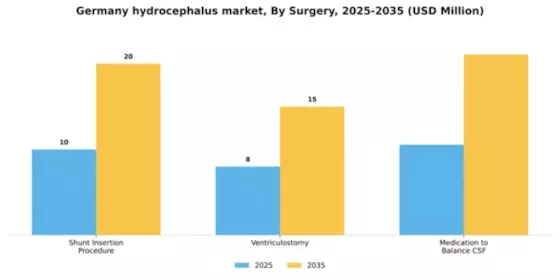
Shunt Insertion Procedure (Dominant) vs. Ventriculostomy (Emerging)
The Shunt Insertion Procedure remains the dominant technique within the Germany hydrocephalus market, primarily due to its long-standing use and proven results in managing cerebrospinal fluid (CSF) dynamics effectively. This procedure is favored for its ability to provide consistent relief from symptoms associated with hydrocephalus, making it a go-to choice for many physicians. On the other hand, Ventriculostomy is emerging as a compelling alternative, particularly in instances where traditional shunt systems present risks of malfunction or infection. Its growing acceptance is bolstered by improvements in surgical technology, which enable a minimally invasive approach, resulting in shorter recovery times and potentially better patient outcomes. As more healthcare providers embrace these advancements, the role of Ventriculostomy in hydrocephalus treatment is becoming increasingly significant.
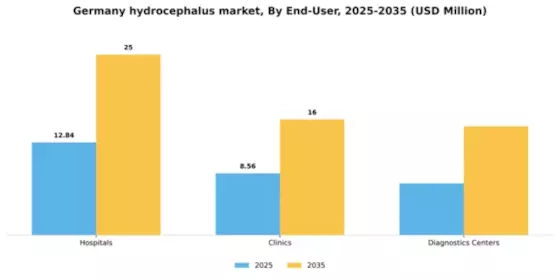
The 'End-User' segment in the Germany hydrocephalus market is primarily dominated by hospitals, which account for a significant share of market activities. Hospitals serve as the largest providers of treatment and care for hydrocephalus patients, utilizing advanced techniques and technologies to manage the condition effectively. Clinics, while smaller in share, are experiencing rapid growth due to the increasing need for specialized medical care, attracting more patients looking for accessibility and convenience in treatment options. In recent years, the demand for hydrocephalus treatment has been on the rise, influenced by the aging population and advancements in medical technology. Clinics are emerging as key players in this market, offering diagnostic and follow-up services that complement hospital treatments. Factors such as increased public awareness, favorable reimbursement policies, and a drive toward outpatient care are propelling clinics into a faster growth trajectory, making them a crucial part of the healthcare infrastructure addressing hydrocephalus in the region.
Hospitals (Dominant) vs. Clinics (Emerging)
Hospitals in the Germany hydrocephalus market hold a dominant position due to their comprehensive resources and expertise in managing complex cases. They typically offer a wide range of surgical and non-surgical treatment options, supported by specialized staff and advanced infrastructure. This enables hospitals to handle severe cases of hydrocephalus and provide robust care, driving their market share. On the other hand, clinics are emerging as important contributors by focusing on outpatient services, making treatment more accessible and tailored to patients' needs. They emphasize preventive care, early diagnosis, and ongoing management, which appeals to a demographic increasingly seeking convenience and reduced hospital stays. The synergy between hospitals and clinics is vital for improving treatment outcomes.
Get more detailed insights about Germany Hydrocephalus Market Request Free Sample
The hydrocephalus market in Germany is characterized by a competitive landscape that is increasingly shaped by innovation, strategic partnerships, and a focus on patient-centric solutions. Key players such as Medtronic (US), Johnson & Johnson (US), and B. Braun Melsungen AG (DE) are actively engaged in enhancing their product offerings and expanding their market presence. Medtronic (US) has positioned itself as a leader in the development of advanced shunt systems, emphasizing technological innovation and patient outcomes. Meanwhile, Johnson & Johnson (US) has been focusing on mergers and acquisitions to bolster its portfolio, particularly in neurovascular devices, which complements its existing hydrocephalus solutions. B. Braun Melsungen AG (DE) is leveraging its strong local presence to optimize supply chains and enhance manufacturing capabilities, thereby ensuring timely delivery of its products to healthcare providers.The business tactics employed by these companies reflect a moderately fragmented market structure, where localized manufacturing and supply chain optimization are critical for maintaining competitive advantage. The collective influence of these key players is significant, as they not only drive innovation but also set industry standards that smaller companies must adhere to. This dynamic fosters a competitive environment where agility and responsiveness to market needs are paramount.
In October Medtronic (US) announced the launch of a new hydrocephalus management platform that integrates AI-driven analytics to monitor patient conditions in real-time. This strategic move is likely to enhance patient care by providing healthcare professionals with actionable insights, thereby improving treatment outcomes. The integration of AI into their product line signifies a shift towards more personalized and data-driven healthcare solutions.
In September Johnson & Johnson (US) completed the acquisition of a promising neurotechnology startup, which specializes in minimally invasive surgical techniques for treating hydrocephalus. This acquisition is expected to expand Johnson & Johnson's capabilities in the hydrocephalus market, allowing for the introduction of innovative surgical solutions that could potentially reduce recovery times and improve patient experiences. Such strategic actions indicate a clear trend towards enhancing surgical efficacy and patient safety.
In August B. Braun Melsungen AG (DE) launched a new initiative aimed at sustainability in its manufacturing processes, focusing on reducing waste and energy consumption. This initiative not only aligns with global sustainability trends but also positions B. Braun as a responsible corporate entity in the healthcare sector. The emphasis on sustainable practices is becoming increasingly important to stakeholders, including healthcare providers and patients, who are more conscious of environmental impacts.
As of November the hydrocephalus market is witnessing trends that emphasize digitalization, sustainability, and the integration of advanced technologies such as AI. Strategic alliances among key players are shaping the competitive landscape, fostering innovation and enhancing product offerings. The shift from price-based competition to a focus on technological advancement and supply chain reliability is evident. Companies that prioritize innovation and patient-centric solutions are likely to emerge as leaders in this evolving market.


Recent developments in the Germany Hydrocephalus Market have shown a steady progression, particularly regarding advancements in medical devices aimed at treating the condition. Companies like Medtronic and Stryker are focusing on enhancing their product lines, which is evident from their increased investment in Research and Development.
Additionally, Integra LifeSciences and Codman and Shurtleff are bringing innovative solutions to the market, reflecting the growing demand for effective hydrocephalus management solutions. Moreover, Germany's healthcare system is integrating these technologies more widely as part of its approach to neurological challenges, aligning with European health initiatives.
In terms of market dynamics, the valuation of several companies, including B. Braun Melsungen and Neurotech, is gaining momentum, attributed to an increasing awareness of hydrocephalus treatments and preventive measures.
Major happenings over the last few years include product launches and collaborations that have bolstered the therapeutic options available. As for mergers and acquisitions, while recent transactions remain focused on external regions, potential consolidations are anticipated as the market evolves, which could reshape competitive landscapes in the near future.
The Hydrocephalus Market in Germany is projected to grow at 6.33% CAGR from 2025 to 2035, driven by advancements in treatment technologies and increasing awareness.
New opportunities lie in:
By 2035, the hydrocephalus market is expected to achieve substantial growth and innovation.
| MARKET SIZE 2024 | 28.56(USD Million) |
| MARKET SIZE 2025 | 30.37(USD Million) |
| MARKET SIZE 2035 | 56.07(USD Million) |
| COMPOUND ANNUAL GROWTH RATE (CAGR) | 6.33% (2025 - 2035) |
| REPORT COVERAGE | Revenue Forecast, Competitive Landscape, Growth Factors, and Trends |
| BASE YEAR | 2024 |
| Market Forecast Period | 2025 - 2035 |
| Historical Data | 2019 - 2024 |
| Market Forecast Units | USD Million |
| Key Companies Profiled | Medtronic (US), Johnson & Johnson (US), Stryker (US), B. Braun Melsungen AG (DE), Integra LifeSciences (US), Codman Neuro (US), Natus Medical Incorporated (US), NeuroPace (US) |
| Segments Covered | Type, Diagnostic, Surgery, End-User |
| Key Market Opportunities | Advancements in minimally invasive surgical techniques enhance treatment options in the hydrocephalus market. |
| Key Market Dynamics | Rising demand for innovative treatment options drives competition and regulatory scrutiny in the hydrocephalus market. |
| Countries Covered | Germany |
The overall market valuation was $28.56 Million in 2024.
The projected valuation for 2035 is $56.07 Million.
The expected CAGR for the hydrocephalus market during the forecast period 2025 - 2035 is 6.33%.
Key players in the market include Medtronic, Johnson & Johnson, Stryker, B. Braun Melsungen AG, Integra LifeSciences, Codman Neuro, Natus Medical Incorporated, and NeuroPace.
The market segments based on type include Congenital Hydrocephalus valued at $11.42 - $22.25 Million and Acquired Hydrocephalus valued at $17.14 - $33.82 Million.
Diagnostic methods include MRI valued at $8.56 - $16.07 Million, CT Scan valued at $10.0 - $20.0 Million, and Head Ultrasound valued at $10.0 - $20.0 Million.
Surgical procedures include Shunt Insertion valued at $10.0 - $20.0 Million, Ventriculostomy valued at $8.0 - $15.0 Million, and Medication to Balance CSF valued at $10.56 - $21.07 Million.
End-user segments include Hospitals valued at $12.84 - $25.0 Million, Clinics valued at $8.56 - $16.0 Million, and Diagnostics Centers valued at $7.16 - $15.07 Million.
While specific comparisons to other regions are not provided, the growth trajectory in Germany appears promising given the projected increase in market valuation.
Trends influencing the market may include advancements in surgical techniques, increased awareness of hydrocephalus, and the development of innovative diagnostic tools.



Kindly complete the form below to receive a free sample of this Report

“This is really good guys. Excellent work on a tight deadline. I will continue to use you going forward and recommend you to others. Nice job”


“Thanks. It’s been a pleasure working with you, please use me as reference with any other Intel employees.”


“Thanks for sending the report it gives us a good global view of the Betaïne market.”


“Thank you, this will be very helpful for OQS.”


“We found the report very insightful! we found your research firm very helpful. I'm sending this email to secure our future business.”


“I am very pleased with how market segments have been defined in a relevant way for my purposes (such as "Portable Freezers & refrigerators" and "last-mile"). In general the report is well structured. Thanks very much for your efforts.”


“I have been reading the first document or the study, ,the Global HVAC and FP market report 2021 till 2026. Must say, good info! I have not gone in depth at all parts, but got a good indication of the data inside!”


“We got the report in time, we really thank you for your support in this process. I also thank to all of your team as they did a great job.”


“The Automotive 48V ECU Components Procurement Intelligence Study” was a complex project, but the Market Research Future (MRFR) team handled it with quality, agility, and customer-centricity. They delivered all requested data on time and within the agreed scope. The team, including Shubhendra Anand and Rahul Gotadki, was always readily available to clarify questions and swiftly implement necessary adjustments, driving the project to a successful conclusion within a very demanding timeframe.
I would also like to specifically commend Akshay Agarwal for his responsiveness and support at every stage—from our initial inquiry on May 6th through to final delivery on June 18th. His dedication made the entire process seamless.”



