Download Free Sample
Kindly complete the form below to receive a free sample of this Report
Germany Insect Pest Control Market Size, Share, Industry Trend & Analysis Research Report: By Pest Type (Insects, Termites, Rodents, others), By Method (Chemical, Mechanical, Biological) andBy Application (Residential, Commercial, Industrial)- Forecast to 2035
As per Market Research Future analysis, the Germany insect pest control market Size was estimated at 1272.56 USD Million in 2024. The Germany insect pest-control market is projected to grow from 1356.55 USD Million in 2025 to 2570.38 USD Million by 2035, exhibiting a compound annual growth rate (CAGR) of 6% during the forecast period 2025 - 2035
The Germany insect pest-control market is experiencing a shift towards sustainable and technologically advanced solutions.
| 2024 Market Size | 1272.56 (USD Million) |
| 2035 Market Size | 2570.38 (USD Million) |
| CAGR (2025 - 2035) | 6.6% |
Bayer AG (DE), Syngenta AG (CH), BASF SE (DE), FMC Corporation (US), Rentokil Initial plc (GB), Ecolab Inc. (US), Terminix Global Holdings Inc. (US), Rollins Inc. (US), Anticimex AB (SE)
Our Impact
Enabled $4.3B Revenue Impact for Fortune 500 and Leading Multinationals
Partnering with 2000+ Global Organizations Each Year
30K+ Citations by Top-Tier Firms in the Industry
The insect pest-control market in Germany is currently experiencing notable transformations driven by various factors. Increasing awareness regarding health and environmental impacts associated with pest infestations has led to a growing demand for effective pest management solutions. Consumers are becoming more discerning, favoring products that are not only efficient but also environmentally friendly. This shift is prompting manufacturers to innovate and develop sustainable alternatives, which may include organic and biopesticide options. Furthermore, regulatory frameworks are evolving, with stricter guidelines on chemical usage, thereby influencing product formulations and market dynamics. In addition, the rise of urbanization in Germany is contributing to the expansion of the insect pest-control market. As urban areas grow, so does the likelihood of pest-related issues, necessitating comprehensive pest management strategies. The integration of technology, such as smart pest control systems and digital monitoring tools, is also gaining traction. These advancements may enhance the effectiveness of pest control measures while providing real-time data for better decision-making. Overall, the insect pest-control market appears poised for growth, driven by innovation, regulatory changes, and shifting consumer preferences.
The pest control services Germany sector is experiencing steady growth as awareness of health, hygiene, and property protection rises across both urban and rural regions. Driven by increasing concerns over vector-borne diseases and structural damages, the insect management market Germany is expanding its range of solutions, including advanced monitoring, environmentally responsible treatments, and integrated pest management strategies. Within this landscape, residential pest control Germany services are seeing heightened demand from homeowners and tenants seeking effective, safe, and long-term protection against common pests such as ants, rodents, and cockroaches. At the same time, the industrial pest control market Germany is becoming more sophisticated, with specialized offerings tailored to sectors like food processing, logistics, hospitality, and manufacturing, where compliance with strict sanitation standards and prevention of contamination are critical for operational continuity and regulatory adherence.
There is a marked trend towards sustainable pest control solutions within the market. Consumers increasingly prefer products that minimize environmental impact, leading to a rise in organic and biopesticide offerings. This shift aligns with broader ecological concerns and regulatory pressures.
The incorporation of technology into pest management practices is becoming more prevalent. Smart systems and digital monitoring tools are enhancing the efficiency of pest control measures, allowing for real-time data analysis and improved decision-making.
As urban areas expand, the demand for effective pest control solutions is intensifying. The growing population in cities is likely to result in increased pest-related challenges, necessitating comprehensive management strategies to address these issues.
Consumer awareness regarding health and environmental impacts is significantly influencing the insect pest-control market in Germany. As individuals become more informed about the potential risks associated with chemical pesticides, there is a growing preference for organic and eco-friendly alternatives. This shift in consumer behavior is prompting companies to diversify their product offerings, focusing on natural insect repellents and biopesticides. Market data indicates that the organic pest-control segment is expected to witness a growth rate of around 6.5% annually, as consumers increasingly prioritize safety and sustainability. Consequently, businesses that align their strategies with these consumer preferences are likely to thrive in the evolving landscape of the insect pest-control market.
The agricultural sector in Germany is witnessing robust growth, which is directly impacting the insect pest-control market. With an increasing focus on crop yield and quality, farmers are investing in advanced pest management solutions to protect their produce from infestations. The demand for effective pest control measures is expected to rise, particularly in the context of sustainable agriculture practices. Market analysis suggests that the agricultural segment of the insect pest-control market could expand by approximately 4.8% annually, driven by the need for enhanced productivity and food security. This growth presents opportunities for companies to introduce innovative products tailored to the specific needs of the agricultural community.
The insect pest-control market in Germany is experiencing a notable shift due to the evolving regulatory framework. Stricter regulations regarding pesticide usage are being implemented, which may compel manufacturers to innovate and develop safer, more environmentally friendly products. This regulatory landscape is likely to drive demand for integrated pest management solutions, as stakeholders seek compliance while maintaining efficacy. The market is projected to grow at a CAGR of approximately 5.2% over the next five years, reflecting the increasing emphasis on sustainable practices. As regulations tighten, companies that adapt swiftly to these changes may gain a competitive edge, thereby influencing the overall dynamics of the insect pest-control market.
Urbanization in Germany is contributing to the expansion of the insect pest-control market. As cities grow and infrastructure develops, the prevalence of pest-related issues is likely to increase, necessitating effective pest management solutions. Urban areas, with their dense populations and diverse environments, present unique challenges for pest control. The market is expected to see a growth rate of around 5.5% as urbanization continues to drive demand for pest control services in residential and commercial settings. Companies that can adapt their strategies to address the complexities of urban pest management may find significant opportunities within the insect pest-control market.
Technological advancements are playing a crucial role in shaping the insect pest-control market in Germany. Innovations such as smart traps, drones for monitoring pest populations, and precision application techniques are enhancing the effectiveness of pest management strategies. These technologies not only improve operational efficiency but also reduce the environmental footprint associated with traditional pest control methods. The integration of data analytics and IoT in pest management is expected to drive market growth, with projections indicating a potential increase in market size by 7% over the next few years. As these technologies become more accessible, they are likely to redefine the standards of pest control in the insect pest-control market.
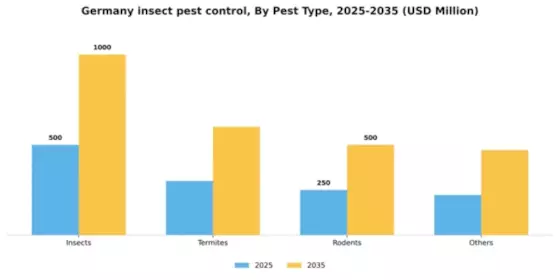
In the Germany insect pest-control market, the segment distribution indicates that Insects hold the largest market share, driven by a wide range of effective treatment options available. Following Insects, Rodents are gaining traction, showcasing a dynamic shift that reflects evolving pest management needs. The Others category encompasses various minor pests but remains significantly smaller in comparison. The growth of the Rodents segment can be attributed to increasing urbanization and changing lifestyles, leading to higher incidences of rodent infestations. Furthermore, growing awareness regarding health risks associated with rodent-borne diseases is pushing demand for control measures. The combined efforts of continuous research and development in pest control technologies also play a pivotal role in driving this segment forward.
Insects: Dominant vs. Rodents: Emerging
Insects represent the dominant force in the pest control landscape, equipped with a comprehensive array of solutions ranging from chemical to environmentally friendly options. This segment benefits from established market players and consumer trust in proven insect management methods. Conversely, Rodents, categorized as emerging, are experiencing rapid growth due to heightened concerns over hygiene and the impact of rodents on public health. The burgeoning demand for innovative and effective rodent solutions is prompting pest control companies to invest heavily in research. Both segments showcase distinct characteristics that cater to specific market demands, with Insects leading in terms of market presence while Rodents demonstrate a fast-adjusting strategy to capture emerging needs.
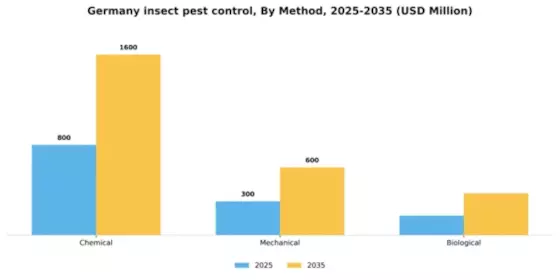
In the Germany insect pest-control market, the chemical method holds the largest share among the various methods deployed. This segment's dominance can be attributed to its widespread use due to effectiveness and ease of application. However, the biological method is on the rise as a viable alternative, catering to environmentally conscious consumers looking for sustainable solutions. Growth trends indicate a shift towards biological methods as regulatory pressures and consumer preferences evolve. While chemical solutions still prevail in overall market share, the biological approach is rapidly gaining traction, driven by a growing awareness of ecological impacts and the demand for eco-friendly pest control options. This dynamic reflects a broader market preference for sustainability in pest management practices.
Chemical: Chemical (Dominant) vs. Biological (Emerging)
The chemical pest-control segment remains dominant in the Germany insect pest-control market, characterized by its established methodologies and robust applications in both domestic and commercial sectors. Its extensive use stems from the immediate effectiveness in eradicating pests. However, the biological segment is emerging strongly, driven by innovation and increasing consumer demand for natural alternatives. Biological methods focus on utilizing natural predators or microorganisms, appealing to a segment of the market that prioritizes sustainability. As biological solutions become more sophisticated and effective, they are increasingly recognized for their potential to complement or even replace traditional chemical practices, signaling a significant shift in consumer preferences.
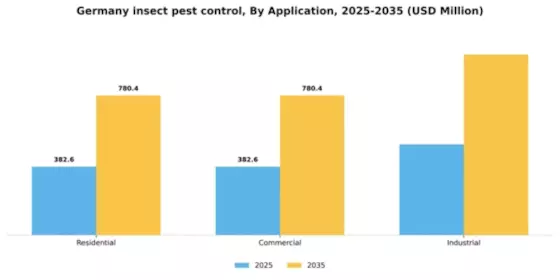
In the Germany insect pest-control market, the application segment is primarily composed of residential, commercial, and industrial areas. The residential sector holds the largest market share due to the increasing focus on maintaining hygiene and preventing pest-related diseases in households. The commercial sector follows closely, driven by the growth in food service, hospitality, and retail businesses, all of which prioritize pest prevention to protect their reputation and ensure compliance with health regulations. Growth trends in this segment are significantly influenced by rising public awareness about pest-related health risks and the demand for sustainable pest control solutions. The commercial segment is particularly emerging as the fastest-growing area, as businesses invest more in pest management services to enhance customer experiences and safety. Additionally, regulatory pressures in various industries are pushing companies toward adopting more efficient and eco-friendly pest control practices, further fueling market expansion.
Residential (Dominant) vs. Commercial (Emerging)
The residential application segment is the dominant force in the Germany insect pest-control market, characterized by a high volume of end-user engagement and a strong demand for effective pest management solutions at home. This segment benefits from increasing investments in pest prevention products like insect repellents and traps that cater to family safety and comfort. Conversely, the commercial segment is rapidly emerging, largely due to the intensifying need for pest control in sectors like food service, healthcare, and retail. Companies are actively seeking comprehensive pest management plans tailored to their operational needs, and the growing trend of outsourcing pest control services is making this segment increasingly appealing. Together, these segments showcase both stability and dynamic growth opportunities within the market.
Get more detailed insights about Germany Insect Pest Control Market Request Free Sample
The insect pest-control market in Germany exhibits a dynamic competitive landscape characterized by a blend of innovation, strategic partnerships, and a focus on sustainability. Key players such as Bayer AG (DE), BASF SE (DE), and Rentokil Initial plc (GB) are at the forefront, each employing distinct strategies to enhance their market positioning. Bayer AG (DE) emphasizes research and development, particularly in biopesticides, which aligns with the growing consumer demand for environmentally friendly solutions. Meanwhile, BASF SE (DE) focuses on expanding its product portfolio through strategic acquisitions, thereby enhancing its competitive edge. Rentokil Initial plc (GB) leverages digital transformation to optimize service delivery, indicating a shift towards technology-driven pest management solutions. Collectively, these strategies contribute to a competitive environment that is increasingly shaped by innovation and sustainability. In terms of business tactics, companies are localizing manufacturing and optimizing supply chains to enhance efficiency and responsiveness to market demands. The market structure appears moderately fragmented, with several key players exerting influence while also allowing for niche companies to thrive. This fragmentation fosters a competitive atmosphere where innovation and customer service are paramount, as companies strive to differentiate themselves in a crowded marketplace. In October 2025, Bayer AG (DE) announced a partnership with a leading agricultural technology firm to develop advanced pest management solutions utilizing AI and machine learning. This strategic move is likely to enhance Bayer's capabilities in predictive analytics, allowing for more effective pest control measures tailored to specific agricultural needs. Such innovations may position Bayer as a leader in the integration of technology within pest management, potentially reshaping industry standards. In September 2025, BASF SE (DE) completed the acquisition of a regional pest control company, which is expected to bolster its market presence in Germany. This acquisition not only expands BASF's service offerings but also enhances its ability to provide localized solutions, thereby improving customer engagement and satisfaction. The strategic importance of this move lies in its potential to create synergies that drive operational efficiencies and broaden market reach. In August 2025, Rentokil Initial plc (GB) launched a new digital platform aimed at streamlining pest control services for commercial clients. This platform integrates real-time monitoring and reporting features, which could significantly enhance service efficiency and customer experience. The strategic importance of this initiative reflects a broader trend towards digitalization in the industry, where technology plays a crucial role in service delivery and operational effectiveness. As of November 2025, current competitive trends in the insect pest-control market are increasingly defined by digitalization, sustainability, and the integration of AI technologies. Strategic alliances are becoming more prevalent, as companies recognize the value of collaboration in driving innovation and expanding market reach. Looking ahead, competitive differentiation is likely to evolve from traditional price-based competition towards a focus on technological advancements, innovative solutions, and reliable supply chains. This shift underscores the importance of adaptability and forward-thinking strategies in maintaining a competitive edge in a rapidly changing market.
The Germany Insect Pest Control Market is experiencing several significant developments. Recent news indicates that Ecolab and BASF are expanding their pest management solutions aimed at residential and commercial sectors, leveraging advanced technologies for efficient pest elimination. In November 2022, Bayer completed the acquisition of a niche pest control firm to strengthen its market presence and diversify its product offerings. Additionally, Rentokil Initial has announced plans for an extensive outreach program targeting urban pest issues, which could enhance community engagement in pest management practices.
Over the past couple of years, other companies like Anticimex and Terminix have also seen increasing growth, attributed to heightened consumer awareness and demand for sustainable insect control solutions. The increasing population and rising urbanization in Germany are fueling market valuation growth, with projections estimating a significant rise in demand for green pest control products. Furthermore, intensified regulatory scrutiny around chemical pest control methods is pushing industry players to adapt and innovate, reflecting a shift in consumer preferences towards eco-friendly solutions.
Overall, the market landscape in Germany is evolving rapidly, characterized by increased competition and the emergence of new technologies in pest control.
The Insect Pest Control Market in Germany is projected to grow at a 6.6% CAGR from 2025 to 2035, driven by increasing urbanization, regulatory changes, and rising consumer awareness.
New opportunities lie in:
By 2035, the market is expected to achieve robust growth, positioning itself as a leader in sustainable pest control solutions.
| MARKET SIZE 2024 | 1272.56(USD Million) |
| MARKET SIZE 2025 | 1356.55(USD Million) |
| MARKET SIZE 2035 | 2570.38(USD Million) |
| COMPOUND ANNUAL GROWTH RATE (CAGR) | 6.6% (2025 - 2035) |
| REPORT COVERAGE | Revenue Forecast, Competitive Landscape, Growth Factors, and Trends |
| BASE YEAR | 2024 |
| Market Forecast Period | 2025 - 2035 |
| Historical Data | 2019 - 2024 |
| Market Forecast Units | USD Million |
| Key Companies Profiled | Bayer AG (DE), Syngenta AG (CH), BASF SE (DE), FMC Corporation (US), Rentokil Initial plc (GB), Ecolab Inc. (US), Terminix Global Holdings Inc. (US), Rollins Inc. (US), Anticimex AB (SE) |
| Segments Covered | Pest Type, Method, Application |
| Key Market Opportunities | Adoption of biopesticides driven by increasing consumer demand for sustainable pest management solutions. |
| Key Market Dynamics | Rising consumer demand for eco-friendly insect pest-control solutions drives innovation and regulatory adaptations. |
| Countries Covered | Germany |
The market valuation was $1272.56 Million in 2024.
The projected valuation for 2035 is $2570.38 Million.
The expected CAGR is 6.6% during the forecast period 2025 - 2035.
Key players include Bayer AG, Syngenta AG, BASF SE, FMC Corporation, Rentokil Initial plc, Ecolab Inc., Terminix Global Holdings Inc., Rollins Inc., and Anticimex AB.
The main segments include Insects ($500.0 - $1000.0 Million), Termites ($300.0 - $600.0 Million), Rodents ($250.0 - $500.0 Million), and Others ($222.56 - $470.38 Million).
The application segments are Residential ($382.56 - $780.38 Million), Commercial ($382.56 - $780.38 Million), and Industrial ($507.44 - $1009.62 Million).
The methods include Chemical ($800.0 - $1600.0 Million), Mechanical ($300.0 - $600.0 Million), and Biological ($172.56 - $370.38 Million).
The market's growth outlook appears positive, with a projected valuation increase to $2570.38 Million by 2035.
Factors influencing growth may include advancements in pest-control technologies, increasing urbanization, and rising awareness of pest-related health issues.
Current trends include a shift towards sustainable pest-control methods and increased regulatory scrutiny on chemical usage.





Kindly complete the form below to receive a free sample of this Report

“This is really good guys. Excellent work on a tight deadline. I will continue to use you going forward and recommend you to others. Nice job”


“Thanks. It’s been a pleasure working with you, please use me as reference with any other Intel employees.”


“Thanks for sending the report it gives us a good global view of the Betaïne market.”


“Thank you, this will be very helpful for OQS.”


“We found the report very insightful! we found your research firm very helpful. I'm sending this email to secure our future business.”


“I am very pleased with how market segments have been defined in a relevant way for my purposes (such as "Portable Freezers & refrigerators" and "last-mile"). In general the report is well structured. Thanks very much for your efforts.”


“I have been reading the first document or the study, ,the Global HVAC and FP market report 2021 till 2026. Must say, good info! I have not gone in depth at all parts, but got a good indication of the data inside!”


“We got the report in time, we really thank you for your support in this process. I also thank to all of your team as they did a great job.”


“The Automotive 48V ECU Components Procurement Intelligence Study” was a complex project, but the Market Research Future (MRFR) team handled it with quality, agility, and customer-centricity. They delivered all requested data on time and within the agreed scope. The team, including Shubhendra Anand and Rahul Gotadki, was always readily available to clarify questions and swiftly implement necessary adjustments, driving the project to a successful conclusion within a very demanding timeframe.
I would also like to specifically commend Akshay Agarwal for his responsiveness and support at every stage—from our initial inquiry on May 6th through to final delivery on June 18th. His dedication made the entire process seamless.”



