Download Free Sample
Kindly complete the form below to receive a free sample of this Report
North America Insect Pest Control Market Size, Share, Industry Trend & Analysis Research Report: By Pest Type (Insects, Termites, Rodents, others), By Method (Chemical, Mechanical, Biological) andBy Application (Residential, Commercial, Industrial)- Forecast to 2035
As per Market Research Future analysis, the North America insect pest-control market Size was estimated at 4500.0 USD Million in 2024. The North America insect pest-control market is projected to grow from 4767.75 USD Million in 2025 to 8500.0 USD Million by 2035, exhibiting a compound annual growth rate (CAGR) of 5.9% during the forecast period 2025 - 2035
The North America insect pest-control market is experiencing a shift towards sustainability and technological innovation.
| 2024 Market Size | 4500.0 (USD Million) |
| 2035 Market Size | 8500.0 (USD Million) |
| CAGR (2025 - 2035) | 5.95% |
Bayer AG (DE), Syngenta AG (CH), BASF SE (DE), FMC Corporation (US), Rentokil Initial plc (GB), Ecolab Inc. (US), Terminix Global Holdings Inc. (US), Rollins Inc. (US)
Our Impact
Enabled $4.3B Revenue Impact for Fortune 500 and Leading Multinationals
Partnering with 2000+ Global Organizations Each Year
30K+ Citations by Top-Tier Firms in the Industry
The insect pest-control market in North America is currently experiencing a notable transformation, driven by evolving consumer preferences and increasing awareness regarding pest-related health risks. As urbanization continues to rise, the demand for effective pest management solutions appears to be escalating. This trend is further fueled by a growing emphasis on sustainable practices, prompting companies to innovate and develop environmentally friendly products. Regulatory frameworks are also adapting, which may influence the types of solutions available in the market. Consequently, businesses are likely to invest in research and development to align with these changing dynamics. In addition, the insect pest-control market is witnessing a shift towards integrated pest management (IPM) strategies. This approach combines various control methods, including biological, cultural, and chemical techniques, to achieve effective pest control while minimizing environmental impact. The increasing prevalence of pests resistant to traditional treatments is pushing stakeholders to explore alternative solutions. As a result, the market landscape is becoming more competitive, with companies striving to differentiate their offerings through innovation and customer-centric strategies. Overall, the insect pest-control market in North America is poised for growth, driven by a combination of regulatory changes, consumer demand, and technological advancements.
There is a growing trend towards the development of sustainable pest-control products. Companies are increasingly focusing on creating solutions that are environmentally friendly and less harmful to non-target species. This shift is likely influenced by consumer demand for greener alternatives and stricter regulations regarding chemical usage.
The adoption of integrated pest management (IPM) strategies is becoming more prevalent. This approach emphasizes the use of multiple control methods, including biological and cultural practices, alongside chemical treatments. The aim is to achieve effective pest control while reducing reliance on chemical pesticides.
Technological innovations are playing a crucial role in shaping the insect pest-control market. The introduction of smart pest management systems, including IoT devices and data analytics, is enhancing the efficiency of pest control measures. These advancements may lead to more precise applications and improved monitoring of pest populations.
Growing awareness of the health risks associated with pest infestations is significantly influencing the insect pest-control market. Pests such as mosquitoes and ticks are known carriers of diseases like West Nile virus and Lyme disease, which pose serious health threats to the population. As public health campaigns emphasize the importance of pest management, consumers are more inclined to invest in pest-control services. Recent surveys indicate that nearly 70% of households in North America consider pest control a priority for health and safety. This heightened awareness is prompting both residential and commercial sectors to seek professional pest management solutions, thereby expanding the market. The insect pest-control market is likely to benefit from this trend as it aligns with the growing demand for health-conscious pest management practices.
The increasing urbanization in North America is driving the insect pest-control market. As more people migrate to urban areas, the demand for effective pest management solutions escalates. Urban environments provide ideal breeding grounds for various pests, including rodents and insects. Consequently, pest-control services are becoming essential for maintaining public health and safety. According to recent data, urban areas in North America have seen a population growth of approximately 10% over the last decade, leading to a corresponding rise in pest-related issues. This trend necessitates innovative pest-control strategies to address the unique challenges posed by densely populated regions. The insect pest-control market must adapt to these changing dynamics, focusing on targeted solutions that cater to urban settings.
Technological advancements are reshaping the insect pest-control market, offering new tools and methods for effective pest management. Innovations such as smart traps, drones for monitoring infestations, and data analytics for predictive pest control are gaining traction. These technologies enhance the efficiency and effectiveness of pest management strategies, allowing for targeted interventions. For example, the use of IoT devices enables real-time monitoring of pest activity, leading to timely responses. The market for pest control technology is projected to grow at a CAGR of 8% over the next five years, reflecting the increasing reliance on technology in pest management. As these innovations become more accessible, the insect pest-control market is poised for significant transformation, catering to the evolving needs of consumers.
The insect pest-control market is experiencing shifts due to evolving regulatory frameworks and compliance requirements. Government agencies are increasingly implementing stringent regulations regarding pesticide usage and environmental safety. These regulations aim to protect public health and the ecosystem, thereby influencing pest-control practices. Companies in the industry must adapt to these changes by adopting safer, more sustainable pest management solutions. For instance, the Environmental Protection Agency (EPA) has introduced new guidelines that require pest-control operators to utilize integrated pest management (IPM) techniques. This shift not only ensures compliance but also enhances the industry's reputation. As a result, the insect pest-control market is likely to see a rise in demand for eco-friendly products and services that meet regulatory standards.
Climate change is emerging as a critical driver affecting the insect pest-control market. Alterations in temperature and precipitation patterns are influencing pest populations and their distribution. Warmer temperatures can lead to increased pest activity and extended breeding seasons, resulting in higher infestation rates. For instance, studies indicate that certain pest species are expanding their range northward due to milder winters. This shift necessitates adaptive pest management strategies to address the changing dynamics of pest populations. The insect pest-control market must remain vigilant and responsive to these environmental changes, potentially leading to increased demand for pest control services. As climate-related challenges continue to evolve, the industry is likely to experience growth opportunities in developing innovative solutions to combat emerging pest threats.
The insect pest-control market's share distribution reveals that Insects dominate the landscape, significantly outpacing other pest types in market share. This is largely attributed to the prevalence of common household pests like ants, cockroaches, and flies, which consistently require intervention. Meanwhile, Termites and Rodents follow, with their respective shares reflecting ongoing concerns in urban and suburban areas, particularly with seasonal infestations. The "Others" category shows limited traction, thus having the smallest share. Growth trends indicate a rising awareness towards health and hygiene driving demand for pest control solutions, particularly in urban areas. Rodent control is witnessing rapid growth, spurred by increasing urbanization and changing climate patterns that affect pest migration and behavior. Insects also maintain steady growth due to ongoing pest resistance issues and the push for organic and environmentally friendly control methods.
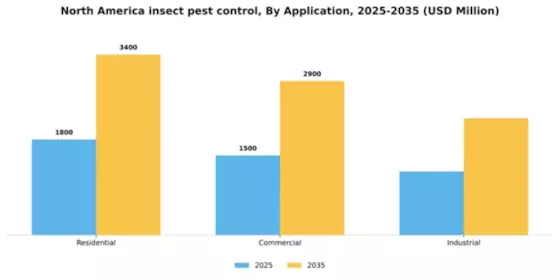
Insects: Dominant vs. Rodents: Emerging
Insects hold a dominant position in the pest control segment, characterized by a wide variety of species that necessitate diverse control strategies. Their prevalence in both residential and commercial settings fuels a continual need for effective pest management solutions. In contrast, Rodents, while emerging, benefit from increasing urban populations and the resulting rise in coastal developments where rodent infestations are more common. These factors drive innovation in control techniques, from traps to bait systems, and highlight the need for tailored approaches to pest management. As cities expand, the demand for rodent solutions will continue to gain momentum, signalling a robust market potential for pest control companies targeting urban settings.
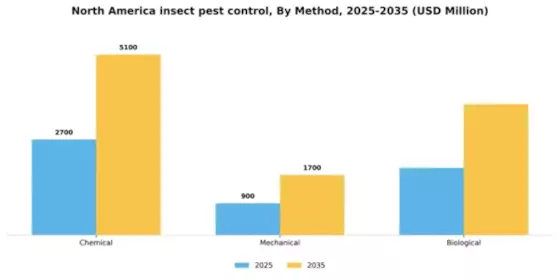
The market share distribution for the Method segment in the insect pest-control market reveals a substantial dominance of Chemical methods, accounting for a significant portion of the total market. Chemical solutions are traditionally favored due to their effectiveness and wide availability, appealing to both residential and commercial sectors. Meanwhile, Biological methods are gaining traction, capturing a smaller yet rapidly increasing segment of the market as consumers seek environmentally friendly alternatives for pest management. Growth trends in this segment indicate that the demand for Biological pest control solutions is driven by shifting consumer preferences towards sustainable practices. With increasing awareness of the potential health risks associated with Chemical pesticides, many are opting for safer, organic options. This evolving landscape also encourages innovation, prompting investments in research and development to enhance the effectiveness of Biological methods and to further penetrate the market.
Chemical (Dominant) vs. Biological (Emerging)
Chemical pest control methods remain the dominant force in the market, attributed to their proven effectiveness and quick action against various insect species. These methods are well-established and widely used in both agricultural and residential sectors, ensuring significant market penetration. Conversely, Biological pest control methods are emerging as a viable alternative, emphasizing the use of natural predators and microbial solutions to manage pest populations. They cater to a growing segment of environmentally conscious consumers and are increasingly seen favorably in regulatory frameworks, positioning them for substantial growth in the coming years. The balance between effectiveness and safety is pivotal in shaping customer choices, making both segments critical in the evolving pest control landscape.
The application segment of the insect pest-control market shows a diverse distribution of market shares among residential, commercial, and industrial sectors. Residential pest control dominates the market, capturing the largest share due to increasing consumer awareness regarding pest-related health issues and the rising demand for hygiene in households. The commercial segment, including hotels, restaurants, and other businesses, also holds a significant share, driven by the necessity of maintaining pest-free environments for customer satisfaction. Growth trends in this segment indicate a shift towards more environmentally friendly and sustainable pest-control solutions, particularly to cater to the rising consumer demand for organic and green products. The commercial sector is expected to grow rapidly due to stringent regulations on pest control in food and hospitality industries. Additionally, the industrial segment is also likely to see incremental growth as companies invest in enhancing their pest management strategies to protect assets and comply with regulatory standards.
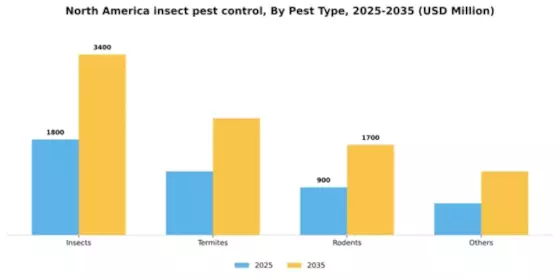
Residential (Dominant) vs. Commercial (Emerging)
The residential application segment plays a dominant role in the insect pest-control market, primarily driven by increasing urbanization and a growing focus on household hygiene. Consumers are increasingly investing in pest-control measures as awareness about the health risks posed by pests rises. Meanwhile, the commercial segment is emerging rapidly, characterized by a growing emphasis on maintaining cleanliness in public spaces and businesses. As restaurants, hotels, and other businesses prioritize pest management to enhance reputation and compliance with health regulations, the demand for pest-control services in this sector is set to grow. Both segments are witnessing technological advancements with the introduction of smart pest-control solutions, further enhancing their market positions.
Get more detailed insights about North America Insect Pest Control Market Request Free Sample
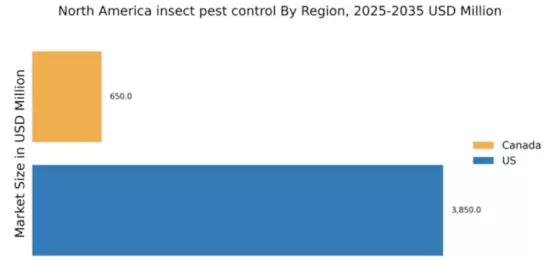
The US insect pest-control market is valued at $3,850.0 million, representing a significant share of approximately 85.6% of North America's total market. Key growth drivers include increasing urbanization, rising awareness of pest-related health risks, and stringent regulatory policies promoting eco-friendly solutions. Government initiatives, such as the Environmental Protection Agency's (EPA) guidelines, are fostering innovation in pest management technologies, while infrastructure development supports distribution networks and service accessibility.
Canada's insect pest-control market is valued at $650.0 million, accounting for about 14.4% of North America's market share. Growth is driven by increasing demand for sustainable pest management solutions and heightened consumer awareness regarding health and safety. Regulatory frameworks, such as the Pest Control Products Act, encourage the adoption of environmentally friendly products, while urban development in cities like Toronto and Vancouver boosts service demand.
The insect pest-control market in North America is characterized by a dynamic competitive landscape, driven by increasing consumer awareness regarding pest-related health risks and a growing demand for sustainable solutions. Major players such as Bayer AG (DE), Syngenta AG (CH), and Terminix Global Holdings Inc. (US) are strategically positioned to leverage innovation and technological advancements. Bayer AG (DE) focuses on integrating digital solutions into pest management, enhancing customer engagement through data analytics. Syngenta AG (CH) emphasizes research and development, particularly in biopesticides, to meet the rising demand for environmentally friendly products. Meanwhile, Terminix Global Holdings Inc. (US) is expanding its service offerings through strategic acquisitions, thereby enhancing its market presence and operational capabilities. The market structure appears moderately fragmented, with a mix of large multinational corporations and regional players. Key business tactics such as localizing manufacturing and optimizing supply chains are prevalent among these companies, allowing them to respond swiftly to market demands and regulatory changes. The collective influence of these major players shapes competitive dynamics, as they vie for market share while addressing the increasing consumer preference for sustainable pest-control solutions. In September 2025, Bayer AG (DE) announced a partnership with a leading technology firm to develop an AI-driven pest management platform. This strategic move is likely to enhance Bayer's service offerings, allowing for more precise pest control measures and improved customer satisfaction. The integration of AI technology may also streamline operations, reducing costs and increasing efficiency in pest management services. In August 2025, Syngenta AG (CH) launched a new line of biopesticides aimed at organic farming. This initiative not only aligns with the growing trend towards sustainable agriculture but also positions Syngenta as a leader in the biopesticide segment. The introduction of these products could potentially capture a significant share of the organic market, appealing to environmentally conscious consumers and farmers alike. In October 2025, Terminix Global Holdings Inc. (US) completed the acquisition of a regional pest-control company, significantly expanding its footprint in the southeastern United States. This acquisition is strategically important as it enhances Terminix's service capabilities and customer base, allowing for greater market penetration in a region known for its pest challenges. Such moves indicate a trend towards consolidation in the market, as companies seek to bolster their competitive positions through strategic acquisitions. As of November 2025, current competitive trends in the insect pest-control market include a pronounced shift towards digitalization, sustainability, and the integration of AI technologies. Strategic alliances are increasingly shaping the landscape, enabling companies to pool resources and expertise to innovate more effectively. Looking ahead, competitive differentiation is likely to evolve from traditional price-based competition to a focus on innovation, technological advancements, and supply chain reliability. This shift underscores the importance of adapting to consumer preferences for sustainable and efficient pest-control solutions.


The North America Insect Pest Control Market has seen significant developments recently, particularly with key players like Terminix, Ecolab, and Rentokil Initial focusing on innovative solutions amid rising pest issues primarily due to climate change factors. In the previous months, the market witnessed a notable increase in demand for environmentally friendly pest control solutions, leading to a surge in Research and Development investments by companies such as Bayer and Syngenta. On the mergers and acquisitions front, major activities included Rollins acquiring a regional pest control company in August 2023, enhancing its market presence in several states.
Furthermore, PestControl.com and Arrow Exterminators have expanded their service offerings through strategic partnerships in September 2023. Investment trends reveal a growth trajectory, with companies like FMC Corporation and BASF also reporting record quarterly earnings, reflecting the overall market valuation increase in the pest control sector. These advancements and market dynamics are pivotal in shaping the competitive landscape, with consumer preferences leaning towards sustainable pest management solutions, thereby influencing strategies employed by key market players in North America.
The Insect Pest Control Market is projected to grow at a 5.95% CAGR from 2025 to 2035, driven by technological advancements, increasing pest resistance, and rising consumer awareness.
New opportunities lie in:
By 2035, the market is expected to achieve robust growth, driven by innovation and evolving consumer preferences.
| MARKET SIZE 2024 | 4500.0(USD Million) |
| MARKET SIZE 2025 | 4767.75(USD Million) |
| MARKET SIZE 2035 | 8500.0(USD Million) |
| COMPOUND ANNUAL GROWTH RATE (CAGR) | 5.95% (2025 - 2035) |
| REPORT COVERAGE | Revenue Forecast, Competitive Landscape, Growth Factors, and Trends |
| BASE YEAR | 2024 |
| Market Forecast Period | 2025 - 2035 |
| Historical Data | 2019 - 2024 |
| Market Forecast Units | USD Million |
| Key Companies Profiled | Bayer AG (DE), Syngenta AG (CH), BASF SE (DE), FMC Corporation (US), Rentokil Initial plc (GB), Ecolab Inc. (US), Terminix Global Holdings Inc. (US), Rollins Inc. (US) |
| Segments Covered | Pest Type, Method, Application |
| Key Market Opportunities | Adoption of biopesticides driven by consumer demand for sustainable pest management solutions. |
| Key Market Dynamics | Rising consumer demand for eco-friendly insect pest-control solutions drives innovation and regulatory adaptations in North America. |
| Countries Covered | US, Canada |
The market valuation was $4500.0 Million in 2024.
The market is projected to reach $8500.0 Million by 2035.
The expected CAGR is 5.95% during the forecast period 2025 - 2035.
Key players include Bayer AG, Syngenta AG, BASF SE, FMC Corporation, Rentokil Initial plc, Ecolab Inc., Terminix Global Holdings Inc., and Rollins Inc.
The main segments include Pest Type, Method, and Application.
In 2024, the valuation for the insect pest type segment was $1800.0 Million.
The termite pest type segment is expected to grow from $1200.0 Million in 2024 to $2200.0 Million by 2035.
The chemical method segment is projected to reach $5100.0 Million by 2035.
The residential application segment is expected to grow from $1800.0 Million in 2024 to $3400.0 Million by 2035.
In 2024, the valuation for the rodent pest type segment was $900.0 Million, which is lower than insects and termites.





Kindly complete the form below to receive a free sample of this Report

“This is really good guys. Excellent work on a tight deadline. I will continue to use you going forward and recommend you to others. Nice job”


“Thanks. It’s been a pleasure working with you, please use me as reference with any other Intel employees.”


“Thanks for sending the report it gives us a good global view of the Betaïne market.”


“Thank you, this will be very helpful for OQS.”


“We found the report very insightful! we found your research firm very helpful. I'm sending this email to secure our future business.”


“I am very pleased with how market segments have been defined in a relevant way for my purposes (such as "Portable Freezers & refrigerators" and "last-mile"). In general the report is well structured. Thanks very much for your efforts.”


“I have been reading the first document or the study, ,the Global HVAC and FP market report 2021 till 2026. Must say, good info! I have not gone in depth at all parts, but got a good indication of the data inside!”


“We got the report in time, we really thank you for your support in this process. I also thank to all of your team as they did a great job.”


“The Automotive 48V ECU Components Procurement Intelligence Study” was a complex project, but the Market Research Future (MRFR) team handled it with quality, agility, and customer-centricity. They delivered all requested data on time and within the agreed scope. The team, including Shubhendra Anand and Rahul Gotadki, was always readily available to clarify questions and swiftly implement necessary adjustments, driving the project to a successful conclusion within a very demanding timeframe.
I would also like to specifically commend Akshay Agarwal for his responsiveness and support at every stage—from our initial inquiry on May 6th through to final delivery on June 18th. His dedication made the entire process seamless.”



