×
Request Free Sample ×

Kindly complete the form below to receive a free sample of this Report

* Please use a valid business email

Leading companies partner with us for data-driven Insights

clients tt-cursor
Hero Background

Germany Monosodium Glutamate Market

ID: MRFR/CnM/45683-HCR
111 Pages
Chitranshi Jaiswal
October 2025

Germany Monosodium Glutamate Market Research Report: By Application (Additives, Acidity Regulators, Preservatives, Others) and By End User (Food Processing, Pharmaceuticals, Cosmetics, Animal Feed, Others)- Forecast to 2035

Share:
Download PDF ×

We do not share your information with anyone. However, we may send you emails based on your report interest from time to time. You may contact us at any time to opt-out.

Germany Monosodium Glutamate Market Infographic
Purchase Options

Germany Monosodium Glutamate Market Summary

As per analysis, the Germany monosodium glutamate market is projected to grow from USD 0.298 Billion in 2025 to USD 0.453 Billion by 2035, exhibiting a compound annual growth rate (CAGR) of 4.28% during the forecast period (2025 - 2035).

Key Market Trends & Highlights

The Germany monosodium glutamate market is experiencing a dynamic shift driven by evolving consumer preferences and regulatory landscapes.

  • The demand for umami flavors is rising, particularly within the food and beverage segment, which remains the largest market.
  • There is a notable focus on clean label products, reflecting consumer preferences for transparency and natural ingredients.
  • Regulatory developments are influencing compliance standards, impacting both the food and beverage and animal feed segments.
  • The rising demand for processed foods and health consciousness are key drivers propelling market growth, especially in the household segment.

Market Size & Forecast

2024 Market Size 0.286 (USD Billion)
2035 Market Size 0.453 (USD Billion)
CAGR (2025 - 2035) 4.28%

Major Players

Ajinomoto (DE), Fufeng Group (CN), Meihua Group (CN), Hunan Dongfang (CN), Shaanxi Sciphar (CN), Ningxia Eppen (CN), Wuhan Jialong (CN), Shandong Qilu (CN)

Germany Monosodium Glutamate Market Trends

The Germany monosodium glutamate market is currently experiencing a notable evolution, driven by changing consumer preferences and increasing demand for flavor enhancers in various food products. As culinary trends shift towards more umami-rich flavors, monosodium glutamate has gained traction among both manufacturers and consumers. This compound, often utilized in processed foods, snacks, and restaurant dishes, appears to be a staple in enhancing taste profiles. Furthermore, the growing awareness of food quality and ingredient transparency is influencing purchasing decisions, leading to a more discerning consumer base that seeks products with clear labeling and natural ingredients. In addition, the regulatory landscape surrounding food additives in Germany is becoming increasingly stringent. Authorities are emphasizing safety and health standards, which may impact the production and distribution of monosodium glutamate. Despite these challenges, the market seems poised for growth, as manufacturers adapt to consumer demands and regulatory requirements. Innovations in production processes and a focus on sustainable sourcing may further enhance the appeal of monosodium glutamate in the German market. Overall, the Germany monosodium glutamate market reflects a complex interplay of consumer behavior, regulatory frameworks, and industry adaptation, suggesting a dynamic future for this flavor enhancer.

Rising Demand for Umami Flavors

The Germany monosodium glutamate market is witnessing a surge in demand for umami flavors, as consumers increasingly seek rich and savory taste experiences. This trend is particularly evident in the food service sector, where restaurants and cafes are incorporating monosodium glutamate into their dishes to enhance flavor profiles. As culinary preferences evolve, the appeal of umami is likely to drive further adoption of this flavor enhancer.

Focus on Clean Label Products

There is a growing emphasis on clean label products within the Germany monosodium glutamate market. Consumers are becoming more health-conscious and are scrutinizing ingredient lists for transparency. This shift is prompting manufacturers to highlight the quality and sourcing of monosodium glutamate, potentially leading to a preference for products that are perceived as natural or minimally processed.

Regulatory Developments and Compliance

The regulatory environment surrounding food additives in Germany is evolving, with authorities implementing stricter guidelines for safety and labeling. This trend may influence the production and marketing strategies of monosodium glutamate manufacturers. Compliance with these regulations is essential for maintaining consumer trust and ensuring market access, thereby shaping the future landscape of the Germany monosodium glutamate market.

Market Segment Insights

By Application: Food and Beverage (Largest) vs. Animal Feed (Fastest-Growing)

In the Germany monosodium glutamate market, the application segment is primarily dominated by the food and beverage industry, which holds the largest market share due to its widespread use as a flavor enhancer. This segment benefits from the strong consumer demand for processed foods, where MSG is utilized to enhance taste and palatability. In contrast, the pharmaceuticals, cosmetics, and animal feed applications represent smaller shares, but they contribute to a diverse market landscape. Animal feed represents the fastest-growing segment in this market, driven by an increasing emphasis on animal nutrition and the rising demand for healthier livestock products. The pharmaceutical and cosmetic applications, although niche, are gradually expanding as these industries recognize the benefits of monosodium glutamate for flavor and performance in formulations. Overall, the application segment reflects a balanced mix of traditional and emerging uses of MSG in diverse markets.

Food and Beverage: Dominant vs. Animal Feed: Emerging

The food and beverage sector is characterized by a robust and well-established utilization of monosodium glutamate, primarily as a flavor enhancer in a wide range of products, from soups to snacks. This segment's dominance is attributed to its deep-rooted acceptance among consumers and food manufacturers alike, driving consistent demand. On the other hand, the animal feed segment, while still emerging, is seeing an accelerated growth trajectory due to increased awareness of nutrition in livestock feed. This segment is innovating with new formulations to enhance animal growth and health, becoming a critical player in the market. Both segments showcase the versatility of monosodium glutamate, balancing between traditional applications and modern nutritional demands.

By End Use: Household (Largest) vs. Commercial (Fastest-Growing)

In the Germany monosodium glutamate market, the end use segment is divided into three main categories: household, commercial, and industrial. Among these, the household segment holds the largest market share, reflecting consumer preferences for flavorful enhancements in home-cooked meals. The commercial segment, driven by the burgeoning food service industry, is witnessing rapid growth, fueled by increasing restaurant establishments and changing consumer dining habits. This dynamic interplay sets the stage for robust competition among the segments.

Household (Dominant) vs. Commercial (Emerging)

The household segment is characterized by a steady demand for monosodium glutamate, predominantly used in households for enhancing the flavor of various dishes. This segment stands out as the dominant force in the market, as consumers increasingly seek to replicate restaurant-quality flavors at home. In contrast, the commercial segment is emerging swiftly, propelled by a surge in the food service sector, including restaurants, catering services, and ready-to-eat meal providers. These establishments rely on monosodium glutamate to improve taste profiles, thus driving its rapid uptake in professional kitchens and food preparation settings.

By Form: Powder (Largest) vs. Granules (Fastest-Growing)

In the Germany monosodium glutamate market, the form segment is crucial to understanding consumer preferences and usage. Currently, powdered monosodium glutamate holds the largest share due to its versatile application in various culinary practices, particularly in Asian cuisine. Following powdered form, granules are gaining traction, appealing to both industrial sectors and home cooks for their ease of use and handling. Liquid monosodium glutamate, while present, remains less popular in comparison and primarily serves niche markets. The growth trajectory for granules is particularly noteworthy as they cater to a rising demand for convenient and user-friendly seasoning options, especially in the food processing industry. Changing consumer preferences towards easy-to-use products and ongoing innovation in the food sector are further driving this growth. The powdered form remains favored for its broad applications, but granules present a rapidly expanding opportunity, facilitated by shifting culinary trends and an increase in ready-to-eat meals.

Powder (Dominant) vs. Granules (Emerging)

In the Germany monosodium glutamate market, powdered monosodium glutamate stands out as the dominant segment due to its longstanding presence and extensive use in culinary applications. It offers a concentrated flavor enhancement suitable for various cuisines, particularly in Asian and processed foods. The convenience of storage, versatility in cooking, and compatibility with numerous recipes contribute to its established market position. In contrast, granulated monosodium glutamate represents an emerging trend, garnering attention for its ease of use and precise measurement, making it attractive to both professional chefs and home cooks. As the demand for simple, effective flavoring agents grows, granules are rapidly catching up, appealing to consumers looking for alternatives that don't compromise on taste or convenience.

By Distribution Channel: Online (Largest) vs. Offline (Fastest-Growing)

In the Germany monosodium glutamate market, the distribution of sales across different channels reveals a clear preference for online platforms, which currently dominate due to their accessibility and efficiency. Online channels benefit from a growing trend towards e-commerce and digital purchasing, allowing consumers to easily access a wide range of products from various manufacturers at competitive prices. Meanwhile, the offline segment is gaining traction, particularly in traditional retail locations where consumers often prefer to make purchases after physical examination of the product and packaging. Growth trends indicate a robust rise in both online and offline channels, driven by increasing consumer awareness of monosodium glutamate's applications in cooking and food preparation. The offline segment is experiencing particularly rapid growth as companies invest in promotional activities and in-store displays, seeking to attract health-conscious shoppers. Complementing this, the online segment is expected to continue thriving as more consumers seek convenience, product variety, and exclusive online offers, supporting sustained demand for monosodium glutamate products.

Online (Dominant) vs. Offline (Emerging)

The online distribution channel is characterized by its dominance in the Germany monosodium glutamate market, largely due to the increasing shift towards e-commerce. Consumers appreciate the convenience of purchasing products online, supported by a growing trend in digital platforms that facilitate easy access to diverse product ranges. Moreover, online retailers often provide extensive product information and customer reviews, which enhance buyer confidence. Conversely, the offline channel, while currently smaller in market share, is emerging rapidly as retailers adopt innovative strategies to capture consumer attention. This includes in-store promotions and hands-on experiences with the product. Both channels serve distinct consumer preferences, with online appealing to tech-savvy shoppers while offline caters to traditional consumers seeking direct engagement and sensory experiences.

Get more detailed insights about Germany Monosodium Glutamate Market

Key Players and Competitive Insights

The competitive dynamics of the monosodium glutamate market in Germany are characterized by a blend of innovation, strategic partnerships, and regional expansion. Key players such as Ajinomoto (DE), Fufeng Group (CN), and Meihua Group (CN) are actively shaping the landscape through their distinct operational focuses. Ajinomoto (DE) emphasizes innovation in product development, particularly in enhancing flavor profiles and reducing sodium content, which aligns with the growing consumer demand for healthier food options. Meanwhile, Fufeng Group (CN) is pursuing aggressive regional expansion, leveraging its extensive supply chain capabilities to penetrate the European market more effectively. Meihua Group (CN) appears to be concentrating on sustainability initiatives, aiming to reduce its carbon footprint and enhance its production efficiency, thereby appealing to environmentally conscious consumers. Collectively, these strategies contribute to a competitive environment that is increasingly focused on differentiation through quality and sustainability rather than solely on price.

In terms of business tactics, companies are localizing manufacturing to better serve regional markets and optimize supply chains to enhance efficiency. The market structure is moderately fragmented, with several key players exerting influence over pricing and product availability. This fragmentation allows for niche players to thrive, while larger companies leverage their scale to optimize operations and reduce costs. The collective influence of these key players fosters a competitive atmosphere where innovation and operational excellence are paramount.

In November 2025, Ajinomoto (DE) announced a partnership with a local food technology startup to develop a new line of plant-based flavor enhancers. This strategic move is significant as it not only diversifies Ajinomoto's product offerings but also positions the company to capitalize on the growing trend towards plant-based diets. By aligning with a startup, Ajinomoto (DE) can leverage innovative technologies and consumer insights, potentially enhancing its market share in the health-conscious segment.

In October 2025, Fufeng Group (CN) completed the acquisition of a German flavoring company, which is expected to bolster its presence in the European market. This acquisition is strategically important as it allows Fufeng Group (CN) to integrate local expertise and distribution networks, thereby accelerating its growth trajectory in a competitive landscape. The move reflects a broader trend of consolidation within the industry, as companies seek to enhance their competitive positioning through strategic acquisitions.

In September 2025, Meihua Group (CN) launched a new sustainability initiative aimed at reducing water usage in its production processes by 30% over the next five years. This initiative underscores the company's commitment to environmental stewardship and aligns with increasing regulatory pressures and consumer expectations regarding sustainability. By prioritizing eco-friendly practices, Meihua Group (CN) is likely to enhance its brand reputation and appeal to a growing segment of environmentally conscious consumers.

As of December 2025, current trends in the monosodium glutamate market are increasingly defined by digitalization, sustainability, and the integration of artificial intelligence in production processes. Strategic alliances are becoming more prevalent, as companies recognize the value of collaboration in driving innovation and efficiency. Looking ahead, competitive differentiation is expected to evolve, with a pronounced shift from price-based competition to a focus on technological advancements, product innovation, and supply chain reliability. This transition suggests that companies that can effectively leverage these trends will likely secure a more favorable position in the market.


Key Companies in the Germany Monosodium Glutamate Market market include

Industry Developments

The has witnessed significant developments recently, with growing consumer demand for flavor enhancers amid trends towards natural food products. Companies like Ajinomoto and Cargill are ramping up their manufacturing capacities to meet this rising demand.

In terms of mergers and acquisitions, August 2023 saw Givaudan acquiring a major flavor company in Germany, expanding their portfolio in the flavor enhancement sector. Additionally, SABIC has made strides in sustainability initiatives that intersect with the production of monosodium glutamate, aligning their offerings with market preferences shifting towards eco-friendly products.

The market valuation for monosodium glutamate in Germany has been positively impacted by these developments, contributing to an expected growth rate increase.

Over the last few years, the industry has also seen a shift towards plant-based monosodium glutamate formulations, with major companies adapting their product lines, including Unilever and Hindustan Unilever, which have researched the acceptance of such alternatives among consumers.

Furthermore, the regulatory landscape in Germany is becoming more supportive of the flavoring industry, promoting innovation and investment in research and development endeavors aimed at improving product quality and sustainability within the monosodium glutamate sector.

Germany Monosodium Glutamate Market Segmentation Insights

Monosodium Glutamate Market Application Outlook

    • Additives
    • Acidity Regulators
    • Preservatives
    • Others

Monosodium Glutamate Market End User Outlook

    • Food Processing
    • Pharmaceuticals
    • Cosmetics
    • Animal Feed
    • Others

Future Outlook

Germany Monosodium Glutamate Market Future Outlook

The Germany monosodium glutamate market is projected to grow at a 4.28% CAGR from 2024 to 2035, driven by increasing demand in the food industry and health-conscious consumer trends.

New opportunities lie in:

  • Expansion into organic monosodium glutamate products
  • Development of customized flavor solutions for food manufacturers
  • Strategic partnerships with health food brands for product innovation

By 2035, the market is expected to solidify its position as a key player in the food additive sector.

Market Segmentation

Germany Monosodium Glutamate Market Form Outlook

  • Powder
  • Granules
  • Liquid

Germany Monosodium Glutamate Market End Use Outlook

  • Household
  • Commercial
  • Industrial

Germany Monosodium Glutamate Market Application Outlook

  • Food and Beverage
  • Pharmaceuticals
  • Cosmetics
  • Animal Feed

Germany Monosodium Glutamate Market Distribution Channel Outlook

  • Online
  • Offline
  • Direct Sales

Report Scope

MARKET SIZE 20240.286(USD Billion)
MARKET SIZE 20250.298(USD Billion)
MARKET SIZE 20350.453(USD Billion)
COMPOUND ANNUAL GROWTH RATE (CAGR)4.28% (2024 - 2035)
REPORT COVERAGERevenue Forecast, Competitive Landscape, Growth Factors, and Trends
BASE YEAR2024
Market Forecast Period2025 - 2035
Historical Data2019 - 2024
Market Forecast UnitsUSD Billion
Key Companies ProfiledAjinomoto (DE), Fufeng Group (CN), Meihua Group (CN), Hunan Dongfang (CN), Shaanxi Sciphar (CN), Ningxia Eppen (CN), Wuhan Jialong (CN), Shandong Qilu (CN)
Segments CoveredApplication, End Use, Form, Distribution Channel
Key Market OpportunitiesGrowing demand for natural flavor enhancers in the Germany monosodium glutamate market presents significant opportunities.
Key Market DynamicsRising consumer preference for natural flavor enhancers influences the Germany monosodium glutamate market dynamics.
Countries CoveredGermany

Leave a Comment

FAQs

What is the expected market size of the Germany Monosodium Glutamate Market in 2024?

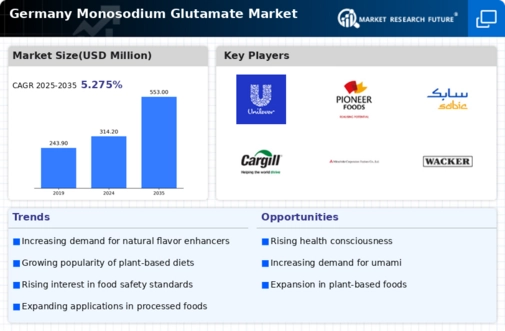
The Germany Monosodium Glutamate Market is expected to be valued at 314.16 million USD in 2024.

What is the projected market size of the Germany Monosodium Glutamate Market by 2035?

By 2035, the market is projected to reach a value of 553.0 million USD.

What is the expected compound annual growth rate (CAGR) for the Germany Monosodium Glutamate Market from 2025 to 2035?

The expected CAGR for the Germany Monosodium Glutamate Market from 2025 to 2035 is 5.275%.

Which application segment is expected to dominate the Germany Monosodium Glutamate Market by 2035?

The Additives segment is expected to dominate the market, with a projected value of 182.85 million USD by 2035.

What will be the value of the Acidity Regulators application in the Germany Monosodium Glutamate Market by 2035?

The Acidity Regulators application is expected to reach a value of 153.11 million USD by 2035.

Who are the key players in the Germany Monosodium Glutamate Market?

Major players include Unilever, Ajinomoto, Cargill, and BASF, among others.

What is the expected value of the Preservatives application segment in 2024?

The Preservatives application segment is expected to be valued at 75.09 million USD in 2024.

How much is the Others application segment projected to grow by 2035?

The Others application segment is projected to grow to 83.99 million USD by 2035.

What market challenges might affect the Germany Monosodium Glutamate Market in the coming years?

Challenges may include regulatory scrutiny and competition in product formulations.

What growth opportunities exist within the Germany Monosodium Glutamate Market?

Opportunities include expanding applications in food additives and flavor enhancement technologies.

Download Free Sample

Kindly complete the form below to receive a free sample of this Report

Compare Licence

×
Features License Type
Single User Multiuser License Enterprise User
Price $4,950 $5,950 $7,250
Maximum User Access Limit 1 User Upto 10 Users Unrestricted Access Throughout the Organization
Free Customization
Direct Access to Analyst
Deliverable Format
Platform Access
Discount on Next Purchase 10% 15% 15%
Printable Versions