Download Free Sample
Kindly complete the form below to receive a free sample of this Report
Germany Montelukast Intermediate Market Research Report: Size, Share, Trend Analysis By Applications (Asthma, Allergic Rhinitis, Bronchospasm, Urticaria) - Growth Outlook & Industry Forecast 2025 To 2035
As per Market Research Future analysis, the Germany Montelukast Intermediate Market size was estimated at 30.0 USD Million in 2024. The Montelukast Intermediate market is projected to grow from 31.77 USD Million in 2025 to 56.3 USD Million by 2035, exhibiting a compound annual growth rate (CAGR) of 5.8% during the forecast period 2025 - 2035
The Germany montelukast intermediate market is poised for growth driven by regulatory compliance and rising demand for respiratory treatments.
| 2024 Market Size | 30.0 (USD Million) |
| 2035 Market Size | 56.3 (USD Million) |
| CAGR (2025 - 2035) | 5.89% |
Merck & Co (US), Teva Pharmaceutical Industries (IL), Mylan N.V. (NL), AstraZeneca (GB), Hetero Labs Limited (IN), Cipla Limited (IN), Sun Pharmaceutical Industries (IN), Zydus Cadila (IN)
Our Impact
Enabled $4.3B Revenue Impact for Fortune 500 and Leading Multinationals
Partnering with 2000+ Global Organizations Each Year
30K+ Citations by Top-Tier Firms in the Industry
The Germany Montelukast Intermediate Market is currently experiencing a dynamic phase characterized by evolving regulatory frameworks and increasing demand for asthma and allergy medications. In Germany, the regulatory environment is shaped by stringent guidelines that govern the production and distribution of pharmaceutical intermediates. This has led to a heightened focus on compliance and quality assurance among manufacturers. Furthermore, the growing awareness of respiratory diseases has prompted healthcare providers to seek effective treatment options, thereby driving the demand for montelukast intermediates. As a result, companies are investing in research and development to enhance product efficacy and safety, which may lead to innovative formulations in the near future. Additionally, the montelukast intermediate market is influenced by the competitive landscape, where both established players and new entrants vie for market share. The presence of a robust pharmaceutical sector in Germany fosters collaboration between manufacturers and research institutions, potentially leading to advancements in production techniques. Moreover, the increasing emphasis on sustainability in manufacturing processes could reshape the market dynamics, as companies strive to minimize their environmental impact. Overall, the montelukast intermediate market appears poised for growth, driven by regulatory compliance, innovation, and a commitment to sustainability.
The montelukast intermediate market is significantly impacted by stringent regulatory requirements in Germany. Manufacturers are compelled to adhere to high standards of quality assurance, which influences production processes and operational costs. This focus on compliance not only ensures product safety but also enhances market credibility.
There is a noticeable increase in the demand for effective treatments for asthma and allergies in Germany. This trend is likely to drive the montelukast intermediate market as healthcare providers seek reliable intermediates for the formulation of medications. The growing awareness of respiratory health issues contributes to this rising demand.
Sustainability is becoming a crucial consideration in the montelukast intermediate market. Manufacturers are exploring eco-friendly production methods to reduce their environmental footprint. This shift towards sustainable practices may attract environmentally conscious consumers and enhance the market's long-term viability.
The increasing healthcare expenditure in Germany is a significant driver for the montelukast intermediate market. As the government and private sectors allocate more funds towards healthcare services, there is a corresponding rise in the demand for effective treatments for respiratory conditions. Current estimates indicate that healthcare spending in Germany is projected to reach approximately €500 billion by 2025. This increase in expenditure is likely to enhance access to medications, including those containing montelukast intermediates. Consequently, pharmaceutical companies are expected to ramp up production to meet the anticipated demand, thereby propelling the growth of the montelukast intermediate market.
The regulatory framework governing the pharmaceutical industry in Germany plays a pivotal role in shaping the montelukast intermediate market. Stringent regulations ensure that all intermediates meet high-quality standards, which can be both a challenge and an opportunity for manufacturers. Compliance with these regulations is essential for market access, and companies that successfully navigate this landscape may gain a competitive edge. Moreover, the German Medicines Agency (BfArM) actively supports innovation while maintaining safety and efficacy standards. This regulatory environment encourages the development of montelukast intermediates, thereby fostering market growth and ensuring that patients have access to safe and effective treatments.
Technological advancements in pharmaceutical manufacturing processes are significantly impacting the montelukast intermediate market in Germany. Innovations such as continuous manufacturing and process optimization are enhancing production efficiency and reducing costs. For instance, the implementation of advanced analytical techniques has improved quality control measures, ensuring that montelukast intermediates meet stringent regulatory standards. This not only increases the reliability of the supply chain but also allows manufacturers to respond swiftly to market demands. As a result, the montelukast intermediate market is likely to benefit from these advancements, leading to increased production capacity and improved product availability for healthcare providers.
The montelukast intermediate market in Germany is experiencing growth due to the rising prevalence of allergic conditions such as asthma and allergic rhinitis. Recent studies indicate that approximately 10-15% of the German population suffers from asthma, leading to a heightened demand for effective treatments. This trend is likely to drive the montelukast intermediate market as healthcare providers seek reliable solutions to manage these conditions. Furthermore, the increasing awareness of the importance of early intervention in allergic diseases may further bolster the market. As a result, pharmaceutical companies are focusing on the development and production of montelukast intermediates to meet the growing needs of healthcare professionals and patients alike.
Investment in research and development (R&D) within the pharmaceutical sector is a crucial driver for the montelukast intermediate market in Germany. With a focus on developing new formulations and delivery methods, companies are allocating substantial resources to R&D initiatives. Reports suggest that R&D spending in the German pharmaceutical industry has reached approximately €10 billion annually, indicating a strong commitment to innovation. This investment is expected to yield new montelukast intermediates that can enhance therapeutic efficacy and patient compliance. Consequently, the montelukast intermediate market is poised for growth as new products emerge from these R&D efforts.
In the Germany montelukast intermediate market, the application segment is predominantly driven by asthma treatment, which holds the largest share among the specified values. This area significantly outpaces others in demand due to the high prevalence of asthma in the region. Following closely behind is allergic rhinitis treatment, which also contributes to the overall market size, while chronic obstructive pulmonary disease is emerging as a key sector with potential for growth. Growth trends within this segment indicate a steady increase in the adoption of montelukast for chronic obstructive pulmonary disease, positioning it as the fastest-growing area. Factors such as rising pollution levels, increased awareness of respiratory conditions, and the aging population in Germany are driving demand in this market. These elements are expected to enhance the future prospects of all application segments, particularly for chronic obstructive pulmonary disease treatments.
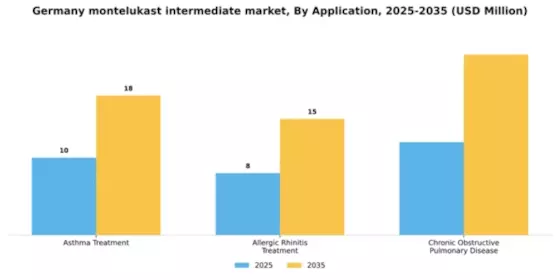
Asthma Treatment (Dominant) vs. Chronic Obstructive Pulmonary Disease (Emerging)
Asthma treatment remains the dominant application in the Germany montelukast intermediate market, characterized by its established protocols and wide patient base due to a high incidence of this condition. It focuses on controlling and preventing asthma symptoms through regular medication, with montelukast being a preferred choice among healthcare providers. In contrast, chronic obstructive pulmonary disease represents an emerging area, driven by the increasing recognition of the condition and the need for effective management strategies. This segment is gaining traction due to a growing understanding of its impact on quality of life and the push for innovative treatments tailored to this patient demographic. Both segments show promise, though the former leads in current market share.
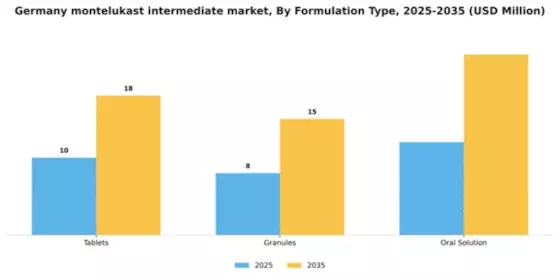
The Germany montelukast intermediate market demonstrates a diversified distribution among formulation types, with tablets capturing the largest share due to their popularity among patients and ease of administration. Granules follow closely, appealing to specific patient demographics that prefer customizable dosages, while oral solutions represent a smaller segment but cater to those with difficulty swallowing solid forms. Growth trends in this segment indicate a robust demand for both tablets and granules, driven by the increasing prevalence of respiratory conditions. The shift towards tailored therapy is propelling granules as the fastest-growing formulation type. Additionally, advancements in manufacturing methods and an increase in healthcare awareness are expected to foster ongoing growth across all formulation types in the future.
Tablets: Dominant vs. Granules: Emerging
Tablets are the dominant formulation type in the Germany montelukast intermediate market, primarily due to their established presence and patient preference for solid dosage forms. They facilitate convenient dosing and have robust manufacturing processes. Granules, on the other hand, represent an emerging segment, appealing to patients who need flexible dosing options. The ability to mix granules with food or liquid makes them particularly attractive for children and individuals with specific swallowing difficulties. This flexibility enhances patient compliance and underscores the potential for granules to capture market share as healthcare professionals increasingly emphasize personalized treatment plans.
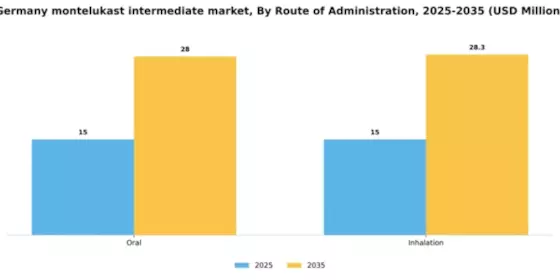
In the Germany montelukast intermediate market, the oral administration route holds the largest share due to its convenience and patient compliance. This segment benefits from widespread preference among both healthcare providers and patients, largely due to the ease of use and established market presence. Inhalation, while smaller, is rapidly gaining traction, appealing to niche applications where targeted delivery is critical, thereby reshaping the competitive landscape. The growth trends for oral administration are primarily driven by its established role in chronic management, with rising diagnoses of respiratory conditions boosting demand. In contrast, inhalation is recognized as the fastest-growing segment, spurred by advancements in delivery technologies and increased research into inhaled therapies for various conditions. As healthcare trends move towards personalized medicine, both administration routes are expected to evolve significantly within the market.
Route of Administration: Oral (Dominant) vs. Inhalation (Emerging)
Oral administration is characterized by its dominance in the Germany montelukast intermediate market, offering a familiar and patient-friendly option that ensures adherence. Its extensive availability and established protocols enable it to cater to a broad spectrum of patient needs, resulting in sustained demand. On the other hand, inhalation is considered an emerging option that focuses on localized treatment, showing promise with its ability to deliver medications directly to the lungs, thus optimizing efficacy. This segment's growth is motivated by technological innovations in inhalation devices and formulations that enhance the therapeutic experience, positioning it favorably to capture a larger market share in the coming years. Both routes reflect the evolving preferences in healthcare, emphasizing patient-centric approaches.
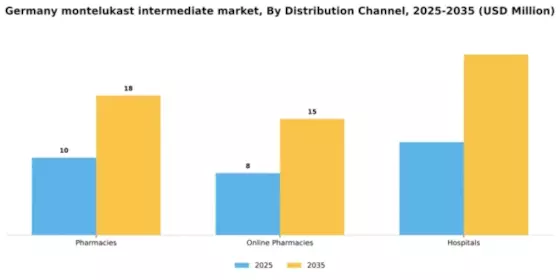
Pharmacies hold a significant share in the Germany montelukast intermediate market due to their established presence and trust among patients. In contrast, online pharmacies are rapidly capturing market attention, reflecting a growing trend toward convenience and remote access to medications. Hospitals also contribute to the distribution, but their share is comparatively smaller as they mainly serve as ancillary sources for patients requiring immediate care. The growth trends within this segment are heavily influenced by consumer preferences shifting towards online purchasing. With advancements in digital health technologies and the increasing penetration of e-commerce, online pharmacies are expected to dominate future growth. Meanwhile, traditional pharmacies continue to be resilient, aided by personal interactions and reliable service, but they may need to innovate to retain market share.
Pharmacies: Dominant vs. Online Pharmacies: Emerging
Pharmacies remain the dominant distribution channel in the Germany montelukast intermediate market, characterized by their extensive reach and established customer base. They provide personalized consultations, enhancing customer loyalty and trust. On the other hand, online pharmacies are emerging rapidly, leveraging the convenience of home delivery and a wide range of product accessibility. Their growth is being driven by the increasing trend of digitalization, especially post-pandemic, as patients prefer to order medications online. Hospitals, while not as dominant, play a crucial role in the distribution chain, particularly when immediate medical assistance is required, thus contributing to a balanced distribution landscape.
Get more detailed insights about Germany Montelukast Intermediate Market Request Free Sample
The montelukast intermediate market in Germany is characterized by a competitive landscape that is both dynamic and multifaceted. Key growth drivers include the increasing prevalence of asthma and allergic rhinitis, alongside a rising demand for effective therapeutic options. Major players such as Merck & Co (US), Teva Pharmaceutical Industries (IL), and AstraZeneca (GB) are strategically positioned to leverage their extensive research capabilities and established market presence. Merck & Co (US) focuses on innovation through the development of advanced formulations, while Teva Pharmaceutical Industries (IL) emphasizes cost-effective production methods to enhance accessibility. AstraZeneca (GB) is actively pursuing partnerships to expand its product portfolio, thereby shaping a competitive environment that is increasingly reliant on collaboration and innovation.In terms of business tactics, companies are localizing manufacturing to reduce lead times and optimize supply chains, which is particularly crucial in the context of fluctuating demand. The market structure appears moderately fragmented, with several players vying for market share. This fragmentation is indicative of a competitive environment where key players exert considerable influence, yet smaller firms also play a vital role in driving innovation and responsiveness to market needs.
In October Teva Pharmaceutical Industries (IL) announced a strategic partnership with a local German biotech firm to enhance its research capabilities in developing montelukast intermediates. This collaboration is expected to bolster Teva's position in the market by integrating cutting-edge technologies and local expertise, thereby accelerating the development of new formulations. Such strategic moves indicate a trend towards localized innovation, which may enhance competitive advantage.
In September Merck & Co (US) unveiled a new manufacturing facility in Germany dedicated to the production of montelukast intermediates. This investment not only signifies Merck's commitment to expanding its operational footprint but also reflects a broader trend of companies investing in local production capabilities to ensure supply chain reliability. The establishment of this facility is likely to enhance Merck's responsiveness to market demands and strengthen its competitive position.
In August AstraZeneca (GB) entered into a licensing agreement with a German pharmaceutical company to distribute its montelukast products in the region. This strategic move is indicative of AstraZeneca's focus on expanding its market reach and enhancing its distribution network. By leveraging local partnerships, AstraZeneca aims to improve its market penetration and capitalize on the growing demand for montelukast intermediates in Germany.
As of November current competitive trends are increasingly defined by digitalization, sustainability, and the integration of AI technologies. Companies are forming strategic alliances to enhance their capabilities and foster innovation. The competitive landscape is shifting from a focus on price-based competition to one that prioritizes technological advancement, supply chain reliability, and innovative product offerings. This evolution suggests that future differentiation will hinge on the ability to adapt to emerging trends and leverage collaborative synergies.


In recent months, the Germany Montelukast Intermediate Market has seen significant developments, with companies such as Abbott Laboratories, Hikma Pharmaceuticals, and Teva Pharmaceuticals actively participating in the sector. In September 2023, Fresenius Kabi announced an expansion of its production capabilities to meet increasing demand for Montelukast, which has been crucial for managing asthma symptoms.
Similarly, Dr. Reddy's Laboratories received regulatory approvals in Germany, enhancing its market presence. Euroapi continues to strengthen its supply chain, ensuring consistent availability of Montelukast intermediates. Regarding mergers and acquisitions, Mylan N.V. completed its acquisition of a biosimilar portfolio from a rival firm in August 2023, thereby broadening its reach in the market.
Meanwhile, Bayer AG is exploring partnerships aimed at innovation in drug delivery systems for Montelukast, which highlights ongoing collaborative efforts among key players. The market is projected to grow as the German healthcare sector pushes for improved respiratory treatments. Over the past few years, from early 2022, the market has witnessed considerable growth driven by rising asthma diagnoses and government initiatives promoting respiratory health management.
The Montelukast Intermediate Market is projected to grow at a 5.89% CAGR from 2025 to 2035, driven by increasing demand for asthma treatments and regulatory support.
New opportunities lie in:
By 2035, the montelukast intermediate market is expected to achieve robust growth and increased market share.
| MARKET SIZE 2024 | 30.0(USD Million) |
| MARKET SIZE 2025 | 31.77(USD Million) |
| MARKET SIZE 2035 | 56.3(USD Million) |
| COMPOUND ANNUAL GROWTH RATE (CAGR) | 5.89% (2025 - 2035) |
| REPORT COVERAGE | Revenue Forecast, Competitive Landscape, Growth Factors, and Trends |
| BASE YEAR | 2024 |
| Market Forecast Period | 2025 - 2035 |
| Historical Data | 2019 - 2024 |
| Market Forecast Units | USD Million |
| Key Companies Profiled | Merck & Co (US), Teva Pharmaceutical Industries (IL), Mylan N.V. (NL), AstraZeneca (GB), Hetero Labs Limited (IN), Cipla Limited (IN), Sun Pharmaceutical Industries (IN), Zydus Cadila (IN) |
| Segments Covered | Application, Formulation Type, Route of Administration, Distribution Channel |
| Key Market Opportunities | Growing demand for montelukast intermediates driven by regulatory support for asthma and allergy treatments. |
| Key Market Dynamics | Regulatory changes and competitive pressures shape the montelukast intermediate market dynamics in Germany. |
| Countries Covered | Germany |
The overall market valuation was $30.0 Million in 2024.
The projected valuation for 2035 is $56.3 Million.
The expected CAGR during the forecast period 2025 - 2035 is 5.89%.
Key players include Merck & Co, Teva Pharmaceutical Industries, Mylan N.V., AstraZeneca, Hetero Labs Limited, Cipla Limited, Sun Pharmaceutical Industries, and Zydus Cadila.
The market value for asthma treatment was $10.0 Million in 2024, projected to reach $18.0 Million.
The market for allergic rhinitis treatment was $8.0 Million in 2024, with a projection of $15.0 Million, indicating a smaller segment than asthma treatment.
The market value for chronic obstructive pulmonary disease treatment was $12.0 Million in 2024, expected to grow to $23.3 Million.
Available formulation types include tablets, granules, and oral solutions, with respective market values of $10.0 Million, $8.0 Million, and $12.0 Million in 2024.
Distribution channels include pharmacies, online pharmacies, and hospitals, with market values of $10.0 Million, $8.0 Million, and $12.0 Million in 2024.
The routes of administration include oral and inhalation, both valued at $15.0 Million in 2024, with slight growth expected.


Kindly complete the form below to receive a free sample of this Report

“This is really good guys. Excellent work on a tight deadline. I will continue to use you going forward and recommend you to others. Nice job”


“Thanks. It’s been a pleasure working with you, please use me as reference with any other Intel employees.”


“Thanks for sending the report it gives us a good global view of the Betaïne market.”


“Thank you, this will be very helpful for OQS.”


“We found the report very insightful! we found your research firm very helpful. I'm sending this email to secure our future business.”


“I am very pleased with how market segments have been defined in a relevant way for my purposes (such as "Portable Freezers & refrigerators" and "last-mile"). In general the report is well structured. Thanks very much for your efforts.”


“I have been reading the first document or the study, ,the Global HVAC and FP market report 2021 till 2026. Must say, good info! I have not gone in depth at all parts, but got a good indication of the data inside!”


“We got the report in time, we really thank you for your support in this process. I also thank to all of your team as they did a great job.”


“The Automotive 48V ECU Components Procurement Intelligence Study” was a complex project, but the Market Research Future (MRFR) team handled it with quality, agility, and customer-centricity. They delivered all requested data on time and within the agreed scope. The team, including Shubhendra Anand and Rahul Gotadki, was always readily available to clarify questions and swiftly implement necessary adjustments, driving the project to a successful conclusion within a very demanding timeframe.
I would also like to specifically commend Akshay Agarwal for his responsiveness and support at every stage—from our initial inquiry on May 6th through to final delivery on June 18th. His dedication made the entire process seamless.”



