Download Free Sample
Kindly complete the form below to receive a free sample of this Report
Germany Personal Mobility Devices Market Research Report: Size, Share, Trend Analysis By Product (Walking Aids, Wheelchairs, Scooters) and By End Users (Hospitals, Homecare, Others) - Growth Outlook & Industry Forecast 2025 To 2035
As per Market Research Future analysis, the Germany Personal Mobility Devices Market size was estimated at 608.65 USD Million in 2024. The Personal Mobility-devices market is projected to grow from 646.51 USD Million in 2025 to 1182.05 USD Million by 2035, exhibiting a compound annual growth rate (CAGR) of 6.2% during the forecast period 2025 - 2035
The Germany personal mobility-devices market is experiencing a transformative shift towards sustainability and technological integration.
| 2024 Market Size | 608.65 (USD Million) |
| 2035 Market Size | 1182.05 (USD Million) |
| CAGR (2025 - 2035) | 6.22% |
Segway (US), Xiaomi (CN), Ninebot (CN), Razor (US), InMotion (CN), Unagi (US), Boosted (US), E-Twow (FR)
Our Impact
Enabled $4.3B Revenue Impact for Fortune 500 and Leading Multinationals
Partnering with 2000+ Global Organizations Each Year
30K+ Citations by Top-Tier Firms in the Industry
The Germany Personal Mobility Devices Market in Germany is currently experiencing a notable transformation, driven by advancements in technology and a growing emphasis on sustainable transportation solutions. The increasing urbanization and the need for efficient commuting options have led to a surge in demand for various mobility devices, including electric scooters, e-bikes, and other innovative solutions. This shift is further supported by government initiatives aimed at promoting eco-friendly transportation alternatives, which appear to resonate well with the environmentally conscious population. As a result, manufacturers are focusing on enhancing product features, such as battery life and safety measures, to cater to the evolving preferences of consumers. In addition, the regulatory landscape surrounding personal mobility-devices is evolving, with authorities implementing new guidelines to ensure safety and accessibility. This regulatory framework is likely to foster a more structured market environment, encouraging both established players and new entrants to innovate and expand their offerings. The integration of smart technologies, such as connectivity and app-based functionalities, is also becoming increasingly prevalent, suggesting a trend towards more user-friendly and efficient mobility solutions. Overall, the personal mobility-devices market is poised for continued growth, driven by technological advancements and changing consumer behaviors.
The personal mobility-devices market is witnessing a pronounced shift towards sustainability, with consumers increasingly favoring eco-friendly options. This trend is reflected in the rising popularity of electric scooters and e-bikes, which offer a greener alternative to traditional transportation methods. Government incentives and initiatives aimed at reducing carbon emissions further bolster this movement, encouraging individuals to adopt more sustainable commuting practices.
The integration of advanced technologies into personal mobility-devices is becoming a defining characteristic of the market. Features such as smart connectivity, GPS navigation, and enhanced safety systems are increasingly being incorporated into new models. This technological evolution not only improves user experience but also addresses safety concerns, making devices more appealing to a broader audience.
Recent regulatory changes are shaping the landscape of the personal mobility-devices market. Authorities are implementing new safety standards and guidelines to ensure the safe use of these devices in urban environments. This regulatory framework is likely to create a more structured market, encouraging innovation while ensuring that consumer safety remains a priority.
Germany's demographic shift towards an aging population significantly influences the personal mobility-devices market. With approximately 22% of the population aged 65 and older, there is a growing need for mobility solutions that cater to the elderly. Personal mobility devices, such as electric scooters and wheelchairs, provide essential support for this demographic, enhancing their independence and quality of life. The market is expected to expand as manufacturers innovate to create user-friendly and accessible devices. Additionally, government initiatives aimed at improving mobility for seniors may further stimulate growth in this sector. The personal mobility-devices market is thus positioned to address the unique needs of an aging society, potentially leading to increased sales and product development.
The stringent environmental regulations in Germany are a crucial driver for the personal mobility-devices market. As the government implements policies aimed at reducing carbon emissions, there is a heightened focus on promoting eco-friendly transportation options. Personal mobility devices, particularly electric models, align with these regulations, offering a sustainable alternative to fossil fuel-powered vehicles. In 2025, the German government aims to have 1 million electric scooters on the roads, reflecting a commitment to cleaner urban transport. This regulatory environment encourages manufacturers to innovate and invest in greener technologies, thereby expanding the personal mobility-devices market. The emphasis on sustainability is likely to resonate with consumers, further driving demand for environmentally friendly mobility solutions.
Technological advancements play a significant role in shaping the personal mobility-devices market in Germany. Innovations in battery technology, connectivity, and design are enhancing the functionality and appeal of personal mobility devices. For instance, the integration of smart features, such as GPS navigation and mobile app connectivity, is becoming increasingly common. In 2025, it is estimated that over 30% of personal mobility devices will incorporate advanced technology, making them more attractive to tech-savvy consumers. This trend not only improves user experience but also encourages the adoption of personal mobility devices as a viable transportation option. As technology continues to evolve, the personal mobility-devices market is likely to witness substantial growth driven by consumer demand for smarter, more efficient solutions.
The shift in consumer preferences towards alternative modes of transportation is a notable driver for the personal mobility-devices market. As awareness of environmental issues grows, many consumers in Germany are seeking sustainable and efficient mobility options. This trend is reflected in the increasing popularity of electric scooters, e-bikes, and other personal mobility devices. In 2025, sales of electric scooters are projected to rise by 40%, indicating a significant shift in consumer behavior. The personal mobility-devices market is responding to this demand by offering a diverse range of products that cater to various lifestyles and preferences. This evolving landscape suggests that manufacturers must remain agile and responsive to changing consumer needs to capitalize on the burgeoning market.
The increasing urbanization in Germany is a pivotal driver for the personal mobility-devices market. As cities expand and population density rises, the demand for efficient and compact transportation solutions intensifies. Urban areas are often congested, leading to a preference for personal mobility devices that can navigate through traffic and limited spaces. In 2025, urban areas in Germany are projected to house over 75% of the population, creating a substantial market for personal mobility devices. This trend is further supported by the need for sustainable transport options, as urban residents seek alternatives to traditional vehicles. The personal mobility-devices market is likely to benefit from this shift, as consumers prioritize convenience and efficiency in their daily commutes.
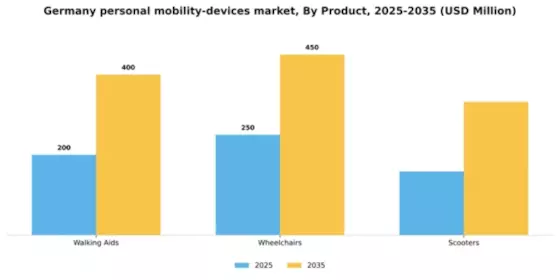
In the Germany personal mobility-devices market, wheelchairs represent the largest segment, capturing a significant share due to their critical importance in enhancing mobility for individuals with severe disabilities. Walking aids, while essential, occupy a smaller segment of the market compared to wheelchairs. Scooters, on the other hand, have been gaining traction, appealing to a broader audience that values both independence and convenience. The distribution of market share among these segments indicates strong consumer preference for durability and functionality in mobility options. The growth trends within this segment are driven by an aging population and increasing awareness of mobility solutions that enhance quality of life. Innovative designs and improved technologies have contributed to the rising popularity of scooters, marking them as the fastest-growing category. Additionally, government initiatives supporting mobility aids and rising healthcare spending further bolster the adoption of these products, indicating a robust trajectory for the personal mobility-devices market.
Wheelchairs (Dominant) vs. Scooters (Emerging)
Wheelchairs are the dominant product in this market, characterized by their essential role in providing mobility solutions for individuals with severe mobility limitations. They are available in various types, including manual and powered options, catering to diverse user needs. On the other hand, scooters are emerging as a popular choice for those seeking independence and convenience for short-distance travel, with enhanced features like portability and advanced battery technologies. The diversity in design and functionality of both segments allows for tailored solutions, attracting customers with varying preferences. While wheelchairs remain crucial for those with profound disabilities, scooters are increasingly viewed as a preferable alternative for many, particularly among older adults seeking mobility options that align with their lifestyle.
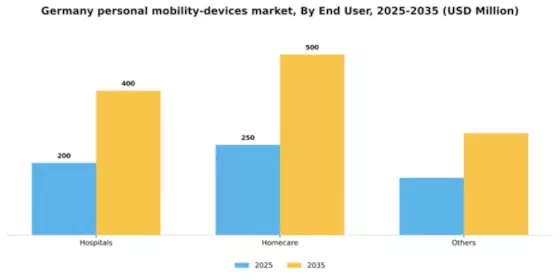
In the Germany personal mobility-devices market, hospitals hold the largest market share due to their critical need for mobility assistance in patient care. This segment benefits from the integration of advanced technologies in mobility devices, further solidifying its dominance. Homecare, on the other hand, is rapidly gaining traction as more individuals prefer to manage their health and mobility from the comfort of their homes, significantly increasing its market presence. Growth trends indicate a strong shift toward homecare solutions, driven by an aging population and a higher prevalence of chronic illnesses. The convenience and personalized care that home mobility devices offer are appealing to patients and healthcare providers alike. Additionally, technological advancements, along with supportive government policies, are expected to drive future growth in this segment, particularly in smart mobility solutions that enhance user experience.
Homecare (Dominant) vs. Others (Emerging)
The homecare segment is becoming the dominant force in the market, representing a shift in consumer preferences towards in-home healthcare solutions. With mobility devices optimized for personal use, homecare equipment is designed to improve the quality of life for users, making them more independent and comfortable at home. In contrast, the 'Others' segment represents a burgeoning area that includes various non-traditional mobility solutions yet to fully capture market attention. This segment may include niche products that cater to specific user needs but currently lacks the widespread recognition and adoption seen with homecare. As innovation continues, the competitive landscape may change, allowing these emerging solutions to gain more market share.
Get more detailed insights about Germany Personal Mobility Devices Market Request Free Sample
The personal mobility-devicesmarket in Germany is characterized by a dynamic competitive landscape, driven by innovation, sustainability, and evolving consumer preferences. Key players such as Segway (US), Xiaomi (CN), and Ninebot (CN) are at the forefront, each adopting distinct strategies to enhance their market presence. Segway (US) focuses on innovation, particularly in electric scooters and personal transporters, while Xiaomi (CN) leverages its extensive ecosystem of smart devices to integrate mobility solutions. Ninebot (CN), a subsidiary of Xiaomi, emphasizes technological advancements in electric scooters, positioning itself as a leader in urban mobility solutions. Collectively, these strategies contribute to a competitive environment that is increasingly shaped by technological advancements and consumer demand for eco-friendly options. In terms of business tactics, companies are increasingly localizing manufacturing and optimizing supply chains to enhance efficiency and reduce costs. The market structure appears moderately fragmented, with several players vying for market share. However, the influence of key players is substantial, as they set trends and standards that smaller companies often follow. This competitive structure fosters an environment where innovation and responsiveness to consumer needs are paramount. In October 2025, Segway (US) announced a partnership with a leading German tech firm to develop smart mobility solutions that integrate AI and IoT technologies. This strategic move is likely to enhance Segway's product offerings, allowing for more personalized and efficient mobility solutions tailored to urban environments. The collaboration underscores the importance of technological integration in maintaining competitive advantage in the market. In September 2025, Xiaomi (CN) launched a new line of electric scooters designed specifically for the European market, featuring enhanced battery life and smart connectivity options. This initiative not only reflects Xiaomi's commitment to innovation but also its strategic focus on regional customization, which is essential for capturing the diverse preferences of European consumers. Such product differentiation is crucial in a market where consumers increasingly seek tailored solutions. In August 2025, Ninebot (CN) expanded its distribution network in Germany by partnering with local retailers, thereby increasing its market accessibility. This strategic expansion is indicative of a broader trend where companies are seeking to enhance their physical presence to better serve customers. By improving accessibility, Ninebot (CN) positions itself to capture a larger share of the growing demand for personal mobility devices. As of November 2025, the competitive trends in the personal mobility-devices market are increasingly defined by digitalization, sustainability, and the integration of AI technologies. Strategic alliances are becoming more prevalent, as companies recognize the value of collaboration in driving innovation and enhancing product offerings. Looking ahead, competitive differentiation is likely to evolve from traditional price-based competition to a focus on innovation, technological advancements, and supply chain reliability. This shift suggests that companies that prioritize these areas will be better positioned to thrive in an increasingly competitive landscape.


Recent developments in the Germany Personal Mobility Devices Market have been notably influenced by the ongoing shift toward sustainable transportation solutions. Companies like BMW, Daimler, and Volkswagen are increasingly focusing on electric-powered personal mobility devices in light of Germany's ambitious environmental goals. In October 2023, Ecotric announced a new line of eco-friendly electric bikes aimed at young city dwellers, aligning with Germany's push for low-emission urban commuting options. Additionally, Siemens is enhancing smart mobility solutions through innovative infrastructure projects that support electric scooters and bikes.
In terms of mergers, Lime acquired a significant stake in Voi Technology in July 2023, strengthening its position in Germany’s shared electric vehicle market. Meanwhile, Xiaomi launched a new range of personal mobility devices, which has quickly gained traction among urban commuters. The recent growth in market valuation for companies like Bird and SegwayNinebot can be attributed to increased demand for shared and personal electric mobility solutions, reflecting a broader trend in Germany towards reducing traffic congestion and carbon footprints over the past couple of years.
State backing for infrastructure improvements further bolsters these developments, ensuring a supportive environment for innovation in personal mobility.
The Personal Mobility Devices Market in Germany is projected to grow at a 6.22% CAGR from 2025 to 2035, driven by technological advancements and increasing urbanization.
New opportunities lie in:
By 2035, the market is expected to achieve robust growth and innovation.
| MARKET SIZE 2024 | 608.65(USD Million) |
| MARKET SIZE 2025 | 646.51(USD Million) |
| MARKET SIZE 2035 | 1182.05(USD Million) |
| COMPOUND ANNUAL GROWTH RATE (CAGR) | 6.22% (2025 - 2035) |
| REPORT COVERAGE | Revenue Forecast, Competitive Landscape, Growth Factors, and Trends |
| BASE YEAR | 2024 |
| Market Forecast Period | 2025 - 2035 |
| Historical Data | 2019 - 2024 |
| Market Forecast Units | USD Million |
| Key Companies Profiled | Segway (US), Xiaomi (CN), Ninebot (CN), Razor (US), InMotion (CN), Unagi (US), Boosted (US), E-Twow (FR) |
| Segments Covered | Product, End User |
| Key Market Opportunities | Integration of smart technology in personal mobility-devices enhances user experience and safety features. |
| Key Market Dynamics | Rising demand for eco-friendly personal mobility devices driven by stringent environmental regulations and consumer preferences. |
| Countries Covered | Germany |
The market valuation was $608.65 Million in 2024.
The projected valuation for 2035 is $1182.05 Million.
The expected CAGR during the forecast period 2025 - 2035 is 6.22%.
Key players include Segway, Xiaomi, Ninebot, Razor, InMotion, Unagi, Boosted, and E-Twow.
Sales for walking aids ranged from $200.0 Million to $400.0 Million.
The wheelchair segment had sales figures between $250.0 Million and $450.0 Million.
Scooter sales were recorded between $158.65 Million and $332.05 Million.
End-user segments include hospitals, homecare, and others.
Homecare sales ranged from $250.0 Million to $500.0 Million.
The 'others' segment had sales figures between $158.65 Million and $282.05 Million.


Kindly complete the form below to receive a free sample of this Report

“This is really good guys. Excellent work on a tight deadline. I will continue to use you going forward and recommend you to others. Nice job”


“Thanks. It’s been a pleasure working with you, please use me as reference with any other Intel employees.”


“Thanks for sending the report it gives us a good global view of the Betaïne market.”


“Thank you, this will be very helpful for OQS.”


“We found the report very insightful! we found your research firm very helpful. I'm sending this email to secure our future business.”


“I am very pleased with how market segments have been defined in a relevant way for my purposes (such as "Portable Freezers & refrigerators" and "last-mile"). In general the report is well structured. Thanks very much for your efforts.”


“I have been reading the first document or the study, ,the Global HVAC and FP market report 2021 till 2026. Must say, good info! I have not gone in depth at all parts, but got a good indication of the data inside!”


“We got the report in time, we really thank you for your support in this process. I also thank to all of your team as they did a great job.”


“The Automotive 48V ECU Components Procurement Intelligence Study” was a complex project, but the Market Research Future (MRFR) team handled it with quality, agility, and customer-centricity. They delivered all requested data on time and within the agreed scope. The team, including Shubhendra Anand and Rahul Gotadki, was always readily available to clarify questions and swiftly implement necessary adjustments, driving the project to a successful conclusion within a very demanding timeframe.
I would also like to specifically commend Akshay Agarwal for his responsiveness and support at every stage—from our initial inquiry on May 6th through to final delivery on June 18th. His dedication made the entire process seamless.”



