×
Request Free Sample ×

Kindly complete the form below to receive a free sample of this Report

* Please use a valid business email

Leading companies partner with us for data-driven Insights

clients tt-cursor
Hero Background

Glass Container Market

ID: MRFR/PCM/3708-CR
135 Pages
Pradeep Nandi
April 2024

Glass Container Market Research Report Information by product type (glass bottle, glass jar, glass vials, candle glass container), by end-user (cosmetic & perfume, pharmaceutical, food packaging, beverage packaging, others), and by region, –Market Forecast Till 2035

Share:
Download PDF ×

We do not share your information with anyone. However, we may send you emails based on your report interest from time to time. You may contact us at any time to opt-out.

Glass Container Market Infographic
Purchase Options

Glass Container Market Summary

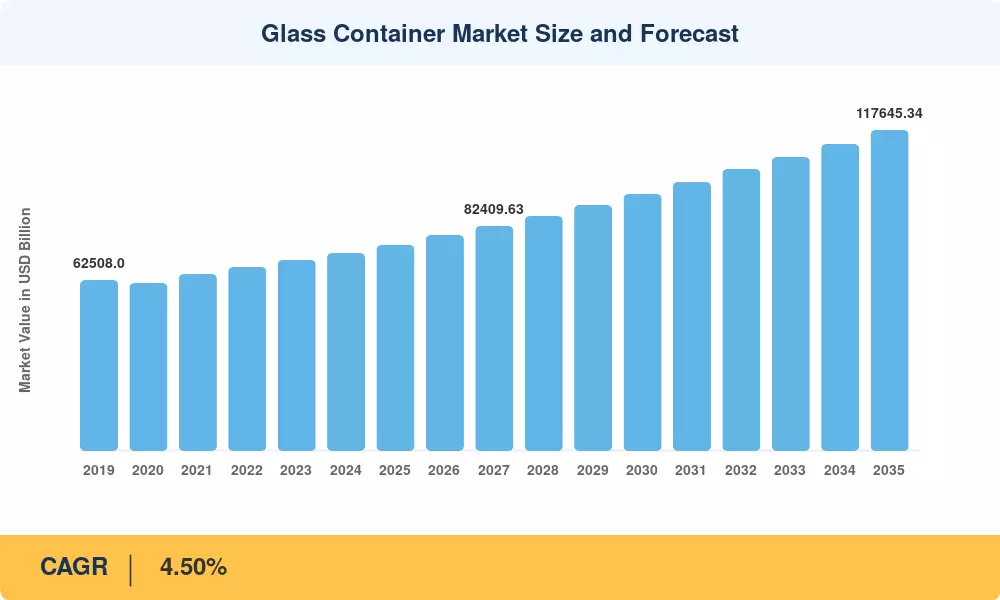
As per MRFR analysis, the Glass Container Market Size was estimated at 71802.7 USD Million in 2024. The Glass Container industry is projected to grow from 76556.21 USD Million in 2025 to 145337.3 USD Million by 2035, exhibiting a compound annual growth rate (CAGR) of 6.62 during the forecast period 2025 - 2035.

Key Market Trends & Highlights

The Glass Container Market is experiencing a robust shift towards sustainability and innovation, driven by evolving consumer preferences and technological advancements.

  • The North American region remains the largest market for glass containers, reflecting a strong demand across various sectors.
  • Asia-Pacific is identified as the fastest-growing region, with increasing investments in sustainable packaging solutions.
  • The beverage packaging segment dominates the market, while the pharmaceutical packaging segment is witnessing rapid growth due to heightened health standards.
  • Key market drivers include sustainability initiatives and rising demand in e-commerce, which are shaping consumer choices and industry practices.

Market Size & Forecast

2024 Market Size 71802.7 (USD Million)
2035 Market Size 145337.3 (USD Million)
CAGR (2025 - 2035) 6.62%

Major Players

Owens-Illinois (US), Ardagh Group (IE), Verallia (FR), Saint-Gobain (FR), Crown Holdings (US), Amcor (AU), Nippon Glass (JP), Schott AG (DE), Gerresheimer (DE)

Glass Container Market Trends

The Glass Container Market is currently experiencing a dynamic evolution, driven by a confluence of consumer preferences and environmental considerations. As sustainability becomes increasingly paramount, manufacturers are adapting their production processes to emphasize eco-friendly materials and practices. This shift not only aligns with global efforts to reduce plastic waste but also caters to a growing demographic that prioritizes health and safety, as glass is perceived as a safer alternative for food and beverage storage. Furthermore, the aesthetic appeal of glass containers, coupled with their reusability, enhances their desirability among consumers seeking both functionality and style in their packaging choices. In addition to sustainability, the Glass Container Market is witnessing innovations in design and technology. Companies are exploring new shapes, sizes, and functionalities to meet diverse consumer needs. This trend is particularly evident in the food and beverage sector, where unique packaging can differentiate products on crowded shelves. Moreover, the rise of e-commerce has prompted a reevaluation of packaging durability, leading to advancements that ensure glass containers withstand the rigors of shipping while maintaining their integrity. As these trends unfold, the Glass Container Market appears poised for continued growth, reflecting broader shifts in consumer behavior and industry practices.

Sustainability Focus

The emphasis on sustainable practices is reshaping the Glass Container Market. Manufacturers are increasingly adopting eco-friendly materials and processes to meet consumer demand for environmentally responsible products. This trend not only addresses concerns about plastic waste but also aligns with global sustainability initiatives.

Innovative Design

Innovation in design is a key trend within the Glass Container Market. Companies are experimenting with various shapes and functionalities to cater to diverse consumer preferences. Unique packaging solutions are becoming essential for differentiation in competitive sectors, particularly in food and beverages.

E-commerce Adaptation

The rise of e-commerce is influencing packaging strategies in the Glass Container Market. As online shopping continues to grow, there is a heightened focus on ensuring that glass containers are durable enough to withstand shipping challenges. This adaptation is crucial for maintaining product integrity during transit.

Glass Container Market Drivers

Sustainability Trends

The Global Glass Container Market Industry is experiencing a notable shift towards sustainability, driven by increasing consumer awareness regarding environmental issues. Glass is perceived as a more eco-friendly alternative to plastic, as it is recyclable and does not leach harmful chemicals. This trend is reflected in the growing demand for glass packaging across various sectors, including food and beverages. In 2024, the market is valued at approximately 71.8 USD Billion, and this figure is expected to rise as companies adopt more sustainable practices. The emphasis on reducing carbon footprints and promoting circular economies further bolsters the growth of the Global Glass Container Market Industry.

Market Growth Projections

The Global Glass Container Market Industry is projected to experience robust growth over the next decade. With a current valuation of 71.8 USD Billion in 2024, the market is expected to reach 145.0 USD Billion by 2035. This growth trajectory suggests a compound annual growth rate of 6.6% from 2025 to 2035. Factors contributing to this expansion include increasing consumer demand for sustainable packaging, stringent regulations favoring glass, and technological advancements in production. As the market evolves, it is likely to attract new investments and innovations, reinforcing the position of glass containers in various sectors.

Health and Safety Regulations

Stringent health and safety regulations are propelling the Global Glass Container Market Industry forward. Governments worldwide are implementing policies that favor glass packaging due to its inert nature, which ensures that no harmful substances migrate into food and beverages. This regulatory environment encourages manufacturers to invest in glass production technologies and innovations. As a result, the market is likely to see increased growth, with projections indicating a rise to 145.0 USD Billion by 2035. Compliance with these regulations not only enhances consumer trust but also positions glass as a preferred choice in sectors where safety is paramount.

Rising Demand in Emerging Markets

Emerging markets are becoming increasingly important for the Global Glass Container Market Industry, as urbanization and rising disposable incomes drive demand for packaged goods. Countries in Asia-Pacific and Latin America are witnessing a surge in the consumption of beverages and food products, leading to a higher demand for glass packaging. This trend is likely to continue, as consumers in these regions become more health-conscious and environmentally aware. The growth potential in these markets presents opportunities for manufacturers to expand their reach and innovate their product offerings, further contributing to the overall growth trajectory of the Global Glass Container Market Industry.

Consumer Preference for Premium Products

There is a discernible shift in consumer preferences towards premium products, which is positively impacting the Global Glass Container Market Industry. Consumers are increasingly willing to pay a premium for products packaged in glass, associating it with higher quality and better preservation of taste and freshness. This trend is particularly evident in the beverage sector, where craft beers and artisanal spirits often utilize glass containers to enhance brand image. As the market evolves, the demand for glass packaging is expected to grow, contributing to a compound annual growth rate of 6.6% from 2025 to 2035, further solidifying the position of the Global Glass Container Market Industry.

Technological Advancements in Production

Technological advancements in glass production are significantly influencing the Global Glass Container Market Industry. Innovations such as automated manufacturing processes and improved melting techniques enhance efficiency and reduce production costs. These advancements allow manufacturers to meet the rising demand for glass containers while maintaining quality standards. Furthermore, the integration of smart technologies in production lines is expected to streamline operations and minimize waste. As a result, the market is poised for growth, with an anticipated increase in value from 71.8 USD Billion in 2024 to 145.0 USD Billion by 2035, underscoring the importance of technology in the Global Glass Container Market Industry.

Market Segment Insights

By Application: Beverage Packaging (Largest) vs. Pharmaceutical Packaging (Fastest-Growing)

The Glass Container Market's application segment showcases a diverse distribution among various sectors. Beverage packaging accounts for the largest share, fueled by the rising consumer preference for glass over plastic alternatives, driven by environmental concerns. Following closely, food packaging and cosmetic packaging also hold significant market portions, reflecting consumer trends toward sustainability and quality. The pharmaceutical packaging segment, although smaller, is increasingly gaining traction due to stricter regulations on drug safety and the rising demand for reliable packaging solutions. Growth trends indicate a robust expansion across the application segment, particularly in pharmaceutical packaging, which is anticipated to be the fastest-growing area. Factors contributing to this growth include a surge in the pharmaceutical industry driven by innovations in drug formulations and increased health awareness among consumers. Furthermore, the overall trend toward sustainable packaging solutions is expected to enhance opportunities in food and beverage sectors, as consumers continue to favor responsible packaging choices.

Beverage Packaging: Dominant vs. Pharmaceutical Packaging: Emerging

Beverage packaging has established itself as the dominant segment in the Glass Container Market, characterized by high demand for environmentally friendly and visually appealing packaging. The trend towards glass for soft drinks and alcoholic beverages is driven by consumer preferences for premium packaging that preserves product quality. Meanwhile, pharmaceutical packaging is emerging as a pivotal segment due to its crucial role in securing medications and ensuring patient safety. This segment is witnessing advancements in technology with innovations in glass formulations and designs that enhance preservation and safety. The focus on compliance with stringent regulations related to pharmaceutical products is also boosting the demand for glass containers in this sector, leading to a significant increase in market presence.

By End Use: Food Industry (Largest) vs. Beverage Industry (Fastest-Growing)

The Glass Container Market is significantly influenced by its end-use applications, with the Food Industry commanding the highest market share. This sector benefits from the rising demand for packaging solutions that ensure food safety, extend shelf life, and preserve nutritional quality. In contrast, the Beverage Industry is rapidly gaining traction, characterized by innovative packaging designs and a shift towards sustainable practices. With increasing consumer preferences for bottled beverages, this segment is becoming a critical player in the market landscape. The growth trends in the Glass Container Market showcase a robust increase in demand across various end-use sectors. Key drivers include the rising consumer awareness regarding health and safety, along with an emphasis on eco-friendly packaging solutions. The Beverage Industry’s expansion is particularly notable as it responds to consumer demand for quality and design, leading to an increase in product offerings. As sustainability becomes a primary focus, manufacturers are innovating to meet these expectations across all end-use segments, ultimately propelling market growth.

Food Industry: Dominant vs. Beverage Industry: Emerging

The Food Industry remains the dominant force in the Glass Container Market, relying on the unique advantages that glass packaging offers, such as inertness and the ability to preserve flavor and freshness. This segment encompasses a wide range of applications, from jars for sauces and spreads to bottles for oils. As concerns over food safety become increasingly paramount, the Food Industry continues to prioritize glass containers for their non-toxic properties and recyclability. Conversely, the Beverage Industry is emerging as a vital segment, characterized by its swift adaptability to contemporary consumer trends. This sector not only addresses the aesthetic appeal of glass packaging but also benefits from increasing health consciousness among consumers. With the rising consumption of functional beverages and ready-to-drink options, the Beverage Industry is expected to maintain a strong growth trajectory, especially as brands gravitate towards sustainable, glass alternatives.

By Material Type: Soda Lime Glass (Largest) vs. Borosilicate Glass (Fastest-Growing)

In the Glass Container Market, Soda Lime Glass dominates the material type segment, holding the largest market share due to its extensive use in various applications, particularly food and beverage packaging. It is favored for its cost-effectiveness and versatility. On the other hand, Borosilicate Glass is rapidly gaining acceptance, known for its thermal resistance and suitability for high-end applications, which positions it as the fastest-growing segment in this category.

Soda Lime Glass (Dominant) vs. Borosilicate Glass (Emerging)

Soda Lime Glass is a well-established material in the glass container market, offering a balance of utility, strength, and affordability that makes it a go-to choice for manufacturers. It is widely used in the production of bottles and jars, driven by its recyclability and low production costs. Alternatively, Borosilicate Glass, known for its superior thermal stability and resistance to thermal shock, is carving a niche in the market by catering to specialized products such as laboratory containers and premium food storage options. Its increasing utilization reflects a growing trend towards high-quality materials in packaging.

By Production Process: Blow Molding (Largest) vs. Press Molding (Fastest-Growing)

In the Glass Container Market, the production process segment demonstrates varied market share distribution, with Blow Molding leading as the predominant method due to its efficiency and ability to produce lightweight products. This method caters to a wide range of applications, making it a preferred choice among manufacturers. Other methods such as Press Molding, Glass Forming, Casting, and Injection Molding follow, each contributing to niche demands within the market. Press Molding, in particular, is gaining traction for its suitability in producing intricate designs and smaller volumes, appealing to specialty markets.

Production Process: Blow Molding (Dominant) vs. Press Molding (Emerging)

The Blow Molding process stands out in the Glass Container Market as the dominant technique, primarily used for producing hollow glass items efficiently and cost-effectively. This technique allows for the rapid production of lightweight containers, which meets the evolving consumer demand for sustainable packaging solutions. On the other hand, Press Molding, though less established, is emerging due to its capability to create complex and tailored designs. This method is increasingly favored by manufacturers looking to cater to specialized markets requiring unique shapes and aesthetics. Both processes showcase the industry's shift towards innovation while addressing different market needs.

By Closure Type: Screw Cap (Largest) vs. Tamper Evident Cap (Fastest-Growing)

In the Glass Container Market, the Closure Type segment is divided into several key categories: Screw Cap, Cork, Snap-On Cap, Flip Top Cap, and Tamper Evident Cap. Screw Caps represent the largest share due to their widespread acceptance and convenience across various sectors, including food and beverage, pharmaceuticals, and cosmetics. Following Screw Caps are Tamper Evident Caps, which have gained significant traction driven by increasing consumer safety concerns and regulatory requirements. Corks, while traditional, are experiencing slower growth in comparison to more modern closure types.

Closure Type: Screw Cap (Dominant) vs. Tamper Evident Cap (Emerging)

Screw Caps are the dominant player in the Glass Container market due to their ease of use, secure sealing, and compatibility with modern production processes. They provide a reliable barrier against contamination, making them ideal for products ranging from gourmet sauces to health supplements. Conversely, Tamper Evident Caps are emerging in response to consumer demand for safety and authenticity. These caps not only serve as a visual indicator of product integrity but are also increasingly being incorporated in various applications, given heightened regulatory scrutiny around product safety. Both segment types showcase distinct characteristics that cater to specific market needs, influencing their growth and positioning.

Get more detailed insights about Glass Container Market

Regional Insights

North America : Market Leader in Glass Containers

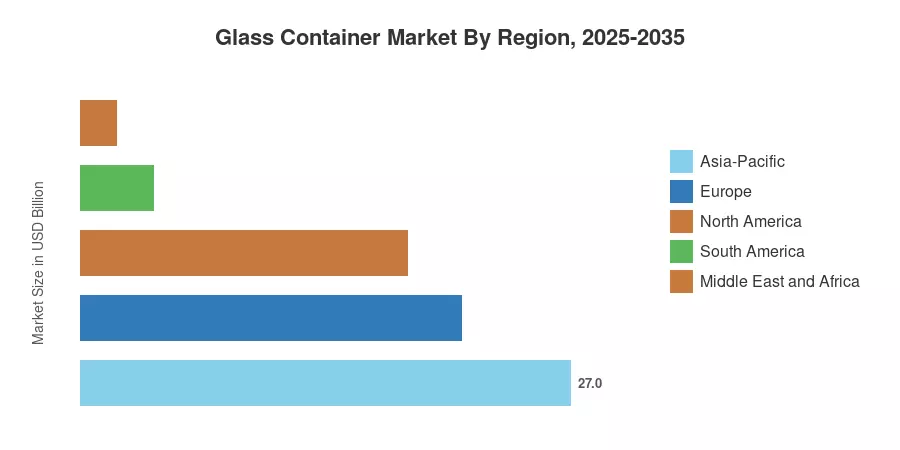
North America is poised to maintain its leadership in the glass container market, holding a significant share of 36,000.0. The region's growth is driven by increasing consumer preference for sustainable packaging solutions and stringent regulations promoting eco-friendly materials. The demand for glass containers is further fueled by the booming food and beverage sector, which emphasizes quality and safety in packaging. The United States stands out as the largest market, with key players like Owens-Illinois and Crown Holdings leading the competitive landscape. The presence of advanced manufacturing facilities and a robust supply chain enhances the region's market position. Additionally, innovations in glass recycling and production technologies are expected to bolster growth, ensuring North America's dominance in the global market.

Europe : Emerging Trends in Sustainability

Europe's glass container market is projected to reach 22,000.0, driven by a strong emphasis on sustainability and circular economy initiatives. Regulatory frameworks, such as the EU's Packaging and Packaging Waste Directive, are catalyzing the shift towards recyclable materials. The increasing consumer demand for eco-friendly packaging solutions is further propelling market growth, as businesses adapt to meet these expectations. Leading countries like Germany, France, and the UK are at the forefront of this transformation, with major players such as Ardagh Group and Verallia investing in innovative production methods. The competitive landscape is characterized by a focus on reducing carbon footprints and enhancing product recyclability. This commitment to sustainability positions Europe as a key player in The Glass Container.

Asia-Pacific : Rapid Growth in Emerging Markets

The Asia-Pacific region is witnessing rapid growth in the glass container market, projected to reach 12,000.0. This growth is driven by increasing urbanization, rising disposable incomes, and a growing preference for premium packaging in food and beverage sectors. Regulatory support for sustainable practices is also enhancing market dynamics, as governments encourage the use of recyclable materials. Countries like China, Japan, and India are leading the charge, with significant investments from key players such as Nippon Glass and Amcor. The competitive landscape is evolving, with local manufacturers emerging alongside established global brands. This dynamic environment is expected to foster innovation and drive further growth in the region's glass container market.

Middle East and Africa : Untapped Potential in Glass Market

The Middle East and Africa (MEA) region presents untapped potential in the glass container market, with a projected size of 3,802.7. The growth is primarily driven by increasing demand in the food and beverage industry, coupled with rising consumer awareness regarding sustainable packaging. Regulatory initiatives aimed at reducing plastic waste are also encouraging the adoption of glass containers as a viable alternative. Countries like South Africa and the UAE are emerging as key players in this market, with local manufacturers and international companies like Schott AG and Gerresheimer expanding their presence. The competitive landscape is characterized by a mix of established players and new entrants, all vying to capitalize on the region's growth opportunities. This evolving market is set to attract further investments and innovations in glass container production.

Key Players and Competitive Insights

The Glass Container Market is currently characterized by a dynamic competitive landscape, driven by increasing consumer demand for sustainable packaging solutions and the growing trend towards eco-friendly materials. Major players such as Owens-Illinois (US), Ardagh Group (IE), and Verallia (FR) are strategically positioning themselves through innovation and regional expansion. Owens-Illinois (US) has focused on enhancing its production capabilities to meet the rising demand for glass packaging, while Ardagh Group (IE) emphasizes sustainability in its operations, aiming to reduce carbon emissions and increase recycling rates. Verallia (FR) is also investing in digital transformation initiatives to optimize its manufacturing processes, collectively shaping a competitive environment that prioritizes sustainability and operational efficiency.

Key business tactics within the Glass Container Market include localizing manufacturing and optimizing supply chains to enhance responsiveness to market demands. The market structure appears moderately fragmented, with several key players exerting influence over various segments. This fragmentation allows for a diverse range of products and innovations, while also fostering competition among established and emerging companies.

In November 2025, Owens-Illinois (US) announced a significant investment in a new manufacturing facility in Mexico, aimed at increasing its production capacity for sustainable glass containers. This strategic move is likely to enhance the company's ability to serve the North American market more effectively, while also aligning with its sustainability goals by reducing transportation emissions. The establishment of this facility may also create local job opportunities, further solidifying Owens-Illinois's commitment to community engagement.

In October 2025, Ardagh Group (IE) launched a new line of lightweight glass containers designed to reduce material usage without compromising quality. This innovation not only addresses environmental concerns but also positions Ardagh as a leader in sustainable packaging solutions. The introduction of these lightweight containers could potentially attract environmentally conscious consumers and brands, thereby enhancing Ardagh's market share in the competitive landscape.

In September 2025, Verallia (FR) entered into a strategic partnership with a technology firm to develop AI-driven solutions for optimizing production processes. This collaboration is expected to enhance operational efficiency and reduce waste, aligning with the industry's shift towards digitalization. By leveraging AI technology, Verallia may improve its competitive edge, enabling it to respond more swiftly to market changes and customer preferences.

As of December 2025, current trends in the Glass Container Market indicate a strong emphasis on digitalization, sustainability, and technological integration. Strategic alliances are increasingly shaping the competitive landscape, allowing companies to pool resources and expertise to drive innovation. The shift from price-based competition to a focus on technological advancements and supply chain reliability is evident, suggesting that future competitive differentiation will hinge on the ability to innovate and adapt to evolving consumer preferences.

Key Companies in the Glass Container Market market include

Industry Developments

In February 2023, Amcor injects US$250,000 in start-up, and TekniPlex offers heat induction seals for glass.

In February 2023, Vidrala completes €100 million investment at Portuguese glass facility.

In May 2023, Ardagh to supply glass bottles for Sprecher’s beer and beverage products.

In May 2023, Ardagh Glass Packaging builds breakthrough 'NextGen Furnace' in Germany.

In May 2022, CCI allows AGI Greenpac to acquire Hindusthan National Glass & Industries.

August 2023- Sun Glass has deployed an 80 tpd furnace at its container glass production facility in Firozabad, Uttar Pradesh, India. Sun Glass offers the premium spirits and beer market across India. Its latest furnace will have the capacity of the Firozabad container glass facility up to 230 tpd. The furnace will generate green glass bottles for beer, wine, spirits, and soft drinks in sizes 90ml to 1000ml. The investment price is nearly 1 billion INR (about 11,159,201 EUR). It has also produced more than 100 jobs.

The group has seven active furnaces in the Firozabad facility, with two at its container glass production facility. The facility's second furnace started manufacturing in July 2023, while the first furnace was fired in November 2020. There was an authorized opening ceremony at the time of the second furnace's firing.

Future Outlook

Glass Container Market Future Outlook

The Glass Container Market is projected to grow at a 6.62% CAGR from 2024 to 2035, driven by sustainability trends, increased demand for premium packaging, and innovations in manufacturing processes.

New opportunities lie in:

  • Expansion into biodegradable glass alternatives for eco-conscious consumers.
  • Development of smart glass containers with integrated tracking technology.
  • Partnerships with e-commerce platforms for direct-to-consumer glass packaging solutions.

By 2035, the Glass Container Market is expected to achieve robust growth, driven by innovation and sustainability.

Market Segmentation

Glass Container Market End Use Outlook

  • Food Industry
  • Beverage Industry
  • Pharmaceutical Industry
  • Cosmetics Industry
  • Household Goods

Glass Container Market Application Outlook

  • Food Packaging
  • Beverage Packaging
  • Pharmaceutical Packaging
  • Cosmetic Packaging
  • Household Products

Glass Container Market Closure Type Outlook

  • Screw Cap
  • Cork
  • Snap-On Cap
  • Flip Top Cap
  • Tamper Evident Cap

Glass Container Market Material Type Outlook

  • Soda Lime Glass
  • Borosilicate Glass
  • Lead Glass
  • Recycled Glass
  • Tempered Glass

Glass Container Market Production Process Outlook

  • Blow Molding
  • Press Molding
  • Glass Forming
  • Casting
  • Injection Molding

Report Scope

MARKET SIZE 202471802.7(USD Million)
MARKET SIZE 202576556.21(USD Million)
MARKET SIZE 2035145337.3(USD Million)
COMPOUND ANNUAL GROWTH RATE (CAGR)6.62% (2024 - 2035)
REPORT COVERAGERevenue Forecast, Competitive Landscape, Growth Factors, and Trends
BASE YEAR2024
Market Forecast Period2025 - 2035
Historical Data2019 - 2024
Market Forecast UnitsUSD Million
Key Companies ProfiledOwens-Illinois (US), Ardagh Group (IE), Verallia (FR), Saint-Gobain (FR), Crown Holdings (US), Amcor (AU), Nippon Glass (JP), Schott AG (DE), Gerresheimer (DE)
Segments CoveredApplication, End Use, Material Type, Production Process, Closure Type
Key Market OpportunitiesGrowing demand for sustainable packaging solutions drives innovation in the Glass Container Market.
Key Market DynamicsRising consumer preference for sustainable packaging drives innovation and competition in the glass container market.
Countries CoveredNorth America, Europe, APAC, South America, MEA

Market Highlights

Author
Pradeep Nandi
Senior Research Analyst

I have a bachelor's degree in mechanical engineering and an MBA. I have more than two years of expertise in the retail, food, and beverage, chemical, and material industries, and hence have developed a sound cross-domain expertise. A firm believer in lifelong learning and sharing of knowledge. Having a proclivity for hatching ideas and trying to absorb as much information as possible in a short amount of time. Introducing corporates to the data and insight, which enables them to move from probability to possibility, has been my key areas of interest. 

Leave a Comment

FAQs

How much is the Glass Container Market?

The Glass Container Market size is expected to be valued at USD 1,14,337.30 million in 2035.

What is the growth rate of the Glass Container Market?

Glass Container Market is projected to grow at a CAGR of 6.62% during the forecast period, 2025-2035

Which region held the largest market share in the Glass Container Market?

Asia- Pacific had the largest share of the global market.

Who are the key players in the Glass Container Market?

The key players in the market include Amcor Limited, Owens-Illinois Inc., Central Glass Co., Ltd, BA Vidro, S.A., VIDRALA, Ardagh Group S.A., Hindusthan National Glass & Industries Limited.

Which Product Type led the Glass Container Market?

Glass Bottle segment dominated the market in 2024.

Which End-Use had the largest market share in the Glass Container Market?

Beverage Packaging had the largest revenue share of the global market.

Download Free Sample

Kindly complete the form below to receive a free sample of this Report

Compare Licence

×
Features License Type
Single User Multiuser License Enterprise User
Price $4,950 $5,950 $7,250
Maximum User Access Limit 1 User Upto 10 Users Unrestricted Access Throughout the Organization
Free Customization
Direct Access to Analyst
Deliverable Format
Platform Access
Discount on Next Purchase 10% 15% 15%
Printable Versions