Download Free Sample
Kindly complete the form below to receive a free sample of this Report
Glucose Biosensor Market Research Report By Sensor Technology (Electrochemical Sensors, Optical Sensors, Microneedle Sensors, Enzymatic Sensors), By Product Type (Wearable Glucose Biosensors, Implantable Glucose Biosensors, Handheld Glucose Monitors), By Application (Diabetes Management, Clinical Research, Continuous Glucose Monitoring), By End User (Hospitals, Home Care Settings, Diabetes Clinics, Pharmaceutical Companies), By Distribution Channel (Online Sales, Retail Pharmacies, Institutional Sales) and By Regional (North America, Europe, South America, Asia Pacific, Middle East and Africa) - Growth & Industry Forecast 2025 To 2035
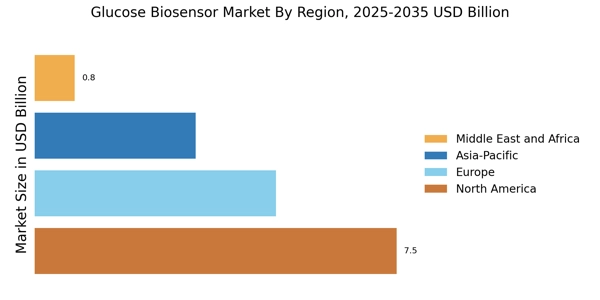
The Global Glucose Biosensor Market size was valued at USD 16.65 Billion in 2024, and the market is projected to grow from USD 17.9 Billion in 2025 to USD 36.82 Billion by 2035, registering a CAGR of 7.48% during the forecast period 2025–2035. North America led the market in 2024 with over 45.05% share, generating around USD 7.5 Billion in revenue. The increasing global prevalence of diabetes and rising demand for continuous glucose monitoring solutions are major growth factors driving the Glucose Biosensor Market. Growing consumer preference for real-time, non-invasive, and wearable glucose monitoring technologies is accelerating product adoption across both clinical and homecare settings. According to the WHO Data Portal, over 830 million people worldwide were living with diabetes in 2024, with cases rising rapidly across low- and middle-income countries. This expanding diabetic population is significantly increasing demand for advanced glucose biosensors and continuous monitoring devices globally.
The Glucose Biosensor Market is experiencing robust growth driven by technological advancements and increasing health awareness.
| 2024 Market Size | 16.65 (USD Billion) |
| 2035 Market Size | 36.82 (USD Billion) |
| CAGR (2025 - 2035) | 7.48% |
Companies such as Abbott Laboratories (US), Roche Diagnostics (CH), Dexcom (US), Medtronic (US), Bayer AG (DE), Terumo Corporation (JP), Nova Biomedical (US), A. Menarini Diagnostics (IT), GlucoRx (GB) are some of the major participants in the global market.
Our Impact
Enabled $4.3B Revenue Impact for Fortune 500 and Leading Multinationals
Partnering with 2000+ Global Organizations Each Year
30K+ Citations by Top-Tier Firms in the Industry
The Glucose Biosensor Market is currently experiencing a notable transformation, driven by advancements in technology and increasing awareness regarding diabetes management. The integration of innovative materials and miniaturized devices appears to enhance the accuracy and convenience of glucose monitoring. Furthermore, the rising prevalence of diabetes globally necessitates the development of more efficient monitoring solutions, which may lead to a surge in demand for these biosensors.
As healthcare systems evolve, the emphasis on personalized medicine and patient-centric approaches seems to further propel the market forward, indicating a shift towards more tailored glucose management solutions. In addition, the market is likely to benefit from the growing trend of digital health and telemedicine.
The incorporation of mobile applications and cloud-based platforms for data analysis and sharing could enhance user engagement and adherence to monitoring regimens. This trend suggests a potential for improved health outcomes, as patients gain better insights into their glucose levels.
Overall, the market appears poised for growth, with technological innovations and changing consumer preferences shaping its future landscape.
Recent innovations in biosensor technology are enhancing the performance and usability of glucose monitoring devices. These advancements include the development of non-invasive sensors and wearable devices that provide real-time data, making glucose management more accessible and user-friendly.
The convergence of glucose biosensors with digital health platforms is becoming increasingly prevalent. This integration allows for seamless data sharing and analysis, empowering patients to monitor their health more effectively and engage with healthcare providers in real-time.
There is a growing emphasis on personalized medicine within the market. Tailored solutions that cater to individual patient needs and preferences are likely to enhance treatment efficacy and improve overall patient satisfaction.
The rising awareness of health and wellness among consumers is significantly influencing the Glucose Biosensor Industry. As individuals become more health-conscious, there is an increasing emphasis on preventive healthcare measures, including regular monitoring of blood glucose levels. This trend is particularly evident among populations at risk of developing diabetes, who are seeking proactive solutions to manage their health. Market Research Future indicates that consumers are more inclined to invest in health technologies that empower them to take control of their well-being. Consequently, the demand for glucose biosensors is expected to rise as they provide an accessible means for individuals to monitor their glucose levels. The Glucose Biosensor Market is thus likely to thrive in an environment where health awareness continues to expand.
Technological advancements play a crucial role in shaping the Glucose Biosensor Industry. Innovations such as continuous glucose monitoring (CGM) systems and non-invasive biosensors are revolutionizing how glucose levels are tracked. These technologies not only enhance the accuracy of readings but also improve user experience by providing real-time data. The market is witnessing a shift towards smart biosensors that integrate with mobile applications, allowing users to monitor their glucose levels conveniently. As these technologies evolve, they are expected to attract a broader consumer base, including those who may not have previously engaged with traditional glucose monitoring methods. The Glucose Biosensor Market is thus likely to benefit from ongoing research and development efforts aimed at enhancing sensor performance and usability.
The increasing incidence of diabetes worldwide is a primary driver for the Glucose Biosensor Industry. According to recent statistics, the number of individuals diagnosed with diabetes is projected to reach 700 million by 2045. This alarming trend necessitates the development and adoption of effective monitoring solutions, such as glucose biosensors. As patients seek to manage their condition more effectively, the demand for accurate and user-friendly biosensors is likely to surge. Furthermore, the growing awareness of diabetes management among healthcare providers and patients alike is expected to bolster the market. The market is thus positioned to experience substantial growth as it addresses the urgent need for reliable glucose monitoring solutions.
The integration of glucose biosensors with digital health platforms is emerging as a significant driver for the Glucose Biosensor Industry. As healthcare increasingly shifts towards digital solutions, the ability to connect biosensors with mobile apps and telehealth services is becoming essential. This integration allows for seamless data sharing between patients and healthcare providers, facilitating better management of diabetes. Market data indicates that the digital health market is expected to grow substantially, with a projected value of over 500 billion by 2025. This trend suggests that glucose biosensors that offer connectivity features will likely see heightened demand, as they align with the broader movement towards personalized and data-driven healthcare. The market stands to gain from this convergence of technology and health.
Regulatory support and favorable reimbursement policies are pivotal drivers for the Glucose Biosensor Industry. Governments and health organizations are increasingly recognizing the importance of diabetes management, leading to the establishment of supportive frameworks for the approval and reimbursement of glucose monitoring devices. This regulatory environment encourages innovation and investment in the development of advanced biosensors. Additionally, as reimbursement policies evolve to cover more diabetes management technologies, patients are more likely to adopt these solutions. Market data suggests that regions with robust reimbursement frameworks experience higher rates of biosensor adoption. Therefore, the market is expected to benefit from ongoing regulatory initiatives aimed at improving access to essential diabetes management tools.
The Glucose Biosensor Market showcases a diverse range of technologies, with electrochemical sensors holding the largest market share of 68.4%. This dominance is attributed to their affordability, ease of use, and established reliability in monitoring blood glucose levels. Meanwhile, optical sensors are rapidly gaining traction, marking their presence as the fastest-growing segment due to advancements in technology that enhance their accuracy and user-friendliness. The growth trajectory for glucose biosensors is driven by increasing diabetes prevalence globally, a rising demand for continuous glucose monitoring systems, and a shift towards non-invasive methods. Researchers are now focusing on developing more efficient and reliable sensors, integrating them with smart technology to improve user experience and compliance, further fueling the market growth.
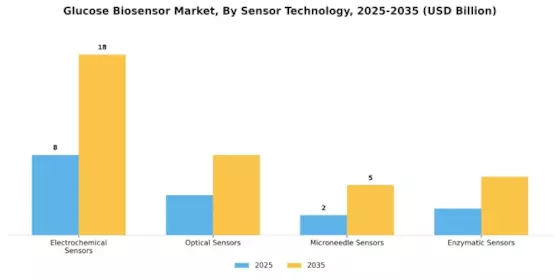
Nova Biomedical continues expanding electrochemical glucose monitoring technologies through advanced point-of-care diagnostic systems. The company’s StatStrip glucose monitoring platform is widely adopted across hospitals for delivering highly accurate readings with reduced interference. Strong clinical preference for reliable electrochemical biosensors continues supporting the segment’s dominant 68.4% market share in 2024.
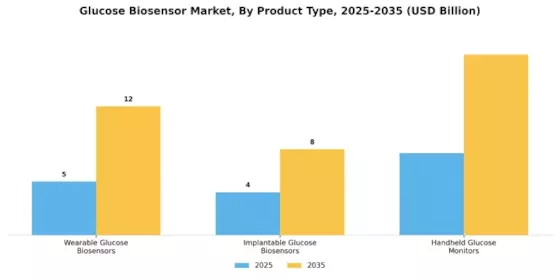
The Glucose Biosensor Market is characterized by a distinct distribution of share among its segments. Wearable Glucose Biosensors currently hold the largest market share of 61.7%, driven by increasing consumer demand for continuous health monitoring and the convenience they offer. This category has gained significant traction among diabetic patients and health-conscious consumers alike, fostering a solid user base. In contrast, Handheld Glucose Monitors are emerging as a fast-growing segment, with advancements in technology enabling more accurate and user-friendly devices.
Terumo Corporation is strengthening wearable diabetes management solutions through continuous innovation in compact and patient-friendly monitoring technologies. Increasing consumer preference for real-time wearable monitoring devices and improved treatment convenience significantly contributed to wearable glucose biosensors capturing 61.7% of the market share in 2024.
In the Glucose Biosensor Market, Diabetes Management holds the largest market share, at 64.9%, due to the rising prevalence of diabetes globally, which is driving demand for effective monitoring solutions. Continuous Glucose Monitoring (CGM) has emerged as a vital component in diabetes management, offering real-time data to users, thus significantly contributing to its market position. Clinical Research remains an important segment but does not match the expansive presence of Diabetes Management and the rapid growth of CGM. As the healthcare sector increasingly emphasizes personalized medicine and proactive health management, the Continuous Glucose Monitoring segment is experiencing rapid growth. Factors such as technological advancements, increased consumer awareness, and the rise of health tracking apps are propelling the CGM segment forward. Furthermore, the growing investment in healthcare infrastructure and a burgeoning demand for chronic disease management solutions are driving innovations in glucose biosensing technology, ensuring sustained growth in this dynamic market.
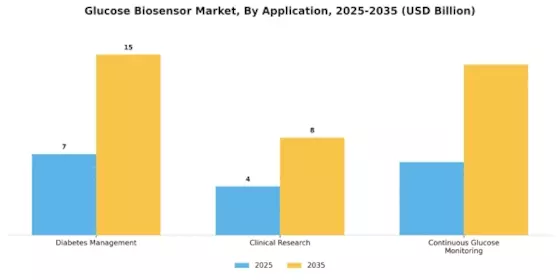
A. Menarini Diagnostics continues enhancing diabetes management solutions with advanced glucose monitoring systems designed for routine disease control and patient compliance. Rising global diabetes prevalence and growing emphasis on long-term glucose monitoring supported diabetes management applications accounting for 64.9% of the Glucose Biosensor Market in 2024.
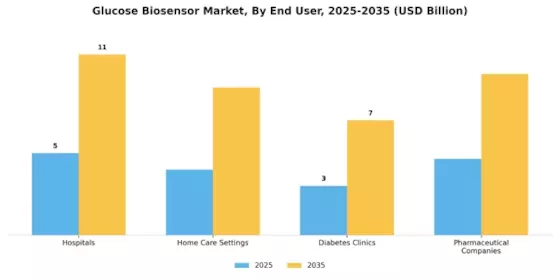
In the Glucose Biosensor Market, the end user segment primarily consists of Hospitals, Home Care Settings, Diabetes Clinics, and Pharmaceutical Companies. Hospitals hold the largest share at 58.3% due to their extensive reliance on glucose monitoring for patient management, particularly in critical care and diabetes management. Meanwhile, Home Care Settings are rapidly gaining traction, as more patients prefer to conduct glucose monitoring at home, leading to a shift in market dynamics. Growth trends indicate a surge in technology adoption among Home Care Settings, driven by the demand for patient-centric healthcare solutions. Advancements in glucose biosensor technology contribute to the convenience and accuracy that home monitoring offers. Meanwhile, Hospitals continue to invest in sophisticated biosensing solutions to improve patient outcomes, demonstrating a balanced market with both stability and growth potential.
Bayer AG continues supporting hospital-based diabetes care through advanced diagnostic technologies and glucose monitoring solutions utilized in critical patient management. The increasing number of diabetes-related hospital admissions and demand for accurate inpatient glucose testing contributed to hospitals maintaining a dominant 58.3% market share in 2024.
In the Glucose Biosensor Market, the distribution channels are diversified among Online Sales, Retail Pharmacies, and Institutional Sales. Online Sales currently holds the largest market share of 54.6%, catering to a growing number of consumers who prefer the convenience of shopping from home. Retail Pharmacies, while smaller in market share, are gaining traction as they become a preferred point of access for patients seeking immediate access to glucose biosensors.
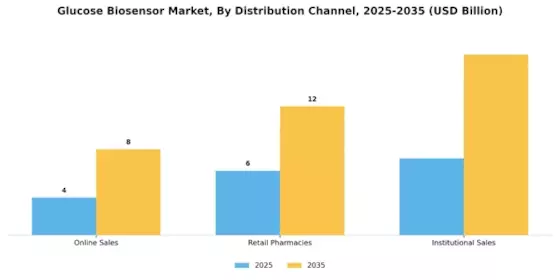
GlucoRx is expanding its digital sales presence by improving direct-to-consumer accessibility for glucose monitoring products through online healthcare platforms. Rising e-commerce penetration and increasing consumer preference for convenient home delivery services helped online sales capture 54.6% of the Glucose Biosensor Market share in 2024.
Get more detailed insights about Glucose Biosensor Market Request Free Sample
North America is the largest market for glucose biosensors, accounting for approximately 45% of the global market share. The region's growth is driven by increasing diabetes prevalence, technological advancements, and supportive regulatory frameworks. The FDA's streamlined approval processes for innovative devices further catalyze market expansion, fostering a competitive environment for key players.
The United States leads the market, with significant contributions from Canada. Major companies like Abbott Laboratories, Dexcom, and Medtronic dominate the landscape, focusing on continuous glucose monitoring systems. The presence of advanced healthcare infrastructure and high consumer awareness also bolster demand, making North America a hub for glucose biosensor innovation.
Europe is the second-largest market for glucose biosensors, holding around 30% of the global market share. The region's growth is propelled by rising diabetes cases and an increasing focus on preventive healthcare. The European Medicines Agency (EMA) has introduced new regulations that encourage innovation while ensuring patient safety, thus enhancing market dynamics.
Germany, France, and the UK are the leading countries in this market, with a strong presence of companies like Roche Diagnostics and Bayer AG. The competitive landscape is characterized by collaborations and partnerships aimed at developing advanced biosensing technologies. The emphasis on research and development in these countries further strengthens Europe's position in the global market.
Asia-Pacific is witnessing rapid growth in the glucose biosensor market, contributing approximately 20% to the global share. The increasing prevalence of diabetes, coupled with rising healthcare expenditures, drives demand in this region. Governments are implementing initiatives to improve healthcare access, which further stimulates market growth and innovation in biosensor technologies.
China and India are the leading countries in this market, with significant investments in healthcare infrastructure. The competitive landscape features both established players and emerging startups, focusing on affordable and user-friendly glucose monitoring solutions. The presence of key players like Terumo Corporation and Nova Biomedical enhances the region's market dynamics, making it a focal point for future growth.
The Middle East and Africa (MEA) region is gradually emerging in the glucose biosensor market, holding about 5% of the global share. The growth is driven by increasing awareness of diabetes management and the need for advanced healthcare solutions. Governments are investing in healthcare infrastructure, which is expected to catalyze market growth in the coming years.
Countries like South Africa and the UAE are leading the market, with a growing number of healthcare initiatives aimed at improving diabetes care. The competitive landscape is evolving, with both local and international players entering the market. The presence of companies like A. Menarini Diagnostics and GlucoRx is indicative of the region's potential for growth and innovation in glucose monitoring technologies.
The Glucose Biosensor Market is currently characterized by a dynamic competitive landscape, driven by technological advancements and increasing demand for diabetes management solutions. Key players such as Abbott Laboratories (US), Dexcom (US), and Roche Diagnostics (CH) are at the forefront, each adopting distinct strategies to enhance their market presence. Abbott Laboratories (US) focuses on innovation, particularly with its FreeStyle Libre system, which has revolutionized continuous glucose monitoring. Meanwhile, Dexcom (US) emphasizes partnerships with digital health platforms to integrate its biosensors into broader health management ecosystems. Roche Diagnostics (CH) is leveraging its extensive distribution network to expand its reach in emerging markets, thereby enhancing accessibility to its glucose monitoring solutions.In terms of business tactics, companies are increasingly localizing manufacturing to reduce costs and improve supply chain efficiency. The market appears moderately fragmented, with several players vying for market share, yet the collective influence of major companies like Abbott and Dexcom is significant. Their strategies not only shape competitive dynamics but also set benchmarks for innovation and customer engagement within the industry.In August Abbott Laboratories (US) announced a strategic partnership with a leading telehealth provider to enhance remote patient monitoring capabilities. This collaboration is poised to facilitate real-time data sharing between patients and healthcare providers, potentially improving diabetes management outcomes. The strategic importance of this move lies in its alignment with the growing trend towards telehealth, which is increasingly becoming a critical component of chronic disease management.In September Dexcom (US) launched its latest generation of continuous glucose monitoring systems, which feature advanced algorithms for more accurate readings. This product release not only reinforces Dexcom's commitment to innovation but also positions the company to capture a larger share of the market as consumers seek more reliable and user-friendly solutions. The introduction of this technology is likely to enhance patient adherence to monitoring regimens, thereby improving overall health outcomes.In July Roche Diagnostics (CH) expanded its product line by introducing a new glucose biosensor designed specifically for pediatric patients. This strategic move reflects Roche's commitment to addressing the unique needs of younger patients and their families, potentially opening new market segments. By tailoring products to specific demographics, Roche aims to differentiate itself in a competitive market, thereby enhancing its brand loyalty and market penetration.As of October the market is witnessing trends such as digitalization, sustainability, and the integration of artificial intelligence in product development. Strategic alliances are increasingly shaping the competitive landscape, as companies recognize the value of collaboration in enhancing technological capabilities and market reach. Looking ahead, competitive differentiation is likely to evolve from traditional price-based strategies to a focus on innovation, technological advancements, and supply chain reliability, as companies strive to meet the growing expectations of consumers and healthcare providers.



The Glucose Biosensor Market size is projected to reach USD 36.82 Billion by 2035, growing at a CAGR of 7.48%, driven by technological advancements, increasing diabetes prevalence, and rising health awareness.
New opportunities lie in:
By 2035, the market is expected to achieve substantial growth, driven by innovation and increased accessibility.
| MARKET SIZE 2024 | 16.65(USD Billion) |
| MARKET SIZE 2025 | 17.9(USD Billion) |
| MARKET SIZE 2035 | 36.82(USD Billion) |
| COMPOUND ANNUAL GROWTH RATE (CAGR) | 7.48% (2025 - 2035) |
| REPORT COVERAGE | Revenue Forecast, Competitive Landscape, Growth Factors, and Trends |
| BASE YEAR | 2024 |
| Market Forecast Period | 2025 - 2035 |
| Historical Data | 2019 - 2024 |
| Market Forecast Units | USD Billion |
| Key Companies Profiled | Abbott Laboratories (US), Roche Diagnostics (CH), Dexcom (US), Medtronic (US), Bayer AG (DE), Terumo Corporation (JP), Nova Biomedical (US), A. Menarini Diagnostics (IT), GlucoRx (GB) |
| Segments Covered | Sensor Technology, Product Type, Application, End User, Distribution Channel, Regional |
| Key Market Opportunities | Integration of advanced wearable technology enhances real-time monitoring in the Glucose Biosensor Market. |
| Key Market Dynamics | Technological advancements and regulatory changes drive innovation and competition in the glucose biosensor market. |
| Countries Covered | North America, Europe, APAC, South America, MEA |
The Glucose Biosensor Market is projected to reach a valuation of 36.82 USD Billion by 2035.
In 2024, the Glucose Biosensor Market was valued at 16.65 USD Billion.
The expected CAGR for the Glucose Biosensor Market during the forecast period 2025 - 2035 is 7.48%.
Key players in the Glucose Biosensor Market include Abbott Laboratories, Roche Diagnostics, Dexcom, Medtronic, Bayer AG, Terumo Corporation, Nova Biomedical, A. Menarini Diagnostics, and GlucoRx.
The main segments based on sensor technology include Electrochemical Sensors, Optical Sensors, Microneedle Sensors, and Enzymatic Sensors.
The market size for wearable glucose biosensors is projected to reach 12.0 USD Billion by 2035.
Sales channels for glucose biosensors include Online Sales, Retail Pharmacies, and Institutional Sales.
The diabetes management application segment is anticipated to grow to 14.82 USD Billion by 2035.





Kindly complete the form below to receive a free sample of this Report

“This is really good guys. Excellent work on a tight deadline. I will continue to use you going forward and recommend you to others. Nice job”


“Thanks. It’s been a pleasure working with you, please use me as reference with any other Intel employees.”


“Thanks for sending the report it gives us a good global view of the Betaïne market.”


“Thank you, this will be very helpful for OQS.”


“We found the report very insightful! we found your research firm very helpful. I'm sending this email to secure our future business.”


“I am very pleased with how market segments have been defined in a relevant way for my purposes (such as "Portable Freezers & refrigerators" and "last-mile"). In general the report is well structured. Thanks very much for your efforts.”


“I have been reading the first document or the study, ,the Global HVAC and FP market report 2021 till 2026. Must say, good info! I have not gone in depth at all parts, but got a good indication of the data inside!”


“We got the report in time, we really thank you for your support in this process. I also thank to all of your team as they did a great job.”


“The Automotive 48V ECU Components Procurement Intelligence Study” was a complex project, but the Market Research Future (MRFR) team handled it with quality, agility, and customer-centricity. They delivered all requested data on time and within the agreed scope. The team, including Shubhendra Anand and Rahul Gotadki, was always readily available to clarify questions and swiftly implement necessary adjustments, driving the project to a successful conclusion within a very demanding timeframe.
I would also like to specifically commend Akshay Agarwal for his responsiveness and support at every stage—from our initial inquiry on May 6th through to final delivery on June 18th. His dedication made the entire process seamless.”



