Gluten Free Pizza Crust Market
Gluten Free Pizza Crust Market Summary
As per Market Research Future analysis, the Gluten-Free Pizza Crust Market Size was estimated at 2.887 USD Billion in 2024. The Gluten-Free Pizza Crust industry is projected to grow from 3.123 USD Billion in 2025 to 6.857 USD Billion by 2035, exhibiting a compound annual growth rate (CAGR) of 8.18% during the forecast period 2025 - 2035
Key Market Trends & Highlights
The Gluten-Free Pizza Crust Market is experiencing robust growth driven by health trends and innovative ingredients.
- The North American market remains the largest for gluten-free pizza crusts, reflecting a strong health and wellness focus among consumers.
- In the Asia-Pacific region, the gluten-free pizza crust market is rapidly expanding, driven by increasing health consciousness and culinary innovation.
- Frozen gluten-free pizza crusts dominate the market, while refrigerated options are emerging as the fastest-growing segment.
- Key market drivers include heightened health consciousness and the diverse utilization of innovative ingredients, which are shaping consumer preferences.
Market Size & Forecast
| 2024 Market Size | 2.887 (USD Billion) |
| 2035 Market Size | 6.857 (USD Billion) |
| CAGR (2025 - 2035) | 8.18% |
Major Players
Caulipower (US), Udi's Gluten Free (US), Amy's Kitchen (US), Schär (IT), Gluten-Free Heaven (US), Banza (US), Cappello's (US), Daiya Foods (CA), Mamma Mia (US)
Gluten Free Pizza Crust Market Trends
The Gluten-Free Pizza Crust Market is currently experiencing a notable transformation, driven by a growing awareness of dietary restrictions and health-conscious eating habits. Consumers are increasingly seeking alternatives that cater to gluten intolerance and celiac disease, leading to a surge in demand for gluten-free options. This shift is not merely a trend but appears to be a fundamental change in consumer preferences, as individuals prioritize health and wellness in their food choices. Manufacturers are responding by innovating and diversifying their product lines, introducing a variety of gluten-free crusts made from alternative flours such as almond, coconut, and chickpea. Moreover, the market landscape is evolving with the rise of online grocery shopping and food delivery services, which facilitate access to gluten-free products. This convenience is likely to enhance consumer engagement and broaden the market reach. As more restaurants and pizzerias incorporate gluten-free offerings into their menus, the Gluten-Free Pizza Crust Market is poised for further expansion. The interplay between consumer demand, product innovation, and distribution channels suggests a dynamic future for this segment, with potential for sustained growth and diversification in the coming years.
Health and Wellness Focus
There is a discernible trend towards health and wellness, with consumers increasingly prioritizing nutritious food options. This focus is driving the demand for gluten-free pizza crusts, as individuals seek healthier alternatives that align with their dietary preferences.
Diverse Ingredient Utilization
Manufacturers are exploring a variety of alternative flours and ingredients to create gluten-free pizza crusts. This trend reflects a growing interest in unique flavors and textures, appealing to a broader audience beyond those with gluten sensitivities.
Expansion of Distribution Channels
The rise of e-commerce and food delivery services is reshaping how gluten-free products reach consumers. This trend indicates a shift in purchasing behavior, as convenience becomes a key factor in consumer decision-making.
Gluten Free Pizza Crust Market Drivers
Culinary Innovation
Culinary innovation is emerging as a vital driver for the Gluten-Free Pizza Crust Market. Chefs and food manufacturers are increasingly focusing on creating gourmet gluten-free pizza crusts that appeal to discerning palates. This trend not only enhances the overall dining experience but also positions gluten-free options as desirable choices in restaurants and pizzerias. Industry expert's suggest that the introduction of artisanal and gourmet gluten-free crusts could attract a new segment of consumers who prioritize quality and taste. As culinary innovation continues to evolve, it is likely to further stimulate interest and demand within the Gluten-Free Pizza Crust Market.
Health Consciousness
The increasing awareness of health and wellness among consumers appears to be a primary driver for the Gluten-Free Pizza Crust Market. As more individuals adopt gluten-free diets due to health concerns such as celiac disease and gluten sensitivity, the demand for gluten-free products, including pizza crusts, has surged. According to recent data, the gluten-free food market is projected to reach substantial figures, indicating a growing consumer base seeking healthier alternatives. This trend suggests that manufacturers are likely to innovate and expand their gluten-free offerings to cater to this health-conscious demographic, thereby propelling the Gluten-Free Pizza Crust Market forward.
Diverse Ingredient Utilization
The Gluten-Free Pizza Crust Market is witnessing a notable trend towards the utilization of diverse ingredients. Manufacturers are increasingly experimenting with alternative flours such as almond, coconut, and chickpea to create gluten-free pizza crusts that not only meet dietary restrictions but also appeal to a broader audience. This innovation is likely to enhance the flavor profiles and textures of gluten-free options, making them more competitive with traditional pizza crusts. Market data suggests that the introduction of these unique ingredients could potentially attract consumers who are not strictly gluten-free but are interested in healthier, alternative food choices, thus expanding the market reach.
Expansion of Distribution Channels
The expansion of distribution channels is significantly influencing the Gluten-Free Pizza Crust Market. Retailers are increasingly recognizing the demand for gluten-free products and are dedicating more shelf space to these items. Additionally, the rise of e-commerce platforms has made gluten-free pizza crusts more accessible to consumers, allowing for a wider reach. Recent statistics indicate that online sales of gluten-free products have seen a remarkable increase, suggesting that convenience plays a crucial role in consumer purchasing decisions. This trend indicates that as distribution channels continue to expand, the Gluten-Free Pizza Crust Market is likely to experience enhanced growth.
Increased Availability of Gluten-Free Options
The increased availability of gluten-free options is a significant factor driving the Gluten-Free Pizza Crust Market. As more restaurants and food service establishments recognize the importance of catering to gluten-free diets, the variety of gluten-free pizza crusts available has expanded. This trend is supported by market data indicating that a growing number of consumers are seeking gluten-free dining options, leading to a rise in menu offerings. Consequently, the proliferation of gluten-free pizza crusts in both retail and food service sectors is likely to enhance consumer choice and satisfaction, thereby contributing to the overall growth of the Gluten-Free Pizza Crust Market.
Market Segment Insights
By Type: Frozen (Largest) vs. Refrigerated (Fastest-Growing)
The Gluten-Free Pizza Crust Market comprises several segment values including Frozen, Refrigerated, and Shelf-stable products. Currently, Frozen pizza crusts hold the largest market share, attributed to their long shelf life and convenience for consumers. Frozen varieties cater to the busy lifestyles of modern consumers who prioritize quick meal options, creating a steady demand within the segment. Meanwhile, Refrigerated crusts are gaining traction among health-conscious consumers looking for fresher alternatives, indicating a shift in preferences towards products perceived as healthier.
Frozen (Dominant) vs. Refrigerated (Emerging)
Frozen gluten-free pizza crusts dominate the market due to their convenience, extended shelf life, and variety of options available to consumers. These crusts are easily accessible in supermarkets and online, ensuring a strong customer base. On the other hand, Refrigerated crusts, while currently smaller in market share, are emerging as a popular choice among health-conscious consumers who seek fresher ingredients and a more artisanal quality. This segment is likely to grow rapidly as brands innovate and offer diverse flavors and health benefits, appealing to the evolving preferences of consumers.
By Ingredient: Rice Flour (Largest) vs. Almond Flour (Fastest-Growing)
Flour: Rice Flour (Dominant) vs. Almond Flour (Emerging)
Rice Flour is widely regarded as the dominant ingredient in the Gluten-Free Pizza Crust Market due to its adaptability and favorable baking qualities. It provides a neutral taste that easily complements various toppings while delivering a chewy texture typical of traditional pizza crusts. Almond Flour, on the other hand, is an emerging player, gaining traction for its health benefits and flavor richness. Although it carries a higher price point and is used in smaller quantities, its appeal lies in its contribution to low-carb and gluten-free diets, attracting a health-conscious demographic. Both flours play pivotal roles, with Rice Flour leading in production volume while Almond Flour continues to rise in popularity among niche consumer groups.
By Distribution Channel: Online Retail (Largest) vs. Supermarkets (Fastest-Growing)
The Gluten-Free Pizza Crust Market shows a diverse distribution channel landscape, with Online Retail taking the lead as the largest channel. This segment has gained significant traction due to the convenience of online shopping and the increasing availability of gluten-free products. Supermarkets, while holding a substantial share, are experiencing growth mostly from an expanding consumer base that prefers one-stop shopping experiences where gluten-free options are becoming increasingly available.
Online Retail (Dominant) vs. Specialty Stores (Emerging)
Online Retail stands as a dominant force in the Gluten-Free Pizza Crust Market, characterized by its broad reach and accessibility to consumers seeking gluten-free options. The convenience offered by online channels, combined with targeted marketing strategies, has made it increasingly popular. In contrast, Specialty Stores emerge as a significant choice for gluten-free products, focusing on quality and niche offerings. Although their reach is limited compared to online retail, these stores attract health-conscious consumers looking for specific gluten-free brands and artisanal options, catering to a growing audience with a preference for personalized shopping experiences.
By End User: Households (Largest) vs. Restaurants (Fastest-Growing)
The Gluten-Free Pizza Crust Market displays a diverse share distribution among its end user segments. Households lead the market, accounting for a significant proportion of the consumption due to the growing number of individuals seeking gluten-free diets at home. In contrast, restaurants and cafes are witnessing an increasing uptake of gluten-free options, although their share is currently less than that of households. The rising trend of healthy eating and dietary restrictions contributes heavily to these market dynamics.
Households (Dominant) vs. Restaurants (Emerging)
Households represent the dominant force in the Gluten-Free Pizza Crust Market, driven by a shift towards healthier eating habits. This segment thrives as more consumers adopt gluten-free diets due to health concerns, allergies, or lifestyle choices. Conversely, restaurants are emerging as a vital segment, increasingly incorporating gluten-free pizza crusts into their menu offerings to cater to the growing demand from health-conscious patrons. This trend is propelled by the rising awareness of gluten intolerance and the desire to provide diverse options that satisfy varying dietary needs. The adaptability of restaurants to consumer preferences will significantly influence their growth in this market.
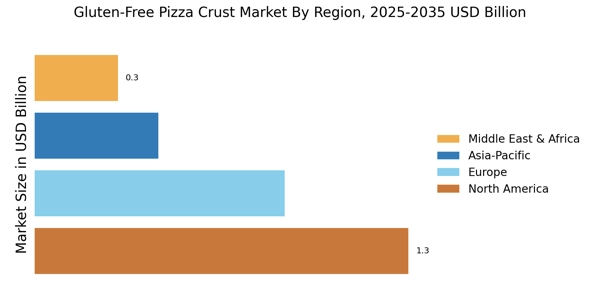
Regional Insights
The Gluten-Free Pizza Crust Market revenue demonstrates a diverse regional landscape, with North America holding a majority position valued at 1.05 USD Billion in 2023 and projected to reach 2.1 USD Billion by 2032, indicating its significance in the gluten-free trend.
Europe followed closely, valued at 0.95 USD Billion in 2023 and expected to hit 1.9 USD Billion in 2032, suggesting strong consumer demand for innovative and healthy pizza options. The APAC region, while at a lower valuation of 0.25 USD Billion in 2023, showed potential for growth, reaching 0.6 USD Billion by 2032, as dietary preferences shift towards gluten-free products.
South America and MEA were still emerging markets, valued at 0.12 USD Billion and 0.1 USD Billion in 2023, respectively, indicating the gradual acceptance of gluten-free pizza crusts but projected to grow slowly to 0.25 USD Billion and 0.15 USD Billion by 2032.
Overall market growth is driven by rising health consciousness and an increasing prevalence of gluten sensitivities, while challenges such as higher production costs and varying consumer awareness across regions could impact market dynamics. Nevertheless, opportunities for expansion remain significant, particularly in APAC and South America, as they adapt to modern dietary trends.
Source Primary Research, Secondary Research, Market Research Future Database and Analyst Review
Key Players and Competitive Insights
Key Companies in the Gluten Free Pizza Crust Market include
Industry Developments
Recent developments in the Gluten-Free Pizza Crust Market indicate a growing consumer demand for gluten-free products, propelled by increased health awareness and dietary restrictions. Companies such as Udi's and Schär are expanding their product lines with innovative, plant-based options to capture market interest.
Additionally, brands like Caulipower and Banza are gaining traction due to their focus on healthier ingredient profiles, catering to both gluten-free consumers and the broader health-conscious demographic. Mergers and acquisitions remain limited in this niche; however, companies are actively exploring partnerships to enhance distribution channels and product offerings.
Recently, Canyon Bakehouse has announced plans to expand its distribution network, signaling confidence in market growth. Furthermore, data suggests that companies such as Amy's Kitchen and Little Northern Bakehouse are experiencing significant increases in market valuation as sales of gluten-free products continue to rise, thereby positively impacting the overall market environment.
As these companies innovate and adjust to consumer preferences, the Gluten-Free Pizza Crust Market is poised for further expansion, driven by both increased accessibility and a diverse range of product options.
Future Outlook
Gluten Free Pizza Crust Market Future Outlook
The Gluten-Free Pizza Crust Market is projected to grow at an 8.18% CAGR from 2025 to 2035, driven by rising health consciousness and increasing demand for gluten-free options.
New opportunities lie in:
- Expansion into online grocery platforms for wider distribution.
- Development of innovative, plant-based gluten-free crusts.
- Partnerships with restaurants for exclusive gluten-free menu offerings.
By 2035, the market is expected to solidify its position as a leading segment in the global food industry.
Market Segmentation
Gluten Free Pizza Crust Market Type Outlook
- Frozen
- Refrigerated
- Shelf-stable
Gluten Free Pizza Crust Market End User Outlook
- Households
- Restaurants
- Cafes
Gluten Free Pizza Crust Market Ingredient Outlook
- Rice Flour
- Almond Flour
- Coconut Flour
- Chickpea Flour
Gluten Free Pizza Crust Market Distribution Channel Outlook
- Online Retail
- Supermarkets
- Specialty Stores
- Convenience Stores
Report Scope
| MARKET SIZE 2024 | 2.887(USD Billion) |
| MARKET SIZE 2025 | 3.123(USD Billion) |
| MARKET SIZE 2035 | 6.857(USD Billion) |
| COMPOUND ANNUAL GROWTH RATE (CAGR) | 8.18% (2025 - 2035) |
| REPORT COVERAGE | Revenue Forecast, Competitive Landscape, Growth Factors, and Trends |
| BASE YEAR | 2024 |
| Market Forecast Period | 2025 - 2035 |
| Historical Data | 2019 - 2024 |
| Market Forecast Units | USD Billion |
| Key Companies Profiled | Caulipower (US), Udi's Gluten Free (US), Amy's Kitchen (US), Schär (IT), Gluten-Free Heaven (US), Banza (US), Cappello's (US), Daiya Foods (CA), Mamma Mia (US) |
| Segments Covered | Product Type, Ingredient Type, Distribution Channel, End User, Regional |
| Key Market Opportunities | Rising consumer demand for healthier, gluten-free options drives innovation in the Gluten-Free Pizza Crust Market. |

| Key Market Dynamics | Rising consumer demand for gluten-free options drives innovation and competition in the gluten-free pizza crust market. |
| Countries Covered | North America, Europe, APAC, South America, MEA |
FAQs
What is the current valuation of the Gluten-Free Pizza Crust Market?
The market valuation reached 2.887 USD Billion in 2024.
What is the projected market size for the Gluten-Free Pizza Crust Market by 2035?
The market is expected to grow to 6.857 USD Billion by 2035.
What is the expected CAGR for the Gluten-Free Pizza Crust Market during the forecast period?
The market is projected to experience a CAGR of 8.18% from 2025 to 2035.
Which distribution channels are leading in the Gluten-Free Pizza Crust Market?
Supermarkets are anticipated to dominate, with a projected valuation of 2.5 USD Billion by 2035.
What types of gluten-free pizza crusts are available in the market?
The market segments include Frozen, Refrigerated, and Shelf-stable crusts, with each expected to reach nearly 2 USD Billion by 2035.
Which ingredients are most commonly used in gluten-free pizza crusts?
Rice Flour is projected to lead the ingredient segment, with an expected valuation of 1.867 USD Billion by 2035.
Who are the key players in the Gluten-Free Pizza Crust Market?
Prominent companies include Caulipower, Udi's Gluten Free, and Amy's Kitchen, among others.
What is the expected growth for gluten-free pizza crusts in households and restaurants?
Both households and restaurants are projected to reach a valuation of 2.8 USD Billion by 2035.
How do online retail sales compare to other distribution channels?
Online retail is expected to grow to 1.999 USD Billion, indicating a strong trend towards e-commerce.
What trends are influencing the Gluten-Free Pizza Crust Market?
Consumer demand for gluten-free options and health-conscious eating habits are driving market growth.
How does the market size for Gluten-Free Pizza Crust differ between North America and Europe by 2032?
Kindly complete the form below to receive a free sample of this Report
Customer Stories
“This is really good guys. Excellent work on a tight deadline. I will continue to use you going forward and recommend you to others. Nice job”
“Thanks. It’s been a pleasure working with you, please use me as reference with any other Intel employees.”
“Thanks for sending the report it gives us a good global view of the Betaïne market.”
“Thank you, this will be very helpful for OQS.”
“We found the report very insightful! we found your research firm very helpful. I'm sending this email to secure our future business.”
“I am very pleased with how market segments have been defined in a relevant way for my purposes (such as "Portable Freezers & refrigerators" and "last-mile"). In general the report is well structured. Thanks very much for your efforts.”
“I have been reading the first document or the study, ,the Global HVAC and FP market report 2021 till 2026. Must say, good info! I have not gone in depth at all parts, but got a good indication of the data inside!”
“We got the report in time, we really thank you for your support in this process. I also thank to all of your team as they did a great job.”