×
Request Free Sample ×

Kindly complete the form below to receive a free sample of this Report

* Please use a valid business email

Leading companies partner with us for data-driven Insights

clients tt-cursor
Hero Background

Gluten-Free Soup Market

ID: MRFR/FnB/33570-HCR
128 Pages
Varsha More
October 2025

Gluten-Free Soup Market Research Report By Type (Vegetable Soup, Chicken Soup, Beef Soup, Seafood Soup), By Distribution Channel (Online Retail, Supermarkets, Convenience Stores, Specialty Stores), By Packaging Type (Pouch, Canned, Boxed, Freeze-Dried), By Consumer Demographics (Health-Conscious Consumers, Dietary Restriction Consumers, Busy Professionals) and By Regional (North America, Europe, South America, Asia Pacific, Middle East and Africa) - Forecast to 2035

Share:
Download PDF ×

We do not share your information with anyone. However, we may send you emails based on your report interest from time to time. You may contact us at any time to opt-out.

Gluten-Free Soup Market Infographic
Purchase Options

Gluten-Free Soup Market Summary

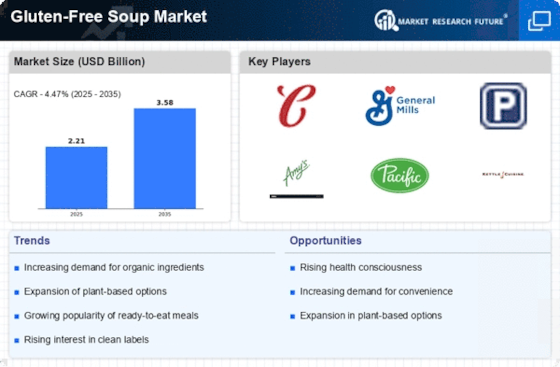
As per MRFR analysis, the Gluten-Free Soup Market Size was estimated at 2.212 USD Billion in 2024. The Gluten-Free Soup industry is projected to grow from 2.311 USD Billion in 2025 to 3.579 USD Billion by 2035, exhibiting a compound annual growth rate (CAGR) of 4.47 during the forecast period 2025 - 2035.

Key Market Trends & Highlights

The Gluten-Free Soup Market is experiencing robust growth driven by health consciousness and diverse offerings.

  • North America remains the largest market for gluten-free soup, reflecting a strong consumer preference for health-oriented products.
  • The Asia-Pacific region is emerging as the fastest-growing market, indicating a rising interest in gluten-free options among diverse populations.
  • Vegetable soup dominates the market as the largest segment, while chicken soup is witnessing the fastest growth due to innovative flavor combinations.
  • Key market drivers include the rising demand for gluten-free products and the growing interest in clean label offerings.

Market Size & Forecast

2024 Market Size 2.212 (USD Billion)
2035 Market Size 3.579 (USD Billion)
CAGR (2025 - 2035) 4.47%

Major Players

Campbell Soup Company (US), General Mills Inc (US), Progresso (US), Amy's Kitchen Inc (US), Pacific Foods of Oregon LLC (US), Kettle Cuisine LLC (US), Health Valley (US), Annie's Homegrown (US)

Gluten-Free Soup Market Trends

The Gluten-Free Soup Market is currently experiencing a notable transformation, driven by an increasing awareness of dietary restrictions and health-conscious consumer behavior. As more individuals adopt gluten-free lifestyles, the demand for gluten-free products, including soups, appears to be on the rise. This shift is not merely a trend but seems to reflect a broader societal movement towards healthier eating habits. Manufacturers are responding by innovating and diversifying their product lines to cater to this growing segment. The market landscape is characterized by a variety of offerings, ranging from traditional flavors to more exotic options, which may appeal to a wider audience. Moreover, the Gluten-Free Soup Market is likely influenced by the expansion of distribution channels, including online platforms and specialty grocery stores. This accessibility could enhance consumer reach and convenience, potentially leading to increased sales. Additionally, the emphasis on clean labels and natural ingredients is becoming more pronounced, as consumers seek transparency in their food choices. As the market evolves, it may continue to adapt to the changing preferences of health-conscious individuals, suggesting a promising future for gluten-free soup products.

Rising Health Awareness

There is a growing consciousness among consumers regarding health and nutrition, which appears to be driving the demand for gluten-free options. This trend suggests that individuals are increasingly seeking products that align with their dietary needs, leading to a surge in gluten-free soup offerings.

Diverse Flavor Profiles

Manufacturers are expanding their product lines to include a variety of flavors, catering to diverse palates. This trend indicates that the Gluten-Free Soup Market is not only focused on dietary restrictions but also on enhancing the culinary experience for consumers.

Increased Online Availability

The rise of e-commerce platforms is facilitating greater access to gluten-free soups. This trend suggests that consumers are more inclined to purchase these products online, which may contribute to the overall growth of the market.

Gluten-Free Soup Market Drivers

Expansion of Retail Channels

The expansion of retail channels plays a pivotal role in the growth of the Gluten-Free Soup Market. With the rise of e-commerce and specialty health food stores, consumers now have greater access to gluten-free products than ever before. This accessibility is crucial for reaching a wider audience, including those who may have previously struggled to find gluten-free options. Data indicates that online sales of gluten-free products have surged, reflecting a shift in consumer purchasing behavior. Retailers are increasingly dedicating shelf space to gluten-free items, enhancing visibility and availability. This trend suggests that the expansion of retail channels is a significant driver for the Gluten-Free Soup Market, as it facilitates consumer access and encourages trial of gluten-free soups.

Growing Interest in Plant-Based Diets

The growing interest in plant-based diets is influencing the Gluten-Free Soup Market in notable ways. As more consumers adopt vegetarian and vegan lifestyles, the demand for plant-based gluten-free soups is on the rise. This shift is driven by health considerations, environmental concerns, and ethical factors. Manufacturers are responding by developing soups that not only meet gluten-free standards but also incorporate plant-based proteins and ingredients. This trend indicates a potential for market growth, as consumers seek nutritious and sustainable meal options. The intersection of gluten-free and plant-based diets presents a unique opportunity for the Gluten-Free Soup Market to innovate and expand its product offerings, catering to a health-conscious demographic.

Rising Demand for Gluten-Free Products

The increasing prevalence of gluten intolerance and celiac disease has led to a notable rise in demand for gluten-free products, including soups. As consumers become more health-conscious, they actively seek gluten-free options that align with their dietary needs. This trend is reflected in the Gluten-Free Soup Market, where sales have shown a steady upward trajectory. According to recent data, the gluten-free food market is projected to reach substantial figures, indicating a growing consumer base. The awareness surrounding gluten-related health issues has prompted manufacturers to innovate and expand their gluten-free soup offerings, catering to a diverse audience. This driver suggests that the rising demand for gluten-free products is a significant factor influencing the growth of the Gluten-Free Soup Market.

Increased Focus on Clean Label Products

The increased focus on clean label products is reshaping the Gluten-Free Soup Market. Consumers are becoming more discerning about the ingredients in their food, favoring products that are free from artificial additives and preservatives. This trend aligns with the broader movement towards transparency in food labeling, where consumers seek to understand what they are consuming. As a result, manufacturers are reformulating their gluten-free soups to meet these clean label demands, emphasizing natural ingredients and simple recipes. This shift not only enhances consumer trust but also positions gluten-free soups as healthier alternatives in the market. The emphasis on clean label products is likely to drive growth in the Gluten-Free Soup Market, as it resonates with the values of health-conscious consumers.

Innovative Flavor and Ingredient Combinations

The Gluten-Free Soup Market is witnessing a surge in innovative flavor and ingredient combinations, appealing to a broader range of consumers. Manufacturers are increasingly experimenting with unique ingredients, such as ancient grains and organic vegetables, to create soups that are not only gluten-free but also rich in taste and nutrition. This trend aligns with the growing consumer preference for gourmet and artisanal food products. As a result, the market is diversifying, with new flavors emerging that cater to various culinary traditions. This innovation is crucial for attracting health-conscious consumers who seek both quality and flavor in their meals. The introduction of these novel products is likely to enhance the overall appeal of the Gluten-Free Soup Market, potentially leading to increased market share.


Market Segment Insights

By Type: Vegetable Soup (Largest) vs. Chicken Soup (Fastest-Growing)

In the gluten-free soup market, Vegetable Soup holds the largest market share, appealing to health-conscious consumers seeking nutritious options. Its wide variety of flavours and healthier ingredients have made it a staple in many households. Chicken Soup, on the other hand, has emerged as the fastest-growing segment, attracting those looking for convenient meal solutions with familiar tastes, contributing to its rising popularity among various consumer demographics. The growth trends for these segments are driven by increasing consumer awareness regarding health and dietary needs. Vegetable Soup capitalizes on the trend towards plant-based diets, promoting various nutritional benefits. Meanwhile, the convenience of Chicken Soup, combined with its comfort-food status, makes it a preferred choice for busy consumers seeking quick, satisfying meals.

Soup Type: Vegetable (Dominant) vs. Seafood (Emerging)

In the gluten-free soup market, Vegetable Soup stands out as a dominant player characterized by its variety of flavours and nutritional content. It appeals particularly to health-conscious buyers and those following specific dietary preferences. The increasing consumer focus on plant-based nutrition fuels its continued success. In contrast, Seafood Soup represents an emerging segment, gradually capturing interest among consumers seeking unique and gourmet flavours. As seafood options are often perceived as high quality and indulgent, their rise is supported by growing demand for premium, inventive soup offerings. This segmentation reflects broader food trends, suggesting that both segments can coexist and thrive in the marketplace.

By Distribution Channel: Online Retail (Largest) vs. Supermarkets (Fastest-Growing)

In the Gluten-Free Soup Market, Online Retail emerges as the largest distribution channel, capturing the highest consumer base due to the growing trend of online shopping and convenience. Supermarkets, while significant, follow closely, offering a wide array of gluten-free products that cater to health-conscious shoppers. Convenience Stores and Specialty Stores, though important, have a smaller share, as they cater to niche markets or localized customer preferences, respectively. The growth trend in the gluten-free soup market reflects a notable shift towards Online Retail, driven by increased digital penetration and consumers' preference for home delivery services. Supermarkets are rapidly adapting to this trend, expanding their gluten-free product lines in response to growing consumer demand. Specialty Stores continue to thrive within their demographic, but Convenience Stores are seeing slower growth, indicating consumers may favor more extensive shopping options when seeking gluten-free solutions.

Online Retail (Dominant) vs. Convenience Stores (Emerging)

In the Gluten-Free Soup Market, Online Retail serves as the dominant distribution channel, characterized by the convenience of shopping from home and the ability to easily compare products. This channel caters to a broad audience, including busy professionals and health-conscious individuals seeking gluten-free options. In contrast, Convenience Stores are emerging but still lag behind, focusing on immediate access and quick transactions. While they offer a limited range of gluten-free soups, their appeal lies in impulse purchases and accessibility. However, as consumer awareness grows about dietary options, these stores are slowly expanding their gluten-free selections, aiming to capture the emerging trend within their operational framework.

By Packaging Type: Pouch (Largest) vs. Freeze-Dried (Fastest-Growing)

The Gluten-Free Soup Market shows significant diversity in its packaging types, with pouches leading the market share. This segment is preferred for its convenience and ability to preserve flavors, which appeals to consumers seeking quick yet high-quality meal options. On the other hand, boxed and canned packaging also play notable roles, catering to different consumer preferences and usage occasions, but they do not surpass the pouch segment in market representation. In recent years, the freeze-dried packaging type has gained momentum, marked as the fastest-growing segment. This growth is primarily driven by rising consumer interest in healthy eating and the need for long shelf life without compromising nutrition. As brands innovate in freeze-drying techniques, more gluten-free soups are introduced in this format, appealing to outdoor enthusiasts and those seeking easy-to-prepare options.

Pouch (Dominant) vs. Boxed (Emerging)

The pouch packaging segment remains dominant in the Gluten-Free Soup Market due to its convenience and efficiency. It attracts both busy consumers and health-conscious individuals eager for nutritious meal solutions that are easy to prepare. The transparency of pouch packaging allows consumers to view the product's quality, enhancing their purchasing confidence. While boxed packaging is emerging as a viable alternative, primarily emphasizing sustainability and on-the-go features, it still trails behind the pouch segment in market acceptance and consumer preference. The introduction of innovative designs in boxed soups is expected to bolster its market position, particularly among environmentally aware consumers.

By Consumer Demographics: Health-Conscious Consumers (Largest) vs. Dietary Restriction Consumers (Fastest-Growing)

In the Gluten-Free Soup Market, the primary consumer demographic is health-conscious individuals who prioritize their lifestyle choices, making up a significant portion of overall sales. These consumers are driven by the desire to maintain well-being, leading to a strong preference for gluten-free options which they associate with healthier eating. On the other hand, dietary restriction consumers, including those with celiac disease or gluten sensitivities, represent the fastest-growing segment. Their needs are strictly tied to health mandates, and this has led brands to innovate and expand their gluten-free soup offerings to cater specifically to this demographic.

Health-Conscious Consumers: Dominant vs. Dietary Restriction Consumers: Emerging

The health-conscious consumer segment is dominant in the gluten-free soup market, as these individuals actively seek products that align with their health goals. They tend to be informed about nutritional content and prefer soups made from organic ingredients with added health benefits. In contrast, dietary restriction consumers are emerging rapidly within the market, driven by essential dietary needs rather than preferences. This group includes individuals who face serious health issues if they consume gluten. As a result, brands are increasingly focusing on creating distinct ranges of gluten-free soups tailored for these consumers, emphasizing quality, taste, and safety, which are critical for their purchasing decisions.

Get more detailed insights about Gluten-Free Soup Market

Regional Insights

North America : Market Leader in Gluten-Free

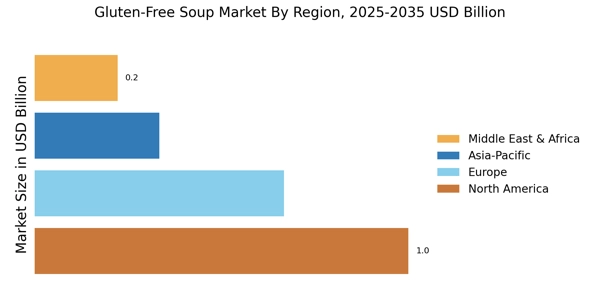
North America is the largest market for gluten-free soup, accounting for approximately 45% of the global market share. The region's growth is driven by increasing health consciousness, rising gluten intolerance awareness, and a growing demand for convenient meal options. Regulatory support, such as the FDA's gluten-free labeling guidelines, further catalyzes market expansion. The U.S. leads this market, followed by Canada, which holds about 15% of the share. The competitive landscape in North America is robust, featuring key players like Campbell Soup Company, General Mills, and Amy's Kitchen. These companies are innovating with new flavors and organic options to cater to health-conscious consumers. The presence of established brands and a strong distribution network enhances market accessibility, making gluten-free soup a staple in many households across the region.

Europe : Emerging Market for Health Foods

Europe is witnessing a significant rise in the gluten-free soup market, holding approximately 30% of the global share. This growth is fueled by increasing consumer awareness regarding gluten-related disorders and a shift towards healthier eating habits. Regulatory frameworks, such as the EU's food labeling regulations, support the gluten-free movement, ensuring product safety and transparency. Germany and the UK are the largest markets, contributing significantly to the region's growth. Leading countries in Europe include Germany, the UK, and France, with a competitive landscape featuring both local and international brands. Companies like Progresso and Kettle Cuisine are expanding their product lines to meet the rising demand. The market is characterized by a mix of traditional soup manufacturers and new entrants focusing on gluten-free options, enhancing consumer choice and market dynamism.

Asia-Pacific : Rapidly Growing Health Sector

Asia-Pacific is emerging as a significant player in the gluten-free soup market, currently holding about 15% of the global share. The region's growth is driven by increasing health awareness, rising disposable incomes, and a growing trend towards vegetarian and gluten-free diets. Countries like Australia and Japan are leading this market, supported by favorable government policies promoting healthy eating. The demand for gluten-free products is expected to rise as more consumers seek healthier lifestyle options. In Asia-Pacific, the competitive landscape is evolving, with both local and international brands entering the market. Key players include Pacific Foods and Health Valley, which are focusing on product innovation and expanding distribution channels. The presence of a diverse consumer base and increasing retail penetration of gluten-free products are further driving market growth, making it a promising region for future investments.

Middle East and Africa : Niche Market with Potential

The Middle East and Africa region is gradually developing a niche market for gluten-free soup, currently holding about 10% of the global market share. The growth is primarily driven by increasing awareness of gluten intolerance and a rising trend towards healthier eating habits. Countries like South Africa and the UAE are leading this market, supported by a growing expatriate population and increasing availability of gluten-free products in retail outlets. Regulatory initiatives are also beginning to support gluten-free labeling and product safety. The competitive landscape in this region is still in its infancy, with a mix of local and international brands starting to emerge. Companies are focusing on educating consumers about gluten-free diets and expanding their product offerings. The presence of key players is limited, but as demand grows, more brands are likely to enter the market, creating opportunities for growth and innovation in gluten-free soup products.

Gluten-Free Soup Market Regional Image

Key Players and Competitive Insights

The Gluten-Free Soup Market has witnessed significant growth in recent years, driven by increasing consumer awareness about health and dietary restrictions related to gluten. As the demand for gluten-free products continues to rise, various players in the market are focusing on innovation and product development tailored to specific dietary needs. Competitive insights reveal that companies are leveraging their strengths in terms of distribution networks, marketing strategies, and product quality to gain a solid foothold in this niche market.

The competition is characterized by both established food brands and emerging companies that are introducing unique flavors and ingredients to cater to the diverse tastes of health-conscious consumers. The market's dynamic nature encourages companies to explore partnerships and collaborations to enhance their product offerings and expand their reach, making it increasingly competitive.Mizkan has established a strong presence in the Gluten-Free Soup Market by prioritizing natural ingredients and unique flavor profiles. The company is recognized for its commitment to quality and transparency, which resonates well with consumers seeking healthy meal options.

Mizkan leverages its extensive experience in food production to create gluten-free soups that are not only delicious but also meet rigorous dietary standards. Their robust distribution channels enable widespread availability, ensuring that their products are accessible to a broad consumer base. In addition to their innovative product lineup, Mizkan invests in marketing campaigns to educate consumers about the benefits of gluten-free nutrition, further enhancing their brand presence and reputation in the market.Rachael Ray Nutrish has carved a niche for itself in the Gluten-Free Soup Market by emphasizing wholesome, natural ingredients that appeal to both health-conscious individuals and families.

The brand is well-regarded for its commitment to providing tasty, gluten-free options that cater to varied dietary needs. Rachael Ray Nutrish focuses on creating products that are not only comforting but also nutritious, elevating the traditional soup experience. Their marketing strategies heavily emphasize quality and responsibility in sourcing ingredients, which resonates with conscientious consumers. As a result, Rachael Ray Nutrish has built a loyal customer base and expanded its market share, positioning itself as a reliable choice for gluten-free soup options among families and individuals alike.

The brand leverages its unique identity in the competitive landscape to continue evolving and meeting consumer demand effectively.

Key Companies in the Gluten-Free Soup Market market include

Industry Developments

Recent developments in the Gluten-Free Soup Market showcase a growing consumer demand for healthier and inclusive food options. Companies like Amy's Kitchen and Pacific Foods are expanding their gluten-free product lines, catering to the increasing number of consumers with dietary restrictions. Significant investments have been made by Kraft Heinz and General Mills to innovate their offerings, introducing new flavors and healthier ingredients to attract more health-conscious customers. The market is experiencing notable growth, driven by changing lifestyle choices, with brands like Progresso and Daiya Foods ramping up their marketing efforts to highlight gluten-free options.

Mergers and acquisitions are also shaping the landscape, as established companies seek to diversify and enhance their product portfolios. For instance, Hain Celestial Group's acquisition strategies have been focused on integrating gluten-free brands, while Mizkan's recent partnerships aim to leverage emerging food trends. Additionally, companies like Boulder Canyon and Loma Linda are gaining traction, emphasizing sustainability and organic ingredients in their gluten-free soups, aligning with consumer preferences for clean-label products. Overall, these developments indicate a dynamic market, reflecting the evolving tastes and preferences of consumers in the gluten-free segment.

Future Outlook

Gluten-Free Soup Market Future Outlook

The Gluten-Free Soup Market is projected to grow at a 4.47% CAGR from 2024 to 2035, driven by increasing health awareness, dietary preferences, and product innovation.

New opportunities lie in:

  • Expansion into online retail platforms for wider reach.
  • Development of premium organic gluten-free soup lines.
  • Collaboration with health-focused restaurants for exclusive offerings.

By 2035, the market is expected to solidify its position as a key player in the global food industry.

Market Segmentation

Gluten-Free Soup Market Type Outlook

  • Vegetable Soup
  • Chicken Soup
  • Beef Soup
  • Seafood Soup

Gluten-Free Soup Market Packaging Type Outlook

  • Pouch
  • Canned
  • Boxed
  • Freeze-Dried

Gluten-Free Soup Market Distribution Channel Outlook

  • Online Retail
  • Supermarkets
  • Convenience Stores
  • Specialty Stores

Gluten-Free Soup Market Consumer Demographics Outlook

  • Health-Conscious Consumers
  • Dietary Restriction Consumers
  • Busy Professionals

Report Scope

MARKET SIZE 20242.212(USD Billion)
MARKET SIZE 20252.311(USD Billion)
MARKET SIZE 20353.579(USD Billion)
COMPOUND ANNUAL GROWTH RATE (CAGR)4.47% (2024 - 2035)
REPORT COVERAGERevenue Forecast, Competitive Landscape, Growth Factors, and Trends
BASE YEAR2024
Market Forecast Period2025 - 2035
Historical Data2019 - 2024
Market Forecast UnitsUSD Billion
Key Companies ProfiledMarket analysis in progress
Segments CoveredMarket segmentation analysis in progress
Key Market OpportunitiesRising consumer demand for healthy, convenient meal options drives innovation in the Gluten-Free Soup Market.
Key Market DynamicsRising consumer demand for healthy options drives innovation and competition in the gluten-free soup market.
Countries CoveredNorth America, Europe, APAC, South America, MEA

Leave a Comment

FAQs

What is the current valuation of the Gluten-Free Soup Market?

The Gluten-Free Soup Market was valued at 2.212 USD Billion in 2024.

What is the projected market size for the Gluten-Free Soup Market by 2035?

The market is projected to reach 3.579 USD Billion by 2035.

What is the expected CAGR for the Gluten-Free Soup Market during the forecast period?

The expected CAGR for the Gluten-Free Soup Market from 2025 to 2035 is 4.47%.

Which companies are the key players in the Gluten-Free Soup Market?

Key players include Campbell Soup Company, General Mills Inc, Progresso, Amy's Kitchen Inc, and others.

What are the main types of gluten-free soups available in the market?

The main types include Vegetable Soup, Chicken Soup, Beef Soup, and Seafood Soup.

How does the distribution channel impact the Gluten-Free Soup Market?

Distribution channels such as Supermarkets and Online Retail are crucial, with Supermarkets valued at 1.325 USD Billion in 2024.

What packaging types are prevalent in the Gluten-Free Soup Market?

Common packaging types include Canned, Pouch, Boxed, and Freeze-Dried soups.

Who are the primary consumers of gluten-free soups?

Primary consumers include Health-Conscious Consumers, Dietary Restriction Consumers, and Busy Professionals.

What was the valuation of the Vegetable Soup segment in 2024?

The Vegetable Soup segment was valued at 0.663 USD Billion in 2024.

What is the projected growth for the Chicken Soup segment by 2035?

The Chicken Soup segment is expected to grow from 0.663 USD Billion in 2024 to 1.0 USD Billion by 2035.

Download Free Sample

Kindly complete the form below to receive a free sample of this Report

Compare Licence

×
Features License Type
Single User Multiuser License Enterprise User
Price $4,950 $5,950 $7,250
Maximum User Access Limit 1 User Upto 10 Users Unrestricted Access Throughout the Organization
Free Customization
Direct Access to Analyst
Deliverable Format
Platform Access
Discount on Next Purchase 10% 15% 15%
Printable Versions