×
Request Free Sample ×

Kindly complete the form below to receive a free sample of this Report

* Please use a valid business email

Leading companies partner with us for data-driven Insights

clients tt-cursor
Hero Background

Heart Failure POC and LOC Devices Market

ID: MRFR/HC/9169-HCR
120 Pages
Kinjoll Dey
October 2025

Heart Failure POC & LOC Devices Market Research Report Information By Test Type (Proteomic Testing, Metabolomic Testing, Genomic Testing), By Technology (Microfluidics, Array-based Systems), By End User (Hospitals & Clinics, Homecare, Specialty Centers, Others), and By Region (North America, Europe, Asia-Pacific, And Rest Of The World) –Market Forecast Till 2035

Share:
Download PDF ×

We do not share your information with anyone. However, we may send you emails based on your report interest from time to time. You may contact us at any time to opt-out.

Heart Failure POC and LOC Devices Market Infographic
Purchase Options

Heart Failure POC and LOC Devices Market Summary

As per MRFR analysis, the Heart Failure POC and LOC Devices Market was estimated at 67.8 USD Million in 2024. The Heart Failure POC and LOC Devices industry is projected to grow from 78.99 USD Million in 2025 to 363.85 USD Million by 2035, exhibiting a compound annual growth rate (CAGR) of 16.5 during the forecast period 2025 - 2035.

Key Market Trends & Highlights

The Heart Failure POC and LOC Devices Market is experiencing robust growth driven by technological advancements and increasing patient engagement.

  • Technological advancements are enhancing the functionality and accuracy of heart failure devices, particularly in North America.
  • Patient empowerment is becoming a central theme, with more individuals taking charge of their health through innovative monitoring solutions.
  • Integration with telehealth services is facilitating remote patient management, especially in the rapidly expanding Asia-Pacific region.
  • The rising prevalence of heart failure and growing demand for home healthcare solutions are key drivers propelling the market forward.

Market Size & Forecast

2024 Market Size 67.8 (USD Million)
2035 Market Size 363.85 (USD Million)
CAGR (2025 - 2035) 16.5%

Major Players

Abbott (US), Medtronic (US), Boston Scientific (US), Philips (NL), Bayer (DE), Roche (CH), Johnson & Johnson (US), Siemens Healthineers (DE), Cardinal Health (US)

Heart Failure POC and LOC Devices Market Trends

The Heart Failure POC and LOC Devices Market is currently experiencing a transformative phase, driven by advancements in technology and an increasing emphasis on patient-centered care. The integration of point-of-care (POC) and lab-on-chip (LOC) devices is reshaping the landscape of heart failure management, enabling healthcare professionals to monitor patients more effectively and efficiently. These devices facilitate rapid diagnostics, allowing for timely interventions that can significantly improve patient outcomes. Furthermore, the growing prevalence of heart failure globally necessitates innovative solutions that can be deployed in various settings, from hospitals to home care environments. In December 2025, the market appears poised for further growth, as stakeholders increasingly recognize the value of these devices in enhancing clinical decision-making. The shift towards decentralized healthcare models suggests a rising demand for portable and user-friendly devices that empower patients to take an active role in their health management. As the healthcare ecosystem evolves, the Heart Failure POC and LOC Devices Market is likely to witness the emergence of novel technologies and partnerships aimed at addressing the complexities of heart failure treatment and monitoring.

Technological Advancements

Recent innovations in sensor technology and data analytics are enhancing the capabilities of heart failure POC and LOC devices. These advancements enable more accurate and real-time monitoring of patients, which is crucial for timely interventions.

Patient Empowerment

There is a noticeable trend towards empowering patients through the use of POC and LOC devices. By providing individuals with tools to monitor their health, the market supports a shift towards self-management and proactive care.

Integration with Telehealth

The integration of heart failure POC and LOC devices with telehealth platforms is becoming increasingly prevalent. This trend facilitates remote monitoring and consultation, allowing healthcare providers to maintain continuous oversight of patient conditions.

Heart Failure POC and LOC Devices Market Drivers

Market Growth Projections

The Global Heart Failure POC and LOC Devices Market Industry is projected to experience substantial growth over the next decade. With a market valuation of 0.07 USD Billion in 2024, it is anticipated to reach 0.36 USD Billion by 2035. This growth trajectory suggests a CAGR of 16.09% from 2025 to 2035, driven by factors such as technological advancements, increased healthcare investments, and rising awareness of heart failure management. These projections indicate a robust future for the industry, emphasizing the importance of ongoing innovation and adaptation to meet the evolving needs of patients and healthcare providers.

Rising Prevalence of Heart Failure

The increasing incidence of heart failure globally is a primary driver for the Global Heart Failure POC and LOC Devices Market Industry. As populations age and lifestyle-related diseases become more prevalent, the demand for effective monitoring and management solutions rises. In 2024, the market is valued at 0.07 USD Billion, reflecting the urgent need for innovative devices that can assist in early detection and ongoing management of heart failure. This trend is expected to continue, with projections indicating a market growth to 0.36 USD Billion by 2035, highlighting the critical role of POC and LOC devices in addressing this growing health concern.

Increased Focus on Preventive Healthcare

The shift towards preventive healthcare is reshaping the Global Heart Failure POC and LOC Devices Market Industry. Healthcare systems worldwide are increasingly emphasizing early detection and management of chronic diseases, including heart failure. This focus is driving demand for point-of-care and lab-on-a-chip devices that allow for timely interventions and better patient management. As healthcare providers seek to reduce hospital admissions and improve patient quality of life, the market is expected to expand significantly. The anticipated growth trajectory suggests that the market will evolve to meet these preventive healthcare needs, further solidifying the role of innovative devices in heart failure management.

Technological Advancements in Device Design

Advancements in technology are significantly influencing the Global Heart Failure POC and LOC Devices Market Industry. Innovations such as miniaturization, enhanced connectivity, and improved sensor technology are enabling the development of more efficient and user-friendly devices. These advancements not only improve patient outcomes but also facilitate remote monitoring, which is increasingly important in managing chronic conditions like heart failure. As a result, the market is poised for substantial growth, with a projected CAGR of 16.09% from 2025 to 2035, indicating a robust future driven by continuous innovation in device design and functionality.

Growing Investment in Healthcare Infrastructure

Investment in healthcare infrastructure is a crucial driver for the Global Heart Failure POC and LOC Devices Market Industry. Governments and private entities are increasingly allocating resources to enhance healthcare facilities and improve access to advanced medical technologies. This trend is particularly evident in developing regions, where the establishment of modern healthcare systems is essential for managing chronic diseases like heart failure. As healthcare infrastructure improves, the adoption of POC and LOC devices is likely to increase, facilitating better patient outcomes and contributing to the overall growth of the market. The ongoing investments indicate a promising future for the industry.

Rising Awareness and Education on Heart Failure

Increasing awareness and education regarding heart failure are pivotal in driving the Global Heart Failure POC and LOC Devices Market Industry. Public health campaigns and educational initiatives are informing patients and healthcare providers about the importance of early detection and management of heart failure. This heightened awareness is leading to greater acceptance and utilization of POC and LOC devices, as patients seek to actively participate in their health management. As awareness continues to grow, the market is expected to expand, reflecting the critical role of education in promoting the adoption of innovative heart failure management solutions.

Market Segment Insights

By Application: Monitoring (Largest) vs. Management (Fastest-Growing)

In the Heart Failure POC and LOC Devices Market, the application segment is primarily dominated by Monitoring devices, which capture significant market share due to their essential role in continuous patient surveillance. Monitoring devices incorporate various technologies to provide real-time data to healthcare professionals, enabling timely interventions and reduced hospitalizations. Following closely is the Management category, which includes devices designed to assist patients in adhering to their treatment plans, thus reflecting a growing focus on outpatient care and enhanced patient autonomy.

Management: Dominant vs. Therapeutics: Emerging

Monitoring devices are well-established in the market, characterized by their reliability and integration within healthcare systems, making them indispensable for patient care in heart failure. In contrast, Management devices are rapidly emerging as essential tools, focusing on improving patients' quality of life by promoting adherence to therapeutic regimens. This emerging segment is characterized by innovative technologies that empower patients to take control of their health, often featuring mobile integration and user-friendly interfaces. As the healthcare landscape shifts towards personalized care, the growth of Management devices is encouraged by a rise in chronic disease management initiatives, reflecting a broader trend towards patient-centric healthcare solutions.

By Device Type: Point of Care Devices (Largest) vs. Wearable Devices (Fastest-Growing)

The Heart Failure POC and LOC Devices Market shows a varied landscape for device types, with Point of Care Devices capturing the largest share of the market. This segment benefits from their critical role in immediate diagnostics and patient management, ensuring a substantial presence in healthcare settings. Laboratory Onsite Devices also play a significant role, though they fall behind in market representation compared to the more prominent POC devices. On the other hand, Wearable Devices are emerging as a significant force in the market due to increasing consumer interest and technological advancements. These devices offer convenience and continuous monitoring, appealing to both healthcare providers and patients. Furthermore, Implantable Devices provide a crucial option for those needing long-term management, although their growth is paced compared to the rapid adoption of wearable solutions.

Point of Care Devices (Dominant) vs. Wearable Devices (Emerging)

Point of Care Devices are at the forefront of the Heart Failure market due to their ability to deliver quick and accurate results, directly at the patient's bedside. Their immediacy and ease of use have made them a staple in managing heart failure effectively. These devices serve a broad range of clinical practices and have garnered trust among healthcare professionals. In contrast, Wearable Devices represent an emerging trend emphasizing personal health management. They enable patients to take an active role in monitoring their conditions, with real-time data and feedback made possible by innovative technology. Both segments are crucial, yet they cater to different aspects of heart failure management, positioning Point of Care Devices as a dominant presence while Wearable Devices carve out their emerging niche.

By End User: Hospitals (Largest) vs. Home Care Settings (Fastest-Growing)

The Heart Failure POC and LOC Devices Market is primarily dominated by hospitals, which account for a substantial share of overall market usage due to their capacity to provide comprehensive patient care and access to advanced medical technology. Hospitals utilize these devices to monitor patients with heart failure, ensuring timely interventions that can significantly improve health outcomes. Home care settings, on the other hand, are emerging as a vital segment, gaining traction as patients increasingly prefer receiving care in the comfort of their homes. This shift is driven by technological advancements in remote monitoring and the growing emphasis on patient-centered care. In recent years, the trends in this market segment have indicated a strong growth trajectory for home care settings, making it the fastest-growing area within the heart failure device market. Factors such as the rising aging population, increased adoption of telemedicine, and cost-effectiveness of home care are propelling this growth. These trends suggest that while hospitals remain dominant, home care settings are set to play an increasingly significant role in managing heart failure, pushing for innovations that make home monitoring more reliable and accessible.

Hospitals (Dominant) vs. Home Care Settings (Emerging)

Hospitals serve as the dominant end-user for heart failure POC and LOC devices, owing to their established infrastructure and comprehensive medical resource availability. These facilities are equipped to handle complex cases and ensure critical monitoring of patients, leveraging advanced devices that can provide real-time data to healthcare providers. On the contrary, home care settings are rapidly emerging as a key player, particularly as technology enhances device usability and connectivity. This shift supports patient autonomy and aligns with the growing trend of personalized healthcare. The rising preference for home care reflects changing patient demographics and a greater emphasis on cost-efficient treatments. As these home care options evolve, they signify a transformative shift towards more integrated and holistic management of heart failure.

By Technology: Electrocardiography (Largest) vs. Telemonitoring (Fastest-Growing)

In the Heart Failure POC and LOC Devices Market, the distribution of market share among the technology segments is notably diverse. Electrocardiography (ECG) holds the largest share due to its longstanding presence in heart monitoring, enabling timely diagnosis and management of heart failure conditions. On the other hand, ultrasound and biomarkers are gaining traction, although they command a smaller share in comparison. Telemonitoring specifically is rapidly emerging, driven by technological advances and increased patient demand for remote monitoring solutions.

Technology: Electrocardiography (Dominant) vs. Telemonitoring (Emerging)

Electrocardiography (ECG) remains the dominant technology in the Heart Failure POC and LOC Devices Market due to its reliability and ease of use in detecting heart rhythm abnormalities and diagnosing heart failures. Its established status is supplemented by continual advancements that enhance accuracy and functionality. Conversely, telemonitoring is an emerging technology characterized by its rapid growth rate and increasing acceptance among patients and healthcare providers. This technology facilitates real-time monitoring of patients' health metrics, enhancing patient engagement and supporting proactive management of heart failure. The shift towards telehealth solutions further underscores its importance, making telemonitoring a vital component for the future of heart failure management.

By Patient Type: Chronic Heart Failure Patients (Largest) vs. Acute Heart Failure Patients (Fastest-Growing)

In the Heart Failure POC and LOC Devices Market, the distribution of market share among patient types is notable. Chronic heart failure patients represent the largest segment, primarily due to the growing prevalence of chronic conditions and the need for ongoing monitoring. Conversely, acute heart failure patients are emerging as a fast-growing segment, driven by increasing awareness and advancements in point-of-care technologies aimed at addressing urgent health needs. The growth trends for this segment reflect a broader shift in healthcare delivery, with a rise in specialized devices designed for chronic management and acute episodes. Factors such as an aging population, lifestyle changes, and improved diagnostic tools are propelling the adoption of heart failure devices. As healthcare systems increasingly focus on personalized medicine, the demand for tailored solutions may further boost market expansion for both chronic and acute heart failure segments.

Chronic Heart Failure Patients (Dominant) vs. Pediatric Patients (Emerging)

Chronic heart failure patients are currently the dominant force in the Heart Failure POC and LOC Devices Market. This segment is characterized by a higher need for ongoing treatment and monitoring due to the progressive nature of their condition. These patients typically require devices that can provide continuous data and support for managing their health effectively. On the other hand, pediatric patients represent an emerging segment, opening new avenues for innovation in device design and functionality. The market for pediatric heart failure devices is evolving to cater to the unique physiological and developmental needs of younger patients. As both segments require specialized care, the focus on chronic patients remains paramount, while pediatric segments are gaining traction through advancements in technology.

Get more detailed insights about Heart Failure POC and LOC Devices Market

Regional Insights

North America : Market Leader in Innovation

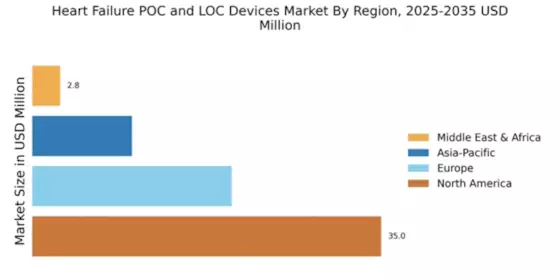
North America holds a commanding 35.0% share of the Heart Failure POC and LOC Devices Market, driven by advanced healthcare infrastructure and increasing prevalence of heart diseases. Regulatory support from agencies like the FDA has accelerated the approval of innovative devices, enhancing patient care. The growing demand for remote monitoring solutions further propels market growth, as healthcare providers seek efficient management of heart failure patients. The United States is the leading country in this region, hosting major players such as Abbott, Medtronic, and Boston Scientific. These companies are at the forefront of technological advancements, focusing on developing user-friendly and effective heart failure management devices. The competitive landscape is characterized by strategic partnerships and collaborations aimed at enhancing product offerings and expanding market reach, ensuring sustained growth in this vital sector.

Europe : Emerging Market with Growth Potential

Europe accounts for a significant 20.0% of the Heart Failure POC and LOC Devices Market, driven by an aging population and increasing healthcare expenditure. The European Medicines Agency (EMA) has been proactive in facilitating the approval of innovative medical devices, which is crucial for market expansion. Additionally, the rising awareness of heart failure management among healthcare professionals and patients is fostering demand for advanced monitoring solutions. Leading countries in this region include Germany, France, and the UK, where key players like Philips and Bayer are making substantial investments in R&D. The competitive landscape is marked by a focus on technological innovation and regulatory compliance, with companies striving to meet the evolving needs of healthcare providers. This dynamic environment is expected to drive further growth in the European heart failure device market.

Asia-Pacific : Rapidly Growing Healthcare Sector

Asia-Pacific represents a growing segment of the Heart Failure POC and LOC Devices Market, with a market share of 10.0%. The region's growth is fueled by rising healthcare investments and a surge in the aging population, leading to increased incidences of heart diseases. Governments are implementing policies to enhance healthcare access, which is vital for the adoption of advanced medical technologies. The demand for cost-effective and efficient heart failure management solutions is also on the rise. Countries like Japan, China, and India are at the forefront of this growth, with local and international players expanding their presence. Companies such as Roche and Siemens Healthineers are focusing on developing affordable devices tailored to the needs of the region. The competitive landscape is evolving, with an emphasis on partnerships and collaborations to enhance market penetration and meet the diverse healthcare needs of the population.

Middle East and Africa : Untapped Market Potential

The Middle East and Africa region holds a modest 2.8% share of the Heart Failure POC and LOC Devices Market, reflecting significant untapped potential. The growth in this region is driven by increasing healthcare investments and a rising prevalence of heart diseases. Governments are prioritizing healthcare reforms, which are essential for improving access to advanced medical technologies. The demand for heart failure management solutions is expected to rise as awareness increases among healthcare providers and patients. Countries like South Africa and the UAE are leading the way in adopting innovative healthcare solutions. The competitive landscape is characterized by a mix of local and international players, with companies exploring opportunities to introduce advanced heart failure devices. As healthcare infrastructure improves, the market is poised for growth, presenting opportunities for investment and development in this vital sector.

Key Players and Competitive Insights

The Heart Failure POC and LOC Devices Market is characterized by a dynamic competitive landscape, driven by technological advancements and an increasing prevalence of heart failure globally. Key players such as Abbott (US), Medtronic (US), and Boston Scientific (US) are at the forefront, each adopting distinct strategies to enhance their market presence. Abbott (US) focuses on innovation through the development of advanced monitoring devices, while Medtronic (US) emphasizes strategic partnerships to expand its product offerings. Boston Scientific (US) is actively pursuing mergers and acquisitions to bolster its capabilities in heart failure management, thereby shaping a competitive environment that is increasingly collaborative and innovation-driven.

In terms of business tactics, companies are localizing manufacturing to reduce costs and optimize supply chains, which appears to be a critical strategy in maintaining competitiveness. The market structure is moderately fragmented, with several key players exerting influence over various segments. This fragmentation allows for niche players to thrive, while larger companies leverage their resources to capture significant market shares.

In November 2025, Abbott (US) announced the launch of a new remote monitoring system designed to enhance patient engagement and data collection. This strategic move is likely to position Abbott as a leader in patient-centric care, addressing the growing demand for telehealth solutions in heart failure management. The integration of advanced analytics into this system may also provide healthcare providers with actionable insights, thereby improving patient outcomes.

In October 2025, Medtronic (US) entered into a partnership with a leading digital health company to develop AI-driven algorithms for predicting heart failure exacerbations. This collaboration underscores Medtronic's commitment to leveraging technology to enhance patient care. By integrating AI into its devices, Medtronic may significantly improve the accuracy of heart failure predictions, potentially reducing hospital readmissions and healthcare costs.

In September 2025, Boston Scientific (US) completed the acquisition of a startup specializing in wearable heart monitoring technology. This acquisition is indicative of Boston Scientific's strategy to diversify its product portfolio and enhance its capabilities in remote patient monitoring. The integration of wearable technology into its offerings could provide Boston Scientific with a competitive edge in the rapidly evolving heart failure management landscape.

As of December 2025, current trends in the Heart Failure POC and LOC Devices Market include a strong emphasis on digitalization, sustainability, and the integration of AI technologies. Strategic alliances are increasingly shaping the competitive landscape, allowing companies to pool resources and expertise. Looking ahead, competitive differentiation is likely to evolve from traditional price-based competition to a focus on innovation, technological advancements, and supply chain reliability. This shift may redefine how companies position themselves in the market, emphasizing the importance of delivering superior patient outcomes through cutting-edge solutions.

Key Companies in the Heart Failure POC and LOC Devices Market market include

Industry Developments

October 2020:Butterfly Network Inc. introduced Butterfly iQ+ point-of-care ultrasound (POCUS), which turns a smartphone into an imaging device and aids in the point-of-care diagnosis of heart failure.

February 2019:The Saudi Arabian Ministry of Health (MOH) and ROYAL Philips worked together to provide an integrated Cardiovascular Information System (CVIS) nationwide. The CVIS would make all of the connected hospitals' medical records available to patients on demand. The goal of this effort was to enhance cardiac care.

Future Outlook

Heart Failure POC and LOC Devices Market Future Outlook

The Heart Failure POC and LOC Devices Market is projected to grow at a 16.5% CAGR from 2024 to 2035, driven by technological advancements, increasing prevalence of heart failure, and rising demand for remote monitoring solutions.

New opportunities lie in:

  • Development of AI-driven predictive analytics tools for patient monitoring.
  • Expansion of telehealth platforms integrating POC devices for remote diagnostics.
  • Partnerships with healthcare providers for bundled service offerings in heart failure management.

By 2035, the market is expected to be robust, driven by innovation and strategic partnerships.

Market Segmentation

Heart Failure POC and LOC Devices Market End User Outlook

  • Hospitals
  • Home Care Settings
  • Ambulatory Surgical Centers
  • Specialty Clinics

Heart Failure POC and LOC Devices Market Technology Outlook

  • Electrocardiography
  • Ultrasound
  • Biomarkers
  • Telemonitoring

Heart Failure POC and LOC Devices Market Application Outlook

  • Monitoring
  • Diagnosis
  • Management
  • Therapeutics

Heart Failure POC and LOC Devices Market Device Type Outlook

  • Point of Care Devices
  • Laboratory Onsite Devices
  • Wearable Devices
  • Implantable Devices

Heart Failure POC and LOC Devices Market Patient Type Outlook

  • Chronic Heart Failure Patients
  • Acute Heart Failure Patients
  • Elderly Patients
  • Pediatric Patients

Report Scope

MARKET SIZE 2024 67.8(USD Million)
MARKET SIZE 2025 78.99(USD Million)
MARKET SIZE 2035 363.85(USD Million)
COMPOUND ANNUAL GROWTH RATE (CAGR) 16.5% (2024 - 2035)
REPORT COVERAGE Revenue Forecast, Competitive Landscape, Growth Factors, and Trends
BASE YEAR 2024
Market Forecast Period 2025 - 2035
Historical Data 2019 - 2024
Market Forecast Units USD Million
Key Companies Profiled Abbott (US), Medtronic (US), Boston Scientific (US), Philips (NL), Bayer (DE), Roche (CH), Johnson & Johnson (US), Siemens Healthineers (DE), Cardinal Health (US)
Segments Covered Application, Device Type, End User, Technology, Patient Type
Key Market Opportunities Integration of advanced telehealth solutions enhances patient monitoring in the Heart Failure POC and LOC Devices Market.
Key Market Dynamics Technological advancements and regulatory changes drive innovation in heart failure point-of-care and laboratory-on-a-chip devices.
Countries Covered North America, Europe, APAC, South America, MEA

Market Highlights

Author
Kinjoll Dey
Research Analyst Level I

He is an extremely curious individual currently working in Healthcare and Medical Devices Domain. Kinjoll is comfortably versed in data centric research backed by healthcare educational background. He leverages extensive data mining and analytics tools such as Primary and Secondary Research, Statistical Analysis, Machine Learning, Data Modelling. His key role also involves Technical Sales Support, Client Interaction and Project management within the Healthcare team. Lastly, he showcases extensive affinity towards learning new skills and remain fascinated in implementing them.

Leave a Comment

FAQs

What is the projected growth of the Heart Failure POC and LOC Devices market?

The Heart Failure POC and LOC Devices market is the expected increase in total market value of 0.36 USD billion over a defined forecast period 2025–2035. It is driven by factors such as demand trends, technological advances, regulatory changes, and geographic expansion.

What is the size of the Heart Failure POC and LOC Devices market?

Heart Failure POC and LOC Devices market size was valued at approximately 0.07 billion USD in 2024. This figure will reach 0.36 billion USD covering all regions (America, Europe, Asia, MEA and ROW), focusing its segments / services / distribution channels till 2035.

What is the CAGR of the Heart Failure POC and LOC Devices market?

Heart Failure POC and LOC Devices market is expected to grow at a CAGR of 16.5% between 2025 and 2035.

How much will the Heart Failure POC and LOC Devices market be worth by 2035?

Heart Failure POC and LOC Devices market is expected to be worth of 0.36 billion USD, reflecting growth driven by usage, technology and global demands by the end of 2035.

How will the Heart Failure POC and LOC Devices market perform over the next 10 years?

Over the next 10 years the Heart Failure POC and LOC Devices market is expected to shift from usd billion 0.07 to 0.36 billion USD, led by adoption of advanced tech, demographic trends, regulatory approvals, with potential headwinds from 2025 to 2035.

Which region held the largest market share in the heart failure POC & LOC devices market?

North America had the largest share in the global market

Download Free Sample

Kindly complete the form below to receive a free sample of this Report

Compare Licence

×
Features License Type
Single User Multiuser License Enterprise User
Price $4,950 $5,950 $7,250
Maximum User Access Limit 1 User Upto 10 Users Unrestricted Access Throughout the Organization
Free Customization
Direct Access to Analyst
Deliverable Format
Platform Access
Discount on Next Purchase 10% 15% 15%
Printable Versions