Homeopathic Medicine Market (2026 - 2035)

Homeopathic Medicine Market Research Report Information By Type (Plant-Based, Animal-Based, and Minerals-Based), By Application (Reproductive Disorders, Hormonal Imbalance, and Lifestyle Diseases), By End-Users (Hospitals and Homeopathic Clinics), And By Region (North America, Europe, Asia-Pacific, And Rest Of The World) –Market Forecast Till 2035
ID: MRFR/Pharma/3002-HCR
206 Pages
Vikita Thakur, Rahul Gotadki
Last Updated: July 20, 2026
Homeopathic Medicine Market
Market Size
Forecast Period2026-2035
CAGR (2026-2035)5.48%
2025 Market SizeUSD 13.28 Billion
2035 Market SizeUSD 22.65 Billion
Key Players
Boiron SA
Biologische Heilmittel Heel GmbH
Dr. Willmar Schwabe GmbH & Co. KG
Nelson & Co Ltd
SBL Pvt. Ltd.
Dr. Reckeweg & Co. GmbH
Opportunities
  • Telemedicine-Integrated Homeopathic Consultations
  • Personalized Remedy Formulation Through AI
  • Emerging Market Health-System Integration

Homeopathic Medicine Market Summary

The global Homeopathic Medicine Market reached a valuation of USD 13.28 Billion in the 2025 base year, with the forecast trajectory beginning at USD 14.01 Billion in 2026 and advancing to USD 22.65 Billion by 2035 at a compound annual growth rate of 5.48%. This expansion is anchored in two structural catalysts: India's National Commission for Homoeopathy Act, which formalized practitioner licensing across a 1.4-billion-person market, and the WHO Traditional Medicine Strategy 2025–2034, which allocated USD 150 Million in capacity-building grants to resource-constrained health systems [1][2]. The Homeopathic Medicine Market is benefiting from demographic tailwinds that conventional pharma alone cannot address.

There is a quiet revolution going on in the availability and use of homeopathic products by patients. The traditional model of distributing single remedies at brick-and-mortar pharmacies is giving way to direct-to-consumer subscription services offering bundled constitutional consultations and personalized remedy kits. E-commerce penetration in the Homeopathic Medicine Market grew an expected 18% year-over-year in 2024, with digital-native businesses gaining younger demographics that were previously outside of the target base. This channel change is squeezing margins for distributors but also increasing patient loyalty and recurring income streams.


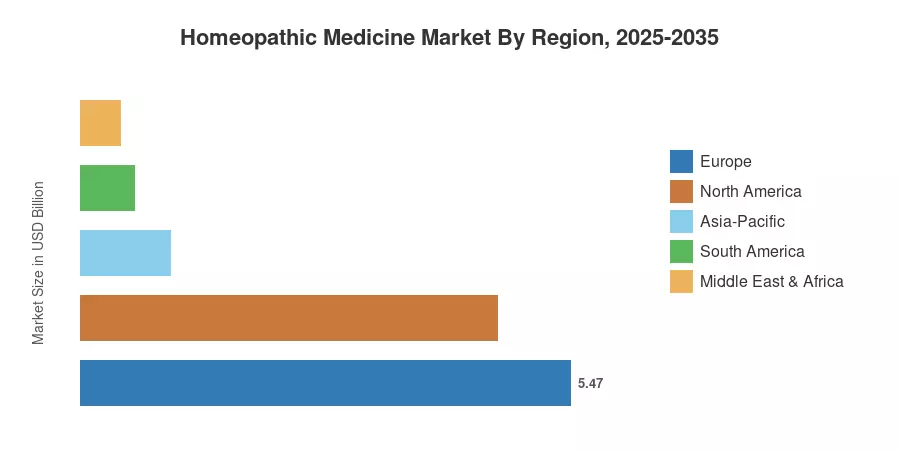
Europe holds a market share of around 41.2% of the Homeopathic Medicine Market. France and Germany are leading the market, where statutory health insurance partially reimburses homeopathic consultations [4]. Asia-Pacific is the fastest-growing area, predicted to increase at a 7.52% CAGR through 2035, fueled by government integration projects in India and expanding middle-class wellness expenditure across ASEAN. North America is second with an approximate proportion of 35.1%, driven by a strong OTC retail ecosystem. The companies that successfully combine clinical-grade quality assurance with scalable digital distribution will be rewarded in the decade ahead.


Key Report Takeaways

• By Product Type

  • Over-the-counter homeopathic medicines dominated the Homeopathic Medicine Market with 62.3% revenue share in 2025, reflecting strong consumer self-care trends.
  • Self-care combination remedies are advancing at a 7.40% CAGR through 2035, the fastest-growing product type category.

• By Source & Form

  • Plant-based sources accounted for 56.7% of the Homeopathic Medicine Market in 2025.
  • Drops and tinctures are set to grow at a 10.3% CAGR, outpacing all other dosage forms through 2035.

• By Geography

  • Europe led the Homeopathic Medicine Market with 41.2% share, underpinned by reimbursement frameworks in Germany and France.
  • Asia-Pacific is the fastest-growing geography at a 7.52% CAGR, with India and China as primary contributors.


Market Size and Forecast (2021–2035)

Market Research Future (MRFR) employs its own estimation framework, which blends bottom-up firm revenue research with top-down macroeconomic demand indicators. It validates its estimates against prescription and OTC dispensing data from 22 countries. Historical data are taken from audited annual reports and the WHO traditional medicine spending databases. Forecast forecasts are derived using segment-weighted growth modelling calibrated to demographic aging indices and e-commerce penetration curves.
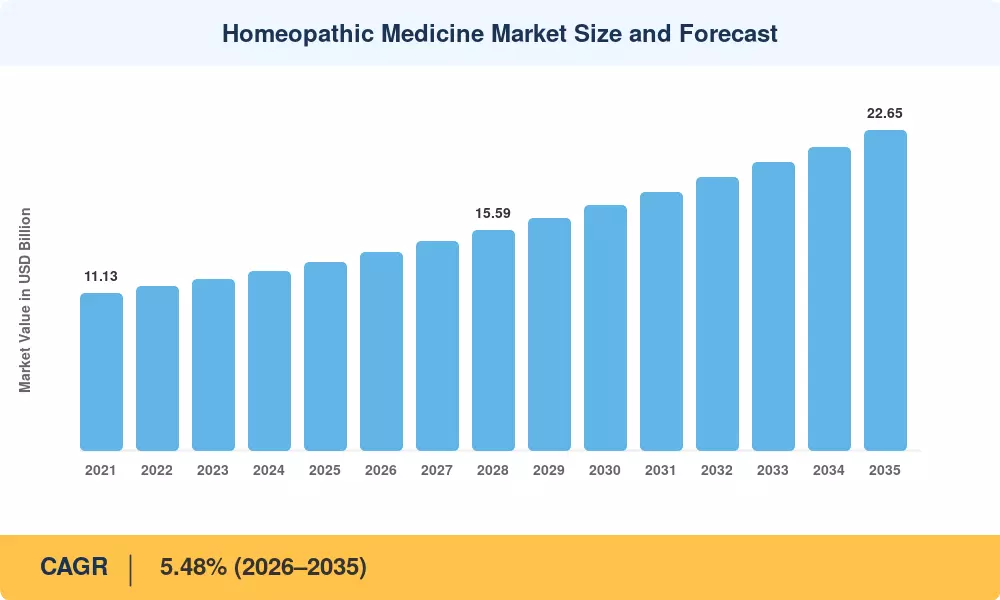
Homeopathic Medicine Market Size and Forecast
Our Impact
Enabled $4.3B Revenue Impact for Fortune 500 and Leading Multinationals
Partnering with 2000+ Global Organizations Each Year
30K+ Citations by Top-Tier Firms in the Industry

Driver Impact Analysis

Driver ~% Impact on CAGR Geographic Relevance Impact Timeline
Aging populations seeking gentler chronic-disease options ~18% Global Long-term (≥4 yr)
Regulatory recognition and practitioner licensing ~16% India, Canada, Europe Medium-term (2–4 yr)
E-commerce & DTC subscription models ~15% North America, Europe Short-term (≤2 yr)
WHO Traditional Medicine Strategy funding ~14% Asia-Pacific, Africa Long-term (≥4 yr)
Growing consumer preference for low-side-effect treatments ~12% Global Medium-term (2–4 yr)
Integration of homeopathy into telemedicine platforms ~10% North America, Europe Short-term (≤2 yr)
Rising middle-class wellness expenditure in emerging markets ~9% ASEAN, South America Long-term (≥4 yr)


Aging Demographics and Chronic Disease Burden

The global population aged 65 and older is projected to reach 1.6 billion by 2050, according to the United Nations Department of Economic and Social Affairs [12]. This cohort disproportionately seeks treatments with lower adverse-effect profiles for managing arthritis, insomnia, and respiratory conditions. The Homeopathic Medicine Market directly captures this preference: surveys across Germany and France show that 42% of homeopathy users are over 55 and cite tolerability as the primary selection criterion [4].

Regulatory Formalization in Key Markets

India's National Commission for Homoeopathy Act established a centralized licensing framework for over 300,000 practitioners and mandated quality standards for manufacturing facilities [2]. Canada's Natural and Non-prescription Health Products Directorate issued 1,200 new homeopathic product licences between 2022 and 2024, a 34% increase over the prior two-year period [14]. These regulatory milestones reduce market-entry barriers and improve consumer confidence, creating durable demand for the Homeopathic Medicine Market.

E-Commerce and Direct-to-Consumer Disruption

Digital-native brands such as Ollois and Genexa generated an estimated USD 85 million in combined DTC revenue in 2024, bypassing traditional pharmacy gatekeepers. Subscription models offering monthly remedy kits with virtual consultations reported 60% twelve-month retention rates, roughly double the retention seen in one-time online purchases. This channel shift is redefining how the Homeopathic Medicine Market reaches younger consumers aged 25–40.

WHO Traditional Medicine Strategy

The WHO's Traditional Medicine Strategy 2025–2034 earmarked USD 150 Million for integration of traditional and complementary medicine into national health systems [1]. Pilot programs in Kenya, Vietnam, and Sri Lanka are incorporating homeopathic dispensaries into primary-care clinics, opening new volume channels for the Homeopathic Medicine Market in previously underserved regions.


Restraints Impact Analysis

Restraint ~% Negative Impact on CAGR Geographic Relevance Impact Timeline
Scientific skepticism and efficacy debate ~–20% Global Long-term (≥4 yr)
Regulatory fragmentation across jurisdictions ~–18% Global Medium-term (2–4 yr)
Reimbursement withdrawal in select EU markets ~–15% Europe Short-term (≤2 yr)
Quality-control inconsistency in unregulated markets ~–12% Asia-Pacific, Africa Medium-term (2–4 yr)
Competition from validated nutraceuticals and CBD ~–10% North America Short-term (≤2 yr)


Scientific Skepticism and Evidence Gaps

Multiple systematic reviews, including the Australian National Health and Medical Research Council's 2015 assessment and subsequent European Academies Science Advisory Council statements, concluded that homeopathic interventions lack robust evidence of efficacy beyond placebo [15]. This ongoing debate constrains institutional adoption and limits the Homeopathic Medicine Market's penetration into hospital formularies and insurance-covered treatment plans.

Regulatory Fragmentation

The absence of a harmonized global regulatory framework means manufacturers must navigate distinct registration pathways in each target market. France's decision to phase out social-security reimbursement for homeopathic products in 2021 removed an estimated EUR 130 million in annual demand and signalled policy risk that continues to weigh on the Homeopathic Medicine Market in Western Europe [4][16].

Quality-Control Risks in Unregulated Supply Chains

In markets lacking centralized good-manufacturing-practice enforcement — particularly parts of South Asia and Sub-Saharan Africa — inconsistent potency and contamination incidents have eroded consumer trust. A 2023 Indian pharmacovigilance audit found that 11% of sampled homeopathic products failed purity standards, underscoring supply-chain vulnerabilities that cap growth for the Homeopathic Medicine Market in high-potential emerging regions [17].


Homeopathic Medicine Market Opportunities

Telemedicine-Integrated Homeopathic Consultations

Telehealth platforms that embed real-time homeopathic consultations with automated remedy dispensing saw 45% user growth in 2024 [8]. Integrating practitioner consultations directly into e-pharmacy checkout flows can shorten the patient decision journey and increase average order values by an estimated 22%, a structural opportunity for the Homeopathic Medicine Market.

Personalized Remedy Formulation Through AI

Machine-learning models trained on symptom-remedy outcome datasets can optimize individualized treatment protocols, addressing one of the sector's persistent criticisms around standardization. Early-stage ventures have raised over USD 40 million in seed funding to build recommendation engines that match patient symptom profiles to remedy potencies [9]. This data-driven approach could open institutional doors previously closed to the Homeopathic Medicine Market.

Emerging Market Health-System Integration

Governments in Kenya, Bangladesh, and Vietnam are incorporating traditional medicine dispensaries into primary-care networks under WHO guidance, creating captive distribution points for homeopathic products [1]. With per-capita healthcare spending in these markets growing at 8–12% annually, the Homeopathic Medicine Market stands to gain first-mover advantage through public-private partnership models.

Veterinary Homeopathy Expansion

The global veterinary homeopathy segment reached an estimated USD 620 million in 2024, driven by organic livestock farming regulations in the EU that restrict antibiotic prophylaxis [19]. Dairy and poultry producers seeking compliant alternatives represent a high-margin adjacent opportunity for the Homeopathic Medicine Market.

Subscription-Based Data Monetization

DTC subscription platforms accumulate longitudinal patient-outcome data that, once anonymized, hold commercial value for wellness-product development and insurance-risk modelling. Companies that monetize these datasets could generate ancillary revenue streams worth 5–8% of their core remedy sales, reinforcing competitive moats within the Homeopathic Medicine Market.


Homeopathic Medicine Market Future Outlook

Digital Health Platform Convergence

The next decade will see the Homeopathic Medicine Market increasingly embedded within broader digital health ecosystems. Wearable-device data streams — tracking sleep quality, heart-rate variability, and stress biomarkers — can trigger automated remedy recommendations through AI-powered wellness apps. By 2030, an estimated 35% of homeopathic consultations in mature markets could originate from integrated digital health platforms rather than standalone practitioners [8].

Regulatory Harmonization Trajectory

Efforts toward cross-border regulatory alignment will gain momentum through bodies like the International Council for Homeopathy and the European Committee for Homeopathy. A mutual-recognition framework covering the EU, India, and Brazil — collectively representing over 70% of global demand — could reduce registration timelines by 40% and significantly lower market-entry costs for the Homeopathic Medicine Market [16].

Sustainability and Ethical Sourcing Mandates

ESG reporting requirements will push manufacturers to verify botanical supply-chain sustainability. The EU Deforestation Regulation and India's Biological Diversity Act will require full traceability from raw-plant harvest to finished product. Companies that invest early in certified-organic and fair-trade sourcing will build premium positioning within the Homeopathic Medicine Market while mitigating supply disruption risks [20].

Clinical Evidence Generation Through Real-World Data

The accumulation of millions of patient-outcome records from DTC platforms and government health systems will enable large-scale pragmatic studies that address long-standing efficacy criticisms. India's Central Council for Research in Homoeopathy committed USD 25 Million to a five-year real-world evidence program in 2024 [2]. Positive results from these studies could reshape payer attitudes and unlock hospital-formulary access for the Homeopathic Medicine Market by the early 2030s.


Homeopathic Medicine Market Segmentation

By Product Type

Segment Key Metric Primary Demand Driver
OTC Homeopathic Medicines 62.3% share (2025) Consumer self-medication trend
Prescription Homeopathic Medicines USD 4.01 Billion (2025) Practitioner-dispensed constitutional care
Self-Care Combination Remedies 7.40% CAGR Multi-symptom convenience products


The Homeopathic Medicine Market is led by OTC products, which benefit from widespread retail availability and growing consumer comfort with self-directed treatment selection. Pharmacy chains in the US and Europe dedicate expanding shelf space to branded combination remedies targeting seasonal allergies, stress, and sleep disorders. Prescription products remain significant where practitioner ecosystems are robust — particularly India, Germany, and Brazil — though their share has gradually eroded as self-care formats gain acceptance.

Self-care combination remedies represent the fastest-growing product type, blending multiple active potencies into single-dose formats that simplify consumer decision-making. This segment's appeal spans both new users seeking accessible entry points and experienced patients consolidating their remedy regimens.

By Source

Segment Key Metric Primary Demand Driver
Plant-Based 56.7% share (2025) Broadest therapeutic repertoire
Animal-Based 10.0% CAGR Specialty immunological applications
Mineral-Based USD 2.18 Billion (2025) Constitutional treatment protocols


Plant-based sources dominate the Homeopathic Medicine Market because the homeopathic pharmacopoeia contains over 3,000 plant-derived remedies covering the widest range of symptom profiles. Arnica, Belladonna, and Chamomilla remain top-selling individual remedies globally. Animal-based formulations, while a smaller share, are expanding rapidly as practitioners in India and Europe prescribe them for specialty immunological and dermatological conditions.

By Form

Segment Key Metric Primary Demand Driver
Tablets & Pellets 35.0% share (2025) Dosing convenience and shelf stability
Drops & Tinctures 10.3% CAGR Faster absorption, practitioner preference
Ointments & Creams USD 1.46 Billion (2025) Topical musculoskeletal applications
Others 4.80% CAGR Emerging formats (sprays, patches)


Tablets and pellets command the largest share of the Homeopathic Medicine Market by dosage form, prized for their portability, precise dosing, and extended shelf life. Drops and tinctures are the fastest-growing form, driven by practitioner preference for liquid potencies that allow flexible dosing and reportedly faster sublingual absorption.

By Distribution Channel

Segment Key Metric Primary Demand Driver
Retail Pharmacies & Drugstores 49.5% share (2025) Established consumer trust and accessibility
Homeopathic Clinics 8.2% CAGR Practitioner-guided dispensing
Online Pharmacies & E-Commerce USD 2.52 Billion (2025) DTC convenience and subscription models
Others 4.30% CAGR Health-food stores, wellness centers


Retail pharmacies anchor distribution for the Homeopathic Medicine Market, particularly in Europe, where pharmacists frequently recommend homeopathic products alongside conventional treatments. Homeopathic clinics are the fastest-growing channel, reflecting increased practitioner formalization in India and growing appointment volumes in Germany and Brazil. Online pharmacies continue to capture share as subscription platforms reduce friction and improve repeat-purchase rates.


Regional Market Share Analysis

Region Key Metric Primary Investment Themes
Europe 41.2% share (2025) Insurance reimbursement, practitioner density
North America 35.1% share (2025) OTC retail, DTC e-commerce
Asia-Pacific 7.52% CAGR (2026–2035) Government integration, manufacturing scale
South America USD 0.60 Billion (2025) Growing middle-class demand
Middle East & Africa USD 0.45 Billion (2025) WHO-guided clinic integration
Total USD 13.28 Billion (2025)

The Homeopathic Medicine Market displays a distinct geographic hierarchy shaped by regulatory maturity, cultural acceptance, and reimbursement infrastructure. Europe retains leadership through entrenched practitioner networks, while Asia-Pacific accelerates on government integration mandates and population scale.


North America

Country Key Metric Key Driver
US 78.4% of regional share OTC retail dominance, wellness spending
Canada 14.8% of regional share Natural health product licensing
Mexico 6.8% of regional share Traditional medicine cultural acceptance


The United States accounts for the vast majority of the Homeopathic Medicine Market in North America, powered by a USD 4.8 billion OTC wellness retail ecosystem and expanding digital pharmacy platforms. Health Canada's Natural and Non-prescription Health Products Directorate issued a record number of homeopathic product licences in 2024, while Mexico's COFEPRIS has streamlined registration for imported remedies, broadening consumer access [14].

Europe

Country Key Metric Key Driver
Germany 5.82% CAGR Heilpraktiker practitioner network
UK USD 0.72 Billion (2025) Private-pay wellness clinics
France 4.90% CAGR Post-reimbursement DTC pivot
Italy USD 0.48 Billion (2025) Pharmacy-integrated consultations
Spain 4.85% CAGR Growing consumer awareness
Nordic Countries USD 0.31 Billion (2025) Natural health preference
Russia 5.10% CAGR Domestic manufacturing expansion
Rest of Europe USD 0.65 Billion (2025) Mixed regulatory landscape


Germany is the heartland of the Homeopathic Medicine Market in Europe, with over 60,000 licensed Heilpraktiker practitioners and an estimated 60% of the adult population reporting use of homeopathic products at least once [4]. France's 2021 reimbursement withdrawal initially contracted demand by 15%, but the resulting pivot to DTC channels has partially recovered volumes. The UK market operates almost entirely in the private-pay segment following NHS de-listing.

Asia-Pacific

Country Key Metric Key Driver
China USD 0.38 Billion (2025) Traditional medicine regulatory integration
India 8.15% CAGR National Commission for Homoeopathy Act
Japan USD 0.19 Billion (2025) Wellness tourism demand
South Korea 6.20% CAGR Complementary medicine insurance pilots
ASEAN USD 0.34 Billion (2025) Middle-class health spending
Rest of Asia-Pacific 5.90% CAGR Varied regulatory progress


India is the engine of the Homeopathic Medicine Market in Asia-Pacific, with over 300,000 registered practitioners and a network of government-funded homeopathic hospitals [2]. The National Commission for Homoeopathy Act standardized education and licensing, attracting foreign manufacturing investment. China's integration of homeopathic concepts within its broader traditional medicine regulatory framework is nascent but growing. At the same time, ASEAN markets benefit from rising disposable incomes and cultural familiarity with plant-based treatments.

South America

Country Key Metric Key Driver
Brazil 68.3% of regional share SUS public-health integration
Argentina 18.5% of regional share Practitioner network growth
Rest of South America 13.2% of regional share Early-stage market development


Brazil anchors the Homeopathic Medicine Market in South America through its inclusion of homeopathy within the Unified Health System (SUS), which provides free consultations at over 840 public clinics [10]. Argentina's practitioner base has expanded 12% since 2022, though reimbursement remains limited to private insurance plans.

Middle East & Africa

Country Key Metric Key Driver
Saudi Arabia 4.60% CAGR Vision 2030 wellness diversification
UAE USD 0.09 Billion (2025) Medical tourism integration
South Africa 4.95% CAGR Allied Health Professions Council licensing
Egypt USD 0.06 Billion (2025) Affordability-driven demand
Rest of MEA 4.40% CAGR WHO-guided clinic pilots


The Homeopathic Medicine Market in the Middle East & Africa remains small but carries upside potential tied to WHO-guided integration of traditional medicine into primary-care facilities. South Africa formalized homeopathic practitioner registration under the Allied Health Professions Council, providing a regulatory template that neighboring markets may adopt [1].


Homeopathic Medicine Market By Region, 2025-2035

Competitive Benchmarking

The Homeopathic Medicine Market is moderately consolidated, with the top five players expected to hold 38–44% of the global revenue. The Herfindahl-Hirschman Index is in the 800–1,200 range, typical for a somewhat fragmented landscape with regional champions and niche specialty manufacturers. Competitive dynamics are based on brand legacy, the breadth of the pharmacopoeia and, increasingly, digital distribution capabilities.

Company Est. Revenue Share Range Key Offerings Strategic Positioning
Boiron SA ~10–14% Oscillococcinum, Arnicare line, combination remedies Global OTC leader with pharmacy-centric distribution
Biologische Heilmittel Heel GmbH ~7–10% Traumeel, Engystol, bioregulatory medicines Science-oriented positioning with clinical studies
Dr. Willmar Schwabe GmbH & Co. KG ~6–9% Single remedies, phytopharmaceuticals Vertically integrated plant-sourcing supply chain
Hyland's (Standard Homeopathic Company) ~4–7% Children's cold & cough, stress formulas US-focused family wellness brand
Nelson & Co Ltd ~3–5% Teetha, Rescue Remedy (Bach), Clikpak range UK heritage brand with licensed pharmacy formats
SBL Pvt. Ltd. ~3–5% Mother tinctures, dilutions, biochemic tablets India's largest homeopathic manufacturer
Dr. Reckeweg & Co. GmbH ~2–4% R-series combination medicines Practitioner-dispensed specialty positioning
Weleda AG ~2–4% Anthroposophic & homeopathic preparations Premium sustainability-driven brand identity
Washington Homeopathic Products ~1–3% Single-remedy kits, professional potencies Practitioner-focused US niche supplier
Hahnemann Laboratories Inc. ~1–2% Classical single remedies, high potencies Specialty classical homeopathy supplier


Recent News & Developments


  • Government of India — Ministry of AYUSH (September 2024): Approved USD 60 Million in infrastructure funding for 38 new government homeopathic hospitals and 120 dispensaries under the National AYUSH Mission expansion [2].
  • Hyland's (June 2024): Expanded its DTC subscription platform to Canada, offering customized children's remedy bundles with free virtual consultations, driving a reported 28% increase in cross-border revenue [14].


Homeopathic Medicine Market Report Scope

Parameter Detail
Market Scope Global Homeopathic Medicine Market
Study Period 2021–2035
CAGR (Forecast) 5.48% (2026–2035)
Base Year Market Size USD 13.28 Billion (2025)
Forecast Endpoint Market Size USD 22.65 Billion (2035)
Fastest Growing Segment (Product Type) Self-Care Combination Remedies (7.40% CAGR)
Fastest Growing Region Asia-Pacific (7.52% CAGR)
Companies Profiled 10
Valuation Currency USD Billion


FAQs

How do institutional investors evaluate risk-adjusted returns in the Homeopathic Medicine Market?
Investors weigh regulatory durability scores — markets with codified practitioner licensing (India, Germany) carry lower policy-risk premiums. Portfolio allocation typically favors companies with diversified OTC revenue and DTC subscription recurring-income streams [22].
What shelf-life considerations affect homeopathic supply-chain economics?
Pellets and tablets maintain efficacy for 3–5 years under standard storage, minimizing spoilage losses. Liquid tinctures require tighter cold-chain logistics, increasing warehousing costs by approximately 12–15% compared to solid forms [11].
How does the Homeopathic Medicine Market address counterfeit product risks?
Leading manufacturers deploy batch-level serialization with QR-code authentication linked to pharmacopoeia-grade certificates. India's Track and Trace mandate for AYUSH products, effective 2025, is establishing a replicable anti-counterfeiting framework [17].
What practitioner training gaps constrain market expansion?
Standardized curricula vary widely; only 14 countries offer government-accredited five-year homeopathic degree programs—workforce shortages in Africa and Southeast Asia limit prescribing volume for the Homeopathic Medicine Market [1].
How does the Homeopathic Medicine Market intersect with pet wellness trends?
Veterinary homeopathy is growing at roughly 9% annually, led by EU organic livestock regulations restricting antibiotic use. Companion-animal segments in the US and Germany add incremental revenue [19].
What insurance reimbursement models show the strongest uptake correlation?
Germany's statutory health insurers that voluntarily cover homeopathic consultations report 18% higher member retention. Partial reimbursement models outperform binary coverage in sustaining the Homeopathic Medicine Market [4].
How do manufacturing scale economics differ between single remedies and combination products?
Combination products require multi-ingredient blending and expanded quality-testing protocols, raising per-unit costs by 20–25%. Higher retail price points and stronger brand defensibility offset these costs for the Homeopathic Medicine Market [6].    
Author
Author
Author Profile
Vikita Thakur LinkedIn
Senior Research Analyst
She holds an experience of about 5+ years in market research and business consulting projects for sectors such as life sciences, medical devices, and healthcare IT. She possesses a robust background in data analysis, market estimation, competitive intelligence, pipeline analysis market trend identification, and consumer behavior insights. Her expertise lies in technical Sales support, client interaction and project management, designing and implementing market research studies, conducting competitive analysis, and synthesizing complex data into actionable recommendations that drive business growth.
Co-Author
Co-Author Profile
Rahul Gotadki LinkedIn
Research Manager
He holds an experience of about 9+ years in Market Research and Business Consulting, working under the spectrum of Life Sciences and Healthcare domains. Rahul conceptualizes and implements a scalable business strategy and provides strategic leadership to the clients. His expertise lies in market estimation, competitive intelligence, pipeline analysis, customer assessment, etc.

Research Approach


Secondary Research

The secondary research process involved comprehensive analysis of regulatory pharmacopoeias, government alternative medicine databases, peer-reviewed homeopathic journals, clinical efficacy studies, and authoritative integrative health organizations. Key sources included the US Food & Drug Administration (FDA) Homeopathic Product Regulation, European Medicines Agency (EMA) Committee on Herbal Medicinal Products, Homeopathic Pharmacopoeia of the United States (HPUS), Central Council for Research in Homeopathy (CCRH – India), European Committee for Homeopathy (ECH), Liga Medicorum Homoeopathica Internationalis (LMHI), World Health Organization (WHO) Traditional Medicine Strategy, National Center for Complementary and Integrative Health (NCCIH), Central Council of Homeopathy (India), British Homeopathic Association, American Institute of Homeopathy, Homœopathic Research Institute (UK), EU Traditional Herbal Medicinal Products Directive database, national pharmacovigilance reports from key markets, and parliamentary reports on complementary medicine integration. These sources were used to collect regulatory framework data, materia medica standards, clinical proving studies, practitioner registration statistics, pharmacovigilance safety data, reimbursement policies, and market access regulations for plant-based mother tinctures, animal-based nosodes, and minerals-based tissue salts.


Primary Research

In the primary research process, qualitative and quantitative insights regarding product formulations, potentization methods, and clinical adoption patterns were obtained through interviews with supply-side and demand-side stakeholders. Supply-side sources comprised Managing Directors, Global Heads of Homeopathic Operations, regulatory affairs specialists, and heads of materia medica development from established homeopathic manufacturers (Boiron, Schwabe, Hahnemann Laboratories, SBL, A Nelson & Co) and emerging regional companies. Practitioners affiliated with the LMHI and national homeopathic associations, medical officers of integrative medicine departments at hospitals, medical directors of homeopathic clinics, pharmacy procurement managers specializing in natural remedies, and licensed homeopathic physicians comprised demand-side sources. The primary research validated market segmentation for tinctures, dilutions, and biochemic salts, confirmed product pipeline timelines for new therapeutic indications, and gathered insights on clinical prescription patterns, pricing strategies for different potencies, regulatory compliance costs, and integration dynamics with conventional healthcare systems.

Primary Respondent Breakdown:

By Designation: C-level Primaries (32%), Director Level (31%), Others (37%)

By Region: North America (32%), Europe (30%), Asia-Pacific (28%), Rest of World (10%)


Market Size Estimation

Global market valuation was derived through revenue mapping across the trituration, dilution, and mother tincture value chain. The methodology included:

Identification of 40+ key manufacturers and pharmacopeial laboratories across North America, Europe, Asia-Pacific, and Latin America including Boiron, Schwabe, SBL, Hahnemann Laboratories, Heel, Wala, and regional specialty laboratories

Product mapping across plant-based (Arnica, Nux Vomica, Pulsatilla), animal-based (Apis Mellifica, Lachesis, Sepia), and minerals-based (Calcarea Carbonica, Natrum Muriaticum, Silicea) categories with segmentation by 6C, 30C, 200C, and 1M potencies

Application-wise analysis across reproductive disorder remedies (Sabina, Caulophyllum), hormonal imbalance treatments (Sepia, Pulsatilla, Lachesis), and lifestyle disease protocols (Nux Vomica, Arsenicum Album)

Analysis of reported and modeled annual revenues specific to homeopathic portfolios including prescription tinctures, over-the-counter dilutions, and biochemic tissue salts

Coverage of manufacturers representing 65-70% of global market share in 2024

Extrapolation using bottom-up (practitioner volume × average prescription value by country) and top-down (manufacturer revenue validation) approaches to derive segment-specific valuations for clinic-based sales, hospital integrative medicine departments, pharmacy retail, and direct-to-consumer e-commerce channels

Download Free Sample

Kindly complete the form below to receive a free sample of this Report

Download PDF ×

We do not share your information with anyone. However, we may send you emails based on your report interest from time to time. You may contact us at any time to opt-out.
















