Download Free Sample
Kindly complete the form below to receive a free sample of this Report
Human Reproductive Technology Market Research Report By Technology (In Vitro Fertilization, Artificial Insemination, Intracytoplasmic Sperm Injection), By Application (Fertility Clinics, Hospitals, Research Institutes), By End User (Patients, Healthcare Providers, Researchers), By Procedure Type (Oocyte Cryopreservation, Sperm Cryopreservation, Embryo Transfer) and By Regional (North America, Europe, South America, Asia Pacific, Middle East and Africa) - Growth & Industry Forecast 2025 To 2035
As per Market Research Future analysis, the Human Reproductive Technology Market Size was estimated at 27.67 USD Billion in 2024. The Human Reproductive Technology industry is projected to grow from 28.94 USD Billion in 2025 to 45.38 USD Billion by 2035, exhibiting a compound annual growth rate (CAGR) of 4.6% during the forecast period 2025 - 2035
The Human Reproductive Technology Market is experiencing robust growth driven by technological advancements and increasing accessibility.
| 2024 Market Size | 27.67 (USD Billion) |
| 2035 Market Size | 45.38 (USD Billion) |
| CAGR (2025 - 2035) | 4.6% |
IVF Technologies (US), Fertility Solutions (US), Reproductive Health Services (US), Genea (AU), Merck KGaA(DE), CooperSurgical (US), Ferring Pharmaceuticals (CH), Thermo Fisher Scientific (US), Eugin Group (ES)
Our Impact
Enabled $4.3B Revenue Impact for Fortune 500 and Leading Multinationals
Partnering with 2000+ Global Organizations Each Year
30K+ Citations by Top-Tier Firms in the Industry
The Human Reproductive Technology Market is currently experiencing a dynamic evolution, driven by advancements in medical devices technology and changing societal attitudes towards fertility treatments. As awareness of reproductive health issues increases, more individuals and couples are seeking assistance to conceive. This growing demand is prompting innovations in techniques such as in vitro fertilization, genetic screening, and cryopreservation. Furthermore, the integration of artificial intelligence and telemedicineinto reproductive services is enhancing accessibility and efficiency, thereby reshaping the landscape of fertility care. In addition to technological advancements, the Human Reproductive Technology Market is influenced by regulatory changes and ethical considerations. Governments and health organizations are increasingly focusing on establishing guidelines that ensure patient safety and ethical practices in reproductive technologies. This regulatory environment is likely to foster trust among consumers, encouraging them to explore available options. As the market continues to expand, it appears poised to address the diverse needs of individuals seeking reproductive assistance, while also navigating the complexities of ethical and regulatory frameworks.
The Human Reproductive Technology Market is witnessing rapid technological progress, particularly in areas such as genetic testing and embryo selection. These innovations are enhancing the success rates of fertility treatments and providing patients with more personalized options.
With the rise of telemedicine and online consultations, access to reproductive health services is becoming more widespread. This trend is particularly beneficial for individuals in remote areas, allowing them to receive expert guidance without geographical constraints.
As the Human Reproductive Technology Market evolves, regulatory bodies are establishing new guidelines to ensure ethical practices and patient safety. These developments are likely to influence market dynamics and consumer confidence in fertility treatments.
The increasing prevalence of infertility is a primary driver for the Human Reproductive Technology Market. Factors such as delayed childbearing, lifestyle changes, and environmental influences contribute to this trend. According to recent data, infertility affects approximately 15% of couples worldwide, leading to a heightened demand for assisted reproductive technologies. This growing need for solutions such as in vitro fertilization (IVF) and artificial insemination is propelling market growth. As more individuals seek assistance in conceiving, the Human Reproductive Technology Market is likely to expand, with innovations in treatment options and increased investment in research and development. The rising awareness of fertility issues is also encouraging more people to explore available technologies, further driving the market's expansion.
Technological advancements play a crucial role in shaping the Human Reproductive Technology Market. Innovations such as preimplantation genetic testing, cryopreservation techniques, and improved embryo culture systems are enhancing the success rates of assisted reproductive procedures. The introduction of artificial intelligence in fertility treatments is also gaining traction, as it allows for more personalized and efficient care. Market data indicates that The Human Reproductive Technology Market alone is projected to reach USD 36 billion by 2026, reflecting the impact of these technological innovations. As research continues to evolve, the Human Reproductive Technology Market is expected to witness further advancements, leading to improved outcomes for patients and increased accessibility to cutting-edge treatments.
Government initiatives and funding programs aimed at supporting reproductive health are vital drivers of the Human Reproductive Technology Market. Many countries are recognizing the importance of addressing infertility and are implementing policies to promote access to reproductive technologies. This includes financial assistance for treatments, research grants, and the establishment of fertility clinics. For instance, some governments have introduced subsidized IVF programs to alleviate the financial burden on couples seeking treatment. Such support not only enhances accessibility but also stimulates market growth by encouraging investment in research and development. As government involvement continues to expand, the Human Reproductive Technology Market is likely to benefit from increased resources and improved patient access.
The rising awareness surrounding reproductive health and fertility issues is significantly influencing the Human Reproductive Technology Market. Educational initiatives and campaigns aimed at informing the public about infertility and available treatment options are becoming more prevalent. This increased awareness is encouraging individuals to seek assistance sooner, thereby driving demand for reproductive technologies. Furthermore, healthcare providers are increasingly incorporating fertility education into their practices, which is likely to enhance patient engagement and treatment uptake. As more people become informed about their reproductive options, the Human Reproductive Technology Market is poised for growth, with a greater emphasis on patient-centered care and support.
Cultural shifts and evolving family structures are influencing the Human Reproductive Technology Market. As societal norms change, more individuals are choosing to delay parenthood or pursue alternative family-building options, such as single parenthood or same-sex partnerships. This shift is leading to a greater acceptance of assisted reproductive technologies as viable solutions for achieving parenthood. Market data suggests that the demand for donor sperm and egg services is on the rise, reflecting these changing dynamics. As diverse family structures become more commonplace, the Human Reproductive Technology Market is expected to adapt, offering tailored services that cater to a broader range of reproductive needs and preferences.
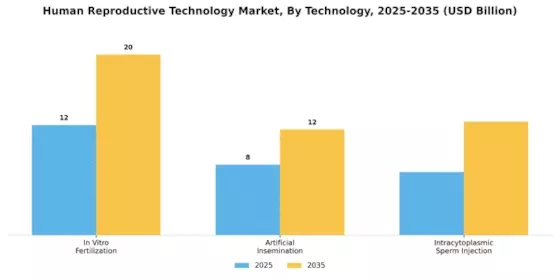
The Human Reproductive Technology Market is significantly shaped by the three predominant techniques: In Vitro Fertilization (IVF), Artificial Insemination (AI), and Intracytoplasmic Sperm Injection (ICSI). Within this context, IVF stands out as the largest contributor, often chosen by numerous couples facing fertility challenges. Meanwhile, AI has carved out a stable niche, providing a less invasive option, while ICSI emerges as a favored choice for individuals experiencing severe male infertility issues. Growth trends in the technology segment are largely driven by advancements in reproductive health technologies and increasing awareness of fertility treatments among couples. The rise in egg freezing practices, along with the growing acceptance of assisted reproductive technologies, fosters ongoing growth of IVF. ICSI is gaining traction rapidly, drawing interest as a solution for male infertility, thus positioning itself as the fastest-growing segment within this category.
Technology: In Vitro Fertilization (Dominant) vs. Intracytoplasmic Sperm Injection (Emerging)
In Vitro Fertilization (IVF) remains the dominant technology in the Human Reproductive Technology Market due to its established efficacy and comprehensive support systems. IVF consists of various protocols, including embryo freezing and genetic screening, which enhance success rates. It holds strong emotional and psychological significance for many, making it a preferred choice. On the other hand, Intracytoplasmic Sperm Injection (ICSI) is making headway as an emerging solution, particularly beneficial for couples facing severe male factor infertility. Its targeted approach, where a single sperm is injected directly into an egg, showcases its innovative edge, contributing to increasing acceptance. Together, these technologies offer diverse options catering to varied reproductive challenges.
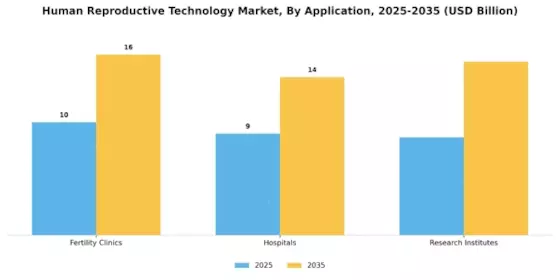
In the Human Reproductive Technology Market, Fertility Clinics hold the largest market share due to their specialized services and increasing demand for assisted reproductive technologies. These clinics have become the primary choice for couples seeking fertility treatments, leading to significant market penetration. Hospitals also play a crucial role but tend to cater to a broader range of healthcare needs, affecting their specialization in reproductive technology. Meanwhile, Research Institutes have emerged as a fast-growing segment as advancements in reproductive health research drive innovation and development in new treatments.
Fertility Clinics: Dominant vs. Research Institutes: Emerging
Fertility Clinics are widely recognized as the dominant force in the Human Reproductive Technology Market, offering targeted services such as in vitro fertilization (IVF), intrauterine insemination (IUI), and egg freezing. Their specialized approach allows for tailored treatments that meet the diverse needs of patients, making them the preferred option for couples facing fertility challenges. On the other hand, Research Institutes are rapidly emerging as key players, focusing on groundbreaking research and development in reproductive technologies. Their role is vital in exploring new methodologies, enhancing existing treatments, and potentially developing innovative solutions that could redefine fertility treatments in the future. This growing interest and investment in research make them a segment to watch in the coming years.
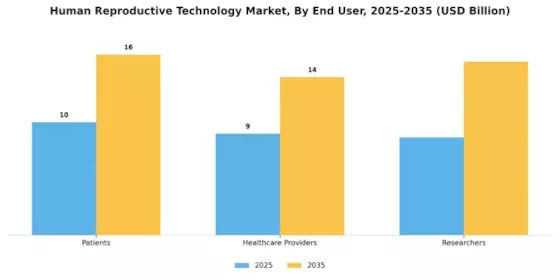
In the Human Reproductive Technology Market, the distribution among end users showcases a diverse array of needs and priorities. Patients constitute the largest segment, driven by increased incidences of fertility issues, changing societal norms regarding family planning, and growing awareness of reproductive health technologies. Healthcare providers, while currently smaller in comparison, are rapidly gaining traction as they adapt to innovative technologies and evolving patient demands, underpinning their importance in the market landscape.
Patients (Dominant) vs. Healthcare Providers (Emerging)
The patient segment remains the dominant force within the Human Reproductive Technology Market, fueled by a significant rise in couples seeking fertility treatments and advancements in reproductive technologies. This group is characterized by its varied demographics and needs, with a focus on personalized treatment plans and enhanced patient experiences. On the other hand, healthcare providers represent an emerging segment, increasingly adopting cutting-edge reproductive health solutions to meet rising patient expectations and streamline their services. Their growth is driven by the integration of advanced technologies such as telemedicine and AI in patient care, positioning them as key players in the ongoing evolution of human reproductive technologies.
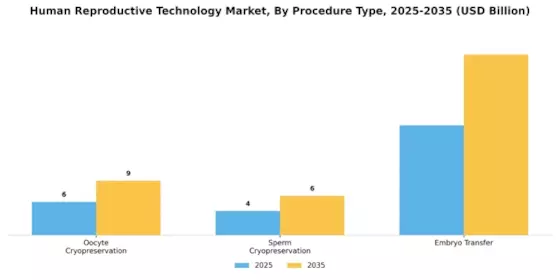
The Human Reproductive Technology Market reveals a diverse landscape within the Procedure Type segment, with Oocyte Cryopreservation holding the largest share. This method allows women to preserve their reproductive potential, often chosen by those delaying childbirth for personal or medical reasons. Meanwhile, Sperm Cryopreservation is gaining momentum, particularly among men seeking to safeguard their fertility prior to medical treatments or due to lifestyle choices, thus marking a significant trend in the market.
Oocyte Cryopreservation (Dominant) vs. Sperm Cryopreservation (Emerging)
Oocyte Cryopreservation is well-established as the dominant procedure within the Human Reproductive Technology Market, widely utilized for its effectiveness in preserving female fertility. This technique is often preferred by women who wish to postpone pregnancy, contributing to its strong market presence. On the other hand, Sperm Cryopreservation, while emerging, is rapidly gaining traction due to increasing awareness of male fertility issues and advancements in cryopreservation techniques. As attitudes towards fertility preservation evolve, both these procedures are positioned to respond to changing demographic trends and societal needs, with Sperm Cryopreservation expected to expand as it addresses the evolving landscape of reproductive choices.
Get more detailed insights about Human Reproductive Technology Market Request Free Sample
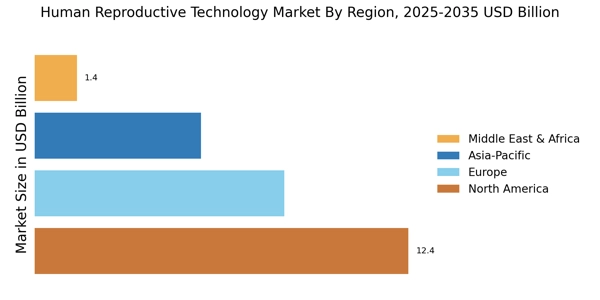
North America is the largest market for human reproductive technology, accounting for approximately 45% of the global market share. The region benefits from advanced healthcare infrastructure, high disposable incomes, and increasing awareness of fertility treatments. Regulatory support, including favorable policies from the FDA, further drives market growth. The demand for assisted reproductive technologies (ART) is on the rise, fueled by changing societal norms and delayed parenthood. The United States is the leading country in this sector, hosting numerous key players such as IVF Technologies and Fertility Solutions. Canada also plays a significant role, contributing to the market with its progressive healthcare policies. The competitive landscape is characterized by a mix of established companies and emerging startups, all striving to innovate and enhance treatment outcomes. The presence of major players ensures a robust market environment.
Europe is the second-largest market for human reproductive technology, holding approximately 30% of the global market share. The region is witnessing significant growth due to increasing infertility rates and advancements in reproductive technologies. Regulatory frameworks, such as the European Union's directives on ART, are evolving to support innovation while ensuring patient safety. Countries like Germany and the UK are at the forefront, driving demand for fertility treatments and services. Germany leads the European market, followed closely by the UK and France. The competitive landscape is marked by a mix of established firms like Merck KGaA and CooperSurgical, alongside innovative startups. The presence of key players fosters a dynamic environment, encouraging research and development in reproductive technologies. As regulations adapt to new technologies, the market is expected to expand further, enhancing accessibility to ART services.
Asia-Pacific is rapidly emerging as a significant player in the human reproductive technology market, accounting for approximately 20% of the global share. The region's growth is driven by rising infertility rates, increasing disposable incomes, and a growing acceptance of ART. Countries like Australia and India are leading the charge, supported by favorable government policies and investments in healthcare infrastructure. The demand for fertility treatments is expected to surge as societal attitudes shift towards family planning and reproductive health. Australia is a key player in this market, with established companies like Genea and a strong regulatory framework. India is also witnessing a boom in fertility clinics, catering to both domestic and international patients. The competitive landscape is diverse, with a mix of local and international players striving to capture market share. As the region continues to develop, the potential for growth in reproductive technologies remains substantial.
The Middle East and Africa represent an untapped market for human reproductive technology, holding approximately 5% of the global market share. The region is experiencing a gradual increase in demand for fertility treatments, driven by rising awareness of reproductive health and changing cultural attitudes. Countries like South Africa and the UAE are leading the way, with investments in healthcare infrastructure and increasing access to ART services. Regulatory bodies are beginning to establish guidelines to support the growth of this sector. South Africa is at the forefront, with a growing number of fertility clinics and services. The UAE is also emerging as a hub for reproductive health, attracting international patients seeking advanced treatments. The competitive landscape is evolving, with both local and international players entering the market. As awareness and acceptance of reproductive technologies grow, the potential for market expansion in this region is significant.
The Global Human Reproductive Technology Market is characterized by rapid advancements and an increasing demand for assisted reproductive technologies driven by changing societal norms, infertilityrates, and a growing awareness of reproductive health. This market showcases a competitive landscape marked by significant innovation as firms strive to develop new and improved products and services such as in-vitro fertilization (IVF), cryopreservation, and genetic screening. The emergence of personalized medicine and technological advancements in mobile health applications also play a crucial role in shaping competition within the market. Companies are not only vying for market share but are also focusing on strategic collaborations, extensive research and development investments, and partnerships to enhance their offerings and address the diverse needs of consumers. Competitive insights reveal a dynamic environment where agility and innovation are vital for sustained growth and market leadership. Merck KGaA stands as a prominent player within the Global Human Reproductive Technology Market, renowned for its comprehensive portfolio of products and services that cater to various fertility treatments. The company boasts significant strengths in its research capabilities, allowing it to stay at the forefront of technological advancements in reproductive health. Merck KGaA's commitment to innovation is evident in its continuous investment in developing cutting-edge reproductive technologies and solutions tailored to individual patient needs. Furthermore, their global presence ensures accessibility to a vast network of healthcare providers, thereby enhancing their ability to deliver timely and effective solutions for various reproductive challenges. This strategic positioning reinforces the company's reputation as a leader in the industry while enabling it to maintain a competitive edge through robust partnerships and collaborations with other entities. In the realm of the Global Human Reproductive Technology Market, Reproductive Health Science is another key player focusing on providing innovative solutions for fertility and reproductive health challenges. This organization is committed to enhancing reproductive outcomes through the development of tailored treatments and comprehensive care strategies. Reproductive Health Science leverages advanced research and employs a multidisciplinary approach that combines scientific expertise with patient-centered practices. Their strengths manifest in the form of specialized programs, state-of-the-art technology for diagnostic and therapeutic applications, and a dedication to advancing reproductive medicine. By prioritizing high-quality services and fostering collaboration with healthcare professionals, Reproductive Health Science has carved out a significant presence within the market, ultimately contributing to improving reproductive health outcomes for many individuals facing fertility issues.






Recent developments in the Global Human Reproductive Technology Market indicate a dynamic landscape fueled by technological advancements and increasing demand for assisted reproductive solutions. Companies such as Merck KGaA and Thermo Fisher Scientific have been focusing on enhancing their product portfolios, catering to the rising needs arising from infertility treatments.
OvaScience and Genea Limited are gaining traction by innovating in ovarian rejuvenation technologies and offering tailored fertility solutions. The Eugin Group is prominently expanding its presence globally, underscoring a surge in cross-border reproductive services.
Notably, there have been recent strategic mergers and acquisitions, with Aid Autoimmuno and CooperSurgical aiming to consolidate their market positions by combining resources and expertise. The
market valuation for companies like Ferring Pharmaceuticals and SARTORIUS AG is witnessing significant growth, reflecting an increased investment in reproductive health technologies.
This growth not only enhances service delivery but also accelerates developments in research and clinical practices, allowing for improved success rates in IVF procedures, thereby impacting the overall market positively. As the industry evolves, companies remain committed to innovation and quality, striving to address the diverse needs of patients worldwide.
The Human Reproductive Technology Market is projected to grow at a 4.6% CAGR from 2025 to 2035, driven by technological advancements, increasing infertility rates, and rising awareness.
New opportunities lie in:
By 2035, the market is expected to be robust, driven by innovation and increased accessibility.
| MARKET SIZE 2024 | 27.67(USD Billion) |
| MARKET SIZE 2025 | 28.94(USD Billion) |
| MARKET SIZE 2035 | 45.38(USD Billion) |
| COMPOUND ANNUAL GROWTH RATE (CAGR) | 4.6% (2025 - 2035) |
| REPORT COVERAGE | Revenue Forecast, Competitive Landscape, Growth Factors, and Trends |
| BASE YEAR | 2024 |
| Market Forecast Period | 2025 - 2035 |
| Historical Data | 2019 - 2024 |
| Market Forecast Units | USD Billion |
| Key Companies Profiled | IVF Technologies (US), Fertility Solutions (US), Reproductive Health Services (US), Genea (AU), Merck KGaA (DE), CooperSurgical (US), Ferring Pharmaceuticals (CH), Thermo Fisher Scientific (US), Eugin Group (ES) |
| Segments Covered | Technology, Application, End User, Procedure Type, Regional |
| Key Market Opportunities | Advancements in genetic screening technologies enhance success rates in the Human Reproductive Technology Market. |
| Key Market Dynamics | Technological advancements and regulatory changes are reshaping competitive dynamics in the Human Reproductive Technology Market. |
| Countries Covered | North America, Europe, APAC, South America, MEA |
The market valuation was 27.67 USD Billion in 2024.
The market is projected to reach 45.38 USD Billion by 2035.
The expected CAGR during the forecast period is 4.6%.
In Vitro Fertilization is expected to have a valuation increase from 12.5 to 20.5 USD Billion.
Fertility Clinics and Hospitals are key applications, with valuations projected to rise from 10.0 to 16.0 USD Billion and 9.0 to 14.0 USD Billion, respectively.
Key players include IVF Technologies, Fertility Solutions, and Merck KGaA, among others.
The Intracytoplasmic Sperm Injection segment is expected to grow from 7.17 to 12.88 USD Billion.
Oocyte Cryopreservation is projected to grow from 5.5 to 9.0 USD Billion, while Sperm Cryopreservation is expected to increase from 4.0 to 6.5 USD Billion.
The Healthcare Providers segment is projected to grow from 9.0 to 14.0 USD Billion.
Research Institutes are expected to see a valuation increase from 8.67 to 15.38 USD Billion.


Kindly complete the form below to receive a free sample of this Report

“This is really good guys. Excellent work on a tight deadline. I will continue to use you going forward and recommend you to others. Nice job”


“Thanks. It’s been a pleasure working with you, please use me as reference with any other Intel employees.”


“Thanks for sending the report it gives us a good global view of the Betaïne market.”


“Thank you, this will be very helpful for OQS.”


“We found the report very insightful! we found your research firm very helpful. I'm sending this email to secure our future business.”


“I am very pleased with how market segments have been defined in a relevant way for my purposes (such as "Portable Freezers & refrigerators" and "last-mile"). In general the report is well structured. Thanks very much for your efforts.”


“I have been reading the first document or the study, ,the Global HVAC and FP market report 2021 till 2026. Must say, good info! I have not gone in depth at all parts, but got a good indication of the data inside!”


“We got the report in time, we really thank you for your support in this process. I also thank to all of your team as they did a great job.”


“The Automotive 48V ECU Components Procurement Intelligence Study” was a complex project, but the Market Research Future (MRFR) team handled it with quality, agility, and customer-centricity. They delivered all requested data on time and within the agreed scope. The team, including Shubhendra Anand and Rahul Gotadki, was always readily available to clarify questions and swiftly implement necessary adjustments, driving the project to a successful conclusion within a very demanding timeframe.
I would also like to specifically commend Akshay Agarwal for his responsiveness and support at every stage—from our initial inquiry on May 6th through to final delivery on June 18th. His dedication made the entire process seamless.”



