Download Free Sample
Kindly complete the form below to receive a free sample of this Report
Reproductive Health Services Market Size, Share and Trends Analysis Research Report Information By Service Type (Family Planning, Maternal Health, Sexual Health, Infertility Treatment), By Delivery Method (In-Person, Telehealth, Community-Based, Mobile Health), By Healthcare Setting (Public Health Clinics, Private Facilities, NGOs, Home-Based Care), By Insurance Coverage (Public, Private, Out-of-Pocket, Sliding Scale), By Target Demographic (Adolescents, Women of Reproductive Age, Couples, Men), And By Region – Market Forecast Till 2035.
As per MRFR analysis, the Reproductive Health Services Market Size was estimated at 15.0 Billion USD in 2024. The Reproductive Health Services industry is projected to grow from 15.71 USD Billion in 2025 to 25.0 USD Billion by 2035, exhibiting a compound annual growth rate (CAGR) of 4.75% during the forecast period 2025 to 2035.
The Reproductive Health Services market is experiencing a transformative shift towards technology integration and inclusivity.
| 2024 Market Size | 15.0 (USD Billion) |
| 2035 Market Size | 25.0 (USD Billion) |
| CAGR (2025 - 2035) | 4.75% |
Planned Parenthood (US), Merck & Co. (US), Bayer AG (DE), Teva Pharmaceutical Industries Ltd. (IL), Hologic, Inc. (US), AbbVie Inc. (US), Ferring Pharmaceuticals (CH), Mylan N.V. (US), Organon & Co. (US)
Our Impact
Enabled $4.3B Revenue Impact for Fortune 500 and Leading Multinationals
Partnering with 2000+ Global Organizations Each Year
30K+ Citations by Top-Tier Firms in the Industry
The landscape of Reproductive Health Services is evolving, reflecting a growing awareness of the importance of comprehensive care. This sector encompasses a wide range of services, including family planning, maternal health, and sexually transmitted infection prevention. As societal attitudes shift, there is an increasing demand for accessible and inclusive reproductive health options. Stakeholders are recognizing the necessity of integrating these services into broader healthcare frameworks, which may enhance overall health outcomes. Furthermore, technological advancements are playing a pivotal role in transforming service delivery, making it more efficient and user-friendly. In December 2025, the emphasis on patient-centered care is particularly pronounced. Individuals are seeking services that not only address their medical needs but also respect their personal values and preferences. This trend suggests a potential shift towards more personalized approaches in Reproductive Health Services, where providers may tailor interventions to meet the unique circumstances of each patient. As the global community continues to advocate for reproductive rights, the future of this sector appears promising, with opportunities for innovation and improved access to care.
The incorporation of digital tools and telehealth platforms is reshaping the delivery of Reproductive Health Services. This trend indicates a movement towards more accessible care, allowing individuals to consult healthcare providers remotely. Such innovations may enhance patient engagement and streamline service provision.
There is a growing emphasis on inclusivity within Reproductive Health Services, addressing the diverse needs of various populations. This trend suggests that providers are increasingly recognizing the importance of catering to marginalized groups, ensuring equitable access to care.
The shift towards patient-centered care is becoming more pronounced in Reproductive Health Services. This trend indicates that healthcare providers are prioritizing the preferences and values of individuals, potentially leading to more tailored and effective interventions.
The Reproductive Health Services Industry benefits from evolving policy frameworks that support reproductive rights and access to healthcare. Governments and international organizations are increasingly recognizing the importance of reproductive health as a fundamental human right. Recent legislative changes in various regions have expanded access to contraceptive methods and reproductive health services. For instance, countries that have implemented comprehensive reproductive health policies report a 30% increase in service utilization. This supportive regulatory environment fosters growth and innovation within the Reproductive Health Services Industry.
The Reproductive Health Services Industry is increasingly emphasizing preventive care and education as key components of service delivery. There is a growing recognition that preventive measures, such as regular screenings and educational programs, can significantly reduce the incidence of reproductive health issues. Recent studies suggest that regions with robust preventive care initiatives experience a 25% decrease in reproductive health complications. This focus on prevention not only enhances patient outcomes but also contributes to the overall sustainability of the Reproductive Health Services Industry.
The Reproductive Health Services Industry is witnessing a rising demand for comprehensive and integrated health services. Patients increasingly seek holistic care that encompasses not only reproductive health but also mental health and wellness. This trend is particularly evident among women, who often prioritize comprehensive care that addresses various aspects of their health. Data indicates that clinics offering integrated services report a 40% increase in patient satisfaction and retention. This shift towards comprehensive care models is reshaping the landscape of the Reproductive Health Services Industry.
The Reproductive Health Services Industry is significantly influenced by technological advancements that enhance service delivery and patient engagement. Innovations such as telehealth, mobile health applications, and data analytics are transforming how reproductive health services are accessed and managed. For example, telehealth consultations for reproductive health have increased by over 50% in the past year, allowing patients to receive care from the comfort of their homes. These technologies not only improve access but also streamline operations, thereby driving efficiency and growth in the Reproductive Health Services Industry.
The Reproductive Health Services Industry experiences a notable surge in awareness regarding reproductive health issues. Educational campaigns and advocacy efforts have led to a more informed public, particularly among younger demographics. This heightened awareness is reflected in the increasing demand for services such as family planning, STI testing, and prenatal care. According to recent data, approximately 70% of individuals aged 18-34 express a desire for more information on reproductive health options. This trend indicates a shift towards proactive health management, driving growth within the Reproductive Health Services Industry.
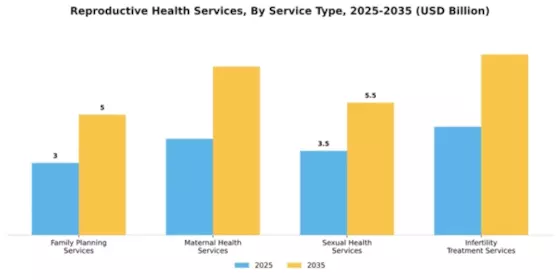
The reproductive health services market showcases a competitive landscape, particularly among family planning services, maternal health services, sexual health services, and infertility treatment services. Family planning services hold the largest market share due to the essential nature of contraceptive methods and family planning education in various demographic groups. However, maternal health services are rapidly gaining traction, propelled by increasing awareness and investments in prenatal and postnatal care, making it a crucial segment in the context of overall reproductive health.
Family Planning Services (Dominant) vs. Maternal Health Services (Emerging)
Family planning services are considered the cornerstone of reproductive health, focusing on contraception, reproductive education, and related health services. This segment is characterized by a variety of products and services, including contraceptive methods, counseling, and education, which empower individuals to make informed choices regarding family planning. In contrast, maternal health services emphasize the health of women during pregnancy, childbirth, and the postpartum period. This emerging segment is gaining importance due to heightened awareness of maternal health issues and investment in quality prenatal care, making it a critical part of the reproductive health ecosystem.
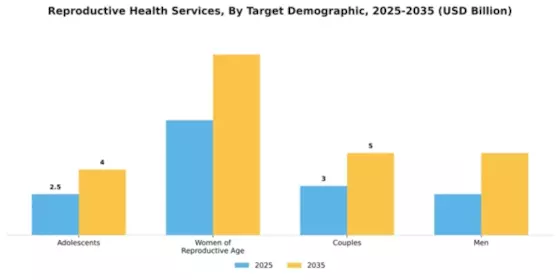
The 'Reproductive Health Services' segment exhibits a diverse market share distribution among various target demographics. Women of Reproductive Age constitute the largest segment, reflecting the wide-ranging services available for family planning, prenatal care, and reproductive health issues. Meanwhile, Adolescents are emerging as a significant group, driven by increased awareness and the growing importance of sexual health education in schools and communities.
Women of Reproductive Age (Dominant) vs. Adolescents (Emerging)
Women of Reproductive Age play a dominant role in the reproductive health services market due to their need for a variety of health services ranging from contraception to prenatal care. This demographic seeks comprehensive support and education regarding family planning and reproductive health options. Conversely, Adolescents represent an emerging but rapidly growing segment. This group is increasingly seeking information and services related to sexual health, influenced by public health initiatives aimed at educating youth about reproductive rights and the importance of safe practices. The growth of telehealth services and online education platforms has further amplified access for adolescents, positioning this demographic as a critical focus for future reproductive health strategies.
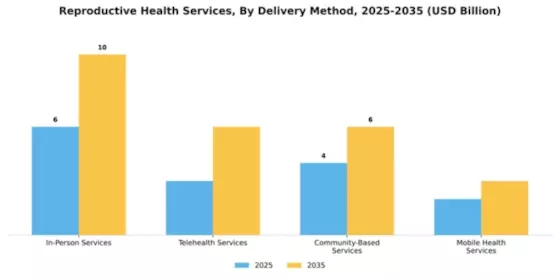
In the Reproductive Health Services market, In-Person Services account for the largest share. They have traditionally been the primary method of delivery for services such as consultations, examinations, and treatments. On the other hand, Telehealth Services are gaining significant traction, appealing to demographics that value convenience and accessibility. The availability of services through virtual consultations is beginning to reshape patient preferences, driving a gradual shift in market dynamics. The growth of Telehealth Services is mainly driven by technological advancements, changes in consumer behavior, and a push for more accessible healthcare solutions. The rising acceptance of digital health platforms, especially post-pandemic, has further accelerated the adoption of telehealth. Community-Based Services and Mobile Health Services are also emerging, providing additional channels for care delivery, yet they are still developing relative to In-Person and Telehealth methods.
In-Person Services (Dominant) vs. Mobile Health Services (Emerging)
In-Person Services remain dominant in the Reproductive Health Services sector, primarily due to their comprehensive approach where patients receive face-to-face consultations, physical exams, and hands-on treatments. This method fosters a personal connection between healthcare providers and patients, enhancing trust and satisfaction. However, in contrast, Mobile Health Services are emerging as a convenient alternative, particularly appealing to younger, tech-savvy populations. These services deliver healthcare solutions directly to patients' locations, including mobile clinics and health education outreach. The growing emphasis on preventive care and patient-centered approaches complements the rise of mobile health, as it addresses barriers to access and reaches underserved communities more effectively.
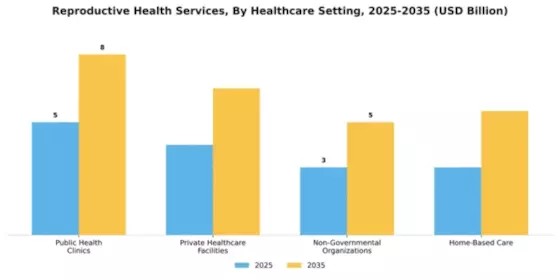
In the Reproductive Health Services market, Public Health Clinics account for the largest share, providing essential services that are often more accessible to the general population. They cater to lower-income demographics and leverage government funding to sustain their operations, ensuring a stable presence in the sector. In contrast, Private Healthcare Facilities, while smaller in market share, are experiencing rapid growth due to increasing consumer willingness to pay for personalized and expedited services.
Public Health Clinics (Dominant) vs. Private Healthcare Facilities (Emerging)
Public Health Clinics remain the dominant force in the Reproductive Health Services sector, offering comprehensive services like family planning, sexually transmitted infection (STI) testing, and pregnancy services at low or no cost. Their focus on accessibility and community outreach plays a crucial role in addressing the reproductive health needs of underserved populations. Alternatively, Private Healthcare Facilities are emerging as significant players, emphasizing quality care, advanced technologies, and specialized services. With a growing affluent clientele seeking personalized options, these facilities are expanding their offerings, including fertility treatments and advanced prenatal care, thereby catering to the evolving demands of the healthcare market.
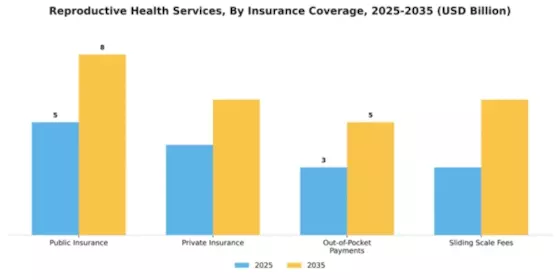
In the Reproductive Health Services sector, the market is significantly shaped by insurance coverage options. Public Insurance holds the largest share, providing essential coverage to millions, especially underserved communities. It plays a vital role in making reproductive health services accessible and affordable. On the other hand, Private Insurance is gaining momentum, supported by increasing demand for personalized and immediate healthcare services. Its growth reflects a shift towards more consumer-driven healthcare solutions.
Public Insurance (Dominant) vs. Private Insurance (Emerging)
Public Insurance serves as the cornerstone of access to reproductive health services, ensuring that low-income individuals receive necessary care without the burden of prohibitive costs. Its strength lies in comprehensive coverage mandates that prioritize women's health. In contrast, Private Insurance is rapidly evolving, targeting younger demographics who prefer flexibility and quicker service options. This segment's growth is fueled by an increasing willingness to invest in comprehensive health portfolios and the rising awareness of reproductive health issues, thus creating a dynamic interplay between affordability and choice.
Get more detailed insights about Reproductive Health Services Market Request Free Sample
North America is poised to maintain its leadership in the reproductive health services market, holding a significant market share of $6.0 billion in 2024. Key growth drivers include increasing awareness of reproductive health issues, advancements in medical technology, and supportive regulatory frameworks. The demand for comprehensive reproductive health services is further fueled by rising healthcare expenditures and a focus on preventive care. The United States is the primary contributor to this market, with major players like Planned Parenthood, Merck & Co., and Hologic, Inc. leading the charge. The competitive landscape is characterized by a mix of established companies and emerging startups, all striving to innovate and expand their service offerings. The presence of these key players ensures a robust market environment, catering to diverse reproductive health needs.
Europe's reproductive health services market is valued at $4.5 billion, driven by a combination of innovative healthcare solutions and evolving regulatory policies. The region is witnessing a shift towards more personalized reproductive health services, supported by government initiatives aimed at improving access and affordability. Increased public awareness and advocacy for reproductive rights are also significant catalysts for market growth. Leading countries such as Germany, France, and the UK are at the forefront of this evolution, with key players like Bayer AG and AbbVie Inc. actively participating in the market. The competitive landscape is marked by collaborations between public and private sectors, enhancing service delivery and patient outcomes. As regulations continue to adapt, the market is expected to expand further, meeting the growing demand for reproductive health services.
The Asia-Pacific region, valued at $3.5 billion, is emerging as a significant player in the reproductive health services market. Key growth drivers include increasing urbanization, rising disposable incomes, and a growing awareness of reproductive health issues. Governments are also implementing policies to enhance access to reproductive health services, which is expected to further stimulate market growth. Countries like China, India, and Japan are leading the charge, with a mix of local and international players such as Teva Pharmaceutical Industries and Ferring Pharmaceuticals. The competitive landscape is evolving, with a focus on expanding service offerings and improving healthcare infrastructure. As the region continues to develop, the demand for comprehensive reproductive health services is anticipated to rise significantly.
The Middle East and Africa region, with a market size of $1.0 billion, faces unique challenges in the reproductive health services sector. Despite these hurdles, there is a growing demand for reproductive health services driven by increasing awareness and advocacy for women's health rights. Regulatory frameworks are gradually evolving, which is expected to enhance service delivery and access to care in the coming years. Countries like South Africa and Nigeria are at the forefront of this market, with local organizations and international players working to improve reproductive health services. The competitive landscape is characterized by a mix of NGOs and private sector initiatives, all striving to address the pressing reproductive health needs of the population. As awareness and access improve, the market is likely to see significant growth in the future.
The Reproductive Health Services market is characterized by a dynamic competitive landscape, driven by increasing awareness of reproductive health issues, technological advancements, and a growing demand for accessible healthcare solutions. Key players such as Planned Parenthood (US), Merck & Co. (US), and Bayer AG (DE) are strategically positioned to leverage these trends. Planned Parenthood (US) focuses on expanding its telehealth services, enhancing accessibility for patients, while Merck & Co. (US) emphasizes innovation in contraceptive technologies and reproductive health medications. Bayer AG (DE) is actively pursuing partnerships to enhance its product offerings and expand its market reach, particularly in emerging economies. Collectively, these strategies contribute to a competitive environment that is increasingly focused on patient-centric solutions and technological integration.In terms of business tactics, companies are localizing manufacturing and optimizing supply chains to enhance efficiency and reduce costs. The market appears moderately fragmented, with several players vying for market share, yet the influence of major companies remains substantial. This competitive structure allows for a diverse range of services and products, catering to varying consumer needs across different regions.In November Planned Parenthood (US) announced the launch of a new telehealth platform aimed at providing comprehensive reproductive health services remotely. This strategic move is significant as it aligns with the growing trend towards digital healthcare solutions, enabling greater access for individuals in underserved areas. The platform is expected to enhance patient engagement and streamline service delivery, positioning Planned Parenthood as a leader in telehealth within the reproductive health sector.In October Merck & Co. (US) unveiled a new contraceptive device that incorporates advanced technology to improve user experience and efficacy. This innovation is crucial as it addresses the evolving needs of consumers seeking more effective and user-friendly reproductive health solutions. By investing in research and development, Merck & Co. is likely to strengthen its competitive edge and capture a larger market share in the contraceptive segment.In September Bayer AG (DE) entered into a strategic partnership with a leading digital health company to develop a comprehensive reproductive health app. This collaboration aims to integrate health tracking, educational resources, and teleconsultation services into a single platform. The strategic importance of this partnership lies in its potential to enhance Bayer's product ecosystem, providing consumers with a holistic approach to reproductive health management and reinforcing its commitment to innovation.As of December current competitive trends in the Reproductive Health Services market include a pronounced shift towards digitalization, sustainability, and the integration of artificial intelligence (AI) in service delivery. Strategic alliances are increasingly shaping the landscape, enabling companies to pool resources and expertise to enhance their offerings. Looking ahead, competitive differentiation is likely to evolve from traditional price-based competition to a focus on innovation, technology, and supply chain reliability, as companies strive to meet the growing expectations of consumers in a rapidly changing market.






The Reproductive Health Services market is projected to grow at a 4.75% CAGR from 2025 to 2035, driven by technological advancements, increasing awareness, and expanding access to services.
New opportunities lie in:
By 2035, the market is expected to be robust, reflecting enhanced service accessibility and innovation.
| MARKET SIZE 2024 | 15.0(USD Billion) |
| MARKET SIZE 2025 | 15.71(USD Billion) |
| MARKET SIZE 2035 | 25.0(USD Billion) |
| COMPOUND ANNUAL GROWTH RATE (CAGR) | 4.75% (2025 - 2035) |
| REPORT COVERAGE | Revenue Forecast, Competitive Landscape, Growth Factors, and Trends |
| BASE YEAR | 2024 |
| Market Forecast Period | 2025 - 2035 |
| Historical Data | 2019 - 2024 |
| Market Forecast Units | USD Billion |
| Key Companies Profiled | Planned Parenthood (US), Merck & Co. (US), Bayer AG (DE), Teva Pharmaceutical Industries Ltd. (IL), Hologic, Inc. (US), AbbVie Inc. (US), Ferring Pharmaceuticals (CH), Mylan N.V. (US), Organon & Co. (US) |
| Segments Covered | Service Type, Target Demographic, Delivery Method, Healthcare Setting, Insurance Coverage |
| Key Market Opportunities | Integration of telehealth solutions enhances access to Reproductive Health Services for diverse populations. |
| Key Market Dynamics | Rising consumer demand for personalized reproductive health services drives innovation and competition among providers. |
| Countries Covered | North America, Europe, APAC, South America, MEA |
The market valuation of Reproductive Health Services was 15.0 USD Billion in 2024.
The projected market size for Reproductive Health Services is expected to reach 25.0 USD Billion by 2035.
The expected CAGR for Reproductive Health Services during the forecast period 2025 - 2035 is 4.75%.
Key players in the Reproductive Health Services market include Planned Parenthood, Merck & Co., Bayer AG, and Hologic, Inc.
The primary service types include Family Planning Services, Maternal Health Services, Sexual Health Services, and Infertility Treatment Services.
Family Planning Services generated approximately 3.0 USD Billion in 2024, with projections reaching 5.0 USD Billion by 2035.
The targeted demographic segments include Adolescents, Women of Reproductive Age, Couples, and Men.
Telehealth Services are projected to generate between 3.0 USD Billion and 6.0 USD Billion by 2035.
Healthcare settings include Public Health Clinics, Private Healthcare Facilities, Non-Governmental Organizations, and Home-Based Care.
Insurance coverage, including Public Insurance, Private Insurance, and Out-of-Pocket Payments, plays a crucial role in shaping market dynamics.


Kindly complete the form below to receive a free sample of this Report

“This is really good guys. Excellent work on a tight deadline. I will continue to use you going forward and recommend you to others. Nice job”


“Thanks. It’s been a pleasure working with you, please use me as reference with any other Intel employees.”


“Thanks for sending the report it gives us a good global view of the Betaïne market.”


“Thank you, this will be very helpful for OQS.”


“We found the report very insightful! we found your research firm very helpful. I'm sending this email to secure our future business.”


“I am very pleased with how market segments have been defined in a relevant way for my purposes (such as "Portable Freezers & refrigerators" and "last-mile"). In general the report is well structured. Thanks very much for your efforts.”


“I have been reading the first document or the study, ,the Global HVAC and FP market report 2021 till 2026. Must say, good info! I have not gone in depth at all parts, but got a good indication of the data inside!”


“We got the report in time, we really thank you for your support in this process. I also thank to all of your team as they did a great job.”


“The Automotive 48V ECU Components Procurement Intelligence Study” was a complex project, but the Market Research Future (MRFR) team handled it with quality, agility, and customer-centricity. They delivered all requested data on time and within the agreed scope. The team, including Shubhendra Anand and Rahul Gotadki, was always readily available to clarify questions and swiftly implement necessary adjustments, driving the project to a successful conclusion within a very demanding timeframe.
I would also like to specifically commend Akshay Agarwal for his responsiveness and support at every stage—from our initial inquiry on May 6th through to final delivery on June 18th. His dedication made the entire process seamless.”



