×
Request Free Sample ×

Kindly complete the form below to receive a free sample of this Report

* Please use a valid business email

Leading companies partner with us for data-driven Insights

clients tt-cursor
Hero Background

Hydrophobic Interaction Chromatography Market

ID: MRFR/MED/4905-HCR
85 Pages
Rahul Gotadki
October 2025

Hydrophobic Interaction Chromatography Market Research Report Information By Product and Service (Resins, Columns, Services, Others), Sample Type (Monoclonal Antibodies, Vaccines, Others), End-User (Research & Academic Institutes) - Forecast Till 2035

Share:
Download PDF ×

We do not share your information with anyone. However, we may send you emails based on your report interest from time to time. You may contact us at any time to opt-out.

Hydrophobic Interaction Chromatography Market Infographic
Purchase Options

Hydrophobic Interaction Chromatography Market Summary

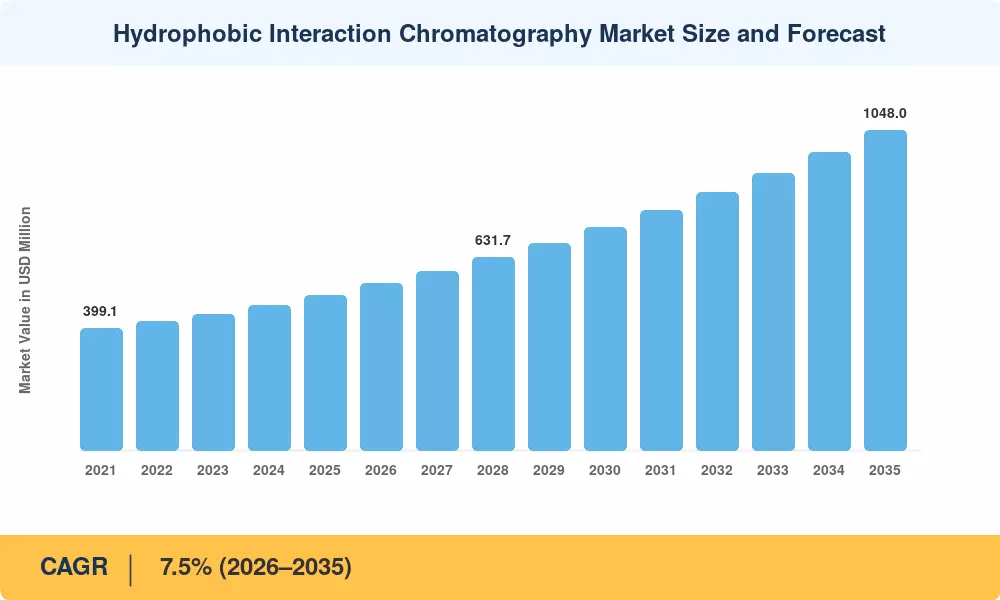
As per MRFR analysis, the Hydrophobic Interaction Chromatography Market Size was estimated at 835.81 USD Million in 2024. The Hydrophobic Interaction Chromatography industry is projected to grow from 917.52 in 2025 to 2086.4 by 2035, exhibiting a compound annual growth rate (CAGR) of 8.63 during the forecast period 2025 - 2035.

Key Market Trends & Highlights

The Hydrophobic Interaction Chromatography Market is experiencing robust growth driven by technological advancements and increasing demand in biopharmaceuticals.

  • The market is witnessing a rising demand in biopharmaceuticals, particularly in North America, which remains the largest market.
  • Technological advancements are enhancing the efficiency and effectiveness of hydrophobic interaction chromatography processes.
  • Research applications are expanding, particularly in the biotechnology segment, which is currently the fastest-growing area.
  • Key market drivers include increasing biopharmaceutical production and regulatory support for biopharmaceuticals, particularly in the context of monoclonal antibody production.

Market Size & Forecast

2024 Market Size 835.81 (USD Million)
2035 Market Size 2086.4 (USD Million)
CAGR (2025 - 2035) 8.63%

Major Players

GE Healthcare (GB), Thermo Fisher Scientific (US), Merck KGaA (DE), Bio-Rad Laboratories (US), Agilent Technologies (US), Waters Corporation (US), Pall Corporation (US), Repligen Corporation (US)

Hydrophobic Interaction Chromatography Market Trends

The Hydrophobic Interaction Chromatography Market is currently experiencing a notable evolution, driven by advancements in biopharmaceutical manufacturing and the increasing demand for purification processes. This technique, which exploits the hydrophobic properties of biomolecules, is becoming increasingly essential in the production of therapeutic proteins and monoclonal antibodies. As industries seek to enhance the efficiency and effectiveness of their purification methods, the adoption of hydrophobic interaction chromatography is likely to rise. Furthermore, the growing emphasis on bioprocess optimization suggests that this market will continue to expand, as organizations strive to improve yield and reduce costs in their production workflows. In addition to the biopharmaceutical sector, the Hydrophobic Interaction Chromatography Market is also witnessing interest from academic and research institutions. These entities are utilizing this technique for various applications, including protein characterization and enzyme purification. The versatility of hydrophobic interaction chromatography makes it a valuable tool in both industrial and research settings. As the market evolves, it appears that innovations in resin technology and process automation may further enhance the capabilities of this chromatography method, potentially leading to broader applications across different fields.

Rising Demand in Biopharmaceuticals

The Hydrophobic Interaction Chromatography Market is increasingly influenced by the growing need for efficient purification methods in biopharmaceutical production. As the industry focuses on developing new therapeutic proteins and monoclonal antibodies, the demand for effective separation techniques is likely to escalate.

Technological Advancements

Innovations in resin technology and automation are shaping the future of the Hydrophobic Interaction Chromatography Market. These advancements may enhance the efficiency and scalability of purification processes, making them more accessible to a wider range of applications.

Expanding Research Applications

The versatility of hydrophobic interaction chromatography is leading to its adoption in various research fields. Academic institutions are utilizing this technique for protein characterization and enzyme purification, indicating a potential growth area for the market.

Hydrophobic Interaction Chromatography Market Drivers

Market Growth Projections

The Global Hydrophobic Interaction Chromatography Market Industry is poised for substantial growth, with projections indicating a market size of 0.15 USD Billion in 2024 and an anticipated increase to 0.55 USD Billion by 2035. This growth trajectory suggests a compound annual growth rate (CAGR) of 12.51% from 2025 to 2035. Such figures reflect the increasing adoption of HIC across various applications, driven by the rising demand for biopharmaceuticals, technological advancements, and regulatory support. The market's expansion is indicative of the critical role that hydrophobic interaction chromatography plays in modern bioprocessing and therapeutic development.

Regulatory Support for Bioprocessing

Regulatory support for bioprocessing is emerging as a significant driver for the Global Hydrophobic Interaction Chromatography Market Industry. Governments and regulatory bodies are increasingly recognizing the importance of bioprocessing in the production of biopharmaceuticals, leading to the establishment of favorable guidelines and standards. This support encourages investment in advanced purification technologies, including HIC, which are essential for meeting regulatory requirements. As a result, the market is likely to benefit from this supportive environment, facilitating growth and innovation in the field of hydrophobic interaction chromatography.

Rising Demand for Biopharmaceuticals

The increasing demand for biopharmaceuticals is a primary driver of the Global Hydrophobic Interaction Chromatography Market Industry. As the biopharmaceutical sector expands, the need for effective purification techniques becomes paramount. Hydrophobic interaction chromatography (HIC) offers a reliable method for the separation and purification of proteins, antibodies, and other biomolecules. In 2024, the market is projected to reach 0.15 USD Billion, reflecting the growing reliance on HIC in biopharmaceutical applications. This trend is expected to continue, with the market anticipated to grow significantly as biopharmaceuticals become more prevalent in treatment protocols.

Growing Focus on Protein Therapeutics

The growing focus on protein therapeutics is reshaping the landscape of the Global Hydrophobic Interaction Chromatography Market Industry. With an increasing number of therapeutic proteins entering clinical trials and the market, the need for effective purification methods becomes critical. HIC is recognized for its ability to selectively purify proteins based on their hydrophobic properties, making it an essential tool in the development of protein-based therapies. As the industry evolves, the demand for HIC is projected to rise, contributing to the overall market growth and reflecting the importance of protein therapeutics in modern medicine.

Technological Advancements in Chromatography

Technological advancements in chromatography techniques are significantly influencing the Global Hydrophobic Interaction Chromatography Market Industry. Innovations in HIC methodologies, such as the development of high-performance liquid chromatography (HPLC) systems, enhance the efficiency and resolution of protein purification processes. These advancements not only improve the yield of desired products but also reduce operational costs. As a result, the market is likely to experience substantial growth, with projections indicating a rise to 0.55 USD Billion by 2035. The continuous evolution of chromatography technology is expected to drive the adoption of HIC in various applications, including research and industrial processes.

Increasing Research and Development Activities

The surge in research and development activities across various sectors, particularly in pharmaceuticals and biotechnology, is a crucial driver for the Global Hydrophobic Interaction Chromatography Market Industry. As organizations invest in R&D to discover new drugs and therapies, the demand for efficient purification techniques like HIC is likely to rise. This trend is supported by the anticipated compound annual growth rate (CAGR) of 12.51% from 2025 to 2035, indicating a robust growth trajectory. The focus on innovative solutions in R&D is expected to further propel the adoption of HIC, thereby enhancing its market presence.

Market Segment Insights

By Application: Protein Purification (Largest) vs. Monoclonal Antibody Production (Fastest-Growing)

In the Hydrophobic Interaction Chromatography Market, the application segments are diverse, with protein purification holding the largest share. This segment's strong presence is due to the extensive use of chromatography techniques for refining and isolating proteins in various biopharmaceutical processes. Following closely is monoclonal antibody production, which is witnessing rapid growth as the demand for targeted therapies and advanced biologics increases, making it a crucial player in the market landscape. Growth trends in this segment are primarily driven by advancements in biopharmaceutical manufacturing and heightened investment in research and development. The need for efficient purification techniques to enhance yield and purity is prompting more industries to adopt hydrophobic interaction chromatography. With vaccines and enzyme purification also contributing to market dynamics, the overall growth trajectory is promising, fueled by the expanding biotechnology sector and rising healthcare demands.

Protein Purification (Dominant) vs. Enzyme Purification (Emerging)

Protein purification remains the dominant application in the Hydrophobic Interaction Chromatography Market, primarily due to its critical role in the production of high-purity proteins for therapeutic and diagnostic applications. This method is essential in various biotechnological processes, where achieving optimum purity levels is paramount. In contrast, enzyme purification is classified as an emerging segment, gaining traction due to the increasing focus on enzyme applications in biocatalysis and industrial processes. While still less prevalent than protein purification, advancements in enzyme production technologies and the growing biopharmaceutical industry are fostering its growth. Both segments significantly contribute to the market, reflecting the evolving landscape of protein science and biotechnological innovations.

By End Use: Pharmaceuticals (Largest) vs. Biotechnology (Fastest-Growing)

In the Hydrophobic Interaction Chromatography Market, the 'By End Use' segment reveals a diverse distribution among its primary components. Pharmaceuticals hold a substantial portion of the market, benefiting from the increasing demand for drug development and purification processes. Biotechnology follows closely, garnering attention due to the growth of biologics and biosimilars, which require advanced separation techniques to ensure product purity and efficacy. Research laboratories and academic institutions also contribute to this market but at a comparatively lower share, reflecting their focused but essential role in research and innovation within the field. Growth trends in the Hydrophobic Interaction Chromatography Market indicate that the biotechnology sector is emerging as a strong player, driven by the rapid advancements in genetic engineering and pharmaceutical research. The growing number of biopharmaceuticals entering the market necessitates efficient purification technologies such as hydrophobic interaction chromatography to meet regulatory demands. In contrast, pharmaceuticals, while established, are also evolving, adapting techniques to enhance their product pipelines. This dynamic interplay of demand in both sectors showcases the market's adaptability to ongoing scientific advancements and the increasing pressure for high-quality product outputs.

Pharmaceuticals (Dominant) vs. Biotechnology (Emerging)

The Pharmaceuticals segment remains dominant in the Hydrophobic Interaction Chromatography Market, driven by the industry’s need for high purity and quality in drug development. This segment benefits from established workflows that integrate hydrophobic interaction chromatography for protein purification and refinement processes. Conversely, Biotechnology is an emerging segment characterized by its rapid innovation and adaptability. The surge in biologics and biosimilars production leverages these techniques to ensure compliance with stringent regulations regarding product efficacy and safety. As both segments evolve, they contribute to the overall advancement of chromatographic methods, with pharmaceuticals relying on traditional methods and biotechnology pushing the envelope towards new and efficient purification techniques.

By Technique: Batch Mode (Largest) vs. Continuous Mode (Fastest-Growing)

In the Hydrophobic Interaction Chromatography market, Batch Mode is currently the largest segment, holding a significant share of the market due to its popularity in various applications like biopharmaceutical manufacturing and protein purification. Continuous Mode, on the other hand, is emerging rapidly, driven by its ability to enhance productivity and reduce processing time, making it an attractive option for manufacturers looking to streamline operations. The growth trends for this segment indicate a shift towards more automated and efficient chromatographic techniques. With the demand for high-purity biomolecules increasing, Continuous Mode is gaining traction as industries seek to optimize their workflows. Factors such as advancements in technology and the increasing need for large-scale production are propelling Continuous Mode's growth, making it a key player in the evolving market landscape.

Batch Mode (Dominant) vs. Membrane Chromatography (Emerging)

Batch Mode remains the dominant technique in the Hydrophobic Interaction Chromatography market, known for its effectiveness in processing small to medium product volumes. Its established presence is widely recognized in laboratories and production facilities, where it is favored for its straightforward setup and high control over process variables. Conversely, Membrane Chromatography is gaining traction as an emerging technology, favored for its ability to offer high flux and selectivity in the separation process. This technique is particularly beneficial for continuous processing, making it an attractive alternative for industries aiming for scalability and efficiency. As innovation continues in membrane materials and designs, Membrane Chromatography is expected to carve out a more significant share, pushing the boundaries of traditional chromatographic methods.

By Material Type: Agarose (Largest) vs. Polymer (Fastest-Growing)

In the Hydrophobic Interaction Chromatography Market, the material type segment is primarily dominated by Agarose, known for its superior performance and versatility in various applications. Agarose holds a significant share due to its favorable properties, facilitating high-resolution purification processes. Its established usage in biopharmaceutical applications contributes to its strong market presence, as it is widely utilized for protein and antibody separations. Meanwhile, Polymer-based materials are gaining increasing traction, appealing to users looking for cost-effective and flexible alternatives. Their adaptability to various chromatographic techniques is enhancing their market position significantly.

Polymer (Dominant) vs. Cellulose (Emerging)

Agarose stands as the dominant player in the hydrophobic interaction chromatography market, recognized for its exceptional biocompatibility and performance in high-throughput applications. On the other hand, Polymer materials are emerging rapidly, fueled by advancements in synthetic polymer technology and their ability to be tailored for specific separations. Despite being newer in the market, Cellulose materials are making inroads due to their eco-friendly nature and affordability, appealing to sustainability-focused applications. These segments together demonstrate the diverse landscape and evolving preferences within the material types used for hydrophobic interactions, showcasing how industries are adapting to new technologies and environmental considerations.

By Scale of Operation: Laboratory Scale (Largest) vs. Industrial Scale (Fastest-Growing)

In the Hydrophobic Interaction Chromatography Market, the distribution of market share among the scale of operation segments is quite pronounced. Laboratory Scale currently leads the market, favored for its flexibility and precision in small-batch separations. This segment holds a significant portion of the market due to increasing R&D activities in biopharmaceuticals that require such scalable solutions. Meanwhile, Industrial Scale is witnessing rapid uptake as manufacturers seek efficient, large-scale production processes, driving its popularity among enterprises aiming for high-capacity purification solutions. Analyzing growth trends, the Laboratory Scale is steadily popular due to ongoing innovation in analytical techniques, allowing for enhanced product quality and efficiency. However, the Industrial Scale is the fastest-growing segment, propelled by the increasing demand for biologics and monoclonal antibodies that necessitate larger production capabilities. This shift reflects a broader trend towards scaling up production to meet rising market demands, making the Industrial Scale increasingly attractive for pharmaceutical companies aiming to improve yield and productivity.

Laboratory Scale (Dominant) vs. Industrial Scale (Emerging)

The Laboratory Scale segment is characterized by its fundamental role in research settings, allowing for detailed experimentation and process optimization without the need for extensive resources. It is a critical stage for bioprocess development and is widely utilized in academic and laboratory environments. On the other hand, the Industrial Scale represents an emerging trend in the market as companies prioritize large-scale operations. This segment caters to manufacturing needs, focusing on high throughput and efficiency in biopharmaceutical production. Notably, advancements in technology are enabling Industrial Scale operations to achieve purification and separation tasks that were traditionally more suited for Laboratory Scale setups, thus blurring the lines between these two segments as industries evolve.

Get more detailed insights about Hydrophobic Interaction Chromatography Market

Regional Insights

North America : Market Leader in Innovation

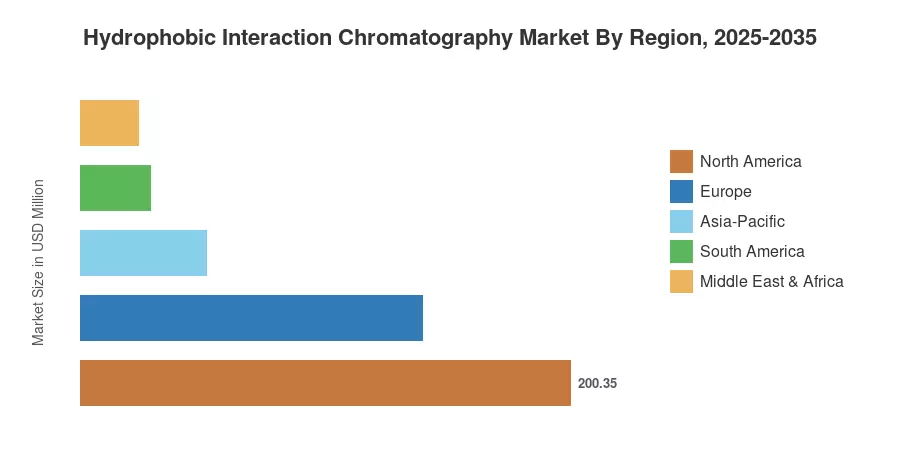
North America continues to lead the Hydrophobic Interaction Chromatography market, holding a significant share of 450.0M in 2024. The region's growth is driven by increasing demand for biopharmaceuticals and advancements in chromatography technologies. Regulatory support from agencies like the FDA further catalyzes market expansion, ensuring compliance and safety in bioprocessing applications. The competitive landscape is robust, with key players such as GE Healthcare, Thermo Fisher Scientific, and Bio-Rad Laboratories dominating the market. The U.S. is the primary contributor, supported by a strong research infrastructure and investment in biotechnology. This environment fosters innovation and collaboration among industry leaders, enhancing the region's market position.

Europe : Emerging Market with Growth Potential

Europe's Hydrophobic Interaction Chromatography market is valued at 250.0M, reflecting a growing interest in biopharmaceutical production and quality control. The region benefits from stringent regulatory frameworks that promote high standards in laboratory practices. Initiatives by the European Medicines Agency (EMA) are pivotal in driving innovation and ensuring compliance, which enhances market growth. Leading countries like Germany, the UK, and France are at the forefront, with a strong presence of companies such as Merck KGaA and Agilent Technologies. The competitive landscape is characterized by collaborations between academia and industry, fostering advancements in chromatography techniques. This synergy is crucial for addressing the increasing demand for efficient separation processes in bioprocessing.

Asia-Pacific : Rapidly Growing Market Dynamics

The Asia-Pacific region, with a market size of 100.0M, is experiencing rapid growth in Hydrophobic Interaction Chromatography, driven by rising healthcare expenditures and increasing biopharmaceutical production. Countries like China and India are investing heavily in biotechnology, which is expected to boost demand for advanced chromatography solutions. Regulatory bodies are also enhancing guidelines to support market development, ensuring safety and efficacy in bioprocessing. China leads the region, supported by a growing number of research institutions and a burgeoning pharmaceutical industry. Key players like Waters Corporation and Pall Corporation are expanding their operations in this region, capitalizing on the increasing demand for innovative separation technologies. The competitive landscape is evolving, with local companies emerging to meet the specific needs of the market.

Middle East and Africa : Emerging Market with Challenges

The Middle East and Africa region, with a market size of 35.81M, is gradually developing in the Hydrophobic Interaction Chromatography sector. The growth is primarily driven by increasing investments in healthcare and biotechnology, alongside a rising demand for quality control in pharmaceutical manufacturing. However, challenges such as regulatory hurdles and limited infrastructure can impede rapid growth. Countries like South Africa and the UAE are leading the way, with a focus on enhancing laboratory capabilities and fostering partnerships with global players. Companies are beginning to establish a presence in the region, aiming to tap into the growing market potential. The competitive landscape is still in its infancy, but there is a clear trend towards increased collaboration and investment in chromatography technologies.

Key Players and Competitive Insights

The Hydrophobic Interaction Chromatography Market is currently characterized by a dynamic competitive landscape, driven by increasing demand for biopharmaceuticals and advancements in protein purification technologies. Key players such as GE Healthcare (GB), Thermo Fisher Scientific (US), and Merck KGaA (DE) are strategically positioned to leverage their extensive portfolios and technological innovations. GE Healthcare (GB) focuses on enhancing its product offerings through continuous R&D, while Thermo Fisher Scientific (US) emphasizes strategic acquisitions to expand its capabilities in chromatography solutions. Merck KGaA (DE) is also investing in digital transformation initiatives to optimize its operations and improve customer engagement, collectively shaping a competitive environment that prioritizes innovation and efficiency.

In terms of business tactics, companies are increasingly localizing manufacturing and optimizing supply chains to enhance responsiveness to market demands. The market structure appears moderately fragmented, with several key players exerting influence over various segments. This fragmentation allows for niche players to emerge, yet the collective strength of major companies like Bio-Rad Laboratories (US) and Agilent Technologies (US) ensures a competitive balance that drives overall market growth.

In November 2025, Bio-Rad Laboratories (US) announced the launch of a new line of hydrophobic interaction chromatography columns designed to improve protein separation efficiency. This strategic move is significant as it not only enhances Bio-Rad's product portfolio but also addresses the growing need for high-performance chromatography solutions in biopharmaceutical applications. The introduction of these columns is likely to strengthen Bio-Rad's market position and attract new customers seeking advanced purification technologies.

In October 2025, Agilent Technologies (US) entered into a partnership with a leading biotechnology firm to co-develop innovative chromatography systems tailored for specific therapeutic applications. This collaboration underscores Agilent's commitment to fostering innovation through strategic alliances, which may enhance its competitive edge in the market. By aligning with biotechnology leaders, Agilent is poised to gain insights into emerging trends and customer needs, thereby refining its product offerings.

In December 2025, Pall Corporation (US) unveiled a new sustainability initiative aimed at reducing the environmental impact of its chromatography products. This initiative includes the development of eco-friendly materials and processes, reflecting a growing trend towards sustainability in the industry. By prioritizing environmental considerations, Pall Corporation is likely to appeal to a broader customer base that values sustainable practices, thereby enhancing its competitive positioning.

As of December 2025, the competitive trends in the Hydrophobic Interaction Chromatography Market are increasingly defined by digitalization, sustainability, and the integration of AI technologies. Strategic alliances are playing a crucial role in shaping the landscape, enabling companies to pool resources and expertise. Looking ahead, competitive differentiation is expected to evolve from traditional price-based competition to a focus on innovation, technological advancements, and supply chain reliability. This shift suggests that companies that prioritize R&D and sustainable practices will likely emerge as leaders in the market.

Key Companies in the Hydrophobic Interaction Chromatography Market market include

Industry Developments

According to the European Federation of Pharmaceutical Industries and Associations, the pharmaceutical sector spent EUR 35000 million on research and development in 2016. Furthermore, the growing number of contract research and manufacturing businesses is likely to boost the market growth. According to the UNESCO Institutes for Statistics, research and development expenditure in the United States was 2.79 percent of GDP in 2015. Additionally, rising R&D spending is likely to add to regional market growth. The global market for hydrophobic interaction chromatography is fragmented and competitive for this company.

Future Outlook

Hydrophobic Interaction Chromatography Market Future Outlook

The Hydrophobic Interaction Chromatography Market is projected to grow at an 8.63% CAGR from 2024 to 2035, driven by increasing demand for biopharmaceuticals and advancements in chromatography technologies.

New opportunities lie in:

  • Development of customized resin solutions for specific applications.
  • Expansion into emerging markets with tailored product offerings.
  • Integration of automation in chromatography systems to enhance efficiency.

By 2035, the market is expected to solidify its position as a leader in bioprocessing solutions.

Market Segmentation

Hydrophobic Interaction Chromatography Market End Use Outlook

  • Pharmaceuticals
  • Biotechnology
  • Research Laboratories
  • Academic Institutions

Hydrophobic Interaction Chromatography Market Technique Outlook

  • Batch Mode
  • Continuous Mode
  • Column Chromatography
  • Membrane Chromatography

Hydrophobic Interaction Chromatography Market Application Outlook

  • Protein Purification
  • Monoclonal Antibody Production
  • Enzyme Purification
  • Vaccine Development

Hydrophobic Interaction Chromatography Market Material Type Outlook

  • Agarose
  • Polymer
  • Silica
  • Cellulose

Hydrophobic Interaction Chromatography Market Scale of Operation Outlook

  • Laboratory Scale
  • Pilot Scale
  • Industrial Scale

Report Scope

MARKET SIZE 2024 835.81(USD Million)
MARKET SIZE 2025 917.52(USD Million)
MARKET SIZE 2035 2086.4(USD Million)
COMPOUND ANNUAL GROWTH RATE (CAGR) 8.63% (2024 - 2035)
REPORT COVERAGE Revenue Forecast, Competitive Landscape, Growth Factors, and Trends
BASE YEAR 2024
Market Forecast Period 2025 - 2035
Historical Data 2019 - 2024
Market Forecast Units USD Million
Key Companies Profiled GE Healthcare (GB), Thermo Fisher Scientific (US), Merck KGaA (DE), Bio-Rad Laboratories (US), Agilent Technologies (US), Waters Corporation (US), Pall Corporation (US), Repligen Corporation (US)
Segments Covered Application, End Use, Technique, Material Type, Scale of Operation
Key Market Opportunities Advancements in biopharmaceuticals drive demand for innovative solutions in the Hydrophobic Interaction Chromatography Market.
Key Market Dynamics Rising demand for biopharmaceuticals drives innovation and competition in the Hydrophobic Interaction Chromatography market.
Countries Covered North America, Europe, APAC, South America, MEA

Market Highlights

Author
Rahul Gotadki
Assistant Manager

He holds an experience of about 7+ years in Market Research and Business Consulting, working under the spectrum of Life Sciences and Healthcare domains. Rahul conceptualizes and implements a scalable business strategy and provides strategic leadership to the clients. His expertise lies in market estimation, competitive intelligence, pipeline analysis, customer assessment, etc. In addition to the above, his other responsibility includes strategic tracking of high growth markets & advising clients on the potential areas of focus they could direct their business initiatives

Leave a Comment

FAQs

At what CAGR is the Hydrophobic Interaction Chromatography Market projected to grow during the forecast period?

Hydrophobic Interaction Chromatography Market is projected to grow at a 7.7% CAGR between 2023-2032.

Which region is expected to lead the Hydrophobic Interaction Chromatography Market?

The Americas is expected to lead the Hydrophobic Interaction Chromatography Market.

What are the end use industries of hydrophobic interaction chromatography?

Different end use industries of hydrophobic interaction chromatography include research & academic institutes, biopharmaceutical & pharmaceutical companies, and others.

What are the key factors driving the Hydrophobic Interaction Chromatography Market?

Increasing expenditure in biopharmaceuticals and demand for monoclonal antibodies are adding market growth.

Which factors may limit the Hydrophobic Interaction Chromatography Market growth?

Lack of skilled labor may limit market growth.

Download Free Sample

Kindly complete the form below to receive a free sample of this Report

Compare Licence

×
Features License Type
Single User Multiuser License Enterprise User
Price $4,950 $5,950 $7,250
Maximum User Access Limit 1 User Upto 10 Users Unrestricted Access Throughout the Organization
Free Customization
Direct Access to Analyst
Deliverable Format
Platform Access
Discount on Next Purchase 10% 15% 15%
Printable Versions