×
Request Free Sample ×

Kindly complete the form below to receive a free sample of this Report

* Please use a valid business email

Leading companies partner with us for data-driven Insights

clients tt-cursor
Hero Background

India Biochips Market

ID: MRFR/HC/48217-HCR
200 Pages
Garvit Vyas
October 2025

India Biochips Market Research Report: By Application (Diagnostics, Drug Discovery, Gene Expression Analysis, Genetic Analysis), By Product Type (DNA Chips, Protein Chips, Cell-Based Chips), By Technology (Microarray Technology, Nanolithography, PCR-Based Technology, Mass Spectrometry) andBy End Use (Research Laboratories, Clinical Laboratories, Pharmaceutical Companies, Biotechnology Companies)- Forecast to 2035

Share:
Download PDF ×

We do not share your information with anyone. However, we may send you emails based on your report interest from time to time. You may contact us at any time to opt-out.

India Biochips Market Infographic
Purchase Options

India Biochips Market Summary

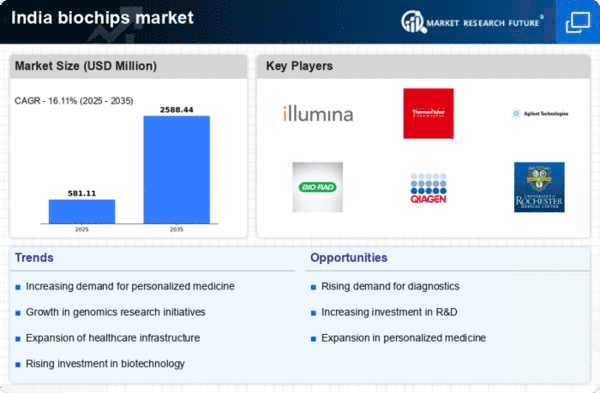
As per MRFR analysis, the India biochips market Size was estimated at 500.48 USD Million in 2024. The biochips market is projected to grow from 581.11 USD Million in 2025 to 2588.44 USD Million by 2035, exhibiting a compound annual growth rate (CAGR) of 16.11% during the forecast period 2025 - 2035.

Key Market Trends & Highlights

The India biochips market is poised for substantial growth driven by technological advancements and increasing demand for personalized medicine.

  • Technological advancements in biochip manufacturing are enhancing the accuracy and efficiency of diagnostics.
  • The largest segment in the India biochips market is the diagnostics segment, which is experiencing robust growth.
  • The fastest-growing segment is the personalized medicine segment, reflecting a shift towards tailored healthcare solutions.
  • Key market drivers include increasing investment in biotechnology and the rising prevalence of chronic diseases.

Market Size & Forecast

2024 Market Size 500.48 (USD Million)
2035 Market Size 2588.44 (USD Million)
CAGR (2025 - 2035) 16.11%

Major Players

Illumina (US), Thermo Fisher Scientific (US), Agilent Technologies (US), Bio-Rad Laboratories (US), Qiagen (DE), Roche (CH), PerkinElmer (US), Abbott Laboratories (US), Merck KGaA (DE)

India Biochips Market Trends

The biochips market in India is experiencing notable growth, driven by advancements in biotechnology and increasing demand for personalized medicine. The integration of biochips in diagnostics and therapeutics is becoming more prevalent, as these tools offer rapid and accurate results. Furthermore, the rise in research activities and government initiatives aimed at promoting biotechnology are likely to enhance the market landscape. The focus on developing innovative biochip technologies, such as lab-on-a-chip systems, is also contributing to the expansion of this sector. In addition, the biochips market is witnessing a surge in applications across various fields, including genomics, proteomics, and drug discovery. The increasing prevalence of chronic diseases and the need for efficient diagnostic solutions are further propelling the adoption of biochips. As the healthcare sector continues to evolve, the demand for biochips is expected to grow, potentially leading to new opportunities for stakeholders. The collaboration between academic institutions and industry players may also foster innovation and drive the market forward, creating a dynamic environment for growth.

Technological Advancements

Recent innovations in biochip technology are enhancing the capabilities of diagnostic tools. The development of microarray and lab-on-a-chip systems is streamlining processes, allowing for faster and more accurate results. These advancements are likely to attract investment and encourage further research in the biochips market.

Rising Demand for Personalized Medicine

The increasing focus on personalized medicine is shaping the biochips market. As healthcare providers seek tailored treatment options, biochips are becoming essential for understanding individual patient profiles. This trend may lead to greater integration of biochips in clinical settings.

Government Initiatives and Support

Government policies aimed at promoting biotechnology are positively impacting the biochips market. Initiatives that support research and development, as well as funding for innovative projects, are likely to stimulate growth and encourage collaboration between public and private sectors.

India Biochips Market Drivers

Expansion of Research Institutions

The proliferation of research institutions and universities in India is contributing to the growth of the biochips market. These institutions are increasingly focusing on biotechnology and bioinformatics, leading to a rise in research output and innovation. Collaborations between academic institutions and industry players are becoming more common, facilitating the transfer of knowledge and technology. This synergy is likely to enhance the development of biochips, as researchers explore novel applications and improve existing technologies. The biochips market stands to benefit from this academic focus, as it fosters a culture of innovation and scientific inquiry.

Growing Demand for Rapid Diagnostics

The biochips market is witnessing a notable increase in demand for rapid diagnostic solutions, particularly in the context of infectious diseases and genetic disorders. With the Indian population's growing awareness of health issues, the need for quick and accurate diagnostic tools is becoming paramount. Biochips offer the potential for high-throughput screening and multiplex testing, which can significantly reduce the time required for diagnosis. Market data suggests that the rapid diagnostics segment is expected to grow at a CAGR of 15% over the next five years, indicating a strong trend towards the adoption of biochips in clinical settings.

Rising Prevalence of Chronic Diseases

The increasing prevalence of chronic diseases in India is driving the demand for advanced diagnostic tools, including biochips. Conditions such as diabetes, cancer, and cardiovascular diseases are becoming more common, necessitating efficient monitoring and management solutions. Biochips can provide rapid and accurate results, enabling healthcare providers to make informed decisions. Market analysis indicates that the chronic disease diagnostics segment is projected to grow significantly, with biochips playing a crucial role in this expansion. As healthcare systems adapt to the rising burden of chronic diseases, the biochips market is likely to see substantial growth.

Increasing Investment in Biotechnology

The biochips market in India is experiencing a surge in investment, particularly from both public and private sectors. The Indian government has allocated substantial funds to biotechnology research, which is expected to reach approximately $1.5 billion by 2026. This financial backing is likely to enhance the development of biochips, facilitating innovations in diagnostics and therapeutics. Furthermore, venture capital firms are increasingly interested in biotechnology startups, which could lead to a more robust ecosystem for biochip development. As a result, the biochips market is poised for growth, driven by enhanced funding and resources that support research and development initiatives.

Advancements in Microfluidics Technology

Recent advancements in microfluidics technology are poised to revolutionize the biochips market in India. Microfluidics allows for the manipulation of small volumes of fluids, which is essential for the development of efficient biochips. This technology enhances the sensitivity and specificity of biochips, making them more effective for various applications, including diagnostics and drug discovery. The integration of microfluidics with biochips is expected to lead to innovative products that can cater to the growing needs of the healthcare sector. As this technology continues to evolve, it may significantly impact the biochips market, driving further growth and adoption.


Market Segment Insights

By Application: Diagnostics (Largest) vs. Drug Discovery (Fastest-Growing)

The India biochips market is characterized by a diverse application landscape, with diagnostics emerging as the most significant segment. Diagnostics holds a substantial market share, benefiting from increasing demand for rapid and accurate medical testing solutions. Drug discovery follows closely, marked by innovative approaches to drug development and personalized medicine, which are gaining traction in India. Growth trends indicate a robust expansion in the diagnostics segment, driven by the rising prevalence of chronic diseases and the need for efficient diagnostic tools. The drug discovery segment is recognized as the fastest-growing area, fueled by advancements in biotechnology and increased investment in research and development. This dynamic growth is expected to continue, with both segments adapting to the evolving healthcare landscape.

Diagnostics (Dominant) vs. Drug Discovery (Emerging)

Diagnostics represents the dominant application in the India biochips market, characterized by its critical role in disease detection, monitoring, and prognosis. This segment integrates advanced technologies to provide quick and reliable test results, catering to the growing demand for effective healthcare solutions. On the other hand, drug discovery stands out as an emerging application, focusing on the innovative development of new therapeutics and treatment methods. This segment is experiencing rapid growth driven by the need for personalized medicine and the integration of biochips in high-throughput screening processes. While diagnostics is pivotal for immediate health solutions, drug discovery is paving the way for future medical advancements, highlighting a complementary relationship within the market.

By Product Type: DNA Chips (Largest) vs. Protein Chips (Fastest-Growing)

In the India biochips market, the market share distribution reveals that DNA Chips hold the largest portion due to their established applications in genomics and personalized medicine. Following closely are Protein Chips, which are rapidly gaining traction, propelled by advancements in proteomics and diagnostics, as they allow for comprehensive protein analysis and biomarker discovery. The growth trends within this segment show a notable increase in adoption rates for Protein Chips as they become essential tools for drug development and disease research. Factors driving this growth include rising investments in biotechnology, increasing prevalence of chronic diseases, and an expanding focus on health and wellness, leading to a broader application landscape for both DNA and Protein Chips.

DNA Chips (Dominant) vs. Protein Chips (Emerging)

DNA Chips are positioned as the dominant player in the India biochips market, recognized for their pivotal role in genetic testing and personalized medicine. Their robust utility in large-scale genomic studies has solidified their market presence and user trust. In contrast, Protein Chips are emerging with significant potential, leveraging advancements in technology that enable high-throughput screening and profiling of proteins. This emerging position garners interest from research institutions and healthcare sectors focusing on novel therapeutic developments. The synergy of both chips supports a comprehensive approach to biomedicine, enhancing diagnostic capabilities and treatment strategies.

By Technology: PCR-Based Technology (Largest) vs. Nanolithography (Fastest-Growing)

The market for biochips is segmented into several technologies, among which PCR-based technology holds the largest market share, underscoring its crucial role in diagnostics and research applications. Microarray technology also maintains a significant portion of the market, owing to its proven efficacy in high-throughput genomics and personalized medicine. In contrast, nanolithography is emerging rapidly as a noteworthy contender due to advancements in miniaturization and the pursuit of more efficient biochip designs. Growth trends within this segment are being driven by increased funding in biotechnology research and the rising prevalence of chronic diseases that demand rapid and reliable diagnostic solutions. The expanding application of PCR-based technology in fields such as infectious disease detection is further fueling market growth. Likewise, the adaptability of nanolithography in creating high-performance biochips is positioning it as the fastest-growing technology, attracting investments and innovation in this sector.

PCR-Based Technology (Dominant) vs. Nanolithography (Emerging)

PCR-based technology remains the dominant force within the biochips market due to its high sensitivity and specificity in nucleic acid detection. This technology is widely implemented in clinical laboratories for pathogen detection and genetic research, cementing its critical market position. Meanwhile, nanolithography is emerging as a competitive technology that offers enhanced capabilities in producing smaller, more efficient biochips. With its potential to improve the resolution and scale of chip production, nanolithography is becoming increasingly popular, particularly in the development of next-generation sequencing technologies and portable diagnostic devices. As research continues to advance, both technologies are poised for significant growth, albeit with different trajectories and applications.

By End-Use: Research Laboratories (Largest) vs. Clinical Laboratories (Fastest-Growing)

In the India biochips market, the segmentation by end-use reveals that Research Laboratories hold the largest share, driven by their extensive applications in genomics and proteomics. Clinical Laboratories, while smaller in comparison, are experiencing rapid growth as advancements in diagnostics become increasingly crucial for healthcare delivery. This dynamic landscape indicates a shift in focus between traditional research and clinical application, catering to a diverse range of scientific inquiries and healthcare diagnostics. The growth trends within this segment are significantly influenced by technological innovations and increased investment in research and development. Research Laboratories are propelled by the need for advanced bioanalytical tools, whereas Clinical Laboratories are expanding due to the rising demand for quick and accurate diagnostic tests. Additionally, the burgeoning biotechnology sector in India fuels the demand for biochips, further underscoring the importance of these two segments in shaping the future of the market.

Research Laboratories (Dominant) vs. Pharmaceutical Companies (Emerging)

Research Laboratories are the dominant segment in the India biochips market, characterized by their expansive use of biochips for various applications in life sciences, including drug discovery and molecular biology. Their sustained market position stems from a strong infrastructural backbone and continuous investment in cutting-edge technologies. Conversely, Pharmaceutical Companies represent an emerging segment, increasingly leveraging biochips for drug development and personalized medicine. The demand from these companies is growing, driven by the need for faster, more efficient methods in drug testing and development. As they adopt biochip technologies, Pharmaceutical Companies are likely to reshape competitive dynamics, potentially leading to increased collaboration between research and commercial sectors in the biochips landscape.

Get more detailed insights about India Biochips Market

Key Players and Competitive Insights

The biochips market exhibits a dynamic competitive landscape characterized by rapid technological advancements and increasing demand for personalized medicine. Key players such as Illumina (US), Thermo Fisher Scientific (US), and Qiagen (DE) are at the forefront, leveraging innovation and strategic partnerships to enhance their market positions. Illumina (US) focuses on next-generation sequencing technologies, while Thermo Fisher Scientific (US) emphasizes comprehensive solutions for genomic research. Qiagen (DE) is strategically positioned with its molecular diagnostics and sample preparation technologies, collectively shaping a competitive environment that prioritizes innovation and customer-centric solutions.

The market structure appears moderately fragmented, with several players vying for market share. Key business tactics include localizing manufacturing to reduce costs and optimize supply chains, which is particularly relevant in the context of India's growing bioeconomy. The collective influence of these major players fosters a competitive atmosphere where agility and responsiveness to market needs are paramount.

In October 2025, Illumina (US) announced a strategic partnership with a leading Indian biotechnology firm to enhance genomic research capabilities in the region. This collaboration is expected to facilitate access to advanced sequencing technologies, thereby accelerating the development of personalized medicine solutions tailored to the Indian population. Such strategic moves indicate a commitment to regional expansion and innovation.

In September 2025, Thermo Fisher Scientific (US) launched a new line of biochips designed specifically for high-throughput screening applications. This product introduction not only strengthens their portfolio but also addresses the increasing demand for efficient and scalable solutions in drug discovery. The strategic importance of this launch lies in its potential to capture a larger share of the growing pharmaceutical market in India.

In August 2025, Qiagen (DE) expanded its operations in India by establishing a new manufacturing facility aimed at enhancing its production capabilities for molecular diagnostics. This move is significant as it not only localizes production but also aligns with the Indian government's initiatives to boost domestic manufacturing in the healthcare sector. Such expansions reflect a broader trend of companies seeking to optimize their supply chains and reduce dependency on imports.

As of November 2025, current competitive trends in the biochips market are increasingly defined by digitalization, sustainability, and the integration of artificial intelligence (AI) into research and development processes. Strategic alliances are becoming more prevalent, enabling companies to pool resources and expertise to drive innovation. The competitive differentiation is likely to evolve from traditional price-based competition towards a focus on technological advancements, reliability in supply chains, and the ability to deliver innovative solutions that meet the specific needs of diverse markets.

Key Companies in the India Biochips Market market include

Industry Developments

The India Biochips Market has witnessed notable developments recently, particularly with companies like Merck Group and Biocon contributing to technological advancements. In June 2023, Bharat Biotech announced a partnership with Thermo Fisher Scientific to enhance biochip solutions aimed at diagnostics and personalized medicine. Additionally, Illumina has expanded its presence in India, aiming to boost genomic research and bioinformatics capabilities.

In terms of market growth, the valuation of India's biochips sector has shown promising trends, driven by increased demand for precision diagnostics and personalized therapies, with projections indicating significant growth in the coming years. Current affairs reflect a keen interest in mergers and acquisitions, although no substantial activities have been reported in the last few months specifically involving companies like Sangamo Therapeutics or GenScript.

Meanwhile, recent reports from industry chambers indicate that the Indian biochip market is poised for rapid development, bolstered by government support for biotechnology research and development initiatives. The combined efforts of companies such as BioRad Laboratories, Jubilant Biosys, and Agilent Technologies are paving the way for innovations in chip technology and their applications in healthcare, thus enhancing the overall landscape for India's biochip industry.

Future Outlook

India Biochips Market Future Outlook

The Biochips Market is projected to grow at a 16.11% CAGR from 2024 to 2035, driven by advancements in personalized medicine, diagnostics, and biotechnology innovations.

New opportunities lie in:

  • Development of portable biochip devices for point-of-care testing.
  • Investment in AI-driven bioinformatics platforms for data analysis.
  • Partnerships with pharmaceutical companies for drug discovery applications.

By 2035, the biochips market is expected to achieve substantial growth, driven by technological advancements and strategic collaborations.

Market Segmentation

India Biochips Market End-Use Outlook

  • Research Laboratories
  • Clinical Laboratories
  • Pharmaceutical Companies
  • Biotechnology Companies

India Biochips Market Technology Outlook

  • Microarray Technology
  • Nanolithography
  • PCR-Based Technology
  • Mass Spectrometry

India Biochips Market Application Outlook

  • Diagnostics
  • Drug Discovery
  • Gene Expression Analysis
  • Genetic Analysis

India Biochips Market Product Type Outlook

  • DNA Chips
  • Protein Chips
  • Cell-Based Chips

Report Scope

MARKET SIZE 2024 500.48(USD Million)
MARKET SIZE 2025 581.11(USD Million)
MARKET SIZE 2035 2588.44(USD Million)
COMPOUND ANNUAL GROWTH RATE (CAGR) 16.11% (2024 - 2035)
REPORT COVERAGE Revenue Forecast, Competitive Landscape, Growth Factors, and Trends
BASE YEAR 2024
Market Forecast Period 2025 - 2035
Historical Data 2019 - 2024
Market Forecast Units USD Million
Key Companies Profiled Illumina (US), Thermo Fisher Scientific (US), Agilent Technologies (US), Bio-Rad Laboratories (US), Qiagen (DE), Roche (CH), PerkinElmer (US), Abbott Laboratories (US), Merck KGaA (DE)
Segments Covered Application, Product Type, Technology, End-Use
Key Market Opportunities Advancements in personalized medicine and diagnostics drive growth in the biochips market.
Key Market Dynamics Technological advancements and regulatory changes drive growth in the biochips market, enhancing diagnostics and personalized medicine.
Countries Covered India

Leave a Comment

FAQs

What is the expected market size of the India Biochips Market in 2024?

The India Biochips Market is expected to be valued at 343.6 million USD in 2024.

What will be the market size of the India Biochips Market by 2035?

By 2035, the India Biochips Market is projected to reach a valuation of 1,500.0 million USD.

What is the expected compound annual growth rate (CAGR) for the India Biochips Market from 2025 to 2035?

The India Biochips Market is anticipated to experience a CAGR of 14.337 percent from 2025 to 2035.

Which application segment is expected to dominate the India Biochips Market by 2035?

The Diagnostics application segment is expected to dominate the market, projected to reach 500.0 million USD by 2035.

What is the anticipated market size for Drug Discovery within the India Biochips Market in 2035?

The Drug Discovery segment is expected to reach a market value of 380.0 million USD by 2035.

Who are the major players in the India Biochips Market?

Key players in the market include Merck Group, Biocon, Bharat Biotech, and Illumina, among others.

How much is the Gene Expression Analysis segment projected to grow by 2035?

The Gene Expression Analysis segment is projected to grow to 320.0 million USD by 2035.

What are the market prospects for Genetic Analysis in the India Biochips Market by 2035?

The Genetic Analysis segment is expected to reach a market value of 300.0 million USD by 2035.

What are the growth drivers for the India Biochips Market expected between 2025 and 2035?

Growth drivers include advancements in diagnostic applications and increasing demand for personalized medicine.

In terms of regionality, which factors are influencing the India Biochips Market's growth?

Factors influencing growth in the India Biochips Market include rising healthcare expenditure and technological innovations in biotechnology.

Download Free Sample

Kindly complete the form below to receive a free sample of this Report

Compare Licence

×
Features License Type
Single User Multiuser License Enterprise User
Price $4,950 $5,950 $7,250
Maximum User Access Limit 1 User Upto 10 Users Unrestricted Access Throughout the Organization
Free Customization
Direct Access to Analyst
Deliverable Format
Platform Access
Discount on Next Purchase 10% 15% 15%
Printable Versions