Download Free Sample
Kindly complete the form below to receive a free sample of this Report
India Home Infusion Therapy Devices Market Research Report: Size, Share, Trend Analysis By Device Type (Infusion Pumps, Syringe Pumps, Ambulatory Pumps, Enteral Feeding Pumps), By Therapy Type (Antibiotic Therapy, Chemotherapy, Nutrition Therapy, Pain Management), By End Users (Hospitals, Home Care Settings, Nursing Homes) and By Components (Infusion Set, Catheters, Accessories, Software Solutions) - Growth Outlook & Industry Forecast 2025 To 2035
As per Market Research Future analysis, the India Home Infusion Therapy Devices Market size was estimated at 341.5 USD Million in 2024. The Home Infusion-therapy-devices market is projected to grow from 358.88 USD Million in 2025 to 589.6 USD Million by 2035, exhibiting a compound annual growth rate (CAGR) of 5.0% during the forecast period 2025 - 2035
The India The home infusion therapy devices market is poised for substantial growth, driven by technological advancements and increasing healthcare demands.
| 2024 Market Size | 341.5 (USD Million) |
| 2035 Market Size | 589.6 (USD Million) |
| CAGR (2025 - 2035) | 5.09% |
Baxter International Inc (US), B. Braun Melsungen AG (DE), Fresenius Kabi AG (DE), Medtronic plc (IE), Smiths Medical (US), ICU Medical Inc (US), Terumo Corporation (JP), Halyard Health Inc (US), Calea (GB)
Our Impact
Enabled $4.3B Revenue Impact for Fortune 500 and Leading Multinationals
Partnering with 2000+ Global Organizations Each Year
30K+ Citations by Top-Tier Firms in the Industry
The India Home Infusion Therapy Devices Market is experiencing notable growth, driven by an increasing demand for at-home healthcare solutions. This trend is largely influenced by the rising prevalence of chronic diseases, which necessitate ongoing treatment and management. Patients are increasingly opting for home-based therapies, as they offer convenience and comfort, allowing individuals to maintain their daily routines while receiving necessary medical care. Furthermore, advancements in technology have led to the development of more sophisticated and user-friendly devices, enhancing the overall patient experience. As a result, healthcare providers are more inclined to recommend home infusion therapies, contributing to the market's expansion. In addition, the regulatory environment in India is evolving to support the home infusion-therapy-devices market. Government initiatives aimed at improving healthcare access and affordability are likely to bolster the adoption of these devices. The emphasis on patient-centric care is prompting healthcare systems to explore innovative solutions that facilitate home-based treatments. This shift not only benefits patients but also alleviates pressure on healthcare facilities, making the home infusion-therapy-devices market a critical component of the broader healthcare landscape. As the market continues to mature, it is expected to attract further investment and innovation, ultimately enhancing the quality of care for patients in need of infusion therapies.
The home infusion-therapy-devices market is witnessing rapid technological advancements that enhance device functionality and user experience. Innovations such as smart infusion pumps and mobile health applications are making it easier for patients to manage their therapies at home. These devices often feature integrated monitoring systems that provide real-time data to healthcare providers, ensuring better patient outcomes and safety.
Regulatory bodies in India are increasingly recognizing the importance of home infusion therapies, leading to supportive policies and guidelines. This regulatory backing is likely to facilitate the approval and availability of new devices in the market. As regulations evolve, manufacturers may find it easier to introduce innovative products that meet the growing demand for home-based therapies.
There is a noticeable shift towards patient-centric care within the healthcare system, which is positively impacting the home infusion-therapy-devices market. Healthcare providers are focusing on personalized treatment plans that cater to individual patient needs. This approach not only improves patient satisfaction but also encourages the adoption of home infusion therapies as a viable alternative to traditional hospital-based treatments.
India's demographic shift towards an aging population is significantly influencing the home infusion-therapy-devices market. By 2025, it is projected that the elderly population will exceed 140 million, leading to an increased demand for healthcare services tailored to older adults. Many elderly patients require long-term infusion therapies for various health conditions, making home infusion devices essential for their care. The convenience and accessibility of home-based therapies can improve the quality of life for these individuals, allowing them to receive treatment in a familiar environment. As the healthcare system adapts to cater to this demographic, the home infusion-therapy-devices market is poised for substantial growth.
The increasing incidence of chronic diseases in India is a primary driver for the home infusion-therapy-devices market. Conditions such as diabetes, cancer, and cardiovascular diseases necessitate ongoing treatment, often requiring infusion therapies. According to recent health statistics, chronic diseases account for approximately 60% of all deaths in India, highlighting the urgent need for effective home care solutions. This trend is likely to propel the demand for home infusion devices, as patients seek convenient and effective treatment options within their homes. The home infusion-therapy-devices market is expected to expand significantly as healthcare providers and patients recognize the benefits of home-based therapies, which can enhance patient comfort and reduce hospital visits.
Technological advancements in infusion devices are transforming the home infusion-therapy-devices market. Innovations such as smart infusion pumps, which offer enhanced accuracy and monitoring capabilities, are becoming increasingly prevalent. These devices can provide real-time data to healthcare providers, ensuring better patient management and safety. The integration of mobile applications for monitoring and managing infusion therapies is also gaining traction, allowing patients and caregivers to track treatment progress easily. As these technologies become more accessible and affordable, the home infusion-therapy-devices market is likely to experience a surge in adoption, driven by both healthcare professionals and patients seeking improved treatment outcomes.
Government policies in India are increasingly supportive of home healthcare services, which is beneficial for the home infusion-therapy-devices market. Initiatives aimed at enhancing healthcare access and affordability are encouraging the adoption of home-based therapies. The National Health Policy emphasizes the importance of providing comprehensive healthcare services, including home care, to improve patient outcomes. Additionally, regulatory frameworks are being established to ensure the safety and efficacy of home infusion devices. As these policies take shape, they are likely to foster a conducive environment for the growth of the home infusion-therapy-devices market, enabling more patients to benefit from these essential therapies.
The rising cost of healthcare in India has led to a growing emphasis on cost-effective treatment options, which is positively impacting the home infusion-therapy-devices market. Home infusion therapies can significantly reduce hospital stays and associated costs, making them an attractive alternative for both patients and healthcare providers. With the Indian government promoting initiatives aimed at reducing healthcare expenses, the demand for home-based therapies is expected to rise. This shift towards more economical healthcare solutions aligns with the broader trend of patient-centered care, where patients are empowered to manage their health more effectively at home, further driving the home infusion-therapy-devices market.
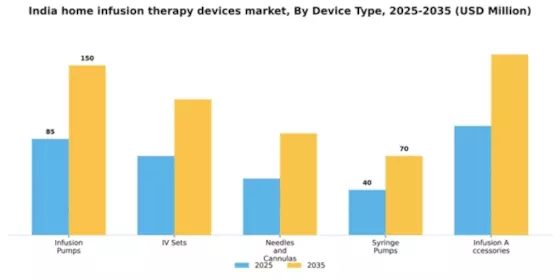
In the India home infusion-therapy-devices market, the distribution of market share among device types reveals Infusion Pumps as the largest segment, capturing a significant portion of the market. IV Sets are rapidly gaining traction, reflecting a growing demand driven by medical advancements and increased patient needs. Needles and Cannulas, Syringe Pumps, and Infusion Accessories also contribute notably, but their share is comparatively smaller. Growth trends in this segment are propelled by factors such as rising healthcare expenditures, increasing prevalence of chronic diseases, and a shift towards home healthcare solutions. The demand for patient-friendly and efficient delivery systems is fueling innovation among device manufacturers. As more patients opt for home healthcare, the segment is expected to expand with new technology integration and improved functionalities.
Infusion Pumps (Dominant) vs. IV Sets (Emerging)
Infusion Pumps hold a dominant position in the India home infusion-therapy-devices market due to their versatility and effectiveness in medication delivery. These devices are critical for precise dosing and are preferred in various clinical settings, making them integral to patient care. In contrast, IV Sets are emerging as a vital component of infusion therapy, driven by their ease of use and the increasing inclination towards outpatient care. The growing trend of self-administration and patient autonomy is enhancing the relevance of IV Sets. Both segments are characterized by rapid technological advancements, focusing on user-friendliness and safety, ensuring they stay aligned with market demands.
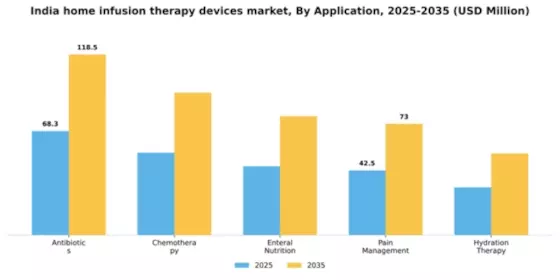
In the India home infusion-therapy-devices market, the application segment shows distinct distribution among key values such as Antibiotics, Chemotherapy, Enteral Nutrition, Pain Management, and Hydration Therapy. Antibiotics dominate this segment, representing a significant share due to their widespread use in treating infections, while Chemotherapy is gaining traction as the fastest-growing category driven by the increasing prevalence of cancer cases and the rising adoption of targeted therapies. The growth trends within this segment are largely influenced by advancements in intravenous delivery systems and a growing preference for outpatient care. Factors such as increased awareness regarding home healthcare alternatives and the rising number of cancer patients contribute to the demand for Chemotherapy devices, while Antibiotics continue to benefit from established usage patterns in infection management. The evolution of pain management solutions and enteral nutrition is also noteworthy, highlighting the diverse needs of patients.
Antibiotics (Dominant) vs. Chemotherapy (Emerging)
Antibiotics are the dominant segment in the India home infusion-therapy-devices market, reflecting their critical role in managing infections effectively. Their established presence is bolstered by healthcare providers' reliance on these devices for intravenous administration to patients undergoing treatment at home. In contrast, Chemotherapy is emerging as a significant player, driven by innovations in the delivery of cancer treatments and the increasing number of individuals opting for home-based solutions. As treatment protocols evolve, the focus on patient-centric care is pushing for greater availability of Chemotherapy devices. This competitive landscape encourages continuous improvements in device design and functionality, catering to the specific needs of both Antibiotic and Chemotherapy administration.
In the India home infusion-therapy-devices market, hospitals account for the largest share of the end user segment, leveraging their infrastructure and resources to provide comprehensive infusion therapies. This segment's dominance is driven by the high volume of patients requiring hospitalization for infusion therapy solutions. Conversely, homecare settings are gaining traction, enjoying a growing market share as patients increasingly prefer receiving care in the comfort of their homes, facilitated by improved technologies and patient training initiatives. The growth trends in this segment are influenced by several factors, including a rising geriatric population, increased prevalence of chronic diseases, and ongoing advancements in technology for home infusion therapy. Homecare settings are emerging as the fastest-growing segment, driven by the demand for personalized treatment options and cost-effective solutions. Hospitals will continue to play a dominant role, but the shift towards homecare is indicative of changing patient preferences and healthcare dynamics.
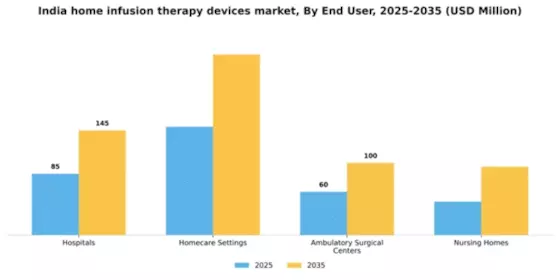
Hospitals (Dominant) vs. Homecare Settings (Emerging)
Hospitals are characterized by their extensive resources, comprehensive treatment offerings, and the ability to handle complex cases, making them the dominant end user in the infusion therapy market. The infrastructure present in hospitals supports a wide range of infusion therapies that cater to various patient needs. On the other hand, homecare settings are becoming a significant emerging player, particularly due to the growing emphasis on patient-centered care. They offer convenience, comfort, and a more personalized experience, which appeals to many patients and their families. The integration of technology in homecare settings enhances treatment efficacy and allows for better monitoring, driving their growth and making them an increasingly vital component of the infusion therapy landscape.
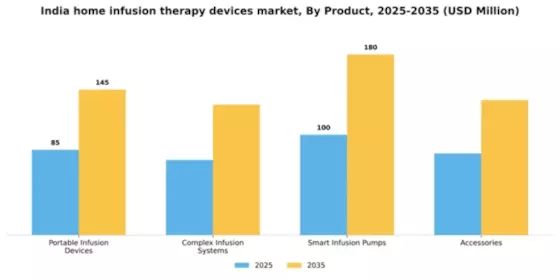
In the India home infusion-therapy-devices market, Smart Infusion Pumps hold the largest market share, driven by their advanced features and widespread adoption in healthcare facilities. This segment has seen consistent demand due to the growing need for precise and controlled drug delivery systems. Meanwhile, Portable Infusion Devices are experiencing rapid growth, appealing particularly to home healthcare settings where convenience and mobility are crucial. Their increasing utilization is contributing to a shift in patient care dynamics, emphasizing the importance of alternatives to traditional methods. The growth trends in this segment are strongly influenced by technological advancements, increasing prevalence of chronic diseases, and a focus on improving patient outcomes. The rising preference for home healthcare solutions is propelling the demand for Portable Infusion Devices, as they facilitate efficient care delivery outside hospital environments. As healthcare providers and patients alike seek more versatile and user-friendly options, investments in innovation within these segments are expected to surge, fostering competitive dynamics in the market.
Smart Infusion Pumps (Dominant) vs. Portable Infusion Devices (Emerging)
Smart Infusion Pumps dominate the market due to their ability to deliver precise dosages and their integration with electronic health records, enhancing safety and efficiency in treatment protocols. Their complex functionalities are essential for administering medication in acute care settings, catering to various therapeutic areas. Conversely, Portable Infusion Devices are emerging strongly, gaining traction because of their ease of use and suitability for outpatient care. They empower patients with mobility and flexibility during treatment, significantly contributing to the growth of home healthcare services. As both segments evolve, the competition between the sophisticated technology of Smart Infusion Pumps and the practical advantages of Portable Infusion Devices will shape the future landscape of home infusion therapy.
Get more detailed insights about India Home Infusion Therapy Devices Market Request Free Sample
The home infusion-therapy-devices market in India is characterized by a dynamic competitive landscape, driven by increasing demand for at-home healthcare solutions and advancements in technology. Major players such as Baxter International Inc (US), B. Braun Melsungen AG (DE), and Fresenius Kabi AG (DE) are strategically positioned to leverage these trends. Baxter International Inc (US) focuses on innovation in infusion systems, emphasizing the development of smart devices that enhance patient safety and treatment efficacy. Meanwhile, B. Braun Melsungen AG (DE) is enhancing its operational focus on regional expansion, particularly in underserved markets, to capture a larger share of the growing demand. Fresenius Kabi AG (DE) appears to be concentrating on digital transformation, integrating advanced data analytics into its product offerings to improve patient outcomes and streamline operations. Collectively, these strategies contribute to a competitive environment that is increasingly centered on technological advancement and patient-centric solutions. Key business tactics within this market include localizing manufacturing and optimizing supply chains to enhance efficiency and reduce costs. The competitive structure is moderately fragmented, with several key players exerting influence over market dynamics. This fragmentation allows for a diverse range of products and services, catering to varying patient needs and preferences. The collective influence of these major companies shapes the market, as they compete not only on product quality but also on service delivery and innovation. In October 2025, Medtronic plc (IE) announced a strategic partnership with a leading Indian healthcare provider to enhance its home infusion therapy offerings. This collaboration aims to integrate Medtronic's advanced infusion technologies with the healthcare provider's extensive patient network, potentially improving access to high-quality home care solutions. Such partnerships are crucial as they enable companies to expand their reach and enhance service delivery in a rapidly evolving market. In September 2025, ICU Medical Inc (US) launched a new line of infusion pumps designed specifically for the Indian market, featuring localized software and user interfaces. This move is significant as it demonstrates ICU Medical's commitment to addressing the unique needs of Indian healthcare providers and patients, thereby enhancing its competitive positioning. By tailoring products to local requirements, the company is likely to strengthen its market presence and foster customer loyalty. In August 2025, Terumo Corporation (JP) unveiled a new digital platform aimed at improving the management of home infusion therapies. This platform integrates real-time monitoring and data analytics, allowing healthcare providers to track patient progress more effectively. The introduction of such digital solutions indicates a broader trend towards the integration of technology in home healthcare, which is likely to redefine patient management and treatment protocols. As of November 2025, current competitive trends in the home infusion-therapy-devices market include a pronounced shift towards digitalization, sustainability, and the integration of artificial intelligence (AI) in product development. Strategic alliances are increasingly shaping the landscape, enabling companies to pool resources and expertise to innovate more effectively. Looking ahead, competitive differentiation is expected to evolve, with a greater emphasis on innovation and technology rather than solely on price. Companies that can reliably enhance supply chain efficiency and deliver cutting-edge solutions are likely to emerge as leaders in this competitive arena.

The India Home Infusion Therapy Devices Market has seen significant developments in 2023, driven by an increasing demand for home healthcare solutions. Notably, companies like Baxter International and Fresenius Kabi continue to enhance their product offerings to cater to a growing elderly population requiring long-term care. In February 2023, Rotech Healthcare expanded its distribution network in India, which is expected to improve accessibility and boost market presence.
Moreover, Nipro Corporation reported structural enhancements aimed at increasing production capabilities, reflecting the rising market valuation in this sector.Regarding mergers and acquisitions, in March 2023, ICU Medical completed the acquisition of a pivotal infusion business division, which is expected to strengthen its position in the Indian market. This could have downstream benefits for competition and innovation in the home infusion segment.
The Indian government, through various initiatives, has been promoting the adoption of home healthcare technologies, recognizing their essential role in managing chronic diseases more effectively, which further enhances the market prospects. Historical developments also indicate steady growth in this market, highlighted by significant investments in technological advancements over the past two years.
The Home Infusion Therapy Devices Market in India is projected to grow at a 5.09% CAGR from 2025 to 2035, driven by increasing chronic diseases, technological advancements, and rising healthcare expenditure.
New opportunities lie in:
By 2035, the market is expected to achieve substantial growth, enhancing patient care and accessibility.
| MARKET SIZE 2024 | 341.5(USD Million) |
| MARKET SIZE 2025 | 358.88(USD Million) |
| MARKET SIZE 2035 | 589.6(USD Million) |
| COMPOUND ANNUAL GROWTH RATE (CAGR) | 5.09% (2025 - 2035) |
| REPORT COVERAGE | Revenue Forecast, Competitive Landscape, Growth Factors, and Trends |
| BASE YEAR | 2024 |
| Market Forecast Period | 2025 - 2035 |
| Historical Data | 2019 - 2024 |
| Market Forecast Units | USD Million |
| Key Companies Profiled | Baxter International Inc (US), B. Braun Melsungen AG (DE), Fresenius Kabi AG (DE), Medtronic plc (IE), Smiths Medical (US), ICU Medical Inc (US), Terumo Corporation (JP), Halyard Health Inc (US), Calea (GB) |
| Segments Covered | Device Type, Application, End User, Product |
| Key Market Opportunities | Integration of advanced telehealth solutions enhances patient monitoring in the home infusion-therapy-devices market. |
| Key Market Dynamics | Rising demand for home healthcare drives innovation in home infusion-therapy-devices, enhancing patient convenience and treatment efficacy. |
| Countries Covered | India |
The market valuation was $341.5 Million in 2024.
The projected valuation for 2035 is $589.6 Million.
The expected CAGR during this period is 5.09%.
In 2024, the Infusion Pumps segment had a valuation of $85.0 Million to $150.0 Million.
Key applications include Antibiotics, Chemotherapy, and Enteral Nutrition, with valuations ranging from $31.4 Million to $118.5 Million.
The Homecare Settings segment is projected to dominate, with a valuation expected to reach $250.0 Million.
The valuation range for Smart Infusion Pumps in 2024 was $100.0 Million to $180.0 Million.
Key players include Baxter International Inc, B. Braun Melsungen AG, and Fresenius Kabi AG.
The valuation range for IV Sets in 2024 was $70.0 Million to $120.0 Million.
While specific regional comparisons are not provided, the growth trajectory suggests a robust development in the Indian market.


Kindly complete the form below to receive a free sample of this Report

“This is really good guys. Excellent work on a tight deadline. I will continue to use you going forward and recommend you to others. Nice job”


“Thanks. It’s been a pleasure working with you, please use me as reference with any other Intel employees.”


“Thanks for sending the report it gives us a good global view of the Betaïne market.”


“Thank you, this will be very helpful for OQS.”


“We found the report very insightful! we found your research firm very helpful. I'm sending this email to secure our future business.”


“I am very pleased with how market segments have been defined in a relevant way for my purposes (such as "Portable Freezers & refrigerators" and "last-mile"). In general the report is well structured. Thanks very much for your efforts.”


“I have been reading the first document or the study, ,the Global HVAC and FP market report 2021 till 2026. Must say, good info! I have not gone in depth at all parts, but got a good indication of the data inside!”


“We got the report in time, we really thank you for your support in this process. I also thank to all of your team as they did a great job.”


“The Automotive 48V ECU Components Procurement Intelligence Study” was a complex project, but the Market Research Future (MRFR) team handled it with quality, agility, and customer-centricity. They delivered all requested data on time and within the agreed scope. The team, including Shubhendra Anand and Rahul Gotadki, was always readily available to clarify questions and swiftly implement necessary adjustments, driving the project to a successful conclusion within a very demanding timeframe.
I would also like to specifically commend Akshay Agarwal for his responsiveness and support at every stage—from our initial inquiry on May 6th through to final delivery on June 18th. His dedication made the entire process seamless.”



