Download Free Sample
Kindly complete the form below to receive a free sample of this Report
India Smokeless Tobacco Market Size, Share, Industry Trend & Analysis Research Report By Type (chewing tobacco, dipping tobacco, dissolvable tobacco), By Form (moist, dry) and By Route (oral, nasal)-Forecast to 2035
As per Market Research Future analysis, the India smokeless tobacco market Size was estimated at 1589.91 USD Million in 2024. The India smokeless tobacco market is projected to grow from 1664.32 USD Million in 2025 to 2628.75 USD Million by 2035, exhibiting a compound annual growth rate (CAGR) of 4.6% during the forecast period 2025 - 2035
The India smokeless tobacco market is experiencing a complex interplay of traditional cultural practices and emerging health trends.
| 2024 Market Size | 1589.91 (USD Million) |
| 2035 Market Size | 2628.75 (USD Million) |
| CAGR (2025 - 2035) | 4.68% |
Altria Group (US), British American Tobacco (GB), Philip Morris International (US), Swedish Match (SE), Reynolds American (US), Japan Tobacco (JP), Imperial Brands (GB), Djarum (ID), ITC Limited (IN)
Our Impact
Enabled $4.3B Revenue Impact for Fortune 500 and Leading Multinationals
Partnering with 2000+ Global Organizations Each Year
30K+ Citations by Top-Tier Firms in the Industry
The smokeless tobacco market in India exhibits a complex landscape characterized by diverse consumer preferences and cultural practices. The market is influenced by various factors, including regional variations in product types, consumption habits, and regulatory frameworks. Traditional products such as khaini, gutkha, and zarda remain prevalent, reflecting deep-rooted cultural significance. However, there is a growing awareness regarding health risks associated with smokeless tobacco use, prompting shifts in consumer behavior. This evolving dynamic suggests that while traditional products maintain a strong foothold, there is potential for innovation and diversification in product offerings to cater to changing consumer preferences. Moreover, the regulatory environment plays a crucial role in shaping the smokeless tobacco market. Government initiatives aimed at reducing tobacco consumption, including stricter advertising regulations and public health campaigns, may impact market dynamics. Despite these challenges, the market continues to thrive, driven by a resilient consumer base and the introduction of new products that align with contemporary health trends. As awareness of health implications increases, the market may witness a gradual transition towards less harmful alternatives, indicating a potential shift in the overall landscape of smokeless tobacco consumption in India.
The smokeless tobacco market remains heavily influenced by traditional products that are deeply embedded in local cultures. Items such as khaini and gutkha are not only consumed for their stimulating effects but also serve as social and cultural symbols. This cultural resilience suggests that despite health concerns, these products will continue to hold significant market share.
Government regulations aimed at curbing tobacco use are likely to reshape consumption patterns within the smokeless tobacco market. Stricter advertising laws and health campaigns may deter new users while encouraging existing consumers to reconsider their choices. This regulatory landscape could lead to a decline in traditional product consumption over time.
There is a noticeable trend towards the development of health-conscious alternatives within the smokeless tobacco market. As consumers become more aware of health risks, manufacturers may explore innovative products that offer reduced harm. This shift could potentially attract a new demographic of users who prioritize health without sacrificing the experience of smokeless tobacco.
The smokeless tobacco market in India is characterized by a wide array of product offerings, catering to diverse consumer preferences. From flavored varieties to different forms such as snuff and chewable tobacco, the market provides options that appeal to various age groups and tastes. This diversity not only attracts new consumers but also retains existing ones, as individuals seek products that align with their preferences. The introduction of innovative flavors and packaging has the potential to further enhance market growth. As competition intensifies, companies are likely to invest in product development, which could lead to an expansion of the smokeless tobacco market.
Rural areas in India represent a significant segment of the smokeless tobacco market, where traditional consumption habits are prevalent. The smokeless tobacco market thrives in these regions due to the established cultural practices and the lack of stringent regulations compared to urban areas. Approximately 70% of smokeless tobacco users reside in rural settings, indicating a strong reliance on these products. The market's growth in rural India is likely to continue as local manufacturers cater to the specific needs and preferences of these consumers. This rural focus may also influence marketing strategies, emphasizing community engagement and traditional values.
Economic factors play a crucial role in shaping the smokeless tobacco market in India. The affordability of smokeless tobacco products compared to other tobacco forms makes them accessible to a broader demographic. With prices often ranging from ₹5 to ₹20 per packet, these products cater to low and middle-income consumers, thereby sustaining high consumption rates. The smokeless tobacco market is projected to grow at a CAGR of 5% over the next few years, driven by this economic accessibility. As disposable incomes rise, the market may witness an increase in premium product offerings, yet the core affordability will likely remain a significant driver for continued consumption.
Social dynamics play a pivotal role in the smokeless tobacco market in India. Peer influence and social acceptance significantly impact consumption patterns, particularly among younger demographics. The smokeless tobacco market benefits from a network effect, where individuals are more likely to try these products if they observe their peers using them. This social aspect is further reinforced by marketing strategies that target group consumption scenarios. As societal norms evolve, the smokeless tobacco market may experience shifts in consumer behavior, potentially leading to increased usage among new demographics. Understanding these social influences is essential for stakeholders aiming to navigate the complexities of the market.
The smokeless tobacco market in India is deeply intertwined with cultural practices and traditions. Various regions have unique forms of smokeless tobacco, such as khaini and gutkha, which are often consumed during social gatherings and rituals. This cultural significance drives demand, as these products are not merely viewed as alternatives to smoking but as integral components of local customs. The market is estimated to be valued at approximately $2 billion, reflecting the strong consumer base that continues to support these traditional products. The enduring popularity of smokeless tobacco in India suggests that cultural factors will remain a key driver in the smokeless tobacco market, influencing consumption patterns and product innovation.
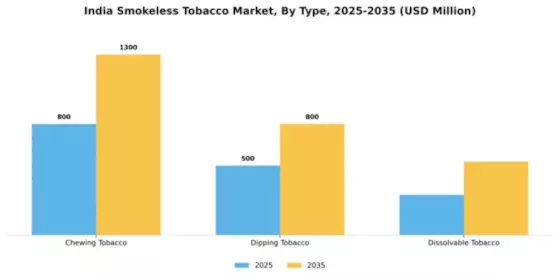
In the India smokeless tobacco market, the distribution of market share among various types shows that Chewing Tobacco holds a significant portion, making it the largest segment. Dipping Tobacco follows closely, reflecting a growing interest among consumers. Dissolvable Tobacco, while present, has a smaller share compared to these two, indicating distinct consumer preferences and acceptance levels within the market. Growth trends indicate that while Chewing Tobacco remains dominant, Dipping Tobacco is witnessing rapid growth due to shifting consumer preferences towards less traditional forms of smokeless tobacco. Factors driving this growth include changing lifestyles, increased health awareness, and targeted marketing strategies that appeal to younger demographics. As a result, the competitive landscape is evolving, with innovations leading to more product variations and healthier alternatives.
Chewing Tobacco: Dominant vs. Dipping Tobacco: Emerging
Chewing Tobacco, characterized by its traditional preparation methods and flavor variations, continues to dominate the India smokeless tobacco market, relying on deep-rooted cultural acceptance and robust consumer loyalty. It is known for its diverse flavor profiles and forms, catering to a wide audience. In contrast, Dipping Tobacco has emerged as a popular alternative, especially among younger consumers looking for convenient and discreet options. This segment is marked by innovative formats and packaging that enhance the user experience, positioning it favorably in the fast-evolving market landscape. The appeal of Dipping Tobacco lies in its easy consumption and the perception of being a 'modern' smokeless option, which is driving its rapid growth.
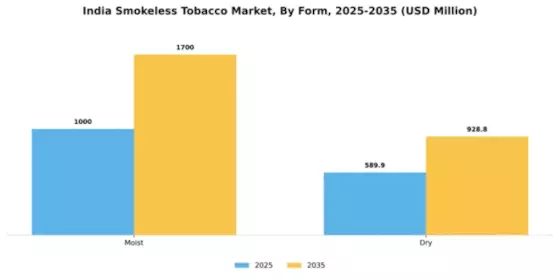
In the India smokeless tobacco market, the Moist form holds the largest market share, preferred by a significant portion of consumers due to its rich flavor and texture. This segment dominates the market's landscape as it aligns well with the traditional consumption habits, contributing to its sustained popularity. Conversely, the Dry segment, though smaller in market share, is gaining traction among consumers looking for less moist options, leading to a notable shift in preferences. The growth trends in this segment highlight a contrasting narrative between Moist and Dry forms. The Moist segment continues to thrive, bolstered by cultural preferences and loyalty among users. Meanwhile, the Dry segment is recognized as the fastest-growing, driven by a younger demographic's interest in innovation and convenience. This shift indicates changing consumer behaviors and the market's dynamic nature, embracing both traditional and modern consumption traits.
Moist (Dominant) vs. Dry (Emerging)
The Moist segment is characterized by its rich texture and flavor, appealing to traditional users who value the experience of smokeless tobacco. This segment not only leads in market share but also fosters brand loyalty, with many consumers preferring established brands that offer proven quality. On the other hand, the Dry segment represents an emerging trend, catering to consumers who seek alternatives that are perceived as more convenient and less intrusive. With its rapid growth, the Dry segment is attracting younger consumers, thereby reshaping the competitive landscape. Brands are innovating within the Dry category to appeal to this demographic, focusing on flavor advancements and packaging that emphasize portability.
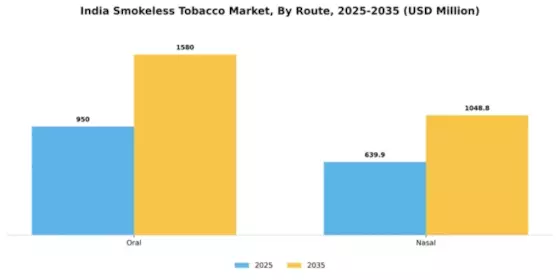
The India smokeless tobacco market exhibits a clear dominance of the Oral segment, which holds the largest share of market distribution. This preference for Oral smokeless tobacco can be attributed to cultural habits and the extensive variety available. In contrast, the Nasal segment, while smaller in market share, is rapidly gaining traction among consumers for its unique consumption experience, aligning with changing lifestyle patterns. Growth trends indicate that the Nasal segment is emerging as the fastest-growing category, driven by increasing consumer awareness and shifting preferences towards less harmful alternatives. Moreover, marketing innovations and expanding distribution networks are propelling the growth of both segments. However, the Oral segment's entrenched traditional appeal continues to provide substantial stability to the market landscape.
Oral (Dominant) vs. Nasal (Emerging)
The Oral segment is characterized by a wide range of products, including chewable and dipping forms, catering to traditional users who appreciate the cultural significance and familiar experience. Its dominance in the India smokeless tobacco market is reinforced by the strong brand loyalty among consumers. On the other hand, the Nasal segment represents an emerging trend, attracting a younger demographic and health-conscious consumers. Its unique delivery method appeals to those looking for novel consumption experiences. Although currently smaller in market share, the increasing availability of nasal products and innovative marketing strategies position this segment for significant growth in the future, potentially reshaping user preferences in the smokeless tobacco landscape.
Get more detailed insights about India Smokeless Tobacco Market Request Free Sample
The smokeless tobacco market in India is characterized by a complex competitive landscape, driven by evolving consumer preferences and regulatory frameworks. Major players such as ITC Limited (IN), British American Tobacco (GB), and Philip Morris International (US) are actively shaping the market dynamics through strategic initiatives. ITC Limited (IN) has positioned itself as a leader by focusing on product innovation and expanding its portfolio to include a variety of smokeless options, thereby appealing to a broader consumer base. Meanwhile, British American Tobacco (GB) emphasizes sustainability and has been investing in alternative products, which reflects a shift towards more responsible consumption. Philip Morris International (US) is also pivoting towards reduced-risk products, indicating a collective industry trend towards innovation and diversification.The business tactics employed by these companies include localizing manufacturing and optimizing supply chains to enhance efficiency and reduce costs. The market structure appears moderately fragmented, with several players vying for market share. However, the influence of key players is substantial, as they leverage their resources and market knowledge to establish competitive advantages. This competitive environment is further intensified by the presence of emerging local brands that challenge established players, thereby fostering a dynamic marketplace.
In October ITC Limited (IN) announced the launch of a new line of smokeless tobacco products aimed at the youth demographic, which is a strategic move to capture a growing segment of the market. This initiative not only diversifies their product offerings but also aligns with the trend of targeting younger consumers who are increasingly seeking alternatives to traditional tobacco products. The potential for increased market penetration is significant, as this demographic is often more open to trying innovative products.
In September British American Tobacco (GB) revealed its plans to invest €100 million in a new manufacturing facility in India, aimed at producing smokeless tobacco products. This investment underscores the company's commitment to expanding its footprint in the region and enhancing its production capabilities. The strategic importance of this move lies in its potential to streamline operations and meet the rising demand for smokeless options, thereby solidifying the company's market position.
In August Philip Morris International (US) launched a digital marketing campaign focused on educating consumers about the benefits of smokeless tobacco alternatives. This initiative reflects a broader trend towards digitalization in the industry, as companies seek to engage consumers through innovative channels. The strategic importance of this campaign is evident in its potential to reshape consumer perceptions and drive adoption of reduced-risk products, aligning with the company's long-term vision of a smoke-free future.
As of November current competitive trends in the smokeless tobacco market are increasingly defined by digitalization, sustainability, and the integration of advanced technologies. Strategic alliances among key players are shaping the landscape, fostering collaboration that enhances product development and market reach. Looking ahead, competitive differentiation is likely to evolve from traditional price-based competition to a focus on innovation, technology, and supply chain reliability. This shift indicates a transformative phase in the market, where companies that prioritize these elements may gain a significant competitive edge.




Recent developments in the India Smokeless Tobacco Market reflect a dynamic landscape influenced by regulatory changes and consumer preferences. Notably, ITC has been focusing on expanding its smokeless product portfolio, driving innovation in alternative flavors to attract younger consumers. Meanwhile, Godfrey Phillips India continues to reinforce its market presence through strategic branding and advertising initiatives. The Kothari Products has seen growth due to its popular gutkha variants, aligning with local consumption trends.
As of October 2023, mergers and acquisitions in this sector have been limited, though there are ongoing discussions surrounding potential consolidations among regional players such as the Dharampal Satyapal Group and GTC Industries to enhance distribution. The market has experienced growth in valuation attributable to shifts in consumer behavior, with increased demand for organic and natural smokeless tobacco products offered by companies like Patanjali Ayurved. Additionally, the last two to three years have seen significant regulatory scrutiny and health awareness campaigns impacting market dynamics, with discussions around stricter regulations potentially affecting product formulation and advertising strategies across the industry.
The Smokeless Tobacco Market in India is projected to grow at 4.68% CAGR from 2025 to 2035, driven by increasing consumer demand and innovative product offerings.
New opportunities lie in:
By 2035, the smokeless tobacco market is expected to achieve robust growth and increased market penetration.
| MARKET SIZE 2024 | 1589.91(USD Million) |
| MARKET SIZE 2025 | 1664.32(USD Million) |
| MARKET SIZE 2035 | 2628.75(USD Million) |
| COMPOUND ANNUAL GROWTH RATE (CAGR) | 4.68% (2025 - 2035) |
| REPORT COVERAGE | Revenue Forecast, Competitive Landscape, Growth Factors, and Trends |
| BASE YEAR | 2024 |
| Market Forecast Period | 2025 - 2035 |
| Historical Data | 2019 - 2024 |
| Market Forecast Units | USD Million |
| Key Companies Profiled | Altria Group (US), British American Tobacco (GB), Philip Morris International (US), Swedish Match (SE), Reynolds American (US), Japan Tobacco (JP), Imperial Brands (GB), Djarum (ID), ITC Limited (IN) |
| Segments Covered | Type, Form, Route |
| Key Market Opportunities | Growing demand for innovative smokeless tobacco products driven by changing consumer preferences and regulatory shifts. |
| Key Market Dynamics | Regulatory changes and shifting consumer preferences are reshaping the competitive landscape of the smokeless tobacco market. |
| Countries Covered | India |
The market valuation was $1589.91 Million in 2024.
The projected valuation for 2035 is $2628.75 Million.
The expected CAGR during this period is 4.68%.
Chewing tobacco had the highest valuation, ranging from $800.0 Million to $1300.0 Million.
The two main forms are Moist, valued between $1000.0 Million and $1700.0 Million, and Dry, valued between $589.91 Million and $928.75 Million.
The routes include Oral, valued between $950.0 Million and $1580.0 Million, and Nasal, valued between $639.91 Million and $1048.75 Million.
Key players include Altria Group, British American Tobacco, Philip Morris International, and ITC Limited.
Dipping Tobacco had a valuation ranging from $500.0 Million to $800.0 Million, indicating a moderate market presence.
The market appears poised for growth, with a projected increase to $2628.75 Million by 2035.
The segment data indicates a strong preference for Chewing Tobacco and Moist forms, reflecting consumer trends.



Kindly complete the form below to receive a free sample of this Report

“This is really good guys. Excellent work on a tight deadline. I will continue to use you going forward and recommend you to others. Nice job”


“Thanks. It’s been a pleasure working with you, please use me as reference with any other Intel employees.”


“Thanks for sending the report it gives us a good global view of the Betaïne market.”


“Thank you, this will be very helpful for OQS.”


“We found the report very insightful! we found your research firm very helpful. I'm sending this email to secure our future business.”


“I am very pleased with how market segments have been defined in a relevant way for my purposes (such as "Portable Freezers & refrigerators" and "last-mile"). In general the report is well structured. Thanks very much for your efforts.”


“I have been reading the first document or the study, ,the Global HVAC and FP market report 2021 till 2026. Must say, good info! I have not gone in depth at all parts, but got a good indication of the data inside!”


“We got the report in time, we really thank you for your support in this process. I also thank to all of your team as they did a great job.”


“The Automotive 48V ECU Components Procurement Intelligence Study” was a complex project, but the Market Research Future (MRFR) team handled it with quality, agility, and customer-centricity. They delivered all requested data on time and within the agreed scope. The team, including Shubhendra Anand and Rahul Gotadki, was always readily available to clarify questions and swiftly implement necessary adjustments, driving the project to a successful conclusion within a very demanding timeframe.
I would also like to specifically commend Akshay Agarwal for his responsiveness and support at every stage—from our initial inquiry on May 6th through to final delivery on June 18th. His dedication made the entire process seamless.”



