Intravascular Optical Coherence Tomography OCT Imaging System Market

Key Players: Companies such as Abbott Laboratories (US), Boston Scientific Corporation (US), Medtronic plc (IE), Terumo Corporation (JP), Nipro Corporation (JP), Opto Medical Technology GmbH (DE), Avinger, Inc. (US), LightLab Imaging, Inc. (US) are some of the major participants in the global market.

Intravascular Optical Coherence Tomography OCT Imaging System Market

Intravascular Optical Coherence Tomography OCT Imaging System Market Research Report By Application (Coronary Imaging, Peripheral Imaging, Intracranial Imaging, Aortic Imaging), By Product Type (Time-Domain OCT, Frequency-Domain OCT, Swept-Source OCT), By End Use (Hospitals, Diagnostic Imaging Centers, Research Laboratories, Ambulatory Surgical Centers), By Technology (Optical Coherence Tomography, Image Processing Software, Optical Components) and By Regional (North America, Europe, South America, Asia Pacific, Middle East and Africa) - Growth & Industry Forecast 2025 To 2035
ID: MRFR/MED/35290-HCR
128 Pages
Satyendra Maurya, Rahul Gotadki
Last Updated: June 05, 2026

Intravascular Optical Coherence Tomography OCT Imaging System Market Summary

The Global Intravascular Optical Coherence Tomography (OCT) Imaging System Market size was valued at USD 0.6701 Billion in 2024, and the market is projected to grow from USD 0.7292 Billion in 2025 to USD 1.698 Billion by 2035, registering a CAGR of 8.82% during the forecast period 2025–2035. North America led the market in 2024 with over 44.77% share, generating around USD 0.3 Billion in revenue.
 
The increasing global burden of cardiovascular diseases is a major growth factor for the Intravascular Optical Coherence Tomography (OCT) Imaging System Market. Rising demand for precise coronary imaging, early diagnosis, and image-guided interventions is accelerating OCT adoption across hospitals and specialized cardiovascular care centers.
 
According to the WHO, cardiovascular diseases cause approximately 17.9 million deaths annually, accounting for nearly 32% of all global deaths, highlighting the growing need for advanced intravascular imaging technologies that improve diagnostic precision and treatment planning.

Key Market Trends & Highlights

The Intravascular Optical Coherence Tomography (OCT) Imaging System Market is poised for substantial growth driven by technological advancements and increasing demand for minimally invasive procedures.

  • Optical Coherence Tomography technology held 72% share, reflecting strong physician preference for high-resolution intravascular imaging capabilities.
  • Cardiovascular diseases cause approximately 17.9 million deaths annually worldwide, creating substantial demand for advanced OCT-guided diagnostic procedures.
  • North America generated over 44.77% of global revenue in 2024, maintaining leadership through advanced cardiovascular care infrastructure.
  • Europe reached approximately USD 0.20 billion in 2024, accounting for nearly 30% of the global OCT imaging market.

Market Size & Forecast

2024 Market Size 0.6701 (USD Billion)
2035 Market Size 1.698 (USD Billion)
CAGR (2025 - 2035) 8.82%

Major Players

Companies such as Abbott Laboratories (US), Boston Scientific Corporation (US), Medtronic plc (IE), Terumo Corporation (JP), Nipro Corporation (JP), Opto Medical Technology GmbH (DE), Avinger, Inc. (US), LightLab Imaging, Inc. (US) are some of the major participants in the global market.

Our Impact
Enabled $4.3B Revenue Impact for Fortune 500 and Leading Multinationals
Partnering with 2000+ Global Organizations Each Year
30K+ Citations by Top-Tier Firms in the Industry

Intravascular Optical Coherence Tomography OCT Imaging System Market Trends

The Intravascular Optical Coherence Tomography (OCT) Imaging System Market is currently experiencing notable advancements driven by technological innovations and increasing demand for minimally invasive diagnostic procedures. This market appears to be expanding as healthcare providers seek enhanced imaging techniques that offer high-resolution images of vascular structures.

The integration of OCT technology into clinical practice seems to facilitate better decision-making in interventional cardiology, potentially leading to improved patient outcomes. Furthermore, the growing prevalence of cardiovascular diseases may contribute to the rising adoption of OCT systems, as they provide critical insights into plaque morphology and vessel health.

In addition, the competitive landscape of the global market is evolving, with various companies investing in research and development to enhance their product offerings. Collaborations between technology firms and healthcare institutions may foster innovation, resulting in more sophisticated imaging solutions. 

As the global industry matures, regulatory approvals and reimbursement policies will likely play a crucial role in shaping its trajectory. Overall, the market appears poised for growth, driven by technological advancements and an increasing focus on patient-centered care.

Technological Advancements

Recent innovations in imaging technology are enhancing the capabilities of Intravascular Optical Coherence Tomography (OCT) systems. These advancements may lead to improved image resolution and faster processing times, which could significantly benefit diagnostic accuracy.

  • Abbott Laboratories continues strengthening OCT innovation through ongoing enhancements to its coronary imaging portfolio, focusing on higher-resolution visualization and workflow efficiency. Strategic collaborations with cardiovascular research institutions have expanded clinical validation efforts. These initiatives support broader physician adoption, while advanced imaging capabilities improve lesion assessment and stent optimization. Such product development and partnership activities reinforce the growing role of OCT technologies in precision-guided cardiovascular interventions worldwide.

Rising Demand for Minimally Invasive Procedures

There is a growing preference for minimally invasive diagnostic techniques among healthcare providers. This trend suggests that the global industry may see increased adoption as it aligns with the shift towards less invasive patient care.

  • Boston Scientific Corporation has expanded its cardiovascular portfolio through strategic acquisitions and portfolio optimization initiatives that support minimally invasive treatment approaches. Regulatory clearances for advanced interventional technologies and favorable clinical evidence have strengthened physician confidence in image-guided procedures. With minimally invasive cardiovascular interventions continuing to increase globally, the company's focus on regulatory advancement and portfolio expansion supports broader OCT adoption and improved patient outcomes.

Collaborative Efforts in Research and Development

Partnerships between technology developers and medical institutions are becoming more common. Such collaborations may drive innovation in the global market, leading to the introduction of advanced imaging solutions.

  • Medtronic plc continues investing in next-generation imaging technologies through extensive product innovation programs focused on cardiovascular diagnostics. Regulatory approvals for advanced interventional and imaging-related solutions have accelerated commercialization opportunities across major healthcare markets. Ongoing collaborations with clinical institutions contribute to technology refinement, while innovation-driven development enhances procedural accuracy and supports the growing integration of OCT imaging into modern cardiovascular treatment pathways.

Intravascular Optical Coherence Tomography OCT Imaging System Market Drivers

Growing Preference for Personalized Medicine

The shift towards personalized medicine is significantly influencing the Intravascular Optical Coherence Tomography (OCT) Imaging System Industry. As healthcare moves away from a one-size-fits-all approach, there is an increasing emphasis on tailored treatment plans based on individual patient profiles. Intravascular OCT provides detailed insights into the vascular anatomy and pathology, enabling clinicians to customize interventions according to specific patient needs. 
 
This capability is particularly relevant in the context of complex cardiovascular cases, where understanding the unique characteristics of a patient's condition can lead to better treatment outcomes. The trend towards personalized medicine is likely to drive the demand for OCT systems, as healthcare providers seek tools that enhance their ability to deliver individualized care.
 

  • Published cardiovascular studies indexed by PubMed have demonstrated that intracoronary OCT provides imaging resolution of approximately 10–20 micrometers, significantly exceeding conventional intravascular imaging modalities. This enhanced visualization supports individualized treatment planning and precision-guided interventions, reinforcing the role of OCT systems in advancing personalized cardiovascular medicine.

Technological Innovations in Imaging Systems

Technological advancements play a crucial role in shaping the Intravascular Optical Coherence Tomography (OCT) Imaging System Industry. Innovations such as enhanced imaging resolution, faster acquisition times, and improved software algorithms are driving the development of next-generation OCT systems. These advancements facilitate more precise imaging of vascular structures, allowing for better assessment of coronary artery disease and other cardiovascular conditions. 
 
The integration of artificial intelligence and machine learning into OCT systems is also emerging, potentially revolutionizing data analysis and interpretation. As these technologies evolve, they are expected to attract more healthcare facilities to adopt OCT systems, thereby expanding the global market. The continuous evolution of imaging technologies suggests a promising future for the OCT market, as it aligns with the growing need for accurate and efficient diagnostic tools.
 

  • According to IHME estimates, cardiovascular diseases remain the world's leading cause of health burden, contributing to millions of disability-adjusted life years annually. The growing demand for accurate diagnostics has accelerated adoption of advanced imaging technologies, with OCT systems offering ultra-high-resolution vessel visualization that supports improved clinical decision-making and procedural outcomes.

Regulatory Support and Reimbursement Policies

Supportive regulatory frameworks and favorable reimbursement policies are vital drivers for the Intravascular Optical Coherence Tomography (OCT) Imaging System Industry. Governments and health authorities are increasingly recognizing the value of advanced imaging technologies in improving patient care. As a result, there is a growing trend towards establishing reimbursement pathways for OCT procedures, which can alleviate financial burdens on healthcare providers and encourage the adoption of these systems. 
 
Additionally, regulatory bodies are streamlining the approval processes for new OCT technologies, facilitating quicker market entry for innovative solutions. This supportive environment is expected to enhance the global market landscape, as more healthcare facilities are likely to invest in OCT systems, knowing that they will receive adequate reimbursement for their use.
 

  • World Bank data indicate that global health expenditure exceeds 10% of global GDP, reflecting continued investment in advanced healthcare technologies. Expanding healthcare funding and supportive reimbursement environments are encouraging hospitals and cardiovascular centers to adopt innovative imaging systems such as OCT for enhanced diagnostic capabilities.

Increasing Prevalence of Cardiovascular Diseases

The rising incidence of cardiovascular diseases is a primary driver for the Intravascular Optical Coherence Tomography (OCT) Imaging System Industry. As heart-related ailments become more prevalent, the demand for advanced imaging techniques to diagnose and treat these conditions intensifies. According to recent statistics, cardiovascular diseases account for a significant portion of global mortality rates, prompting healthcare providers to seek innovative solutions. 
 
Intravascular OCT offers high-resolution imaging capabilities, enabling clinicians to visualize arterial structures and assess plaque characteristics effectively. This technology is particularly valuable in guiding interventional procedures, thereby enhancing patient outcomes. The increasing burden of cardiovascular diseases is likely to propel the adoption of OCT systems, as healthcare systems strive to improve diagnostic accuracy and treatment efficacy.

Rising Awareness and Education Among Healthcare Professionals

The increasing awareness and education regarding the benefits of Intravascular Optical Coherence Tomography (OCT) Imaging System Industry among healthcare professionals is a significant driver. As more clinicians become informed about the advantages of OCT technology, including its ability to provide high-resolution images and detailed insights into vascular health, the demand for these systems is likely to rise.
 
Educational initiatives, workshops, and training programs are being implemented to enhance the understanding of OCT applications in clinical practice. This growing knowledge base is expected to lead to a higher adoption rate of OCT systems, as healthcare providers recognize their potential to improve diagnostic accuracy and patient outcomes. The emphasis on continuous professional development in the medical field suggests a promising trajectory for the OCT market.

Market Segment Insights

By Application: Coronary Imaging (Largest) vs. Peripheral Imaging (Fastest-Growing)

In the Intravascular Optical Coherence Tomography (OCT) Imaging System Market, the application segment is predominantly led by coronary imaging, reflecting its critical role in diagnosing and managing cardiovascular diseases. Among the segment values, coronary imaging has established a significant position with a 61% share due to its extensive clinical applications and growing adoption in hospitals and specialized cardiac care centers. Following closely is peripheral imaging, which is experiencing an accelerated uptake, driven by increasing awareness and advancements in imaging technologies that cater to peripheral arterial diseases. The growth of the market segment is primarily fueled by the rising incidence of cardiovascular ailments, alongside an upsurge in healthcare expenditure globally. Peripheral imaging is increasingly recognized for its promising applications in detecting and treating vascular conditions, contributing to its designation as the fastest-growing segment. Moreover, technological advancements and the introduction of innovative OCT systems are shaping the future landscape of these applications, enhancing their functionality and accuracy in clinical settings.

Terumo Corporation continues expanding its cardiovascular intervention portfolio across more than 160 countries and regions, supporting growing utilization of coronary imaging technologies. The company's strong presence in interventional cardiology and catheter-based procedures reinforces demand for OCT-guided coronary assessments, contributing to the segment's leadership position.

By Product Type: Frequency-Domain OCT (Largest) vs. Swept-Source OCT (Fastest-Growing)

In the Intravascular Optical Coherence Tomography (OCT) Imaging System Market, Frequency-Domain OCT currently holds the majority market share of 67%, largely due to its high speed and resolution, which make it the preferred choice among medical professionals. Time-Domain OCT, while historically significant, has seen its share dwindle as clinicians and institutions shift towards more advanced technologies. Swept-Source OCT, a more recent innovation, is rapidly gaining traction, appealing to facilities looking for the latest advancements in imaging capabilities.

Nipro Corporation maintains a global healthcare presence with operations spanning over 150 countries, supporting advanced cardiovascular diagnostic solutions. Continued investments in precision medical technologies and interventional devices strengthen the adoption of high-speed Frequency-Domain OCT systems, which remain the preferred platform for coronary imaging applications.

By End Use: Hospitals (Largest) vs. Diagnostic Imaging Centers (Fastest-Growing)

In the Intravascular Optical Coherence Tomography (OCT) Imaging System Market, hospitals hold the largest share, accounting for 64% of the end-use segments, showcasing their pivotal role in delivering advanced imaging solutions for patient diagnostics. Diagnostic imaging centers, while holding a smaller share currently, are rapidly gaining traction, particularly due to an increase in outpatient procedures and technological advancements that enhance imaging capabilities. This trend highlights the integral part these facilities play in the broader healthcare landscape.

Opto Medical Technology GmbH continues supporting advanced optical imaging applications across hospital settings. The increasing concentration of cardiovascular procedures within hospital-based catheterization laboratories, which perform millions of interventional procedures annually worldwide, supports hospitals maintaining the largest share of OCT system utilization.

By Technology: Optical Coherence Tomography (Largest) vs. Image Processing Software (Fastest-Growing)

The Intravascular Optical Coherence Tomography (OCT) Imaging System Market showcases a diverse distribution of technology segments, with Optical Coherence Tomography leading the market due to its substantial 72% share and reliability in image acquisition. Following closely, Image Processing Software is gaining traction, driven by advancements in artificial intelligence and machine learning that enhance imaging techniques and analysis. Optical Components, while vital, experience slower adoption compared to software solutions, owing to existing infrastructure and compatibility concerns.

Avinger Inc. has demonstrated the growing clinical value of image-guided vascular interventions through its proprietary imaging technologies. The company reported continued adoption of real-time vascular visualization platforms, reflecting increasing clinician preference for advanced optical imaging solutions that enhance procedural accuracy and treatment outcomes.

Get more detailed insights about Intravascular Optical Coherence Tomography OCT Imaging System Market

Regional Insights

North America : Innovation and Market Leadership

North America is the largest market for Intravascular Optical Coherence Tomography (OCT) Imaging Systems, holding approximately 45% of the global market share. The region's growth is driven by advanced healthcare infrastructure, increasing prevalence of cardiovascular diseases, and significant investments in medical technology. Regulatory support from agencies like the FDA further catalyzes innovation and adoption of OCT systems, enhancing diagnostic capabilities.

  • According to CDC statistics, approximately 805,000 Americans experience a heart attack each year, highlighting the substantial demand for advanced cardiovascular diagnostic technologies. This large patient population supports continued adoption of OCT imaging systems across hospitals and cardiac care centers throughout North America.

The United States leads the North American market, with key players such as Abbott Laboratories and Boston Scientific Corporation driving competition. The presence of established healthcare facilities and a high rate of technological adoption contribute to the region's dominance. Canada also plays a significant role, with growing investments in healthcare technology and a focus on improving patient outcomes, further solidifying North America's position in the OCT market.

  • LightLab Imaging pioneered intravascular OCT technology and played a foundational role in advancing coronary imaging adoption. Its technological innovations contributed to broader clinical acceptance of OCT-guided procedures, supporting North America's leadership position with approximately 45% global market share in 2024.

Europe : Regulatory Support and Growth

Europe is the second-largest market for Intravascular Optical Coherence Tomography (OCT) Imaging Systems, accounting for approximately 30% of the global market share. The region benefits from stringent regulatory frameworks that ensure high-quality medical devices, alongside increasing demand for minimally invasive procedures. Countries like Germany and the UK are at the forefront, with supportive healthcare policies driving market growth and innovation in OCT technology.

Germany is a key player in the European market, hosting several leading manufacturers and research institutions. The competitive landscape is characterized by collaborations between medical device companies and healthcare providers, enhancing the development and distribution of OCT systems. The European market is also witnessing a rise in awareness regarding cardiovascular diseases, further propelling the demand for advanced imaging solutions.

  • The European Medicines Agency continues supporting access to innovative cardiovascular technologies through structured regulatory pathways. With the European Union serving a population exceeding 448 million people, streamlined regulatory oversight and growing demand for minimally invasive cardiovascular procedures continue to strengthen OCT system adoption across Europe.

Asia-Pacific : Rapid Growth and Adoption

Asia-Pacific is witnessing rapid growth in the market, holding approximately 20% of the global market share. The region's expansion is fueled by increasing healthcare expenditure, a rising geriatric population, and growing awareness of cardiovascular diseases. Countries like Japan and China are leading this growth, supported by government initiatives aimed at improving healthcare infrastructure and access to advanced medical technologies.

Japan stands out as a significant player, with major companies like Terumo Corporation and Nipro Corporation contributing to the market. The competitive landscape is evolving, with local manufacturers emerging alongside established global players. The region's focus on research and development, coupled with a growing demand for minimally invasive procedures, positions Asia-Pacific as a key market for OCT systems in the coming years.

Middle East and Africa : Untapped Potential and Growth

The Middle East and Africa region is gradually emerging in the market, currently holding about 5% of the global market share. The growth is driven by increasing investments in healthcare infrastructure, rising awareness of cardiovascular diseases, and a growing population. Countries like South Africa and the UAE are leading the way, with government initiatives aimed at enhancing healthcare services and access to advanced medical technologies.

South Africa is a key player in the region, with a growing number of healthcare facilities adopting advanced imaging technologies. The competitive landscape is characterized by collaborations between local and international companies, aiming to improve patient outcomes. As healthcare systems in the region continue to evolve, the demand for OCT systems is expected to rise, presenting significant opportunities for market players.
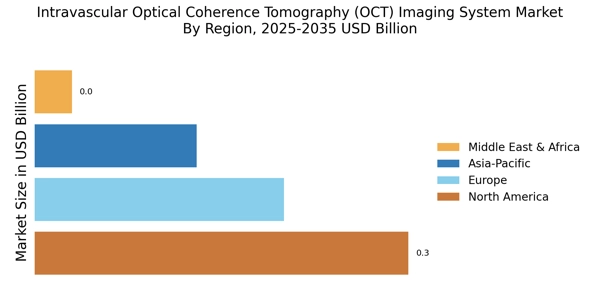

Intravascular Optical Coherence Tomography OCT Imaging System Market Regional Image

Key Players and Competitive Insights

The Intravascular Optical Coherence Tomography (OCT) Imaging System Market is currently characterized by a dynamic competitive landscape, driven by technological advancements and increasing demand for minimally invasive diagnostic tools. Key players such as Abbott Laboratories (US), Boston Scientific Corporation (US), and Medtronic plc (IE) are at the forefront, each adopting distinct strategies to enhance their market positioning. Abbott Laboratories (US) appears to focus on innovation, particularly in developing next-generation OCT systems that integrate advanced imaging capabilities.
 
Meanwhile, Boston Scientific Corporation (US) emphasizes strategic partnerships to expand its product offerings and enhance its market reach. Medtronic plc (IE) is likely concentrating on regional expansion, particularly in emerging markets, to capitalize on the growing demand for advanced imaging technologies. Collectively, these strategies contribute to a competitive environment that is increasingly centered around technological innovation and strategic collaborations.
 
In terms of business tactics, companies are increasingly localizing manufacturing and optimizing supply chains to enhance operational efficiency. The market structure is moderately fragmented, with several key players exerting influence over various segments. This fragmentation allows for a diverse range of products and innovations, although it also intensifies competition among established and emerging players alike. In August 2025, Abbott Laboratories (US) announced the launch of its latest OCT imaging system, which features enhanced resolution and faster imaging capabilities. This strategic move is significant as it positions Abbott to capture a larger share of the market by addressing the growing demand for high-quality imaging solutions in cardiovascular procedures.
 
The introduction of this advanced system may also strengthen Abbott's competitive edge against rivals by offering superior diagnostic capabilities. In September 2025, Boston Scientific Corporation (US) entered into a partnership with a leading technology firm to develop AI-driven analytics for its OCT imaging systems. This collaboration is indicative of a broader trend towards digital transformation within the industry, as it aims to enhance the interpretative capabilities of OCT images, thereby improving patient outcomes. Such strategic alliances are likely to bolster Boston Scientific's position in the market by integrating cutting-edge technology into its product offerings.
 
In July 2025, Medtronic plc (IE) expanded its operations in Asia by establishing a new manufacturing facility dedicated to OCT systems. This expansion is crucial as it not only increases Medtronic's production capacity but also allows for quicker response times to regional market demands. By localizing production, Medtronic may enhance its supply chain reliability and reduce operational costs, thereby strengthening its competitive position in the global market.
 
As of October 2025, current competitive trends in the market are increasingly defined by digitalization, sustainability, and the integration of artificial intelligence. Strategic alliances are shaping the landscape, enabling companies to leverage complementary strengths and accelerate innovation.
 
Looking ahead, competitive differentiation is likely to evolve from traditional price-based competition towards a focus on technological advancements, innovative solutions, and robust supply chain management. This shift underscores the importance of adaptability and forward-thinking strategies in maintaining a competitive edge in a rapidly changing market.

Key Companies in the Intravascular Optical Coherence Tomography OCT Imaging System Market include

Industry Developments

Recent developments in the Intravascular Optical Coherence Tomography (OCT) Imaging System Market reflect a dynamic landscape shaped by technological advancements and strategic partnerships among key companies. Notable players such as Nidek, Optovue, St. Jude Medical, Terumo, Canon, and Boston Scientific have been enhancing their product lines, focusing on innovations that improve imaging resolution and diagnostic accuracy. Additionally, companies like Medtronic and Abbott are actively investing in research and development to streamline the integration of OCT technology into routine clinical practices.

Merger and acquisition activities have also significantly influenced market trends, with firms like Bausch Health and Heidelberg Engineering pursuing strategic alliances to strengthen their portfolios and expand market reach. The valuation of companies involved in the OCT sector has been on an upward trajectory, driven partially by the increasing adoption of OCT in cardiology and ophthalmology applications. This growth is attributed to the technology’s ability to provide real-time imaging, facilitating better decision-making during complex medical procedures. Overall, the market showcases a robust trajectory toward enhancing patient care through advanced imaging solutions.

Future Outlook

Intravascular Optical Coherence Tomography OCT Imaging System Market Future Outlook

The Intravascular Optical Coherence Tomography (OCT) Imaging System Market size is projected to reach USD 1.698 Billion by 2035, growing at a CAGR of 8.82%, driven by technological advancements and increasing cardiovascular diseases.

New opportunities lie in:

  • Development of AI-driven OCT analysis software for enhanced diagnostic accuracy. Expansion into emerging markets with tailored OCT solutions for local healthcare needs. Partnerships with telemedicine platforms to integrate OCT imaging into remote consultations.

By 2035, the market is expected to achieve substantial growth, solidifying its role in advanced cardiovascular diagnostics.

Market Segmentation

Intravascular Optical Coherence Tomography OCT Imaging System Market End Use Outlook

  • Hospitals
  • Diagnostic Imaging Centers
  • Research Laboratories
  • Ambulatory Surgical Centers

Intravascular Optical Coherence Tomography OCT Imaging System Market Technology Outlook

  • Optical Coherence Tomography
  • Image Processing Software
  • Optical Components

Intravascular Optical Coherence Tomography OCT Imaging System Market Application Outlook

  • Coronary Imaging
  • Peripheral Imaging
  • Intracranial Imaging
  • Aortic Imaging

Intravascular Optical Coherence Tomography OCT Imaging System Market Product Type Outlook

  • Time-Domain OCT
  • Frequency-Domain OCT
  • Swept-Source OCT

Report Scope

MARKET SIZE 2024 0.6701(USD Billion)
MARKET SIZE 2025 0.7292(USD Billion)
MARKET SIZE 2035 1.698(USD Billion)
COMPOUND ANNUAL GROWTH RATE (CAGR) 8.82% (2025 - 2035)
REPORT COVERAGE Revenue Forecast, Competitive Landscape, Growth Factors, and Trends
BASE YEAR 2024
Market Forecast Period 2025 - 2035
Historical Data 2019 - 2024
Market Forecast Units USD Billion
Key Companies Profiled Abbott Laboratories (US), Boston Scientific Corporation (US), Medtronic plc (IE), Terumo Corporation (JP), Nipro Corporation (JP), Opto Medical Technology GmbH (DE), Avinger, Inc. (US), LightLab Imaging, Inc. (US)
Segments Covered Application, Product Type, End Use, Technology, Regional
Key Market Opportunities Advancements in imaging technology enhance diagnostic precision in the Intravascular Optical Coherence Tomography (OCT) Imaging System Market.
Key Market Dynamics Technological advancements and regulatory changes drive growth in the Intravascular Optical Coherence Tomography Imaging System market.
Countries Covered North America, Europe, APAC, South America, MEA

FAQs

What is the projected market valuation of the Intravascular Optical Coherence Tomography (OCT) Imaging System Market by 2035?

The market is projected to reach a valuation of 1.698 USD Billion by 2035.

What was the market valuation of the Intravascular Optical Coherence Tomography (OCT) Imaging System Market in 2024?

The overall market valuation was 0.6701 USD Billion in 2024.

What is the expected compound annual growth rate (CAGR) for the market during the forecast period 2025 - 2035?

The expected CAGR for the market during the forecast period 2025 - 2035 is 8.82%.

Which application segment is projected to have the highest valuation by 2035?

The Coronary Imaging segment is projected to reach a valuation of 0.849 USD Billion by 2035.

What are the projected valuations for the different product types in the Intravascular OCT market by 2035?

By 2035, Frequency-Domain OCT is expected to reach 0.625 USD Billion, while Swept-Source OCT may reach 0.698 USD Billion.

Which end-use segment is anticipated to dominate the market by 2035?

The Hospitals segment is anticipated to dominate, with a projected valuation of 0.849 USD Billion by 2035.

What is the expected growth in the Optical Coherence Tomography technology segment by 2035?

The Optical Coherence Tomography technology segment is expected to grow to 0.849 USD Billion by 2035.

Who are the key players in the Intravascular Optical Coherence Tomography (OCT) Imaging System Market?

Key players include Abbott Laboratories, Boston Scientific Corporation, Medtronic plc, and Terumo Corporation.

What is the projected valuation for the Image Processing Software segment by 2035?

The Image Processing Software segment is projected to reach a valuation of 0.507 USD Billion by 2035.

How does the market for Intracranial Imaging compare to other application segments by 2035?

The Intracranial Imaging segment is projected to reach 0.21 USD Billion by 2035, indicating a smaller market compared to Coronary and Peripheral Imaging.

Author
Author
Author Profile
Satyendra Maurya LinkedIn
Research Analyst
An accomplished research analyst with high proficiency in market forecasting, data visualization, competitive benchmarking, and others. He holds a pronounced track record in research and consulting projects for sectors such as life sciences, medical devices, and healthcare IT. His capabilities in qualitative and quantitative analysis have resulted in positive client outcomes. Working on niche market trends, opportunities, sales, and forecasted value is part of his skill set.
Co-Author
Co-Author Profile
Rahul Gotadki LinkedIn
Research Manager
He holds an experience of about 9+ years in Market Research and Business Consulting, working under the spectrum of Life Sciences and Healthcare domains. Rahul conceptualizes and implements a scalable business strategy and provides strategic leadership to the clients. His expertise lies in market estimation, competitive intelligence, pipeline analysis, customer assessment, etc.
Leave a Comment
Download Free Sample

Kindly complete the form below to receive a free sample of this Report

Download PDF ×

We do not share your information with anyone. However, we may send you emails based on your report interest from time to time. You may contact us at any time to opt-out.