Download Free Sample
Kindly complete the form below to receive a free sample of this Report
Japan Knee Replacement Market Research Report By End User (Clinics and Hospitals, Rehabilitation Centres, Specialty Centres), By Product Type (Partial Knee Reconstructive Implants, Total Knee Reconstructive Implants, Medical Pivot Implants, Fixed Bearing Implants, Revision Knee Reconstructive Implants, Mobile Bearing Implants, Others) and By Materials (Metal Alloy, Ceramic Material, Strong Plastic Parts) - Growth & Industry Forecast 2025 To 2035
As per Market Research Future analysis, the Japan knee replacement market Size was estimated at 411.75 USD Million in 2024. The Japan knee replacement market is projected to grow from 455.35 USD Million in 2025 to 1245.88 USD Million by 2035, exhibiting a compound annual growth rate (CAGR) of 10.5% during the forecast period 2025 - 2035
The Japan knee replacement market is poised for growth driven by demographic shifts and technological innovations.
| 2024 Market Size | 411.75 (USD Million) |
| 2035 Market Size | 1245.88 (USD Million) |
| CAGR (2025 - 2035) | 10.59% |
Zimmer Biomet (US), Stryker (US), DePuy Synthes (US), Smith & Nephew (GB), Medtronic (US), Ottobock (DE), Exactech (US), Aesculap (DE), B. Braun (DE)
Our Impact
Enabled $4.3B Revenue Impact for Fortune 500 and Leading Multinationals
Partnering with 2000+ Global Organizations Each Year
30K+ Citations by Top-Tier Firms in the Industry
The knee replacement market in Japan is currently experiencing notable growth, driven by an aging population and increasing prevalence of knee-related disorders. As the demographic landscape shifts, the demand for knee replacement procedures is expected to rise, reflecting a broader trend towards improved healthcare services. Innovations in surgical techniques and prosthetic technologies are also contributing to this expansion, enhancing patient outcomes and satisfaction. Furthermore, the Japanese healthcare system's focus on advanced medical technologies supports the adoption of new procedures, which may lead to a more efficient and effective treatment landscape. In addition, the knee replacement market is influenced by various factors, including economic conditions and healthcare policies. The government’s commitment to providing quality healthcare services may facilitate access to knee replacement surgeries, potentially increasing the number of procedures performed. Moreover, the integration of minimally invasive techniques and robotic-assisted surgeries could reshape the treatment paradigm, offering patients quicker recovery times and reduced hospital stays. Overall, the knee replacement market appears poised for continued growth, reflecting both demographic trends and advancements in medical technology.
Japan's demographic shift towards an older population is a primary driver of the knee replacement market. As individuals age, the incidence of knee-related ailments tends to increase, leading to a higher demand for surgical interventions.
Innovations in surgical techniques and prosthetic designs are transforming the knee replacement market. Enhanced materials and minimally invasive procedures are improving patient outcomes and satisfaction, making surgeries more appealing.
The Japanese government's focus on enhancing healthcare services is likely to positively impact the knee replacement market. Policies aimed at improving access to advanced medical treatments may facilitate an increase in surgical procedures.
Japan's increasing healthcare expenditure is a significant driver for the knee replacement market. As the government allocates more resources to healthcare, the availability of funds for orthopedic procedures, including knee replacements, is improving. In 2025, healthcare spending is projected to reach approximately ¥42 trillion, reflecting a commitment to enhancing patient care. This rise in expenditure is likely to facilitate better access to advanced surgical options and rehabilitation services, thereby promoting the growth of the knee replacement market. As patients gain access to improved healthcare services, the demand for knee replacements is expected to rise correspondingly.
There is a growing awareness regarding knee health and the benefits of knee replacement surgeries in Japan. Educational campaigns by healthcare providers and organizations are informing the public about the options available for treating severe knee pain. This increased awareness is likely to drive more patients to seek consultations and consider knee replacement as a viable option. The knee replacement market is benefiting from this trend, as more individuals are recognizing the potential for improved quality of life post-surgery. Additionally, the rise of online health resources and patient support groups is facilitating informed decision-making among potential candidates.
Government initiatives aimed at improving healthcare access and affordability are influencing the knee replacement market in Japan. Recent policies have focused on increasing funding for orthopedic surgeries, including knee replacements, thereby reducing the financial burden on patients. This support is crucial, as the average cost of a knee replacement surgery can exceed ¥1,000,000. With government backing, more patients may be encouraged to undergo these procedures, leading to a projected increase in the number of surgeries performed annually. Such initiatives are likely to enhance the overall growth trajectory of the knee replacement market.
The increasing prevalence of osteoarthritis in Japan is a critical driver for the knee replacement market. As the population ages, the incidence of osteoarthritis, a degenerative joint disease, rises significantly. It is estimated that approximately 30% of individuals aged 65 and older in Japan suffer from this condition, leading to a growing demand for knee replacement surgeries. The knee replacement market is likely to experience substantial growth as more patients seek surgical interventions to alleviate pain and restore mobility. Furthermore, the economic burden associated with osteoarthritis management, including medication and physical therapy, may push patients towards considering knee replacement as a more viable long-term solution.
Innovations in surgical techniques are transforming the knee replacement market in Japan. Minimally invasive procedures, such as arthroscopic surgery, are gaining traction, allowing for quicker recovery times and reduced hospital stays. These advancements not only enhance patient outcomes but also increase the overall efficiency of healthcare systems. The introduction of robotic-assisted surgeries is also noteworthy, as it improves precision and reduces the risk of complications. As these technologies become more widely adopted, the knee replacement market is expected to expand, with a projected growth rate of around 8% annually over the next five years.
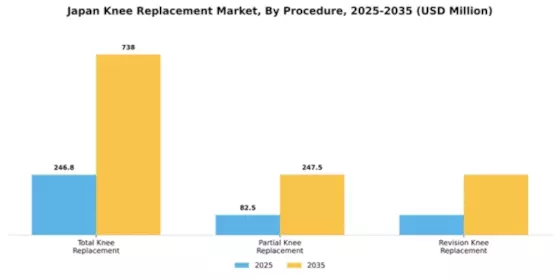
In the Japan knee replacement market, the segmentation by procedure illustrates that Total Knee Replacement holds a significant share among the options available. This procedure has been historically favored due to its comprehensive nature in addressing severe osteoarthritis, allowing for improved mobility and quality of life among patients. Meanwhile, Partial Knee Replacement is gaining momentum as an appealing alternative for patients with less extensive damage, indicating a shift in preference towards less invasive options. The growth trends indicate an increasing inclination towards Partial Knee Replacement, which is recognized as the fastest-growing segment in recent years. This shift can be attributed to advancements in surgical techniques and technology, which have made this procedure more accessible and effective. Additionally, an aging population, coupled with a rise in awareness about knee health, fuels the desire for procedures that offer quicker recovery and less risk of complications, making Partial Knee Replacement increasingly attractive to both physicians and patients.
Total Knee Replacement: Dominant vs. Partial Knee Replacement: Emerging
Total Knee Replacement remains the dominant player in the Japan knee replacement market, characterized by its ability to address complex knee conditions with a high success rate. Patients typically opt for this procedure when they have multifaceted knee issues, making it a preferred choice among orthopedic surgeons. On the other hand, Partial Knee Replacement has emerged as a favorable alternative for less severe cases, attracting patients who seek a less invasive solution. This procedure preserves more bone and tissue than its total counterpart, leading to decreased recovery times and less postoperative pain. As a result, while Total Knee Replacement continues to hold a strong market share, Partial Knee Replacement is rapidly gaining recognition and preference, highlighting a diversification in patient choices.
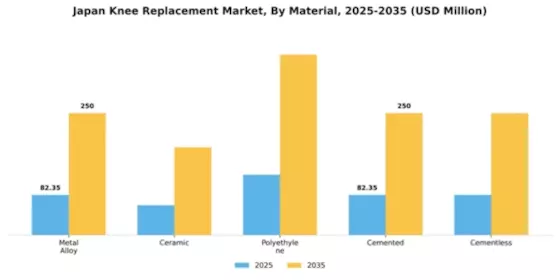
In the Japan knee replacement market, the segment values showcase diverse materials including Metal Alloy, Ceramic, Polyethylene, Cemented, and Cementless. Among these, Metal Alloy retains the largest market share due to its durability and compatibility with surgical procedures, while Ceramic is gaining traction rapidly, appealing to patients seeking improved biocompatibility and lower wear rates. This distribution indicates a market leaning towards robust solutions alongside innovative materials. Growth trends in this segment reflect a shifting preference towards advanced materials. The demand for Ceramic implants is propelled by increasing patient awareness of benefits such as reduced allergic reactions and enhanced longevity. Meanwhile, the Cemented segment is witnessing stable growth as it continues to be favored for its proven performance, ensuring a competitive landscape where both established and emerging materials vie for market presence.
Metal Alloy (Dominant) vs. Ceramic (Emerging)
The Metal Alloy segment is dominant in the Japan knee replacement market, primarily due to its strength and established track record over decades of surgical applications. This material is highly favored for its reliability in supporting joint functionality and longevity. On the other hand, the Ceramic segment, while emerging, is rapidly gaining popularity due to its superior wear resistance and aesthetic appeal. Unlike Metal Alloys, Ceramics offer the advantage of reduced friction and lower ion release into the body, which enhances patient safety and comfort. As consumers become more educated about their options, the balance between these two materials is shifting, presenting both challenges and opportunities for manufacturers.
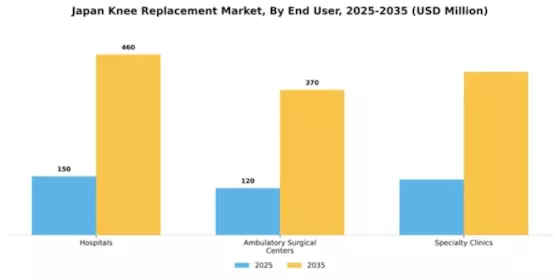
The Japan knee replacement market showcases a dynamic distribution of end users, with hospitals holding a significant share as the dominant segment. Hospitals are preferred due to their advanced infrastructure, availability of skilled surgeons, and comprehensive post-operative care, resulting in widespread acceptance among patients. Ambulatory Surgical Centers, while smaller in share, are rapidly gaining traction as they offer efficiency, lower costs, and quicker recovery times, appealing particularly to outpatient procedures. Growth trends in the segment are primarily driven by the increasing aging population and the rising prevalence of knee-related ailments. Hospitals continue to invest in advanced surgical technologies and procedures, improving outcomes and patient experiences. Meanwhile, Ambulatory Surgical Centers are emerging as a go-to option for many patients seeking minimally invasive procedures, further fueling their growth in the market.
Hospitals (Dominant) vs. Ambulatory Surgical Centers (Emerging)
Hospitals dominate the Japan knee replacement market due to their established reputation, ability to cater to complex cases, and comprehensive facilities that provide all-encompassing care. They typically have high volumes of procedures, which enhances their expertise. In contrast, Ambulatory Surgical Centers are emerging as a competitive alternative by focusing on outpatient knee replacement surgeries. These centers enable same-day discharge and are designed for efficiency, reducing the overall patient healthcare cost. They appeal particularly to healthy patients requiring knee replacements, given the expected lower complication rates and quicker recovery times. As surgical techniques continue to evolve, Ambulatory Surgical Centers are expected to grow their share significantly, reflecting changing patient preferences towards convenience and cost savings.
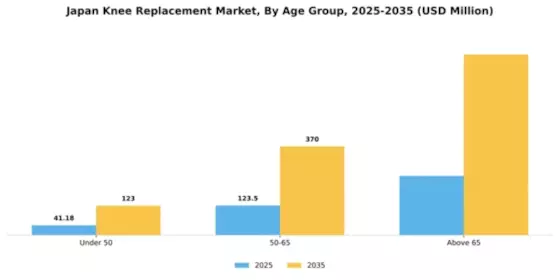
Within the age group segments, those aged 50-65 hold the largest market share in the Japan knee replacement market, demonstrating significant demand due to the increasing prevalence of age-related joint issues. This demographic exhibits a strong inclination towards knee replacement surgery as a means to restore mobility and quality of life, resulting in a more substantial proportion of surgeries performed within this age bracket. In contrast, the over 65 segment is identified as the fastest-growing category in the market. This growth is driven by the aging population and advancements in surgical techniques, leading to better outcomes and lower risks. As more individuals in this age group become eligible for knee replacements, the demand for procedures specifically tailored for older patients increases, further expanding this segment's significance.
50-65: Dominant vs. Above 65: Emerging
The 50-65 age group is characterized by a robust demand for knee replacement surgeries, largely due to the onset of osteoarthritis and other degenerative joint diseases that typically surface during this phase of life. Patients within this bracket are often more active and seek surgical solutions to maintain functionality. Conversely, the above 65 age group, while currently smaller in market share, is emerging rapidly due to demographic shifts and enhanced surgical technologies. Many older adults are now more receptive to surgery as a result of better health management and support systems, resulting in increased accessibility and acceptance of knee replacement as a viable option, thus driving this segment's growth.
Get more detailed insights about Japan Knee Replacement Market Request Free Sample
The knee replacement market in Japan is characterized by a competitive landscape that is both dynamic and multifaceted. Key growth drivers include an aging population, increasing prevalence of osteoarthritis, and advancements in surgical techniques. Major players such as Zimmer Biomet (US), Stryker (US), and DePuy Synthes (US) are strategically positioned to leverage these trends. Zimmer Biomet (US) focuses on innovation through the development of advanced implant technologies, while Stryker (US) emphasizes regional expansion and partnerships to enhance its market presence. DePuy Synthes (US) is actively pursuing digital transformation initiatives to improve surgical outcomes, collectively shaping a competitive environment that prioritizes technological advancement and patient-centric solutions.In terms of business tactics, companies are increasingly localizing manufacturing to reduce costs and enhance supply chain efficiency. The market structure appears moderately fragmented, with several key players exerting influence over various segments. This fragmentation allows for a diverse range of products and services, fostering competition that drives innovation and quality improvements across the board.
In October Stryker (US) announced the launch of a new robotic-assisted surgical system designed to enhance precision in knee replacement procedures. This strategic move is significant as it aligns with the growing trend towards minimally invasive surgeries, potentially improving patient recovery times and outcomes. By investing in robotic technology, Stryker (US) positions itself as a leader in surgical innovation, likely attracting a broader customer base.
In September Zimmer Biomet (US) expanded its partnership with a leading Japanese healthcare provider to enhance the distribution of its knee replacement products. This collaboration is crucial as it not only strengthens Zimmer Biomet's market presence but also facilitates access to advanced technologies for local healthcare professionals. Such strategic alliances may enhance the company's competitive edge in a rapidly evolving market.
In August DePuy Synthes (US) launched a new digital platform aimed at improving surgical planning and patient engagement in knee replacement procedures. This initiative reflects a broader trend towards digitalization in healthcare, suggesting that companies are increasingly recognizing the importance of integrating technology into their offerings. By enhancing the surgical experience through digital tools, DePuy Synthes (US) may improve patient satisfaction and outcomes, further solidifying its market position.
As of November current competitive trends in the knee replacement market include a pronounced focus on digitalization, sustainability, and the integration of artificial intelligence (AI) into surgical practices. Strategic alliances are becoming increasingly vital, as companies seek to combine resources and expertise to drive innovation. The competitive landscape is likely to evolve from traditional price-based competition towards a model that emphasizes technological advancement, supply chain reliability, and superior patient outcomes. This shift indicates that companies must prioritize innovation and quality to differentiate themselves in a crowded marketplace.

Recent developments in the Japan Knee Replacement Market show a growing focus on innovative surgical techniques and advanced materials, with major companies, including Mizuhho Medical and Zimmer Biomet, actively contributing to research and development. Current affairs indicate that companies like Stryker and Smith & Nephew are launching new knee prostheses designed to enhance patient mobility and longevity, driven by the increasing elderly population in Japan, which reached approximately 28% as of 2022.
In the last few years, particularly in March 2021, MediKey made strides in digital healthcare integration to enhance surgical outcomes and patient recovery times. The market has seen notable mergers, with Nipro expanding its orthopedic portfolio following a strategic acquisition in early 2022, strengthening its market position in Japan. Growth in market valuation has been significant; for example, Aesculap recorded a 15% increase in sales due to rising demand for minimally invasive surgeries as healthcare providers aim to improve patient experiences.
The current valuation trends reflect a competitive landscape, with organizations like DePuy Synthes continually innovating to cater to the evolving needs of healthcare professionals and patients alike in Japan.
The Knee replacement Market in Japan is projected to grow at a 10.59% CAGR from 2025 to 2035, driven by technological advancements, an aging population, and increasing healthcare expenditure.
New opportunities lie in:
By 2035, the knee replacement market is expected to achieve substantial growth and innovation.
| MARKET SIZE 2024 | 411.75(USD Million) |
| MARKET SIZE 2025 | 455.35(USD Million) |
| MARKET SIZE 2035 | 1245.88(USD Million) |
| COMPOUND ANNUAL GROWTH RATE (CAGR) | 10.59% (2025 - 2035) |
| REPORT COVERAGE | Revenue Forecast, Competitive Landscape, Growth Factors, and Trends |
| BASE YEAR | 2024 |
| Market Forecast Period | 2025 - 2035 |
| Historical Data | 2019 - 2024 |
| Market Forecast Units | USD Million |
| Key Companies Profiled | Zimmer Biomet (US), Stryker (US), DePuy Synthes (US), Smith & Nephew (GB), Medtronic (US), Ottobock (DE), Exactech (US), Aesculap (DE), B. Braun (DE) |
| Segments Covered | Procedure, Material, End User, Age Group |
| Key Market Opportunities | Integration of advanced robotics and minimally invasive techniques enhances patient outcomes in the knee replacement market. |
| Key Market Dynamics | Technological advancements and regulatory changes drive growth in Japan's knee replacement market, enhancing patient outcomes and surgical efficiency. |
| Countries Covered | Japan |
The Japan knee replacement market was valued at $411.75 Million in 2024.
The market is projected to reach $1245.88 Million by 2035.
The expected CAGR for the market during 2025 - 2035 is 10.59%.
Key players include Zimmer Biomet, Stryker, DePuy Synthes, Smith & Nephew, Medtronic, Ottobock, Exactech, Aesculap, and B. Braun.
The market segments include Total Knee Replacement, Partial Knee Replacement, and Revision Knee Replacement.
The valuation for Total Knee Replacement was $246.75 Million in 2024.
Partial Knee Replacement had a valuation of $82.5 Million in 2024, significantly lower than Total Knee Replacement.
Materials include Metal Alloy ($82.35 Million), Ceramic ($61.31 Million), Polyethylene ($123.75 Million), Cemented ($82.35 Million), and Cementless ($82.35 Million) in 2024.
End-user segments include Hospitals, Ambulatory Surgical Centers, and Specialty Clinics.
The valuation for the age group above 65 was $247.04 Million in 2024.



Kindly complete the form below to receive a free sample of this Report

“This is really good guys. Excellent work on a tight deadline. I will continue to use you going forward and recommend you to others. Nice job”


“Thanks. It’s been a pleasure working with you, please use me as reference with any other Intel employees.”


“Thanks for sending the report it gives us a good global view of the Betaïne market.”


“Thank you, this will be very helpful for OQS.”


“We found the report very insightful! we found your research firm very helpful. I'm sending this email to secure our future business.”


“I am very pleased with how market segments have been defined in a relevant way for my purposes (such as "Portable Freezers & refrigerators" and "last-mile"). In general the report is well structured. Thanks very much for your efforts.”


“I have been reading the first document or the study, ,the Global HVAC and FP market report 2021 till 2026. Must say, good info! I have not gone in depth at all parts, but got a good indication of the data inside!”


“We got the report in time, we really thank you for your support in this process. I also thank to all of your team as they did a great job.”


“The Automotive 48V ECU Components Procurement Intelligence Study” was a complex project, but the Market Research Future (MRFR) team handled it with quality, agility, and customer-centricity. They delivered all requested data on time and within the agreed scope. The team, including Shubhendra Anand and Rahul Gotadki, was always readily available to clarify questions and swiftly implement necessary adjustments, driving the project to a successful conclusion within a very demanding timeframe.
I would also like to specifically commend Akshay Agarwal for his responsiveness and support at every stage—from our initial inquiry on May 6th through to final delivery on June 18th. His dedication made the entire process seamless.”



