Download Free Sample
Kindly complete the form below to receive a free sample of this Report
US Knee Replacement Market Research Report: Size, Share, Trend Analysis By End Users (Clinics and Hospitals, Rehabilitation Centres, Specialty Centres), By Product Type (Partial Knee Reconstructive Implants, Total Knee Reconstructive Implants, Medical Pivot Implants, Fixed Bearing Implants, Revision Knee Reconstructive Implants, Mobile Bearing Implants, Others) and By Materials (Metal Alloy, Ceramic Material, Strong Plastic Parts) - Growth Outlook & Industry Forecast 2025 To 2035
As per Market Research Future analysis, the US knee replacement market Size was estimated at 2700.0 USD Million in 2024. The US knee replacement market is projected to grow from 2983.5 USD Million in 2025 to 8100.0 USD Million by 2035, exhibiting a compound annual growth rate (CAGR) of 10% during the forecast period 2025 - 2035
The US knee replacement market is experiencing robust growth driven by technological advancements and demographic shifts.
| 2024 Market Size | 2700.0 (USD Million) |
| 2035 Market Size | 8100.0 (USD Million) |
| CAGR (2025 - 2035) | 10.5% |
Zimmer Biomet (US), Stryker (US), DePuy Synthes (US), Smith & Nephew (GB), Medtronic (US), Ottobock (DE), Exactech (US), Aesculap (DE), B. Braun (DE)
Our Impact
Enabled $4.3B Revenue Impact for Fortune 500 and Leading Multinationals
Partnering with 2000+ Global Organizations Each Year
30K+ Citations by Top-Tier Firms in the Industry
The knee replacement market is currently experiencing notable transformations driven by advancements in technology and evolving patient demographics. As the population ages, the demand for knee replacement procedures is likely to increase, reflecting a growing prevalence of osteoarthritis and other degenerative joint diseases. Innovations in surgical techniques, such as minimally invasive procedures and robotic-assisted surgeries, appear to enhance recovery times and improve patient outcomes. Furthermore, the integration of personalized medicine into treatment plans may lead to more tailored approaches, potentially increasing the effectiveness of interventions. In addition to technological advancements, the knee replacement market is influenced by shifts in healthcare policies and reimbursement models. The emphasis on value-based care suggests that healthcare providers are increasingly focused on delivering high-quality outcomes while managing costs. This trend may encourage the adoption of new technologies and practices that demonstrate clear benefits to patients. Moreover, the rising awareness of joint health and the importance of early intervention could lead to an increase in preventive measures, thereby impacting the overall landscape of knee replacement procedures in the near future.
Innovations in surgical techniques, including robotic-assisted surgeries and minimally invasive procedures, are transforming the knee replacement market. These advancements may lead to shorter recovery times and improved patient outcomes, making procedures more appealing to both patients and healthcare providers.
The aging population in the US is contributing to a rising demand for knee replacement surgeries. As more individuals experience joint-related issues, the market is likely to expand, necessitating a focus on effective treatment options and patient education.
The shift towards value-based care is influencing the knee replacement market by prioritizing quality outcomes over volume. This trend encourages healthcare providers to adopt practices that enhance patient satisfaction and reduce costs, potentially reshaping the delivery of knee replacement services.
The upward trend in healthcare expenditure in the US is likely to have a profound impact on the knee replacement market. As healthcare spending continues to rise, more resources are allocated towards orthopedic procedures, including knee replacements. In 2025, healthcare spending is projected to reach approximately $4.5 trillion, with a significant portion directed towards surgical interventions. This increase in funding may facilitate better access to knee replacement surgeries for patients, particularly those who may have previously faced financial barriers. Additionally, as insurance coverage expands and reimbursement rates improve, more individuals may opt for knee replacement procedures, further driving market growth. The correlation between healthcare expenditure and surgical interventions suggests a promising outlook for the knee replacement market.
There is a growing awareness and education regarding knee health and the benefits of knee replacement surgeries, which appears to be a significant driver for the knee replacement market. Healthcare campaigns and patient education initiatives are informing individuals about the options available for managing knee pain and mobility issues. This increased awareness is likely leading to more patients seeking consultations and considering knee replacement as a viable solution. Moreover, as patients become more informed about the advancements in surgical techniques and post-operative care, they may be more inclined to pursue these procedures. This trend is expected to contribute to a steady increase in the demand for knee replacements, thereby positively impacting the market.
Innovations in surgical techniques and technologies are significantly influencing the knee replacement market. Minimally invasive procedures, robotic-assisted surgeries, and enhanced recovery protocols are becoming increasingly prevalent. These advancements not only improve surgical outcomes but also reduce recovery times, which is appealing to both patients and healthcare providers. For instance, robotic-assisted knee surgeries have been shown to enhance precision, potentially leading to better alignment and longevity of implants. As a result, the market is witnessing a shift towards these advanced surgical options, which may contribute to an increase in the number of procedures performed annually. The adoption of these technologies is likely to enhance patient satisfaction and outcomes, further propelling the growth of the knee replacement market.
The increasing incidence of osteoarthritis among the aging population appears to be a primary driver for the knee replacement market. As individuals age, the likelihood of developing osteoarthritis escalates, leading to a higher demand for knee replacement surgeries. In the US, it is estimated that approximately 27 million adults are affected by osteoarthritis, with knee joints being the most commonly impacted. This condition often results in chronic pain and mobility issues, prompting patients to seek surgical interventions. Consequently, the knee replacement market is experiencing growth as healthcare providers respond to this rising need. Furthermore, the financial burden associated with untreated osteoarthritis, which can lead to increased healthcare costs, may further incentivize patients to opt for knee replacement procedures, thereby driving market expansion.
The demographic shift towards an aging population, coupled with a desire for active lifestyles, appears to be a crucial driver for the knee replacement market. As the baby boomer generation ages, there is an increasing number of individuals seeking to maintain their mobility and quality of life. Many older adults are prioritizing physical activity, which can lead to wear and tear on knee joints, necessitating surgical intervention. This trend is particularly evident in the US, where a significant portion of the population is over 65 years old. The desire to remain active and engaged in daily activities is likely to drive demand for knee replacements, as individuals seek solutions to alleviate pain and restore function. Consequently, this demographic trend is expected to contribute to the sustained growth of the knee replacement market.
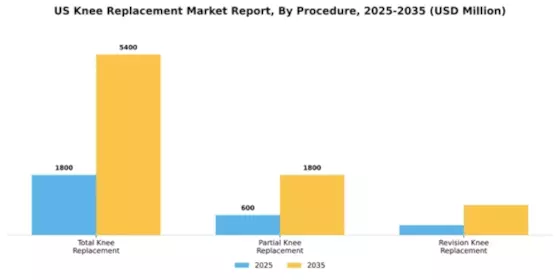
In the US knee replacement market, Total Knee Replacement (TKR) constitutes the largest segment, commanding a significant share due to its established surgical protocols and extensive application in patients with severe knee osteoarthritis. Partial Knee Replacement (PKR) is emerging strongly as an alternative, appealing to a growing demographic of patients seeking less invasive options with quicker recovery times and less postoperative discomfort. This diversification is reshaping the overall market landscape. Growth trends in the US knee replacement market are being driven by an aging population, increasing prevalence of obesity, and advancements in surgical techniques and prosthetic technology. The demand for less invasive procedures has made PKR the fastest-growing segment, as more surgeons gain proficiency in its application, thereby enhancing patient outcomes and satisfaction. As awareness and acceptance of partial replacements increase, this segment is expected to gain further market traction over the coming years.
Total Knee Replacement (Dominant) vs. Partial Knee Replacement (Emerging)
Total Knee Replacement (TKR) stands out as the dominant procedure within the US knee replacement market, widely recognized for its efficacy in relieving pain and improving mobility in patients with significant knee degeneration. Surgeons prefer this option for its proven track record and the comprehensive restoration of function it offers. However, Partial Knee Replacement (PKR) is carving a niche as an emerging choice for patients with localized knee issues, providing a less invasive alternative that minimizes damage to surrounding tissues. As surgical techniques and patient selection criteria evolve, PKR is witnessing a rise in adoption, particularly among younger patients and those looking for quicker recovery, thereby enhancing its appeal in the current market.
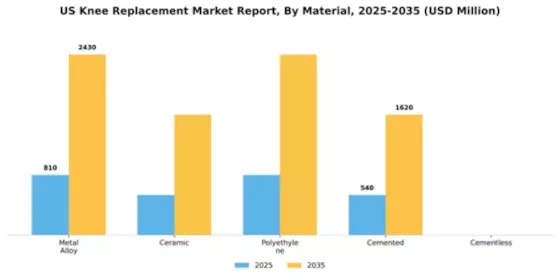
In the US knee replacement market, the material segment showcases a diverse range of options including Metal Alloy, Ceramic, Polyethylene, Cemented, and Cementless. Among these, Metal Alloy stands as the largest share contributor, favored for its durability and established performance record. Ceramic, on the other hand, is rapidly gaining traction due to its superior wear resistance and biocompatibility, making it a popular choice for both patients and surgeons. The growth trends within the material segment are shaped by advanced manufacturing techniques and innovative material compositions. Increasing patient awareness regarding the advantages of various materials, paired with rising incidences of knee osteoarthritis, fuels demand, particularly for Ceramic and Cementless options. The trend toward minimally invasive surgeries is also propelling the adoption of lighter and more flexible materials like Polyethylene and Cementless solutions, further enhancing the segment’s dynamics.
Metal Alloy (Dominant) vs. Ceramic (Emerging)
Metal Alloy represents the dominant material within the knee replacement sphere, known for its robustness and historical reliability. It typically offers prolonged lifespan and resilience against wear, making it favored among orthopedics. In contrast, Ceramic is emerging strongly due to its low friction and wear rates, which contribute to reduced pain and discomfort for patients post-surgery. Although historically used less frequently, advancements in manufacturing have enabled better performance characteristics for Ceramic, positioning it as an appealing choice for younger, active patients seeking longevity in their joint replacements. Both materials have their unique benefits, catering to specific patient needs and preferences.
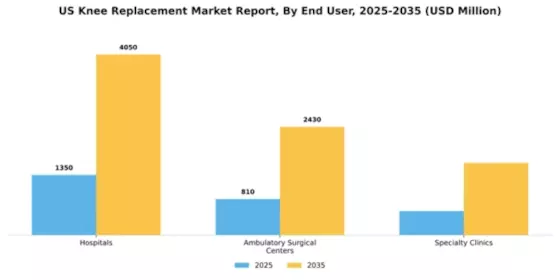
In the US knee replacement market, Hospitals command the largest market share, significantly outpacing other end users. They represent a critical component in the healthcare infrastructure, providing extensive resources and specialized staff necessary for complex surgeries. On the other hand, Ambulatory Surgical Centers (ASCs), while currently holding a smaller share, are rapidly increasing their presence in the market. The convenience and efficiency offered by ASCs are appealing to both patients and providers, contributing to their notable growth in recent years. The growth trends in this segment are driven by a combination of factors including the rising aging population and an increasing prevalence of knee-related disorders. Innovations in surgical techniques and prosthetic technologies are also supporting this growth trajectory. Market players are shifting towards ASCs due to their cost-effectiveness and shorter recovery times, making them an attractive alternative to traditional hospital settings. Hospitals will likely continue to dominate, but ASCs are poised to capture a more significant share of the market over time.
Hospitals (Dominant) vs. Ambulatory Surgical Centers (Emerging)
Hospitals remain the dominant force in the US knee replacement market, characterized by their ability to offer comprehensive surgical services and postoperative care. They are equipped with advanced imaging and surgical technology, essential for complex knee procedures and managing complications. The established infrastructure and skilled surgical teams in hospitals lend confidence to patients seeking knee replacements. Conversely, Ambulatory Surgical Centers are emerging as a viable option, focusing on outpatient procedures that enhance patient convenience and reduce healthcare costs. ASCs attract patients with shorter waiting times, less invasive procedures, and a focus on efficiency, making them increasingly popular among physicians and patients alike. The competition between these two segments is fostering innovation and improvement in service delivery.
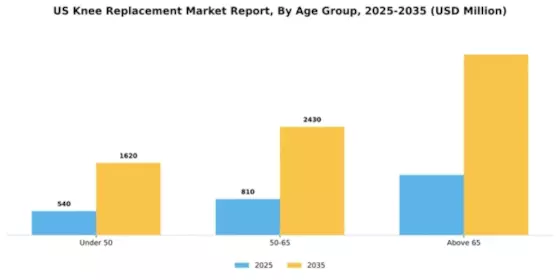
In the US knee replacement market, the age group 50-65 holds the largest market share, reflecting a significant portion of those requiring joint replacements due to age-related wear and tear. Following closely, the above 65 age group is rapidly increasing its market share as the population ages and seeks surgical interventions to improve mobility and quality of life. The under 50 segment, while smaller, presents niche opportunities, especially among active younger patients with specific conditions. Growth trends indicate a surge in demand for knee replacements among the older population, primarily driven by an increase in life expectancy and the prevalence of osteoarthritis. Additionally, advances in surgical techniques and implant technologies enhance the appeal of knee replacements for older adults, leading to higher adoption rates. With an aging population, the market is poised for continued growth, particularly among the above 65 group, which is becoming more open to surgical solutions for knee issues.
50-65 (Dominant) vs. Above 65 (Emerging)
The 50-65 age group is characterized by a more active lifestyle and higher prevalence of knee-related issues due to aging. This segment is often at a stage where they prioritize health and fitness, driving greater demand for knee replacements as they seek to maintain mobility and lower pain levels. In contrast, the above 65 segment is emerging as a vital part of the market due to increased life expectancy and a growing acceptance of surgical options to enhance life quality. As healthcare becomes more tailored to the needs of seniors, this segment is likely to witness rapid growth, along with advancements in minimally invasive procedures making knee replacements more attractive.
Get more detailed insights about US Knee replacement Market Request Free Sample
The knee replacement market is characterized by a dynamic competitive landscape, driven by an increasing aging population and rising prevalence of osteoarthritis. Major players such as Zimmer Biomet (US), Stryker (US), and DePuy Synthes (US) are at the forefront, each adopting distinct strategies to enhance their market positioning. Zimmer Biomet (US) emphasizes innovation through advanced surgical technologies and personalized solutions, while Stryker (US) focuses on expanding its product portfolio and enhancing patient outcomes through digital health solutions. DePuy Synthes (US) leverages its extensive research capabilities to develop cutting-edge implants, thereby shaping a competitive environment that prioritizes technological advancement and patient-centric approaches.Key business tactics within the market include localizing manufacturing and optimizing supply chains to enhance efficiency and reduce costs. The competitive structure appears moderately fragmented, with several key players exerting influence over market dynamics. This fragmentation allows for a diverse range of products and innovations, fostering a competitive atmosphere where companies must continuously adapt to maintain their market share.In October Stryker (US) announced the launch of its new robotic-assisted surgical system, designed to improve precision in knee replacement procedures. This strategic move is significant as it aligns with the growing trend towards minimally invasive surgeries, potentially enhancing patient recovery times and satisfaction. By investing in robotic technology, Stryker (US) positions itself as a leader in surgical innovation, likely attracting a broader customer base.In September Zimmer Biomet (US) entered into a partnership with a leading telehealth provider to integrate remote monitoring solutions into its knee replacement offerings. This collaboration is indicative of the increasing importance of digital health in orthopedic care, suggesting that Zimmer Biomet (US) is keen on enhancing patient engagement and post-operative care. Such initiatives may not only improve patient outcomes but also strengthen brand loyalty in a competitive market.In August DePuy Synthes (US) unveiled a new line of personalized knee implants that utilize 3D printing technology. This innovation is crucial as it allows for tailored solutions that cater to individual patient anatomies, potentially leading to better surgical outcomes. The adoption of 3D printing signifies a shift towards customization in the knee replacement market, which could redefine competitive strategies among key players.As of November current trends in the knee replacement market include a pronounced focus on digitalization, sustainability, and the integration of artificial intelligence (AI) in surgical procedures. Strategic alliances are increasingly shaping the landscape, enabling companies to pool resources and expertise to drive innovation. Looking ahead, competitive differentiation is likely to evolve from traditional price-based competition to a focus on technological advancements, supply chain reliability, and enhanced patient experiences. This shift underscores the necessity for companies to invest in innovation and operational excellence to thrive in an ever-evolving market.


In recent developments within the US Knee Replacement Market, several companies have reported advancements and collaborations aimed at enhancing surgical outcomes and patient recovery. Smith and Nephew has been focusing on innovation with its new robotic-assisted surgery platforms, while Exactech has expanded its product offering to include devices tailored to the needs of outpatient settings. The market has seen significant investment activity, highlighted by Stryker's acquisition of Wright Medical Group in November 2020, which strengthened Stryker's position in the joint replacement sector.
Additionally, in August 2021, Zimmer Biomet announced a partnership with ConforMIS to enhance personalized knee implant solutions, showcasing a trend towards customized patient care.
The ongoing growth in this market is also reflected in financial metrics, with analysts noting a CAGR of approximately 5% for knee replacement procedures in the US as of 2023, driven by an aging population and increased prevalence of orthopedic conditions. Furthermore, Medtronic and Ottobock have initiated programs focusing on regenerative medicine, which may further impact the market landscape in the coming years, continuing the momentum of technological advancements and strategic collaborations in orthopedic healthcare.
The Knee replacement Market is projected to grow at a 10.5% CAGR from 2025 to 2035, driven by technological advancements, increasing aging population, and rising prevalence of knee disorders.
New opportunities lie in:
By 2035, the knee replacement market is expected to achieve substantial growth, driven by innovation and increasing demand.
| MARKET SIZE 2024 | 2700.0(USD Million) |
| MARKET SIZE 2025 | 2983.5(USD Million) |
| MARKET SIZE 2035 | 8100.0(USD Million) |
| COMPOUND ANNUAL GROWTH RATE (CAGR) | 10.5% (2025 - 2035) |
| REPORT COVERAGE | Revenue Forecast, Competitive Landscape, Growth Factors, and Trends |
| BASE YEAR | 2024 |
| Market Forecast Period | 2025 - 2035 |
| Historical Data | 2019 - 2024 |
| Market Forecast Units | USD Million |
| Key Companies Profiled | Zimmer Biomet (US), Stryker (US), DePuy Synthes (US), Smith & Nephew (GB), Medtronic (US), Ottobock (DE), Exactech (US), Aesculap (DE), B. Braun (DE) |
| Segments Covered | Procedure, Material, End User, Age Group |
| Key Market Opportunities | Integration of advanced robotics and personalized implants enhances outcomes in the knee replacement market. |
| Key Market Dynamics | Technological advancements and regulatory changes drive innovation and competition in the knee replacement market. |
| Countries Covered | US |
The US knee replacement market was valued at $2700.0 Million in 2024.
The projected valuation for the US knee replacement market in 2035 is $8100.0 Million.
The expected CAGR for the US knee replacement market during the forecast period 2025 - 2035 is 10.5%.
Key players in the US knee replacement market include Zimmer Biomet, Stryker, DePuy Synthes, Smith & Nephew, Medtronic, Ottobock, Exactech, Aesculap, and B. Braun.
In 2024, Total Knee Replacement was valued at $1800.0 Million, Partial Knee Replacement at $600.0 Million, and Revision Knee Replacement at $300.0 Million.
In 2024, the age group above 65 accounted for $1350.0 Million, while those aged 50-65 contributed $810.0 Million, and under 50 accounted for $540.0 Million.
In 2024, Metal Alloy and Polyethylene each had a valuation of $810.0 Million, while Ceramic was valued at $540.0 Million.
In 2024, hospitals represented a market value of $1350.0 Million, ambulatory surgical centers $810.0 Million, and specialty clinics $540.0 Million.
The market for partial knee replacements is expected to grow from $600.0 Million in 2024 to $1800.0 Million by 2035.
The revision knee replacement segment was valued at $300.0 Million in 2024 and is projected to reach $900.0 Million by 2035.



Kindly complete the form below to receive a free sample of this Report

“This is really good guys. Excellent work on a tight deadline. I will continue to use you going forward and recommend you to others. Nice job”


“Thanks. It’s been a pleasure working with you, please use me as reference with any other Intel employees.”


“Thanks for sending the report it gives us a good global view of the Betaïne market.”


“Thank you, this will be very helpful for OQS.”


“We found the report very insightful! we found your research firm very helpful. I'm sending this email to secure our future business.”


“I am very pleased with how market segments have been defined in a relevant way for my purposes (such as "Portable Freezers & refrigerators" and "last-mile"). In general the report is well structured. Thanks very much for your efforts.”


“I have been reading the first document or the study, ,the Global HVAC and FP market report 2021 till 2026. Must say, good info! I have not gone in depth at all parts, but got a good indication of the data inside!”


“We got the report in time, we really thank you for your support in this process. I also thank to all of your team as they did a great job.”


“The Automotive 48V ECU Components Procurement Intelligence Study” was a complex project, but the Market Research Future (MRFR) team handled it with quality, agility, and customer-centricity. They delivered all requested data on time and within the agreed scope. The team, including Shubhendra Anand and Rahul Gotadki, was always readily available to clarify questions and swiftly implement necessary adjustments, driving the project to a successful conclusion within a very demanding timeframe.
I would also like to specifically commend Akshay Agarwal for his responsiveness and support at every stage—from our initial inquiry on May 6th through to final delivery on June 18th. His dedication made the entire process seamless.”



