Download Free Sample
Kindly complete the form below to receive a free sample of this Report
Japan Surgical Sutures Market Research Report By Type (Absorbable, Non Absorbable), By Filament (Monofilament, Multifilament) and By Application (Ophthalmic Surgery, Cardiovascular Surgery, Orthopedic Surgery, Neurological Surgery, Others) - Growth & Industry Forecast 2025 To 2035
As per Market Research Future analysis, the Japan Surgical Sutures Market size was estimated at 161.29 USD Million in 2024. The Surgical Sutures market is projected to grow from 166.81 USD Million in 2025 to 233.48 USD Million by 2035, exhibiting a compound annual growth rate (CAGR) of 3.4% during the forecast period 2025 - 2035
The Japan surgical sutures market is poised for growth driven by technological advancements and increasing surgical procedures.
| 2024 Market Size | 161.29 (USD Million) |
| 2035 Market Size | 233.48 (USD Million) |
| CAGR (2025 - 2035) | 3.42% |
Ethicon (US), Medtronic (US), Sutures India (IN), B. Braun (DE), Surgical Specialties Corporation (CA), Smith & Nephew (GB), Conmed Corporation (US), DemeTECH Corporation (US), Mölnlycke Health Care (SE)
Our Impact
Enabled $4.3B Revenue Impact for Fortune 500 and Leading Multinationals
Partnering with 2000+ Global Organizations Each Year
30K+ Citations by Top-Tier Firms in the Industry
The Japan Surgical Sutures Market in Japan is currently experiencing notable developments, driven by advancements in medical technology and an increasing emphasis on patient safety. The demand for high-quality sutures is rising, as healthcare providers seek to enhance surgical outcomes and minimize complications. Innovations in materials, such as biodegradable and antimicrobial sutures, are gaining traction, reflecting a shift towards more effective and safer options. Furthermore, the aging population in Japan is contributing to a higher incidence of surgical procedures, thereby propelling the need for reliable suturing solutions. In addition, regulatory frameworks are evolving to ensure that surgical sutures meet stringent safety and efficacy standards. This regulatory environment encourages manufacturers to invest in research and development, fostering a competitive landscape. As a result, the surgical sutures market is poised for growth, with a focus on sustainability and technological advancements. The interplay between innovation and regulatory compliance is likely to shape the future of this market, making it a dynamic sector within the healthcare industry.
The surgical sutures market is witnessing a shift towards advanced materials, including biodegradable and antimicrobial options. These innovations are designed to enhance healing and reduce infection rates, aligning with the growing focus on patient safety and recovery outcomes.
The integration of technology in surgical procedures is influencing the surgical sutures market. Enhanced surgical techniques, such as minimally invasive surgeries, require specialized sutures that cater to the unique demands of these procedures, driving innovation and development.
Stringent regulatory standards are shaping the surgical sutures market. Manufacturers are compelled to adhere to rigorous quality assurance protocols, ensuring that products meet safety and efficacy requirements, which ultimately benefits patient care.
Japan's healthcare expenditure continues to rise, which positively influences the surgical sutures market. In 2025, healthcare spending is expected to reach approximately ¥42 trillion, reflecting a commitment to improving healthcare services. This increase in funding allows for the procurement of advanced surgical sutures, which are essential for effective surgical outcomes. The surgical sutures market stands to gain from this trend, as hospitals and clinics prioritize high-quality materials and technologies to enhance patient care. As healthcare budgets expand, the demand for superior suturing solutions is likely to grow, further driving market expansion.
The surgical sutures market in Japan is experiencing growth due to the rising number of surgical procedures performed annually. Factors such as an aging population and advancements in surgical techniques contribute to this trend. In 2025, it is estimated that the number of surgeries will increase by approximately 5% compared to previous years. This surge in surgical interventions necessitates a corresponding demand for high-quality sutures, as they are critical for effective wound closure and healing. The surgical sutures market is thus poised to benefit from this upward trajectory, as healthcare providers seek reliable and innovative suture solutions to enhance patient outcomes.
There is a heightened awareness of surgical safety among healthcare providers and patients in Japan, which is influencing the surgical sutures market. As surgical complications can lead to significant health risks, the emphasis on using reliable sutures has intensified. In 2025, it is anticipated that hospitals will increasingly adopt best practices in surgical procedures, including the selection of high-quality sutures. This trend indicates a shift towards prioritizing patient safety and outcomes, thereby benefiting the surgical sutures market. Manufacturers that focus on quality assurance and safety features in their products are likely to see increased demand.
Innovations in suture technology are significantly impacting the surgical sutures market in Japan. The introduction of absorbable sutures and antimicrobial coatings has revolutionized wound management, reducing infection rates and improving healing times. In 2025, the market for advanced sutures is projected to grow by 7%, driven by these technological advancements. The surgical sutures market is adapting to these changes, with manufacturers investing in research and development to create products that meet the evolving needs of healthcare professionals. This focus on innovation is likely to enhance the competitive landscape and provide better options for surgeons.
The surgical sutures market is also being driven by the expansion of minimally invasive surgical techniques in Japan. These procedures, which often require specialized sutures, are gaining popularity due to their benefits, including reduced recovery times and lower complication rates. In 2025, the market for sutures used in minimally invasive surgeries is projected to grow by 6%. The surgical sutures market must adapt to this trend by developing sutures that cater specifically to the needs of these advanced surgical methods. This adaptation could lead to increased market share for companies that innovate in this area.
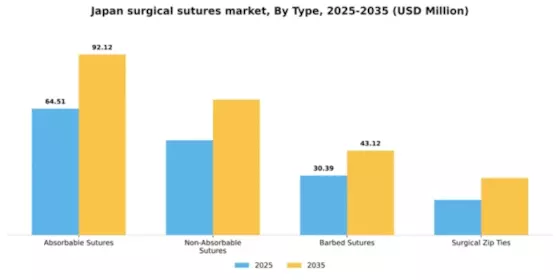
The Japan surgical sutures market exhibits a diverse segmentation with absorbable sutures securing the largest market share, primarily due to their widespread use in various surgical procedures that require minimal post-operative complications. Non-absorbable sutures also hold a significant portion of the market, favored for their strength and durability in long-term tissue support, while barbed sutures and surgical zip ties cater to niche areas with specialized applications. Recent trends indicate a robust growth trajectory for barbed sutures, attributed to their innovative design that enhances efficiency during surgeries. This segment is witnessing increasing adoption as healthcare professionals recognize their advantages in reducing suturing time and minimizing the need for knot tying. Moreover, the rising number of surgical procedures contributes to the overall expansion of the market, making these products essential in modern surgical practices.
Absorbable Sutures (Dominant) vs. Barbed Sutures (Emerging)
Absorbable sutures are the dominant force in the market, offering advantages such as easy application and reduced need for removal, making them invaluable in surgeries where healing time is crucial. They are primarily made from materials like polyglycolic acid and polylactic acid, ensuring safe absorption by the body. On the other hand, barbed sutures are an emerging segment known for their unique design that eliminates the need for knots, making them increasingly popular in minimally invasive surgeries. Their ability to provide secure tissue approximation with reduced operating time positions them favorably among surgical professionals, reflecting a shift in preference towards innovative solutions that enhance surgical efficiency.
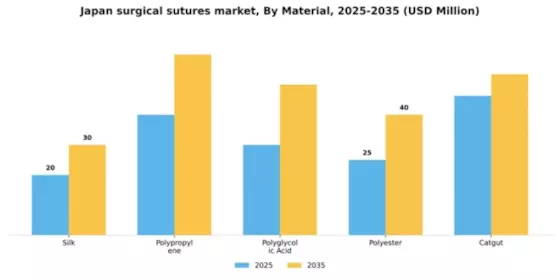
Within the material segment of the Japan surgical sutures market, Silk currently holds the largest market share, favored for its ease of handling and effective tissue adhesion properties. Other materials, such as Polypropylene and Polyester, also contribute significantly to the market, but Silk's traditional use in various surgical procedures gives it a competitive advantage. Polyglycolic Acid, while smaller in market share, is gaining traction due to its biodegradable nature and rapid absorption characteristics. The growth trends within the material segment are primarily driven by advancements in surgical procedures and an increasing preference for minimally invasive techniques. The demand for Polyglycolic Acid is especially rising, as healthcare providers focus on reducing patient recovery times and enhancing surgical outcomes. Innovations in surgical material technology and a growing emphasis on patient safety and comfort enable the emergence of new materials, contributing to an evolving market landscape.
Silk (Dominant) vs. Polyglycolic Acid (Emerging)
Silk sutures are renowned for their excellent flexibility, ease of knot tying, and minimal tissue reactivity, making them a go-to choice for many surgical applications, particularly in delicate tissue areas. Their long history of use in the surgical field ensures that they remain a trusted option among surgeons. On the other hand, Polyglycolic Acid sutures are emerging as a preferred choice due to their biodegradable properties, which promote natural tissue healing without leaving foreign material in the body. They are particularly appealing in surgeries requiring rapid absorption. While Silk continues to dominate the market, the innovative features of Polyglycolic Acid reflect a shift towards modern surgical practices and a growing emphasis on reducing environmental impacts in healthcare.
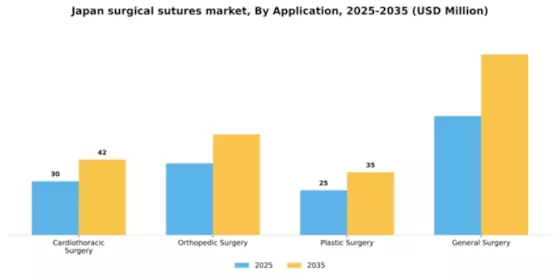
In the Japan surgical sutures market, General Surgery holds the largest market share, largely due to its wide application across various surgical procedures. This segment benefits from the increased volume of surgeries performed annually, bolstered by advancements in surgical techniques and the rising number of hospitals equipped with modern surgical facilities. Cardiothoracic Surgery, while smaller in comparison, is experiencing rapid growth driven by increasing incidences of cardiovascular diseases and the aging population, resulting in a higher demand for specialized surgical interventions. The growth of the Japan surgical sutures market is significantly influenced by technological advancements in suture materials and design, enhancing surgical outcomes. Continuous innovation in minimally invasive surgeries is contributing to the rising demand for sutures, especially in the Cardiothoracic Surgery segment where precision is crucial. Furthermore, the growing geriatric population is expected to lead to more surgical procedures, thus driving the market for both General and Cardiothoracic Surgery in the coming years.
General Surgery (Dominant) vs. Cardiothoracic Surgery (Emerging)
The General Surgery segment is characterized by a broad spectrum of applications that cater to numerous medical conditions, making it a dominant player in the Japan surgical sutures market. This segment's growth is facilitated by the trend towards minimally invasive surgical procedures, which requires specific suturing techniques and materials to ensure effective recovery. On the other hand, Cardiothoracic Surgery is an emerging segment that is gaining traction due to the increasing prevalence of heart-related conditions and advancements in surgical methods. Safety and efficacy are paramount in this segment, leading to the development of advanced sutures that offer better performance in cardiac and thoracic procedures. Together, these segments showcase the dual dynamics of dominance and emerging opportunities within the market.
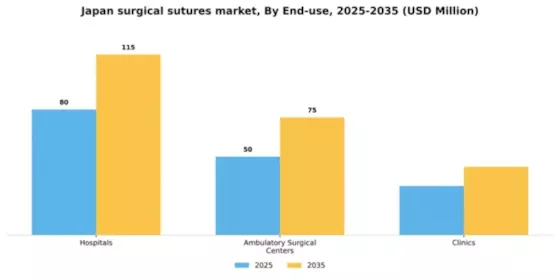
In the Japan surgical sutures market, hospitals command the largest share, significantly outpacing other end-use segments. With a well-established infrastructure and a diverse range of surgical procedures, hospitals are the primary consumers of surgical sutures. Ambulatory surgical centers, while smaller in market share, are rapidly gaining traction due to an increase in outpatient surgeries and minimally invasive procedures, allowing them to capture a larger portion of the market over time. The growth trends within these segments are driven by technological advancements and an increase in surgical procedures across various healthcare settings. Hospitals continue to expand their surgical capabilities, which maintains their dominant position. Conversely, ambulatory surgical centers are benefiting from a shift towards outpatient care, which is enhancing their growth prospects. As patient preferences shift and surgical techniques evolve, both segments are poised for continued development in the surgical sutures market.
Hospitals (Dominant) vs. Ambulatory Surgical Centers (Emerging)
Hospitals play a dominant role in the Japan surgical sutures market, characterized by their extensive resources and capability to perform a wide array of surgical interventions. They typically have established purchasing processes and relationships with suture manufacturers, ensuring a steady supply of both standard and specialty sutures. On the other hand, ambulatory surgical centers are emerging as significant players, increasingly favored for outpatient procedures that reduce healthcare costs and improve patient satisfaction. These centers often adopt innovations quickly, allowing them to utilize advanced suturing technologies and maintain an edge in their specific segment. This comparative analysis highlights the contrasting yet interlinked positions of these two segments in the overall landscape of surgical sutures.
Get more detailed insights about Japan Surgical Sutures Market Request Free Sample
The surgical sutures market in Japan is characterized by a competitive landscape that is increasingly shaped by innovation, strategic partnerships, and a focus on quality. Key growth drivers include the rising demand for minimally invasive surgeries, advancements in suture technology, and an aging population that necessitates surgical interventions. Major players such as Ethicon (US), Medtronic (US), and B. Braun (DE) are at the forefront, employing strategies that emphasize product development and market expansion. Ethicon (US), for instance, has been focusing on enhancing its product portfolio through innovative suture materials, while Medtronic (US) is leveraging its extensive distribution network to penetrate deeper into the Japanese market. B. Braun (DE) appears to be concentrating on sustainability initiatives, which may resonate well with the growing environmental consciousness among healthcare providers.In terms of business tactics, companies are increasingly localizing manufacturing to reduce costs and improve supply chain efficiency. This approach not only mitigates risks associated with The surgical sutures market demands. The competitive structure of the market is moderately fragmented, with several players vying for market share. However, the collective influence of key players like Ethicon (US) and Medtronic (US) suggests a trend towards consolidation, as these companies seek to enhance their competitive edge through strategic acquisitions and partnerships.
In October Ethicon (US) announced the launch of a new biodegradable suture line designed to reduce post-operative complications. This strategic move is significant as it aligns with the increasing demand for sustainable medical products, potentially positioning Ethicon (US) as a leader in eco-friendly surgical solutions. The introduction of biodegradable sutures may not only enhance patient outcomes but also cater to the growing regulatory pressures for environmentally responsible healthcare products.
In September Medtronic (US) expanded its partnership with a local Japanese healthcare provider to enhance its distribution capabilities. This collaboration is likely to strengthen Medtronic's market presence and improve access to its advanced surgical sutures. By aligning with local entities, Medtronic (US) can better navigate the regulatory landscape and tailor its offerings to meet specific regional needs, thereby enhancing its competitive positioning.
In August B. Braun (DE) launched a new initiative aimed at integrating AI into its manufacturing processes to optimize production efficiency. This strategic action reflects a broader trend towards digital transformation within the industry. By adopting AI technologies, B. Braun (DE) may improve its operational efficiency and reduce costs, which could provide a competitive advantage in a market where price sensitivity is prevalent.
As of November the competitive trends in the surgical sutures market are increasingly defined by digitalization, sustainability, and technological integration. Strategic alliances are becoming more prevalent, as companies recognize the need to collaborate to enhance their innovation capabilities. The shift from price-based competition to a focus on technological advancement and supply chain reliability is evident. Moving forward, competitive differentiation will likely hinge on the ability to innovate and adapt to changing market dynamics, with a strong emphasis on quality and sustainability.





In recent months, the Japan Surgical Sutures Market has witnessed several noteworthy developments. Companies such as W. L. Gore and Associates and Johnson and Johnson are focusing on innovative surgical suture technologies to enhance patient outcomes. Notably, in September 2023, Smith and Nephew announced a collaboration with Japanese medical institutions to advance surgical training utilizing their latest suturing devices. Additionally, there has been a visible increase in the market valuation of companies like Medtronic and B. Braun Melsungen AG, primarily driven by rising healthcare expenditures and an aging population in Japan.
The emphasis on minimally invasive procedures has also escalated, leading to higher demand for specialized sutures. Currently, there have been no significant mergers or acquisitions reported specifically within the Japanese context among the key players like Ethicon, 3M, and Teleflex, but ongoing research and development activities signify a robust competitive landscape. The last two years saw persistent growth trends, with a marked increase in the deployment of bioengineered sutures, reflecting the evolving needs of surgical practices in Japan's healthcare system.
The Surgical Sutures Market in Japan is projected to grow at a 3.42% CAGR from 2025 to 2035, driven by technological advancements and increasing surgical procedures.
New opportunities lie in:
By 2035, the market is expected to achieve robust growth, reflecting evolving healthcare needs.
| MARKET SIZE 2024 | 161.29(USD Million) |
| MARKET SIZE 2025 | 166.81(USD Million) |
| MARKET SIZE 2035 | 233.48(USD Million) |
| COMPOUND ANNUAL GROWTH RATE (CAGR) | 3.42% (2025 - 2035) |
| REPORT COVERAGE | Revenue Forecast, Competitive Landscape, Growth Factors, and Trends |
| BASE YEAR | 2024 |
| Market Forecast Period | 2025 - 2035 |
| Historical Data | 2019 - 2024 |
| Market Forecast Units | USD Million |
| Key Companies Profiled | Ethicon (US), Medtronic (US), Sutures India (IN), B. Braun (DE), Surgical Specialties Corporation (CA), Smith & Nephew (GB), Conmed Corporation (US), DemeTECH Corporation (US), Mölnlycke Health Care (SE) |
| Segments Covered | Type, Material, Application, End-use |
| Key Market Opportunities | Adoption of advanced biodegradable materials enhances sustainability in the surgical sutures market. |
| Key Market Dynamics | Rising demand for advanced surgical sutures driven by technological innovations and regulatory enhancements in Japan's healthcare sector. |
| Countries Covered | Japan |
The market valuation was $161.29 Million in 2024.
The projected valuation for 2035 is $233.48 Million.
The expected CAGR is 3.42% during the forecast period 2025 - 2035.
Absorbable sutures had the highest valuation at $64.51 Million in 2024.
The projected valuation for non-absorbable sutures is $69.12 Million by 2035.
Polypropylene is expected to grow significantly, with a projected valuation of $60.0 Million by 2035.
The valuation for surgical sutures used in general surgery was $66.29 Million in 2024.
Hospitals had the highest valuation at $80.0 Million in 2024.
The projected valuation for orthopedic surgery is $56.0 Million by 2035.
Key players include Ethicon, Medtronic, Sutures India, B. Braun, and Smith & Nephew.


Kindly complete the form below to receive a free sample of this Report

“This is really good guys. Excellent work on a tight deadline. I will continue to use you going forward and recommend you to others. Nice job”


“Thanks. It’s been a pleasure working with you, please use me as reference with any other Intel employees.”


“Thanks for sending the report it gives us a good global view of the Betaïne market.”


“Thank you, this will be very helpful for OQS.”


“We found the report very insightful! we found your research firm very helpful. I'm sending this email to secure our future business.”


“I am very pleased with how market segments have been defined in a relevant way for my purposes (such as "Portable Freezers & refrigerators" and "last-mile"). In general the report is well structured. Thanks very much for your efforts.”


“I have been reading the first document or the study, ,the Global HVAC and FP market report 2021 till 2026. Must say, good info! I have not gone in depth at all parts, but got a good indication of the data inside!”


“We got the report in time, we really thank you for your support in this process. I also thank to all of your team as they did a great job.”


“The Automotive 48V ECU Components Procurement Intelligence Study” was a complex project, but the Market Research Future (MRFR) team handled it with quality, agility, and customer-centricity. They delivered all requested data on time and within the agreed scope. The team, including Shubhendra Anand and Rahul Gotadki, was always readily available to clarify questions and swiftly implement necessary adjustments, driving the project to a successful conclusion within a very demanding timeframe.
I would also like to specifically commend Akshay Agarwal for his responsiveness and support at every stage—from our initial inquiry on May 6th through to final delivery on June 18th. His dedication made the entire process seamless.”



