Download Free Sample
Kindly complete the form below to receive a free sample of this Report
Japan Zipper Market Size, Share, Industry Trend & Analysis Research Report: By Product Type (Close-End, Conventional Zipper, Invisible Zipper, Open-End), By Material Type (Metal, Coil, Plastic, Others), By Function (Standard, Multifunctional, Reflective Zipper, Water Repellent, Sustainable, Heat Resistant) andBy End Use (Apparel, Sporting Goods, Bags, Luggage, Camping Gear, Others)- Forecast to 2035
As per Market Research Future analysis, the Japan zipper market Size was estimated at 524.0 USD Million in 2024. The Japan zipper market is projected to grow from 564.45 USD Million in 2025 to 1187.0 USD Million by 2035, exhibiting a compound annual growth rate (CAGR) of 7.7% during the forecast period 2025 - 2035
The Japan zipper market is experiencing a shift towards sustainability and customization, driven by technological advancements.
| 2024 Market Size | 524.0 (USD Million) |
| 2035 Market Size | 1187.0 (USD Million) |
| CAGR (2025 - 2035) | 7.72% |
YKK Corporation (JP), Coats Group plc (GB), Riri S.A. (CH), SBS Zipper (KR), Talon International, Inc. (US), Kao Shing Zipper (TW), Zipper Shipper (US), YKK AP (JP)
Our Impact
Enabled $4.3B Revenue Impact for Fortune 500 and Leading Multinationals
Partnering with 2000+ Global Organizations Each Year
30K+ Citations by Top-Tier Firms in the Industry
The zipper market in Japan is currently experiencing a dynamic phase characterized by evolving consumer preferences and technological advancements. The demand for zippers is influenced by various sectors, including fashion, automotive, and outdoor equipment. As consumers increasingly prioritize sustainability, manufacturers are adapting by incorporating eco-friendly materials and production processes. This shift not only aligns with environmental concerns but also caters to a growing market segment that values ethical consumption. Furthermore, innovations in zipper design and functionality are enhancing product appeal, leading to a broader range of applications. In addition to sustainability, the zipper market is witnessing a trend towards customization and personalization. Consumers are seeking unique products that reflect their individual styles, prompting manufacturers to offer customizable options. This trend is particularly evident in the fashion industry, where zippers are not merely functional components but also design elements. As the market continues to evolve, it appears that the integration of technology, such as smart zippers, may further transform consumer experiences and expectations. Overall, the zipper market in Japan is poised for growth, driven by innovation and changing consumer demands.
Manufacturers in the zipper market are increasingly focusing on sustainable practices. This includes the use of recycled materials and environmentally friendly production methods. Such initiatives not only address consumer demand for eco-conscious products but also align with broader environmental goals.
There is a noticeable shift towards customization within the zipper market. Consumers are looking for personalized options that cater to their unique preferences. This trend is particularly strong in the fashion sector, where zippers serve both functional and aesthetic purposes.
Advancements in technology are influencing the zipper market significantly. Innovations such as smart zippers, which may include features like automatic locking mechanisms, are emerging. These developments enhance user experience and expand the potential applications of zippers across various industries.
The expansion of the automotive sector in Japan is a significant driver for the zipper market, as zippers are increasingly utilized in automotive interiors and accessories. With the automotive industry projected to grow by 10% in 2025, the demand for specialized zippers for car seats, bags, and other components is expected to rise correspondingly. This trend presents a lucrative opportunity for zipper manufacturers to diversify their product offerings and cater to the automotive market. The zipper market must focus on developing zippers that meet the specific requirements of automotive applications, such as durability and resistance to wear and tear. By tapping into this growing sector, manufacturers can enhance their market presence and drive revenue growth.
The zipper market in Japan experiences a notable increase in demand for fashionable zippers, driven by the country's vibrant fashion industry. As consumers seek unique and stylish clothing, the need for aesthetically pleasing zippers becomes paramount. In 2025, the market for fashion-oriented zippers is projected to grow by approximately 15%, reflecting a shift towards personalization in apparel. This trend is particularly evident in urban areas, where fashion-forward consumers prioritize design and functionality. Consequently, manufacturers are compelled to innovate and produce zippers that not only serve their practical purpose but also enhance the overall appeal of garments. The zipper market must adapt to these evolving consumer preferences to remain competitive and relevant in the dynamic fashion landscape of Japan.
The expansion of e-commerce in Japan significantly influences the zipper market, as online retail platforms increasingly offer a wide range of zipper products. In 2025, e-commerce sales in the fashion sector are expected to account for over 30% of total retail sales, creating new opportunities for zipper manufacturers. This shift towards online shopping allows consumers to access diverse zipper options, including specialty and custom designs, which may not be available in traditional brick-and-mortar stores. As a result, the zipper market must enhance its online presence and optimize supply chains to meet the growing demand for zippers through digital channels. The ability to provide seamless online shopping experiences will likely determine the competitive edge of zipper manufacturers in Japan.
The zipper market in Japan is increasingly influenced by sustainability and eco-friendly practices. As consumers become more environmentally conscious, there is a growing demand for zippers made from sustainable materials. In 2025, it is estimated that eco-friendly zippers will represent approximately 25% of the total zipper market. This shift is prompting manufacturers to explore biodegradable and recycled materials, aligning with broader sustainability goals. The zipper market must adapt to these changing consumer preferences by investing in sustainable production methods and materials. By doing so, companies can not only meet market demands but also contribute to environmental conservation efforts, enhancing their brand reputation in the process.
Technological advancements in manufacturing processes are reshaping the zipper market in Japan. Innovations such as automated production lines and advanced materials are enhancing efficiency and reducing costs. In 2025, it is anticipated that the adoption of smart manufacturing technologies will increase by 20%, allowing companies to produce zippers with greater precision and durability. These advancements not only improve product quality but also enable manufacturers to respond swiftly to market trends and consumer demands. The zipper market must embrace these technologies to maintain competitiveness and ensure sustainability in production practices. As the market evolves, the integration of technology will likely play a crucial role in shaping the future landscape of zipper manufacturing in Japan.
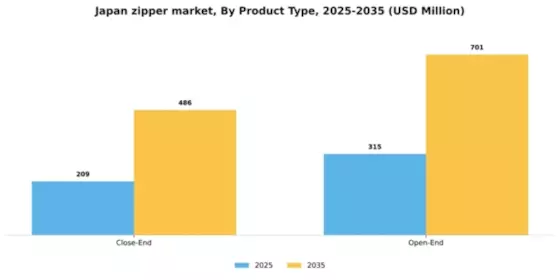
In the Japan zipper market, the product type segment is primarily dominated by Close-End zippers, which hold a significant share of the market due to their extensive use in various applications, including garments and accessories. Open-End zippers, while smaller in market share, are gaining attention as they find unique applications in products such as jackets and bags, contributing to a diversification in consumer preferences. The growth trends in this segment indicate a robust increase in the adoption of Open-End zippers due to rising demand for versatile and easily operable designs. Innovations in zipper manufacturing and an increased focus on functionality in apparel are driving this trend. Additionally, sustainability concerns are nudging manufacturers to expand their product lines to include eco-friendly options, enhancing market dynamics further.
Close-End: Dominant vs. Open-End: Emerging
Close-End zippers are the hallmark of reliability in the Japan zipper market, known for their widespread applicability and secure fastening capabilities. They dominate the market, offering consumers a sense of trust in durability and performance, making them a staple in traditional applications. Meanwhile, Open-End zippers represent an emerging trend, gaining traction because of their unique functionalities, such as easy separation and reattachment, making them ideal for outerwear and sports equipment. This segment is growing rapidly as manufacturers innovate, creating zippers that boast enhanced usability and stylish designs. The strategic shift towards combining aesthetics with functionality signifies Open-End zippers' increasing relevance, fostering a competitive environment within the market.
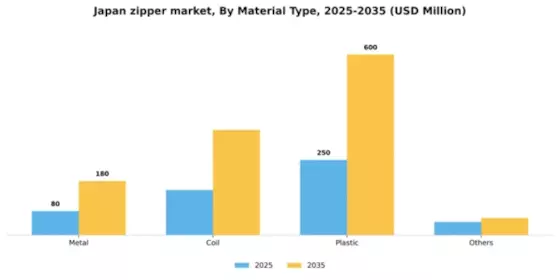
In the Japan zipper market, the material type segment is characterized by a diverse distribution among its key players. Metal zippers hold the largest market share due to their durability and strength, appealing to high-end fashion segments and outdoor equipment sectors. In contrast, plastic zippers are gaining significant traction, especially in casual fashion and children’s apparel markets, where their lightweight and color variety offer distinct advantages. Growth trends indicate a strong shift towards sustainable materials, driving innovation in plastic zipper designs, which now include eco-friendly options. Additionally, the rise in activewear and casual clothing trends has further propelled the demand for lightweight zippers. Consumers are increasingly favoring zippers that not only meet functional needs but also align with their environmental values, boosting the plastic segment's growth.
Metal (Dominant) vs. Plastic (Emerging)
Metal zippers are recognized for their robustness and long-lasting nature, making them the preferred choice for heavy-duty applications such as luggage and outdoor gear. Their premium appeal allows manufacturers to position them at higher price points, thus enhancing profit margins. In contrast, plastic zippers are emerging as a versatile and affordable alternative. They provide manufacturers with flexibility in design and color, catering to the dynamic fashion trends prevalent in the market. Moreover, advancements in material technology have allowed plastic zippers to mimic some advantages of their metal counterparts, such as increased strength and improved aesthetics. This combination of durability and versatility positions plastic zippers as a competitive force in the Japan zipper market.
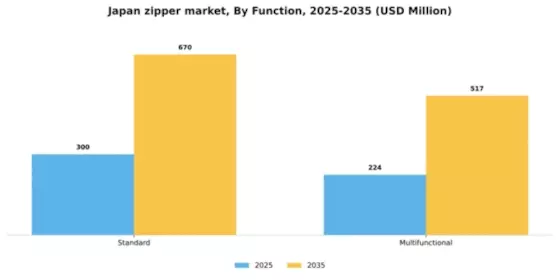
In the Japan zipper market, the function segment showcases a significant distribution of market share, with standard zippers leading as the dominant choice among consumers. This preference stems from their reliability and wide availability across various applications. In contrast, multifunctional zippers are capturing increasing attention, reflecting a growing trend toward innovative solutions that combine various functions, thus broadening their appeal in niche markets. The growth trends within this segment are driven by evolving consumer preferences and advancements in technology. Standard zippers continue to sustain a strong market presence, yet the multifunctional variant is emerging rapidly, propelled by demands for versatility in product design and functionality. The push for sustainable materials and eco-friendly solutions is further invigorating the market dynamics, encouraging manufacturers to innovate and adapt their offerings accordingly.
Standard: Dominant vs. Multifunctional: Emerging
Standard zippers represent the backbone of the Japan zipper market, characterized by their simple design and robust performance in various industries including fashion, automotive, and home textiles. Their dominance is attributed to their established presence and customer trust built over years of use. On the other hand, multifunctional zippers are gaining traction due to their adaptability and appeal to modern consumers looking for convenience and efficiency, particularly in outdoor gear and specialized applications. As they gain market share, manufacturers focus on enhancing the functional aspects of zippers, making them more valuable for design innovation while still appealing to eco-conscious buyers.
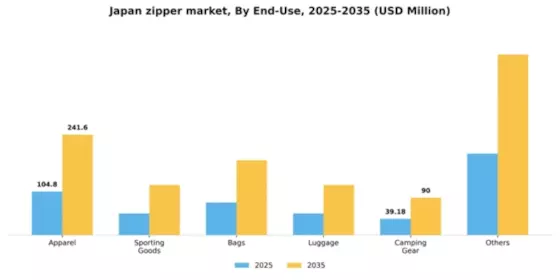
In the Japan zipper market, the distribution of market share among the end-use segments shows that Bags hold the largest portion, contributing significantly to the demand. This dominance can be attributed to the rising trend of fashion accessories and practical uses in daily life, increasing the need for zippers in various types of bags, including handbags, backpacks, and travel bags. Additionally, the Sporting Goods and Camping Gear segments also maintain notable shares, indicating a robust market across different consumer categories. On the other hand, Apparel has emerged as the fastest-growing segment within the Japan zipper market. The growth is driven by changing fashion trends and the increasing consumption of clothing among consumers. As sustainable and innovative fabric technologies gain traction, brands are looking for high-quality zippers that complement their products. This trend is expected to intensify, leading to further growth in the apparel segment, as consumer preferences shift towards more stylish and functional designs.
Bags: Dominant vs. Apparel: Emerging
Bags represent the dominant force in the end-use segments of the Japan zipper market. This segment includes a wide range of products such as handbags, backpacks, and travel bags, countering various styles and functionalities. The versatility of zippers in enhancing both aesthetic appeal and practicality contributes to their sustained popularity. In contrast, the Apparel segment is emerging rapidly, as demand for stylish and functional clothing continues to rise. The increasing focus on fashion and consumer preferences for quality and versatility in clothing are pushing zipper manufacturers to innovate further. As a result, the competition between these segments highlights a dynamic landscape, with Bags maintaining dominance while Apparel rapidly gains ground, driven by evolving market needs.
Get more detailed insights about Japan Zipper Market Request Free Sample
The zipper market in Japan exhibits a competitive landscape characterized by a blend of innovation, strategic partnerships, and regional expansion. Key players such as YKK Corporation (Japan), Coats Group plc (GB), and Riri S.A. (CH) are at the forefront, each employing distinct strategies to enhance their market positioning. YKK Corporation (Japan), renowned for its commitment to quality and innovation, continues to invest heavily in R&D, focusing on sustainable materials and advanced manufacturing techniques. Coats Group plc (GB) emphasizes digital transformation, integrating AI into its supply chain processes to improve efficiency and responsiveness. Meanwhile, Riri S.A. (CH) leverages its luxury branding to cater to high-end fashion markets, thereby differentiating itself from competitors. Collectively, these strategies contribute to a dynamic competitive environment, where innovation and brand positioning are paramount.In terms of business tactics, companies are increasingly localizing manufacturing to reduce lead times and enhance supply chain resilience. This approach appears to be a response to the growing demand for rapid delivery and customization in the fashion and apparel sectors. The market structure is moderately fragmented, with several players vying for market share, yet dominated by a few key firms that wield considerable influence over pricing and product development. The collective actions of these major players shape the competitive dynamics, fostering an environment where agility and responsiveness are critical.
In October YKK Corporation (Japan) announced the launch of a new line of eco-friendly zippers made from recycled materials. This strategic move not only aligns with global sustainability trends but also positions YKK as a leader in environmentally conscious manufacturing. The introduction of these products is likely to attract environmentally aware consumers and brands, enhancing YKK's market share in a growing segment.
In September Coats Group plc (GB) unveiled a new digital platform aimed at streamlining its supply chain operations. This initiative is expected to enhance transparency and efficiency, allowing Coats to respond more swiftly to market demands. By integrating advanced analytics and AI, the company is poised to improve its operational capabilities, which may lead to increased customer satisfaction and loyalty.
In August Riri S.A. (CH) entered into a strategic partnership with a leading luxury fashion brand to develop exclusive zipper designs. This collaboration not only reinforces Riri's position in the luxury segment but also showcases its commitment to innovation and customization. Such partnerships are likely to enhance brand visibility and drive sales, particularly in high-value markets.
As of November the competitive trends in the zipper market are increasingly defined by digitalization, sustainability, and the integration of AI technologies. Strategic alliances are becoming more prevalent, enabling companies to leverage each other's strengths and enhance their market offerings. Looking ahead, competitive differentiation is expected to evolve, shifting from traditional price-based competition to a focus on innovation, technological advancements, and supply chain reliability. This transition underscores the importance of agility and responsiveness in meeting the evolving demands of consumers and the market.

The Japan Zipper Market has witnessed several notable developments recently. YKK, a dominant player in the market, continues to innovate with advanced technology and sustainability practices, reinforcing its leading position amidst growing environmental concerns. Additionally, KohINoor and Ota Zipper have been expanding their product lines to cater to diverse consumer needs, reflecting the shifting preferences towards customized and quality zipper solutions. In terms of mergers and acquisitions, there have been no newly reported transactions among the specified companies such as ShinA Zipper, Sengoku Zipper, or Tameike Zipper in 2023.
Increasing demands in the textile and fashion industries primarily drive growth in market valuation for companies like YBS Zipper and Fujitsu Zipper. The Japan Zipper Market, valued at approximately 500 billion yen in 2022, has shown resilience, with projections for steady growth through 2025 due to rising apparel and accessory markets. Notable events include significant participation in trade shows and exhibitions, showcasing innovation and collaboration across the industry over the last two years, notably the Tokyo Fashion Week in March 2022, which highlighted leading zipper innovations and applications.
The Zipper Market in Japan is projected to grow at a 7.72% CAGR from 2025 to 2035, driven by innovation, sustainability, and increasing demand in fashion and automotive sectors.
New opportunities lie in:
By 2035, the zipper market is expected to achieve robust growth, driven by innovation and strategic partnerships.
| MARKET SIZE 2024 | 524.0(USD Million) |
| MARKET SIZE 2025 | 564.45(USD Million) |
| MARKET SIZE 2035 | 1187.0(USD Million) |
| COMPOUND ANNUAL GROWTH RATE (CAGR) | 7.72% (2025 - 2035) |
| REPORT COVERAGE | Revenue Forecast, Competitive Landscape, Growth Factors, and Trends |
| BASE YEAR | 2024 |
| Market Forecast Period | 2025 - 2035 |
| Historical Data | 2019 - 2024 |
| Market Forecast Units | USD Million |
| Key Companies Profiled | YKK Corporation (JP), Coats Group plc (GB), Riri S.A. (CH), SBS Zipper (KR), Talon International, Inc. (US), Kao Shing Zipper (TW), Zipper Shipper (US), YKK AP (JP) |
| Segments Covered | Product Type, Material Type, Function, End-Use |
| Key Market Opportunities | Integration of sustainable materials in zipper production aligns with consumer demand for eco-friendly products. |
| Key Market Dynamics | Technological advancements drive innovation in zipper designs, enhancing functionality and sustainability in Japan's zipper market. |
| Countries Covered | Japan |
The overall market valuation was $524.0 Million in 2024.
The projected valuation for 2035 is $1187.0 Million.
The expected CAGR for the market during the forecast period 2025 - 2035 is 7.72%.
The product types include Close-End and Open-End zippers, with valuations of $209.0 Million and $315.0 Million respectively.
Key material types include Metal, Coil, Plastic, and Others, with Plastic zippers valued at $250.0 Million.
Primary end-use segments include Apparel, Sporting Goods, Bags, Luggage, and Camping Gear, with Apparel valued at $104.76 Million.
Key players in the market include YKK Corporation, Coats Group plc, Riri S.A., and SBS Zipper.
The Metal zipper segment was valued at $80.0 Million in 2024.
The multifunctional zipper segment was valued at $224.0 Million, compared to $300.0 Million for standard zippers.
The market is expected to grow steadily, reaching $1187.0 Million by 2035, indicating a robust growth trend.


Kindly complete the form below to receive a free sample of this Report

“This is really good guys. Excellent work on a tight deadline. I will continue to use you going forward and recommend you to others. Nice job”


“Thanks. It’s been a pleasure working with you, please use me as reference with any other Intel employees.”


“Thanks for sending the report it gives us a good global view of the Betaïne market.”


“Thank you, this will be very helpful for OQS.”


“We found the report very insightful! we found your research firm very helpful. I'm sending this email to secure our future business.”


“I am very pleased with how market segments have been defined in a relevant way for my purposes (such as "Portable Freezers & refrigerators" and "last-mile"). In general the report is well structured. Thanks very much for your efforts.”


“I have been reading the first document or the study, ,the Global HVAC and FP market report 2021 till 2026. Must say, good info! I have not gone in depth at all parts, but got a good indication of the data inside!”


“We got the report in time, we really thank you for your support in this process. I also thank to all of your team as they did a great job.”


“The Automotive 48V ECU Components Procurement Intelligence Study” was a complex project, but the Market Research Future (MRFR) team handled it with quality, agility, and customer-centricity. They delivered all requested data on time and within the agreed scope. The team, including Shubhendra Anand and Rahul Gotadki, was always readily available to clarify questions and swiftly implement necessary adjustments, driving the project to a successful conclusion within a very demanding timeframe.
I would also like to specifically commend Akshay Agarwal for his responsiveness and support at every stage—from our initial inquiry on May 6th through to final delivery on June 18th. His dedication made the entire process seamless.”



