Liquid Handling System Market (2025 - 2035)

Liquid Handling System Market Research Report: Size, Share, Trend Analysis By Fusion Type (Anterior Interbody Fusion, Anterior Liquid handling system, Posterior Fusion), By Types (Metal, Polymer, And Others), By Surgery (Minimally Invasive Spine Surgery, And Open Spine Surgery), By End Userss (Orthopedic Clinics, Multispecialty Hospitals, Neurology Clinics, And Others), And By Region (North America, Europe, Asia-Pacific, And Rest Of The World) - Growth Outlook & Industry Forecast 2025 To 2035
ID: MRFR/MED/5126-HCR
90 Pages
Rahul Gotadki, Kinjoll Dey
Last Updated: July 12, 2026
Liquid Handling System Market
Market Size
Forecast Period2025-2035
CAGR (2025-2035)8.6%
2025 Market SizeUSD 5.79 Billion
2035 Market SizeUSD 13.20 Billion
Key Players
Beckman Coulter
Tecan Group
Thermo Fisher Scientific
Agilent Technologies
PerkinElmer
Eppendorf
Opportunities
  • Emerging Market Laboratory Modernization
  • Software-Defined Platforms and Protocol Monetization
  • Point-of-Care and Decentralized Diagnostics

Liquid Handling System Market Summary

The Liquid Handling System Market reached USD 5.79 billion in 2025 and is projected to grow from USD 6.28 billion in 2026 to USD 13.20 billion by 2035, registering a CAGR of 8.6% during the forecast period. This expansion is fueled by pharmaceutical companies investing heavily in automation to meet FDA 21 CFR Part 11 compliance requirements and the ongoing scale-up of cell and gene therapy manufacturing pipelines, which demand traceable, error-free liquid transfers at volumes that manual methods cannot sustain [1][2].

Globally, a change in technology is redefining laboratories. Long the foundation of academic and clinical laboratories, legacy manual pipetting operations are being replaced by integrated robotic platforms that can process thousands of samples daily with sub-microliter accuracy. For fiscal year 2024, the US National Institutes of Health allotted more than USD 47.3 billion in research funding, much of which goes into upgrading equipment at federally funded research facilities [3]. This shift is being accelerated by acoustic dispensing and microfluidic nano-dispensing technologies, which eliminate tip-contact contamination hazards.

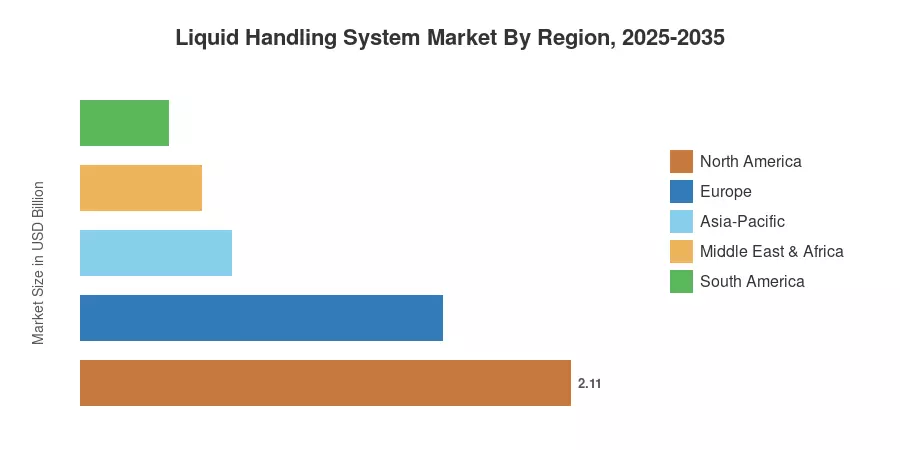
Due to a high concentration of pharmaceutical R&D facilities and contract research firms, North America accounted for the highest portion of the Liquid Handling System Market in 2025 (36.5%). With a predicted CAGR of 11.25%, Asia-Pacific emerged as the fastest-growing area, driven by government-backed biotech park developments in South Korea, China, and India. With almost 27% of the market, Europe held the second-largest position due to the EU's Horizon Europe research investment framework and Germany's pharmaceutical manufacturing corridor [4]. As AI-integrated platforms and modular funding models remove obstacles for mid-tier laboratories worldwide, the competitive landscape will change over the next ten years.


Key Report Takeaways

• By System Type

  • Semi-automated platforms accounted for 30.6% of the Liquid Handling System Market in 2025, reflecting the transitional phase many laboratories are navigating between manual and fully integrated workflows.
  • Fully automated systems are poised to register the fastest growth at an 11.55% CAGR through 2035, as throughput demands outpace what semi-automated configurations can reliably deliver.

• By Product Category

  • Automated workstations led the Liquid Handling System Market with 26.9% revenue share in 2025, serving as the anchor platform for high-volume drug screening operations.
  • Acoustic ejectors are set to expand at a 10.95% CAGR to 2035, driven by rising adoption in genomics and miniaturized assay development.

• By Application

  • Drug discovery and high-throughput screening commanded 37.8% of the Liquid Handling System Market in 2025, a segment defined by the pharmaceutical industry's relentless push toward larger compound libraries.
  • Cell and gene therapy manufacturing is growing at a 12.75% CAGR, the fastest among all application segments, as approved therapies move from clinical-stage to commercial-scale production.

• By End User

  • Pharmaceutical and biotechnology companies represented 40.7% of revenue in the Liquid Handling System Market during 2025.
  • Contract research and manufacturing organizations are expanding fastest at an 11.95% CAGR, reflecting the broader outsourcing trend in drug development.

• By Geography

  • North America dominated the Liquid Handling System Market with 36.5% share in 2025.
  • Asia-Pacific is advancing at an 11.25% CAGR to 2035, the highest among all regions.


Market Size and Forecast (2021–2035)

Market Research Future constructed this forecast using a triangulated approach combining bottom-up revenue analysis of key vendors, top-down validation against pharmaceutical R&D expenditure benchmarks, and primary interviews with laboratory procurement officers across 14 countries. Historical figures (2021–2024) reflect actual industry performance; the base year (2025) incorporates preliminary full-year data; forecast values (2026–2035) apply a calibrated compound annual growth rate derived from demand modeling across all end-use verticals.
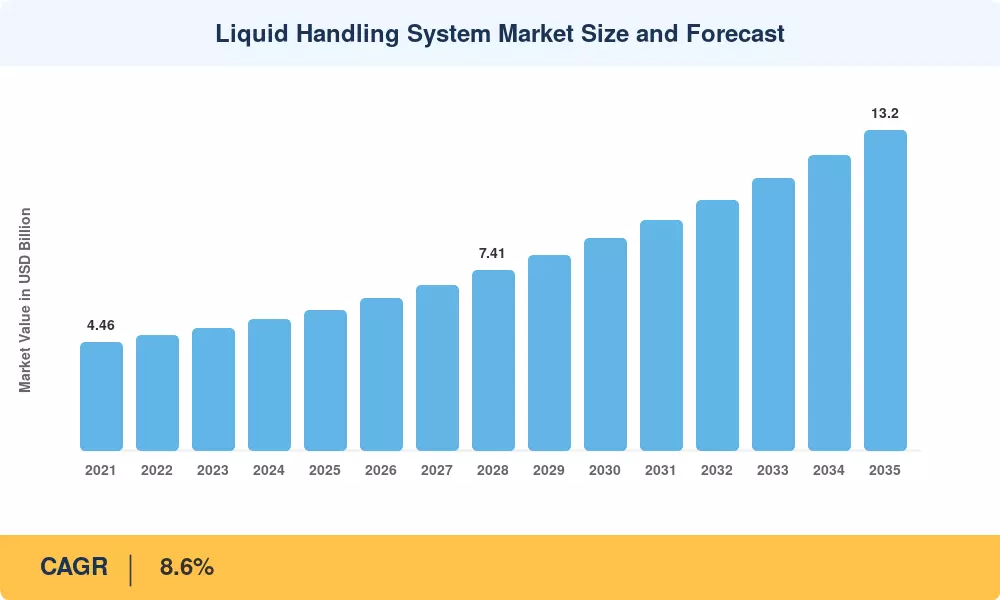
Liquid Handling System Market Size and Forecast
Our Impact
Enabled $4.3B Revenue Impact for Fortune 500 and Leading Multinationals
Partnering with 2000+ Global Organizations Each Year
30K+ Citations by Top-Tier Firms in the Industry

Driver Impact Analysis

Driver ~% Impact on CAGR Geographic Relevance Impact Timeline
Cell & gene therapy pipeline scale-up ~18% North America, Europe Medium-term (2–4 yr)
Regulatory mandates for electronic audit trails ~16% Global Short-term (≤2 yr)
High-throughput screening volume growth ~15% North America, Asia-Pacific Long-term (≥4 yr)
AI and machine learning integration in lab workflows ~14% North America, Europe Medium-term (2–4 yr)
Synthetic biology venture funding surge ~12% US, China, UK Short-term (≤2 yr)
Modular leasing and DaaS financing models ~10% Global Medium-term (2–4 yr)
Precision medicine and companion diagnostics expansion ~9% Europe, Asia-Pacific Long-term (≥4 yr)


Cell and Gene Therapy Pipeline Scale-Up

The global cell and gene therapy market surpassed USD 14 billion in 2024, with over 3,700 active clinical trials worldwide requiring GMP-compliant liquid handling at every manufacturing step [14]. Autologous CAR-T workflows demand closed-system liquid transfers with zero cross-contamination risk, pushing manufacturers toward fully automated platforms that can document each dispensing event for regulatory submission. The FDA's growing comfort with platform-based manufacturing — evidenced by its acceptance of matrix-based CMC submissions — is accelerating capital expenditure commitments across CDMOs in North America and Western Europe.

Regulatory Mandates for Electronic Audit Trails

FDA 21 CFR Part 11 and the EU's Annex 11 requirements have transformed liquid handling from a throughput question into a compliance imperative. Laboratories operating under GxP frameworks must now demonstrate complete traceability of every pipetting action, a requirement that manual systems cannot satisfy without prohibitive labor costs [9]. The 2024 revision to ICH Q2(R2) analytical procedure guidelines further tightened validation standards, pushing quality-conscious labs toward automated systems that embed audit trail functionality directly into dispensing hardware.

High-Throughput Screening Volume Expansion

Pharmaceutical companies screened an estimated 4.2 million compounds per day across global operations in 2024, a figure projected to grow at 9% annually as target-based and phenotypic screening libraries expand [7]. Each screening campaign generates hundreds of thousands of discrete liquid transfer events — volumes where manual execution introduces unacceptable variability. The shift toward 1536-well and 3456-well microplate formats has made automated dispensing not just preferable but physically necessary, since human-operated pipettes cannot consistently deliver nanoliter volumes into ultra-high-density wells.

AI and Machine Learning Integration

Laboratory informatics platforms are increasingly embedding AI modules that optimize dispensing protocols in real time, adjusting aspiration speeds and tip immersion depths based on liquid viscosity profiles learned from prior runs [10]. Beckman Coulter's integration of predictive analytics into its Biomek platform and Hamilton's Venus AI-assisted scheduling software are early indicators of a broader convergence that will make adaptive liquid handling standard by 2030.


Restraints Impact Analysis

Restraint impact percentages are directional estimates reflecting the degree to which each factor decelerates adoption or compresses margins. These values are not subtractive from the headline CAGR.

Restraint ~% Negative Impact on CAGR Geographic Relevance Impact Timeline
High upfront capital costs for automated platforms ~20% Emerging markets, academia Long-term (≥4 yr)
Integration complexity with legacy LIMS/ELN systems ~18% Global Medium-term (2–4 yr)
Shortage of trained automation specialists ~15% Asia-Pacific, South America Medium-term (2–4 yr)
Proprietary consumable lock-in concerns ~12% Europe, North America Short-term (≤2 yr)
Validation burden for regulated applications ~10% North America, Europe Long-term (≥4 yr)


High Upfront Capital Costs

A fully configured automated liquid handling workstation typically costs between USD 150,000 and USD 500,000, placing it beyond the immediate reach of academic core facilities and small biotech startups operating on grant-funded budgets [17]. While reagent-rental and device-as-a-service models are emerging, penetration remains low — fewer than 12% of new installations in 2024 used alternative financing structures. This capital barrier is most acute in South America and Southeast Asia, where currency depreciation amplifies the dollar-denominated sticker price.

Integration Complexity with Legacy Laboratory Systems

Many laboratories still operate LIMS and ELN platforms built on architectures designed before API-first interoperability became standard. Connecting a new liquid handler to these systems often requires custom middleware, adding USD 30,000–80,000 in integration costs and 4–8 months of validation time [19]. The absence of universal data exchange standards — despite progress from SiLA 2.0 and ASTM E1394 — means that each vendor pairing creates unique integration challenges that slow procurement decisions.

Shortage of Trained Automation Specialists

The laboratory automation sector faces a widening structural workforce gap, a challenge heavily highlighted by the Society for Laboratory Automation and Screening (SLAS) in its initiatives to standardize cross-disciplinary education. Operating sophisticated liquid handling robotics requires a highly specialized, hybrid skill set spanning wet-lab molecular biology, software scripting languages, and hardware-level mechanical troubleshooting. Because traditional university programs have historically been slow to produce graduates possessing this unique combination of competencies, a talent deficit has emerged.


Liquid Handling System Market Opportunities

Emerging Market Laboratory Modernization

India's Department of Biotechnology committed USD 1.2 billion to its BioE3 initiative in 2024, with a significant allocation directed toward laboratory infrastructure upgrades across 15 national biotechnology parks [12]. China's 14th Five-Year Plan for biotechnology includes dedicated subsidies for domestic procurement of automated laboratory equipment. These government-backed programs create a greenfield opportunity for the Liquid Handling System Market in regions where penetration rates remain below 20%.

Software-Defined Platforms and Protocol Monetization

A new class of vendors is decoupling liquid handling protocols from hardware, enabling laboratories to purchase, share, and monetize validated assay workflows through cloud-based protocol marketplaces [15]. This data monetization model transforms instrument vendors from one-time hardware sellers into recurring-revenue platform operators — a shift that can potentially add USD 800 million to the Liquid Handling System Market by 2032 as laboratories increasingly value protocol libraries over raw dispensing speed.

Point-of-Care and Decentralized Diagnostics

The push toward decentralized clinical trials and near-patient testing is creating demand for compact, cartridge-based liquid handling systems that can operate outside traditional laboratory settings [18]. Portable platforms capable of automated sample preparation in field clinics or pharmacy-based testing sites represent an untapped application vertical for the Liquid Handling System Market, with particular relevance in rural healthcare delivery across Africa and Southeast Asia.

Sustainability-Driven Consumable Innovation

Laboratories globally consume an estimated 5.5 million metric tons of plastic annually, with pipette tips representing a significant waste stream [21]. The development of biodegradable tip materials and tip-washing recycling systems is opening a sustainability-adjacent opportunity for vendors who can reduce per-assay plastic consumption without compromising accuracy. European laboratories are especially receptive, as EU Single-Use Plastics Directive extensions are anticipated to reach laboratory consumables by 2028.

Synthetic Biology and Biofoundry Expansion

Global venture investment in synthetic biology companies exceeded USD 4.8 billion in 2024, with automated DNA assembly, strain engineering, and metabolic pathway optimization all requiring precise, high-throughput liquid handling [16]. Biofoundries operated by companies like Ginkgo Bioworks and Twist Bioscience are scaling to process tens of thousands of genetic constructs weekly, driving demand for integrated robotic platforms in the Liquid Handling System Market.


Liquid Handling System Market Future Outlook

AI-Autonomous Laboratory Operations

By 2030, an estimated 35% of pharmaceutical laboratories will operate at least one fully autonomous workflow where AI systems select protocols, execute liquid transfers, and interpret results without human intervention [10]. The convergence of large language models with laboratory execution systems — demonstrated in early-stage "self-driving lab" implementations at Carnegie Mellon and MIT — will reduce experiment cycle times by 40–60% and reshape how the Liquid Handling System Market defines its value proposition. The shift from selling dispensing precision to selling experimental intelligence will favor vendors with strong software ecosystems.

Platform Economics and Recurring Revenue Models

The transition from capital-equipment sales to platform-as-a-service models will restructure the economics of the Liquid Handling System Market by 2032. Vendors offering subscription-based access to hardware, consumables, and cloud-hosted protocol libraries can capture 2.5–3x the lifetime revenue per customer compared to traditional one-time sales [17]. This mirrors the transformation that occurred in gene sequencing, where Illumina's consumable-driven model generated margins that hardware-only competitors could not match.

Sustainability and Circular Lab Operations

The laboratory sustainability movement will materially influence product design throughout the forecast period. IEA estimates that laboratory facilities consume 3–5 times more energy per square meter than commercial offices, with liquid handling contributing through tip manufacturing, sterilization, and waste disposal [21]. Vendors introducing tip-free dispensing technologies, recyclable consumable cartridges, and energy-efficient robotic platforms will capture share as European and North American procurement policies increasingly weigh sustainability scores in tender evaluations.

Precision Medicine and Companion Diagnostics Integration

The expansion of precision medicine into biomarker-linked therapies drives steady demand for companion diagnostics and automated sample-preparation platforms. Because targeted therapies require clinical-grade, highly validated diagnostic screening, laboratories must prioritize advanced, automated dispensing systems. This structural infrastructure requirement insulates the liquid handling market from broader macroeconomic fluctuations in cyclical pharmaceutical R&D budgets.


Liquid Handling System Market Segmentation

By System Type

Segment Key Metric Primary Demand Driver
Manual Liquid Handling USD 1.21 Billion (2025) Academic laboratories, budget-constrained settings
Semi-Automated Liquid Handling 30.6% share (2025) Mid-tier labs transitioning from manual workflows
Fully Automated Liquid Handling 11.55% CAGR (2026–2035) GxP compliance, high-throughput requirements


Semi-automated systems occupy the largest share of the Liquid Handling System Market, serving as a pragmatic middle ground for laboratories that need improved reproducibility but lack the budget or workflow volume to justify full automation. These platforms typically pair electronic pipettes with basic scheduling software, offering 3–5x throughput improvement over manual operation while keeping capital costs below USD 80,000 [17].

Fully automated liquid handling platforms represent the fastest-growing segment, driven by pharmaceutical manufacturers and CDMOs that cannot afford the error rates or documentation gaps inherent in manual processes. These systems incorporate robotic arms, integrated plate handlers, and real-time monitoring — a combination that supports 21 CFR Part 11 compliance out of the box. The segment's 11.55% CAGR reflects aggressive adoption in cell therapy manufacturing and high-throughput screening applications.

By Product Category

Segment Key Metric Primary Demand Driver
Automated Workstations 26.9% share (2025) Drug screening, compound management
Pipettes (Single-Channel, Multi-Channel) USD 1.14 Billion (2025) Universal laboratory staple, replacement demand
Dispensers & Diluters 9.4% CAGR (2026–2035) Clinical diagnostics, sample dilution workflows
Acoustic Ejectors 10.95% CAGR (2026–2035) Genomics, miniaturized assay development
Consumables & Accessories USD 0.98 Billion (2025) Recurring revenue from tips, plates and reservoirs


Automated workstations anchor the Liquid Handling System Market product landscape, serving as the central hardware platform around which high-throughput screening, compound management, and biobanking workflows are built. Leading platforms from Hamilton, Beckman Coulter, and Tecan integrate multiple dispensing modalities — air displacement, positive displacement, and peristaltic — into unified robotic configurations.

Acoustic ejectors represent the most technologically differentiated product segment, using focused sound energy to transfer sub-nanoliter volumes without any physical contact between the dispenser and the target vessel. This eliminates cross-contamination risk and reduces consumable costs by removing the need for disposable tips, making acoustic technology increasingly attractive for genomics applications where sample volumes are precious and contamination is catastrophic.

By Application

Segment Key Metric Primary Demand Driver
Drug Discovery & High-Throughput Screening 37.8% share (2025) Compound library expansion, phenotypic screening
Genomics & Proteomics 10.1% CAGR (2026–2035) NGS library preparation, single-cell workflows
Cell & Gene Therapy Manufacturing 12.75% CAGR (2026–2035) Approved therapy commercial scale-up
Clinical Diagnostics USD 0.79 Billion (2025) Immunoassay automation, sample prep
Biobanking & Sample Management 9.2% CAGR (2026–2035) Population genomics programs


Drug discovery and high-throughput screening remain the dominant applications in the Liquid Handling System Market, consuming the largest share of installed automated workstation capacity globally. The segment's volume requirements are staggering — a single large-pharma screening campaign can generate over 500,000 liquid transfer events per week.

Cell and gene therapy manufacturing is the fastest-growing application, with its 12.75% CAGR reflecting the commercial reality that 27 cell and gene therapies had received FDA or EMA approval by the end of 2024 [14]. Each approved therapy requires validated manufacturing processes that depend on automated liquid handling for cell washing, media exchange, and vector addition steps.

By End User

Segment Key Metric Primary Demand Driver
Pharmaceutical & Biotechnology Companies 40.7% share (2025) Internal R&D, manufacturing automation
Academic & Government Research Institutes USD 1.04 Billion (2025) Grant-funded instrumentation, core facilities
Contract Research & Manufacturing Organizations 11.95% CAGR (2026–2035) Outsourcing growth, multi-client capacity
Clinical Diagnostics Laboratories 8.8% CAGR (2026–2035) Immunoassay volume growth
Other End Users USD 0.21 Billion (2025) Food safety, environmental testing


Pharmaceutical and biotechnology companies remain the bedrock of the Liquid Handling System Market, with internal R&D laboratories and manufacturing sites accounting for the largest share of both new installations and consumable spend. These organizations prioritize platform standardization, often selecting a single vendor ecosystem across multiple sites to simplify validation and training.

Contract research and manufacturing organizations are growing fastest as pharmaceutical companies increasingly outsource early-stage discovery and late-stage manufacturing. CDMOs must serve multiple clients on shared infrastructure, making flexible, rapidly reconfigurable automated platforms essential — a requirement that favors modular systems from vendors like Tecan and Hamilton.


Regional Market Share Analysis

Region Key Metric Primary Investment Themes
North America 36.5% share (2025) Pharma R&D density, FDA compliance modernization
Europe USD 1.56 Billion (2025) Horizon Europe funding, pharma manufacturing automation
Asia-Pacific 11.25% CAGR (2026–2035) Biotech park construction, CRO/CDMO expansion
South America USD 0.38 Billion (2025) Clinical diagnostics infrastructure buildout
Middle East & Africa 8.9% CAGR (2026–2035) Healthcare modernization, genomics programs
Total USD 5.79 Billion (2025)

The Liquid Handling System Market exhibits a clear geographic hierarchy defined by pharmaceutical R&D concentration, regulatory infrastructure maturity, and government investment in life-science capacity. North America and Europe together account for the majority of the installed base, while Asia-Pacific is rapidly closing the gap through ambitious biotech industrialization programs.


North America

Country Key Metric Key Driver
United States 78.2% of regional share NIH funding, pharma headquarters density
Canada 12.8% CAGR Life-sciences superclusters, CDMO expansion
Mexico USD 0.07 Billion Clinical laboratory modernization


The United States dominates the North American Liquid Handling System Market, housing the headquarters of eight of the world's ten largest pharmaceutical companies and receiving the bulk of NIH extramural research funding. Canada's life-science supercluster investments in Toronto and Montreal are accelerating CDMO capacity additions that require validated automated liquid handling platforms. Mexico's growing role as a nearshoring destination for clinical laboratory services is drawing initial capital commitments from multinational CROs.

Europe

Country Key Metric Key Driver
Germany 24.6% of regional share Pharma manufacturing corridor, BioNTech effect
United Kingdom 9.2% CAGR Genomics England, cell therapy investment
France USD 0.19 Billion CDMO capacity, academic research funding
Italy 7.8% CAGR Biosimilar manufacturing scale-up
Spain USD 0.09 Billion Clinical trial site modernization
Nordic Countries 8.5% CAGR Precision medicine national programs
Russia USD 0.06 Billion Domestic pharma self-sufficiency drive
Rest of Europe 8.1% CAGR Eastern European CRO expansion


Germany anchors the European Liquid Handling System Market through its pharmaceutical manufacturing corridor stretching from Basel to Frankfurt, where automation investments accelerated following COVID vaccine production scale-ups. The UK's Genomics England program and the Medicines and Healthcare products Regulatory Agency's innovation pathway are drawing cell therapy developers who need validated liquid handling infrastructure. France and Italy are contributing through biosimilar manufacturing expansions that require automated filling and dispensing systems.

Asia-Pacific

Country Key Metric Key Driver
China 34.8% of regional share 14th Five-Year Plan biotech subsidies
India 12.6% CAGR BioE3 initiative, vaccine manufacturing
Japan USD 0.27 Billion Regenerative medicine regulation (PMDA)
South Korea 11.8% CAGR Bio-Health Vision 2030, Samsung Biologics
ASEAN USD 0.11 Billion CRO hub development in Singapore, Malaysia
Rest of Asia-Pacific 10.4% CAGR Emerging clinical diagnostics demand


Asia-Pacific represents the highest-growth opportunity for the Liquid Handling System Market, driven by China's aggressive biotech industrialization program and India's vaccine manufacturing scale-up ambitions. South Korea's Bio-Health Vision 2030 has catalyzed over USD 3 billion in biopharmaceutical infrastructure investments, with Samsung Biologics and Celltrion expanding CDMO capacity that requires automated liquid handling at every process step [12]. Japan's PMDA-accelerated regenerative medicine approvals are supporting a wave of autologous cell therapy installations.

South America

Country Key Metric Key Driver
Brazil 58.3% of regional share Anvisa modernization, Fiocruz expansion
Argentina 9.1% CAGR Biotech startup ecosystem, agricultural biotech
Rest of South America USD 0.06 Billion Clinical diagnostics laboratory upgrades


Brazil dominates the South American Liquid Handling System Market through the Fiocruz research network and Anvisa's ongoing regulatory modernization program, which is aligning Brazilian pharmaceutical manufacturing standards with ICH guidelines. Argentina's growing biotech startup ecosystem — particularly in agricultural genomics — is creating niche demand for compact automated dispensing platforms.

Middle East & Africa

Country Key Metric Key Driver
Saudi Arabia 29.4% of regional share Vision 2030 healthcare modernization
UAE 10.6% CAGR Dubai Science Park, medical tourism
South Africa USD 0.04 Billion Genomics Africa initiative
Egypt 9.3% CAGR Pharmaceutical manufacturing localization
Rest of MEA USD 0.05 Billion Public health laboratory upgrades


Saudi Arabia's Vision 2030 healthcare pillar is channeling billions into hospital and laboratory infrastructure, creating first-time demand for automated liquid handling in a region historically reliant on manual laboratory practices. The UAE's Dubai Science Park and Abu Dhabi's Hub71 ecosystem are attracting diagnostics startups that require modern liquid handling capabilities. South Africa's Genomics Africa initiative is driving academic laboratory automation investments.


Liquid Handling System Market By Region, 2025-2035

Competitive Benchmarking

The Liquid Handling System Market exhibits moderate concentration, with the top five players commanding an estimated 45–52% of global revenue. The Herfindahl-Hirschman Index falls in the 800–1,200 range, indicating a market where several well-resourced players compete alongside dozens of specialized manufacturers. Consolidation activity has intensified since 2022, with major instrumentation conglomerates using acquisitions to fill portfolio gaps in acoustic dispensing, microfluidics, and AI-driven protocol optimization.

Company Est. Revenue Share Range Key Offerings Strategic Positioning
Beckman Coulter (Danaher) ~10–14% Biomek series automated workstations Full-suite life science automation leader
Hamilton Company ~9–13% Microlab STAR, VANTAGE platforms High-precision OEM and direct sales
Tecan Group ~8–12% Fluent, Freedom EVO workstations Drug discovery and diagnostics automation
Thermo Fisher Scientific ~7–11% Multidrop, Versette dispensers Integrated workflow from sample to result
Agilent Technologies ~5–8% Bravo, AssayMAP platforms Genomics and proteomics focus
PerkinElmer (Revvity) ~4–7% JANUS, chemagic platforms Screening and nucleic acid extraction
Eppendorf ~4–6% epMotion series, Xplorer pipettes Academic and mid-tier lab automation
Corning Life Sciences ~3–5% Lambda, Mediajet dispensers Cell culture liquid handling specialization
Mettler Toledo ~2–4% Rainin pipettes, E4 XLS+ Manual-to-electronic pipette transition
Sartorius ~2–4% Microsart ATMP liquid handling Cell therapy manufacturing focus
Bio-Rad Laboratories ~2–3% Automated droplet generators Digital PCR and diagnostics workflows
Gilson ~1–3% PIPETMAX, Pipetman systems Compact automation for small labs


Recent News & Developments

Hamilton Company(July 2025)— Acquired UK Robotics and Trisonic Discovery to integrate automated scheduling software and robotic expertise into its high-throughput liquid handling ecosystem.

Beckman Coulter Life Sciences(December 2025)— Launched the Biomek i3 benchtop liquid handler, targeting compact laboratory workspaces with automated, flexible pipetting decks for low-to-medium throughput genomics workflows.


SPT Labtech(April 2026)— Collaborated with EMBL GeneCore to integrate its firefly liquid handling platform into fully walkaway automated workflows to optimize genomics research efficiency.


Liquid Handling System Market Report Scope

Parameter Details
Market Scope Global Liquid Handling System Market across all system types, product categories, applications, end users, and geographies
Study Period 2021–2035
Historical Period 2021–2024
Base Year 2025
Forecast Period 2026–2035
CAGR (2026–2035) 8.6%
Market Size (2025) USD 5.79 Billion
Market Size (2035) USD 13.20 Billion
Fastest Growing Segment Cell & Gene Therapy Manufacturing (12.75% CAGR)
Companies Profiled 12 (Beckman Coulter, Hamilton, Tecan, Thermo Fisher, Agilent, Revvity, Eppendorf, Corning, Mettler Toledo, Sartorius, Bio-Rad, Gilson)
Valuation Currency USD Billion


FAQs

How does tip-free acoustic dispensing compare to traditional air-displacement pipetting for DMSO compound libraries?
Acoustic dispensing eliminates tip costs and removes DMSO carryover risk between wells. It achieves sub-5% CV at nanoliter volumes, outperforming air-displacement methods for miniaturized assay formats [11].
What validation timeline should a GxP laboratory expect when deploying a new automated liquid handler?
IQ/OQ/PQ validation typically takes 12–18 weeks for a single platform in a regulated environment. Complex multi-instrument integrations with LIMS connectivity can extend timelines to 6 months [9].
Are modular leasing programs financially viable for laboratories processing fewer than 500 samples per day?
Leasing programs break even at roughly 200–300 samples daily when factoring in labor savings and error reduction. Below that threshold, semi-automated options offer better cost efficiency [17].
How are AI-enabled liquid handlers reducing protocol development time in drug discovery workflows?
Machine learning modules analyze liquid properties and optimize aspiration parameters automatically, cutting protocol development from weeks to days. Hamilton's Venus AI demonstrated 50% time savings in benchmarking studies [10].
What cybersecurity considerations apply to cloud-connected liquid handling platforms in clinical settings?
Cloud-connected systems must comply with HIPAA technical safeguards and FDA cybersecurity guidance for networked medical devices. Vendors should provide encrypted data transmission and role-based access controls [9].
Which emerging application vertical offers the highest incremental revenue potential beyond traditional pharma R&D?
Synthetic biology biofoundries represent the fastest-emerging vertical, with automated strain engineering workflows requiring thousands of precision transfers daily. This segment grew over 25% in 2024 [16].
How does the Liquid Handling System Market address sustainability concerns around single-use plastic tip waste?
Tip-washing systems and biodegradable tip materials are gaining traction, with early adopters reporting 60–70% reductions in plastic waste per assay cycle. European procurement tenders increasingly score sustainability [21].    
Author
Author
Author Profile
Rahul Gotadki LinkedIn
Research Manager
He holds an experience of about 9+ years in Market Research and Business Consulting, working under the spectrum of Life Sciences and Healthcare domains. Rahul conceptualizes and implements a scalable business strategy and provides strategic leadership to the clients. His expertise lies in market estimation, competitive intelligence, pipeline analysis, customer assessment, etc.
Co-Author
Co-Author Profile
Kinjoll Dey LinkedIn
Senior Research Analyst
He is an extremely curious individual currently working in Healthcare and Medical Devices Domain. Kinjoll is comfortably versed in data centric research backed by healthcare educational background. He leverages extensive data mining and analytics tools such as Primary and Secondary Research, Statistical Analysis, Machine Learning, Data Modelling. His key role also involves Technical Sales Support, Client Interaction and Project management within the Healthcare team. Lastly, he showcases extensive affinity towards learning new skills and remain fascinated in implementing them.

Research Approach


Secondary Research

The secondary research process involved comprehensive analysis of regulatory databases, peer-reviewed scientific journals, laboratory automation publications, and authoritative life sciences organizations. Key sources included US Food and Drug Administration (FDA) 21 CFR Part 11 and Good Laboratory Practice (GLP) databases, International Organization for Standardization (ISO 8655) for pipette calibration standards, Clinical Laboratory Improvement Amendments (CLIA) regulatory filings, College of American Pathologists (CAP) laboratory accreditation records, National Institutes of Health (NIH) research funding databases and instrumentation grants, National Center for Biotechnology Information (NCBI/PubMed) forliquid handling protocol publications, Centers for Disease Control and Prevention (CDC) laboratory standards, European Medicines Agency (EMA) Good Manufacturing Practice (GMP) guidelines for pharmaceutical quality control, European Committee for Standardization (CEN) laboratory equipment directives, International Society for Pharmaceutical Engineering (ISPE) automation guidelines, International Federation of Clinical Chemistry and Laboratory Medicine (IFCC) standards, SelectUSA biotechnology industry statistics, Organisation for Economic Co-operation and Development (OECD) biotechnology R&D indicators, National Science Foundation (NSF) Science and Engineering Indicators, EU Eurostat research and development expenditure data, national health ministry and research council reports from key markets (Germany's Federal Ministry of Education and Research, Japan's Ministry of Health Labour and Welfare, China's National Medical Products Administration), and commercial laboratory automation association reports (Society for Laboratory Automation and Screening - SLAS).

These sources were employed to gather data on the adoption rates of laboratory automation, the installed base statistics, regulatory compliance requirements, clinical research publication trends, and procurement data for automated workstations, electronic pipettes, manual liquid handling tools, and associated consumables.


Primary Research

Qualitative and quantitative insights were obtained by interviewing supply-side and demand-side stakeholders during the primary research process. From precision instrumentation OEMs, consumable suppliers, and automated liquid handling system manufacturers, supply-side sources comprised CEOs, VPs of Product Development, leaders of Laboratory Automation R&D, regulatory affairs managers, and commercial directors. The demand-side sources consist of directors of high-throughput screening (HTS) facilities, heads of core laboratories at research universities, chief scientific officers (CSOs) at contract research organizations (CROs), laboratory managers from pharmaceutical quality control departments, procurement leads from clinical diagnostic laboratories, and principal investigators leading genomics and proteomics research programs. The market segmentation was validated across automated, semi-automated, and manual system types through primary research. The product pipeline timelines for acoustic dispensing and robotic integration technologies were confirmed, and insights were gathered on laboratory automation adoption patterns, replacement cycles for pipetting workstations, pricing strategies for consumables versus hardware, and capital equipment budgeting dynamics in academic versus pharmaceutical settings.

Primary Respondent Breakdown:

By Designation: C-level Primaries (30%), Director Level (35%), Others (35%)

By Region: North America (40%), Europe (25%), Asia-Pacific (25%), Rest of World (10%)


Market Size Estimation

Revenue mapping, installed base analysis, and procedure volume extrapolation were implemented in high-throughput screening environments to determine global market valuation. The methodology comprised the following:

The identification of over 50 main manufacturers in North America, Europe, Asia-Pacific, and Latin America, who specialize in the production of automated liquid handling workstations, electronic pipetting systems, manual pipettes, dispensers, burettes, and consumables (pipette tips, microplates, reservoirs).

Product mapping encompasses automated workstations (both standalone and integrated), pipetting systems (air displacement, positive displacement, and electronic), consumables (standard tips, filter tips, and low-retention tips), and software/integration modules.

Examination of annual revenues that are specific to liquid handling portfolios, including hardware sales, consumables recurring revenue, and service contracts, as reported and modeled

Manufacturers that account for 75-80% of the global market share in 2024 are included in the coverage.

Extrapolation using bottom-up (installed base units × replacement rates × average selling price by region; consumable volumes per instrument per year × pricing by country) and top-down (manufacturer revenue validation against total laboratory automation spending) approaches to derive segment-specific valuations for drug discovery, genomics, clinical diagnostics, and academic research applications

Download Free Sample

Kindly complete the form below to receive a free sample of this Report

Download PDF ×

We do not share your information with anyone. However, we may send you emails based on your report interest from time to time. You may contact us at any time to opt-out.
















