Research Methodology on Low-Calorie Sweeteners Market
Introduction
In today’s day and age, the keyword is living a healthy life. This means that more and more people are actively making healthier eating choices, which may include reducing their intake of refined sugars and opting instead to use other natural sweeteners. This has been further facilitated by the increasing availability of low-calorie sweeteners, or LCSs, which are naturally derived, sugar-free, and calorie-free solutions that provide the same level of sweetness as sugar without the added calories. This report from Market Research Future attempts to provide an insight into the market trends of the low-calorie sweeteners industry, globally.
Research Aims
The primary goal of this research is to come to understand the global trends of the low-calorie sweeteners market and to identify the growth opportunities and limitations based on value chains, market pricing, competitive landscape, and current demands.
Objectives
The objectives of this research are as follows:
- To provide a detailed description of the low-calorie sweeteners industry and the major players present in the global market
- To assess the opportunities and threats in the global low-calorie sweeteners market
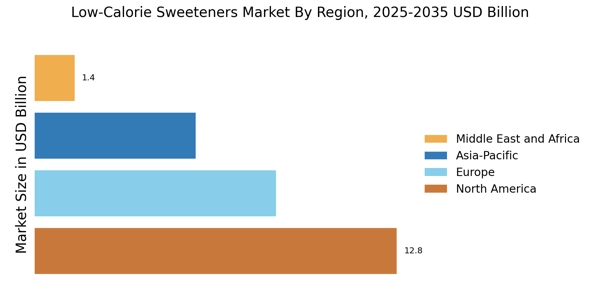
- To analyze the market size, regional market shares, and major geographies in the low-calorie sweeteners market
- To identify key drivers and constraints, as well as industry/technology trends in the global low-calorie sweeteners market
Research Questions
The research questions for this research are as follows:
- What are the opportunities, market dynamics, and threats in the global low-calorie sweeteners market?
- What are the major market segments, geographies, and players in the global low-calorie sweeteners market?
- What are the key drivers and constraints, as well as industry/technology trends in the global low-calorie sweeteners market?
Literature Review
The literature review for this research will explore both primary and secondary sources related to the low-calorie sweeteners market. The primary sources include industry reports, healthcare & food-related journals, company profiles, press releases, and analyst reports. The secondary sources include books, websites, academic journals, trade magazines, and online sources.
Methodology
This research will employ a combination of qualitative and quantitative research methods in order to obtain a comprehensive understanding of the global low-calorie sweeteners market.
Research Design
The research design for this project is exploratory in nature. This type of research design allows us to explore the global low-calorie sweeteners market to identify growth opportunities and limitations.
Sampling Technique
The sampling technique for this research will be non-probability sampling, specifically quota sampling. This technique will allow us to include a diverse selection of respondents, from major LCS manufacturers to LCS consumers.
Data Collection
Data collection for this study will be conducted through both primary and secondary means. Primary data will be collected through interviews with industry experts and surveys of LCS consumers. Secondary data will be gathered through searches of the relevant literature, primarily industry reports, healthcare & food-related journals, press releases, and analyst reports.
Data Analysis
The collected data will be analyzed using quantitative analysis techniques such as descriptive analysis, hypothesis testing, correlation, factor analysis, and regression analysis. Descriptive analysis will be used to describe the global market size, regional market shares, and major geographies in the low-calorie sweeteners market. Hypothesis testing will be used to test the hypothesis that the demand for low-calorie sweeteners is increasing globally. Correlation analysis will be used to assess the relationship between different variables in the global low-calorie sweeteners market. Factor analysis will be used to identify key drivers and constraints, as well as industry/technology trends in the global low-calorie sweeteners market.
Ethical Considerations
Ethical considerations for this research include ensuring the confidentiality of the respondents, seeking informed consent before engaging in any data collection activities, and maintaining the accuracy and integrity of the data collected. All data collected will be kept secure and only used for the purpose of this research.
Timeframe
The research period for this study is approximately 4–6 weeks.
Conclusion
This research aims to provide insight into the global market trends and growth opportunities of the low-calorie sweeteners market with the market forecast for 2023 to 2030. The research design, sampling technique, data collection, and data analysis strategies have been outlined in this report. Ethical considerations have been discussed, and the timeframe for completion has been estimated.