×
Request Free Sample ×

Kindly complete the form below to receive a free sample of this Report

* Please use a valid business email

Leading companies partner with us for data-driven Insights

clients tt-cursor
Hero Background

Luxury Watch Market

ID: MRFR/CG/9413-HCR
128 Pages
Sakshi Gupta
October 2025

Luxury Watch Market Research Report: By Type (Mechanical, Quartz, Smart Watches, Hybrid Smart Watches), By Price Range (Entry-Level, Mid-Range, High-End), By Gender (Men, Women, Unisex), By Material (Metal, Leather, Ceramic, Plastic, Gemstone) andBy Regional (North America, Europe, South America, Asia Pacific, Middle East and Africa)- Forecast to 2035.

Share:
Download PDF ×

We do not share your information with anyone. However, we may send you emails based on your report interest from time to time. You may contact us at any time to opt-out.

Luxury Watch Market Infographic
Purchase Options

Luxury Watch Market Summary

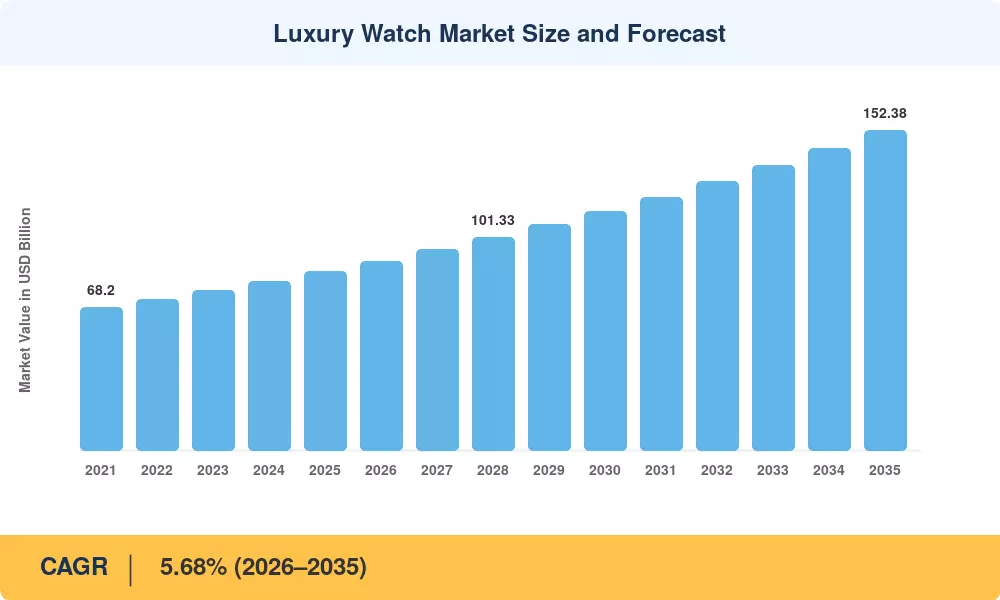
As per MRFR analysis, the Luxury Watch Market was estimated at 47.49 USD Billion in 2024. The Luxury Watch industry is projected to grow from 50.01 USD Billion in 2025 to 83.83 USD Billion by 2035, exhibiting a compound annual growth rate (CAGR) of 5.3 during the forecast period 2025 - 2035.

Key Market Trends & Highlights

The Luxury Watch Market is experiencing a dynamic evolution driven by consumer preferences and technological advancements.

  • Personalization and customization are becoming increasingly important to consumers in the luxury watch segment.
  • Integration of smart technology is gaining traction, particularly among younger affluent buyers in North America.
  • Sustainability initiatives are influencing purchasing decisions, especially in the Asia-Pacific region.
  • Rising disposable income and evolving consumer preferences are key drivers propelling growth in both the luxury and premium segments.

Market Size & Forecast

2024 Market Size 47.49 (USD Billion)
2035 Market Size 83.83 (USD Billion)
CAGR (2025 - 2035) 5.3%

Major Players

Rolex (CH), Patek Philippe (CH), Audemars Piguet (CH), Omega (CH), Tag Heuer (CH), Cartier (FR), IWC Schaffhausen (CH), Breguet (FR), Panerai (IT), Jaeger-LeCoultre (CH)

Luxury Watch Market Trends

The Luxury Watch Market is currently experiencing a dynamic evolution, characterized by shifting consumer preferences and technological advancements. As individuals increasingly seek unique and personalized timepieces, brands are responding by offering bespoke options that cater to individual tastes. This trend reflects a broader movement towards individuality in luxury goods, where consumers desire products that resonate with their personal identity. Furthermore, the integration of smart technology into traditional watchmaking is gaining traction, appealing to a younger demographic that values both style and functionality. This fusion of heritage craftsmanship with modern innovation appears to be redefining the landscape of luxury timepieces. In addition, sustainability has emerged as a pivotal consideration within the Luxury Watch Market. Brands are increasingly adopting eco-friendly practices, from sourcing materials responsibly to implementing sustainable manufacturing processes. This shift not only addresses growing consumer concerns regarding environmental impact but also enhances brand reputation. As the market continues to evolve, it seems likely that these trends will shape the future of luxury watches, creating a more diverse and responsible marketplace that aligns with contemporary values.

Personalization and Customization

Consumers are gravitating towards unique timepieces that reflect their individual styles. Brands are responding by offering bespoke services, allowing customers to personalize their watches, thus enhancing the emotional connection to the product.

Integration of Smart Technology

The Luxury Watch Market is witnessing a blend of traditional craftsmanship with modern technology. Smart features are being incorporated into luxury timepieces, appealing to tech-savvy consumers who seek both elegance and functionality.

Sustainability Initiatives

There is a growing emphasis on eco-friendly practices within the Luxury Watch Market. Brands are increasingly focusing on sustainable sourcing and manufacturing processes, addressing consumer demand for environmentally responsible products.

Luxury Watch Market Drivers

Rising Disposable Income

The Global Luxury Watch Market Industry is experiencing growth driven by increasing disposable income among consumers, particularly in emerging economies. As individuals gain more financial freedom, they are more inclined to invest in luxury items, including high-end watches. For instance, countries like China and India are witnessing a surge in the affluent class, which is expected to contribute significantly to the market's expansion. By 2024, the market is projected to reach 65.1 USD Billion, reflecting a strong consumer demand for luxury timepieces. This trend suggests that as wealth increases, so does the propensity to purchase luxury watches, thereby bolstering the overall market.

Market Growth Projections

The Global Luxury Watch Market Industry is poised for substantial growth, with projections indicating a market size of 65.1 USD Billion in 2024 and an anticipated increase to 100 USD Billion by 2035. This growth trajectory suggests a compound annual growth rate (CAGR) of 3.99% from 2025 to 2035. Such figures reflect the increasing consumer interest in luxury timepieces, driven by factors such as rising disposable income, technological advancements, and changing consumer preferences. As the market evolves, it is likely to attract both established brands and new entrants, further enriching the competitive landscape.

Technological Advancements

Technological innovations play a pivotal role in shaping the Global Luxury Watch Market Industry. Brands are increasingly incorporating advanced features such as smart technology, enhanced durability, and unique materials into their timepieces. This integration of technology not only appeals to tech-savvy consumers but also enhances the functionality and appeal of luxury watches. For example, brands like TAG Heuer and Rolex are exploring smart functionalities while maintaining traditional craftsmanship. As the market evolves, these advancements are likely to attract a broader audience, potentially increasing the market size to 100 USD Billion by 2035, indicating a shift in consumer preferences towards technologically advanced luxury watches.

Expansion of E-commerce Channels

The Global Luxury Watch Market Industry is witnessing a significant shift towards e-commerce, which is transforming how consumers purchase luxury timepieces. The convenience of online shopping, coupled with the rise of luxury e-commerce platforms, is making luxury watches more accessible to a global audience. Brands are investing in their online presence and enhancing the digital shopping experience to cater to this trend. This expansion is likely to attract new customers and increase overall sales. As e-commerce continues to grow, it is anticipated that the market will experience a robust growth rate, aligning with the projected CAGR of 3.99% from 2025 to 2035.

Growing Demand for Sustainable Products

Sustainability is becoming a crucial factor influencing purchasing decisions in the Global Luxury Watch Market Industry. Consumers are increasingly seeking brands that prioritize ethical sourcing and environmentally friendly practices. Luxury watch manufacturers are responding by adopting sustainable materials and transparent supply chains. For instance, brands like Panerai are utilizing recycled materials and promoting eco-friendly practices. This shift towards sustainability not only aligns with consumer values but also enhances brand loyalty. As awareness of environmental issues grows, the demand for sustainable luxury watches is expected to rise, contributing to the market's projected growth rate of 3.99% CAGR from 2025 to 2035.

Influence of Social Media and Celebrity Endorsements

The impact of social media and celebrity endorsements on the Global Luxury Watch Market Industry cannot be understated. Platforms like Instagram and TikTok have become vital marketing tools for luxury brands, allowing them to reach a wider audience. Influencers and celebrities often showcase luxury watches, creating aspirational value among consumers. This trend is particularly evident among younger demographics who are influenced by online personalities. As brands leverage these platforms to promote their products, the visibility and desirability of luxury watches increase, potentially driving sales and contributing to the market's growth trajectory towards 100 USD Billion by 2035.

Market Segment Insights

By Price Range: Luxury (Largest) vs. Premium (Fastest-Growing)

In the Luxury Watch Market, the price range segment showcases a diverse spread of consumer preferences, largely dominated by the Luxury category. This segment captures significant attention from affluent consumers seeking exclusive timepieces, contributing to its status as the largest segment. In contrast, the Premium price range has seen an influx of interest, marking it as the fastest-growing segment within this market, as more consumers aspire to own high-quality watches that reflect status without reaching the ultra-luxury price points.

Luxury (Dominant) vs. Premium (Emerging)

The Luxury segment represents the pinnacle of the watch market, characterized by brands that are synonymous with craftsmanship, exclusivity, and heritage. These watches often feature complex mechanisms, precious materials, and limited availability. On the other hand, the Premium segment is carving its niche as an emerging player, appealing to consumers who desire luxury features and quality but at more accessible price points. This segment is gaining traction as consumers increasingly prioritize quality and brand reputation, leading to a surge in demand for watches that bridge the gap between luxury and affordability.

By Material: Stainless Steel (Largest) vs. Gold (Fastest-Growing)

The Luxury Watch Market showcases a distinct preference for different materials, with stainless steel claiming the largest share among all materials used in watchmaking. This dominance is attributed to its durability, resistance to tarnishing, and modern aesthetic, appealing to a broad spectrum of consumers. In contrast, gold watches, while traditionally viewed as a symbol of luxury, are experiencing a surge in popularity, driven by a growing desire for personalized, high-status items. The market has seen an increasing number of brands releasing new collections featuring gold, which has captured the attention of affluent consumers seeking exclusive timepieces.

Stainless Steel (Dominant) vs. Gold (Emerging)

Stainless steel is renowned for its unrivaled durability and sleek appearance, making it the dominant material in luxury watches. Brands favor it due to its hypoallergenic properties and its ability to maintain an exquisite finish over time. Conversely, gold, particularly rose and white gold, is emerging as a favored choice, catering to consumers who appreciate opulence and sophistication. Gold watches symbolize prestige and status, often targeted at high-end audiences willing to invest in unique designs. As modern consumers seek individuality, gold's resurgence in various models signifies its potential for growth. While stainless steel remains the cornerstone of luxury watch production, gold is swiftly evolving into a crucial segment with increasing market presence.

By Functionality: Chronograph (Largest) vs. Smartwatch (Fastest-Growing)

In the Luxury Watch Market, the functionality segment showcases a diverse range of offerings, with chronographs holding the largest market share. Known for their unique timing capabilities and stylish designs, chronograph watches appeal to luxury consumers who are not only looking for aesthetic appeal but also precision in timekeeping. This established preference positions chronograph as a dominant player in the market. Following closely are automatic and digital watches, which maintain substantial shares, albeit with slower growth rates compared to the emerging smartwatch category. The smartwatch segment has been gaining momentum in the luxury watch sector, driven by increasing consumer interest in advanced technology features combined with luxury elements. As affluent customers seek to blend style with functionality, smartwatches are capitalizing on trends toward health tracking, connectivity, and customization. The growth of this segment is also supported by collaborations between luxury watch brands and technology companies, integrating high fashion with cutting-edge tech. Overall, this diversification in the functionality segment reflects broader consumer preferences towards multifunctional luxury items.

Chronograph: Dominant vs. Smartwatch: Emerging

Chronograph watches are renowned for their sophisticated craftsmanship and complex mechanisms, appealing to traditional luxury watch enthusiasts. Their ability to measure elapsed time with precision makes them a favorite among sports and fashion lovers alike. The chronograph segment is characterized by classic styles, often featuring mechanical movements and lavish designs that speak to heritage and luxury. In contrast, smartwatches are emerging rapidly as an appealing alternative, especially among younger demographics. These timepieces combine traditional luxury with advanced technology, offering features such as fitness tracking, notifications, and app integration. While maintaining a high-end aesthetic, smartwatches represent a shift in consumer preferences towards practicality and technological innovation in the luxury space.

By Target Audience: Affluent Individuals (Largest) vs. Collectors (Fastest-Growing)

In the Luxury Watch Market, the 'Affluent Individuals' segment holds a substantial share due to their discretionary income and preference for high-end timepieces that signify status and success. This group is characterized by individuals with higher purchasing power, seeking exclusive and bespoke products that reflect their social standing. In contrast, 'Collectors' have been rapidly increasing in number, particularly those focused on limited-edition and vintage watches, driving demand for rare timepieces.

Affluent Individuals (Dominant) vs. Collectors (Emerging)

The 'Affluent Individuals' segment is primarily composed of wealthy consumers who prioritize luxury as a lifestyle. They often seek iconic brands and classic designs that symbolize opulence. This group tends to favor established luxury watch brands and values craftsmanship, heritage, and exclusivity. Meanwhile, the 'Collectors' segment consists of passionate watch enthusiasts who invest in timepieces as both luxury items and assets. They often have in-depth knowledge of the market and may engage in trading or investment, indicating a dynamic and emerging category characterized by diverse interests in watch craftsmanship, brand significance, and market trends.

By Design Style: Classic (Largest) vs. Sporty (Fastest-Growing)

In the Luxury Watch Market, the design style segment reflects a diverse range of consumer preferences, with Classic watches holding the largest market share. This segment is characterized by timeless elegance and traditional craftsmanship, attracting affluent consumers who value heritage and sophistication. Sporty designs, while smaller in market share, are quickly gaining traction among younger buyers seeking versatility and functional aesthetics. This rapid growth indicates a shift in consumer interests, particularly towards active lifestyles and modern aesthetics in luxury timepieces.

Style Appeal: Classic (Dominant) vs. Sporty (Emerging)

Classic watches are revered for their understated elegance and representation of traditional watchmaking. They appeal to consumers who seek prestige, status, and an investment in craftsmanship that transcends trends. With features like intricate dials and high-quality materials, these pieces are often seen as heirlooms. In contrast, sporty watches represent an emerging segment focusing on practicality, durability, and contemporary design elements. They often incorporate innovative functionalities and materials tailored for active lifestyles, appealing especially to younger luxury consumers who desire both form and function. The rise in sporty designs indicates a broader acceptance of luxury watches as versatile accessories fitting various occasions.

Get more detailed insights about Luxury Watch Market

Regional Insights

North America : Luxury Market Resilience

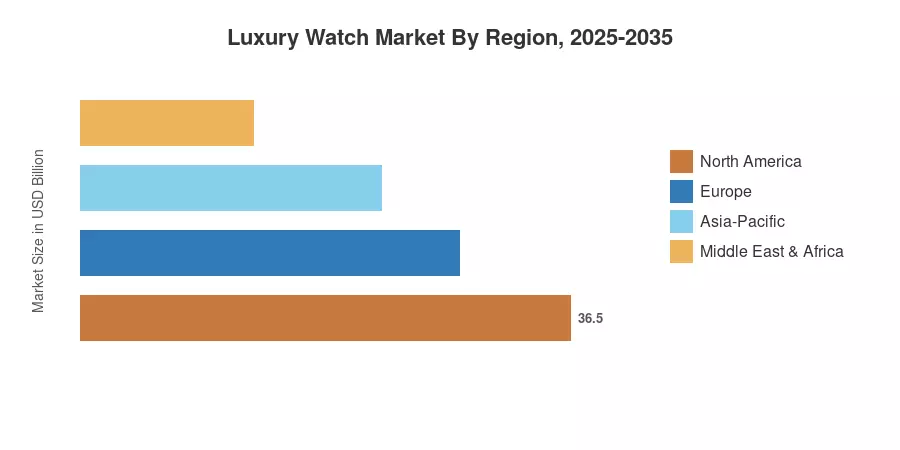
The North American luxury watch market is projected to reach $15.0 billion by December 2025, driven by increasing disposable incomes and a growing appreciation for high-end timepieces. The demand for luxury watches is bolstered by a shift towards online retail and personalized shopping experiences. Regulatory support for luxury goods, including favorable import tariffs, further enhances market growth prospects. Leading countries in this region include the USA and Canada, where brands like Rolex, Omega, and Tag Heuer dominate the market. The competitive landscape is characterized by a mix of established Swiss brands and emerging luxury players. The presence of high-net-worth individuals and a strong retail network contribute to the region's robust market dynamics.

Europe : Market Leader in Luxury Watches

Europe remains the largest market for luxury watches, with a market size of $25.0 billion as of December 2025. The region benefits from a rich heritage of watchmaking, with countries like Switzerland and France leading the charge. Regulatory frameworks that support luxury goods, along with a strong tourism sector, drive demand. The increasing trend of sustainable luxury also influences consumer preferences, pushing brands to innovate. Switzerland is the epicenter of luxury watch manufacturing, home to iconic brands such as Patek Philippe and Audemars Piguet. France also plays a significant role with brands like Cartier and Breguet. The competitive landscape is marked by a blend of traditional craftsmanship and modern marketing strategies, ensuring that Europe maintains its leadership in The Luxury Watch.

Asia-Pacific : Emerging Luxury Market

The Asia-Pacific luxury watch market is valued at $5.0 billion as of December 2025, reflecting a growing affluence among consumers in countries like China and Japan. The region's demand is fueled by a rising middle class and increasing interest in luxury brands. Regulatory changes that promote foreign investment in luxury goods are also contributing to market growth. The trend towards online shopping is reshaping consumer behavior, making luxury watches more accessible. China stands out as a key player in the luxury watch market, with a significant presence of brands like Omega and Tag Heuer. Japan also contributes to the market with its unique blend of traditional and modern luxury. The competitive landscape is evolving, with both established brands and local players vying for market share, reflecting the dynamic nature of consumer preferences in the region.

Middle East and Africa : Luxury Market Potential

The Middle East and Africa luxury watch market is projected to reach $2.49 billion by December 2025, driven by a growing affluent population and increasing tourism. The region's demand for luxury watches is supported by a strong retail environment and favorable regulations that encourage luxury imports. The rise of e-commerce is also making luxury watches more accessible to consumers across the region. Countries like the UAE and South Africa are leading the market, with a strong presence of luxury brands. The competitive landscape features both international brands and local retailers, catering to the diverse tastes of consumers. The region's unique cultural appreciation for luxury goods further enhances its market potential.

Key Players and Competitive Insights

The Luxury Watch Market is currently characterized by a dynamic competitive landscape, driven by a confluence of innovation, brand heritage, and evolving consumer preferences. Major players such as Rolex (CH), Patek Philippe (CH), and Audemars Piguet (CH) are at the forefront, each leveraging their unique brand identities to capture market share. Rolex (CH) continues to emphasize its status as a symbol of success, focusing on limited edition releases and exclusive collaborations that enhance its desirability. Patek Philippe (CH), renowned for its craftsmanship, appears to be investing heavily in digital transformation, aiming to engage a younger demographic through enhanced online presence and e-commerce capabilities. Meanwhile, Audemars Piguet (CH) is likely concentrating on sustainability initiatives, aligning its operations with the growing consumer demand for environmentally responsible luxury products.

The business tactics employed by these companies reflect a strategic focus on localizing manufacturing and optimizing supply chains to enhance efficiency and responsiveness. The Luxury Watch Market is moderately fragmented, with a few dominant players exerting considerable influence. This structure allows for a diverse range of offerings, yet the collective strategies of key players create a competitive environment where innovation and brand loyalty are paramount.

In November 2025, Rolex (CH) unveiled a new line of timepieces that incorporate recycled materials, signaling a commitment to sustainability while maintaining its luxury appeal. This strategic move not only aligns with global trends towards environmental responsibility but also reinforces Rolex's brand image as a leader in the luxury sector. The introduction of these models is expected to resonate well with eco-conscious consumers, potentially expanding Rolex's market reach.

In October 2025, Patek Philippe (CH) announced a partnership with a leading tech firm to develop a smartwatch that integrates traditional watchmaking with modern technology. This collaboration is indicative of Patek Philippe's strategy to bridge the gap between heritage and innovation, appealing to tech-savvy consumers while preserving its esteemed craftsmanship. Such a move may enhance the brand's relevance in an increasingly digital marketplace.

In September 2025, Audemars Piguet (CH) launched a new initiative aimed at reducing its carbon footprint by 30% over the next five years. This ambitious goal reflects the brand's commitment to sustainability and positions it favorably among consumers who prioritize environmental considerations in their purchasing decisions. The initiative is likely to strengthen Audemars Piguet's brand loyalty and attract a new segment of environmentally conscious buyers.

As of December 2025, the Luxury Watch Market is witnessing a pronounced shift towards digitalization, sustainability, and the integration of artificial intelligence in product development and customer engagement. Strategic alliances are increasingly shaping the competitive landscape, enabling brands to leverage complementary strengths. The evolution of competitive differentiation appears to be moving away from price-based competition towards a focus on innovation, technological advancement, and supply chain reliability. This trend suggests that companies that can effectively harness these elements will likely emerge as leaders in the Luxury Watch Market.

Key Companies in the Luxury Watch Market market include

Industry Developments

Recent developments in the Global Luxury Watch Market have seen notable shifts, particularly involving key players such as LVMH and Richemont. In September 2023, LVMH reported a 20% increase in sales for its watch and jewelry segment, indicating robust consumer demand. Patek Philippe and Audemars Piguet continue to innovate with exclusive limited editions, maintaining their positions as leaders in high-end horology. The Swatch Group introduced eco-friendly practices in its production, aligning with growing consumer preferences for sustainability. Notably, in May 2023, Richemont completed the acquisition of a majority stake in a prominent independent watch brand, further consolidating its portfolio.

Market growth has also been fueled by the rising affluence in Asia-Pacific and North America, with Swiss watch exports increasing by 15% year-on-year in July 2023. This market expansion emphasizes the ongoing consumer shift towards luxury timepieces as status symbols. In the past two years, notable events like the resurgence of trade shows and exhibitions post-pandemic have reinvigorated brand visibility and consumer engagement across the Global Luxury Watch Market, reflecting an optimistic outlook for the sector.

Future Outlook

Luxury Watch Market Future Outlook

The Luxury Watch Market is projected to grow at a 5.3% CAGR from 2024 to 2035, driven by increasing disposable incomes, evolving consumer preferences, and technological advancements.

New opportunities lie in:

  • Expansion into emerging markets through localized luxury retail experiences.
  • Integration of smart technology in traditional luxury watches for enhanced functionality.
  • Development of sustainable luxury watch lines to attract eco-conscious consumers.

By 2035, the Luxury Watch Market is expected to solidify its position as a leader in luxury goods.

Market Segmentation

Luxury Watch Market Material Outlook

  • Stainless Steel
  • Gold
  • Platinum
  • Ceramic

Luxury Watch Market Price Range Outlook

  • Luxury
  • Premium
  • Affordable Luxury

Luxury Watch Market Design Style Outlook

  • Classic
  • Sporty
  • Modern
  • Vintage

Luxury Watch Market Functionality Outlook

  • Chronograph
  • Automatic
  • Digital
  • Smartwatch

Luxury Watch Market Target Audience Outlook

  • Affluent Individuals
  • Collectors
  • Fashion Enthusiasts
  • Gift Buyers

Report Scope

MARKET SIZE 202447.49(USD Billion)
MARKET SIZE 202550.01(USD Billion)
MARKET SIZE 203583.83(USD Billion)
COMPOUND ANNUAL GROWTH RATE (CAGR)5.3% (2024 - 2035)
REPORT COVERAGERevenue Forecast, Competitive Landscape, Growth Factors, and Trends
BASE YEAR2024
Market Forecast Period2025 - 2035
Historical Data2019 - 2024
Market Forecast UnitsUSD Billion
Key Companies ProfiledRolex (CH), Patek Philippe (CH), Audemars Piguet (CH), Omega (CH), Tag Heuer (CH), Cartier (FR), IWC Schaffhausen (CH), Breguet (FR), Panerai (IT), Jaeger-LeCoultre (CH)
Segments CoveredPrice Range, Material, Functionality, Target Audience, Design Style
Key Market OpportunitiesIntegration of smart technology in traditional Luxury Watch Market designs enhances consumer engagement and personalization.
Key Market DynamicsShifting consumer preferences towards sustainable luxury watches drive innovation and competition among leading brands.
Countries CoveredNorth America, Europe, APAC, South America, MEA

Leave a Comment

FAQs

What was at a the expected Market Was at a the Global Luxury Watch Market by 2024?

The Global Luxury Watch Market was at a 47.49 Billion USD by 2024

Download Free Sample

Kindly complete the form below to receive a free sample of this Report

Compare Licence

×
Features License Type
Single User Multiuser License Enterprise User
Price $4,950 $5,950 $7,250
Maximum User Access Limit 1 User Upto 10 Users Unrestricted Access Throughout the Organization
Free Customization
Direct Access to Analyst
Deliverable Format
Platform Access
Discount on Next Purchase 10% 15% 15%
Printable Versions