Download Free Sample
Kindly complete the form below to receive a free sample of this Report
Medical Courier Services Market Research Report By End User (Hospitals, Clinics, Research Institutions, Pharmaceutical Companies, Diagnostic Laboratories), By Application (Healthcare Facilities, Laboratories, Pharmaceuticals, Biotechnology, Diagnostic Centers), By Service Type (Same-Day Delivery, Scheduled Delivery, On-Demand Delivery, Temperature-Controlled Delivery, Specialty Delivery) And By Region (North America, Europe, Asia-Pacific, And Rest Of The World) – Market Forecast Till 2035.
As per MRFR analysis, the Medical Courier Services Market was estimated at 7.5 USD Billion in 2024. The Medical Courier Services industry is projected to grow from 7.83 USD Billion in 2025 to 12.0 USD Billion by 2035, exhibiting a compound annual growth rate (CAGR) of 4.37% during the forecast period 2025 - 2035.
The Medical Courier Services Market is experiencing robust growth driven by technological advancements and increasing demand for timely deliveries.
| 2024 Market Size | 7.5 (USD Billion) |
| 2035 Market Size | 12.0 (USD Billion) |
| CAGR (2025 - 2035) | 4.37% |
FedEx (US), UPS (US), DHL (DE), LabCorp (US), Quest Diagnostics (US), MedSpeed (US), Covenant Transport (US), Sameday Health (US), OnTrac (US)
Our Impact
Enabled $4.3B Revenue Impact for Fortune 500 and Leading Multinationals
Partnering with 2000+ Global Organizations Each Year
30K+ Citations by Top-Tier Firms in the Industry
The Medical Courier Services Market is currently experiencing a notable evolution, driven by the increasing demand for timely and secure transportation of medical supplies, specimens, and pharmaceuticals. This sector plays a crucial role in ensuring that healthcare providers can deliver essential services efficiently. As the healthcare landscape continues to expand, the need for specialized courier services that cater to the unique requirements of medical logistics becomes increasingly apparent. Factors such as the rise in telemedicine and home healthcare services further amplify the necessity for reliable delivery systems, which are integral to patient care and operational efficiency. Moreover, advancements in technology are reshaping the Medical Courier Services Market, with innovations such as real-time tracking and temperature-controlled transport solutions gaining traction. These developments not only enhance service reliability but also improve compliance with regulatory standards. As stakeholders in the healthcare industry recognize the importance of swift and safe delivery, the market is poised for continued growth. The interplay between evolving healthcare demands and technological advancements suggests a dynamic future for medical courier services, where adaptability and efficiency will be paramount.
The integration of advanced technologies into the Medical Courier Services Market is becoming increasingly prevalent. Innovations such as real-time tracking systems and automated logistics management are enhancing operational efficiency. These technologies enable couriers to monitor shipments closely, ensuring timely deliveries and reducing the risk of errors. As a result, stakeholders are likely to experience improved service reliability and customer satisfaction.
Regulatory compliance remains a critical focus within the Medical Courier Services Market. As healthcare regulations evolve, courier services must adapt to meet stringent standards for the transportation of medical products. This trend indicates a growing emphasis on maintaining quality and safety throughout the supply chain, which could lead to increased investment in training and certification for personnel involved in medical logistics.
Sustainability initiatives are emerging as a significant trend in the Medical Courier Services Market. Companies are increasingly exploring eco-friendly transportation options and practices to reduce their carbon footprint. This shift towards greener logistics not only aligns with global sustainability goals but also appeals to environmentally conscious consumers, potentially enhancing brand reputation and market competitiveness.
The Medical Courier Services Market is shaped by the increasing regulatory requirements imposed on the transportation of medical goods. Compliance with stringent regulations ensures the safe handling and delivery of sensitive items, such as pharmaceuticals and biological specimens. Regulatory bodies mandate specific protocols for temperature control, packaging, and documentation, which couriers must adhere to. This compliance not only enhances the credibility of courier services but also fosters trust among healthcare providers. As regulations become more rigorous, the demand for specialized medical courier services is likely to rise, thereby driving market growth.
The expansion of healthcare facilities plays a crucial role in the Medical Courier Services Market. As new hospitals, clinics, and laboratories emerge, the demand for efficient logistics and transportation services intensifies. This expansion is reflected in the increasing number of healthcare establishments, which has been reported to grow at a rate of 5% annually. Consequently, medical couriers are required to facilitate the movement of essential medical items, including blood samples and diagnostic equipment, between these facilities. This trend not only supports the operational efficiency of healthcare providers but also propels the growth of the medical courier services market.
The Medical Courier Services Market experiences a notable increase in demand for timely deliveries, particularly in the healthcare sector. As healthcare providers strive to enhance patient outcomes, the need for rapid transportation of medical supplies, specimens, and pharmaceuticals becomes paramount. This trend is underscored by the projected growth of the medical courier services market, which is anticipated to reach a valuation of approximately USD 10 billion by 2026. The urgency associated with medical deliveries necessitates reliable courier services that can ensure prompt and safe transportation, thereby driving the market forward.
Technological advancements significantly influence the Medical Courier Services Market by enhancing operational efficiency and service reliability. The integration of tracking systems, route optimization software, and real-time communication tools allows couriers to streamline their operations. For instance, the implementation of GPS tracking has been shown to reduce delivery times by up to 30%. As technology continues to evolve, medical couriers are likely to adopt innovative solutions that improve service quality and customer satisfaction. This technological integration is expected to contribute to the overall growth of the medical courier services market, making it a vital component of the healthcare supply chain.
The growing focus on patient-centric services is a driving force in the Medical Courier Services Market. Healthcare providers are increasingly prioritizing patient needs, which includes ensuring timely access to medical supplies and medications. This shift towards patient-centricity necessitates efficient logistics solutions that can adapt to the dynamic requirements of healthcare delivery. As a result, medical couriers are expected to offer tailored services that align with the specific needs of patients and healthcare providers. This trend not only enhances patient satisfaction but also contributes to the overall expansion of the medical courier services market.
The Medical Courier Services Market is primarily driven by the growing need for timely and reliable transportation of medical goods across various segments, with Healthcare Facilities having the largest market share. They are crucial in the logistics of delivering medical supplies, pharmaceuticals, and specimens for analysis. Laboratories, while smaller in share, are experiencing rapid expansion due to increasing demand for diagnostic testing and precision medicine. The ability of courier services to provide flexible and on-demand solutions enhances their role in these facilities. Growth trends in the Medical Courier Services Market are largely influenced by the rising demand for home healthcare and an increased emphasis on diagnostic testing. As healthcare facilities seek efficiency in supply chains, the demand for couriers has surged significantly. Laboratories are becoming increasingly reliant on medical couriers for timely deliveries of specimens to ensure the accuracy and speed of test results. This trend is anticipated to continue as the industry evolves to meet the complexities of modern healthcare.
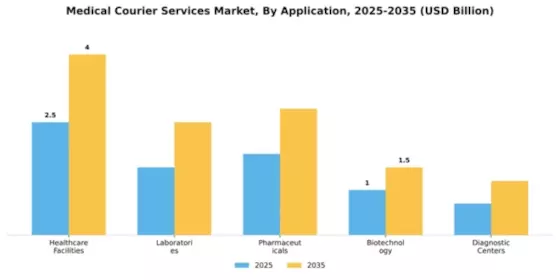
Healthcare Facilities (Dominant) vs. Laboratories (Emerging)
Healthcare Facilities cater to a broad range of services, from hospitals to clinics, representing the dominant segment in the Medical Courier Services Market. Their operations require consistent and reliable logistics to maintain high standards in patient care and operational efficiency. On the other hand, Laboratories, being an emerging segment, are rapidly adapting to technological advancements. They focus on timely testing and results, which relies heavily on efficient courier services to transport specimens without compromise. This growing dependence on logistics solutions highlights the labs' need for flexibility and speed, positioning them as vital collaborators in the healthcare ecosystem. Both segments are vital to the overall health supply chain, facilitating seamless interactions and improving patient outcomes.
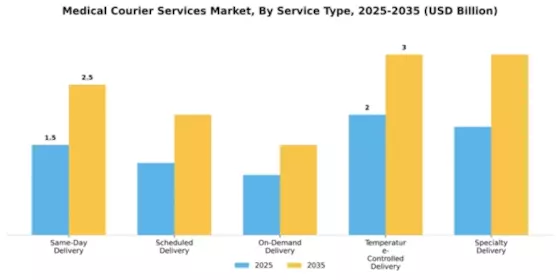
In the Medical Courier Services Market, Same-Day Delivery holds the largest market share as it offers rapid transportation of medical supplies, specimens, and pharmaceuticals, ensuring prompt service essential for patient care. Scheduled Delivery is also prominent, providing routine transport of items that don't require expedited handling, thereby catering to hospitals and clinics with planned logistics needs. The balance between these two services defines a significant portion of the market's operations.
Same-Day Delivery (Dominant) vs. Scheduled Delivery (Emerging)
Same-Day Delivery is a cornerstone of the Medical Courier Services Market, renowned for its ability to transport urgent medical items within hours, which is crucial in emergency scenarios. This service is characterized by its reliability and speed, catering especially to hospitals and laboratories that require immediate access to medical supplies. On the other hand, Scheduled Delivery has emerged as a flexible option, preferred by healthcare providers for transporting non-urgent items at predetermined times. This service adapts to the growing needs of healthcare providers who seek efficiency in their supply chain without compromising service speed. Together, these segment types reflect the dynamic demands of the healthcare sector.
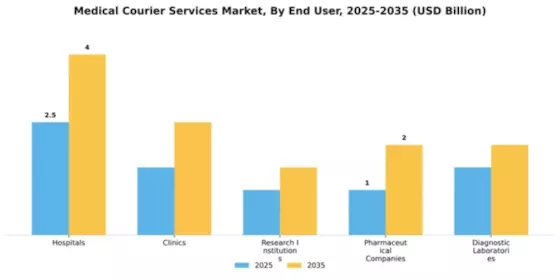
The Medical Courier Services Market is significantly influenced by its end users, with hospitals commanding the largest share of the market. The reliance on efficient and timely delivery of medical supplies, equipment, and specimens positions hospitals as a dominant force in this sector. In contrast, pharmaceutical companies have emerged as the fastest-growing segment, fueled by an increasing demand for expedited delivery of critical medications and biologics to healthcare providers and patients, particularly during crises such as the COVID-19 pandemic.
Hospitals (Dominant) vs. Pharmaceutical Companies (Emerging)
Hospitals represent the dominant player in the Medical Courier Services Market, leveraging their extensive networks and critical need for reliable logistics to ensure patient care. They require prompt delivery services for a wide range of products, including medications, surgical instruments, and lab specimens. Pharmaceutical companies, on the other hand, are rapidly emerging as a key segment in the market, driven by the need for swift delivery of life-saving drugs and the rise of telehealth services. This segment's growth is supported by increased collaboration with logistic providers to enhance service efficiency and meet rising patient expectations. Both segments are critical for efficient healthcare delivery, yet they operate with different logistics needs and service expectations.
Get more detailed insights about Medical Courier Services Market Request Free Sample
North America is poised to maintain its leadership in the Medical Courier Services market, holding a significant market share of 3.75 in 2024. The region's growth is driven by increasing demand for timely and secure transportation of medical supplies, coupled with stringent regulatory requirements that ensure compliance and safety. The rise in e-commerce and telehealth services further fuels this demand, as healthcare providers seek reliable logistics solutions to meet patient needs. The competitive landscape in North America is robust, featuring key players such as FedEx, UPS, and LabCorp. These companies leverage advanced technology and extensive networks to enhance service efficiency. The U.S. stands out as the leading country, supported by a well-established healthcare infrastructure and a growing emphasis on same-day delivery services. This competitive edge positions North America as a critical hub for medical logistics.
Europe's Medical Courier Services market is on an upward trajectory, with a market size of 2.25 in 2024. The growth is propelled by increasing healthcare expenditures and a rising demand for specialized logistics solutions. Regulatory frameworks across the EU are becoming more stringent, promoting safety and efficiency in medical transport. This regulatory environment is a catalyst for innovation, encouraging companies to adopt advanced technologies for tracking and delivery. Leading countries in this region include Germany, France, and the UK, where established players like DHL and local couriers are enhancing their service offerings. The competitive landscape is characterized by a mix of global and regional companies, all vying for market share. The emphasis on sustainability and eco-friendly practices is also shaping the market, as companies adapt to changing consumer preferences and regulatory pressures.
The Asia-Pacific region is witnessing a significant surge in the Medical Courier Services market, with a size of 1.5 in 2024. This growth is driven by increasing healthcare access, urbanization, and a rising population. The demand for efficient logistics solutions is further amplified by the growing prevalence of chronic diseases, necessitating timely delivery of medical supplies. Regulatory bodies are also enhancing frameworks to ensure compliance and safety in medical transport, fostering market growth. Countries like China, India, and Japan are at the forefront of this expansion, with a mix of local and international players competing for market share. Companies are investing in technology to streamline operations and improve service delivery. The competitive landscape is evolving, with a focus on innovation and customer-centric solutions, positioning the Asia-Pacific region as a key player in The Medical Courier Services.
The Middle East and Africa region is gradually emerging in the Medical Courier Services market, with a size of 0.75 in 2024. The growth is driven by increasing healthcare investments and a rising demand for efficient logistics solutions. Regulatory frameworks are evolving, aiming to enhance the safety and reliability of medical transport. This shift is creating opportunities for companies to innovate and expand their service offerings in the region. Leading countries such as South Africa and the UAE are witnessing a rise in local and international players entering the market. The competitive landscape is characterized by a mix of established logistics firms and new entrants, all aiming to capture the growing demand. As healthcare infrastructure improves, the region is expected to see significant growth in medical courier services, making it an attractive market for investment.
The Medical Courier Services Market is characterized by a dynamic competitive landscape, driven by the increasing demand for timely and secure transportation of medical specimens, pharmaceuticals, and healthcare products. Key players such as FedEx (US), UPS (US), and LabCorp (US) are strategically positioned to leverage their extensive logistics networks and technological advancements. FedEx (US) focuses on enhancing its cold chain capabilities, which is crucial for transporting temperature-sensitive medical products. Meanwhile, UPS (US) emphasizes its commitment to sustainability, integrating eco-friendly practices into its operations, which resonates with the growing demand for environmentally responsible services. LabCorp (US) is enhancing its service offerings through strategic partnerships with healthcare providers, thereby expanding its reach and operational efficiency. Collectively, these strategies contribute to a competitive environment that prioritizes innovation and responsiveness to market needs.The business tactics employed by these companies reflect a nuanced understanding of the market's structure, which is moderately fragmented yet increasingly influenced by a few dominant players. Localizing operations and optimizing supply chains are critical tactics that enhance service delivery and reduce operational costs. The collective influence of these key players shapes the market dynamics, as they set benchmarks for service quality and operational efficiency, compelling smaller firms to adapt or innovate to remain competitive.In November FedEx (US) announced the launch of a new temperature-controlled delivery service specifically designed for the healthcare sector. This strategic move is significant as it addresses the growing need for reliable transportation of sensitive medical products, thereby enhancing FedEx's competitive edge in the market. The introduction of this service not only strengthens its logistics capabilities but also aligns with the increasing regulatory requirements for the safe transport of medical goods.In October UPS (US) expanded its healthcare logistics network by acquiring a regional courier service specializing in medical deliveries. This acquisition is pivotal as it allows UPS to enhance its service offerings and improve delivery times, particularly in underserved areas. By integrating this regional player into its operations, UPS is likely to bolster its market share and reinforce its position as a leader in the medical courier segment.In September LabCorp (US) entered into a strategic partnership with a leading telehealth provider to streamline the logistics of specimen collection and delivery. This collaboration is indicative of a broader trend towards integrating technology with logistics, enhancing patient access to healthcare services. By facilitating quicker turnaround times for lab results, LabCorp is positioning itself as a forward-thinking player in the medical courier landscape, likely attracting more healthcare providers to its network.As of December the competitive trends in the Medical Courier Services Market are increasingly defined by digitalization, sustainability, and the integration of artificial intelligence (AI) into logistics operations. Strategic alliances are becoming more prevalent, as companies recognize the value of collaboration in enhancing service offerings and operational efficiency. Looking ahead, competitive differentiation is expected to evolve, with a shift from price-based competition to a focus on innovation, technology, and supply chain reliability. This transition underscores the importance of adapting to changing market demands and leveraging technological advancements to maintain a competitive edge.






The Medical Courier Services Market is projected to grow at a 4.37% CAGR from 2025 to 2035, driven by increasing healthcare demands and technological advancements.
New opportunities lie in:
By 2035, the market is expected to be robust, reflecting substantial growth and innovation.
| MARKET SIZE 2024 | 7.5(USD Billion) |
| MARKET SIZE 2025 | 7.83(USD Billion) |
| MARKET SIZE 2035 | 12.0(USD Billion) |
| COMPOUND ANNUAL GROWTH RATE (CAGR) | 4.37% (2025 - 2035) |
| REPORT COVERAGE | Revenue Forecast, Competitive Landscape, Growth Factors, and Trends |
| BASE YEAR | 2024 |
| Market Forecast Period | 2025 - 2035 |
| Historical Data | 2019 - 2024 |
| Market Forecast Units | USD Billion |
| Key Companies Profiled | FedEx (US), UPS (US), DHL (DE), LabCorp (US), Quest Diagnostics (US), MedSpeed (US), Covenant Transport (US), Sameday Health (US), OnTrac (US) |
| Segments Covered | Application, Service Type, End User |
| Key Market Opportunities | Integration of advanced tracking technologies enhances efficiency in the Medical Courier Services Market. |
| Key Market Dynamics | Rising demand for timely delivery of medical supplies drives innovation and competition in medical courier services. |
| Countries Covered | North America, Europe, APAC, South America, MEA |
The Medical Courier Services Market was valued at 7.5 USD Billion in 2024.
The market is projected to reach 12.0 USD Billion by 2035.
The expected CAGR for the Medical Courier Services Market during 2025 - 2035 is 4.37%.
Key players in the market include FedEx, UPS, DHL, LabCorp, Quest Diagnostics, MedSpeed, Covenant Transport, Sameday Health, and OnTrac.
The primary applications include Healthcare Facilities, Laboratories, Pharmaceuticals, Biotechnology, and Diagnostic Centers.
The Healthcare Facilities segment is expected to grow from 2.5 USD Billion in 2024 to 4.0 USD Billion by 2035.
Temperature-Controlled Delivery services are projected to increase from 2.0 USD Billion in 2024 to 3.0 USD Billion by 2035.
Demand is driven by Hospitals, Clinics, Research Institutions, Pharmaceutical Companies, and Diagnostic Laboratories.
The Pharmaceuticals segment is expected to grow from 1.8 USD Billion in 2024 to 2.8 USD Billion by 2035.
Growth varies, with Same-Day Delivery expected to rise from 1.5 USD Billion in 2024 to 2.5 USD Billion by 2035, while Specialty Delivery may increase from 1.8 USD Billion to 3.0 USD Billion.


Kindly complete the form below to receive a free sample of this Report

“This is really good guys. Excellent work on a tight deadline. I will continue to use you going forward and recommend you to others. Nice job”


“Thanks. It’s been a pleasure working with you, please use me as reference with any other Intel employees.”


“Thanks for sending the report it gives us a good global view of the Betaïne market.”


“Thank you, this will be very helpful for OQS.”


“We found the report very insightful! we found your research firm very helpful. I'm sending this email to secure our future business.”


“I am very pleased with how market segments have been defined in a relevant way for my purposes (such as "Portable Freezers & refrigerators" and "last-mile"). In general the report is well structured. Thanks very much for your efforts.”


“I have been reading the first document or the study, ,the Global HVAC and FP market report 2021 till 2026. Must say, good info! I have not gone in depth at all parts, but got a good indication of the data inside!”


“We got the report in time, we really thank you for your support in this process. I also thank to all of your team as they did a great job.”


“The Automotive 48V ECU Components Procurement Intelligence Study” was a complex project, but the Market Research Future (MRFR) team handled it with quality, agility, and customer-centricity. They delivered all requested data on time and within the agreed scope. The team, including Shubhendra Anand and Rahul Gotadki, was always readily available to clarify questions and swiftly implement necessary adjustments, driving the project to a successful conclusion within a very demanding timeframe.
I would also like to specifically commend Akshay Agarwal for his responsiveness and support at every stage—from our initial inquiry on May 6th through to final delivery on June 18th. His dedication made the entire process seamless.”



