Medical Electrode Market (2026 - 2035)

Medical Electrode Market Research Report By Product Type (Surface Electrodes, Needle Electrodes, Wire Electrodes, Other Electrodes), By Material (Carbon-Based Materials, Polymer-Based Materials, Metal-Based Materials, Ceramic Materials), By Application (Electroencephalography (EEG), Electrocardiography (ECG), Electromyography (EMG), Other Applications), By End User (Hospitals & Clinics, Ambulatory Surgical Centers, Diagnostic Centers, Other End Users) and By Regional (North America, Europe, South America, Asia Pacific, Middle East and Africa) - Growth & Industry Forecast 2025 To 2035
ID: MRFR/MED/25955-HCR
128 Pages
Rahul Gotadki, Satyendra Maurya
Last Updated: July 09, 2026
Medical Electrode Market
Market Size
Forecast Period2026-2035
CAGR (2026-2035)4.82%
2025 Market SizeUSD 2.25 Billion
2035 Market SizeUSD 3.57 Billion
Key Players
Ambu A/S
Cardinal Health
Medtronic plc
CONMED Corporation
Nihon Kohden Corporation
Natus Medical
Opportunities
  • Dry Electrode Commercialization at Scale
  • Home-Care and Decentralized Clinical Trial Electrode Kits
  • Emerging Market Healthcare Infrastructure Build-Out

Medical Electrode Market Summary

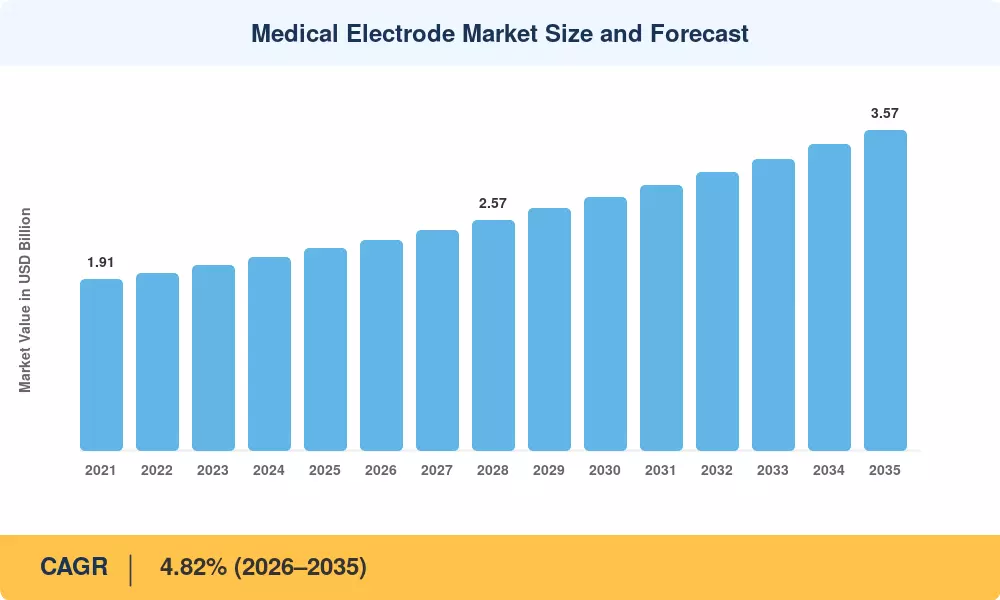
The Medical Electrode Market size was valued at USD 2.25 Billion in 2025, and the market is projected to grow from USD 2.34 Billion in 2026 to USD 3.57 Billion by 2035, registering a CAGR of 4.82% during the forecast period 2026–2035. This growth trajectory draws direct energy from two structural catalysts: the global rise in cardiovascular and neurological disease burden — with the WHO reporting over 17.9 million annual cardiovascular deaths worldwide — and accelerated government investment in remote patient monitoring infrastructure, particularly across CMS reimbursement expansions in the United States and EU MDR compliance mandates reshaping device specifications across Europe [1][2].

The landscape of the medical electrode market is being subtly altered by a technological revolution. Dry-contact and printed flexible electrode platforms that interface directly with wearable biosensor systems are replacing traditional wet-gel electrode formats, which have long been the standard for clinical diagnosis. Advances in conductive polymers and silver-silver chloride nano-coating are driving electrode innovation toward thinner, skin-conformable designs in the wearable medical device market, which is expected to be worth over USD 22 billion by 2024. The FDA and other regulatory agencies have expedited the time-to-market for next-generation electrode assemblies by introducing pre-certification paths for AI-enabled cardiac monitoring devices [4].

Due to well-established hospital procurement networks and advantageous insurance reimbursement schedules, North America holds around 41% of the medical electrode market. With a 5.70% CAGR through 2035, Asia-Pacific has the strongest development trajectory thanks to growing domestic manufacturing capacity in South Korea, Japan, and China. Europe has the second-largest market, at around 27%, with demand centered around clinical routes for the aging population and cardiac rehabilitation programs in Germany, France, and the Nordic nations. As the therapy of chronic diseases shifts from acute-care facilities to home and ambulatory settings, the medical electrode market is positioned for long-term, stable growth.


Key Report Takeaways

• By Product Type

  • Surface electrodes captured 49% of the Medical Electrode Market share in 2025, driven by high-volume ECG and Holter monitoring utilization across hospital and outpatient settings.
  • Needle electrodes are projected to expand at a 6.70% CAGR through 2035, fueled by rising electromyography (EMG) procedure volumes in neurology departments.

• By Technology

  • Wet gel electrodes retained approximately 48% revenue share within the Medical Electrode Market in 2025, reflecting their established role in acute-care diagnostics.


• By Usability Type

  • Disposable formats accounted for 72% of total unit volume in 2025, supported by infection-control mandates and single-use procurement policies across hospital networks.

• By Region

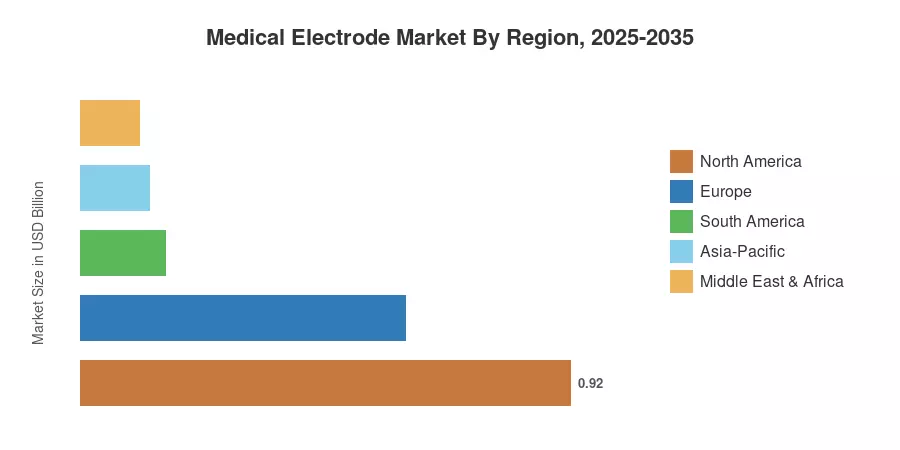
  • North America generated approximately USD 0.92 billion in Medical Electrode Market revenue during 2025, maintaining its position as the dominant regional buyer.
  • Asia-Pacific is set to record the fastest regional CAGR of 5.70% through 2035, led by government healthcare modernization initiatives in China and India.


Medical Electrode Market Size and Forecast (2021–2035)

Market Research Future employs a triangulated methodology combining bottom-up revenue analysis from manufacturer filings, top-down demand modeling from hospital procurement databases, and cross-validation against regulatory import-export records across 42 countries. Historical data (2021–2024) is derived from audited company financials and public health procurement disclosures, while forecast projections (2026–2035) apply a compound annual growth model calibrated to macro-epidemiological trends and technology adoption curves.
Medical Electrode Market Size and Forecast
Our Impact
Enabled $4.3B Revenue Impact for Fortune 500 and Leading Multinationals
Partnering with 2000+ Global Organizations Each Year
30K+ Citations by Top-Tier Firms in the Industry

Driver Impact Analysis

Driver ~% Impact on CAGR Geographic Relevance Impact Timeline
Rising cardiovascular disease prevalence ~22% Global Long-term (≥4 yr)
Remote patient monitoring expansion ~20% North America, Europe Medium-term (2–4 yr)
Wearable biosensor integration ~18% Global Medium-term (2–4 yr)
Aging population demographics ~15% Europe, Asia-Pacific Long-term (≥4 yr)
Infection-control mandates (single-use) ~12% Global Short-term (≤2 yr)
AI-enabled diagnostic platform adoption ~8% North America, Asia-Pacific Medium-term (2–4 yr)
Emerging market healthcare infrastructure ~5% South America, MEA Long-term (≥4 yr)


Rising Cardiovascular Disease Prevalence

According to the American Heart Association, more than 48% of adult Americans suffer from some cardiovascular disease, making cardiovascular disorders the largest cause of death worldwide [1]. The year-round need for diagnostic and monitoring electrodes in hospital catheterization labs, cardiac rehabilitation facilities, and ambulatory Holter monitoring programs is sustained by this epidemiological fact. As cardiologists standardize continuous monitoring procedures that require 8–12 disposable electrodes per patient every monitoring session, the medical electrode market directly benefits.


Remote Patient Monitoring Expansion

In 2023, CMS created a direct income stream for electrode-dependent home cardiac and neurological monitoring kits by expanding reimbursement for remote physiologic monitoring (CPT codes 99453–99458) [8]. By 2028, the U.S. remote patient monitoring market is expected to grow to over USD 5.6 billion, and every enrolled cardiac patient will need to have their electrodes continuously replenished. The Medical Electrode Market now has recurrent home delivery revenue streams in addition to typical hospital walls, thanks to this structural change.


Wearable Biosensor Integration

The convergence of consumer health wearables with clinical-grade sensing has created a new electrode design paradigm. Apple, Samsung, and Withings have embedded single-lead ECG capability into smartwatches, generating demand for ultra-thin, flexible electrode patches compatible with FDA-cleared algorithms. The Medical Electrode Market stands at the intersection of consumer electronics scale and clinical validation requirements, with adhesive electrode patch revenues for wearable integration growing at nearly double the overall market rate.

Aging Population Demographics

The number of people 60 and older is expected to increase dramatically by the end of the decade, according to the United Nations, which views global population aging as a transformative long-term trend. The management of chronic illnesses is the primary focus of global healthcare spending due to this demographic transition. This clinical focus naturally creates a steady demand for electrode-based diagnostics and monitoring systems. The government of Japan, which has one of the largest percentages of older people in the world, has made community-based cardiac and neurological screening a top priority. This change has resulted in increased and continuous support for diagnostic equipment, establishing a solid, long-term environment for the purchase of medical electrodes.


Restraints Impact Analysis

The restraint impacts below are directional estimates of each factor's dampening effect on the Medical Electrode Market growth. They represent modeled drag coefficients, not direct CAGR subtractions, and are derived from cost-structure analysis and regulatory timeline mapping.

Restraint ~% Negative Impact on CAGR Geographic Relevance Impact Timeline
Raw material and logistics cost inflation ~−25% Global Short-term (≤2 yr)
Regulatory compliance complexity (EU MDR/IVDR) ~−20% Europe Medium-term (2–4 yr)
Skin sensitivity and adhesion failure rates ~−18% Global Long-term (≥4 yr)
Pricing pressure from hospital GPO consolidation ~−22% North America Medium-term (2–4 yr)
Environmental concerns over single-use disposal ~−15% Europe, Asia-Pacific Long-term (≥4 yr)


Raw Material and Logistics Cost Inflation

Electrode manufacturing relies on silver, conductive hydrogels, and medical-grade adhesives. In 2026, silver prices demonstrated extreme volatility, peaking at approximately ₹3.6 lakh per kilogram in January before stabilizing near ₹2.5 lakh by mid-year. According to UNCTAD, ongoing supply-chain disruptions and rising freight insurance costs for raw materials have further compressed manufacturing margins, challenging price stability for critical clinical consumables.


Regulatory Compliance Complexity

The European Union’s Medical Device Regulation (MDR 2017/745) introduced stringent clinical evidence and post-market surveillance requirements. European Commission assessments indicate these mandates significantly increase the administrative and financial burden for manufacturers. For small and medium-sized enterprises (SMEs), these compliance costs frequently reach millions of euros per product family, creating substantial market entry barriers and affecting product availability.

Pricing Pressure from Hospital GPO Consolidation

In the United States, Group Purchasing Organizations (GPOs) have achieved high market penetration, with roughly 92% to 98% of hospitals utilizing these networks for procurement. By aggregating demand, GPOs leverage collective buying power to secure price reductions often ranging from 10% to 18% in targeted categories. This structural consolidation forces manufacturers to prioritize volume-based efficiency over premium innovation investments.


Medical Electrode Market Opportunities

Dry Electrode Commercialization at Scale

Dry electrode technology is transitioning from laboratory validation to commercial-scale production, driven by the need to eliminate liquid electrolyte handling and simplify manufacturing. Industry forecasts now project the global dry electrode market to reach approximately USD 148 million by 2032. Investment in carbon nanotube and conductive textile arrays is enabling premium positioning for ambulatory EEG and long-term cardiac monitoring.


Home-Care and Decentralized Clinical Trial Electrode Kits

Decentralized clinical trials (DCTs) grew to represent over 35% of new trial designs by 2024, each requiring patient-applied electrode kits shipped directly to participants [11]. This creates a recurring consumable revenue stream independent of hospital procurement cycles. Electrode manufacturers that partner with contract research organizations unlock a high-margin channel within the Medical Electrode Market.

Emerging Market Healthcare Infrastructure Build-Out

India's Ayushman Bharat Digital Mission and Brazil's SUS modernization program are channeling billions into primary care diagnostics, including point-of-care ECG systems that depend on affordable, reliable electrode supplies [15]. The Medical Electrode Market in South America and the Middle East & Africa collectively represents under 12% of global revenue today, pointing to a significant white-space opportunity for manufacturers willing to localize production and distribution.

AI-Powered Electrode-Device Ecosystem Monetization

Manufacturers are shifting from commodity component sales toward integrated digital health platforms. By pairing proprietary electrode designs with cloud-based diagnostic algorithms, companies can move toward subscription-based service models. While specific "3–5×" value lifts vary by implementation, industry data indicates that AI-enabled monitoring devices are rapidly increasing the revenue contribution of post-hardware data services in cardiology and neurology.


Sustainability-Driven Reusable Electrode Innovation

European healthcare procurement committees are increasingly prioritizing lifecycle assessments to reduce medical waste. This shift has spurred innovation in durable, reusable electrode systems. The segment is projected to grow at a steady CAGR of approximately 7.05% through the next decade. Success in this space depends on manufacturers demonstrating performance parity between reusable designs and traditional single-use alternatives.


Medical Electrode Market Future Outlook

AI-Integrated Diagnostic Electrode Platforms

Artificial intelligence is transforming electrodes from passive conductors into active diagnostic components. With the global cardiac AI monitoring market projected to reach USD 7.49 billion by 2031, manufacturers are prioritizing signal fidelity to meet the demands of advanced deep-learning algorithms. By 2030, integrated software-hardware ecosystems will standardize electrode designs optimized for algorithmic precision, significantly reducing reliance on manual data interpretation.


Sustainability and Circular Economy Pressures

The European Green Deal’s Circular Economy Action Plan mandates stringent waste reduction targets, requiring recycling rates for municipal waste to reach 60% by 2030. To comply, the industry is shifting toward biodegradable substrates and reusable electrode platforms. Companies achieving high-performance, durable designs that maintain clinical efficacy across repeated use cycles are increasingly favored in sustainable public procurement contracts.


Decentralized Care and Hospital-at-Home Models

CMS’s Acute Hospital Care at Home program, currently supporting nearly 380 approved facilities across 37 states as of 2026, is fundamentally restructuring medical supply logistics. The shift from bulk hospital procurement to direct-to-patient fulfillment requires manufacturers to adopt consumer-grade supply chain models. This transition necessitates patient-friendly, easy-to-apply electrode designs capable of maintaining high-quality diagnostic data outside of clinical environments.


Flexible and Printed Electronics Convergence

Printed electronics enable the mass production of lightweight, flexible sensors on polymer substrates. The global market for these components is projected to reach approximately USD 39.85 billion by 2030. This manufacturing evolution allows for the integration of electrodes with low-energy transmitters at scale, facilitating the rise of disposable, "smart" wearable patches that are both cost-effective and clinically reliable.


Medical Electrode Market Segmentation

By Product Type

Segment Key Metric Primary Demand Driver
Surface Electrodes 49% share (2025) High-volume ECG, Holter, and stress-test utilization
Needle Electrodes 6.70% CAGR (2026–2035) Rising EMG and nerve conduction study volumes


Surface electrodes dominate the Medical Electrode Market by product type, accounting for the vast majority of units consumed in routine cardiac diagnostics and intraoperative monitoring. Their adhesive-backed, single-use design aligns with hospital infection-control protocols and high patient throughput requirements. Needle electrodes, though smaller in total volume, are gaining share as neurology departments expand electromyography and intraoperative neurophysiological monitoring services — procedures that require direct tissue-contact signal acquisition.

By Usability

Segment Key Metric Primary Demand Driver
Disposable Electrodes 72% share (2025) Infection prevention mandates: single-use procurement policies
Reusable Electrodes 7.60% CAGR (2026–2035) Sustainability mandates; cost-per-use optimization


Disposable electrodes remain the backbone of the Medical Electrode Market, driven by zero cross-contamination risk and simplified workflow logistics. Reusable electrodes are experiencing renewed interest as hospital systems face dual pressure from environmental sustainability targets and consumable cost-reduction mandates, particularly in European markets where waste disposal regulations carry financial penalties.

By Technology

Segment Key Metric Primary Demand Driver
Wet (Gel-Based) Electrodes 48% share (2025) Clinical gold standard for acute-care signal quality
Dry Electrodes 7.10% CAGR (2026–2035) Wearable integration; patient comfort for long-term monitoring


Wet gel electrodes retain their dominance in the Medical Electrode Market through decades of clinical validation and physician familiarity. Dry electrodes, however, are the technology segment to watch — their elimination of gel preparation time and reduced skin irritation make them ideal for continuous home monitoring and wearable device integration, where patient compliance directly determines diagnostic value.

By Modality

Segment Key Metric Primary Demand Driver
Electrocardiography (ECG) 43.5% share (2025) Cardiovascular disease screening and monitoring
Electroencephalography (EEG) 7.70% CAGR (2026–2035) Neurological disorder diagnosis; brain-computer interface R&D


ECG applications anchor the Medical Electrode Market by modality, consuming the highest electrode volumes across emergency departments, cardiology clinics, and remote monitoring programs. EEG represents the fastest-growing modality segment, propelled by expanding epilepsy diagnosis programs, sleep disorder clinics, and early-stage brain-computer interface research funding.

By Application

Segment Key Metric Primary Demand Driver
Cardiology 40% share (2025) Global cardiovascular disease burden
Home-Care Settings 7.60% CAGR (2026–2035) Remote monitoring and hospital-at-home programs


By End User

Segment Key Metric Primary Demand Driver
Hospitals 44% share (2025) Centralized procurement and high procedure volumes
Home-Care 7.60% CAGR (2026–2035) CMS reimbursement for remote patient monitoring


Hospitals remain the largest end-user segment in the Medical Electrode Market due to concentrated diagnostic procedure volumes and established GPO-driven supply chains. Home-care settings are emerging as the fastest-growing end-user segment, reshaping electrode distribution models from institutional bulk delivery toward patient-level consumable subscriptions.


Regional Market Share Analysis

Region Key Metric Primary Investment Themes
North America 41% share (2025) Remote monitoring reimbursement; GPO procurement modernization
Europe 27% share (2025) EU MDR compliance; cardiac rehabilitation expansion
Asia-Pacific 5.70% CAGR (2026–2035) Domestic manufacturing scale-up; government health digitization
South America USD 0.16 Billion (2025) SUS modernization; point-of-care diagnostics rollout
Middle East & Africa 5% share (2025) Healthcare infrastructure investment; medical tourism
Total USD 2.25 Billion (2025)

The Medical Electrode Market exhibits distinct regional purchasing patterns shaped by reimbursement frameworks, disease burden profiles, and manufacturing localization strategies. North America and Europe together account for approximately 68% of global revenue, while Asia-Pacific's rapid infrastructure expansion positions it as the primary growth engine through 2035.


North America

Country Key Metric Key Driver
United States 78% of regional share CMS remote monitoring reimbursement expansion [8]
Canada 4.60% CAGR Provincial cardiac screening program investments
Mexico USD 0.04 Billion (2025) Medical device manufacturing nearshoring


The United States drives Medical Electrode Market demand in North America through its massive acute-care hospital network of over 6,100 facilities and the fastest-expanding remote patient monitoring infrastructure globally. CMS reimbursement codes for remote physiologic monitoring have tripled enrolled patient volumes since 2021, creating sustained electrode consumable demand. Canada's provincial health systems have launched targeted cardiac screening initiatives, while Mexico benefits from growing medical device manufacturing clusters in Baja California and Nuevo León [8][20].

Europe

Country Key Metric Key Driver
Germany 24% of regional share Cardiac rehabilitation program mandates
United Kingdom 4.50% CAGR NHS long-term plan digital health investments [22]
France USD 0.06 Billion (2025) Telemonitoring reimbursement reforms
Italy 12% of regional share Aging population cardiovascular burden
Spain 4.30% CAGR Public health digitization programs
Nordic Countries USD 0.04 Billion (2025) EEG neurology research funding
Russia 7% of regional share Import substitution and domestic production mandates
Rest of Europe 4.20% CAGR Medical device harmonization initiatives


The European Medical Electrode Market is shaped by EU MDR compliance requirements that have consolidated the supplier base toward larger manufacturers capable of absorbing regulatory costs [2]. Germany's statutory health insurance system funds comprehensive cardiac rehabilitation electrode usage, while the UK's NHS Long Term Plan allocated GBP 2.1 billion toward digital health infrastructure through 2028 [22]. France's télésurveillance reimbursement framework, launched in 2023, has expanded the addressable market for home-use cardiac electrodes.

Asia-Pacific

Country Key Metric Key Driver
China 35% of regional share Domestic electrode manufacturing and export capacity
India 6.20% CAGR Ayushman Bharat Digital Mission primary care rollout [15]
Japan USD 0.08 Billion (2025) Aging population, neurological screening programs
South Korea 5.80% CAGR MedTech innovation ecosystem and R&D investment
ASEAN 14% of regional share Hospital infrastructure expansion across Vietnam and Thailand
Rest of Asia-Pacific 5.40% CAGR Healthcare access improvement programs


Asia-Pacific represents the fastest-growing region in the Medical Electrode Market, with China's domestic manufacturing base supplying both internal demand and a significant global export share. India's Ayushman Bharat scheme is equipping over 150,000 health and wellness centers with basic diagnostic capability, each requiring an ECG electrode inventory [15]. Japan's super-aged society sustains premium demand for neurological monitoring electrodes, while South Korea's medical device innovation corridor around Wonju drives next-generation electrode R&D.

South America

Country Key Metric Key Driver
Brazil 62% of regional share SUS healthcare system modernization
Argentina 4.10% CAGR Cardiac diagnostic infrastructure investment
Rest of South America USD 0.03 Billion (2025) Public health capacity-building programs


Brazil dominates the South American Medical Electrode Market through its Unified Health System (SUS), which serves over 190 million citizens and has been undergoing a multi-year digital health transformation. Electrode procurement in the region remains price-sensitive, favoring local distributors and manufacturers that can navigate import tariff structures and offer volume-based pricing tiers.

Middle East & Africa

Country Key Metric Key Driver
Saudi Arabia 28% of the regional share Vision 2030 healthcare infrastructure investment
UAE 5.10% CAGR Medical tourism and premium hospital construction
South Africa USD 0.02 Billion (2025) Public health system electrode procurement
Egypt 4.40% CAGR Healthcare access expansion programs
Rest of MEA 22% of the regional share NGO-supported diagnostic equipment donations


Saudi Arabia's Vision 2030 program is channeling over USD 65 billion into healthcare infrastructure, including new hospital complexes equipped with advanced cardiac and neurological diagnostic suites that drive electrode demand within the Medical Electrode Market. The UAE's medical tourism sector sustains premium pricing for high-performance electrode products across private hospital networks in Dubai and Abu Dhabi.


Medical Electrode Market By Region, 2025-2035

Competitive Benchmarking

The Medical Electrode Market exhibits medium market concentration, with the top five players accounting for an estimated 38–45% of global revenue. The competitive landscape spans multinational medical device conglomerates, specialized electrode-focused companies, and regional manufacturers competing on cost. Market fragmentation increases in the mid-tier and value segments, where local players leverage manufacturing proximity and tariff advantages.

Company Est. Revenue Share Range Key Offerings Strategic Positioning
3M Company ~8–12% Disposable ECG electrodes; Red Dot monitoring electrode line Broad clinical portfolio; global distribution network
Ambu A/S ~6–9% Single-use neuroline electrodes; BlueSensor ECG electrodes Single-use innovation leader; strong European presence
Cardinal Health ~5–8% Medi-Trace diagnostic electrodes; electrosurgical return pads GPO contract optimization; U.S. hospital supply chain strength
Medtronic plc ~5–8% Electrosurgical patient return electrodes; neuromodulation leads Integrated device-electrode ecosystem strategy
CONMED Corporation ~4–7% Electrosurgical electrodes; patient monitoring electrodes Surgical electrode specialization; procedure-specific design
Nihon Kohden Corporation ~3–6% ECG electrodes; EEG cup and needle electrodes Diagnostic equipment–electrode integration; Japan market leadership
Natus Medical (Integra LifeSciences) ~3–5% Neurodiagnostic electrodes; EMG needle electrodes Neurology segment depth: clinical research partnerships
Rhythmlink International ~2–4% Disposable EEG electrodes; intraoperative monitoring leads Neurodiagnostic niche; rapid innovation cycles
Nissha Medical Technologies ~2–4% Printed electrode arrays; flexible sensor patches Printed electronics manufacturing; wearable integration
Leonhard Lang GmbH (Skintact) ~2–4% Premium ECG monitoring electrodes; stress-test electrodes European quality positioning; specialized clinical segments


Recent News & Developments

  • Enterra Medical (January 2026): The company launched Enterra ReliaStim®, a next-generation stimulation lead designed to improve the precision and efficiency of gastric electrical stimulation procedures.
  • AliveCor (January 2026): The company received FDA clearance for its enhanced AI-powered technology integrated into the Kardia 12L ECG system to streamline clinical diagnostic interpretation.

Naox Technologies (January 2026): The firm secured U.S. FDA 510(k) clearance for its NAOX LINK (NX01), an advancement enabling more scalable and flexible EEG monitoring.


Medical Electrode Market Report Scope

Parameter Detail
Market Scope Global Medical Electrode Market — diagnostic, monitoring, and therapeutic electrode products
Study Period 2021–2035
CAGR (Forecast) 4.82% (2026–2035)
Base Year Market Size USD 2.25 Billion (2025)
Forecast Endpoint USD 3.57 Billion (2035)
Fastest Growing Segments Needle Electrodes (Product Type); EEG (Modality); Dry Electrodes (Technology); Home-Care (End User)
Companies Profiled 3M, Ambu, Cardinal Health, Medtronic, CONMED, Nihon Kohden, Natus Medical, Rhythmlink, Nissha, Leonhard Lang
Valuation Currency USD Billion


FAQs

What electrode signal fidelity standards should procurement teams verify before awarding contracts?
Verify IEC 60601-2-25 compliance for ECG electrodes and IEC 60601-2-26 for EEG variants, focusing on DC offset voltage below 100 mV and AC impedance under 2 kΩ at 10 Hz. Electrode-skin impedance consistency across a 72-hour wear period distinguishes clinical-grade products from commodity alternatives [4].
How does the shift to value-based care reimbursement affect electrode purchasing decisions?
Value-based models reward diagnostic accuracy over procedural volume, pushing hospitals toward higher-fidelity electrodes with lower signal artifact rates. Procurement teams increasingly evaluate the total cost of diagnostic outcome rather than per-unit electrode price [8].
What shelf-life considerations apply to hydrogel-based disposable electrodes?
Medical-grade conductive hydrogels typically maintain specified impedance performance for 18–24 months when stored at 15–25°C. Procurement should align order quantities with consumption velocity to avoid expired inventory write-offs [6].
How do dry electrodes compare to wet gel electrodes in ambulatory monitoring accuracy?
Recent clinical trials demonstrate dry electrodes achieving 92–96% concordance with gel-based references in ambulatory ECG applications, though performance gaps persist in high-motion and perspiration-heavy conditions [14].
What supply-chain diversification strategies reduce electrode procurement risk?
Dual-sourcing from manufacturers in at least two geographic regions — typically one North American or European and one Asia-Pacific supplier — mitigates tariff, logistics, and capacity disruption risks [6].
Are there regulatory differences between diagnostic and therapeutic electrode classifications?
Diagnostic electrodes typically fall under Class IIa (EU) or Class II (FDA). In contrast, electrosurgical and stimulation electrodes may require Class IIb or Class III designation with more extensive clinical evidence submissions [2].
What role do electrode specifications play in AI-enabled cardiac monitoring device validation?
AI diagnostic algorithms are validated against specific electrode signal characteristics, meaning electrode substitution can void algorithmic accuracy certifications. Device-electrode pairing documentation is becoming a regulatory requirement [4][9].    
What is the current size of the medical electrode market?
The medical electrode market reached USD 2.25 billion in 2025 and is projected to reach USD 3.57 billion by 2035.
What is the CAGR of the medical electrode market?
The medical electrode market is projected to grow at a CAGR of 4.82% during the forecast period 2026–2035.
Which region leads the medical electrode market?
North America holds the largest share at 41%, while Asia-Pacific is the fastest-growing region at 5.70% CAGR.
Author
Author
Author Profile
Rahul Gotadki LinkedIn
Research Manager
He holds an experience of about 9+ years in Market Research and Business Consulting, working under the spectrum of Life Sciences and Healthcare domains. Rahul conceptualizes and implements a scalable business strategy and provides strategic leadership to the clients. His expertise lies in market estimation, competitive intelligence, pipeline analysis, customer assessment, etc.
Co-Author
Co-Author Profile
Satyendra Maurya LinkedIn
Research Analyst
An accomplished research analyst with high proficiency in market forecasting, data visualization, competitive benchmarking, and others. He holds a pronounced track record in research and consulting projects for sectors such as life sciences, medical devices, and healthcare IT. His capabilities in qualitative and quantitative analysis have resulted in positive client outcomes. Working on niche market trends, opportunities, sales, and forecasted value is part of his skill set.
Download Free Sample

Kindly complete the form below to receive a free sample of this Report

Download PDF ×

We do not share your information with anyone. However, we may send you emails based on your report interest from time to time. You may contact us at any time to opt-out.
















