Medical Radiation Shielding Market

Key Players: MarShield, ETS-Lindgren, Nelco Worldwide, Ray-Bar Engineering, Veritas Medical Solutions, Radiation Protection Products, Nuclear Shields, Gaven Industries

Medical Radiation Shielding Market

Medical Radiation Shielding Market Research Report By Type (Lead-Based Shielding, Lead-Free Shielding, Polymer-Based Shielding, Composite Shielding, Glass-Based Shielding), By Radiation Type (X-rays, Gamma Rays, Neutrons, Charged Particles, Mixed Radiation), By Imaging Modality (X-Ray Imaging, Computed Tomography (CT), Magnetic Resonance Imaging (MRI), Nuclear Medicine, Radiotherapy), By Application (Diagnostic Imaging, Interventional Radiology, Radiation Therapy, Dental and Veterinary Imaging, Nuclear Medicine), By End-User (Hospitals and Clinics, Imaging Centers, Radiology Practices, Veterinary Hospitals, Research Institutions) and By Regional (North America, Europe, South America, Asia-Pacific, Middle East and Africa) - Growth & Industry Forecast 2025 To 2035
ID: MRFR/MED/22839-HCR
128 Pages
Satyendra Maurya, Rahul Gotadki
Last Updated: June 18, 2026

Medical Radiation Shielding Market Summary

The Global Medical Radiation Shielding Market size was valued at USD 1.71 Billion in 2025, and the market is projected to grow from USD 1.83 Billion in 2026 to USD 3.39 Billion by 2035, registering a CAGR of 7.1% during the forecast period 2026–2035. Two forces are driving this expansion: the global cancer burden — which the World Health Organization projects will produce 35 million new cases annually by 2050 [1] — and the rapid build-out of proton therapy and radiopharmaceutical manufacturing facilities across Asia and the Middle East [2]. Government mandates for radiation safety in healthcare settings, including the European Union's revised Basic Safety Standards Directive (2013/59/Euratom) and updated U.S. Nuclear Regulatory Commission (NRC) guidelines, are creating binding compliance timelines that funnel capital directly into shielding upgrades [3].

A generational shift in shielding materials is underway within the medical radiation shielding market. Lead — the dominant barrier material for over a century — is gradually ceding ground to non-lead composite alternatives that reduce structural weight by 30–40% and eliminate hazardous disposal requirements [4]. Hospitals retrofitting legacy diagnostic imaging suites are choosing bismuth- and barium-based composites because they can be installed without structural reinforcement, cutting project timelines by weeks. The U.S. Department of Energy's 2024 Isotope Program invested over USD 200 million to expand domestic molybdenum-99 production, and every new hot cell requires Class I shielding that meets 10 CFR Part 20 standards [5].

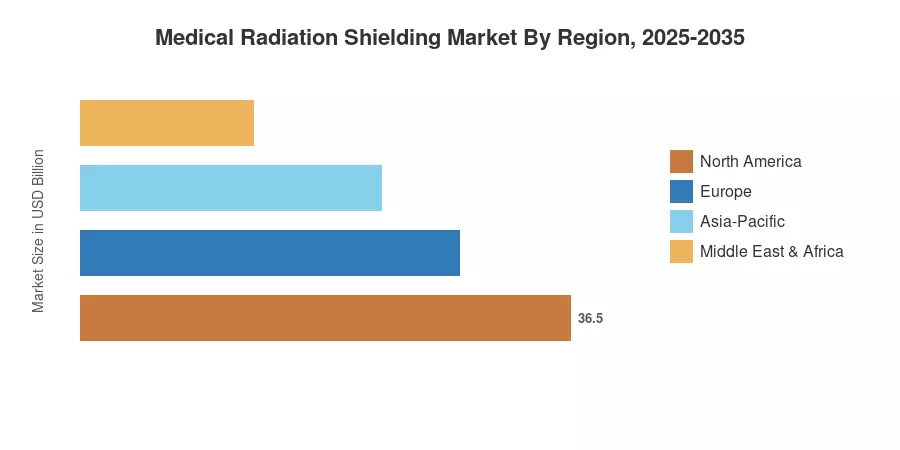
North America held roughly 38% of global revenue in 2025, anchored by the largest installed base of linear accelerators and PET-CT scanners in the world. Asia-Pacific is the fastest-growing region in the medical radiation shielding market, projected to advance at an approximate 7.8% CAGR through 2035, fueled by China's "Healthy China 2030" initiative and India's Ayushman Bharat expansion of tertiary oncology centers [6]. Europe claimed the second-largest share at about 27%, supported by the EU4Health Programme's radiation safety mandates [7]. The decade ahead will reward suppliers that combine advanced materials science with turnkey project delivery.


Key Report Takeaways

• By Material

  • Lead retained approximately 76% of the medical radiation shielding market in 2025, reflecting its established regulatory acceptance and cost-effectiveness for high-energy photon attenuation.
  • Non-lead composites are projected to grow at about a 9.0% CAGR from 2026 to 2035, driven by environmental regulations restricting lead use in healthcare construction.

• By Imaging/Therapy Modality

  • Diagnostic radiology commanded roughly 58% of revenue in the medical radiation shielding market in 2025, owing to the sheer volume of X-ray and CT installations worldwide.
  • Proton and heavy ion therapy is forecast to post the fastest segment CAGR of approximately 10.2% through 2035.

• By End User

  • Hospitals accounted for an estimated 66% of the medical radiation shielding market size in 2025.
  • Ambulatory surgery centers are expected to expand at a roughly 10.6% CAGR from 2026 to 2035.

• By Region

  • North America captured approximately 38% of the 2025 revenue in the medical radiation shielding market.
  • Asia-Pacific is projected to register the highest regional CAGR of about 7.8% through 2035.


Market Size and Forecast (2021–2035)

Market Research Future's proprietary estimation framework combines bottom-up procurement data from hospital networks, radiation facility construction permits, material supplier shipments, and top-down macroeconomic indicators. Historical figures (2021–2024) are triangulated against published import-export databases and verified through primary interviews with shielding contractors. Forecast projections (2026–2035) apply segment-level growth assumptions modeled on planned facility pipelines and regulatory compliance schedules.
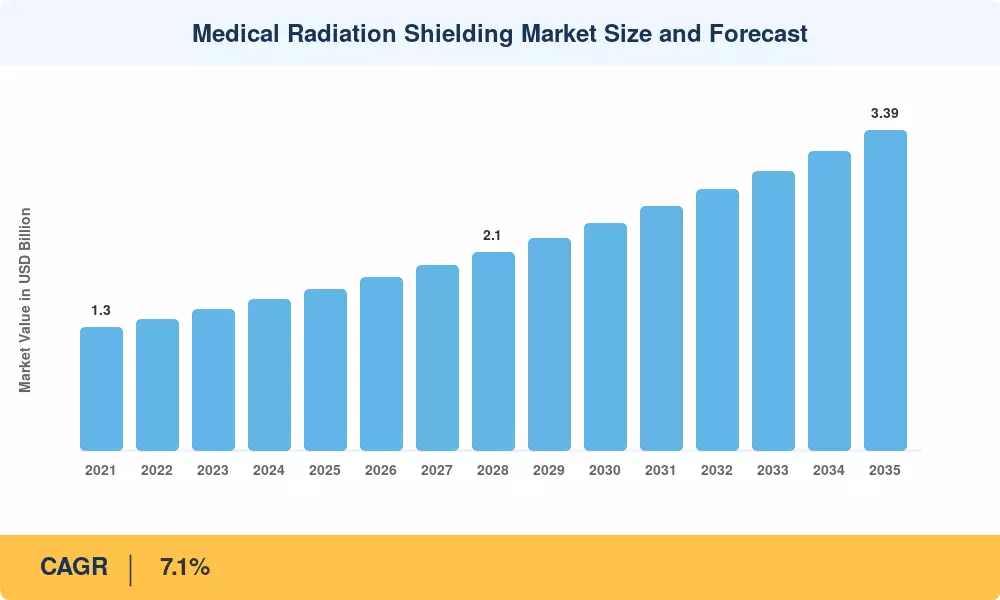
Medical Radiation Shielding Market Size and Forecast
Our Impact
Enabled $4.3B Revenue Impact for Fortune 500 and Leading Multinationals
Partnering with 2000+ Global Organizations Each Year
30K+ Citations by Top-Tier Firms in the Industry

Driver Impact Analysis

Driver ~% Impact on CAGR Geographic Relevance Impact Timeline
Rising global cancer incidence ~1.8% Global Long-term (≥4 yr)
Proton/heavy ion therapy facility expansion ~1.5% Asia-Pacific, Europe Medium-term (2–4 yr)
Radiopharmaceutical manufacturing scale-up ~1.2% North America, Asia-Pacific Short-term (≤2 yr)
Non-lead composite material adoption ~0.9% Europe, North America Medium-term (2–4 yr)
Tightening regulatory standards (NRC, EU BSS) ~0.8% North America, Europe Short-term (≤2 yr)
Hospital greenfield construction in emerging economies ~0.7% Asia-Pacific, MEA Long-term (≥4 yr)
Growth of ambulatory and outpatient oncology centers ~0.5% Global Medium-term (2–4 yr)


Rising Global Cancer Incidence

The WHO's Global Cancer Observatory forecasts that new cancer diagnoses will rise from 20 million in 2022 to approximately 35 million annually by 2050, a 75% increase driven by aging populations, urbanization, and improved detection rates [1]. Every new linear accelerator vault, brachytherapy suite, or PET-CT room requires purpose-built radiation shielding that meets dose-limit thresholds. Countries such as India, where cancer incidence is projected to climb 12.8% by 2030, are commissioning entire oncology wings — each needing full-perimeter shielding — at district hospitals for the first time [17].

Proton and Heavy Ion Therapy Facility Expansion

The Particle Therapy Co-Operative Group (PTCOG) reported 127 operational proton/carbon-ion centers worldwide by mid-2025, with another 42 under construction [14]. China alone has approved 15 new proton centers under its 14th Five-Year Plan for medical infrastructure. Each proton treatment room demands concrete-and-steel shielding walls exceeding 2 meters thick — roughly three to five times the material volume of a conventional linac vault — making these facilities the highest-value contracts in the medical radiation shielding market.

Radiopharmaceutical Manufacturing Scale-Up

The U.S. DOE's 2024 Isotope Program allocated USD 214 million to expand domestic production of molybdenum-99, lutetium-177, and actinium-225 [5]. Each hot cell and cyclotron vault requires heavily shielded enclosures rated for high-energy gamma and neutron emissions. Similar investments are underway in the Netherlands (SHINE Medical Technologies), Australia (ANSTO), and South Korea (KAERI), collectively adding dozens of new shielded production suites to the global installed base by 2028 [13].

Tightening Regulatory Standards

The EU's Basic Safety Standards Directive (2013/59/Euratom) set binding transposition deadlines that triggered a wave of legacy facility audits and shielding upgrades across member states [3]. In the U.S., the NRC's ongoing review of 10 CFR Part 20 occupational dose limits could lower permissible exposure thresholds, mandating thicker or higher-attenuation barriers in existing treatment rooms [11]. These regulatory cycles create recurring, non-discretionary demand within the medical radiation shielding market that is largely insensitive to broader capital expenditure slowdowns.


Restraints Impact Analysis

The restraint impacts below are directional estimates reflecting their approximate drag on sector-level growth. They should not be subtracted directly from the CAGR figure.

Restraint ~% Impact on CAGR Geographic Relevance Impact Timeline
Volatile lead and tungsten commodity prices ~–0.9% Global Short-term (≤2 yr)
High upfront construction and retrofit costs ~–0.7% Emerging economies Long-term (≥4 yr)
Long permitting and regulatory approval timelines ~–0.5% Europe, North America Medium-term (2–4 yr)
Shortage of certified radiation safety engineers ~–0.4% Global Medium-term (2–4 yr)
Limited awareness of non-lead alternatives in LMICs ~–0.3% Asia-Pacific, Africa Long-term (≥4 yr)


Volatile Lead and Tungsten Commodity Prices

Lead prices on the London Metal Exchange swung between USD 1,800 and USD 2,300 per metric ton during 2023–2024, compressing margins for shielding fabricators locked into fixed-price hospital contracts [9]. Tungsten, essential for high-density collimators and specialized barriers, is even more vulnerable: China controls over 80% of refined tungsten supply, and export quota adjustments have caused 15–20% quarterly price spikes [21]. Vertically integrated suppliers that recycle lead or smelt tungsten in-house are better insulated, but smaller fabricators face material-cost uncertainty that slows quoting and project finalization in the medical radiation shielding market.

High Upfront Construction and Retrofit Costs

A single proton therapy vault can cost USD 3–5 million in shielding materials and installation alone, exclusive of the accelerator hardware [18]. For public hospitals in lower-middle-income countries, this represents a prohibitive capital outlay that delays or cancels planned oncology expansions. Even in wealthier markets, CFOs often defer shielding retrofits in favor of revenue-generating imaging equipment purchases, pushing the replacement cycle for aging vaults beyond recommended timelines.

Shortage of Certified Radiation Safety Engineers

The Health Physics Society estimates a 15% shortfall in qualified medical health physicists across the U.S. alone, with retirement rates outpacing new certifications [19]. Shielding design, commissioning surveys, and regulatory sign-off require specialized expertise; project delays of 3–6 months attributable solely to physicist availability are common in the medical radiation shielding market, particularly outside major metropolitan areas.


Medical Radiation Shielding Market Opportunities

Modular Pre-Fabricated Shielding Systems

Another growth vector: prefabricated, interlocking shielding panels that may be built on site in days rather than weeks. These solutions eliminate construction waste, limit facility downtime, and enable phased installation—all highly desirable characteristics for ambulatory surgery centers and outpatient imaging clinics looking for quick commissioning. Early users have reported 25-35% reductions in total installed cost compared to poured-concrete alternatives [16].


Radiopharmaceutical CDMO Shielding Contracts

The global radiopharmaceutical CDMO (contract development and manufacturing organization) industry is booming with a minimum of 18 new commercial size facilities expected to be established in North America, Europe and South Korea by 2028 [13]. Multiple shielded hot cells, transfer corridors and waste disposal sections are needed for each plant. Turnkey shielding contracts, encompassing engineering, materials, installation and regulatory filing, are becoming the preferred procurement strategy in this section of the medical radiation shielding industry.


Non-Lead Composite Material Innovation

Demand for bismuth-, barium- and boron-based composite shielding is being driven by environmental restrictions on the use of lead, such as the EU’s REACH framework and California’s Proposition 65 [4]. Suppliers that create their own non-lead formulations that are as good as or better than lead in terms of attenuation per unit of thickness should be rewarded with premium pricing and specification benefits, especially in new-build European hospital projects.


Emerging Market Hospital Infrastructure

India’s National Health Mission is aiming for 1.5 new district hospital oncology wings per state each year till 2030, and Saudi Arabia’s Vision 2030 healthcare pillar is funding 22 specialized medical cities [6][22]. Each facility is a greenfield shielding opportunity ranging from diagnostic imaging rooms to radiation treatment vaults to nuclear medicine suites. In many markets, local content rules favor suppliers that develop regional fabrication or joint-venture agreements.


Digital Twin and AI-Optimized Shielding Design

Monte Carlo simulation software and AI-driven design platforms can now generate optimized shielding geometries that reduce material usage by 10–15% while maintaining regulatory dose compliance [15]. Suppliers offering integrated design-to-installation workflows — where computational modeling feeds directly into CNC-cut panel fabrication — are differentiating on speed and cost in the medical radiation shielding market.


Medical Radiation Shielding Market Future Outlook

AI-Driven Shielding Design and Optimization

Monte Carlo N-Particle (MCNP) simulations have long been the gold standard for shielding calculations, but AI-augmented platforms are cutting design iteration times from weeks to hours [15]. By 2030, generative design algorithms will likely produce shielding geometries that optimize attenuation, structural load, and material cost simultaneously, reducing over-specification by an estimated 10–15%. This trend favors technology-forward firms within the medical radiation shielding market that invest in proprietary computational tools.

Sustainability and Circular Economy in Shielding Materials

Growing ESG pressure on healthcare systems is pushing the medical radiation shielding market toward closed-loop material lifecycles. Lead recycling rates in healthcare already exceed 95% in developed markets, but the shift to non-lead composites introduces new end-of-life challenges [4]. Suppliers establishing take-back programs and certified recycling streams for bismuth and barium composites will gain specification advantages as hospitals integrate Scope 3 emissions reporting into procurement decisions [27].

Theranostics and Precision Medicine Infrastructure

The convergence of diagnostics and therapy — theranostics — is spawning a new category of dual-purpose facilities that require hybrid shielding designs accommodating both high-energy treatment beams and sensitive imaging detectors [13]. The global lutetium-177 and actinium-225 pipeline alone is projected to require over 200 new shielded preparation suites by 2032. Shielding suppliers that can engineer rooms for multi-isotope workflows will capture premium contracts in this emerging niche of the medical radiation shielding market.

Modular and Relocatable Vault Systems

Containerized, relocatable radiation therapy vaults — originally developed for military field hospitals — are gaining traction in civilian settings where permanent construction is impractical or where demand fluctuates seasonally [16]. The International Atomic Energy Agency (IAEA) has endorsed modular vault concepts for low- and middle-income countries, and at least three major shielding manufacturers are developing standardized, ISO-container-compatible vault modules for the medical radiation shielding market [20].


Medical Radiation Shielding Market Segmentation

By Material

Segment Key Metric Primary Demand Driver
Lead ~76% market share (2025) Regulatory incumbency; cost-per-unit attenuation advantage
Lead Composite ~USD 0.20 Billion (2025) Weight reduction in structural retrofit applications
Non-Lead ~9.0% CAGR (2026–2035) Environmental regulations; REACH and Proposition 65 compliance


Lead continues to dominate the medical radiation shielding market because it offers the highest atomic number-to-cost ratio for photon attenuation and carries decades of regulatory precedent in healthcare construction codes. Sheet lead, lead-lined drywall, and lead glass remain the default specifications in most hospital radiation protection manuals. Non-lead composites are the disruptive segment, gaining ground as environmental compliance costs associated with lead handling, storage, and disposal rise, particularly in the EU where REACH registration requirements add procurement complexity and cost.

By Imaging/Therapy Modality

Segment Key Metric Primary Demand Driver
Diagnostic Radiology ~58% revenue share (2025) Massive global installed base of X-ray and CT systems
Nuclear Medicine/PET ~USD 0.26 Billion (2025) PET-CT scanner proliferation and radiopharmaceutical growth
External Beam Radiation Therapy ~6.8% CAGR (2026–2035) Linac replacement cycles in mature markets
Proton & Heavy Ion Therapy ~10.2% CAGR (2026–2035) New facility construction in China, India, and Europe


Diagnostic radiology generates the largest shielding demand volume in the medical radiation shielding market simply because every hospital, outpatient clinic, and dental office operates X-ray or CT equipment requiring compliant room barriers. Proton and heavy ion therapy, while representing a smaller revenue share today, commands the highest per-project shielding expenditure — a single proton gantry room can require 800–1,200 metric tons of concrete and steel plus specialized neutron-absorbing layers — making it the fastest-growing modality segment.

By End User

Segment Key Metric Primary Demand Driver
Hospitals ~66% market share (2025) Largest concentration of imaging and therapy equipment
Ambulatory Surgery Centers ~10.6% CAGR (2026–2035) Shift of radiation-guided procedures to outpatient settings
Research & Academic Institutions ~USD 0.09 Billion (2025) Cyclotron and reactor shielding for isotope research
Radiopharmaceutical Manufacturers ~9.8% CAGR (2026–2035) CDMO hot cell and production suite expansion


Hospitals remain the backbone of the medical radiation shielding market, housing the vast majority of the world's linear accelerators, PET scanners, and fluoroscopy suites. Capital planning cycles at large hospital networks typically batch shielding procurement with broader facility renovation programs, creating lumpy but predictable demand patterns. Ambulatory surgery centers represent the fastest-growing end-user category as interventional radiology, fluoroscopy-guided pain management, and outpatient brachytherapy procedures migrate from inpatient settings to freestanding facilities that require purpose-built shielding.


Regional Market Share Analysis

Region Key Metric Primary Investment Themes
North America ~38% revenue share (2025) Isotope production expansion; NRC compliance upgrades
Europe ~27% revenue share (2025) BSS Directive transposition; proton center construction
Asia-Pacific ~7.8% CAGR (2026–2035) China proton pipeline; India oncology scale-up
South America ~USD 0.11 Billion (2025) Brazil public hospital modernization
Middle East & Africa ~6.5% revenue share (2025) Vision 2030 medical cities; South Africa linac deployment
Total USD 1.71 Billion (2025)

The medical radiation shielding market exhibits distinct regional dynamics shaped by healthcare infrastructure maturity, regulatory rigor, and oncology investment pipelines. North America and Europe remain the highest-revenue regions, while Asia-Pacific and the Middle East are the fastest-growing.


North America

Country Key Metric Key Driver
US ~78% of regional revenue Largest linac and PET-CT installed base; DOE isotope program [5]
Canada ~6.2% CAGR Provincial cancer agency capital programs (e.g., Cancer Care Ontario) [23]
Mexico ~USD 0.03 Billion IMSS hospital oncology wing additions [24]


The U.S. dominates the North American medical radiation shielding market, driven by over 4,000 operational radiation therapy centers and the world's densest network of PET-CT scanners. Federal investment through the DOE Isotope Program and NIH-funded proton research centers at institutions like the Mayo Clinic and MD Anderson sustain a steady pipeline of high-value shielding contracts [5][23].

Europe

Country Key Metric Key Driver
Germany ~24% of regional revenue Heidelberg Ion-Beam Therapy Center expansion [14]
UK ~7.1% CAGR NHS proton beam therapy centers (Christie, UCLH) [25]
France ~18% of regional revenue CEA-led hadrontherapy investments [14]
Italy ~USD 0.07 Billion CNAO carbon-ion facility upgrades [14]
Spain ~5.8% CAGR Public hospital renovation program under EU Recovery Fund [7]
Nordic Countries ~8% of regional revenue Scandion Clinics proton therapy network [14]
Russia ~USD 0.04 Billion Dimitrovgrad MBIR reactor shielding [26]
Rest of Europe ~6.0% CAGR EU4Health radiation safety compliance [7]


Europe's medical radiation shielding market is shaped by the EU BSS Directive's binding dose-limit standards, which require member states to audit and upgrade shielding in all medical radiation facilities. The continent's proton therapy buildout — including Scandion Clinics' multi-site network in the Nordics and the UK's two NHS proton centers — generates some of the highest per-project shielding values globally [14][25].

Asia-Pacific

Country Key Metric Key Driver
China ~38% of regional revenue 15+ approved proton centers under 14th Five-Year Plan [6]
India ~8.5% CAGR Ayushman Bharat tertiary oncology expansion [17]
Japan ~26% of regional revenue Mature heavy ion therapy installed base (NIRS, QST) [14]
South Korea ~USD 0.05 Billion KAERI isotope facility and Samsung Medical proton center [13]
ASEAN ~7.4% CAGR Thailand and Vietnam first-generation linac vault construction [20]
Rest of Asia-Pacific ~USD 0.03 Billion Australia's ANSTO cyclotron shielding [13]


Asia-Pacific represents the fastest-growing geography in the medical radiation shielding market. China's aggressive proton therapy rollout — with at least 15 centers approved and several already under construction — is generating multi-million-dollar shielding contracts that favor suppliers offering turnkey bundles of engineering, civil works, and regulatory filing [6]. India's public oncology infrastructure remains significantly under-shielded, creating a large addressable gap as state cancer institutes add cobalt-60 and linac treatment rooms [17].

South America

Country Key Metric Key Driver
Brazil ~62% of regional revenue SUS public hospital linac procurement program [24]
Argentina ~5.9% CAGR CNEA nuclear medicine facility modernization [24]
Rest of South America ~USD 0.02 Billion Chile and Colombia tertiary hospital upgrades [24]


Brazil anchors the South American medical radiation shielding market through its Unified Health System (SUS), which has prioritized reducing oncology treatment wait times by adding linear accelerators at regional public hospitals. Shielding contractors that can navigate Brazil's Anvisa regulatory framework and local content preferences hold a competitive advantage in this price-sensitive market [24].

Middle East & Africa

Country Key Metric Key Driver
Saudi Arabia ~34% of regional revenue Vision 2030 medical city construction [22]
UAE ~7.2% CAGR Dubai Health Authority specialist oncology expansion [22]
South Africa ~28% of regional revenue National Department of Health linac replacement program [20]
Egypt ~6.8% CAGR Egyptian Atomic Energy Authority facility upgrades [26]
Rest of MEA ~USD 0.02 Billion Sub-Saharan IAEA Technical Cooperation projects [20]


Saudi Arabia and the UAE are the primary growth engines in the MEA region of the medical radiation shielding market, with sovereign wealth-funded medical cities in Riyadh, Jeddah, and Abu Dhabi specifying international-grade shielding standards. South Africa's public linac fleet is aging, and a government replacement program is expected to trigger associated shielding upgrades at 20+ facilities by 2030 [20][22].


Medical Radiation Shielding Market By Region, 2025-2035

Competitive Benchmarking

The medical radiation shielding market exhibits medium concentration. The top five suppliers collectively hold an estimated 35–45% of global revenue, with the remainder fragmented among regional fabricators, specialty material suppliers, and general construction contractors that offer shielding as part of broader healthcare build packages. Competitive differentiation hinges on material science expertise, turnkey project delivery capability, and geographic proximity to high-growth facility construction pipelines.

Company Est. Revenue Share Range Key Offerings Strategic Positioning
MarShield ~6–9% Custom lead and composite shielding products; modular barriers North American specialist with vertically integrated lead recycling
ETS-Lindgren ~5–8% RF and radiation shielding enclosures; turnkey room solutions Dual RF-radiation shielding capability for hybrid imaging suites
Nelco Worldwide ~5–7% Lead-lined drywall, doors, frames; non-lead alternatives Broad product catalog targeting diagnostic radiology retrofit market
Ray-Bar Engineering ~4–7% Lead glass, lead-lined doors, modular shielding panels Long-standing U.S. manufacturer with deep hospital network relationships
Veritas Medical Solutions ~4–6% Radiation therapy vault design and construction; turnkey delivery Focused on high-value proton and linac vault contracts
Radiation Protection Products ~3–5% Lead sheet, lead bricks, shielding accessories Cost-competitive commodity shielding for general radiology
Nuclear Shields ~3–5% Tungsten and lead shielding for nuclear medicine and PET European base with nuclear medicine specialization
Gaven Industries ~3–5% Lead-lined products, radiation doors, custom fabrication U.S. mid-market player with strong contractor partnerships
Ultraray Radiation Protection ~2–4% Composite shielding panels; retrofit solutions Asia-Pacific growth play with lightweight composite focus
Wardray Premise ~2–4% Radiation shielding for healthcare and nuclear sectors UK-based turnkey provider expanding into Middle East projects


Recent News & Developments


  • Nuclear Shields (May 2024): Signed a multi-year supply agreement with a European radiopharmaceutical CDMO to provide tungsten-alloy hot cell shielding for lutetium-177 production suites across three EU facilities. [13]


  • IAEA (June 2023): Published updated Technical Document (TECDOC) guidance on shielding design for compact medical cyclotrons, providing standardized calculation methodologies for Tc-99m production facilities in low- and middle-income countries. [20]


Medical Radiation Shielding Market Report Scope

Parameter Detail
Market Scope Medical radiation shielding products and services for healthcare facilities including hospitals, ambulatory surgery centers, research institutions, and radiopharmaceutical manufacturers
Study Period 2021–2035
CAGR (2026–2035) 7.1%
Market Size (2025) USD 1.71 Billion
Market Size (2035) USD 3.39 Billion
Fastest Growing Segments Non-lead composites (by material); Proton & heavy ion therapy (by modality); Ambulatory surgery centers (by end user); Asia-Pacific (by region)
Companies Profiled MarShield, ETS-Lindgren, Nelco Worldwide, Ray-Bar Engineering, Veritas Medical Solutions, Radiation Protection Products, Nuclear Shields, Gaven Industries, Ultraray Radiation Protection, Wardray Premise
Valuation Currency USD Billion


FAQs

What certifications should buyers verify before selecting a shielding contractor?

Buyers should confirm the contractor holds AAPM-compliant shielding design verification capability and uses materials tested to ASTM E2927 or equivalent national standards. Independent commissioning surveys by a qualified medical physicist are essential before room occupancy [16].

How do non-lead composites compare with traditional lead in cost-per-unit attenuation?

Non-lead composites typically cost 20–40% more per square meter for equivalent photon attenuation at diagnostic energy ranges. However, they eliminate lead abatement and hazardous disposal costs, often narrowing the total lifecycle cost gap to under 10% [4].

What shielding design differences exist between linac vaults and proton therapy rooms?

Proton therapy rooms require substantially thicker barriers — typically 2–3 meters of concrete versus 1–1.5 meters for linac vaults — due to secondary neutron production. Proton rooms also need neutron-absorbing layers such as borated polyethylene [14].

How is the medical radiation shielding market affected by the shift toward hypofractionated radiation therapy?

Hypofractionation delivers higher doses per session in fewer treatments, increasing instantaneous shielding demands per fraction. Existing vaults designed for conventional fractionation may require upgraded primary barriers to accommodate higher dose rates [16].

What role do turnkey contracts play in the medical radiation shielding market procurement process?

Turnkey contracts bundle design, materials, installation, and regulatory commissioning into a single deliverable, reducing procurement complexity. They are now the dominant model for new proton centers, particularly in China and India [6].

How does the medical radiation shielding market address shielding for emerging alpha-emitting radiopharmaceuticals?

Alpha emitters such as actinium-225 require distinct shielding protocols because their daughter isotopes produce high-energy gamma rays. Hot cells for alpha radiopharmaceuticals use layered tungsten-and-lead enclosures with interlocked ventilation systems [13].

What impact will compact superconducting cyclotrons have on shielding requirements?

Compact cyclotrons reduce the accelerator footprint but do not proportionally reduce shielding needs because neutron production remains energy-dependent rather than size-dependent. Shielding volumes may decrease 15–20% but not commensurately with the machine's smaller profile [20].


Author
Author
Author Profile
Satyendra Maurya LinkedIn
Research Analyst
An accomplished research analyst with high proficiency in market forecasting, data visualization, competitive benchmarking, and others. He holds a pronounced track record in research and consulting projects for sectors such as life sciences, medical devices, and healthcare IT. His capabilities in qualitative and quantitative analysis have resulted in positive client outcomes. Working on niche market trends, opportunities, sales, and forecasted value is part of his skill set.
Co-Author
Co-Author Profile
Rahul Gotadki LinkedIn
Research Manager
He holds an experience of about 9+ years in Market Research and Business Consulting, working under the spectrum of Life Sciences and Healthcare domains. Rahul conceptualizes and implements a scalable business strategy and provides strategic leadership to the clients. His expertise lies in market estimation, competitive intelligence, pipeline analysis, customer assessment, etc.

Research Approach


Secondary Research

The secondary research process involved comprehensive analysis of regulatory databases, peer-reviewed medical journals, clinical publications, and authoritative health organizations. Key sources included the US Nuclear Regulatory Commission (NRC), Food & Drug Administration (FDA) Center for Devices and Radiological Health, European Medicines Agency (EMA), International Atomic Energy Agency (IAEA), National Council on Radiation Protection and Measurements (NCRP), American College of Radiology (ACR), Radiological Society of North America (RSNA), National Institutes of Health (NIH), National Center for Biotechnology Information (NCBI/PubMed), Centers for Disease Control and Prevention (CDC) National Center for Health Statistics, World Health Organization (WHO) Global Health Observatory, EU Eurostat Health Database, Organisation for Economic Co-operation and Development (OECD) Health Statistics, Health Canada, Australian Radiation Protection and Nuclear Safety Agency (ARPANSA), and national health ministry reports from key markets including China National Health Commission, Ministry of Health and Family Welfare (India), and Brazilian National Health Surveillance Agency (ANVISA). These sources were used to collect radiation safety standards, regulatory compliance data, imaging procedure statistics, shielding material specifications, clinical safety studies, demographic trends, and market landscape analysis for lead-based shielding, lead-free shielding, polymer-based shielding, composite shielding, and glass-based shielding technologies.


Primary Research

In order to gather both qualitative and quantitative insights, supply-side and demand-side stakeholders were interviewed during the primary research process. CEOs, VPs of Product Development, heads of regulatory affairs, and commercial directors from OEMs, material suppliers, and makers of medical radiation shielding were examples of supply-side sources. Board-certified radiologists, medical physicists, radiation safety officers, hospital procurement leads, administrators of imaging centers, and facility managers from hospitals, diagnostic imaging centers, radiation treatment facilities, and veterinary clinics were among the demand-side sources. In addition to gathering information on clinical acceptance patterns, pricing strategies, regulatory compliance costs, and installation dynamics, primary research verified product pipeline timings and validated market segmentation.

Primary Respondent Breakdown:

By Designation: C-level Primaries (32%), Director Level (30%), Others (38%)

By Region: North America (38%), Europe (25%), Asia-Pacific (28%), Rest of World (9%)


Market Size Estimation

Global market valuation was derived through revenue mapping and procedure volume analysis. The methodology included:

Identification of 40+ key manufacturers across North America, Europe, Asia-Pacific, and Latin America

Product mapping across lead-based shielding, lead-free shielding, polymer-based shielding, composite shielding, and glass-based shielding categories

Analysis of reported and modeled annual revenues specific to radiation shielding portfolios

Coverage of manufacturers representing 75-80% of global market share in 2024

Extrapolation using bottom-up (imaging procedure volume × shielding requirement per facility × ASP by country) and top-down (manufacturer revenue validation) approaches to derive segment-specific valuations

Download Free Sample

Kindly complete the form below to receive a free sample of this Report

Download PDF ×

We do not share your information with anyone. However, we may send you emails based on your report interest from time to time. You may contact us at any time to opt-out.
















