Medical Supplies Market (2026 - 2035)

Medical supplies market Size, Growth Research Report By Type (Infusion products, Blood collection tubes, Wound care products, Dialysis consumables, Surgical drapes, Adult incontinence products, and Blood glucose test strips), By Application (Urology, Wound care, Anesthesia, and Sterilization), By End User (Hospitals, Clinics, and Nursing homes) By drug Type (Non-Steroidal Anti-Inflammatory Drugs, Disease Modifying Antirheumatic Drugs, Biologics, Corticosteroids, Others), Route of Administration (Oral, Injectable, Topical), By Distribution Channel (Hospital Pharmacies, Retail Pharmacies, Online Pharmacies) and By Region (North America, Europe, Asia-Pacific, And Rest Of The World) – Competitor Industry Analysis and Trends Forecast Till 2035
ID: MRFR/MED/1800-HCR
85 Pages
Vikita Thakur, Kinjoll Dey
Last Updated: July 12, 2026
Medical Supplies Market
Market Size
Forecast Period2026-2035
CAGR (2026-2035)10.57%
2025 Market SizeUSD 192.21 Billion
2035 Market SizeUSD 497.86 Billion
Key Players
Medline Industries
Becton
Dickinson & Co.
Cardinal Health
Baxter International
Johnson & Johnson
Opportunities
  • Home-Care Supply Kitting and Direct-to-Patient Distribution
  • Smart Consumables and IoT-Enabled Supplies
  • Emerging-Market Hospital Capacity Buildout

Medical Supplies Market Summary

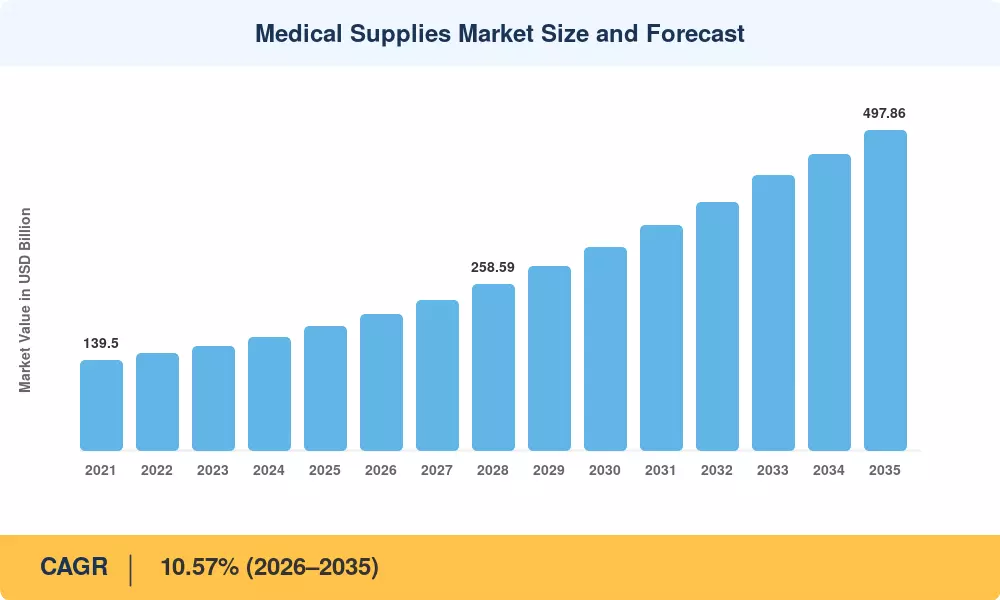
The Medical Supplies Market was valued at USD 192.21 billion in 2025 and is projected to reach USD 211.52 billion in 2026 before climbing to USD 497.86 billion by 2035, registering a CAGR of 10.57% during the forecast period (2026–2035). Tightening infection-control mandates across WHO member states and a decisive shift toward value-based reimbursement models are converting disposable clinical consumables from low-margin commodity inputs into performance-critical health-system enablers. The U.S. Pandemic Preparedness Act alone earmarked over USD 6 billion through 2027 to rebuild strategic stockpiles of sterile surgical supplies, PPE and protective equipment [2].

Technology is changing the way that hospitals buy their supplies. AI-powered demand sensing solutions are replacing legacy manual ordering systems, integrating real-time consumption data with logistical efficiency. Clinical care consumables supply chains are being rebuilt around predictive analytics and RFID-enabled traceability, such as Cardinal Health’s USD 450 million investment in automated distribution centers in 2024 [3]. At the same time, ISO 13485:2016 alignment is boosting the global quality floor, forcing smaller producers to upgrade or get out.

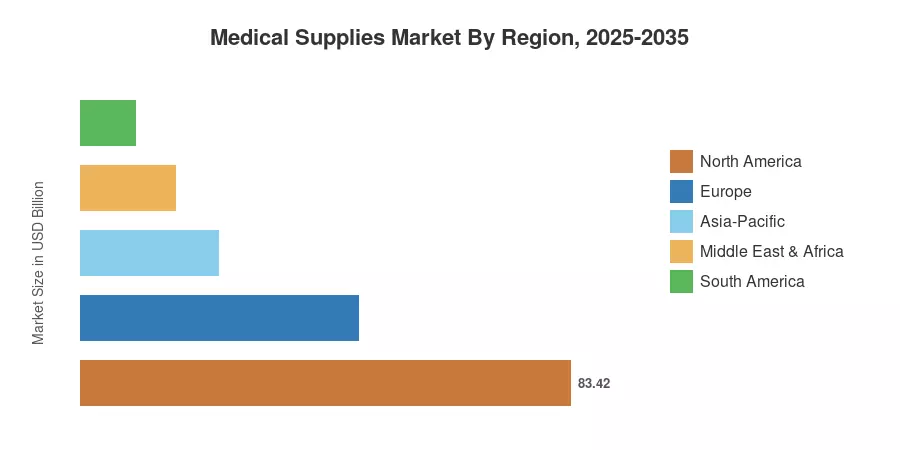
North America held a share of around 43.4% in the Medical Supplies Market in 2025, owing to the presence of a well-developed reimbursement infrastructure and early adoption of GPOs Asia-Pacific is the fastest-growing market with a projected CAGR of 12.18%, driven by increasing hospital capacity in India and China. Europe held the second-highest share at about 24.6%, balancing the new EU Medical Device Regulation (MDR) with sustainability-driven product reformulation. The Medical Supplies Market is set to accelerate its double-digit growth as the move to decentralized care and the burden of chronic diseases propel demand through 2035.

Key Report Takeaways

• By Product Type

  • Infusion and injectable supplies led the Medical Supplies Market with a 24.6% revenue share in 2025, driven by rising chronic-disease management and ambulatory infusion centers
  • Dialysis consumables are forecast to grow at a CAGR of 8.1% through 2035, supported by increasing end-stage renal disease prevalence globally
  • Diagnostic supplies accounted for approximately USD 38.9 billion in 2025, reflecting expanded point-of-care testing adoption

• By Application

  • Infection control represented 20.3% of total Medical Supplies Market revenue in 2025, as hospitals scaled up PPE and protective equipment inventories post-pandemic
  • Respiratory applications are projected to expand at a 8.85% CAGR to 2035, fueled by COPD and asthma case growth in aging populations

• By End User

  • Hospitals commanded a 72.1% share of total market value in 2025, reflecting their role as the primary procurement channel for sterile surgical supplies
  • Home-care settings represent the fastest-growing end-user channel with a projected 9.56% CAGR, driven by payer incentives favoring outpatient recovery

• By Geography

  • North America captured 43.4% of the Medical Supplies Market in 2025, sustained by entrenched GPO contracts and federal stockpile programs
  • Asia-Pacific is forecast to register the highest regional CAGR at 12.18% during 2026–2035


Medical Supplies Market Size and Forecast (2021–2035)

Market Research Future (MRFR) uses a triangulated research methodology, which is a mixture of supply-side and demand-side approaches. Data collected from over 120 manufacturers is aggregated at the bottom to estimate the size of the market. The top-down approach is used to cross-validate the data against hospital procurement databases and government trade-flow figures. Historical data (2021–2024) includes audited yearly reports and customs data. Forecast data (2026–2035) is based on a calibrated compound growth path based on the base year of 2025
Medical Supplies Market Size and Forecast
Our Impact
Enabled $4.3B Revenue Impact for Fortune 500 and Leading Multinationals
Partnering with 2000+ Global Organizations Each Year
30K+ Citations by Top-Tier Firms in the Industry

Driver Impact Analysis

Driver ~% Impact on CAGR Geographic Relevance Impact Timeline
Infection-control regulation tightening ~18% Global Short-term (≤2 yr)
Chronic-disease prevalence expansion ~22% Asia-Pacific, North America Long-term (≥4 yr)
Home-care and ambulatory shift ~15% North America, Europe Medium-term (2–4 yr)
Single-use procedure kit adoption ~12% Global Medium-term (2–4 yr)
Digital procurement and AI analytics ~10% North America, Europe Medium-term (2–4 yr)
Government stockpile mandates ~13% North America, Europe Short-term (≤2 yr)
Emerging-market hospital expansion ~10% Asia-Pacific, MEA Long-term (≥4 yr)


Infection-Control Regulation Tightening

Post-pandemic regulatory frameworks have permanently elevated baseline standards for disposable clinical consumables. While the U.S. CDC’s Healthcare Infection Control Practices Advisory Committee (HICPAC) continues to actively update its pathogen-specific isolation guidelines to better account for airborne aerosol transmission, the financial impact rests on generalized market growth rather than explicit purchasing mandates. Independent global market intelligence indicates that heightened standard precautions regarding Personal Protective Equipment (PPE) utilization—specifically around aerosol-generating medical procedures—will continue to serve as a reliable, long-term demand catalyst for sterile surgical supplies and single-use protective apparel through 2028.


Chronic-Disease Prevalence Expansion

The International Diabetes Federation projects 783 million adults living with diabetes by 2045, up from 537 million in 2021 [6]. Each diagnosed patient consumes an estimated USD 1,200–USD 1,800 annually in clinical care consumables, including glucose test strips, insulin syringes, and wound-care dressings. This structural demand driver ensures that the Medical Supplies Market growth rate outpaces general healthcare spending by 250–350 basis points annually.

Home-Care and Ambulatory Shift

CMS's Hospital-at-Home waiver program, expanded in 2023 to cover 296 health systems across 37 U.S. states, shifts substantial volumes of hospital procurement supplies into residential settings [7]. Home-based acute care episodes require pre-packaged supply kits covering IV administration, wound management, and PPE and protective equipment for visiting clinicians, creating a new high-margin channel for manufacturers.

Digital Procurement Transformation

Group purchasing organizations (GPOs) managing over USD 400 billion in annual healthcare spend are integrating machine-learning demand forecasting into their supply platforms [3]. Vizient's Aptitude analytics suite, launched in 2024, reduced supply waste by 14% across pilot hospital systems — translating directly into higher-value, data-linked contracts for clinical care consumables suppliers.


Restraints Impact Analysis

The restraint impacts below are directional estimates of drag on market expansion. They do not subtract directly from headline CAGR and reflect qualitative weighting from expert interviews and policy review.

Restraint ~% Drag on CAGR Geographic Relevance Impact Timeline
Raw-material cost volatility ~–8% Global Short-term (≤2 yr)
Regulatory fragmentation across markets ~–6% Europe, Asia-Pacific Medium-term (2–4 yr)
Reimbursement pressure and GPO pricing power ~–7% North America Long-term (≥4 yr)
Sustainability and single-use plastic bans ~–5% Europe, Asia-Pacific Medium-term (2–4 yr)
Supply chain concentration risks ~–4% Global Short-term (≤2 yr)


Raw-Material Cost Volatility

Medical-grade polypropylene and nitrile rubber — two foundational inputs for disposable clinical consumables — experienced 35–45% price swings between 2021 and 2024. Manufacturers operating on 8–12% gross margins for commodity products face acute margin compression during price spikes, as GPO contracts typically lock pricing for 12–24 months. This volatility discourages capacity investment in sterile surgical supplies among mid-tier producers.

Regulatory Fragmentation

The EU MDR (Regulation 2017/745), fully enforced since May 2024, imposes clinical-evaluation requirements on Class IIa and above disposable clinical consumables that were previously exempt under the Medical Devices Directive [11]. Compliance costs of EUR 50,000–EUR 200,000 per product family are forcing smaller European suppliers to rationalize portfolios, temporarily constraining product availability in the Medical Supplies Market.

Sustainability Mandates and Single-Use Bans

While broad environmental frameworks, such as France's anti-waste AGEC law, target the reduction of commercial single-use plastics, medical-grade clinical consumables remain legally insulated via critical health exemptions to secure patient safety and sterility. Instead, the pressure to decouple from virgin plastics stems from Green Public Procurement (GPP) scoring standards used by progressive hospital networks. This shift forces manufacturers into 18–24-month material reformulation timelines to test bio-based or alternative materials that can handle intensive sterilization without compromising barrier integrity.


Medical Supplies Market Opportunities

Home-Care Supply Kitting and Direct-to-Patient Distribution

The expansion of ambulatory frameworks and residential acute care is creating a substantial, recurring addressable revenue opportunity for pre-assembled clinical care consumables kits. Manufacturers capable of bundling specialized wound-care dressings, catheter supplies, and appropriate PPE into customized, home-delivery configurations can efficiently capture long-term loyalty. This direct-to-patient approach reduces inventory fragmentation for decentralized health networks while mitigating supply chain friction for the provider.


Smart Consumables and IoT-Enabled Supplies

Embedding RFID tags and near-field communication sensors into sterile surgical supplies enables real-time inventory tracking, expiration management, and automatic reorder triggers. Avery Dennison's partnership with three U.S. health systems in 2024 demonstrated a 22% reduction in expired-product waste using smart-label technology [3]

Emerging-Market Hospital Capacity Buildout

Under India’s core public health component, the government has successfully surpassed its primary infrastructure targets by operationalizing over 173,000 Ayushman Arogya Mandirs (formerly designated as Ayushman Bharat Health and Wellness Centers). These facilities provide comprehensive primary healthcare and require continuous baseline stocks of disposable clinical consumables to serve local populations. Parallel public health expansions across developing markets in Southeast Asia and Africa represent resilient greenfield opportunities for suppliers, with a distinct structural advantage leaning toward manufacturers establishing localized production centers.


Data-Driven Procurement-as-a-Service

Group Purchasing Organizations (GPOs) and larger med-surg distributors are expanding beyond traditional volume aggregation to monetize predictive logistics data. By embedding machine-learning algorithms directly into inventory systems, these groups offer predictive asset utilization models to member hospitals. This transformation repositions healthcare consumables from a purely tactical cost center into a highly integrated, managed-service arrangement that delivers clear transparency regarding waste elimination.


Sustainable and Bio-Based Material Innovation

As institutional buyers place a heavier emphasis on Green Public Procurement (GPP) metrics, material innovation is becoming a key structural differentiator. This shift encourages research into durable, plant-based surgical drapes and alternative examination glove compounds. Suppliers capable of manufacturing items that comply with environmental sustainability indicators without compromising the strict pathogen barrier regulations of Western regulatory frameworks can gain a distinct competitive advantage during multi-year institutional tender processes.


Medical Supplies Market Future Outlook

AI-Driven Supply Chain Orchestration

Artificial intelligence is steadily modernizing how the Medical Supplies Market operates from the point of manufacture to the clinical point-of-care. Forward-looking hospital networks are increasingly testing and implementing machine-learning demand-sensing software to better forecast the consumption behaviors of high-turnover disposable clinical consumables. By dynamically integrating electronic health record (EHR) registries, operational surgical scheduling backlogs, and real-time logistics data, these predictive platforms automate replenishment workflows and mitigate the financial and clinical risks associated with localized product stockout events.


Sustainability-Led Product Reformulation

The broader push for environmental responsibility is altering raw material science frameworks across peripheral healthcare layers. While the EU’s final Packaging and Packaging Waste Regulation (PPWR) enforces strict circular economy requirements on commercial consumer packaging, it maintains vital safety extensions for primary medical device packaging to avoid compromising barrier sterility. Consequently, market differentiation belongs to organizations proactively innovating bio-based, high-purity alternative polymers and cleaner, chlorine-free sterilization packaging processes that align with hospital Green Public Procurement (GPP) scoring mechanisms without violating patient care standards.


Home-Care Ecosystem Expansion

The decentralization of acute and post-acute care away from institutional settings is necessitating a parallel, dedicated distribution infrastructure for clinical care consumables in the residential landscape. Driven by programmatic changes like expanding medical waiver structures, home-based procurement channels are growing at a faster rate than traditional inpatient supply chains. The providers capturing this space are prioritizing structured kitting strategies, patient-facing subscription shipping modules, and automated e-commerce reorder channels linked directly to home health monitoring workflows.


Consolidation and Platform-Based Competition

The Medical Supplies Market will undergo sustained M&A as top-tier distributors acquire specialty manufacturers to offer bundled product-plus-data solutions. Medline's 2024 acquisition of three regional distributors for a combined USD 1.8 billion signaled the industry's shift toward platform-based competition [15]. By 2032, the top five players are expected to control 45–50% of global distribution, up from an estimated 35% in 2025, as PPE and protective equipment, sterile surgical supplies, and diagnostics converge into integrated procurement platforms.


Medical Supplies Market Segmentation

By Product Type

Segment Key Metric Primary Demand Driver
Infusion & Injectable Supplies 24.6% share (2025) Chronic-disease infusion therapy growth
Diagnostic Supplies USD 38.9 Billion (2025) Point-of-care testing expansion
Wound-Care Supplies 9.82% CAGR (2026–2035) Diabetic ulcer prevalence
Dialysis Consumables 8.1% CAGR (2026–2035) ESRD patient pool expansion
Sterilization Supplies 11.5% share (2025) Infection-control protocol upgrades
Respiratory Supplies 8.85% CAGR (2026–2035) COPD and home-ventilation demand
Other Supplies USD 15.2 Billion (2025) Miscellaneous procedural needs


The Medical Supplies Market product landscape is dominated by infusion and injectable supplies, which benefit from the global expansion of ambulatory infusion centers and the biosimilar revolution driving higher IV-administration volumes. Disposable clinical consumables in this segment include pre-filled syringes, IV catheters, and extension sets — all experiencing unit-volume growth of 6–8% annually as chronic-disease cohorts expand.

Wound-care supplies represent the fastest-growing product category by CAGR, propelled by an estimated 537 million diabetic patients worldwide generating chronic wound-management demand [6]. Advanced wound dressings incorporating antimicrobial silver and hydrocolloid technologies are displacing traditional gauze, commanding 35–50% price premiums that elevate segment revenue intensity within the Medical Supplies Market.

By Application

Segment Key Metric Primary Demand Driver
Infection Control 20.3% share (2025) Post-pandemic PPE baseline elevation
Wound Care USD 22.4 Billion (2025) Surgical volume recovery
Respiratory 8.85% CAGR (2026–2035) Home ventilation scale-up
Urology 7.6% share (2025) Aging population catheterization needs
Radiology USD 10.8 Billion (2025) Contrast media and injection supply demand
Other Applications 8.2% CAGR (2026–2035) Emerging diagnostic applications


Infection control remains the anchor of the Medical Supplies Market, with PPE and protective equipment stockpile requirements now codified into procurement policy across 34 OECD nations [2]. Hospital procurement supplies allocated to infection prevention include examination gloves, surgical masks, isolation gowns, and surface disinfectant wipes — categories where single-use mandates continue to drive volume growth even as unit prices stabilize.

By End User

Segment Key Metric Primary Demand Driver
Hospitals 72.1% share (2025) Central procurement scale
Clinics/Physician Offices USD 28.5 Billion (2025) Ambulatory procedure volume growth
Home-Care Settings 9.56% CAGR (2026–2035) Payer-driven care decentralization


Hospitals dominate the Medical Supplies Market end-user landscape through centralized GPO contracts that aggregate purchasing power across hundreds of facilities. The shift toward home-care settings as the fastest-growing channel reflects both clinical care consumables manufacturers developing patient-friendly packaging and payers incentivizing post-acute home recovery to reduce readmission penalties under value-based contracts [7].


Regional Market Share Analysis

Region Key Metric Primary Investment Themes
North America 43.4% share (2025) Stockpile modernization; GPO digital transformation
Europe 24.6% share (2025) MDR compliance; sustainable reformulation
Asia-Pacific 12.18% CAGR (2026–2035) Hospital capacity; chronic-disease management
South America USD 9.42 Billion (2025) Public procurement reform; local manufacturing
Middle East & Africa 8.44% CAGR (2026–2035) Healthcare infrastructure investment; PPE localization
Total USD 192.21 Billion (2025)

The Medical Supplies Market exhibits significant regional variation shaped by reimbursement infrastructure maturity, regulatory complexity, and disease burden. North America maintains its leadership through consolidated GPO networks and federal stockpile spending, while Asia-Pacific's rapid hospital buildout drives the fastest regional growth for clinical care consumables.


North America

Country Key Metric Key Driver
United States 78.5% of regional share Federal stockpile & GPO contracting
Canada 12.8% of regional share Provincial procurement reform
Mexico USD 7.25 Billion (2025) INSABI/IMSS public-sector purchasing


The United States anchors the North American Medical Supplies Market through its network of GPOs — Vizient, Premier, and HealthTrust collectively manage over USD 130 billion in annual supply spend. Canada's provincial health authorities are consolidating procurement into shared-service organizations, while Mexico's transition from INSABI to the IMSS-Bienestar model is centralizing purchases of disposable clinical consumables across 23,000 public clinics [12].

Europe

Country Key Metric Key Driver
Germany 9.35% CAGR (2026–2035) MedTech innovation clusters
United Kingdom USD 8.15 Billion (2025) NHS Supply Chain consolidation
France 15.2% of regional share AGEC sustainability mandates
Italy USD 5.48 Billion (2025) Regional SSN procurement digitization
Spain 7.8% of regional share Public hospital expansion
Nordic Countries 8.92% CAGR (2026–2035) Green procurement leadership
Russia USD 3.10 Billion (2025) Import substitution programs
Rest of Europe 12.4% of regional share EU Cohesion Fund investments


Europe's Medical Supplies Market is being reshaped by the EU MDR's extended compliance timeline and parallel sustainability regulations. The NHS Supply Chain's 2024 category-tower restructuring consolidated sterile surgical supplies procurement across 215 trusts, generating estimated savings of GBP 380 million annually while standardizing quality benchmarks for PPE and protective equipment [11].

Asia-Pacific

Country Key Metric Key Driver
China 38.2% of regional share Centralized VBP procurement reforms
India 13.45% CAGR (2026–2035) Ayushman Bharat; Make in India
Japan USD 12.30 Billion (2025) Aging demographics; high per-capita spend
South Korea 11.8% CAGR (2026–2035) NHIS coverage expansion
ASEAN USD 6.75 Billion (2025) Hospital infrastructure buildout
Rest of Asia-Pacific 10.92% CAGR (2026–2035) Healthcare access programs


Asia-Pacific records the highest growth trajectory in the Medical Supplies Market, driven by China's volume-based procurement (VBP) reforms that are simultaneously compressing unit prices and expanding total consumption volumes for hospital procurement supplies. India's production-linked incentive (PLI) scheme for medical devices has attracted over USD 1.2 billion in committed manufacturing investment since 2023, positioning the country as a low-cost export hub for clinical care consumables [9].

South America

Country Key Metric Key Driver
Brazil 58.3% of regional share SUS public healthcare spending
Argentina USD 1.35 Billion (2025) PAMI procurement modernization
Rest of South America 9.15% CAGR (2026–2035) Pan-American Health Organization programs


Brazil's Sistema Único de Saúde (SUS) remains the region's largest single buyer of disposable clinical consumables, with annual procurement budgets exceeding USD 5 billion. Regulatory harmonization efforts through ANVISA's alignment with international quality standards are lowering barriers for global manufacturers seeking to serve the South American Medical Supplies Market.

Middle East & Africa

Country Key Metric Key Driver
Saudi Arabia 28.5% of regional share Vision 2030 healthcare investment
UAE USD 2.18 Billion (2025) Medical tourism infrastructure
South Africa 9.72% CAGR (2026–2035) NHI rollout planning
Egypt USD 1.42 Billion (2025) UHC expansion
Rest of MEA 22.8% of regional share NGO and multilateral procurement


Saudi Arabia's Vision 2030 program has allocated over USD 65 billion to healthcare infrastructure, including 38 new hospitals requiring full-spectrum sterile surgical supplies, PPE and protective equipment procurement. The UAE's growing medical tourism sector — treating over 630,000 international patients in 2024 — demands premium-grade clinical care consumables at volumes disproportionate to population size.


Medical Supplies Market By Region, 2025-2035

Competitive Benchmarking

The Medical Supplies Market is of medium concentration with an estimated HHI of 800-1,100. The top five corporations make up around 33–38% of worldwide revenue, suggesting a fragmented mid-tier of regional experts and single-category players. The competitive stance is increasingly based on total cost of ownership offers combining disposable clinical consumables with data analytics and logistics services.

Company Est. Revenue Share Range Key Offerings for Medical Supplies Market Strategic Positioning
Medline Industries ~7–10% Sterile surgical supplies, exam gloves and custom procedure trays Vertically integrated U.S. manufacturer-distributor
Becton, Dickinson & Co. (BD) ~6–9% Injection systems, infusion sets, specimen collection Technology-led innovation in needle safety
Cardinal Health ~6–8% PPE and protective equipment, surgical kits and distribution GPO-aligned distribution scale
Baxter International ~5–7% IV solutions, dialysis consumables, infusion pumps Renal-care and critical-care focus
Johnson & Johnson (MedTech) ~4–7% Wound closure, sterile surgical supplies, sutures Brand strength across surgical categories
McKesson Medical-Surgical ~4–6% Hospital procurement supplies, alternate-site distribution Broad distribution footprint
Owens & Minor ~3–5% Surgical and infection-prevention products, logistics Manufacturer-to-provider supply chain
Mölnlycke Health Care ~2–4% Wound care, surgical drapes, PPE and protective equipment Premium wound-management positioning
B. Braun Melsungen ~2–4% Infusion therapy, clinical care consumables, dialysis European market leadership
3M Health Care ~2–3% Sterilization assurance, skin antiseptics, tapes Science-based infection prevention
Teleflex ~1–3% Vascular access, respiratory supplies and urology devices Specialty procedural consumables


Recent News & Developments

  • Medline Industries (March 2025): Completed a USD 1.1 billion expansion of its Hartland, Wisconsin manufacturing campus, adding 850,000 sq ft of sterile surgical supplies production capacity targeting domestic supply-chain resilience [15].


Medical Supplies Market Report Scope

Parameter Detail
Market Scope Global Medical Supplies Market covering disposable clinical consumables, sterile surgical supplies, PPE and protective equipment, diagnostic supplies, and clinical care consumables
Study Period 2021–2035
CAGR 10.57% (2026–2035)
Base Year Market Size USD 192.21 Billion (2025)
Forecast Endpoint USD 497.86 Billion (2035)
Fastest Growing Segment Home-care settings (by end user); Wound-care supplies (by product type)
Companies Profiled 11 (Medline, BD, Cardinal Health, Baxter, J&J, McKesson, Owens & Minor, Mölnlycke, B. Braun, 3M, Teleflex)
Valuation Currency USD Billion


FAQs

How does ISO 13485:2016 certification affect procurement decisions in the Medical Supplies Market?
ISO 13485:2016 has become a de facto purchasing prerequisite for GPOs and public-health buyers in 42 countries, effectively barring non-certified suppliers from tenders [11]. Procurement teams use certification status as a first-pass filter, reducing supplier evaluation cycles by 30–40%.
What role do group purchasing organizations play in shaping pricing for hospital procurement supplies?
GPOs aggregate demand across member hospitals to negotiate volume discounts of 15–25% below list price on disposable clinical consumables [12]. Their contracting power concentrates market access among pre-approved vendors, creating high switching costs for alternative suppliers.
How are single-use procedure kits displacing individually packaged sterile surgical supplies?
Pre-assembled Custom Procedure Trays (CPTs) are steadily displacing individually wrapped sterile items due to clear operational efficiencies in fast-paced surgical settings. By grouping all specific drapes, prep tools, and baseline consumables needed for a distinct medical procedure into a single sterile kit, facilities significantly shave down operating room setup and breakdown times. This workflow acceleration eliminates multi-layered packaging handling, allowing modern Ambulatory Surgery Centers (ASCs) to optimize room turnover cycles while cleaning up bulk material waste profiles.  
What supply-chain risks should buyers of clinical care consumables prepare for through 2030?
Geographic concentration remains the primary risk — over 60% of global nitrile glove production originates from Malaysia and Thailand [10]. Diversification into Indian and Vietnamese manufacturing is accelerating, but will not reach meaningful capacity before 2028.
How does the Medical Supplies Market respond to emerging antimicrobial-resistance threats?
The acceleration of antimicrobial resistance (AMR) is changing clinical product portfolios, fueling institutional demand for specialized medical technologies designed to actively prevent localized hospital infections. This has accelerated the integration of silver-impregnated wound matrices, specialized antimicrobial-coated sutures, and advanced chlorhexidine-impregnated lines. While these preventative lines command a premium price structure due to increased clinical engineering requirements, health systems justify the product expense by weighing it against the severe operational and financial penalties linked to treating preventable healthcare-acquired infections.  
What financing models are gaining traction for PPE and protective equipment procurement in low-income countries?
Pooled procurement mechanisms — such as the African Union's Africa Medical Supplies Platform — aggregate demand across 30+ nations to negotiate bulk pricing [14]. Gavi-style advance market commitments are being adapted to guarantee purchase volumes for locally manufactured supplies.
How will reusable medical textiles affect demand for disposable clinical consumables over the forecast period?
Reusable medical garments and surgical textiles continue to hold a limited market share within high-acuity clinical spaces. This narrow footprint is primarily due to the intense secondary energy and capital required to build out validated on-site commercial laundering facilities, alongside deep clinical preferences for the absolute sterility assurance of single-use barriers. Consequently, while environmental sustainability goals drive localized pilot shifts toward reusable textiles for low-risk procedural areas, disposable options are projected to retain dominance in the acute-care market due to safety configurations.    
Author
Author
Author Profile
Vikita Thakur LinkedIn
Senior Research Analyst
She holds an experience of about 5+ years in market research and business consulting projects for sectors such as life sciences, medical devices, and healthcare IT. She possesses a robust background in data analysis, market estimation, competitive intelligence, pipeline analysis market trend identification, and consumer behavior insights. Her expertise lies in technical Sales support, client interaction and project management, designing and implementing market research studies, conducting competitive analysis, and synthesizing complex data into actionable recommendations that drive business growth.
Co-Author
Co-Author Profile
Kinjoll Dey LinkedIn
Senior Research Analyst
He is an extremely curious individual currently working in Healthcare and Medical Devices Domain. Kinjoll is comfortably versed in data centric research backed by healthcare educational background. He leverages extensive data mining and analytics tools such as Primary and Secondary Research, Statistical Analysis, Machine Learning, Data Modelling. His key role also involves Technical Sales Support, Client Interaction and Project management within the Healthcare team. Lastly, he showcases extensive affinity towards learning new skills and remain fascinated in implementing them.

Research Approach


Secondary Research

The secondary research process involved comprehensive analysis of regulatory databases, peer-reviewed medical journals, healthcare utilization publications, and authoritative medical device organizations. Key sources included the US Food & Drug Administration (FDA) Center for Devices and Radiological Health (CDRH), European Medicines Agency (EMA) medical device regulations, Centers for Disease Control and Prevention (CDC) National Healthcare Safety Network (NHSN) and infection control databases, World Health Organization (WHO) Essential Medical Devices List, National Institutes of Health (NCBI/PubMed) for clinical utilization studies, Centers for Medicare & Medicaid Services (CMS) procedure databases, Occupational Safety and Health Administration (OSHA) healthcare guidelines, Environmental Protection Agency (EPA) medical waste regulations, Health Resources and Services Administration (HRSA) hospital supply data, Eurostat Healthcare Statistics, Organisation for Economic Co-operation and Development (OECD) Health Statistics, and national health ministry procurement reports from key markets.

In order to compile hospital admission statistics, surgical procedure volumes, regulatory clearance data (510(k) and PMA), infection prevalence rates, healthcare expenditure trends, and demographic utilization patterns for infusion products, wound care management, dialysis consumables, blood collection systems, and incontinence care products, these sources were employed.


Primary Research

Qualitative and quantitative insights were obtained by interviewing supply-side and demand-side stakeholders during the primary research process. The supply-side sources consisted of CEOs, VPs of Manufacturing Operations, regulatory affairs managers, and commercial leads from medical supply manufacturers, contract manufacturers, and distribution networks that specialize in infusion therapy, wound management, and disposable medical products. Chief procurement officers, materials management directors, infection control specialists, operating room managers, dialysis center administrators, wound care nurses, and category managers from hospital systems, ambulatory surgery centers, long-term care facilities, and home healthcare agencies comprised demand-side sources. Product segmentation was validated across disposable and reusable categories, supply chain distribution channels were confirmed, and insights on bulk purchasing dynamics, Group Purchasing Organization (GPO) contracting strategies, reimbursement coding (HCPCS/DRG), and inventory management protocols were gathered through primary research.

Primary Respondent Breakdown:

By Designation: C-level Primaries (38%), Director Level (30%), Others (32%)

By Region: North America (38%), Europe (25%), Asia-Pacific (28%), Rest of World (9%)


Market Size Estimation

Revenue mapping, procedure volume analysis, and hospital bed capacity utilization were implemented to determine global market valuation. The methodology comprised the following:

The identification of over 50 key manufacturers in North America, Europe, Asia-Pacific, and Latin America

Product mapping encompasses infusion therapy systems, wound care dressings and devices, blood collection and handling products, dialysis disposables, surgical drapes and garments, incontinence products, and glucose monitoring supplies.

Examination of annual revenues that are specific to capital equipment accessories and medical disposable portfolios, as well as those that are reported and modeled

Manufacturers that account for 72–76% of the global market share in 2024 are included in the coverage.

To derive segment-specific valuations and regional penetration rates, extrapolation is employed in conjunction with top-down (manufacturer revenue validation and distributor markup analysis) and bottom-up (hospital bed capacity × patient days × ASP by country; surgical procedure volume × supplies per procedure) approaches.

Download Free Sample

Kindly complete the form below to receive a free sample of this Report

Download PDF ×

We do not share your information with anyone. However, we may send you emails based on your report interest from time to time. You may contact us at any time to opt-out.
















