Meibomian Gland Dysfunction Market
Meibomian Gland Dysfunction Market Summary
As per Market Research Future analysis, the Meibomian Gland Dysfunction Market Size was estimated at 5.685 USD Billion in 2024. The Meibomian Gland Dysfunction industry is projected to grow from 6.002 USD Billion in 2025 to 10.33 USD Billion by 2035, exhibiting a compound annual growth rate (CAGR) of 5.58% during the forecast period 2025 - 2035
Key Market Trends & Highlights
The Meibomian Gland Dysfunction Market is experiencing notable growth driven by technological advancements and increasing awareness.
- Technological advancements in treatment are reshaping the Meibomian Gland Dysfunction Market landscape, particularly in North America.
- The rise of telemedicine is facilitating access to care, especially in the Asia-Pacific region, which is the fastest-growing market.
- Obstructive Meibomian Gland Dysfunction Market remains the largest segment, while evaporative forms are witnessing rapid growth.
- The increasing prevalence of dry eye disease and advancements in diagnostic technologies are key drivers propelling market expansion.
Market Size & Forecast
| 2024 Market Size | 5.685 (USD Billion) |
| 2035 Market Size | 10.33 (USD Billion) |
| CAGR (2025 - 2035) | 5.58% |
Major Players
Allergan (US), Santen Pharmaceutical (JP), Bausch Health (CA), Novartis (CH), Johnson & Johnson (US), Ocular Therapeutix (US), Eyevance Pharmaceuticals (US), Aerie Pharmaceuticals (US)
Meibomian Gland Dysfunction Market Trends
The Meibomian Gland Dysfunction Market is currently experiencing notable transformations driven by advancements in technology and increasing awareness of eye health. As the prevalence of dry eye conditions rises, there is a growing demand for effective treatment options. This market appears to be influenced by a combination of factors, including the introduction of innovative therapies and devices aimed at improving meibomian gland function. Furthermore, the integration of telemedicine in eye care is likely to enhance patient access to specialized treatments, thereby expanding the market's reach. In addition, the Meibomian Gland Dysfunction Market is characterized by a shift towards personalized medicine. Healthcare providers are increasingly focusing on tailored treatment plans that address individual patient needs. This trend suggests a movement away from one-size-fits-all approaches, potentially leading to improved patient outcomes. Moreover, the collaboration between pharmaceutical companies and technology firms may foster the development of novel solutions, further propelling market growth. Overall, the Meibomian Gland Dysfunction Market appears poised for continued evolution as stakeholders adapt to changing consumer demands and technological advancements.
Technological Advancements in Treatment
The Meibomian Gland Dysfunction Market is witnessing a surge in innovative treatment modalities. New devices and therapies are being developed to enhance meibomian gland function, which may lead to improved patient outcomes. This trend indicates a shift towards more effective and targeted interventions.
Rise of Telemedicine
The integration of telemedicine into eye care is transforming the Meibomian Gland Dysfunction Market. Patients are increasingly able to access specialized care remotely, which could enhance treatment adherence and expand the market's reach. This trend suggests a more patient-centric approach to managing eye health.
Personalized Medicine Approach
There is a growing emphasis on personalized medicine within the Meibomian Gland Dysfunction Market. Healthcare providers are focusing on individualized treatment plans that cater to specific patient needs. This trend may lead to better management of symptoms and overall patient satisfaction.
Meibomian Gland Dysfunction Market Drivers
Growing Awareness and Education
There is a notable increase in awareness and education regarding Meibomian gland dysfunction, which serves as a significant driver for the Meibomian Gland Dysfunction Market. Healthcare professionals are increasingly recognizing the importance of educating patients about the symptoms and treatment options available for this condition. Public health campaigns and initiatives aimed at raising awareness about dry eye disease and its association with Meibomian gland dysfunction are becoming more prevalent. This heightened awareness is likely to lead to an increase in patient consultations and demand for treatment options. As a result, the Meibomian Gland Dysfunction Market may experience a surge in growth, with projections indicating a potential market size reaching several billion dollars by the end of the decade.
Aging Population and Lifestyle Changes
The aging population and evolving lifestyle changes are critical factors driving the Meibomian Gland Dysfunction Market. As individuals age, the likelihood of developing Meibomian gland dysfunction increases due to natural physiological changes and decreased tear production. Additionally, modern lifestyle factors, such as increased screen time and environmental pollutants, contribute to the prevalence of dry eye symptoms. This demographic shift is expected to result in a higher demand for effective treatments and management strategies for Meibomian gland dysfunction. Market forecasts indicate that the combination of an aging population and lifestyle changes could lead to a significant expansion of the Meibomian Gland Dysfunction Market, potentially reaching a market value of several billion dollars within the next decade.
Rising Demand for Innovative Therapies
The demand for innovative therapies to treat Meibomian gland dysfunction is on the rise, significantly impacting the Meibomian Gland Dysfunction Market. Traditional treatments, such as warm compresses and eyelid scrubs, are being supplemented by advanced therapeutic options, including anti-inflammatory medications and lipid-based eye drops. Furthermore, the development of novel devices, such as thermal pulsation systems, is gaining traction among healthcare providers. This shift towards more effective and patient-friendly treatment modalities is likely to enhance patient compliance and satisfaction. Market analysts suggest that the introduction of these innovative therapies could lead to a substantial increase in market revenue, with estimates indicating a growth trajectory that may exceed 15% annually in the coming years.
Advancements in Diagnostic Technologies
Technological innovations in diagnostic tools are significantly influencing the Meibomian Gland Dysfunction Market. Enhanced imaging techniques, such as meibography and tear film break-up time assessments, allow for more accurate diagnosis of Meibomian gland dysfunction. These advancements facilitate early detection and intervention, which is crucial for effective management of the condition. The introduction of point-of-care testing devices is also likely to streamline the diagnostic process, making it more accessible to patients. As a result, the market for diagnostic solutions is projected to grow, with estimates suggesting a compound annual growth rate of over 10% in the next few years. This growth underscores the importance of technological progress in shaping the Meibomian Gland Dysfunction Market.
Increasing Prevalence of Dry Eye Disease
The rising incidence of dry eye disease is a pivotal driver for the Meibomian Gland Dysfunction Market. Studies indicate that approximately 5 to 30% of the population experiences dry eye symptoms, with a notable increase in prevalence among older adults. This condition is often linked to Meibomian gland dysfunction, which leads to insufficient lipid production and subsequent tear film instability. As awareness of dry eye disease grows, healthcare providers are more likely to diagnose and treat underlying Meibomian gland dysfunction. Consequently, this trend is expected to propel the demand for innovative therapies and diagnostic tools within the Meibomian Gland Dysfunction Market, potentially leading to a market expansion valued at several billion dollars in the coming years.
Market Segment Insights
By Dysfunction Type: Obstructive Meibomian Gland Dysfunction (Largest) vs. Evaporative Meibomian Gland Dysfunction (Fastest-Growing)
In the Meibomian Gland Dysfunction market, Obstructive Meibomian Gland Dysfunction (MGD) holds the largest share due to its common prevalence in the population. It accounts for a significant portion of diagnosed cases, making it a focal point for research and treatment options. In contrast, Evaporative MGD, which occurs due to insufficient oil production by the Meibomian glands, is gaining traction as a considerable segment. Its rise is motivated by increasing awareness and identification of dry eye symptoms, which often stem from this condition. The growth trends in the Dysfunction Type segment indicate a robust demand for innovative therapies and diagnostic tools, particularly for Evaporative MGD, which is increasingly identified as a prominent cause of discomfort among patients. The expansion of telemedicine and advancements in treatment methodologies are further boosting the market. Additionally, awareness campaigns about the importance of Meibomian gland health are influencing the uptake of targeted therapies, driving the growth of this segment significantly.
Obstructive Meibomian Gland Dysfunction (Dominant) vs. Mixed Meibomian Gland Dysfunction (Emerging)
Obstructive Meibomian Gland Dysfunction (MGD) is recognized as the dominant form in the market, characterized by blockage of the Meibomian glands, leading to inadequate oil secretion and resultant dry eye symptoms. This condition is prevalent and often exacerbated by environmental factors, making it a central focus for treatment developments. Meanwhile, Mixed Meibomian Gland Dysfunction is emerging as a notable segment, as it combines aspects of both obstructive and evaporative dysfunctions. It represents a more complex case that requires multifaceted treatment approaches. While still not as prevalent as obstructive MGD, the awareness and diagnosis of mixed cases are increasing, prompting clinicians to adopt comprehensive management strategies. As such, this segment is anticipated to grow, reflecting evolving understanding and advancements in ocular surface health.
By Disease Severity: Moderate Meibomian Gland Dysfunction (Largest) vs. Severe Meibomian Gland Dysfunction (Fastest-Growing)
In the Meibomian Gland Dysfunction market, the segment distribution reveals that Moderate Meibomian Gland Dysfunction holds the largest market share. This segment significantly caters to patients experiencing persistent symptoms that are manageable but often require medical intervention. Meanwhile, the Severe Meibomian Gland Dysfunction segment, while smaller in terms of current market share, is witnessing the fastest growth due to an increasing prevalence of severe symptoms and a growing recognition of the condition among healthcare professionals. The growth of the Severe segment is driven by advancements in treatment technology and heightened awareness of the condition. As more individuals are diagnosed, the demand for effective therapies has surged. Additionally, marketing strategies that focus on educating patients about severe symptoms have contributed to faster growth. This upward trend indicates a broadening understanding of the implications of poorly managed Meibomian Gland Dysfunction, leading to innovative treatment options and improved patient outcomes.
Moderate Meibomian Gland Dysfunction (Dominant) vs. Severe Meibomian Gland Dysfunction (Emerging)
Moderate Meibomian Gland Dysfunction is characterized by symptoms that interfere with daily activities but are not debilitating. This segment remains dominant due to its larger patient base seeking symptomatic relief through various treatments. Effective management options, including anti-inflammatory medications and warm compresses, cater well to this demographic. On the other hand, Severe Meibomian Gland Dysfunction represents an emerging segment marked by significant patient discomfort and a critical need for more advanced therapeutic interventions. The increasing incidence of severe cases is spurring research and development efforts in targeted therapies, with the potential for rapid growth as healthcare providers place greater emphasis on addressing these more complex cases.
By Treatment Type: Medication (Largest) vs. Surgery (Fastest-Growing)
In the Meibomian Gland Dysfunction Market, the distribution of treatment types reveals that medication is the most prevalent option among patients, primarily due to its accessibility and ease of use. Medications, including anti-inflammatories and lipid-based therapies, dominate the market, providing symptomatic relief to a substantial number of individuals suffering from gland dysfunction. On the other hand, surgical interventions, while less common, are gaining traction as a necessary alternative for severe cases, reflecting a shift in treatment paradigms as more patients seek permanent solutions to their conditions. The fast-growing surgical segment is driven by the increasing awareness and diagnosis of Meibomian Gland Dysfunction Market, leading to higher patient referrals for surgical options. Furthermore, advancements in minimally invasive techniques are making surgical treatments more appealing due to reduced recovery times and improved outcomes. Lifestyle modifications, while important, are not experiencing the same growth rate as they often take longer to show results, thus creating a disparity in adoption rates compared to surgical options that offer quicker resolutions. Overall, the landscape of treatment for Meibomian Gland Dysfunction Market is evolving to include more diverse and effective solutions.
Medication (Dominant) vs. Surgery (Emerging)
Medication remains the dominant treatment strategy in the Meibomian Gland Dysfunction Market due to its effectiveness and simplicity. Patients often prefer medications for their non-invasive nature and immediate accessibility, which allows for self-administration without the need for extensive medical intervention. In contrast, surgery is emerging as a viable option, particularly for those with chronic or severe conditions who require surgical intervention for long-term relief. The surgical approaches are rapidly evolving with novel techniques that improve safety and outcomes, making them attractive for patients seeking definitive solutions. While medication will continue to lead, the rise of surgical options signifies a shifting trend where patients are increasingly open to exploring comprehensive treatment plans that may include both medication and surgical interventions.
By Distribution Channel: Hospitals and Clinics (Largest) vs. Online Retailers (Fastest-Growing)
The distribution of the Meibomian Gland Dysfunction Market highlights Hospitals and Clinics as the largest segment, providing essential diagnostic and therapeutic services for patients. Pharmacies also play a significant role, serving as convenient access points for patients to obtain over-the-counter treatments. Online Retailers, while currently smaller in market share, show a promising trend towards growth, driven by the increasing preference for online shopping and telehealth services.
Hospitals and Clinics (Dominant) vs. Online Retailers (Emerging)
In the Meibomian Gland Dysfunction Market, Hospitals and Clinics are the dominant distribution channels, primarily due to their capacity to offer comprehensive eye care services, fostering direct clinical relationships with patients. They provide specialized care, which is critical for accurately diagnosing and treating Meibomian Gland Dysfunction Market. Conversely, Online Retailers have emerged as a strong alternative, appealing to tech-savvy consumers who prefer the convenience of home delivery and access to a broader range of treatments. This segment's growth is further accelerated by advancements in logistics and increased consumer trust in online healthcare products, positioning it as a substantial player in the future landscape.
Regional Insights
North America : Leading Market for Innovation
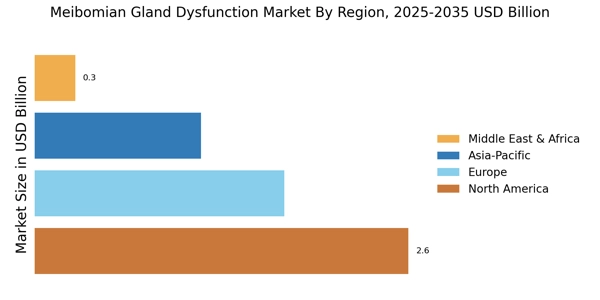
North America is the largest market for meibomian gland dysfunction market (MGD) treatments, holding approximately 45% of the global market share. The region benefits from advanced healthcare infrastructure, high awareness of eye health, and a growing aging population. Regulatory support from agencies like the FDA has accelerated the approval of innovative therapies, driving demand for effective treatments within the meibomian gland dysfunction treatment market. The United States is the primary contributor, representing a major share of the u.s. meibomian gland dysfunction market, with significant investments from key players such as Allergan and Johnson & Johnson. Canada also plays a vital role, with a focus on research and development. The competitive landscape is characterized by a mix of established pharmaceutical companies and emerging biotech firms, ensuring a robust pipeline of products to address MGD.
Europe : Emerging Market with Growth Potential
Europe is the second-largest market for Meibomian Gland Dysfunction Market, accounting for approximately 30% of the global market share. The region is witnessing an increase in awareness regarding eye health, coupled with a rise in the prevalence of dry eye diseases. Regulatory bodies like the European Medicines Agency (EMA) are facilitating the introduction of new therapies, which is expected to further boost market growth. Leading countries include Germany, France, and the UK, where healthcare systems are increasingly adopting advanced treatment options. The competitive landscape features major players such as Novartis and Santen Pharmaceutical, alongside numerous startups focusing on innovative solutions. This dynamic environment is fostering collaboration and investment in research, enhancing the overall market landscape.
Asia-Pacific : Rapidly Growing Market Segment
Asia-Pacific is emerging as a significant market for meibomian gland dysfunction market, holding about 20% of the global market share. The region's growth is driven by increasing urbanization, rising disposable incomes, and a growing awareness of eye health issues. Countries like Japan and China are leading the charge, supported by favorable government initiatives aimed at improving healthcare access and quality. Japan is a key player, with established companies like Santen Pharmaceutical leading the market. China is rapidly expanding its healthcare infrastructure, creating opportunities for both local and international firms. The competitive landscape is becoming increasingly dynamic, with a mix of established players and new entrants focusing on innovative treatment solutions for MGD and expanding the meibomian gland dysfunction treatment market.
Middle East and Africa : Untapped Market with Opportunities
The Middle East and Africa represent an untapped market for Meibomian Gland Dysfunction Market, holding approximately 5% of the global market share. The region is characterized by a growing population and increasing healthcare investments, which are driving demand for eye care solutions. Regulatory frameworks are gradually improving, encouraging the entry of new products and therapies into the market. Countries like South Africa and the UAE are at the forefront, with initiatives aimed at enhancing healthcare access. The competitive landscape is still developing, with a mix of local and international players. Key companies are beginning to explore opportunities in this region, recognizing the potential for growth in eye health treatments including medications for meibomian gland dysfunction market.
Key Players and Competitive Insights
Key Companies in the Meibomian Gland Dysfunction Market include
Industry Developments
The market growth is attributed to the increasing prevalence of dry eye disease, rising awareness about MGD, and technological advancements in diagnostic and treatment modalities.
Key market players are investing in research and development to introduce innovative products and expand their market presence.
Recent developments include the launch of TearCare's LipiFlow Thermal Pulsation System for the treatment of MGD and the FDA approval of Novaliq's CyclASol sterile ophthalmic solution for the management of evaporative dry eye disease.
These advancements are expected to drive market growth in the coming years.

Future Outlook
Meibomian Gland Dysfunction Market Future Outlook
The Meibomian Gland Dysfunction Market is projected to grow at a 5.58% CAGR from 2025 to 2035, driven by increasing awareness, technological advancements, and rising prevalence of dry eye conditions.
New opportunities lie in:
- Development of innovative drug delivery systems for targeted therapy. Expansion of telemedicine platforms for remote diagnosis and treatment. Investment in AI-driven diagnostic tools for early detection and management.
By 2035, the Meibomian Gland Dysfunction Market is expected to achieve substantial growth and innovation.
Market Segmentation
Meibomian Gland Dysfunction Market Treatment Type Outlook
- Medication
- Surgery
- Lifestyle Modifications
Meibomian Gland Dysfunction Market Disease Severity Outlook
- Mild Meibomian Gland Dysfunction
- Moderate Meibomian Gland Dysfunction
- Severe Meibomian Gland Dysfunction
Meibomian Gland Dysfunction Market Dysfunction Type Outlook
- Obstructive Meibomian Gland Dysfunction
- Evaporative Meibomian Gland Dysfunction
- Mixed Meibomian Gland Dysfunction
Meibomian Gland Dysfunction Market Distribution Channel Outlook
- Hospitals and Clinics
- Pharmacies
- Online Retailers
Report Scope
| MARKET SIZE 2024 | 5.685(USD Billion) |
| MARKET SIZE 2025 | 6.002(USD Billion) |
| MARKET SIZE 2035 | 10.33(USD Billion) |
| COMPOUND ANNUAL GROWTH RATE (CAGR) | 5.58% (2025 - 2035) |
| REPORT COVERAGE | Revenue Forecast, Competitive Landscape, Growth Factors, and Trends |
| BASE YEAR | 2024 |
| Market Forecast Period | 2025 - 2035 |
| Historical Data | 2019 - 2024 |
| Market Forecast Units | USD Billion |
| Key Companies Profiled | Allergan (US), Santen Pharmaceutical (JP), Bausch Health (CA), Novartis (CH), Johnson & Johnson (US), Ocular Therapeutix (US), Eyevance Pharmaceuticals (US), Aerie Pharmaceuticals (US) |
| Segments Covered | Dysfunction Type, Disease Severity, Treatment Type, Distribution Channel, Regional |
| Key Market Opportunities | Advancements in therapeutic devices enhance treatment options in the Meibomian Gland Dysfunction Market. |
| Key Market Dynamics | Rising demand for innovative therapies drives competition and technological advancements in the Meibomian Gland Dysfunction market. |
| Countries Covered | North America, Europe, APAC, South America, MEA |
FAQs
What is the projected market valuation for the Meibomian Gland Dysfunction Market in 2035?
The projected market valuation for the Meibomian Gland Dysfunction Market in 2035 is expected to reach 10.33 USD Billion.
What was the market valuation for the Meibomian Gland Dysfunction Market in 2024?
The overall market valuation for the Meibomian Gland Dysfunction Market was 5.685 USD Billion in 2024.
What is the expected CAGR for the Meibomian Gland Dysfunction Market from 2025 to 2035?
The expected CAGR for the Meibomian Gland Dysfunction Market during the forecast period 2025 - 2035 is 5.58%.
Which companies are considered key players in the Meibomian Gland Dysfunction Market?
Key players in the Meibomian Gland Dysfunction Market include Allergan, Santen Pharmaceutical, Bausch Health, Novartis, Johnson & Johnson, Ocular Therapeutix, Eyevance Pharmaceuticals, and Aerie Pharmaceuticals.
What are the projected revenues for Obstructive Meibomian Gland Dysfunction by 2035?
The projected revenue for Obstructive Meibomian Gland Dysfunction is expected to reach 4.67 USD Billion by 2035.
How does the revenue for Moderate Meibomian Gland Dysfunction compare to Severe Meibomian Gland Dysfunction in 2035?
By 2035, the revenue for Moderate Meibomian Gland Dysfunction is projected to be 4.5 USD Billion, whereas Severe Meibomian Gland Dysfunction is expected to reach 3.1 USD Billion.
What is the anticipated revenue for the Medication treatment type by 2035?
The anticipated revenue for the Medication treatment type in the Meibomian Gland Dysfunction Market is expected to be 4.5 USD Billion by 2035.
Which distribution channel is projected to generate the highest revenue by 2035?
By 2035, Hospitals and Clinics are projected to generate the highest revenue in the Meibomian Gland Dysfunction Market, expected to reach 4.5 USD Billion.
What is the expected revenue for Lifestyle Modifications in 2035?
The expected revenue for Lifestyle Modifications in the Meibomian Gland Dysfunction Market is projected to be 2.83 USD Billion by 2035.
How does the revenue for Mixed Meibomian Gland Dysfunction compare to Evaporative Meibomian Gland Dysfunction in 2035?
In 2035, the revenue for Mixed Meibomian Gland Dysfunction is projected to be 3.18 USD Billion, compared to 2.48 USD Billion for Evaporative Meibomian Gland Dysfunction.
Research Approach
Secondary Research
The secondary research process involved comprehensive analysis of regulatory databases, peer-reviewed ophthalmology journals, clinical publications, and authoritative health organizations. Key sources included the US Food & Drug Administration (FDA), European Medicines Agency (EMA), National Eye Institute (NEI), American Academy of Ophthalmology (AAO), American Optometric Association (AOA), Tear Film & Ocular Surface Society (TFOS), International Dry Eye Workshop (DEWS), National Institutes of Health (NIH), National Center for Biotechnology Information (NCBI/PubMed), Centers for Disease Control and Prevention (CDC), World Health Organization (WHO) Global Health Observatory, EU Eurostat Health Database, Japanese Ministry of Health Labour and Welfare (MHLW), Pharmaceuticals and Medical Devices Agency (PMDA) Japan, Health Canada, and national health ministry reports from key markets. These sources were used to collect disease prevalence statistics, regulatory approval data, clinical safety and efficacy studies, demographic trends, and competitive landscape analysis for thermal pulsation devices, intense pulsed light therapy, prescription ophthalmic drops, and other MGD treatment modalities.
Primary Research
In order to gather both qualitative and quantitative insights, supply-side and demand-side stakeholders were interviewed during the primary research process. CEOs, VPs of Product Development, heads of regulatory affairs, and commercial directors from manufacturers of diagnostic equipment, pharmaceuticals, and ophthalmic devices were among the supply-side sources. Board-certified ophthalmologists, optometrists with expertise in ocular surface disease, medical directors of eye care facilities, and procurement leads from hospitals, ambulatory surgery centers, specialist eye clinics, and optical retail chains were among the demand-side sources. Primary research verified product pipeline timelines, gathered information on clinical adoption patterns, pricing strategies, and reimbursement dynamics, and validated market segmentation across dysfunction types (obstructive, evaporative, mixed), disease severity classifications (mild, moderate, severe), treatment modalities (medication, surgery, lifestyle modifications), and distribution channels (hospitals/clinics, pharmacies, online retailers).
Primary Respondent Breakdown:
By Designation: C-level Primaries (32%), Director Level (30%), Others (38%)
By Region: North America (38%), Europe (25%), Asia-Pacific (28%), Rest of World (9%)
Market Size Estimation
Global market valuation was derived through revenue mapping and procedure volume analysis. The methodology included:
Identification of 40+ key manufacturers across North America, Europe, Asia-Pacific, and Latin America specializing in MGD diagnostic devices, thermal treatment systems, and pharmaceutical therapies
Product mapping across thermal pulsation systems (LipiFlow, TearCare, iLux), intense pulsed light devices, meibomian gland imaging systems, prescription ophthalmic drops (cyclosporine, lifitegrast), and over-the-counter lubricants
Analysis of reported and modeled annual revenues specific to MGD treatment portfolios
Coverage of manufacturers representing 72-78% of global market share in 2024
Extrapolation using bottom-up (procedure volume × ASP by country/region) and top-down (manufacturer revenue validation) approaches to derive segment-specific valuations for obstructive MGD, evaporative MGD, and mixed MGD treatment markets
Kindly complete the form below to receive a free sample of this Report
Customer Stories
“This is really good guys. Excellent work on a tight deadline. I will continue to use you going forward and recommend you to others. Nice job”
“Thanks. It’s been a pleasure working with you, please use me as reference with any other Intel employees.”
“Thanks for sending the report it gives us a good global view of the Betaïne market.”
“Thank you, this will be very helpful for OQS.”
“We found the report very insightful! we found your research firm very helpful. I'm sending this email to secure our future business.”
“I am very pleased with how market segments have been defined in a relevant way for my purposes (such as "Portable Freezers & refrigerators" and "last-mile"). In general the report is well structured. Thanks very much for your efforts.”
“I have been reading the first document or the study, ,the Global HVAC and FP market report 2021 till 2026. Must say, good info! I have not gone in depth at all parts, but got a good indication of the data inside!”
“We got the report in time, we really thank you for your support in this process. I also thank to all of your team as they did a great job.”