×
Request Free Sample ×

Kindly complete the form below to receive a free sample of this Report

* Please use a valid business email

Leading companies partner with us for data-driven Insights

clients tt-cursor
Hero Background

Mental Health Software Devices Market

ID: MRFR/HCIT/4424-HCR
100 Pages
Rahul Gotadki
October 2025

Mental Health Software and Devices Market Research Report Information By Component (Software (Web-based, and Standalone Software) and Devices), By Functionality (Clinical (Electronic Health Records (EHRs), Clinical Decision Support, Health Management, E-prescribing, Tele-health, and Others), Administrative (Information Management, Scheduling, Workforce Management, And Others), Financial (Accounting, Revenue Cycle Management, Business Intelligence, And Others)), By End User (Providers, Payers, and Patients), and By Region (North America, Euro... read more

Share:
Download PDF ×

We do not share your information with anyone. However, we may send you emails based on your report interest from time to time. You may contact us at any time to opt-out.

Mental Health Software Devices Market Infographic
Purchase Options

Mental Health Software Devices Market Summary

As per MRFR analysis, the Mental Health Software Devices Market was estimated at 6.88 USD Billion in 2024. The Mental Health Software Devices industry is projected to grow from 7.99 USD Billion in 2025 to 35.88 USD Billion by 2035, exhibiting a compound annual growth rate (CAGR) of 16.2 during the forecast period 2025 - 2035.

Key Market Trends & Highlights

The Mental Health Software Devices Market is experiencing robust growth driven by technological advancements and increasing demand for remote services.

  • The integration of AI and machine learning is transforming therapeutic applications, enhancing personalized care.
  • Teletherapy solutions are gaining traction, particularly in North America, as they offer convenient access to mental health support.
  • Collaborative patient-provider platforms are emerging as essential tools in both hospitals and home care settings, facilitating better communication.
  • The rising prevalence of mental health disorders and increased awareness are key drivers propelling market expansion, especially in the Asia-Pacific region.

Market Size & Forecast

2024 Market Size 6.88 (USD Billion)
2035 Market Size 35.88 (USD Billion)
CAGR (2025 - 2035) 16.2%

Major Players

Teladoc Health (US), Talkspace (US), BetterHelp (US), Ginger (US), Woebot Health (US), Mindstrong Health (US), SilverCloud Health (IE), Happify Health (US), Cerebral (US)

Mental Health Software Devices Market Trends

The Mental Health Software Devices Market is currently experiencing a notable transformation, driven by advancements in technology and an increasing awareness of mental health issues. The integration of artificial intelligence and machine learning into software solutions appears to enhance the personalization of treatment plans, thereby improving patient outcomes. Furthermore, the growing acceptance of teletherapy and remote monitoring tools suggests a shift in how mental health services are delivered, making them more accessible to a broader audience. This evolution is likely to foster a more proactive approach to mental health care, as individuals seek out tools that can assist in managing their well-being more effectively. In addition, the Mental Health Software Devices Market is witnessing a rise in collaborative platforms that connect patients with healthcare providers. These platforms may facilitate real-time communication, enabling timely interventions and support. As mental health continues to gain prominence in public discourse, the demand for innovative software solutions is expected to grow. This trend indicates a potential for increased investment in research and development, as stakeholders aim to create more effective and user-friendly applications that cater to diverse mental health needs.

Integration of AI and Machine Learning

The incorporation of artificial intelligence and machine learning technologies into mental health software is reshaping treatment methodologies. These innovations allow for tailored therapeutic approaches, enhancing the effectiveness of interventions.

Rise of Teletherapy Solutions

The expansion of teletherapy platforms is transforming access to mental health services. This trend indicates a growing preference for remote consultations, which may lead to increased patient engagement and satisfaction.

Collaborative Patient-Provider Platforms

Emerging platforms that facilitate collaboration between patients and healthcare providers are gaining traction. These tools enable real-time communication, potentially improving the quality of care and support for individuals.

Mental Health Software Devices Market Drivers

Rising Awareness of Mental Health Issues

The increasing recognition of mental health issues globally is a primary driver of the Global Mental Health Software and Devices Market Industry. Governments and organizations are prioritizing mental health, leading to enhanced funding and resources for mental health initiatives. This growing awareness is reflected in the rising demand for software and devices that facilitate mental health care. As of 2024, the market is valued at 6.88 USD Billion, indicating a robust interest in mental health solutions. The emphasis on mental well-being is likely to continue, fostering innovation and expansion within the industry.

Integration of Mental Health into Primary Care

The integration of mental health services into primary care settings is gaining traction, significantly influencing the Global Mental Health Software and Devices Market Industry. This approach facilitates early detection and treatment of mental health conditions, promoting a holistic view of health. As healthcare systems worldwide adopt this model, the demand for software and devices that support integrated care is likely to rise. This trend not only improves patient outcomes but also enhances the efficiency of healthcare delivery. The growing recognition of mental health's role in overall health is expected to drive further investment and innovation in this sector.

Growing Demand for Remote Mental Health Services

The demand for remote mental health services is escalating, particularly in light of the need for accessible care options. This trend is a crucial driver of the Global Mental Health Software and Devices Market Industry. Remote services, including teletherapy and mobile applications, provide individuals with convenient access to mental health support, especially in underserved areas. The market's growth reflects this shift, as more individuals seek flexible and immediate mental health solutions. The increasing reliance on digital platforms for mental health care is expected to continue, further propelling the industry's expansion.

Increased Investment in Mental Health Technologies

Investment in mental health technologies is surging, driven by both public and private sectors. This trend is a significant catalyst for the Global Mental Health Software and Devices Market Industry. Governments are allocating more resources to mental health initiatives, while private investors recognize the profitability of mental health solutions. The anticipated compound annual growth rate (CAGR) of 16.2% from 2025 to 2035 highlights the growing confidence in the market's potential. This influx of capital is likely to spur innovation and the development of new software and devices, ultimately enhancing mental health care accessibility and quality.

Technological Advancements in Mental Health Solutions

Technological innovations are transforming the landscape of mental health care, significantly impacting the Global Mental Health Software and Devices Market Industry. The integration of artificial intelligence, machine learning, and telehealth capabilities enhances the effectiveness and accessibility of mental health solutions. These advancements enable personalized treatment plans and real-time monitoring of patients' mental health. As a result, the market is projected to grow substantially, with an anticipated value of 35.9 USD Billion by 2035. This growth underscores the potential of technology to improve mental health outcomes and expand the reach of mental health services.

Market Segment Insights

By Application: Therapeutic (Largest) vs. Monitoring (Fastest-Growing)

The Mental Health Software Devices Market showcases a diverse range of applications, led by the Therapeutic segment, which holds the largest market share. This segment encompasses various software solutions designed to provide therapeutic support, treatment plans, and personalized care to patients. In contrast, the Monitoring segment has rapidly gained traction, reflecting an increasing focus on real-time health tracking and patient engagement. This growing interest in remote monitoring tools highlights the shifting paradigm towards proactive mental health management. In terms of growth trends, the market is witnessing a significant rise in the demand for innovative monitoring solutions, driven by technological advancements and increasing awareness of mental health issues. As telehealth services expand, tools that incorporate artificial intelligence and data analytics are becoming pivotal in enhancing patient outcomes. Additionally, the shift towards preventive care is influencing software developers to create more integrated solutions that offer assessments and ongoing support, further fueling the growth of the mental health software application sector.

Therapeutic (Dominant) vs. Assessment (Emerging)

The Therapeutic segment stands as the dominant player within the Mental Health Software Devices Market, offering essential tools for effective treatment delivery and patient engagement. This includes applications for cognitive behavioral therapy, mindfulness programs, and emotional wellness platforms, positioning it as a fundamental resource for mental health professionals and patients alike. Conversely, the Assessment segment is emerging as a vital component, focusing on the evaluation of mental health conditions through sophisticated questionnaires, diagnostics, and user-friendly interfaces. This segment is gaining attention due to the growing recognition of the importance of early detection and personalized assessment methods, which align with the broader trend of individualized healthcare. As practitioners seek reliable tools for evaluating mental health, the Assessment segment is poised for significant growth.

By End Use: Hospitals (Largest) vs. Home Care (Fastest-Growing)

In the Mental Health Software Devices Market, hospitals seize the largest share due to their extensive capabilities and established infrastructure for mental health services. Clinics also hold a significant portion of this market, focusing on outpatient care and specialized treatment. On the other hand, home care is beginning to capture an increasing market share as innovations in telehealth and remote monitoring become more prevalent, fundamentally altering how mental health services are delivered beyond traditional settings.

Hospitals: Dominant vs. Home Care: Emerging

Hospitals dominate the Mental Health Software Devices Market due to their comprehensive services and the need for robust psychiatric care, facilitating the adoption of sophisticated software solutions for patient management and treatment tracking. However, the home care segment is rapidly emerging, driven by advances in technology that support remote therapy and monitoring, appealing especially to patients looking for flexible and convenient care options. The integration of mobile applications and wearable devices empowers individuals to manage their mental health from home, significantly enhancing engagement and satisfaction. As a result, while hospitals remain essential, home care is innovating the landscape, offering tailored solutions that cater to individual patient needs.

By Device Type: Mobile Applications (Largest) vs. Telehealth Solutions (Fastest-Growing)

In the Mental Health Software Devices Market, Mobile Applications dominate the landscape, showcasing their extensive user adoption and integration into daily mental health practices. Telehealth Solutions, although currently a smaller segment, are rapidly gaining traction as more individuals seek convenient, remote access to mental health professionals. The shift towards digital solutions is evident as the demand for both segments continues to rise, with mobile apps securing the largest share of user engagement. Growth trends indicate that the Mental Health Software Devices Market is increasingly driven by advances in technology and heightened awareness of mental health issues. Mobile Applications are primarily favored for their accessibility and diverse functionalities like mood tracking and therapeutic content. In contrast, Telehealth Solutions have emerged as a response to the increased need for remote care, spurred by the COVID-19 pandemic and ongoing shifts toward digital health alternatives.

Mobile Applications (Dominant) vs. Telehealth Solutions (Emerging)

Mobile Applications stand at the forefront of the Mental Health Software Devices Market, characterized by their user-friendly interfaces and the convenience they offer for symptom monitoring, therapy sessions, and mood tracking. They empower users to take an active role in managing their mental health, fostering adherence to therapeutic regimens, and broadening access to essential tools and resources. Conversely, Telehealth Solutions represent an emerging segment focused on delivering real-time psychological support through virtual consultations. With a growing acceptance of remote therapy and increased investments in technology, this segment is poised for growth, offering easy access to licensed professionals and addressing barriers associated with traditional in-person therapy.

By User Type: Individuals (Largest) vs. Healthcare Professionals (Fastest-Growing)

In the Mental Health Software Devices Market, the user type segment showcases a diverse distribution of market share. Individuals account for the largest share, reflecting a growing trend where personal mental wellness applications are becoming essential. Healthcare professionals are quickly catching up, particularly with the rise of telehealth services, which enables them to utilize software for patient support and mental health monitoring. Caregivers, organizations, and researchers also contribute to the market, but their share is relatively smaller compared to individuals and healthcare professionals. The growth trends in this segment indicate a shift towards individual empowerment in mental health management. Factors such as the increasing awareness of mental health issues, the rise of self-help technologies, and the integration of software in clinical practices for healthcare professionals drive this segment’s expansion. Organizations are increasingly adopting mental health solutions for employee wellness, while researchers focus on leveraging data to improve mental health outcomes further. This evolving landscape marks a significant turning point in mental health support and care delivery across various user types.

Individuals (Dominant) vs. Healthcare Professionals (Emerging)

The Individuals segment remains the dominant player in the Mental Health Software Devices Market, characterized by a substantial interest in personal mental health applications that facilitate mood tracking, therapy sessions, and mindfulness exercises. As self-care gains priority, individuals actively seek solutions that can support their mental well-being, leading to a proliferation of apps catering specifically to personal needs. On the other hand, the Healthcare Professionals segment is emerging as a critical player, driven by the demand for innovative tools that enhance patient care. This segment includes therapists, psychiatrists, and clinical psychologists who are integrating software into their practices for better diagnosis, treatment plans, and patient engagement. As telehealth services expand, healthcare professionals are increasingly reliant on mental health software devices to provide effective, remote support and facilitate ongoing communication with patients.

By Technology: Artificial Intelligence (Largest) vs. Machine Learning (Fastest-Growing)

Within the Mental Health Software Devices Market, the distribution of market share among the technological advancements reveals a significant dominance of Artificial Intelligence (AI), which is currently the largest segment. AI-driven solutions are recognized for enhancing diagnostic accuracy, personalizing treatment plans, and providing scalable support. In contrast, Machine Learning (ML) has emerged as the fastest-growing segment, capturing attention for its proficiency in analyzing user interactions and outcomes, thereby refining therapeutic approaches as they evolve. The growth trends in this segment are propelled by the increasing acceptance of technology in mental healthcare, driven by a surge in demand for innovative solutions that cater to diverse patient needs. AI's robust capabilities in predictive analytics and real-time data processing present a transformative opportunity in patient engagement and treatment efficacy. Meanwhile, ML's ability to learn and adapt from large datasets, combined with advances in cloud computing, emphasizes the interconnectedness of these technologies in enhancing mental health solutions and outcomes.

AI (Dominant) vs. ML (Emerging)

Artificial Intelligence (AI) has established itself as the dominant force within the Mental Health Software Devices Market, primarily due to its ability to offer personalized and data-driven insights. Mental health applications leveraging AI technologies enable practitioners to deliver tailored interventions, significantly improving patient outcomes. Its integration with virtual therapy platforms enhances user experience by providing real-time support and analytics. Conversely, Machine Learning (ML) is rapidly gaining momentum as an emerging technology, showcasing exceptional potential in automating and optimizing therapeutic processes. ML algorithms, which continuously learn from patient data, adapt treatments according to individual progress and feedback. As both technologies continue to evolve, the synergy between AI's cognitive capabilities and ML's adaptive learning is poised to redefine mental health care delivery.

Get more detailed insights about Mental Health Software Devices Market

Regional Insights

North America : Leading Market Innovators

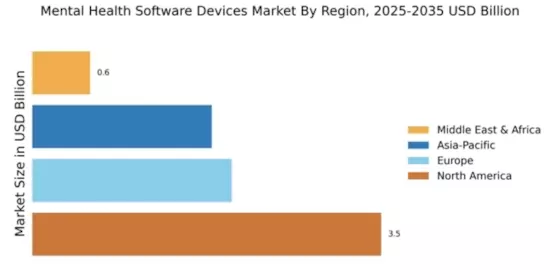
North America is poised to maintain its leadership in the Mental Health Software Devices Market, holding a market size of $3.5B in 2025. The region's growth is driven by increasing mental health awareness, technological advancements, and supportive regulatory frameworks. The demand for telehealth services has surged, particularly post-pandemic, as more individuals seek accessible mental health solutions. Regulatory support, including reimbursement policies for teletherapy, further catalyzes market expansion. The competitive landscape is robust, with key players like Teladoc Health, Talkspace, and BetterHelp leading the charge. The U.S. dominates the market, accounting for a significant share due to its advanced healthcare infrastructure and high investment in mental health technologies. Companies are increasingly focusing on personalized care solutions, leveraging AI and data analytics to enhance user experience and outcomes.

Europe : Emerging Digital Health Hub

Europe is witnessing a significant transformation in the Mental Health Software Devices Market, with a market size of €2.0B projected for 2025. The region's growth is fueled by rising mental health issues, increased funding for digital health initiatives, and a shift towards integrated care models. Regulatory bodies are promoting digital solutions to enhance mental health services, which is expected to drive adoption rates across member states. Leading countries such as Germany, the UK, and France are at the forefront of this growth, with a competitive landscape featuring companies like SilverCloud Health and Happify Health. The European market is characterized by a mix of established players and innovative startups, all striving to meet the growing demand for effective mental health solutions. The emphasis on data privacy and security is also shaping the development of new technologies in this space.

Asia-Pacific : Rapidly Growing Market Potential

The Asia-Pacific region is emerging as a vital player in the Mental Health Software Devices Market, with a projected market size of $1.8B by 2025. The growth is driven by increasing awareness of mental health issues, a rise in smartphone penetration, and government initiatives aimed at improving mental health services. Countries like Australia and Japan are leading the charge, supported by favorable regulations that encourage the adoption of digital health solutions. The competitive landscape is evolving, with both local and international players vying for market share. Companies are focusing on culturally relevant solutions to cater to diverse populations. The presence of key players such as Woebot Health and Mindstrong Health highlights the region's potential for innovation and growth in mental health technologies, addressing the unique challenges faced by the population.

Middle East and Africa : Emerging Market Opportunities

The Middle East and Africa region is gradually developing its Mental Health Software Devices Market, with a market size of $0.58B anticipated by 2025. The growth is primarily driven by increasing awareness of mental health issues, government initiatives to improve healthcare access, and a growing acceptance of digital health solutions. The region is witnessing a shift towards integrating mental health services into primary healthcare, which is expected to enhance service delivery. Countries like South Africa and the UAE are leading the way in adopting mental health technologies, supported by local startups and international collaborations. The competitive landscape is still in its infancy, but the presence of innovative solutions is beginning to emerge, addressing the unique cultural and social challenges in mental health care. The focus on community-based approaches is also gaining traction, paving the way for future growth.

Key Players and Competitive Insights

The Mental Health Software Devices Market is currently characterized by a dynamic competitive landscape, driven by increasing awareness of mental health issues and the growing demand for accessible mental health solutions. Key players such as Teladoc Health (US), Talkspace (US), and BetterHelp (US) are at the forefront, leveraging innovative technologies and strategic partnerships to enhance their service offerings. Teladoc Health (US) focuses on integrating telehealth services with mental health solutions, thereby expanding its reach and improving patient engagement. Meanwhile, Talkspace (US) emphasizes personalized therapy through its platform, which connects users with licensed therapists, reflecting a trend towards tailored mental health care. Collectively, these strategies contribute to a competitive environment that prioritizes accessibility, personalization, and technological integration.

In terms of business tactics, companies are increasingly localizing their services to cater to diverse populations, optimizing their supply chains to ensure timely delivery of mental health resources. The market appears moderately fragmented, with a mix of established players and emerging startups vying for market share. This fragmentation allows for a variety of approaches to mental health care, fostering innovation and competition among key players.

In November 2025, Ginger (US) announced a partnership with a leading health insurance provider to offer integrated mental health services to its members. This strategic move is significant as it not only expands Ginger's user base but also enhances its credibility in the market, positioning it as a comprehensive solution for mental health care. The partnership is likely to facilitate better access to mental health resources for insured individuals, thereby aligning with the growing trend of integrated health services.

In October 2025, Woebot Health (US) launched a new AI-driven feature aimed at improving user engagement and therapeutic outcomes. This innovation underscores the company's commitment to leveraging technology to enhance mental health support. By utilizing AI, Woebot Health (US) can provide more personalized interactions, which may lead to improved user satisfaction and retention, reflecting a broader trend towards digital transformation in mental health care.

In September 2025, SilverCloud Health (IE) expanded its platform to include new evidence-based programs targeting anxiety and depression. This expansion is indicative of the company's strategy to diversify its offerings and cater to a wider audience. By continuously updating its programs, SilverCloud Health (IE) positions itself as a leader in evidence-based mental health solutions, which is crucial in a market that increasingly values scientifically validated approaches.

As of December 2025, the Mental Health Software Devices Market is witnessing trends such as digitalization, AI integration, and a focus on sustainability. Strategic alliances among companies are shaping the competitive landscape, fostering innovation and enhancing service delivery. The shift from price-based competition to a focus on technological advancement and supply chain reliability is evident. Moving forward, competitive differentiation is likely to hinge on the ability to innovate and adapt to the evolving needs of consumers, with a strong emphasis on integrating advanced technologies into mental health solutions.

Key Companies in the Mental Health Software Devices Market market include

Industry Developments

February 2022 Core Solutions, the creators of the next-generation, clinically oriented Cx360 behavioral health electronic health record (EHR) system, is thrilled to announce the release of an update to its flagship product. The secure, cloud-based Cx360 V7.5 platform has gained several significant improvements and a more modern and efficient user interface to streamline quality care and billing further.

September 2022 Osmind, based in San Francisco, said that its electronic health record (EHR) system for mental health physicians has integrated Zoom virtual visits into the company's regulatory-compliant ISV Partner Programme. Clinicians can utilize various digital tools, such as progress tracking and journaling capabilities, within the Osmind EHR to address high-patient demand.

Future Outlook

Mental Health Software Devices Market Future Outlook

The Mental Health Software Devices Market is projected to grow at a 16.2% CAGR from 2024 to 2035, driven by increasing awareness, technological advancements, and rising demand for mental health solutions.

New opportunities lie in:

  • Integration of AI-driven analytics for personalized treatment plans.
  • Development of mobile applications for remote therapy sessions.
  • Partnerships with healthcare providers for subscription-based services.

By 2035, the market is expected to be robust, reflecting substantial growth and innovation.

Market Segmentation

Mental Health Software Devices Market End Use Outlook

  • Hospitals
  • Clinics
  • Home Care
  • Corporate
  • Educational Institutions

Mental Health Software Devices Market User Type Outlook

  • Individuals
  • Healthcare Professionals
  • Caregivers
  • Organizations
  • Researchers

Mental Health Software Devices Market Technology Outlook

  • Artificial Intelligence
  • Machine Learning
  • Data Analytics
  • Cloud Computing
  • Blockchain

Mental Health Software Devices Market Application Outlook

  • Therapeutic
  • Diagnostic
  • Monitoring
  • Assessment
  • Prevention

Mental Health Software Devices Market Device Type Outlook

  • Mobile Applications
  • Wearable Devices
  • Software Platforms
  • Telehealth Solutions
  • Virtual Reality Tools

Report Scope

MARKET SIZE 20246.88(USD Billion)
MARKET SIZE 20257.99(USD Billion)
MARKET SIZE 203535.88(USD Billion)
COMPOUND ANNUAL GROWTH RATE (CAGR)16.2% (2024 - 2035)
REPORT COVERAGERevenue Forecast, Competitive Landscape, Growth Factors, and Trends
BASE YEAR2024
Market Forecast Period2025 - 2035
Historical Data2019 - 2024
Market Forecast UnitsUSD Billion
Key Companies ProfiledTeladoc Health (US), Talkspace (US), BetterHelp (US), Ginger (US), Woebot Health (US), Mindstrong Health (US), SilverCloud Health (IE), Happify Health (US), Cerebral (US)
Segments CoveredApplication, End Use, Device Type, User Type, Technology
Key Market OpportunitiesIntegration of artificial intelligence in Mental Health Software Devices Market enhances personalized treatment and user engagement.
Key Market DynamicsRising demand for mental health software devices drives innovation and competition among technology providers and healthcare professionals.
Countries CoveredNorth America, Europe, APAC, South America, MEA

Market Highlights

Author
Rahul Gotadki
Assistant Manager

He holds an experience of about 7+ years in Market Research and Business Consulting, working under the spectrum of Life Sciences and Healthcare domains. Rahul conceptualizes and implements a scalable business strategy and provides strategic leadership to the clients. His expertise lies in market estimation, competitive intelligence, pipeline analysis, customer assessment, etc. In addition to the above, his other responsibility includes strategic tracking of high growth markets & advising clients on the potential areas of focus they could direct their business initiatives

Leave a Comment

FAQs

What is the projected growth of the Mental Health Software and Devices market?

The Mental Health Software and Devices market is the expected increase in total market value of 35.88 USD billion over a defined forecast period 2025–2035. It is driven by factors such as demand trends, technological advances, regulatory changes, and geographic expansion.

What is the size of the Mental Health Software and Devices market?

Mental Health Software and Devices market size was valued at approximately 6.88 billion USD in 2024. This figure will reach 35.88 billion USD covering all regions (America, Europe, Asia, MEA and ROW), focusing its segments / services / distribution channels till 2035.

What is the CAGR of the Mental Health Software and Devices market?

Mental Health Software and Devices market is expected to grow at a CAGR of 16.2% between 2025 and 2035.

How much will the Mental Health Software and Devices market be worth by 2035?

Mental Health Software and Devices market is expected to be worth of 35.88 billion USD, reflecting growth driven by usage, technology and global demands by the end of 2035.

How will the Mental Health Software and Devices market perform over the next 10 years?

Over the next 10 years the Mental Health Software and Devices market is expected to shift from usd billion 6.88 to 35.88 billion USD, led by adoption of advanced tech, demographic trends, regulatory approvals, with potential headwinds from 2025 to 2035.

How much is the mental health software and devices market?

The global market size of the mental health software and devices market was prized at USD 5.1 Billion in 2024.

Download Free Sample

Kindly complete the form below to receive a free sample of this Report

Compare Licence

×
Features License Type
Single User Multiuser License Enterprise User
Price $4,950 $5,950 $7,250
Maximum User Access Limit 1 User Upto 10 Users Unrestricted Access Throughout the Organization
Free Customization
Direct Access to Analyst
Deliverable Format
Platform Access
Discount on Next Purchase 10% 15% 15%
Printable Versions