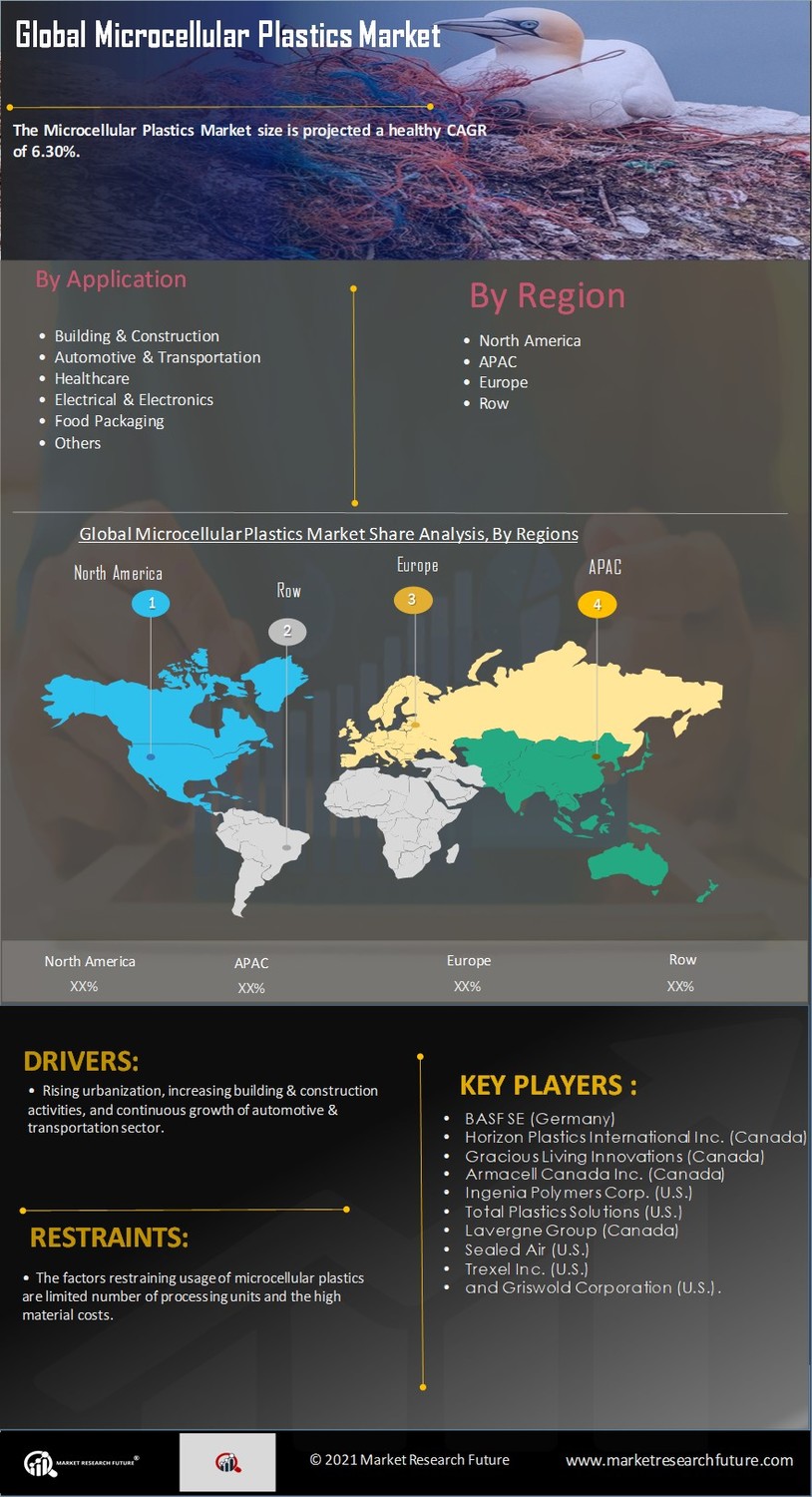
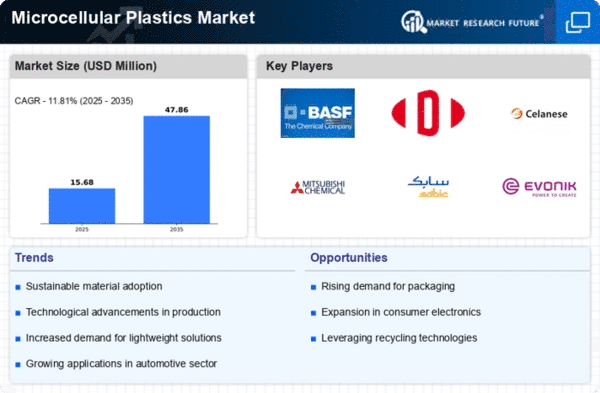
The Microcellular Plastics Market is currently characterized by a dynamic competitive landscape, driven by innovation, sustainability, and strategic partnerships. Key players such as BASF SE (Germany), DuPont de Nemours, Inc. (US), and Mitsubishi Chemical Corporation (Japan) are actively shaping the market through their distinct operational focuses. BASF SE (Germany) emphasizes innovation in material science, particularly in developing lightweight and high-performance microcellular plastics, which are increasingly sought after in automotive and packaging applications. Meanwhile, DuPont de Nemours, Inc. (US) is concentrating on expanding its product portfolio through strategic acquisitions, enhancing its capabilities in specialty materials. Mitsubishi Chemical Corporation (Japan) appears to be focusing on regional expansion, particularly in Asia, to capitalize on the growing demand for advanced materials in various industries.
The business tactics employed by these companies include localizing manufacturing and optimizing supply chains to enhance efficiency and reduce costs. The competitive structure of the Microcellular Plastics Market is moderately fragmented, with several players vying for market share. However, the collective influence of major companies like BASF SE (Germany) and DuPont de Nemours, Inc. (US) is significant, as they set industry standards and drive technological advancements.
In November 2025, BASF SE (Germany) announced the launch of a new line of bio-based microcellular plastics aimed at reducing environmental impact. This strategic move not only aligns with global sustainability trends but also positions BASF as a leader in eco-friendly materials, potentially attracting environmentally conscious consumers and businesses. The introduction of these products could enhance their market share and reinforce their commitment to sustainable practices.
In October 2025, DuPont de Nemours, Inc. (US) completed the acquisition of a specialty polymer manufacturer, which is expected to bolster its capabilities in producing high-performance microcellular plastics. This acquisition is strategically important as it allows DuPont to integrate advanced technologies and expand its product offerings, thereby enhancing its competitive edge in the market.
In September 2025, Mitsubishi Chemical Corporation (Japan) entered into a partnership with a leading automotive manufacturer to develop lightweight microcellular plastics for electric vehicles. This collaboration is indicative of the growing trend towards lightweight materials in the automotive sector, which is crucial for improving energy efficiency and performance. Such strategic alliances are likely to enhance Mitsubishi's market presence and foster innovation in product development.
As of December 2025, the Microcellular Plastics Market is witnessing trends such as digitalization, sustainability, and the integration of AI technologies. These trends are reshaping the competitive landscape, with companies increasingly focusing on strategic alliances to enhance their capabilities and market reach. The shift from price-based competition to a focus on innovation, technology, and supply chain reliability is evident, suggesting that future competitive differentiation will hinge on the ability to deliver advanced, sustainable solutions.



















Leave a Comment