Molecular Diagnostics Market (2026 - 2035)

Molecular Diagnostics Market Research Report: Size, Share, Trend Analysis By Applications (Oncology, Infectious Diseases, Genetic Testing, Blood Screening, Other Applications), By Technology (Polymerase Chain Reaction, Next-Generation Sequencing, Microarrays, In Situ Hybridization, Other Technologies), By Product Type (Reagents, Instruments, Software, Consumables, Other Products), By End-user (Hospitals, Diagnostic Laboratories, Academic Institutions, Pharmaceutical Companies, Other End-users), and By Regional (North America, Europe, South America, Asia Pacific, Middle East and Africa) - Growth Outlook & Industry Forecast 2025 To 2035
ID: MRFR/HC/0665-CR
200 Pages
Nidhi Mandole, Rahul Gotadki
Last Updated: July 02, 2026
Molecular Diagnostics Market
Market Size
Forecast Period2026-2035
CAGR (2026-2035)9.58%
2025 Market SizeUSD 19.82 Billion
2035 Market SizeUSD 49.50 Billion
Key Players
Roche Diagnostics
Abbott Laboratories
Danaher
Hologic Inc.
bioMรฉrieux
Qiagen N.V.
Opportunities
  • Multi-Cancer Early Detection via Liquid Biopsy
  • Point-of-Care Molecular Testing in Retail Clinics
  • Emerging-Market Government Screening Programs

Molecular Diagnostics Market Summary

The Global Molecular Diagnostics Market size was valued at USD 19.82 Billion in 2025, and the market is projected to grow from USD 21.72 Billion in 2026 to USD 49.50 Billion by 2035, registering a CAGR of 9.58% during the forecast period 2026โ€“2035.ย This trajectory is anchored in two converging forces: the expansion of reimbursement frameworks for genomic profiling in oncology and the establishment of clearer regulatory pathways for laboratory-developed tests under the FDA's proposed rule finalized in 2024 [1]. Together, these policy moves are pulling precision medicine out of the research setting and embedding it in routine clinical workflows.

A sweeping technology shift underpins this growth. Legacy culture-based pathogen identification and single-analyte immunoassays are steadily giving way to multiplex syndromic panels and rapid sequencing platforms. Whole-genome sequencing costs have dropped below USD 200 per sample, prompting the FDA to issue breakthrough device designations for several rapid-turnaround platforms [2]. Pharmaceutical companies are investing heavily in vertical integration, building in-house genomic services divisions that feed companion diagnostic pipelines directly into their drug-development programs.

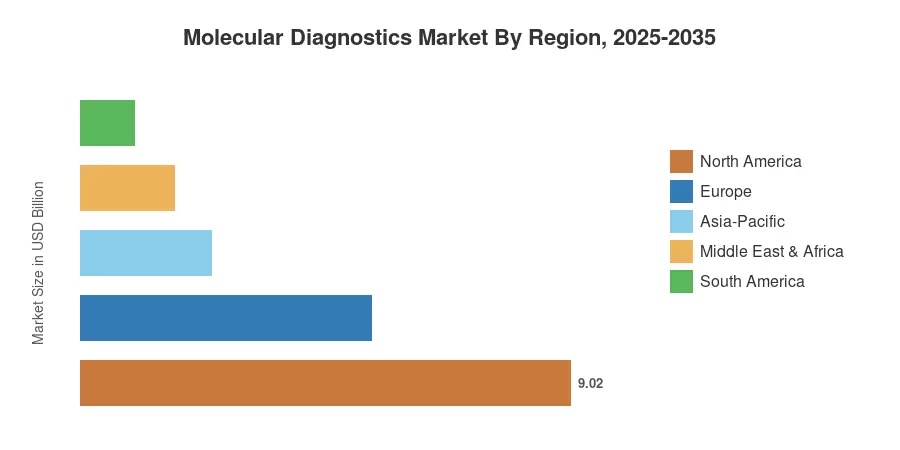
North America commands roughly 45.50% of the Molecular Diagnostics Market, buoyed by payer coverage mandates and a dense network of reference laboratories. Asia-Pacific is the fastest-growing region, with a projected CAGR of 12.21%, driven by government-led screening initiatives in China and India. Europe holds the second-largest share at approximately 27%, though the EU's In Vitro Diagnostic Regulation (IVDR) is compressing margins for smaller manufacturers and consolidating demand around integrated platforms [3]. The decade ahead will hinge on how quickly decentralized testing models reach retail clinics and resource-limited settings worldwide.

Key Report Takeaways

โ€ข By Technology

  • Polymerase chain reaction captured a 46.27% share of the Molecular Diagnostics Market in 2025, reinforcing its position as the dominant testing platform across clinical laboratories.
  • Next-generation sequencing is anticipated to grow at a 12.49% CAGR through 2035, driven by falling per-run costs and expanding oncology panels.

โ€ข By Application

  • Infectious disease testing accounted for 64.21% of total revenue in 2025, reflecting sustained demand for respiratory and sexually transmitted infection panels.
  • Oncology applications are projected to expand at a 10.93% CAGR, fueled by liquid biopsy adoption and companion diagnostic mandates from regulators.

โ€ข By Region

  • North America led the Molecular Diagnostics Market with a 45.50% revenue share in 2025, supported by broad commercial payer reimbursement for genomic tests.
  • The Asia-Pacific region is expected to post the highest CAGR of 12.21% through 2035 as national health programs in China and India scale molecular screening infrastructure.

Market Size and Forecast (2021โ€“2035)

Market Research Future's estimates draw on primary interviews with laboratory directors, procurement leads at hospital networks, and published regulatory filings, triangulated against company revenue disclosures and trade-association datasets. Historical figures reflect reported revenues; forecast figures apply a bottom-up build by technology segment and region, calibrated to macro indicators including healthcare expenditure growth and diagnostic test-volume trends.
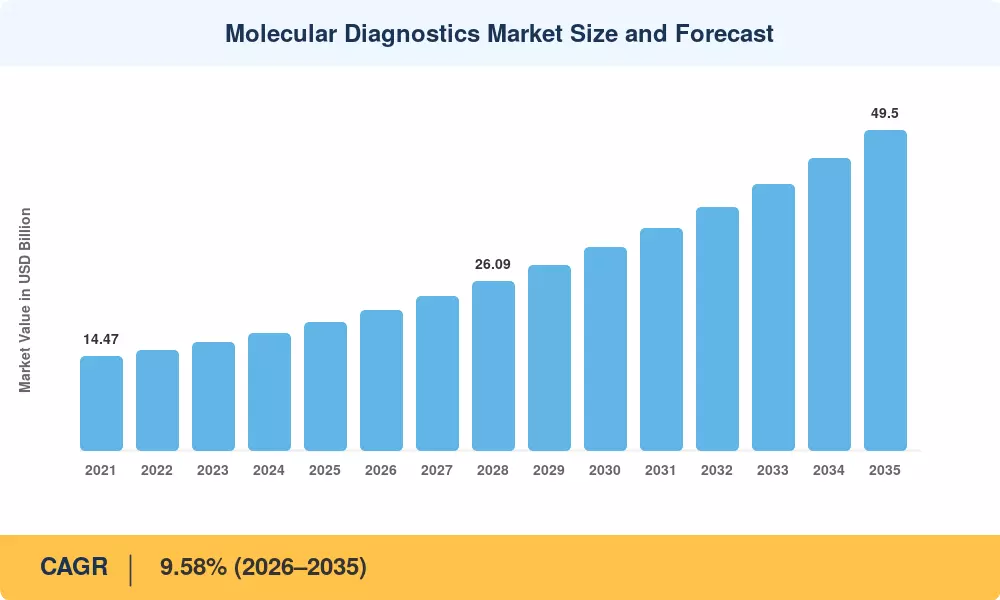
Molecular Diagnostics Market Size and Forecast
Our Impact
Enabled $4.3B Revenue Impact for Fortune 500 and Leading Multinationals
Partnering with 2000+ Global Organizations Each Year
30K+ Citations by Top-Tier Firms in the Industry

Driver Impact Analysis

Driver ~% Impact on CAGR Geographic Relevance Impact Timeline
Broadening payer reimbursement for genomic profiling ~18% North America, Europe Short-term (โ‰ค2 yr)
Falling sequencing costs and platform miniaturization ~16% Global Medium-term (2โ€“4 yr)
Multiplex syndromic panel uptake in hospitals ~14% North America, Europe, Asia-Pacific Short-term (โ‰ค2 yr)
Companion diagnostic mandates by FDA and EMA ~13% North America, Europe Medium-term (2โ€“4 yr)
Government-led molecular screening programs in Asia ~12% Asia-Pacific Long-term (โ‰ฅ4 yr)
Liquid biopsy adoption for multi-cancer early detection ~15% North America, Europe Long-term (โ‰ฅ4 yr)
Pharmacogenomics integration into clinical workflows ~10% North America Medium-term (2โ€“4 yr)

ย 

Payer Reimbursement Expansion for Genomic Tests

The single most immediate accelerator for the Molecular Diagnostics Market is the broadening of insurance coverage for genomic profiling. CMS's 2024 National Coverage Determination extended reimbursement for comprehensive genomic profiling to all advanced solid tumors, a decision projected to unlock an additional USD 1.2 Billion in annual test volumes by 2027 [1]. Private payers have followed: UnitedHealthcare and Aetna both expanded molecular test coverage lists in 2024, covering over 45 specific assays. This removes the out-of-pocket barrier that historically limited adoption to academic medical centers.

Sequencing Cost Deflation and Platform Miniaturization

As of late 2024, the cost of whole-genome sequencing was less than $200 per sample, compared to more than $1,000 only five years prior [2]. Applications that were previously unfeasible at scale, such as population-level pharmacogenomic testing and newborn screening, are being made possible by this cost curve. High-throughput genomics is now possible for mid-sized community hospitals without centralized laboratory facilities because of compact benchtop sequencers that can handle up to 48 samples per run.

ย 

Multiplex Syndromic Panel Adoption

Multiplex syndromic panels, which test for 20 or more respiratory, gastrointestinal, or meningitis-encephalitis pathogens in a single run, are becoming more and more common in hospital emergency rooms and urgent care facilities. According to studies, these panels cut down on needless antibiotic prescriptions by up to 30% by reducing the time-to-result from 48โ€“72 hours to less than 90 minutes [8]. Adoption in European and Asian health systems has been further accelerated by the WHO's 2023 recommendations for syndromic surveillance for antibiotic resistance.

ย 

Companion Diagnostic Regulatory Mandates

The FDA approved 27 new companion diagnostic indications in 2024 alone, the highest annual total on record [6]. Each approval effectively creates a captive market for the associated molecular test, linking drug reimbursement to diagnostic utilization. The EMA has mirrored this trend through its qualification opinions on biomarker-driven endpoints, tightening the linkage between therapeutic access and molecular testing across the Molecular Diagnostics Market in Europe.

Restraints Impact Analysis

Restraint ~% Negative Impact on CAGR Geographic Relevance Impact Timeline
EU IVDR compliance costs squeezing smaller manufacturers ~(โ€“12%) Europe Short-term (โ‰ค2 yr)
Reimbursement uncertainty for novel LDTs ~(โ€“10%) North America Medium-term (2โ€“4 yr)
Skilled workforce shortages in molecular laboratories ~(โ€“9%) Global Long-term (โ‰ฅ4 yr)
Data privacy regulations limiting genomic data sharing ~(โ€“8%) Europe, Asia-Pacific Medium-term (2โ€“4 yr)
High capital expenditure for sequencing infrastructure ~(โ€“7%) Emerging markets Long-term (โ‰ฅ4 yr)

ย 

IVDR Compliance and Manufacturer Consolidation

After coming into effect in 2022, the EU's In Vitro Diagnostic Regulation (IVDR) is presently going through a protracted transition period. The European Commission modified the legislation in 2024 to stagger compliance deadlines according to device risk classification, prolonging some transitions until 2029 in order to avoid supply interruptions. The sector is currently undergoing active adaptation, even if the regulatory burdenโ€”which calls for thorough clinical evidence and post-market surveillanceโ€”remains substantial. In order to meet these changing deadlines, manufacturers are giving portfolio optimization first priority, and many small-to-mid-tier companies are merging or establishing strategic alliances in order to split the high expenses of conformity tests.

ย 

Reimbursement Uncertainty for Laboratory-Developed Tests

The regulatory situation of Laboratory-Developed Tests (LDTs) has stabilized after a period of considerable ambiguity. The FDA's 2024 final rule that attempted to regulate LDTs as medical devices was overturned by a federal court in 2025. The rule was then repealed by the FDA in September 2025, returning enforcement discretion to its previous state. Through the Clinical Laboratory Improvement Amendments (CLIA), the Centers for Medicare & Medicaid Services (CMS) will continue to oversee LDTs as of mid-2026. With the immediate threat of device-style premarket review eliminated by this resolution, laboratories can now engage in innovative diagnostic development without having to worry about dual-agency compliance.

ย 

Molecular Laboratory Workforce Gaps

The clinical laboratory workforce is still under a great deal of stress, even if the severe "crisis-level" staffing shortages seen during the 2020โ€“2022 period have started to stabilize. Although vacancy rates are not as high as they were during the pandemic, they are still higher than pre-pandemic benchmarks, according to data from the American Society for Clinical Pathology (ASCP). An aging workforce and rising retirement rates are surpassing the results of recognized training programs, creating a structural imbalance in the field. In 2026, national-level policy attempts to prioritize the recruitment and education of medical laboratory specialists were prompted by the fact that laboratory throughput is still primarily hampered by a lack of staff.

ย 

Molecular Diagnostics Market Opportunities

Multi-Cancer Early Detection via Liquid Biopsy

Liquid biopsy platforms capable of detecting multiple cancer types from a single blood draw represent the highest-value growth frontier in the Molecular Diagnostics Market. Grail's Galleri test and Guardant Health's Shield assay are progressing through large-scale clinical trials, with Medicare coverage decisions anticipated by 2027 [10]. If validated, these tests could generate an incremental USD 8โ€“12 Billion in annual revenue globally by 2033.

Point-of-Care Molecular Testing in Retail Clinics

CLIA-waived molecular assays are enabling pharmacy chains and retail health clinics to offer rapid strep, influenza, RSV, and COVID-19 testing without laboratory infrastructure. CVS Health and Walgreens have deployed over 6,000 CLIA-waived testing sites across the US [8]. Expanding this model internationally, especially in Southeast Asian and Latin American pharmacy networks, could shift a meaningful share of infectious-disease testing from centralized laboratories to community settings.

Emerging-Market Government Screening Programs

India's Ayushman Bharat Digital Mission and China's Healthy China 2030 plan together target molecular screening for tuberculosis, hepatitis, and cervical cancer at population scale [7]. India alone plans to establish 150,000 health-and-wellness centers with point-of-care diagnostic capabilities by 2028. These programs represent a substantial greenfield opportunity for manufacturers willing to adapt pricing and device form factors for resource-constrained settings.

Pharmacogenomics and Data Monetization

The integration of pharmacogenomic test results into electronic health records creates a longitudinal data asset that pharmaceutical companies will pay to access for drug-development insights and real-world evidence generation [9]. Health systems running pre-emptive pharmacogenomics panels can license de-identified datasets to biopharma, creating a recurring revenue stream that subsidizes the cost of testing.

AI-Augmented Variant Interpretation Services

Artificial intelligence platforms that automate the classification of genomic variants are reducing turnaround times for sequencing reports from days to hours. Companies offering cloud-based interpretation-as-a-service can sell into community laboratories that lack in-house bioinformatics teams, opening a software-margin business alongside reagent sales [12].

Molecular Diagnostics Market Future Outlook

AI-Driven Diagnostics and Algorithmic Interpretation

Artificial intelligence will reshape the Molecular Diagnostics Market by automating variant classification, quality control, and report generation. The WHO estimates that AI-augmented interpretation could reduce genomic report turnaround by 60% and cut interpretive errors by 35% within the next five years [12]. Cloud-based AI platforms will allow community laboratories to access specialist-grade interpretation without in-house bioinformaticians, democratizing genomic medicine.

Decentralized and Point-of-Care Testing Expansion

The migration of molecular testing from centralized laboratories to point-of-care settings will accelerate through 2035. Isothermal amplification platforms and microfluidic cartridge systems now deliver laboratory-grade sensitivity in devices small enough for a clinic countertop. The global point-of-care molecular testing segment is projected to surpass USD 6 Billion by 2032, driven by retail-clinic deployments in North America and community health worker programs in sub-Saharan Africa [8].

Liquid Biopsy and Multi-Cancer Early Detection

Multi-cancer early detection tests represent the single largest addressable expansion for the Molecular Diagnostics Market through 2035. Clinical trials enrolling over 200,000 participants are underway to validate blood-based screening for 50-plus cancer types [10]. A positive Medicare coverage decision could add USD 10 Billion in annual testing revenue by the early 2030s, fundamentally altering the economics of oncology diagnostics.

Pharmacogenomics and Population Health Integration

Pre-emptive pharmacogenomic testing โ€” screening patients for drug-metabolism variants before prescribing โ€” is transitioning from academic pilot programs to health-system-wide implementation. Vanderbilt, St. Jude, and the UK Biobank have demonstrated that embedding pharmacogenomic results in electronic health records reduces adverse drug events by 20โ€“30% [9]. As EHR integration matures, pharmacogenomics will become a standard clinical tool, adding a durable recurring-test revenue stream to the Molecular Diagnostics Market.

Molecular Diagnostics Market Segmentation

By Technology

Segment Key Metric Primary Demand Driver
Polymerase Chain Reaction (PCR) 46.27% share (2025) Installed base; syndromic panel adoption
Next-Generation Sequencing (NGS) 12.49% CAGR Oncology profiling; falling per-run costs
Fluorescence In Situ Hybridization (FISH) USD 1.53 Billion (2025) Cytogenetic testing in hematologic malignancies
Isothermal Amplification 11.82% CAGR Point-of-care and resource-limited settings
Other Technologies USD 1.18 Billion (2025) Microarray, mass spectrometry-based ID

ย 

PCR remains the backbone of the Molecular Diagnostics Market, commanding nearly half of all revenue in 2025. Its dominance reflects an enormous installed instrument base, established reimbursement codes, and the rapid proliferation of multiplex syndromic panels in hospital emergency departments. Real-time and digital PCR variants continue to gain share within the category as laboratories seek higher sensitivity for minimal-residual-disease monitoring in oncology.

Next-generation sequencing is the clear growth leader, benefiting from declining library-preparation costs and an expanding menu of FDA-approved comprehensive genomic profiling panels. Illumina's NovaSeq X and MGI's DNBSEQ-T20 have pushed per-genome costs below USD 200, making population-scale sequencing programs economically viable for the first time [2].

By Application

Segment Key Metric Primary Demand Driver
Infectious Disease 64.21% share (2025) Respiratory and STI syndromic panels
Oncology 10.93% CAGR Companion Dx; liquid biopsy expansion
Genetic Testing USD 2.14 Billion (2025) Carrier screening; prenatal diagnostics
Pharmacogenomics 11.47% CAGR Pre-emptive prescribing integration
Other Applications USD 0.78 Billion (2025) Transplant monitoring; forensics

ย 

Infectious disease testing dominates the Molecular Diagnostics Market by application, driven by high-volume respiratory, sexually transmitted infection, and blood-safety screening programs. Hospital adoption of multiplex respiratory panels that simultaneously test for influenza, RSV, SARS-CoV-2, and bacterial pathogens has created a durable baseline demand that persists well beyond pandemic-era surges.

Oncology is the fastest-growing application, propelled by regulatory mandates tying targeted-therapy access to companion diagnostic results. The FDA's requirement for biomarker testing before prescribing drugs such as pembrolizumab and osimertinib has made molecular oncology testing a clinical necessity rather than an elective procedure [6].

By Product

Segment Key Metric Primary Demand Driver
Reagents & Kits 72.0% share (2025) Recurring consumable revenue model
Instruments & Systems 12.53% CAGR Platform refresh cycles; POC devices
Software & Services USD 1.82 Billion (2025) Bioinformatics; cloud interpretation

ย 

Reagents and kits generate the lion's share of revenue in the Molecular Diagnostics Market, reflecting the razor-and-blade business model that defines the industry. Instrument placements drive downstream consumable pull-through, making reagent margins the primary profitability lever for manufacturers.

By Sample Type

Segment Key Metric Primary Demand Driver
Blood, Serum & Plasma 86.15% share (2025) Liquid biopsy; blood-safety screening
Urine 12.20% CAGR STI molecular testing; transplant monitoring
Tissue USD 1.03 Billion (2025) Surgical pathology; tumor profiling
Other Sample Types 8.74% CAGR Saliva, cerebrospinal fluid, swab-based

Blood, Serum & Plasma dominates the sample type segment with an 86.15% share in 2025, driven by rising liquid biopsy adoption and blood-safety screening needs, while Tissue holds a solid USD 1.03 billion market on the back of surgical pathology and tumor profiling demand. Urine samples are emerging as the fastest-growing segment at a 12.20% CAGR, fueled by STI molecular testing and transplant monitoring, closely followed by Other Sample Types (saliva, CSF, swabs) growing at 8.74% CAGR.ย 

By End User

Segment Key Metric Primary Demand Driver
Diagnostic & Reference Laboratories 24.64% share (2025) High-complexity testing centralization
Hospitals 10.79% CAGR In-house syndromic panel and POC adoption
Academic & Research Institutions USD 2.96 Billion (2025) Translational genomics programs
Clinics & Ambulatory Care 11.13% CAGR Decentralized testing models
Other End Users USD 0.87 Billion (2025) Public-health labs; blood banks

Diagnostic & Reference Laboratories lead the end-user segment with a 24.64% share in 2025, supported by the centralization of high-complexity testing, while Academic & Research Institutions represent a substantial USD 2.96 billion market driven by translational genomics programs. Clinics & Ambulatory Care (11.13% CAGR) and Hospitals (10.79% CAGR) are the fastest-growing end-user segments, reflecting a broader shift toward decentralized testing and in-house syndromic panel and point-of-care adoption, while Other End Users, including public-health labs and blood banks, account for USD 0.87 billion.

Regional Market Share Analysis

Region Key Metric (2025) Primary Investment Themes
North America 45.50% revenue share Genomic profiling reimbursement; LDT regulation
Europe USD 5.35 Billion IVDR compliance; companion diagnostics
Asia-Pacific 12.21% CAGR (2026โ€“2035) TB/hepatitis screening; infrastructure build-out
South America USD 0.99 Billion Public-health laboratory modernization
Middle East & Africa 8.74% CAGR (2026โ€“2035) Infectious disease surveillance; Gulf healthcare investment
Total USD 19.82 Billion โ€”

The Molecular Diagnostics Market exhibits distinct regional dynamics shaped by payer structures, regulatory frameworks, and disease burden. North America leads on payer coverage breadth, while Asia-Pacific shows the steepest growth trajectory driven by government infrastructure investments.

ย 

North America

Country Key Metric Key Driver
United States 83.6% of regional share CMS genomic profiling coverage; companion Dx mandates
Canada 10.18% CAGR Provincial molecular screening expansions
Mexico USD 0.52 Billion Public-health laboratory investment under IMSS modernization

ย 

The United States anchors the Molecular Diagnostics Market in North America through a combination of favorable reimbursement, a mature reference-laboratory network, and the world's deepest companion-diagnostic pipeline. CMS coverage decisions, commercial payer follow-on policies, and FDA's accelerating approval of molecular indications continue to expand addressable test volumes. Canada is investing in national pharmacogenomics initiatives, while Mexico's IMSS health system modernization includes molecular testing capacity at over 40 regional hospitals [1][7].

Europe

Country Key Metric Key Driver
Germany 24.3% of regional share Hospital laboratory automation; IVDR early compliance
United Kingdom 9.87% CAGR NHS Genomic Medicine Service expansion
France USD 0.72 Billion Plan France Mรฉdecine Gรฉnomique 2025
Italy 8.95% CAGR Oncology companion Dx adoption in tertiary centers
Spain USD 0.38 Billion National TB/STI molecular screening programs
Nordic Countries 9.42% CAGR Biobank-linked precision medicine initiatives
Russia USD 0.29 Billion Federal program for infectious disease surveillance
Rest of Europe USD 0.61 Billion Varied regulatory adoption of IVDR frameworks

ย 

Europe's Molecular Diagnostics Market is shaped by the IVDR transition, which has raised entry barriers and concentrated procurement around platform providers that offer turnkey compliance documentation. The UK's NHS Genomic Medicine Service has committed GBP 200 million to embed whole-genome sequencing into routine cancer care pathways, while France's genomic medicine plan funds 12 regional sequencing hubs [3][5].

Asia-Pacific

Country Key Metric Key Driver
China 38.7% of regional share Healthy China 2030; domestic sequencer manufacturing
India 13.58% CAGR Ayushman Bharat screening; TB elimination campaign
Japan USD 0.68 Billion Aging population; pharmacogenomics in polypharmacy
South Korea 11.24% CAGR Precision medicine cohort programs
ASEAN USD 0.31 Billion Infectious disease burden; WHO laboratory-capacity grants
Rest of Asia-Pacific 10.46% CAGR Distributed growth across emerging health systems

ย 

The Asia-Pacific Molecular Diagnostics Market benefits from large unscreened populations, rising healthcare expenditure, and assertive government health targets. China's domestic sequencer manufacturers have reduced instrument costs by 40% relative to Western imports, accelerating adoption in Tier-2 and Tier-3 city hospitals. India's National TB Elimination Programme now requires molecular confirmation of drug resistance at all district-level laboratories [7].

South America

Country Key Metric Key Driver
Brazil 58.2% of regional share SUS public-health laboratory molecular upgrades
Argentina 9.15% CAGR Oncology testing centralization in Buenos Aires
Rest of South America USD 0.18 Billion PAHO-supported infectious disease surveillance

ย 

Brazil's Unified Health System (SUS) has allocated BRL 1.4 Billion for public-health laboratory modernization through 2028, including molecular testing equipment for HIV viral-load monitoring and tuberculosis drug-resistance screening. Argentina is centralizing oncology molecular testing through its national cancer institute network [7][16].

Middle East & Africa

Country Key Metric Key Driver
Saudi Arabia 31.4% of regional share Vision 2030 healthcare modernization
UAE 10.35% CAGR Dubai and Abu Dhabi genomic medicine centers
South Africa USD 0.11 Billion National Health Laboratory Service TB and HIV programs
Egypt 9.28% CAGR Population-scale hepatitis C screening and treatment
Rest of MEA USD 0.14 Billion NGO-funded infectious disease surveillance

ย 

Saudi Arabia's Vision 2030 healthcare pillar has earmarked SAR 3.5 Billion for genomic medicine infrastructure, including a national genome project that will sequence 100,000 Saudi genomes by 2030. Egypt's successful hepatitis C elimination campaign, which molecular-tested over 60 million citizens, has created laboratory infrastructure now being repurposed for broader molecular diagnostics [7][16].

Molecular Diagnostics Market By Region, 2025-2035

Competitive Benchmarking

The Molecular Diagnostics Market exhibits medium concentration, with the top five players accounting for an estimated 52โ€“58% of global revenue. The Herfindahl-Hirschman Index falls in the 1,200โ€“1,500 range, indicating a market structure where a handful of vertically integrated platform providers coexist with a long tail of specialty assay developers. Recent M&A activity โ€” including Danaher's integration of Cepheid and Roche's acquisition of GenMark โ€” has further tightened competitive dynamics.

Company Est. Revenue Share Range Key Offerings for Molecular Diagnostics Market Strategic Positioning
Roche Diagnostics ~14โ€“17% cobas PCR systems; AVENIO ctDNA panels Full-spectrum platform leader; pharma-Dx integration
Abbott Laboratories ~9โ€“12% Alinity m; ID NOW rapid molecular POC-to-centralized lab portfolio; global distribution
Danaher (Cepheid) ~8โ€“11% GeneXpert systems; Xpert syndromic panels Point-of-care dominance; CLIA-waived leadership
Hologic Inc. ~6โ€“9% Panther system; Aptima assays Women's health molecular; STI panel strength
bioMรฉrieux ~5โ€“8% BioFire FilmArray; ARGENE PCR Syndromic panel pioneer; antimicrobial stewardship
Qiagen N.V. ~4โ€“7% QIAstat-Dx; QuantiFERON; sample prep kits Sample-to-insight workflow; companion Dx partnerships
Becton Dickinson ~3โ€“6% BD MAX; BD Veritor molecular Integrated specimen-management ecosystems
Siemens Healthineers ~3โ€“5% Versant; FluoroType assays Laboratory automation integration; hospital IT linkages
Illumina Inc. ~4โ€“6% NovaSeq X; TruSight Oncology Sequencing platform leader; population genomics
Thermo Fisher Scientific ~3โ€“5% Ion Torrent; Applied Biosystems PCR Research-to-clinical translation; reagent supply chain

ย 

Recent News & Developments

ย 

ย 

ย 

  • bioMรฉrieux (November 2023): Expanded the BioFire FilmArray panel menu to include a 27-target lower-respiratory infection panel, securing CE-IVDR marking ahead of regulatory deadlines [3].
  • Guardant Health (January 2025): Published pivotal trial results for its Shield blood test for colorectal cancer screening, demonstrating 83% sensitivity for stage Iโ€“III cancers, ahead of anticipated Medicare coverage determination [10].

ย 

  • Qiagen (August 2024): Partnered with AstraZeneca to develop a companion diagnostic for a next-generation EGFR inhibitor, reinforcing the pharma-diagnostics co-development model [6].

Molecular Diagnostics Market Report Scope

Parameter Detail
Market Scope Global Molecular Diagnostics Market covering technologies, applications, products, sample types, end users, and regions
Study Period 2021โ€“2035
CAGR (Forecast) 9.58% (2026โ€“2035)
Base Year Market Size USD 19.82 Billion (2025)
Forecast Endpoint USD 49.50 Billion (2035)
Fastest Growing Segment Next-Generation Sequencing (by technology); Oncology (by application)
Companies Profiled Roche, Abbott, Danaher, Hologic, bioMรฉrieux, Qiagen, BD, Siemens Healthineers, Illumina, Thermo Fisher
Valuation Currency USD Billion

ย 

FAQs

What reimbursement challenges should diagnostic companies anticipate beyond 2026?
Payers are shifting toward outcomes-based reimbursement, tying molecular test payments to demonstrated clinical utility rather than analytical validity alone [13]. Companies lacking real-world evidence linking test results to treatment outcomes will face coverage denials.
How does the IVDR affect non-European manufacturers exporting to the EU?
Non-EU manufacturers must appoint an authorized representative and meet identical clinical-evidence and post-market surveillance requirements as domestic firms [3]. Compliance timelines and costs often delay EU market entry by 12โ€“18 months.
Which sample types are gaining traction for decentralized molecular testing?
Saliva and nasal swabs are displacing venipuncture-dependent samples at point-of-care sites because they require no phlebotomy training [8]. Self-collection kits for HPV and STI testing are accelerating this shift.
What role does bioinformatics outsourcing play in laboratory competitiveness?
Cloud-based variant interpretation services enable mid-size laboratories to offer NGS panels without in-house bioinformaticians [12]. This lowers fixed costs and compresses report turnaround to under 48 hours.
How are pharmaceutical companies integrating molecular diagnostics into drug development?
Pharma firms increasingly co-develop companion diagnostics alongside therapeutic candidates, embedding biomarker-driven enrollment criteria into Phase II trials [6]. This reduces late-stage failure rates and speeds regulatory approval.
What cybersecurity risks accompany cloud-connected molecular diagnostic platforms?
Connected sequencers and cloud-based LIMS systems introduce attack surfaces for ransomware and data exfiltration targeting protected health information [15]. FDA pre-market guidance now requires cybersecurity documentation for all networked diagnostic devices.
How do multiplex panels change hospital antibiotic stewardship economics?
Syndromic panels identifying pathogens within 90 minutes enable targeted therapy initiation, reducing broad-spectrum antibiotic use by up to 30% and lowering average antimicrobial costs per patient admission [8]. ย  ย 
Author
Author
Author Profile
Nidhi Mandole LinkedIn
Senior Research Analyst
She is an extremely curious individual currently working in Healthcare and Medical Devices Domain. Nidhi is comfortably versed in data centric research backed by healthcare educational background. She leverages extensive data mining and analytics tools such as Primary and Secondary Research, Statistical Analysis, Machine Learning, Data Modelling. Her key role also involves Technical Sales Support, Client Interaction and Project management within the Healthcare team. Lastly, she showcases extensive affinity towards learning new skills and remain fascinated in implementing them.
Co-Author
Co-Author Profile
Rahul Gotadki LinkedIn
Research Manager
He holds an experience of about 9+ years in Market Research and Business Consulting, working under the spectrum of Life Sciences and Healthcare domains. Rahul conceptualizes and implements a scalable business strategy and provides strategic leadership to the clients. His expertise lies in market estimation, competitive intelligence, pipeline analysis, customer assessment, etc.

Research Approach

ย 

Secondary Research

The secondary research process involved comprehensive analysis of regulatory databases, peer-reviewed clinical journals, diagnostic industry publications, and authoritative health organizations. Key sources included the US Food & Drug Administration (FDA) Center for Devices and Radiological Health (CDRH), Centers for Medicare & Medicaid Services (CMS) Clinical Laboratory Fee Schedule, Centers for Disease Control and Prevention (CDC) Division of Laboratory Systems, National Institutes of Health (NIH) National Human Genome Research Institute, Clinical Laboratory Improvement Amendments (CLIA) database, College of American Pathologists (CAP) Laboratory Accreditation Program, European Medicines Agency (EMA) In Vitro Diagnostics Regulation (IVDR) database, European Centre for Disease Prevention and Control (ECDC), World Health Organization (WHO) International Health Regulations, Foundation for Innovative New Diagnostics (FIND), American Association for Clinical Chemistry (AACC), Association for Molecular Pathology (AMP), Infectious Diseases Society of America (IDSA), PubMed/MEDLINE, National Center for Biotechnology Information (NCBI) Genetic Testing Registry, and national laboratory surveillance reports from key markets. These sources were used to collect test volume statistics, regulatory approval data (510(k), PMA, CE-IVD), clinical validity studies, epidemiological trends, and competitive landscape analysis for polymerase chain reaction (PCR), hybridization techniques, sequencing technologies, microarrays, and other molecular diagnostic platforms.

ย 

Primary Research

As part of the primary research process, interviews were conducted with stakeholders from both the supply-side and the demand-side in order to acquire qualitative and quantitative perspectives. Sources from the supply side included chief executive officers, heads of research and development, chief scientific officers, managers of regulatory affairs, and commercial directors from firms that manufacture molecular diagnostics, companies that develop platform technology, and companies that manufacture IVD. Board-certified pathologists, clinical laboratory directors, hospital microbiologists, infectious disease specialists, molecular geneticists, oncology clinicians, and procurement managers from clinical reference laboratories, hospital systems, academic medical centers, and blood banks were the individuals who were included in the demand-side sources. Through primary research, market segmentation was validated, assay development pipelines were confirmed, and insights were gained regarding clinical adoption patterns, reimbursement dynamics, laboratory workflow integration, and regulatory pathway strategies.

Primary Respondent Breakdown:

โ€ข By Designation: C-level Primaries (28%), Director Level (35%), Others (37%)

โ€ข By Region: North America (32%), Europe (30%), Asia-Pacific (25%), Rest of World (13%)

ย 

Market Size Estimation

Global market valuation was derived through revenue mapping and test volume analysis. The methodology included:

โ€ข Identification of 50+ key manufacturers across North America, Europe, Asia-Pacific, and Latin America

โ€ข Product mapping across PCR-based assays, in situ hybridization kits, sequencing platforms, microarray systems, and other molecular testing technologies

โ€ข Analysis of reported and modeled annual revenues specific to molecular diagnostic portfolios

โ€ข Coverage of manufacturers representing 75-80% of global market share in 2024

โ€ข Extrapolation using bottom-up (test volume ร— average selling price by disease indication and country) and top-down (manufacturer revenue validation) approaches to derive segment-specific valuations for oncology testing, infectious disease screening, genetic testing, and blood donor screening applications

Download Free Sample

Kindly complete the form below to receive a free sample of this Report

Download PDF ×

We do not share your information with anyone. However, we may send you emails based on your report interest from time to time. You may contact us at any time to opt-out.
















