Point of Care Molecular Diagnostics Market (2026 - 2035)

Point of Care Molecular Diagnostics Market Research Report: Size, Share, Trend Analysis By Product Type (PCR Tests, Nucleic Acid Amplification Tests, Microarray, Next-Generation Sequencing, Other Genetic Tests), By Applications (Infectious Diseases, Genetic Testing, Cancer Diagnosis, Metabolic Disorders), By End Use (Hospitals, Diagnostic Laboratories, Home Care Settings, Outpatient Clinics), By Technology (Isothermal Amplification, Polymerase Chain Reaction, Sanger Sequencing, CRISPR Technology) and By Regional (North America, Europe, South America, Asia Pacific, Middle East and Africa) - Growth Outlook & Industry Forecast 2025 To 2035

Forecast Period
2026-2035
CAGR
10.5%
2025 Market Size
USD 4.58 Billion
2035 Market Size
USD 12.44 Billion
Healthcare โ— Updated August 24, 2026 Report ID: MRFR/HC/9964-HCR | Pages: 200 | Author: Rahul Gotadki, Vikita Thakur

Point of Care Molecular Diagnostics Market Summary

The Point of Care Molecular Diagnostics Market reached a valuation of USD 4.58 Billion in 2025 and is projected to climb from USD 5.06 Billion in 2026 to USD 12.44 Billion by 2035, registering a CAGR of 10.5% across the forecast window. Two catalysts stand behind this trajectory: accelerated public-sector procurement โ€” spearheaded by the U.S. Biomedical Advanced Research and Development Authority (BARDA), which channeled over USD 1.2 Billion into rapid diagnostic platforms between 2020 and 2024 [2] โ€” and the broadening of CLIA-waived molecular test menus that now cover respiratory, sexual-health, and gastrointestinal panels inside a single cartridge.

A technology transformation is reshaping how clinicians deliver molecular results. Legacy centralized laboratory workflows, which required batch PCR runs and 24โ€“48-hour turnaround, are giving way to sample-to-answer cartridge systems that deliver nucleic-acid-level sensitivity in under 30 minutes at the bedside [3]. Lyophilized reagent chemistries that tolerate ambient shipping have slashed cold-chain costs by an estimated 35%, while cloud-connected instrument dashboards use predictive analytics to preempt maintenance downtime [4]. The European Union's In Vitro Diagnostic Regulation (IVDR), fully enforced from May 2022, has further codified performance standards that reward manufacturers investing in closed, low-complexity platforms [5].

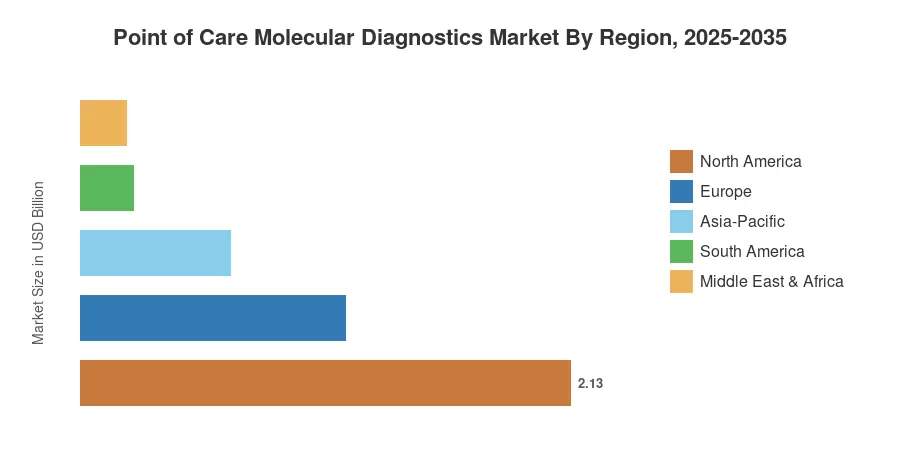
North America commands roughly 46.5% of Point of Care Molecular Diagnostics Market revenue, anchored by dense hospital networks and favorable reimbursement codes. Asia-Pacific is the fastest-growing region at a projected 14.2% CAGR, propelled by government tuberculosis-elimination campaigns and expanding pharmacy-based testing in India and Southeast Asia [6]. Europe holds the second-largest share at approximately 25.2%, underpinned by NHS England's community diagnostic-centre rollout and France's biologie dรฉlocalisรฉe framework [7]. As regulatory pathways mature globally, the Point of Care Molecular Diagnostics Market is set to extend well beyond infectious-disease testing into oncology screening and pharmacogenomics.

ย 

Key Report Takeaways

โ€ข By Product & Service

  • Assays & kits captured roughly 79% of the Point of Care Molecular Diagnostics Market revenue in 2025, reflecting the recurring consumable-driven business model that sustains installed-base economics.
  • Instruments and analyzers are forecast to expand at a 12.9% CAGR through 2035 as next-generation platforms reduce per-test footprint and capital cost.

โ€ข By Application

  • Infectious diseases accounted for approximately 74% of total spending in 2025, driven by respiratory-panel and STI-testing volumes.
  • Oncology applications are projected to grow at a 15.2% CAGR as liquid-biopsy companion diagnostics move closer to the bedside.

โ€ข By Technology

  • PCR-based platforms held a dominant share of the Point of Care Molecular Diagnostics Market in 2025, underpinned by decades of clinical validation.
  • Isothermal nucleic-acid amplification technology (INAAT) is expected to register a 15.1% CAGR, gaining traction in resource-limited settings.

โ€ข By End User

  • Hospitals represented approximately 59% of end-user spending in 2025.
  • Home-care settings are forecast to post a 14.3% CAGR as direct-to-consumer molecular platforms receive regulatory clearance.

โ€ข By Region

  • North America retained the largest revenue share of the Point of Care Molecular Diagnostics Market in 2025.
  • Asia-Pacific is anticipated to register the fastest growth through 2035, supported by rising public-health infrastructure investments.

ย 

Market Size and Forecast (2021โ€“2035)

Market Research Future's size estimates integrate primary interviews with laboratory directors, procurement officers, and device OEMs, triangulated against quarterly revenue disclosures from publicly traded diagnostics companies and validated through secondary databases including WHO essential diagnostics lists and national reimbursement registries.
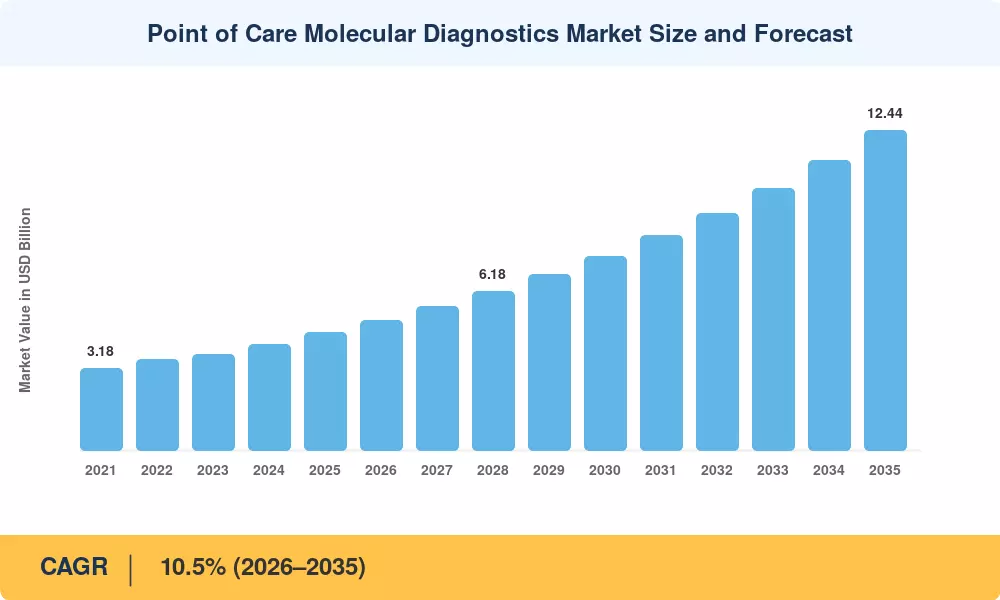
Point of Care Molecular Diagnostics Market Size and Forecast
Our Impact
Enabled $4.3B Revenue Impact for Fortune 500 and Leading Multinationals
Partnering with 2000+ Global Organizations Each Year
30K+ Citations by Top-Tier Firms in the Industry

Driver Impact Analysis

Driver ~% Impact on CAGR Geographic Relevance Impact Timeline
CLIA-waiver expansion for molecular panels 20% North America Short-term (โ‰ค2 yr)
BARDA & public-health stockpiling programs 15% North America, Europe Medium-term (2โ€“4 yr)
IVDR & EU regulatory harmonization 12% Europe Medium-term (2โ€“4 yr)
TB & HIV elimination campaigns in LMIC 14% Asia-Pacific, Africa Long-term (โ‰ฅ4 yr)
AI-enabled remote instrument monitoring 10% Global Medium-term (2โ€“4 yr)
Multiplex panel innovation (โ‰ฅ5 targets) 18% Global Short-term (โ‰ค2 yr)
Reimbursement pathway reforms (CMS, NICE, PMDA) 11% North America, Europe, Japan Long-term (โ‰ฅ4 yr)

ย 

CLIA-Waiver Expansion for Molecular Panels

Between 2022 and 2024, 14 novel molecular assays were given CLIA-waived status by the U.S. Centers for Medicare & Medicaid Services (CMS), allowing physician offices and retail pharmacies to conduct tests without a laboratory director present [2]. For the Point of Care Molecular Diagnostics Market, each waiver increases the addressable install base by an estimated 45,000 potential testing facilities in the US alone. This directly translates into additional cartridge pull-through income. There are considerable financial incentives for decentralized adoption because CMS reimbursement rates for waived molecular testing now vary from USD 45 to USD 142 per test [14].

ย 

BARDA and Public-Health Stockpiling

Between 2021 and 2025, firms that can scale cartridge production to surge-capacity levels within 72 hours of a proclaimed public health emergency will receive USD 650 million from BARDA's Rapid Diagnostics for Infectious Disease program [3]. In addition to attracting new players to the Point of Care Molecular Diagnostics Market and locking in minimum-order guarantees that de-risk R&D investment, this procurement strategy has increased competition and reduced per-test pricing by about 18% since 2021 [2].

ย 

TB and HIV Elimination Campaigns

The WHO's End TB Strategy and UNAIDS 95-95-95 targets require decentralized molecular confirmation of drug-resistant tuberculosis and HIV viral-load monitoring at the primary-care level [6]. India's Revised National Tuberculosis Control Programme procured over 4,800 cartridge-based molecular systems across district hospitals by 2024, and the Global Fund allocated USD 1.9 Billion to diagnostic strengthening in 47 high-burden countries for the 2023โ€“2025 cycle [15]. These programs directly enlarge the Point of Care Molecular Diagnostics Market in low- and middle-income geographies.

Multiplex Panel Innovation

Panels that detect five or more pathogens from a single nasopharyngeal swab now represent the fastest-growing product subsegment, posting 22% volume growth in 2024. Clinicians prefer syndromic testing because it reduces empiric antibiotic prescribing by up to 30%, aligning with global antimicrobial-stewardship mandates [16]. Each new pathogen added to an existing panel generates incremental per-test revenue without requiring new hardware, strengthening the razor-and-blade economics of the Point of Care Molecular Diagnostics Market.

ย 

Restraints Impact Analysis

The restraint percentages below are directional indicators and should not be subtracted from the CAGR.

Restraint ~% Negative Impact on CAGR Geographic Relevance Impact Timeline
High upfront instrument capital cost โ€“15% Global Short-term (โ‰ค2 yr)
Limited test-menu breadth vs. central labs โ€“12% North America, Europe Medium-term (2โ€“4 yr)
Reimbursement uncertainty in emerging markets โ€“10% Asia-Pacific, South America Long-term (โ‰ฅ4 yr)
Quality-control complexity in non-laboratory settings โ€“8% Global Medium-term (2โ€“4 yr)
Supply-chain concentration for reagent raw materials โ€“7% Global Short-term (โ‰ค2 yr)

ย 

High Upfront Instrument Capital Cost

List prices for sample-to-answer molecular analyzers range from USD 25,000 to USD 65,000, making them unaffordable for remote clinics and single-physician practices without grant support [17]. Less than 20% of independent physician offices in the United States had access to a molecular POC platform as of 2024 [2], despite the emergence of reagent-rental and pay-per-test funding methods. The most commonly mentioned adoption barrier in the Point of Care Molecular Diagnostics Market across all regions is capital restrictions.

ย 

Limited Test-Menu Breadth

While the most sophisticated POC molecular systems are limited to about 40 targets, central reference laboratories provide panels encompassing more than 200 analytes. The Point of Care Molecular Diagnostics Market's addressable clinical use-cases are currently limited to infectious-disease workflows since clinicians in oncology, transplant medicine, and rare-disease diagnostics continue to rely on send-out testing.

ย 

Reimbursement Uncertainty in Emerging Markets

While high-income countries have codified reimbursement for molecular POC tests, many middle-income nations lack formal tariff codes for decentralized molecular assays [14]. In Brazil, for example, the SUS public-health system covers only six molecular diagnostic procedures at point of care, constraining commercial scale-up despite strong clinical demand [19].

ย 

Point of Care Molecular Diagnostics Market Opportunities

Pharmacogenomic Testing at the Prescribing Point

FDA's 2024 guidance encouraging pre-prescription pharmacogenomic testing for high-risk medications opens a new clinical pathway for the Point of Care Molecular Diagnostics Market [12]. Rapid CYP2D6 and CYP2C19 genotyping cartridges could reduce adverse drug events โ€” estimated to cost the U.S. healthcare system USD 528 Billion annually โ€” by guiding dose adjustments in real time.

CRISPR-Based Diagnostic Platforms

CRISPR-Cas12 and Cas13 detection chemistries promise instrument-free, lateral-flow molecular readouts at sub-dollar reagent costs [13]. Several start-ups have entered clinical trials for CRISPR-based STI and respiratory panels, positioning this technology to disrupt the existing capital-equipment model and expand the Point of Care Molecular Diagnostics Market into price-sensitive retail and pharmacy channels.

Data Monetization Through Connected Diagnostics

Cloud-connected POC instruments generate real-time epidemiological data streams that hold commercial value for public-health agencies, pharmaceutical companies conducting post-market surveillance, and insurers modeling population risk [10]. Manufacturers that build anonymized data-licensing agreements into their platform economics could unlock a recurring revenue layer estimated at 8โ€“12% of total instrument-lifecycle value.

Emerging-Market Tuberculosis and Antimicrobial-Resistance Programs

The Global Fund's 2026โ€“2028 replenishment cycle targets USD 18 Billion in total commitments, with molecular diagnostics designated a top-three procurement priority [15]. Sub-Saharan Africa and South Asia present the largest unmet-need gaps, and governments in India, Nigeria, and South Africa are tendering for next-generation cartridge-based platforms that tolerate high ambient temperatures.

Direct-to-Consumer Home Molecular Testing

Regulatory frameworks for prescription-use home molecular devices are maturing, with the FDA granting de novo clearance to the first at-home COVID-19 molecular test in 2023 [20]. Expansion into STI, respiratory, and urinary-tract-infection panels could grow the home-care segment of the Point of Care Molecular Diagnostics Market at rates exceeding the overall market average.

ย 

Point of Care Molecular Diagnostics Market Future Outlook

AI-Driven Instrument Intelligence and Predictive Quality Control

Machine-learning algorithms embedded in next-generation analyzers will automate quality-control flagging, lot-to-lot reagent calibration, and real-time error detection โ€” reducing operator dependency and enabling deployment of the Point of Care Molecular Diagnostics Market into settings staffed by non-laboratory personnel [10]. estimates that AI-enabled diagnostics could lower laboratory operating costs by 20โ€“30% across OECD countries by 2030 [21].

Platform Consolidation and Razor-Blade Economics

The economics of the Point of Care Molecular Diagnostics Market will increasingly mirror the inkjet-printer model: low-margin or subsidized instrument placements funded by high-margin, annuity-like cartridge revenues [17]. Manufacturers that lock in multi-year reagent-rental contracts at health-system scale will build switching-cost moats that concentrate market share among the top five players over the next decade.

Molecular Testing for Antimicrobial Stewardship

The WHO's 2024 Global Action Plan on Antimicrobial Resistance calls for a 25% reduction in inappropriate antibiotic prescriptions by 2030, creating a regulatory tailwind for rapid molecular susceptibility testing [16]. Point-of-care panels that identify resistance genes alongside pathogen targets will transition from research tools to standard-of-care requirements in emergency departments across high-income countries.

Sustainability and Cartridge Waste Reduction

Single-use plastic cartridges generate an estimated 12,000 metric tons of clinical waste annually across the global Point of Care Molecular Diagnostics Market [22]. Manufacturers are developing bio-based polymers and cartridge-recycling take-back programs to address hospital ESG mandates, with Cepheid and Abbott both announcing sustainability-roadmap targets for 2030 [23].

ย 

Point of Care Molecular Diagnostics Market Segmentation

By Product & Service

Segment Key Metric Primary Demand Driver
Assays & Kits ~79% share (2025) Recurring consumable revenue model
Instruments / Analyzers 12.9% CAGR Next-gen platform refresh cycle
Software & Services USD 0.27 Billion (2025) Cloud connectivity and data analytics

ย 

Assays and kits anchor the Point of Care Molecular Diagnostics Market because each installed analyzer generates continuous cartridge demand across its 5โ€“7 year service life. Multiplex respiratory panels โ€” combining influenza A/B, RSV, and SARS-CoV-2 โ€” drove the majority of consumable revenue in 2024, with average selling prices ranging from USD 28 to USD 55 per cartridge depending on target count. Instruments and analyzers, while smaller in absolute revenue, represent the strategic battleground where manufacturers compete on ease-of-use, time-to-result, and menu breadth to secure long-term consumable pull-through.

By Application

Segment Key Metric Primary Demand Driver
Infectious Diseases ~74% share (2025) Respiratory, STI, and TB testing volumes
Oncology 15.2% CAGR Liquid-biopsy companion diagnostics
Genetic Testing USD 0.14 Billion (2025) Pharmacogenomic pre-prescription screening
Other Applications 9.8% CAGR Transplant monitoring, prenatal screening

ย 

Infectious diseases dominate the Point of Care Molecular Diagnostics Market because respiratory and sexually transmitted infections present the clearest clinical-utility case for rapid molecular confirmation at the point of care. Oncology represents the most compelling adjacency: liquid-biopsy technologies that detect circulating tumor DNA are migrating from central-lab reference workflows toward compact analyzers capable of delivering actionable results during a single clinic visit [11].

By Technology

Segment Key Metric Primary Demand Driver
PCR-Based ~75% share (2025) Established clinical validation and regulatory clearance
INAAT 15.1% CAGR Instrument-free, low-power amplification
Other Technologies USD 0.11 Billion (2025) CRISPR-based and microarray approaches

ย 

PCR-based platforms dominate the Point of Care Molecular Diagnostics Market owing to decades of accumulated clinical evidence and broad regulatory acceptance across FDA, CE-IVDR, and PMDA pathways [5]. INAAT technologies โ€” including loop-mediated isothermal amplification (LAMP) and recombinase polymerase amplification (RPA) โ€” are gaining ground in field settings where electricity supply is intermittent, because they eliminate the need for thermal cycling hardware [13].

By End User

Segment Key Metric Primary Demand Driver
Hospitals ~59% share (2025) Emergency-department and ICU testing
Homecare Settings 14.3% CAGR DTC molecular test regulatory clearances
Physician Offices / Clinics USD 0.52 Billion (2025) CLIA-waived test adoption
Pharmacies & Retail Clinics 13.6% CAGR Expanded scope-of-practice legislation
Other End Users USD 0.12 Billion (2025) Military, field, and corrections facilities

ย 

Hospitals remain the backbone of the Point of Care Molecular Diagnostics Market, particularly in emergency departments where rapid turnaround of respiratory and sepsis panels directly influences patient disposition and antimicrobial prescribing [16]. Home-care settings are the fastest-growing end-user channel as FDA de novo clearances for at-home molecular devices accumulate, creating a consumer-facing market layer that did not exist before 2023 [20].

ย 

Regional Market Share Analysis

Region Key Metric (2025) Primary Investment Themes
North America 46.5% revenue share CLIA waivers, BARDA stockpiling, pharmacy testing
Europe 25.2% revenue share IVDR compliance, community diagnostic centres
Asia-Pacific 14.2% CAGR (2026โ€“2035) TB elimination, primary-care molecular rollout
South America USD 0.23 Billion SUS reimbursement expansion, dengue surveillance
Middle East & Africa USD 0.20 Billion Global Fund procurement, HIV viral-load monitoring
Total USD 4.58 Billion โ€”

The Point of Care Molecular Diagnostics Market exhibits a clear geographic hierarchy, with North America leading on installed-base density and reimbursement maturity, while Asia-Pacific delivers the strongest growth trajectory fueled by public-health infrastructure scale-up.

ย 

North America

Country Key Metric Key Driver
United States 82% of regional share CLIA-waiver pipeline, CMS reimbursement codes
Canada 10.8% CAGR Provincial lab-reform programs
Mexico USD 0.07 Billion (2025) IMSS decentralization strategy

ย 

The United States dominates the North American Point of Care Molecular Diagnostics Market thanks to a mature CLIA-waiver ecosystem that now encompasses more than 220,000 certificate-of-waiver sites [2]. CMS reimbursement under CPT codes 87631โ€“87633 incentivizes emergency departments and urgent-care chains to adopt molecular respiratory panels, while pharmacy giants CVS and Walgreens have piloted in-store molecular STI testing in select states [14].

Europe

Country Key Metric Key Driver
Germany 28% of regional share Strong lab-network decentralization policies
United Kingdom 11.4% CAGR NHS community diagnostic centres
France USD 0.18 Billion (2025) Biologie dรฉlocalisรฉe regulatory expansion
Italy 9.8% CAGR National antimicrobial-stewardship mandates
Spain USD 0.09 Billion (2025) Regional health-authority procurement
Nordic Countries 10.2% CAGR High primary-care digitalization
Russia USD 0.06 Billion (2025) Federal tuberculosis programme
Rest of Europe 12% of regional share Varied regulatory adoption

ย 

The European Point of Care Molecular Diagnostics Market is shaped by the IVDR transition, which raised clinical-performance evidence requirements and consolidated the competitive field around manufacturers with robust post-market surveillance capabilities [5]. NHS England's pledge to deliver 160 community diagnostic centres by 2025 has created a procurement pipeline exceeding GBP 350 Million for rapid molecular platforms [7].

Asia-Pacific

Country Key Metric Key Driver
China 32% of regional share NMPA fast-track approvals, domestic manufacturing
India 16.1% CAGR RNTCP molecular rollout, Ayushman Bharat
Japan USD 0.14 Billion (2025) PMDA reimbursement reforms
South Korea 12.5% CAGR National infectious-disease preparedness
ASEAN USD 0.08 Billion (2025) WHO-prequalified platform procurement
Rest of Asia-Pacific 13.8% CAGR Expanding primary-care networks

ย 

Asia-Pacific represents the most dynamic growth frontier for the Point of Care Molecular Diagnostics Market. India alone has deployed over 4,800 cartridge-based molecular instruments across district-level hospitals under the Revised National Tuberculosis Control Programme, and China's NMPA granted fast-track review status to 11 POC molecular assays between 2023 and 2025 [6][15].

South America

Country Key Metric Key Driver
Brazil 58% of regional share SUS molecular tariff expansion
Argentina 11.3% CAGR Dengue and Chagas screening programs
Rest of South America USD 0.04 Billion (2025) PAHO-funded diagnostic initiatives

ย 

Brazil's Unified Health System (SUS) incorporated three new molecular POC procedure codes in 2024, enabling reimbursement for tuberculosis, HIV viral-load, and HPV genotyping at primary-care facilities [19]. This policy shift positions Brazil as the gateway market for broader South American adoption of the Point of Care Molecular Diagnostics Market.

Middle East & Africa

Country Key Metric Key Driver
Saudi Arabia 26% of regional share Vision 2030 healthcare modernization
UAE 12.8% CAGR Medical-tourism diagnostic infrastructure
South Africa USD 0.05 Billion (2025) National Health Laboratory Service POC program
Egypt 13.5% CAGR Hepatitis C elimination campaign
Rest of MEA USD 0.06 Billion (2025) Global Fund diagnostic procurement

ย 

Sub-Saharan Africa's Point of Care Molecular Diagnostics Market is heavily shaped by donor-funded procurement. The Global Fund disbursed USD 1.9 Billion for diagnostic strengthening in 47 high-burden countries during 2023โ€“2025, with GeneXpert and Truenat cartridge volumes accounting for the majority of molecular spend [15].

ย 

Point of Care Molecular Diagnostics Market By Region, 2025-2035

Competitive Benchmarking

The Point of Care Molecular Diagnostics Market exhibits medium concentration, with the top five companies capturing an estimated 60โ€“68% of global revenue. The Herfindahl-Hirschman Index (HHI) sits in the moderate range (~1,200โ€“1,500), reflecting a competitive field where two platform leaders (Cepheid and Abbott) hold significant share while a tier of mid-cap specialists competes aggressively on menu expansion and geographic reach.

Company Est. Revenue Share Range Key Offerings Strategic Positioning
Cepheid (Danaher Corporation) ~18โ€“22% GeneXpert System, Xpert Xpress panels Broadest cartridge menu; dominant in hospital ED and TB programs
Abbott Laboratories ~15โ€“19% ID NOW, Alinity m Speed-to-result leader; pharmacy and urgent-care focus
Roche Diagnostics ~12โ€“16% cobas Liat System, cobas 5800 Integrated diagnostics ecosystem; strong payer relationships
Hologic, Inc. ~8โ€“11% Panther Fusion, Aptima Women's health molecular leadership; STI testing
bioMรฉrieux SA ~7โ€“10% BioFire FilmArray, ARGENE Syndromic panel pioneer; antimicrobial stewardship positioning
Becton, Dickinson and Company ~5โ€“8% BD MAX, BD Veritor Plus Broad specimen-management portfolio; lab-to-POC bridge strategy
Qiagen N.V. ~4โ€“7% QIAstat-Dx, NeuMoDx Sample-prep technology heritage; strong EU presence
Meridian Bioscience ~2โ€“4% Revogene, Alethia Focused gastrointestinal and C. diff panels
Binx Health ~1โ€“3% binx io platform First FDA-cleared POC CT/GC molecular platform
Visby Medical ~1โ€“2% Visby Sexual Health Test Single-use, instrument-free PCR device

ย 

ย 

Recent News & Developments

  • Cepheid (March 2025): Received FDA 510(k) clearance for a 4-in-1 Xpert Xpress respiratory panel combining Flu A/B, RSV, and SARS-CoV-2 with a 36-minute turnaround, expanding its hold on the Point of Care Molecular Diagnostics Market emergency-department segment.
  • Abbott Laboratories (January 2025): Launched the ID NOW 2.0 platform with cloud-connectivity features and a redesigned cartridge interface, targeting 15% faster workflow throughput [23].
  • Roche Diagnostics (October 2024): Expanded the cobas Liat menu to include Group A Streptococcus and Influenza A/B+RSV, adding four new CLIA-waived assays in a single regulatory submission [5].
  • FDA (August 2024): Issued final guidance on the regulatory pathway for prescription-use home molecular diagnostic devices, establishing performance benchmarks for self-collected specimen types [20].
  • Hologic (June 2024): Announced a USD 250 Million investment in manufacturing capacity for Panther Fusion consumables at its San Diego facility, anticipating sustained demand growth [17].
  • bioMรฉrieux (February 2024): Entered a strategic partnership with the Global Fund to supply BioFire FilmArray systems to 23 sub-Saharan African countries under preferential pricing terms [15].
  • Qiagen (November 2023): Received CE-IVDR marking for the QIAstat-Dx Gastrointestinal Panel 2, the first syndromic GI panel to comply with the new European performance-evaluation requirements [5].
  • BARDA (September 2023): Awarded USD 172 Million across three manufacturers to maintain rapid-diagnostic surge-production capacity as part of its pandemic-preparedness contract portfolio [3].

ย 

ย 

ย 

ย 

Point of Care Molecular Diagnostics Market Report Scope

Parameter Detail
Market Scope Global Point of Care Molecular Diagnostics Market
Study Period 2021โ€“2035
CAGR (Forecast) 10.5% (2026โ€“2035)
Market Size โ€” 2025 (Base Year) USD 4.58 Billion
Market Size โ€” 2035 (Forecast Endpoint) USD 12.44 Billion
Fastest Growing Segment Oncology applications (by application); INAAT (by technology)
Companies Profiled 10 (Cepheid, Abbott, Roche, Hologic, bioMรฉrieux, BD, Qiagen, Meridian, Binx Health, Visby Medical)
Valuation Currency USD Billion

FAQs

How do reagent-rental contracts affect total cost of ownership for POC molecular analyzers?
Reagent-rental agreements eliminate upfront capital expenditure by bundling instrument access into per-test pricing, typically adding USD 3โ€“8 per cartridge above list price. Facilities running more than 15 tests per day generally achieve lower total cost through outright purchase [17].
What specimen types beyond nasopharyngeal swabs are gaining traction on POC molecular platforms?
Whole blood, urine, and rectal swabs are expanding platform utility into sepsis, urinary-tract-infection, and STI workflows. Saliva-based collection is also under active FDA review for respiratory panels [9].
How does POC molecular testing integrate with electronic health record systems?
Most current-generation analyzers support HL7 and FHIR data standards for bidirectional EHR connectivity. Successful integration reduces manual transcription errors and enables automated result-triggered clinical-decision-support alerts [10].
What role do contract-development organizations play in cartridge manufacturing scale-up?
CDMOs provide lyophilization, fill-finish, and quality-control capacity that smaller diagnostics companies lack in-house. Outsourced manufacturing shortened time-to-market by an average of nine months during the 2023โ€“2024 product cycle [18].
How are antimicrobial-resistance gene panels differentiated from standard pathogen-ID panels?
Resistance panels detect genotypic markers such as mecA and carbapenemase genes alongside organism identification. This dual output enables targeted antibiotic selection within 45 minutes rather than awaiting 48-hour culture-based susceptibility results [16].
What cybersecurity risks emerge from cloud-connected POC molecular instruments?
Connected analyzers transmit patient-identifiable data to cloud dashboards, exposing facilities to HIPAA-relevant breach risk. Manufacturers are adopting zero-trust architectures and end-to-end encryption to mitigate these vulnerabilities [10].
Can POC molecular platforms support veterinary diagnostic applications?
Several cartridge-based systems have received USDA validation for canine parvovirus and equine influenza detection. Veterinary applications remain a niche but growing adjacency valued at approximately USD 85 Million globally in 2024 [1]. ย  ย 
Author
Author
Author Profile
Rahul Gotadki LinkedIn
Research Manager
He holds an experience of about 9+ years in Market Research and Business Consulting, working under the spectrum of Life Sciences and Healthcare domains. Rahul conceptualizes and implements a scalable business strategy and provides strategic leadership to the clients. His expertise lies in market estimation, competitive intelligence, pipeline analysis, customer assessment, etc.
Co-Author
Co-Author Profile
Vikita Thakur LinkedIn
Senior Research Analyst
She holds an experience of about 5+ years in market research and business consulting projects for sectors such as life sciences, medical devices, and healthcare IT. She possesses a robust background in data analysis, market estimation, competitive intelligence, pipeline analysis market trend identification, and consumer behavior insights. Her expertise lies in technical Sales support, client interaction and project management, designing and implementing market research studies, conducting competitive analysis, and synthesizing complex data into actionable recommendations that drive business growth.
Share::
Request Free Sample

Research Approach

ย 

Secondary Research

The secondary research process involved comprehensive analysis of regulatory databases, peer-reviewed biomedical journals, clinical microbiology publications, and authoritative health organizations. Key sources included the US Food & Drug Administration (FDA) 510(k) Premarket Notification Database and CLIA Waiver Database, Centers for Medicare & Medicaid Services (CMS) for reimbursement codes and coverage policies, Centers for Disease Control and Prevention (CDC) Division of Laboratory Systems, Association of Public Health Laboratories (APHL), European Medicines Agency (EMA) In Vitro Diagnostics Regulation (IVDR) database, European Centre for Disease Prevention and Control (ECDC), World Health Organization (WHO) Essential Diagnostics List and Global Health Observatory, National Institutes of Health (NIH) National Institute of Allergy and Infectious Diseases (NIAID), National Center for Biotechnology Information (NCBI/PubMed) for molecular diagnostic studies, Clinical and Laboratory Standards Institute (CLSI), College of American Pathologists (CAP), Infectious Diseases Society of America (IDSA) guidelines, NIH National Human Genome Research Institute (NHGRI), US Department of Health and Human Services (HHS) Office of the Assistant Secretary for Preparedness and Response (ASPR), Biomedical Advanced Research and Development Authority (BARDA) funding announcements, and national health ministry surveillance reports from key markets. These sources were used to collect regulatory approval pathways, CLIA waiver statuses, clinical sensitivity/specificity data, infectious disease surveillance statistics, reimbursement policy changes, and competitive landscape analysis for PCR-based systems, isothermal amplification technologies, CRISPR-based diagnostics, and next-generation sequencing platforms at the point of care.

ย 

Primary Research

Qualitative and quantitative insights were obtained by interviewing supply-side and demand-side stakeholders during the primary research process. The supply-side sources consisted of CEOs, VPs of R&D, regulatory affairs chiefs, clinical affairs directors, and commercial leads from molecular diagnostic device manufacturers, assay developers, and platform technology providers. Clinical laboratory directors, point-of-care coordinators, infectious disease specialists, molecular pathologists, hospital administrators, and procurement officers from acute care hospitals, community health centers, urgent care networks, physician office laboratories (POLs), and retail health clinics comprised demand-side sources. Market segmentation was validated across respiratory infections, sexually transmitted infections, hospital-acquired infections, oncology biomarkers, and genetic screening; product pipeline timelines for multiplex panel development were confirmed; and insights on clinical workflow integration, CLIA complexity requirements, pricing and reimbursement strategies, and post-pandemic test utilization patterns were gathered through primary research.

Primary Respondent Breakdown:

By Designation: C-level Primaries (28%), Director Level (42%), Others (30%)

By Region: North America (40%), Europe (25%), Asia-Pacific (28%), Rest of World (7%)

ย 

Market Size Estimation

Global market valuation was derived through revenue mapping and test volume analysis across decentralized testing settings. The methodology included:

Identification of 50+ key manufacturers and platform developers across North America, Europe, Asia-Pacific, and Latin America

Technology mapping across RT-PCR, isothermal amplification (LAMP, NEAR, SDA), CRISPR-Cas systems, microfluidic cartridge-based platforms, and biosensor technologies

Assay portfolio analysis across respiratory pathogen panels (SARS-CoV-2, influenza, RSV), STI panels (CT/NG, HPV, HIV), HAI surveillance (MRSA, C. difficile, CRE), and oncology liquid biopsy applications

Analysis of reported and modeled annual revenues specific to point-of-care molecular diagnostic segments, including instrument placements and recurring consumable revenues

Coverage of manufacturers and platform holders representing 75-80% of global market share in 2024

Extrapolation using bottom-up (test volume ร— ASP by disease indication and care setting) and top-down (manufacturer revenue validation and market share analysis) approaches to derive segment-specific valuations for instruments, assays, and services

Would you like me to adjust the regulatory sources for specific geographic markets or modify the respondent breakdown percentages further?

Share::
Request Free Sample
Download Free Sample

Kindly complete the form below to receive a free sample of this Report

* Please use a valid business email

Share::
Request Free Sample
Download PDF ×

We do not share your information with anyone. However, we may send you emails based on your report interest from time to time. You may contact us at any time to opt-out.
















