Market Growth Projections
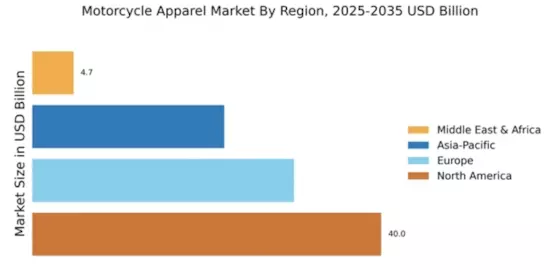
The Global Motorcycle Apparel Market Industry is projected to experience substantial growth over the coming years. With a current valuation of 96.7 USD Billion in 2024, the market is expected to reach 152.1 USD Billion by 2035. This growth trajectory suggests a compound annual growth rate of 4.2% from 2025 to 2035. Factors contributing to this expansion include rising safety awareness, increased disposable income, and the growing popularity of motorcycle tourism. As these trends continue to evolve, the market is likely to attract new entrants and foster innovation, ultimately enhancing the overall consumer experience in motorcycle apparel.
Increase in Disposable Income
The Global Motorcycle Apparel Market Industry is positively influenced by the increase in disposable income among consumers. As economic conditions improve, individuals are more willing to invest in high-quality motorcycle gear that offers both safety and style. This trend is particularly evident in emerging markets where a growing middle class is eager to embrace motorcycle culture. The willingness to spend on premium apparel is likely to drive market growth, as consumers seek products that reflect their lifestyle choices. Consequently, the market is anticipated to expand, with projections indicating a valuation of 152.1 USD Billion by 2035, highlighting the potential for premium product offerings.
Rising Demand for Protective Gear
The Global Motorcycle Apparel Market Industry experiences a notable surge in demand for protective gear, driven by increasing awareness of safety among riders. As motorcycle accidents remain a concern, consumers are prioritizing apparel that offers enhanced protection. This trend is reflected in the growing sales of armored jackets, gloves, and helmets. In 2024, the market is valued at approximately 96.7 USD Billion, indicating a robust consumer preference for safety-oriented products. Manufacturers are responding by innovating materials and designs that not only provide safety but also comfort and style, thus appealing to a broader audience.
Technological Advancements in Apparel
Technological advancements play a crucial role in shaping the Global Motorcycle Apparel Market Industry. Innovations such as moisture-wicking fabrics, impact-resistant materials, and smart textiles are revolutionizing the way motorcycle gear is designed and manufactured. These advancements not only enhance rider safety but also improve comfort and functionality. For instance, the integration of temperature-regulating materials allows riders to maintain optimal body temperature during long rides. As the market evolves, consumers are increasingly drawn to apparel that incorporates these technologies, indicating a shift towards performance-driven products. This trend is expected to contribute to a compound annual growth rate of 4.2% from 2025 to 2035.
Growing Popularity of Motorcycle Tourism
The Global Motorcycle Apparel Market Industry benefits from the rising popularity of motorcycle tourism, which encourages enthusiasts to invest in high-quality apparel. As more individuals seek adventure and exploration through motorcycle travel, the demand for durable and stylish riding gear increases. This trend is particularly evident in regions with scenic routes and established motorcycle tourism infrastructure. The market is projected to grow significantly, with estimates suggesting a value of 152.1 USD Billion by 2035. This growth is likely fueled by the increasing number of motorcycle events and rallies that promote tourism, thereby enhancing the visibility of motorcycle apparel.
Environmental Concerns and Sustainable Practices
The Global Motorcycle Apparel Market Industry is increasingly influenced by environmental concerns, prompting manufacturers to adopt sustainable practices. As consumers become more environmentally conscious, there is a growing demand for apparel made from eco-friendly materials and sustainable production methods. Brands that prioritize sustainability are likely to attract a loyal customer base, as consumers seek to align their purchases with their values. This trend is evident in the introduction of recycled materials and biodegradable products in the market. As sustainability becomes a key factor in purchasing decisions, the industry may witness a shift towards greener practices, potentially reshaping the competitive landscape.